Looking for the best dehumidifiers with humidistats in 2026? The most useful models let you choose or automatically maintain a target humidity level, so the unit can cycle on and off instead of running blindly. This guide compares smart Wi-Fi models, compressor dehumidifiers for basements and larger rooms, and compact options for lighter moisture control. Use the quick verdict, comparison table, product notes, honest limitations, and buying tips below to match capacity, drainage, noise, and humidity-control features to your space.
Affiliate disclosure: This article contains Amazon affiliate links. If you buy through a qualifying link, the site may earn a commission at no extra cost to you.
Quick Verdict: Best Dehumidifiers With Humidistats in 2026
Best smart medium-room picks: Midea Energy Star Dehumidifier and Frigidaire 22-Pint Portable Dehumidifier stand out if you want adjustable humidity control plus app or voice features.
Best for large damp areas: Waykar 80 Pints Energy Star Dehumidifier offers the highest verified daily moisture-removal rating in this roundup.
Best compact choices: AEOCKY Small Dehumidifier and the NovaLivin Auto Humidity Control Dehumidifier are easier to place in bedrooms, closets, bathrooms, offices, and other smaller spaces.
Best for continuous drainage: VEAGASO, AEOCKY, Aiusevo, and GoGuess are useful if you want a drain-hose setup instead of relying only on manual tank emptying.
How We Selected These Dehumidifiers
We focused on models that offer adjustable or automatic humidity control and then compared practical buyer factors such as moisture-removal capacity, drainage options, room use, portability, controls, noise-oriented modes, and energy-efficiency features. We did not treat manufacturer square-foot claims as a substitute for matching capacity to the actual dampness and temperature of your space.
| Product | Best For | Key Strength | Amazon |
|---|---|---|---|
| Midea Energy Star Dehumidifier | Medium rooms up to 1,500 sq. ft. | Wi-Fi control and adjustable humidity settings | Check Price |
| NovaLivin Auto Humidity Control Dehumidifier | Bedrooms, bathrooms, closets, and small rooms | Auto humidity control and compact design | Check Price |
| KNKA 21 Pint Dehumidifier | Bedrooms, basements, and medium rooms | Intelligent humidistat and easy digital controls | Check Price |
| VEAGASO 2500 Sq.Ft Dehumidifier | Larger rooms and damp basements | Humidistat, multiple modes, and drain hose | Check Price |
| Frigidaire 22-Pint Portable Dehumidifier | Smart small-to-medium room humidity control | Wi-Fi, voice control, and ENERGY STAR certification | Check Price |
| AEOCKY Small Dehumidifier | Bedrooms, offices, closets, RVs, and small spaces | Adjustable humidity control with drain hose | Check Price |
| Waykar 80 Pints Energy Star Dehumidifier | Large damp spaces and basements | 80-pint/day moisture-removal rating | Check Price |
| Aiusevo AS280 1500 Sq. ft Dehumidifier | Basements, bedrooms, and laundry rooms | Three modes and automatic humidity control | Check Price |
| GoGuess 1600 Sq.ft Dehumidifier | Large rooms, offices, bedrooms, and basements | Adjustable humidity control, timer, and drain hose | Check Price |
Midea Energy Star Dehumidifier (22 Pint, White)
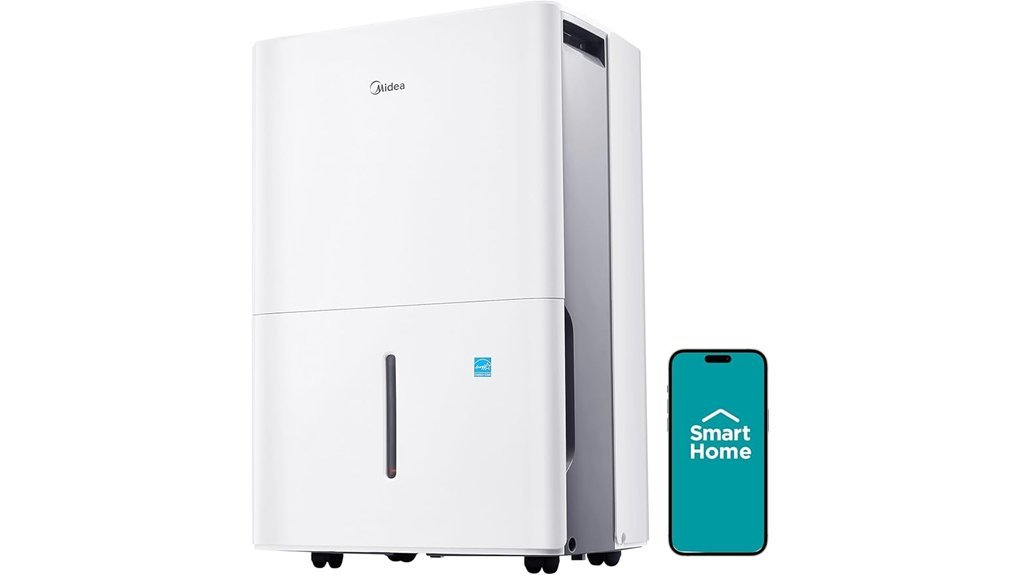
The Midea Energy Star Dehumidifier is a strong fit for medium rooms where you want a compressor dehumidifier with adjustable humidity control and smart features. Its 22-pint daily rating and advertised coverage up to 1,500 sq. ft. make it better suited to bedrooms, living rooms, home offices, and moderate basement moisture than to tiny closets or very wet oversized basements. Wi-Fi support adds app and voice-control convenience, while caster wheels make room-to-room movement easier.
Why You’ll Like It: You can choose a target humidity level and let the built-in control manage cycling instead of manually checking the room all day. The smart-home features are useful if you want to monitor or adjust settings without walking over to the unit.
Who Should Buy This: Choose it if you want a balanced combination of humidity control, 22-pint capacity, ENERGY STAR efficiency, portability, and Wi-Fi convenience.
Who Should Avoid This: Skip it if you only need a very small thermoelectric unit or if your space has severe moisture loads that call for a higher-capacity compressor model.
Best For: Medium rooms, bedrooms, living areas, home offices, and moderately damp basement spaces.
Pros:
- ENERGY STAR certified and rated to remove up to 22 pints of moisture per day.
- Adjustable humidity control plus Wi-Fi app and voice-assistant support.
- Caster wheels make it easier to reposition in different rooms.
Cons:
- A higher-capacity model may be better for very wet or oversized basements.
- Manual tank emptying is still required if you do not set up continuous drainage.
- Larger and heavier than compact thermoelectric dehumidifiers.
NovaLivin Dehumidifier with Auto Humidity Control
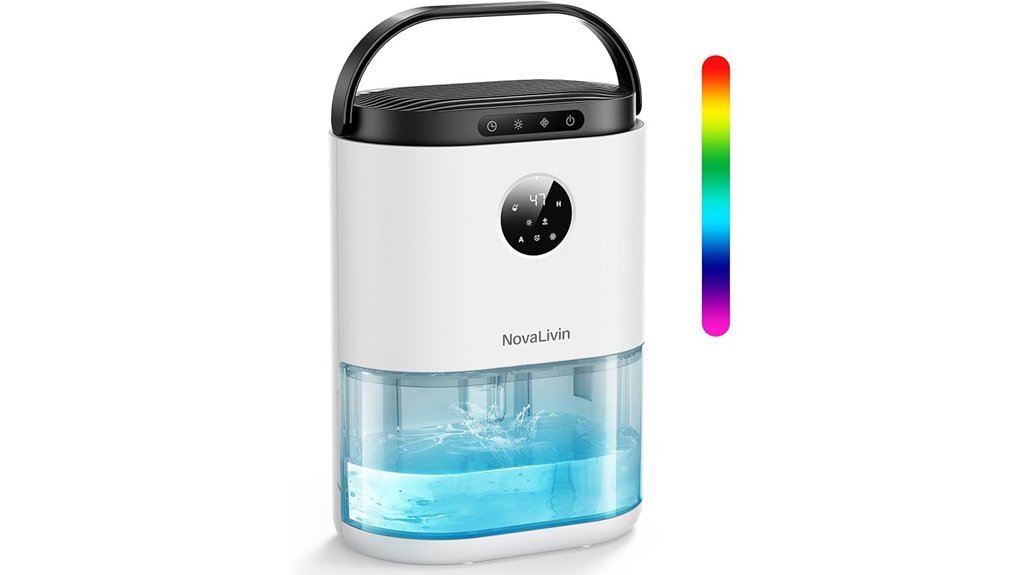
The NovaLivin dehumidifier is a compact thermoelectric option built around auto humidity control, a digital display, and a 68 oz water tank. Its listing states moisture removal up to 34 oz per day under warm, high-humidity test conditions, so it makes more sense for bedrooms, bathrooms, closets, offices, and other smaller spaces than for a wet basement. Multiple operating modes and a timer add convenience without taking up much floor space.
Why You’ll Like It: The auto humidity feature is the main reason it belongs in this roundup. It gives you more control than a basic mini dehumidifier that only runs until the tank fills.
Who Should Buy This: It suits shoppers who want lighter moisture control, a small footprint, and automatic humidity management in compact rooms.
Who Should Avoid This: Avoid it for large open rooms, flooding-related moisture, or heavy basement dampness where a compressor dehumidifier is more appropriate.
Best For: Bedrooms, bathrooms, closets, home offices, and other smaller spaces with light-to-moderate humidity.
Pros:
- Auto humidity control and digital display improve everyday usability.
- Compact thermoelectric design is easier to place in smaller rooms.
- 68 oz tank, multiple modes, and timer add convenience.
Cons:
- Thermoelectric moisture removal is much lower than a full-size compressor dehumidifier.
- Daily extraction depends heavily on room temperature and relative humidity.
- The tank still needs manual emptying unless the specific setup supports another drainage method.
KNKA 21 Pint Dehumidifier for Home (1600 sq.ft)
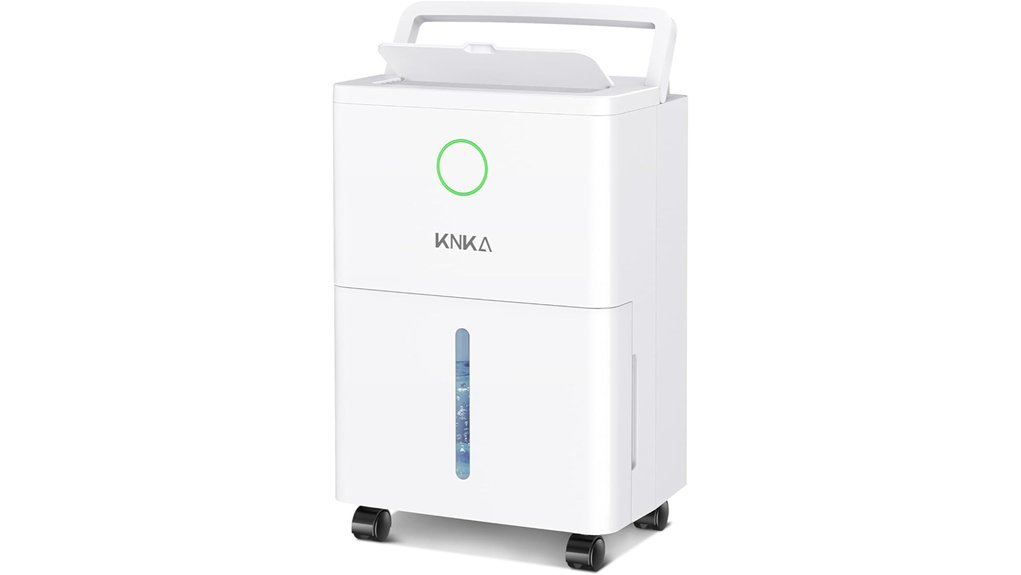
The KNKA 21 Pint Dehumidifier is marketed for spaces up to 1,600 sq. ft. and combines compressor-based moisture removal with an intelligent humidistat. Adjustable humidity control, a digital display, automatic shutoff, continuous drainage support, a washable filter, and a child lock make it more flexible than a basic on/off unit. Its 21-pint daily rating is best viewed together with the actual dampness and temperature of your room rather than square footage alone.
Why You’ll Like It: The digital controls and humidistat make it easy to set a preferred moisture level and see what the room is doing without relying on guesswork.
Who Should Buy This: Choose it if you want a mid-capacity dehumidifier for bedrooms, bathrooms, basements, laundry areas, or shared living spaces where simple controls and continuous drainage are useful.
Who Should Avoid This: Skip it if your space has severe dampness that needs a substantially higher daily moisture-removal rating.
Best For: Medium rooms, bedrooms, basements, bathrooms, and laundry areas.
Pros:
- Intelligent humidistat with adjustable humidity control.
- Continuous drainage support, washable filter, and automatic shutoff.
- Digital controls, child lock, and portable design improve day-to-day use.
Cons:
- Coverage claims should be treated as a starting point because real performance depends on room conditions.
- 21 pints per day may be too little for very wet or oversized spaces.
- The tank may need frequent attention if continuous drainage is not used.
VEAGASO 2500 Sq.Ft Dehumidifier with Drain Hose
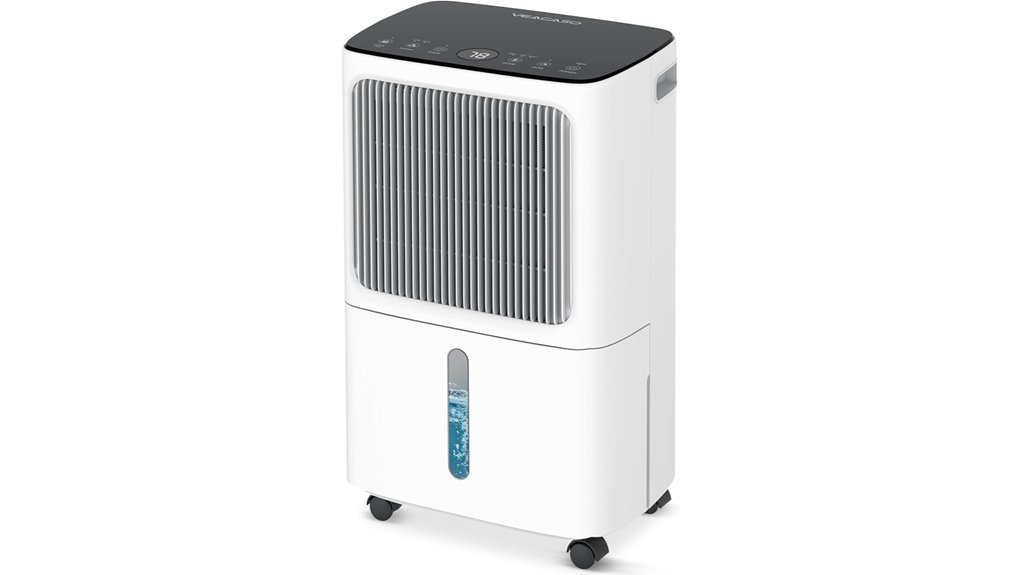
The VEAGASO 2500 Sq.Ft Dehumidifier is a larger compressor model with a 34-pint daily rating, an intelligent humidistat, and three operating modes: DEHU, DRY, and CONT. Its included drain hose makes it especially practical for spaces where the unit will run often, while the LED touch panel and 24-hour timer help you manage normal dehumidifying, laundry drying, or continuous operation.
Why You’ll Like It: The combination of automatic humidity control and continuous drainage reduces hands-on maintenance in consistently damp rooms.
Who Should Buy This: It is a good fit for larger bedrooms, laundry rooms, basements, offices, and living spaces where you can route a drain hose safely.
Who Should Avoid This: Avoid it if you only need a tiny unit for a closet or if you have no practical place to route the hose for continuous drainage.
Best For: Larger rooms, damp basements, laundry areas, and spaces that benefit from drain-hose operation.
Pros:
- 34-pint daily moisture-removal rating with intelligent humidity control.
- DEHU, DRY, and CONT modes support different moisture problems.
- Included drain hose and 24-hour timer make long-running use easier.
Cons:
- The tank may still fill quickly in humid conditions if you do not use continuous drainage.
- Square-foot coverage is only a rough guide and should be matched to actual dampness.
- Drain-hose placement requires a suitable gravity-drain destination.
Frigidaire 22-Pint Portable Dehumidifier with Wi-Fi
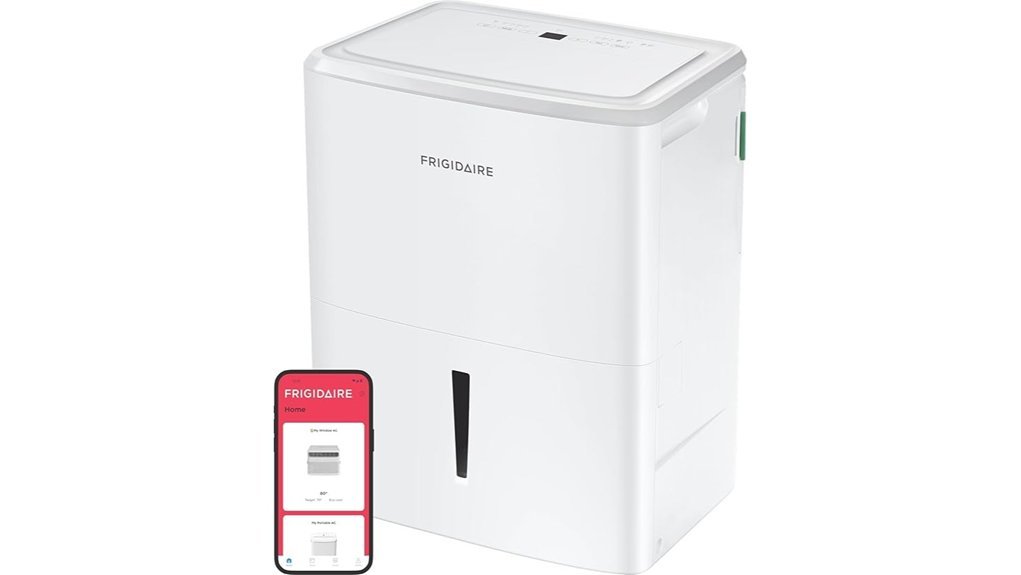
The Frigidaire 22-Pint Portable Dehumidifier combines adjustable humidity control with Wi-Fi, app access, voice-assistant compatibility, a programmable timer, and ENERGY STAR certification. Its 22-pint rating targets small-to-medium rooms rather than severe whole-basement moisture loads, and the portable design makes it easier to move between spaces when needed.
Why You’ll Like It: This model is a good fit if you want smart-home convenience from a familiar appliance brand without stepping up to a much larger high-capacity machine.
Who Should Buy This: Choose it for bedrooms, living rooms, offices, or moderate basement areas where Wi-Fi control and a target humidity setting are useful.
Who Should Avoid This: Skip it if you do not need smart features or if your room has a moisture load that calls for substantially more than 22 pints per day.
Best For: Smart humidity control in small-to-medium rooms.
Pros:
- ENERGY STAR certified with a 22-pint daily dehumidification rating.
- Wi-Fi app control and voice-assistant compatibility.
- Adjustable humidity control and programmable timer improve automation.
Cons:
- 22-pint capacity may be undersized for very large or persistently wet areas.
- Smart features add little value if you prefer simple manual controls.
- Like other compressor models, operating noise can be more noticeable than on very small thermoelectric units.
AEOCKY Small Dehumidifier with Drain Hose
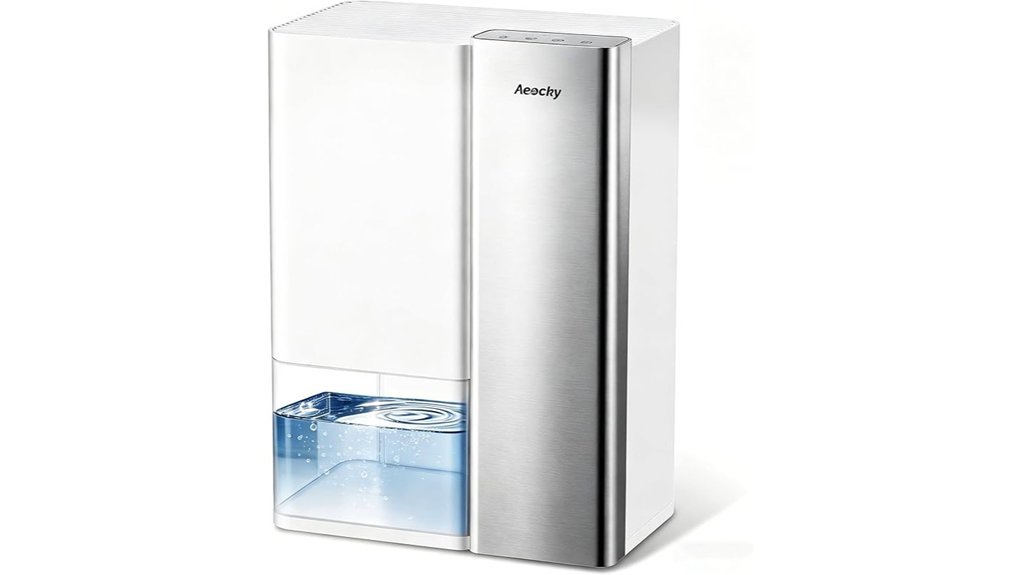
The AEOCKY Small Dehumidifier is a thermoelectric model with adjustable humidity control, a 64 oz tank, timer, automatic shutoff, and an included drain hose. Its current listing specifies up to 1.2 liters of moisture removal per day under its rated conditions, which makes it more capable than many basic mini units while still remaining a small-space option rather than a substitute for a high-capacity compressor dehumidifier.
Why You’ll Like It: Adjustable humidity control and a drain hose are uncommon advantages in the mini-dehumidifier category, especially if you want less frequent tank handling.
Who Should Buy This: It is a strong compact choice for bedrooms, closets, bathrooms, RVs, dorm rooms, offices, and other smaller spaces.
Who Should Avoid This: Do not use it as your primary solution for a large wet basement, flood cleanup, or severe whole-room moisture problems.
Best For: Small spaces where you want a real humidity setting plus optional continuous drainage.
Pros:
- Adjustable humidity control, timer, and automatic shutoff.
- 64 oz tank with an included drain hose for lower-maintenance operation.
- Compact thermoelectric design is easier to place in tight spaces.
Cons:
- Lower moisture-removal capacity than full-size compressor dehumidifiers.
- Performance depends strongly on temperature and relative humidity.
- Not a replacement for a high-capacity basement dehumidifier.
Waykar 80 Pints Energy Star Dehumidifier for Home
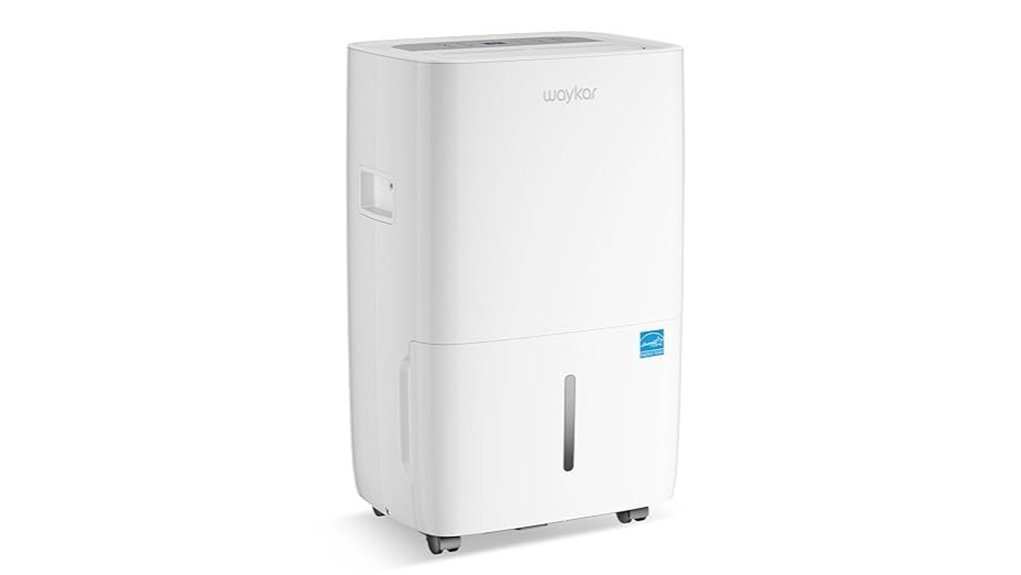
If you are dealing with heavier moisture loads, the Waykar Energy Star Dehumidifier stands out for its current 80-pint-per-day dehumidification rating. The listing also highlights ENERGY STAR certification, timer control, washable filtration, quiet-operation features, and automatic functions suited to ongoing use. Because large-space coverage and tank-size fields can vary across listing data or product variants, it is safer to size this unit by the 80-pint daily rating, room conditions, and drainage plan instead of relying on a single square-foot number.
Why You’ll Like It: This is the highest verified daily moisture-removal rating in the roundup, making it the most appropriate option here for serious basement humidity and larger damp spaces.
Who Should Buy This: Choose it for large basements, open living spaces, storage rooms, workshops, or other areas where smaller 21-to-34-pint models may struggle to keep up.
Who Should Avoid This: Avoid it if you only need light bedroom or closet moisture control, since a smaller unit will be easier to place and move.
Best For: Large damp spaces, basements, storage areas, and higher daily moisture loads.
Pros:
- 80-pint-per-day dehumidification rating gives it the strongest capacity in this list.
- ENERGY STAR certification supports more efficient moisture removal.
- Timer, washable filter, and automatic operating features support regular use.
Cons:
- Larger and heavier than compact and mid-capacity models.
- Current listing metadata is not perfectly consistent on coverage and tank-size fields, so confirm the exact variant before ordering.
- May be unnecessary for lightly damp bedrooms, closets, or bathrooms.
Aiusevo AS280 1500 Sq. ft Dehumidifier for Home and Basement
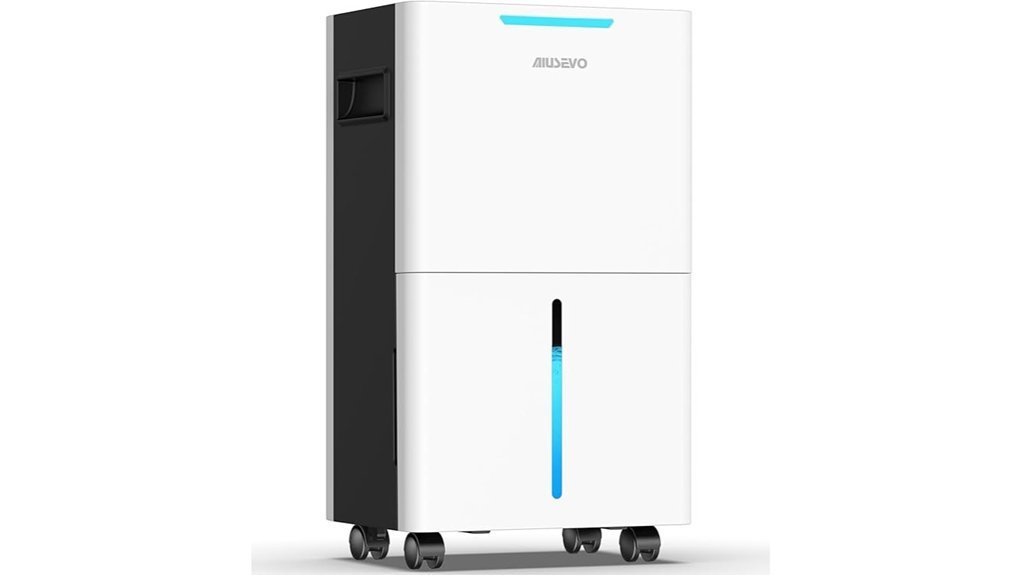
The Aiusevo AS280 dehumidifier is rated to remove up to 21 pints of moisture per day under warm, high-humidity test conditions and is marketed for spaces up to 1,500 sq. ft. It offers three modes: DEHU for normal humidity control, DRY for laundry support, and CONT for ongoing dehumidification. Automatic humidity control, a digital display, tank shutoff, and drainage options make it a flexible mid-capacity choice.
Why You’ll Like It: The three modes make it easy to switch between everyday humidity management, clothes-drying support, and continuous moisture removal.
Who Should Buy This: It works well for buyers who want one portable unit for basements, bedrooms, laundry rooms, bathrooms, and general home moisture control.
Who Should Avoid This: Skip it if you want Wi-Fi smart-home control or a much higher daily capacity for severe dampness.
Best For: Basements, bedrooms, laundry rooms, bathrooms, and medium-size living spaces.
Pros:
- 21-pint daily rating with automatic humidity control.
- DEHU, DRY, and CONT modes cover several common household use cases.
- Portable design and drainage options make it easier to use in different rooms.
Cons:
- 21 pints per day may be insufficient for severe or very large moisture problems.
- Tank emptying may be frequent if continuous drainage is not used.
- No Wi-Fi or voice-control advantage compared with the smart picks above.
GoGuess 1600 Sq.ft Dehumidifier with Drain Hose & Timer
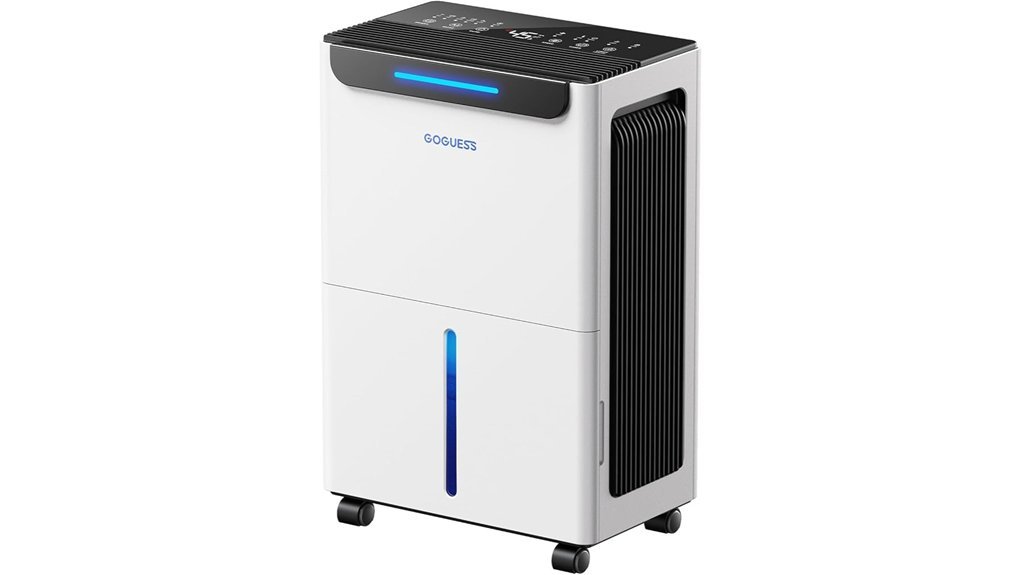
The GoGuess 1600 Sq.ft Dehumidifier is a 21-pint compressor model with adjustable humidity control from 30% to 80%, a digital display, three operating modes, a 24-hour timer, and continuous drainage support. The included drain hose and sleep-oriented mode make it a practical choice for bedrooms, offices, basements, and other rooms where you want automatic humidity management without constant tank checks.
Why You’ll Like It: It combines a real target-humidity range with a timer, multiple modes, and a drain hose, giving you more control over both when it runs and how water is removed.
Who Should Buy This: Choose it if you want a flexible 21-pint unit for bedrooms, offices, basements, garages, or living areas where continuous drainage is useful.
Who Should Avoid This: Skip it if your space needs a much higher-capacity 50-to-80-pint class dehumidifier or if you specifically want Wi-Fi app control.
Best For: Medium-to-large rooms that benefit from adjustable humidity control, timer scheduling, and drain-hose operation.
Pros:
- Adjustable humidity control from 30% to 80%.
- 21-pint daily rating with DEHU, Turbo, and Sleep modes.
- 24-hour timer and continuous drainage support with included drain hose.
Cons:
- 21-pint capacity may be too low for very wet or oversized basements.
- Tank size still matters if you do not use continuous drainage.
- No app or voice-control features like the Midea and Frigidaire smart picks.
Factors to Consider When Choosing a Dehumidifier With Humidistat
When choosing a dehumidifier with a humidistat, focus on more than the advertised square footage. The best fit depends on daily moisture-removal capacity, how damp the room actually is, room temperature, drainage setup, target humidity range, noise, and whether you need smart controls. A built-in humidistat is most useful when it lets the unit respond to measured relative humidity instead of running continuously without a target.
Before You Buy Checklist
- Measure your room: Use square footage as a starting point, not the only sizing rule.
- Judge the dampness: A mildly humid bedroom needs less capacity than a basement with condensation or persistent musty moisture.
- Check the pint rating: Compare daily moisture-removal ratings and remember they are measured under specified test conditions.
- Confirm humidity control: Look for adjustable or automatic target-humidity control, not just auto shutoff when the tank fills.
- Plan drainage: Choose a larger tank or continuous drain hose if you do not want frequent emptying.
- Think about noise: Bedrooms and offices benefit from quieter operation or a dedicated sleep mode.
- Plan filter care: A washable filter is convenient, but it still needs regular cleaning.
Dehumidification Capacity Requirements
Dehumidifier capacity is normally expressed as pints of water removed per 24 hours under standardized test conditions. A higher pint rating generally gives the unit more headroom for larger or wetter spaces, but room size alone does not tell the whole story. Temperature, starting humidity, air leakage, laundry activity, basement seepage, and how often doors open can all change the real workload. For a persistently damp basement, choose more capacity than you would for a mildly humid bedroom of similar size.
Coverage Area Considerations
Manufacturer coverage claims can be useful for quick comparison, but they are not measured the same way across every listing. Treat the advertised square footage as a rough guide and compare it with the unit’s pint rating, the moisture level in your room, and the conditions under which the capacity was measured. If you are choosing between two similar models for a damp basement, having some extra capacity is usually more useful than selecting a model that is only barely sized for the space.
Humidistat Range and Sensor Control
A true buyer advantage in this category is the ability to set or automatically maintain a target relative humidity. Look for adjustable humidity settings, intelligent humidistat wording, automatic humidity control, or a digital humidity display. Do not confuse a full-tank auto shutoff with a humidistat: full-tank protection stops the machine because the reservoir is full, while a humidistat responds to the moisture level in the air.
Energy Efficiency Ratings
Energy efficiency matters because dehumidifiers may run for many hours in damp weather. ENERGY STAR certified dehumidifiers are designed to remove moisture using less electricity than similarly sized conventional models. When detailed efficiency data is shown, the current energy-efficiency metric is based on how many liters of water are removed per kilowatt-hour under standardized testing. Also consider whether the unit can cycle around a target humidity level, because unnecessary runtime wastes energy.
Smart Features Availability
Wi-Fi connectivity, app control, voice-assistant support, programmable timers, and digital humidity displays can make a dehumidifier easier to manage. These features are most useful when the unit is in a basement, laundry room, or another area you do not check constantly. If you only need straightforward moisture control, prioritize the humidistat, capacity, drainage, and reliability before paying extra attention to smart-home features.
Noise Level Preferences
Noise matters most in bedrooms, offices, nurseries, and other quiet rooms. Compare dBA figures only when they refer to similar operating modes, because fan speed and compressor cycling can change the sound level. Thermoelectric mini dehumidifiers are often quieter but remove much less moisture than full-size compressor models. A sleep mode can be useful, but it may also reduce fan speed or moisture-removal performance.
Drainage Options Flexibility
Look for both manual tank collection and continuous drainage if the unit will run often. Continuous drainage is especially useful in basements, laundry rooms, and utility spaces where a hose can safely run downhill to a suitable drain. Check whether the hose is included, confirm the connection size, and make sure the hose route will not kink or create a trip hazard. Automatic shutoff is still important as protection when using the tank.
Portability and Design
If you plan to move the dehumidifier between rooms, check its weight, handles, caster wheels, footprint, and cord placement. Compact thermoelectric units are easier to carry, while larger compressor models provide much more moisture-removal capacity. For a unit that will stay in one basement location, drainage and capacity usually matter more than low weight.
Pro Tips for Better Dehumidifier Results
- Keep doors and windows closed while the unit runs so it is not constantly fighting outdoor humidity.
- Leave enough space around the intake and exhaust vents for proper airflow.
- Use continuous drainage in basements or laundry rooms if the tank fills too often.
- Clean the filter on the schedule recommended by the manufacturer.
- Use a separate hygrometer if you want to compare the room’s humidity reading with the dehumidifier’s built-in sensor.
- Address leaks, seepage, and ventilation problems instead of relying on a dehumidifier as the only moisture solution.
Safety and Maintenance Note
Always place your dehumidifier on a stable, level surface and keep the power cord away from standing water. Follow the manufacturer’s clearance, electrical, cleaning, and drainage instructions. Empty and clean the tank regularly when using manual collection, confirm the drain hose is secure when using continuous drainage, and clean the filter as directed. A dehumidifier can help manage excess indoor moisture, but it does not replace repairing leaks, seepage, poor ventilation, or hidden water damage.
Frequently Asked Questions
How Often Should I Clean My Dehumidifier’s Filter?
Check the filter regularly and follow the cleaning interval in the manufacturer’s manual. In dusty rooms or during heavy use, it may need attention more often. A clean filter helps maintain airflow and moisture-removal performance.
Can a Dehumidifier Help With Mold or Dust-Mite Conditions?
A dehumidifier can make the environment less favorable for mold growth and dust mites by reducing excess humidity, but it is not an air purifier and does not directly remove airborne particles. If you already have visible mold or a water leak, address the moisture source and cleanup problem directly.
What Size Dehumidifier Do I Need for My Space?
Start with the room’s square footage, then consider how damp it is, the temperature, and the unit’s daily pint rating. A mildly humid bedroom may need far less capacity than a basement with persistent condensation. When comparing models, prioritize moisture-removal capacity and actual room conditions rather than square footage alone.
Is It Safe to Run a Dehumidifier Continuously?
Many dehumidifiers are designed for long or continuous operation, especially when they have a humidistat and properly installed drainage. Follow the manufacturer’s instructions, keep the filter and drainage path maintained, and use a stable electrical setup. If the manual limits unattended or continuous use, follow that guidance.
How Do I Know When to Empty the Water Tank?
Most tank-style dehumidifiers have a full-tank indicator and automatic shutoff. Empty the tank when the indicator appears or when the unit stops because the reservoir is full. In very humid conditions, check the tank more often or consider continuous drainage if the model supports it.
What Humidity Level Should I Set My Dehumidifier To?
A common indoor target is around 30% to 50% relative humidity, with the exact setting depending on comfort, season, and room conditions. If a room feels damp or smells musty, start around the middle of that range and adjust gradually while watching for condensation or excessive dryness.
Is a Drain Hose Better Than a Water Tank?
A drain hose is usually more convenient when the unit runs frequently or sits in a basement, laundry room, or utility area. A tank works well for occasional use or when there is no suitable drain nearby. Continuous drainage reduces manual emptying, but the hose must be routed securely and according to the manufacturer’s instructions.
Final Recommendation
If you want a balanced smart dehumidifier for a medium room, start with the Midea Energy Star Dehumidifier or Frigidaire 22-Pint Portable Dehumidifier. For heavier basement or large-space moisture, the Waykar 80 Pints Energy Star Dehumidifier has the highest verified daily moisture-removal rating in this roundup. For a compact option with real humidity control, the AEOCKY Small Dehumidifier or NovaLivin Auto Humidity Control Dehumidifier makes more sense for smaller spaces. If continuous drainage is a priority, compare VEAGASO, AEOCKY, Aiusevo, and GoGuess based on the capacity your room actually needs.
Conclusion
The best dehumidifier with a humidistat is the one that matches your actual moisture load, not just the largest square-foot number on a product page. Look for adjustable or automatic humidity control, enough pint-per-day capacity for the room, a practical drainage setup, and a noise level you can live with. Keeping indoor relative humidity in a moderate range can help control excess moisture and reduce conditions that encourage mold growth, but leaks and water intrusion still need to be repaired at the source. Choose the model that fits your room, drainage plan, and daily moisture problem rather than paying for capacity or smart features you do not need.