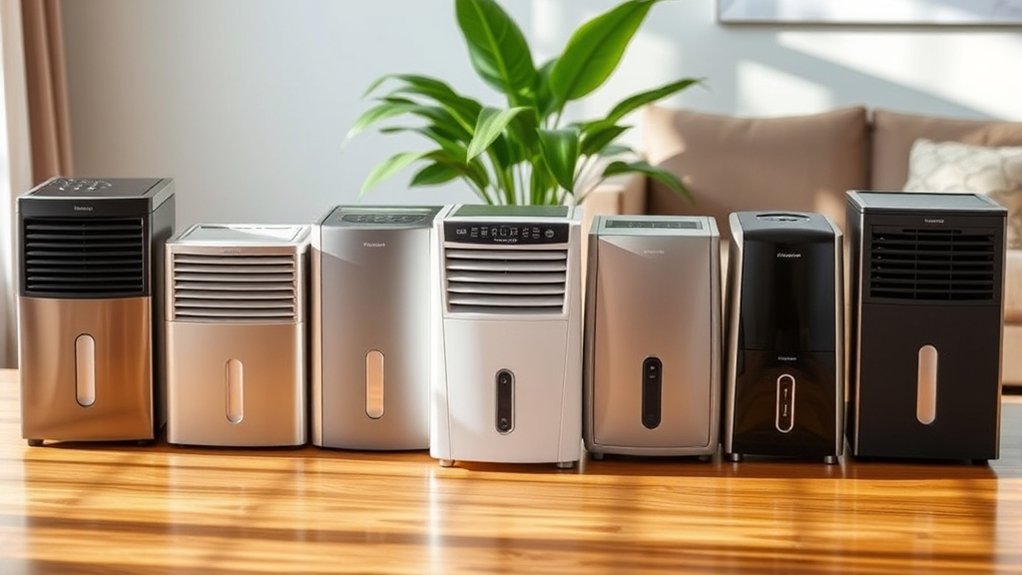
For keeping your boat dry in the UK in 2026, choose a dehumidifier for boat UK conditions by matching the moisture-control method to the space, temperature, and electrical setup. A small cruiser, narrowboat, sailboat cabin, locker, or heads compartment may need a different solution. Tank-style electric dehumidifiers actively collect water, marine air dryers warm and circulate air to reduce condensation, and rechargeable or refillable absorbers are better suited to lockers and enclosed storage.
This guide compares the Eva-Dry EDV-365, Eva-Dry EDV-1100, Pro Breeze Mini, DryTote rechargeable pack, Ironwood Pacific Drywave 1000, Dri-Z-Air, Davis Air-Dryr 500, and Afloia mini unit. The products solve different moisture problems, so the best pick depends on whether you are protecting a berth, cupboard, heads compartment, electronics box, or compact cabin.
Quick Picks for Boat Moisture Control
- Eva-Dry EDV-1100 Whisper-Quiet 16 OZ Dehumidifier: Best quiet active pick for very small cabins; an optional 12V DC cord is available.
- DryTote Rechargeable Desiccant Pack, 100g Yellow: Best no-power pick for gear bins, lockers, and electronics cases.
- Dri Z Air Dri-Z-Air DZA-U Pot: Best refillable boat-labelled absorber for secure storage areas.
- Eva-Dry EDV-365 Renewable Dehumidifier for Small Spaces: Best renewable silica-gel system for lockers and enclosed storage; the recharge base is 110-120V.
- Afloia Rechargeable Mini Dehumidifier with Heating Base: Best tiny cordless absorber for lockers; verify the heating-base input before UK use.
- Pro Breeze Mini Dehumidifier for 250 sq ft: Best higher-capacity compact Peltier pick for a small, warm cabin.
- Davis Air-Dryr 500 Marine Dehumidifier for Boats/RVs: Best compact marine air dryer for boats with a compatible 110-120V supply.
- Ironwood Pacific Drywave 1000 Air Dryer: Best cool-weather air dryer for boats with a compatible 110-120V supply.
Boat Dehumidifier Comparison Table
| Product | Best Use | Power Type | Coverage | Moisture-Control Detail | Amazon Check |
|---|---|---|---|---|---|
| Eva-Dry EDV-1100 Whisper-Quiet 16 OZ Dehumidifier | Best quiet plug-in pick for very small cabins | 110-120V AC; optional 12V DC power cord sold separately | Up to 1,100 cubic feet | 22W; about 33 dB; internal tank with auto shut-off | Check Price on Amazon |
| DryTote Rechargeable Desiccant Pack, 100g Yellow | Best reusable desiccant pack for gear bins and electronics | No power while absorbing; microwave or low-oven recharge | Enclosed spaces up to about 200 gallons per 100g pack | Rechargeable silica-gel pack with colour-change indicator | Check Price on Amazon |
| Dri Z Air Dri-Z-Air DZA-U Pot | Best refillable moisture absorber pot | No power required | Tight cabins, lockers, closets, and storage areas | 13 oz moisture absorber with refill crystals | Check Price on Amazon |
| Eva-Dry EDV-365 Renewable Dehumidifier for Small Spaces | Best passive rechargeable pick for small lockers and compact cabins | Cordless while absorbing; 110-120V blower recharge base | Up to 400 cubic feet | Up to 7 oz capacity per cylinder; colour-change indicator | Check Price on Amazon |
| Afloia Rechargeable Mini Dehumidifier with Heating Base | Best cordless mini pick for very small spaces | Cordless while absorbing; 50W heating base for renewal; verify base input | Up to 54 sq. ft. | Listing states up to 4 oz/100 ml under warm, humid test conditions | Check Price on Amazon |
| Pro Breeze Mini Dehumidifier for 250 sq ft | Best compact electric model for lightly damp cabins | 40W Peltier electric; verify the exact adapter supplied with this ASIN | 2,200 cubic feet; current manufacturer guide lists about 161-215 sq. ft. | Up to 18 oz per day; 52 oz tank; auto shut-off | Check Current Amazon Availability |
| Davis Air-Dryr 500 Marine Dehumidifier for Boats/RVs | Best marine-focused air dryer for quiet continuous use | North American 110/120V version; 70W heating element | Up to 500 cubic feet | Silent natural-convection air warming; no water tank | Check Price on Amazon |
| Ironwood Pacific Drywave 1000 Air Dryer | Best gentle air dryer for cool, enclosed cabins | 110-120V AC, 120W electric air warmer | Up to 1,000 cubic feet | Natural-convection warming; thermal cut-off; cool-climate use | Check Price on Amazon |
Eva-Dry EDV-1100 Whisper-Quiet 16 OZ Dehumidifier
Best Active Small-Cabin Pick
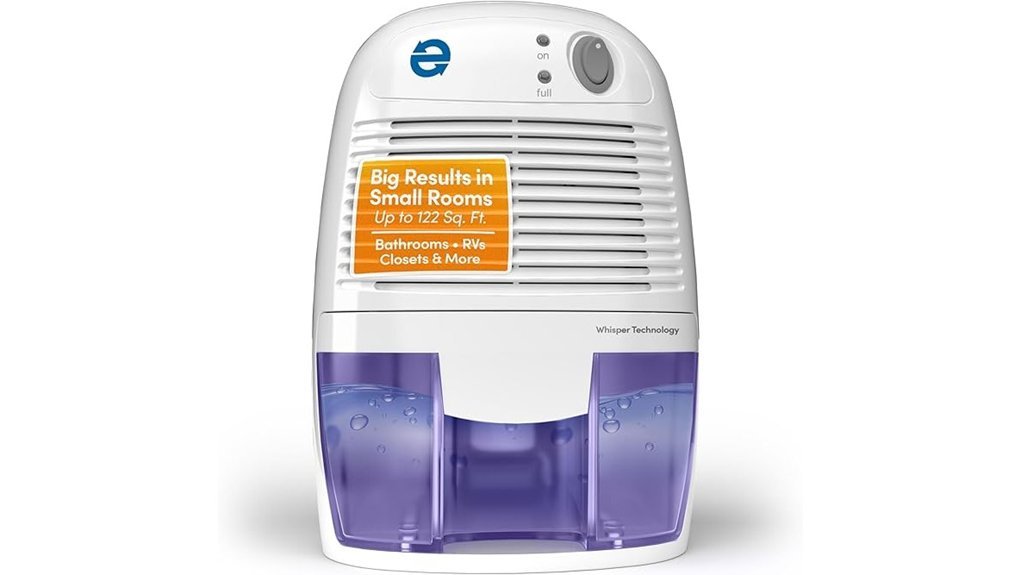
Eva-Dry’s EDV-1100 is the most flexible active dehumidifier in this list for a very small cabin, berth, galley corner, or similar boat space. The manufacturer currently rates it for up to 1,100 cubic feet, with approximately 33 dB operation, 22W power use, an internal reservoir, and automatic shut-off when the tank is full.
The standard AC version is rated for 110-120V, so it is not a direct 230V UK plug-in appliance. However, Eva-Dry also offers an optional EDV-12V power cord that can run the unit from a standard 12V DC cigarette-lighter-style outlet, and the manufacturer specifically mentions boats among the intended 12V use cases. The optional cord is separate, so check your boat’s socket rating, wiring, fusing, and battery capacity before using it.
Why You’ll Like It: It gives you active water collection in a compact, quiet package, and the optional 12V power route can make it more practical on boats than a mains-only mini dehumidifier.
Best For: Boat owners who want active moisture collection in a very small cabin and can provide either compatible 110-120V AC or a properly supported 12V DC setup with the optional cord.
Who Should Skip It: Skip it for heavy condensation, leaks, large saloons, or any setup where you cannot empty the reservoir or safely support its electrical load.
Pros:
- Quiet operation, useful for sleeping areas and small berths.
- Compact and lightweight design fits small spaces and is easy to move.
- Auto shut-off when the tank is full adds convenience and helps prevent overflow.
Cons:
- Only suitable for very small areas.
- The internal reservoir still needs manual emptying after the full-tank shut-off.
- Like other compact thermoelectric units, it is a small-space solution rather than a heavy-duty winter drying system.
Bottom Line: Pick the EDV-1100 when compact active water collection matters and your boat can safely support its 110-120V AC input or the optional 12V DC accessory.
DryTote Rechargeable Desiccant Pack, 100g Yellow
Best for Gear Bins and Electronics

DryTote is one of the cleanest relevance matches for boat lockers and gear storage. The manufacturer specifically lists boats and RVs, and rates each 100g rechargeable silica-gel pack for enclosed spaces up to about 200 gallons. That makes it a targeted protector for camera boxes, document cases, tool kits, electronics bags, lockers, and storage bins rather than a full-cabin dehumidifier.
A colour-change indicator shows when the pack is saturated. The manufacturer says it can be renewed in a microwave for about three minutes at the specified power level or in a low oven, then reused after cooling. This is useful when you want moisture control around valuables without a powered appliance or liquid tank inside the locker.
Why You’ll Like It: It targets the items that often suffer first on a boat: tools, chargers, spare parts, paperwork, cameras, and emergency gear. It is a better fit for sealed boxes than for open cabin air.
Best For: Boat owners and anyone needing a compact, rechargeable moisture-control solution for lockers, totes, and storage bins.
Who Should Skip It: Skip it if you are trying to dry cabin air, upholstery, bedding, or a whole saloon. This is a container-level moisture-control product.
Pros:
- Effective moisture absorption helps protect documents, photos, electronics, clothing, and other valuables.
- Rechargeable design makes it convenient for repeated use.
- Lightweight, portable design fits gear bins, cases, and lockers.
Cons:
- Best suited for moisture control, not for sealing items from water exposure or leaks.
- Requires monitoring the colour-changing dot and periodic recharging to stay effective.
- One 100g pack may not be enough for highly damp or poorly sealed storage areas.
Bottom Line: Use DryTote for enclosed lockers, cases, and valuables where a reusable, no-power absorber makes more sense than a cabin dehumidifier.
Dri Z Air Dri-Z-Air DZA-U Pot
Best Refillable Boat Absorber
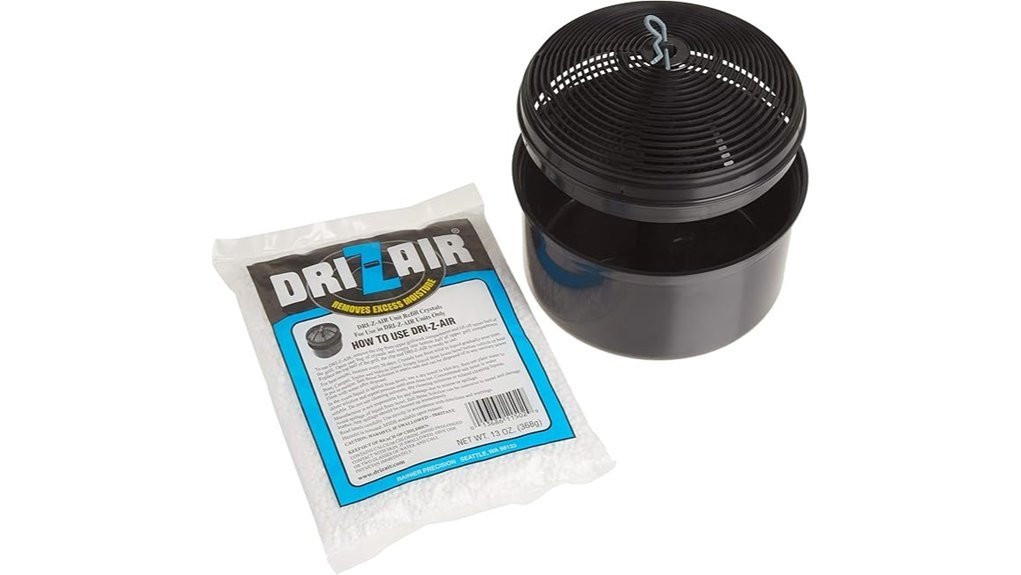
The Dri-Z-Air DZA-U Pot is a straightforward refillable absorber for small storage zones. Dri-Z-Air explicitly lists boats and RVs among its intended environments, which makes this a better category fit than a generic household hanging pouch. The compact 13 oz unit uses replaceable crystals and needs no electricity.
Use it in a locker, cupboard, bedding-storage zone, or other place where it can remain upright and secure. Because absorbed moisture collects in the container, placement matters on a boat. Keep it where movement, tipping, or accidental contact is unlikely, and follow the refill and disposal directions on the product.
Why You’ll Like It: It is easy to understand, easy to place, and useful for seasonal storage. If you prefer refill crystals over single-use hanging bags, this pot gives you a more structured storage solution.
Best For: Boat owners who want a refillable, electricity-free absorber for a small storage area where the pot can be kept upright and secure.
Who Should Skip It: Skip it if you do not want to handle refill crystals or if you need active electric drying for a whole cabin.
Pros:
- Compact size fits easily in tight cabins, lockers, or storage areas.
- Uses refill crystals and does not require electricity.
- Good fit for storage lay-up, wardrobes, and bedding areas.
Cons:
- Requires periodic crystal refills to keep working.
- Low-tech design may not suit users wanting an electric dehumidifier.
- Best for enclosed storage spaces rather than large open areas.
Bottom Line: Choose Dri-Z-Air when you want a simple boat-labelled refillable absorber for secure locker or seasonal-storage use.
Eva-Dry EDV-365 Renewable Dehumidifier for Small Spaces
Best Renewable Locker System
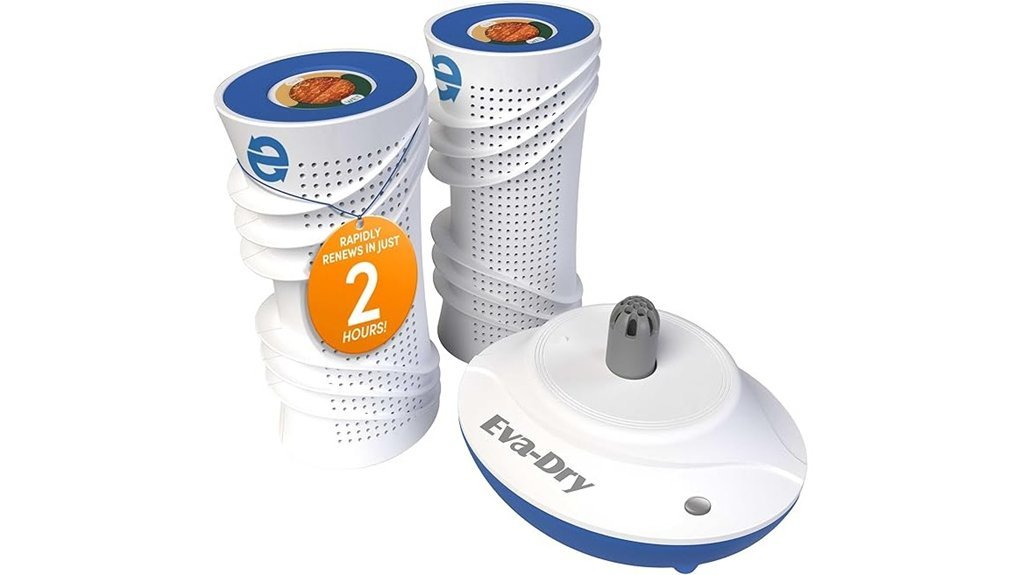
The Eva-Dry EDV-365 is a strong locker and enclosed-storage pick because the silica-gel cylinders work without a cord while they are absorbing moisture. Eva-Dry rates the system for spaces up to 400 cubic feet and lists capacity up to 7 oz per cylinder. The manufacturer specifically includes boats, RVs, travel trailers, safes, and seasonal storage among its common uses.
The colour-changing beads show when a cylinder needs renewal. The dedicated blower base can recharge a cylinder in about two hours, but the current base is rated for 110-120V. That matters for UK buyers: the cylinders are cordless in use, but you still need a compatible power source for recharging. Do not connect the recharge base directly to 230V unless the exact electrical setup is approved and correctly rated.
Why You’ll Like It: It gives you reusable, silent moisture control without leaving a powered appliance inside the locker. Use it around tools, documents, spare clothing, or other enclosed storage where a tank-style dehumidifier would be oversized.
Best For: Boat owners who need rechargeable moisture control for lockers, cupboards, safes, and other enclosed storage and have access to a compatible 110-120V recharge point.
Who Should Skip It: Skip it if your cabin has standing condensation, wet upholstery, or a large open saloon. A small passive unit cannot replace a stronger electric dehumidifier or heated air dryer in those conditions.
Pros:
- Silica-gel cylinders provide targeted moisture absorption for small spaces.
- No electricity is required while it is absorbing moisture inside the boat.
- Reusable design makes it suitable for repeated locker and storage use.
Cons:
- Best suited only for small enclosed areas, not larger cabins.
- Requires periodic manual renewal when the indicator shows saturation.
- Capacity is limited, so it may need frequent attention in very damp environments.
Bottom Line: Choose the EDV-365 for lockers and enclosed storage where quiet, cordless moisture control matters more than fast water removal, but plan for its 110-120V recharge base.
Afloia Rechargeable Mini Dehumidifier with Heating Base
Best Tiny Cordless Pick
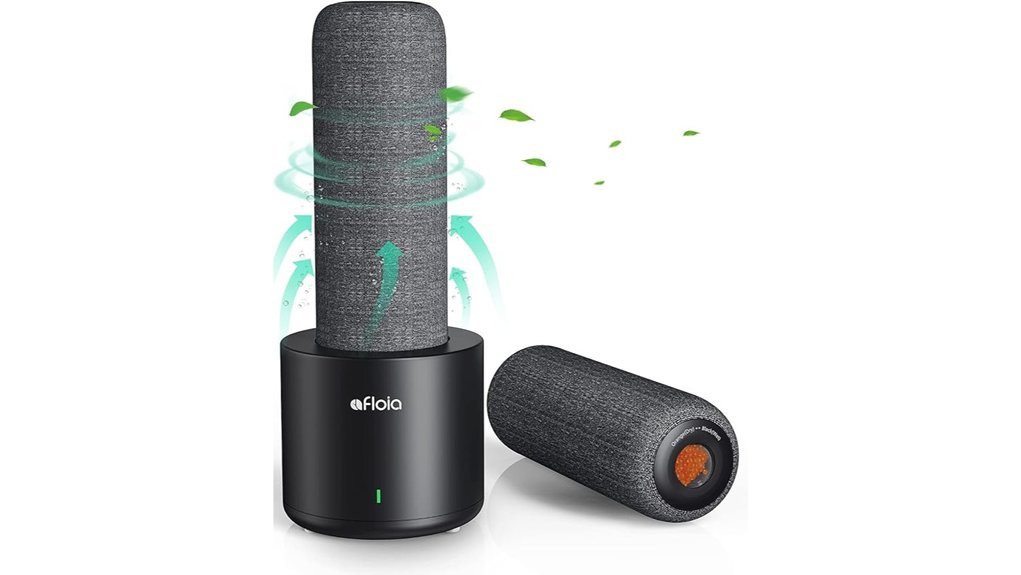
The Afloia Mini is a compact cordless absorber for very small boat spaces. The linked listing says it is intended for areas up to 54 sq. ft. and specifically includes boats and RVs among its example uses. Only the heating base is wired, so the cylinder can sit in a locker or cabinet without a power cable while it absorbs moisture.
Amazon states up to 4 oz/100 ml of moisture removal under warm, humid test conditions and lists a 50W heating base for renewal. The exact input voltage of the base was not clearly verified in the sources checked, so UK buyers should confirm the rating label and plug type before ordering. Treat it as a tiny-zone absorber, not as a substitute for active cabin drying.
Why You’ll Like It: It is small, clean-looking, and easy to move between lockers. It is especially useful if you want reusable moisture control without crystals, bags, liquids, or a power cord running through the compartment while it absorbs moisture.
Best For: Boat lockers, cupboards, and other very small spaces where cordless placement matters and you can verify a compatible heating-base input.
Who Should Skip It: Skip it if you need to dry a full cabin, manage winter lay-up, or leave one device running continuously without recharge breaks.
Pros:
- Cordless and compact cylinder design with 360° air inlet for small spaces.
- Renewable silica gel beads with a simple heating-base recharge process.
- No tank water to spill inside a locker or cupboard.
Cons:
- Only effective for very small areas up to 54 sq. ft.
- Takes time to renew, which may be inconvenient if you need continuous use.
- Heating base voltage and plug type must be checked before UK boat use.
Bottom Line: Choose Afloia for tiny lockers and cupboards where cordless placement matters, but verify the 50W heating base’s exact UK electrical compatibility first.
Pro Breeze Mini Dehumidifier for 250 sq ft
Best Higher-Capacity Peltier Pick
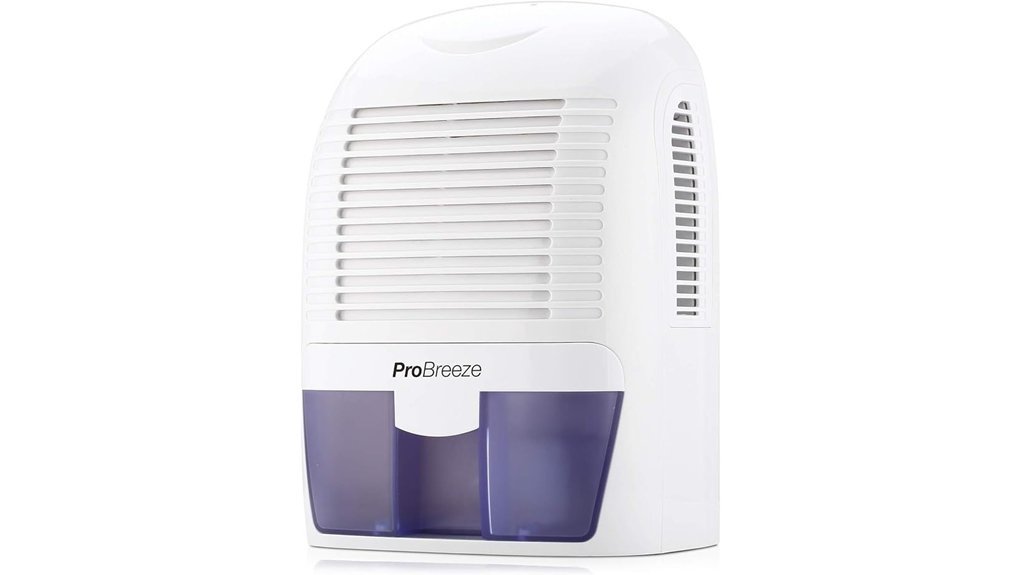
The Pro Breeze Mini is the higher-capacity Peltier option in this list for a small, warm cabin or heads compartment. The linked Amazon listing describes up to 18 oz of moisture removal per day and a 52 oz tank. Pro Breeze’s current 2,200-cubic-foot version lists a maximum room guide of about 161 to 215 sq. ft., 40 dBA noise, and 100-240V input, although the Amazon title still uses a 250 sq. ft. marketing figure.
Auto shut-off and a tank indicator help reduce overflow risk, and the compact body is easy to move. Because exact regional adapters and product revisions can differ, UK buyers should verify the input label and plug supplied with the exact ASIN before ordering. The manufacturer’s current US page also shows this version as sold out, while the Amazon listing may route buyers to other sellers, so check current availability rather than assuming a direct offer is present.
Why You’ll Like It: It combines a larger tank with stronger stated extraction than the smaller electric pick, making it easier to use when a compact cabin has persistent light condensation and the temperature is suitable for Peltier operation.
Best For: Small, lightly damp, reasonably warm cabins where you want a compact tank-style dehumidifier and can verify the exact electrical version and current seller availability.
Who Should Skip It: Skip it for cold winter lay-up, severe moisture, leaks, saturated furnishings, or if the linked ASIN has no suitable current seller for your location.
Pros:
- Offers stronger active moisture removal than passive absorbers.
- Quiet Peltier operation suits small cabins and sleeping areas.
- Auto shut-off with a tank alert helps reduce overflow risk.
Cons:
- Works best in warmer conditions and may slow down in cold cabins.
- Limited capacity makes it better for light dampness, not heavy moisture problems.
- Still needs regular tank emptying during damp periods.
Bottom Line: Choose Pro Breeze only if the exact linked version is currently available to you and its input rating matches your boat; it is best used as a compact warm-cabin dehumidifier, not a cold-weather storage dryer.
Davis Air-Dryr 500 Marine Dehumidifier for Boats/RVs
Best Compact Marine Air Dryer
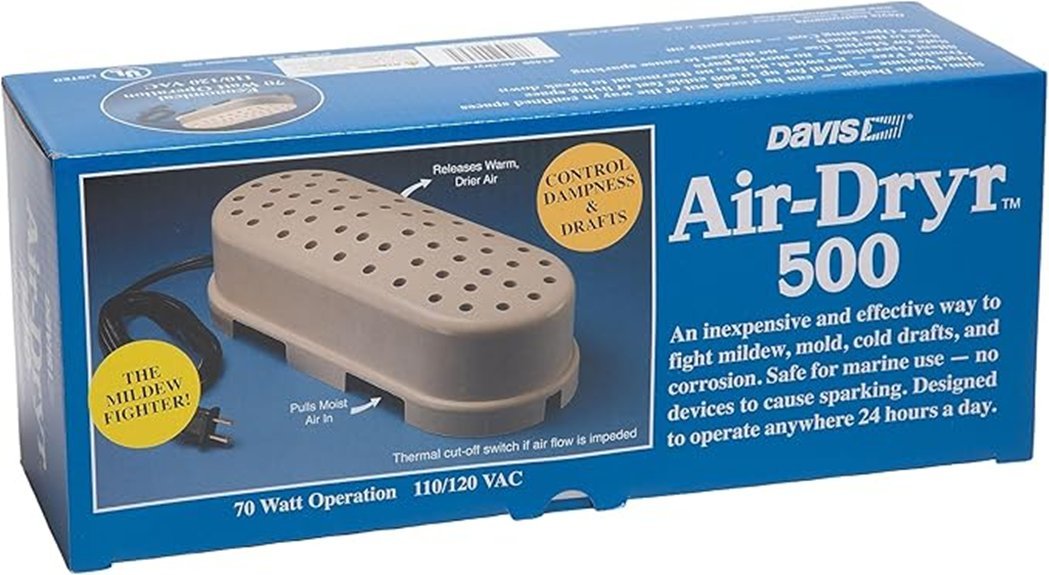
Davis’s Air-Dryr 500 is one of the strongest marine-use matches in this roundup. It is not a water-extracting dehumidifier. Davis explains that it draws in moist air, warms it with a 70W heating element, and uses natural convection to help keep the air above the dew point. The manufacturer rates it for enclosed spaces up to 500 cubic feet and specifically says it is safe for marine use.
The slim polycarbonate housing, silent operation, and no-fan design suit compact storage areas and cabins where background condensation control is the goal. Davis describes the unit as safe to the touch and designed for 24-hour operation. The North American version is intended for 110/120V power, so UK buyers must confirm a compatible onboard supply before use. Because it does not collect water, monitor actual condensation and humidity rather than judging performance by tank volume.
Why You’ll Like It: It is specifically designed for marine-style condensation control, runs silently with no fan, and does not need a drip pan or tank emptying.
Best For: Compact boat spaces up to 500 cubic feet where quiet, tank-free condensation control is useful and a compatible 110/120V supply is available.
Who Should Skip It: Skip it if you want a tank, a drain hose, digital humidity controls, or compressor-level moisture extraction.
Pros:
- Silent, continuous operation suits cabins and sleeping areas.
- Slim, lightweight design fits tight spaces.
- Manufacturer describes it as safe to the touch and safe for marine use.
Cons:
- Coverage is cubic feet, not square feet, so it suits compact areas best.
- Does not collect water in a tank.
- Limited moisture-control power compared with larger electric dehumidifiers.
Bottom Line: Choose the Davis Air-Dryr 500 for quiet, purpose-built marine condensation control in a compact space, but only with a compatible 110/120V electrical supply.
Ironwood Pacific Drywave 1000 Air Dryer
Best Cool-Weather Air Dryer
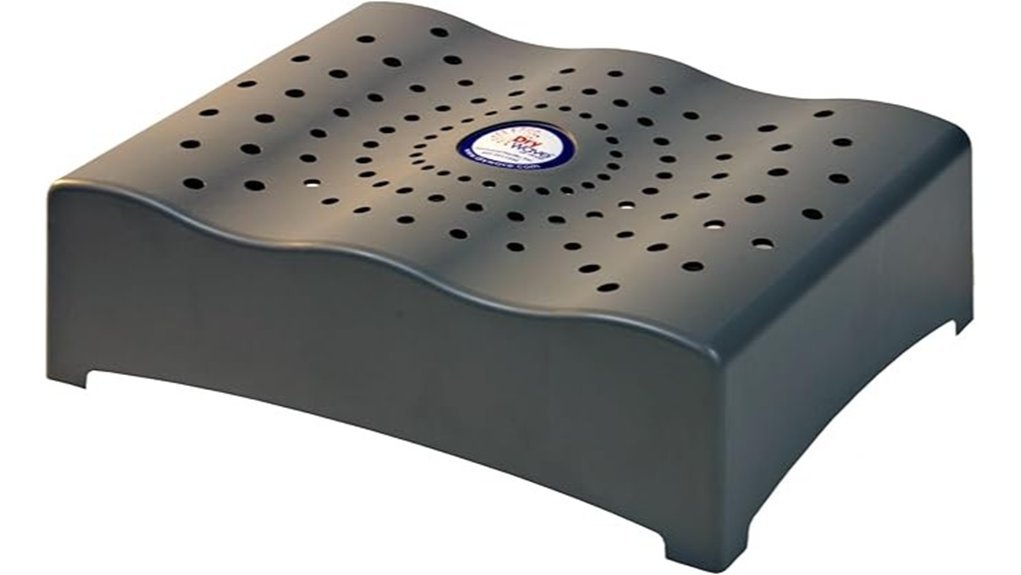
The Ironwood Pacific Drywave 1000 is a purpose-built boat air dryer for cool, damp storage conditions. It does not extract water into a tank. Instead, it uses a 120W heating element and natural convection to warm the air, helping keep surfaces above the dew point so condensation is less likely to form. The manufacturer rates it for enclosed spaces up to 1,000 cubic feet and says it is most efficient in cool conditions.
The key UK limitation is electrical: the Drywave is designed for a standard 110-120V AC outlet. It must not be connected directly to UK 230V mains. Placement also matters. Ironwood says to keep at least 24 inches clear around the sides and top, use it on a flat, level, dry surface, and avoid blankets, long carpet, wet surfaces, and locations where it could fall into water. The unit can become hot during operation and includes a thermal cut-off.
Why You’ll Like It: It is designed specifically for background condensation control on boats and has no tank, fan, or routine water-emptying chore.
Best For: Cool-weather boat storage where you have a correctly supplied 110-120V AC circuit and enough clear, dry placement space around the unit.
Who Should Skip It: Skip it if you need visible water collection, a humidity target, or fast drying after a leak.
Pros:
- Purpose-built for boats and cool, moist enclosed spaces up to 1,000 cubic feet.
- Natural convection provides gentle, even air warming without a water tank.
- Thermal cut-off switch adds an important safety feature for enclosed-space use.
Cons:
- Requires 110-120V AC, so it is not a direct plug-in match for standard UK 230V mains.
- Does not collect water in a tank, so you need to monitor condensation and humidity yourself.
- Needs substantial clear space around the unit and can become hot during operation.
Bottom Line: Choose the Drywave 1000 for cool-weather, tank-free condensation control only when your boat has a compatible 110-120V supply and safe placement space.
Factors to Consider When Choosing a Dehumidifier for Boat UK
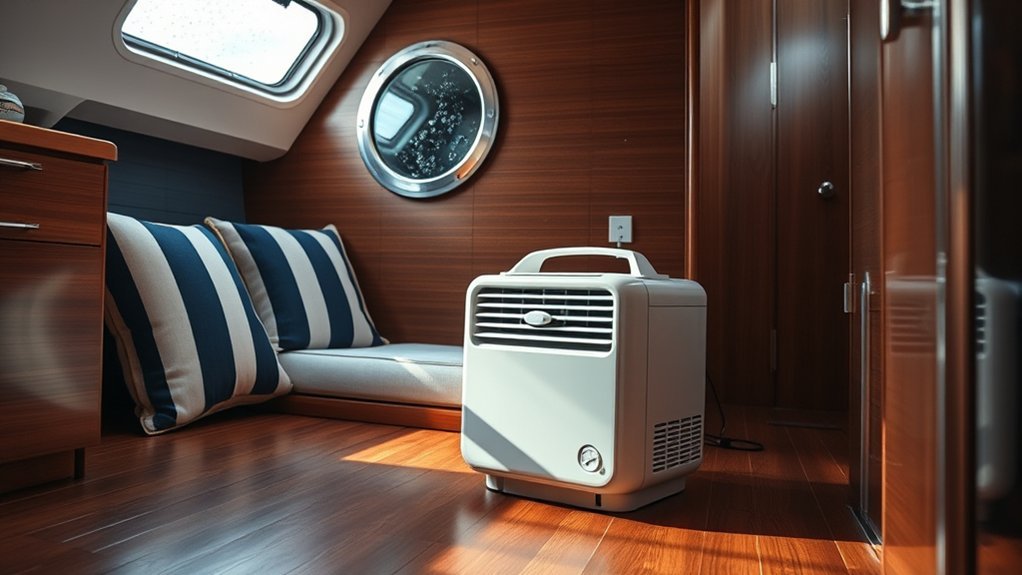
When you choose a dehumidifier for your boat in the UK, start with the moisture problem, then check cabin or locker volume, temperature, power source, voltage, placement, and maintenance. A product that is excellent for a sealed gear box may be too weak for a berth, while a boat air dryer may control condensation without ever collecting water. For UK buyers, electrical compatibility is a first-step filter, not a detail to check after purchase.
Cabin size
Locker size
Shore power
UK plug type
Voltage
12V DC option
Wattage
Tank size
Noise level
Refill or recharge needs
Spill risk
Winter storage plan
Moisture Removal Capacity
For a tank-style dehumidifier for your boat, check the stated extraction rate in ounces, millilitres, or litres per day, but remember that small thermoelectric models are normally tested in warm, humid conditions. Real-world output can fall as the cabin gets colder or drier. Rechargeable desiccants use a different metric, such as enclosed-space coverage or absorbent capacity, while air dryers do not have a litres-per-day extraction figure because they control condensation by warming and circulating air rather than collecting water.
Confirm the manufacturer’s cubic-foot or square-foot coverage and compare it with the zone you actually want to protect. Do not treat a locker-rated absorber as a full-cabin solution. For prolonged storage, check whether the product is designed for continuous use and whether its placement rules can be followed safely. Also compare tank size, refill or recharge method, indicator system, and auto shut-off so maintenance fits how often you visit the boat.
Power Source Options
Power source matters because UK shore power is commonly 230V while several products in this roundup are North American 110-120V versions. A plug adapter only changes the physical connector; it does not change voltage. Check the rating label on the exact product, the boat’s shore-power and inverter arrangement, RCD protection, cable routing, fusing, and the manual before connecting any powered moisture-control device.
A 12V DC option can be useful on a boat when the product is specifically designed for it. The Eva-Dry EDV-1100, for example, has an optional manufacturer 12V cord. Even then, confirm socket rating, battery-bank capacity, cable size, and fusing. For lockers and cases, rechargeable silica-gel units and refillable absorbers avoid cabin power while they are working, although their recharge method or liquid collection may still require planning.
Space Coverage Range
Once you have sorted out the power source, the next thing to check is how much space the dehumidifier can actually handle. You need a unit that matches your boat’s cubic footage, not just its floor area. Small models may suit cabins, lockers, or storage boxes, while larger air dryers can help with broader cabin areas. If you choose one that is too small, it won’t keep up with damp marine air. If you choose one that is too large or power-hungry, you may waste energy.
Think in zones. Use a rechargeable cylinder or desiccant pack for a locker or electronics case, a secure refillable absorber for a stable storage area, and an active mini dehumidifier or compatible marine air dryer for a cabin. Do not use a moisture product on a moving boat when its instructions prohibit vehicle use. For continuous operation, follow the manufacturer’s placement, temperature, and electrical requirements rather than relying on size alone.
Noise Level Considerations
On a boat, noise matters just as much as moisture removal, because a loud dehumidifier can quickly disturb sleep and relaxation in tight quarters. Look for a quiet unit if you plan to run it near a berth. Quiet Peltier models, passive absorbers, and air dryers can be easier to live with than bigger compressor units in a small cabin.
If you plan to run the unit continuously, low noise becomes even more important, because constant humming can wear on your patience during long stays onboard. Always check the rated sound level before you buy, and be wary of noisy models in a small marine living space.
Safety And Durability
When you’re choosing a dehumidifier for a boat in the UK, safety and durability should come first. A confined cabin may have damp surfaces, limited placement options, and tight cable routes. Follow the exact product manual for clearance, surface, temperature, and electrical requirements. A marine-use statement is useful, but it does not override voltage compatibility or placement rules. For example, some air dryers need clear space around the housing and must be kept away from wet surfaces even though they are marketed for boats.
For durability, look for tough housing, simple controls, and materials that can tolerate damp storage conditions. Boats rarely offer much spare space, so a compact, lightweight design is useful when you need to move the unit between the cabin, heads, lockers, and winter storage area.
Ease Of Maintenance
Ease of maintenance matters on a boat, where space is tight and you may not want extra chores. Check whether the dehumidifier has a water tank, because you’ll need to empty it regularly to keep it working well and stop overflow. An auto shut-off feature helps a lot, since it turns the unit off when the tank is full, so you do not have to watch it constantly.
If you want less day-to-day upkeep, consider a rechargeable desiccant or refillable absorber for small zones. Recharge methods differ: some use a dedicated heating base, some can be renewed in a microwave or low oven, and refillable pots need replacement crystals. For liquid-forming absorbers, secure upright placement is essential. Choose a method you can service safely and predictably during lay-up.
Winter Storage and Mould Control
UK boat owners often need moisture control most during winter lay-up, when the cabin stays closed, air circulation drops, and soft furnishings hold damp air. A dehumidifier can help, but it works best as part of a routine. Remove wet ropes, towels, and cushions where possible. Lift mattresses so air can move around them. Open internal lockers slightly if safe, and keep vents clear so moisture is not trapped in one corner.
For a boat left unattended, rechargeable desiccants and secure manufacturer-approved absorbers can protect small storage zones, but they still need checking. A purpose-built air dryer may suit cool-weather storage when the voltage and clearance requirements are met, while a compact tank dehumidifier can actively collect water in warmer conditions. Whichever route you choose, inspect the cabin regularly for leaks, window condensation, mildew on fabrics, and damp smells in hidden storage areas.
Tank Dehumidifier vs Air Dryer vs Passive Absorber
A tank-style dehumidifier actively removes water from the air and lets you see the collected moisture, but it needs suitable temperature, safe power, and tank maintenance. An air dryer is different: it warms and circulates air to reduce condensation without extracting water into a tank. A passive or rechargeable absorber is best for small enclosed zones such as lockers, drawers, tool boxes, and sealed cases.
For many boats, the best setup is zone-based rather than one oversized product. You might use a compatible air dryer or active dehumidifier in the cabin, a rechargeable desiccant in the electronics box, and a secure refillable pot in seasonal storage. This approach matches the method to the moisture problem instead of expecting one device to solve every damp area.
Frequently Asked Questions
How often should I empty a boat dehumidifier in winter?
Check a tank-style boat dehumidifier daily at first. Emptying frequency depends on tank size, cabin temperature, and actual moisture load, so use the full-tank indicator or auto shut-off rather than assuming a fixed schedule.
Can dehumidifiers run safely on a boat’s battery overnight?
Only if the dehumidifier is designed for the available DC supply or is powered through a correctly sized inverter, and the battery bank, cabling, fusing, and ventilation are suitable for the load. Some models offer dedicated 12V accessories. For unattended use, follow the product manual and your boat’s electrical safety guidance.
Are 120V air dryers suitable for UK boats?
Only on a compatible 110-120V onboard circuit or with a correctly rated, approved electrical setup. A plug adapter alone does not convert UK 230V mains to 120V. Never connect a 120V-only appliance directly to 230V.
Which moisture-control product works best for salt air and marine humidity?
For a small powered cabin, a compact electric dehumidifier can collect water when temperature conditions suit it. For cool-weather storage, a purpose-built marine air dryer can reduce condensation without a tank if the voltage is compatible. For lockers and sealed gear containers, rechargeable desiccants or a secure refillable absorber are usually a better fit.
Do boat dehumidifiers prevent mould in closed cabins?
They can reduce mould risk by controlling condensation and humidity, but they do not fix leaks or replace ventilation, cleaning, and dry fabric storage. Check hidden lockers, bedding, and window condensation regularly.
Are rechargeable dehumidifiers better than electric models for boats?
Rechargeable desiccant units are useful for lockers, cupboards, safes, and small storage zones because they work without cabin power while absorbing. Electric tank-style models remove moisture actively and are better suited to small cabins when temperature and power conditions are suitable.
Do passive moisture absorbers work on boats?
Yes, when the manufacturer permits boat or vehicle use and the product can be placed securely. Use them mainly in lockers, storage bins, and other small enclosed zones. Avoid products whose instructions say they are not for moving vehicles, and do not rely on passive absorbers for a heavily damp cabin.
Should I buy one large unit or several small moisture-control products?
Many boats benefit from zone-based moisture control. A small cabin may use an electric dehumidifier or compatible air dryer, while lockers, bedding storage, tool boxes, and electronics cases can use rechargeable desiccants or secure passive absorbers.
Final Verdict
Choosing the right dehumidifier for a UK boat starts with matching the moisture-control method to the problem. For a small powered cabin, the Eva-Dry EDV-1100 stands out because it actively collects water and has an optional manufacturer 12V power cord. For lockers and gear storage, DryTote, Dri-Z-Air, EDV-365, and Afloia avoid a powered appliance in the compartment while they absorb moisture. For cool-weather tank-free condensation control, the Davis Air-Dryr 500 and Ironwood Pacific Drywave are purpose-built boat air dryers, but their North American electrical requirements make voltage compatibility essential.
The best choice is the one that matches your space, temperature, power access, maintenance routine, voltage, and placement limits. Continue fixing leaks, ventilating when practical, drying fabrics, and checking hidden storage because no dehumidifier or air dryer can compensate for standing water or an unresolved leak.