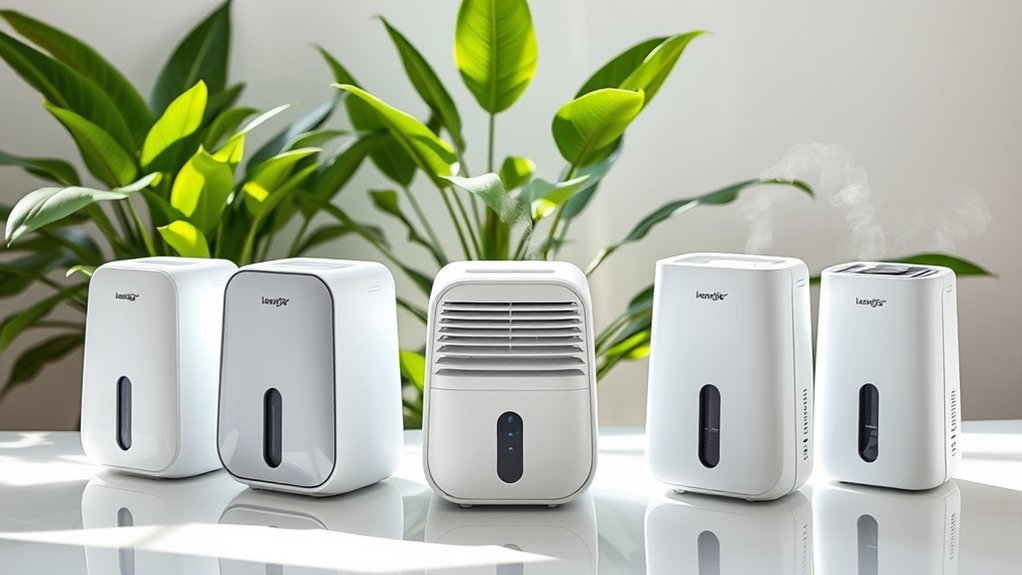
If you need a garage dehumidifier in Canada, start with one question: is the garage heated enough for a compressor dehumidifier to work properly? The five models below suit damp, enclosed garages, but their real moisture-removal rate will fall as the temperature drops. For most heated or insulated garages, the Vellgoo 4,500 Sq. Ft. model offers the best balance of capacity and efficiency, while the Waykar 150-pint model is the strongest option when you need a built-in pump. The Yaufey 5,000 Sq. Ft. model is another practical large-space choice, and the two Tehanld units suit smaller budgets or more moderate moisture loads.
Important for Canadian garages: Portable compressor dehumidifiers can lose performance or frost up in cool spaces. Check the manufacturer’s minimum operating temperature before buying, especially if your garage regularly falls below 18°C.
Marketplace note: The preserved product links below open Amazon.com. Confirm shipping to your Canadian postal code, currency, import costs, voltage, warranty coverage, and return terms before ordering.
Quick Verdict
- Best Overall: Vellgoo 4,500 Sq. Ft. Energy Star Dehumidifier
- Best With a Pump: Waykar 150 Pints Energy Star Dehumidifier
- Best for a Large Heated Garage: Yaufey 5,000 Sq. Ft. Dehumidifier
- Best Value for Moderate Dampness: Tehanld 3,000 Sq. Ft. 30 Pint Dehumidifier
- Best Compact Option: Tehanld 2,500 Sq. Ft. 35 Pint Dehumidifier
Quick Comparison
| Model | Best For | Advertised Coverage | Moisture Rating | Drainage | Link |
|---|---|---|---|---|---|
| Vellgoo 4,500 Sq. Ft. | Balanced efficiency and capacity | Up to 4,500 sq. ft. | Up to 70 pints/day under high-humidity test conditions | Tank or continuous hose | Check Amazon |
| Waykar 150 Pints | High moisture loads and upward drainage | Up to 7,000 sq. ft. | Up to 150 pints/day in hot, saturated test conditions | Tank, gravity hose, or built-in pump | Check Amazon |
| Yaufey 5,000 Sq. Ft. | Large heated garages and simple controls | Up to 5,000 sq. ft. | Up to 80 pints/day at 35°C and 90% RH | Tank or continuous hose | Check Amazon |
| Tehanld 3,000 Sq. Ft. | Moderate dampness and straightforward controls | Up to 3,000 sq. ft. | Up to 30 pints/day | Tank or continuous hose | Check Amazon |
| Tehanld 2,500 Sq. Ft. | Smaller garages and compact placement | Up to 2,500 sq. ft. | Up to 35 pints/day | Tank or continuous hose | Check Amazon |
Capacity note: Manufacturers may publish maximum moisture removal under hot, extremely humid laboratory conditions. Real output in a cool Canadian garage can be much lower, so compare the standard rated capacity, operating-temperature range, and drainage setup rather than relying on the largest pint number alone.
Vellgoo 4,500 Sq. Ft. Energy Star Dehumidifier
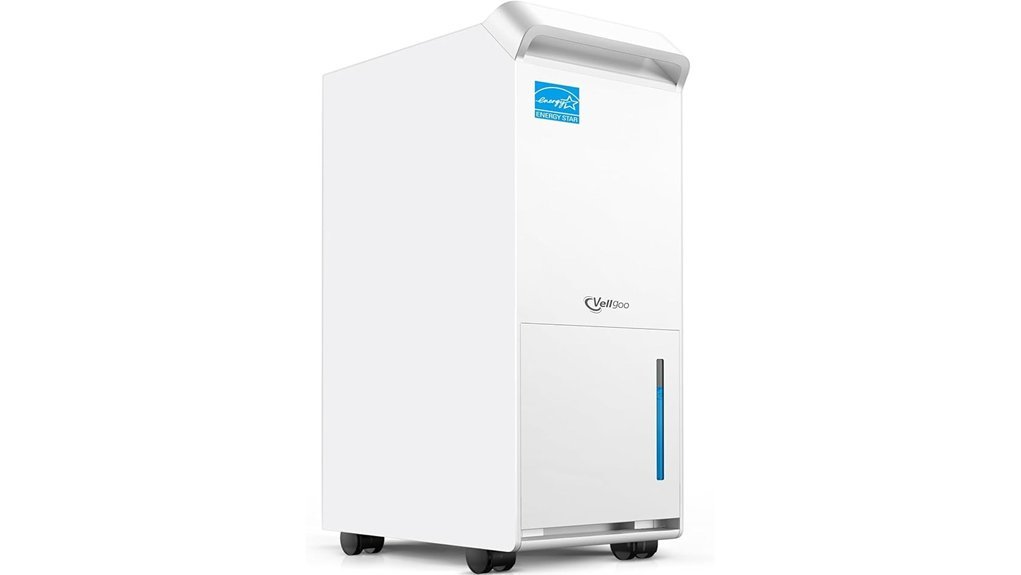
The Vellgoo model is the most balanced choice for a heated or insulated garage where you want strong moisture control without jumping to an oversized pump unit. The current listing describes coverage up to 4,500 sq. ft. and maximum moisture removal of roughly 70 pints per day under demanding test conditions. Its humidistat, timer, washable filter, auto defrost, tank collection, and continuous-drain option make it practical for regular use.
Why You’ll Like It: It combines useful automatic controls with an efficiency-focused design and enough capacity for many two-car garages, workshops, basements, and storage areas.
Best For: Homeowners who want an efficient, set-and-monitor dehumidifier for a large enclosed garage.
Who Should Avoid It: Buyers who need water pumped upward to a sink or window, or anyone whose garage frequently drops below the model’s approved operating range.
Pros:
- Good balance of capacity, controls, and energy-conscious operation.
- Continuous drainage reduces the need to empty the tank manually.
- Washable filter, timer, child lock, and automatic humidity control improve day-to-day usability.
Cons:
- No built-in pump is stated for this specific linked model.
- Maximum pint claims are based on warm, very humid conditions and may not reflect a cool garage.
- Confirm Canadian shipping, certification details, and warranty coverage before ordering from Amazon.com.
Waykar 150 Pints Energy Star Dehumidifier with Pump
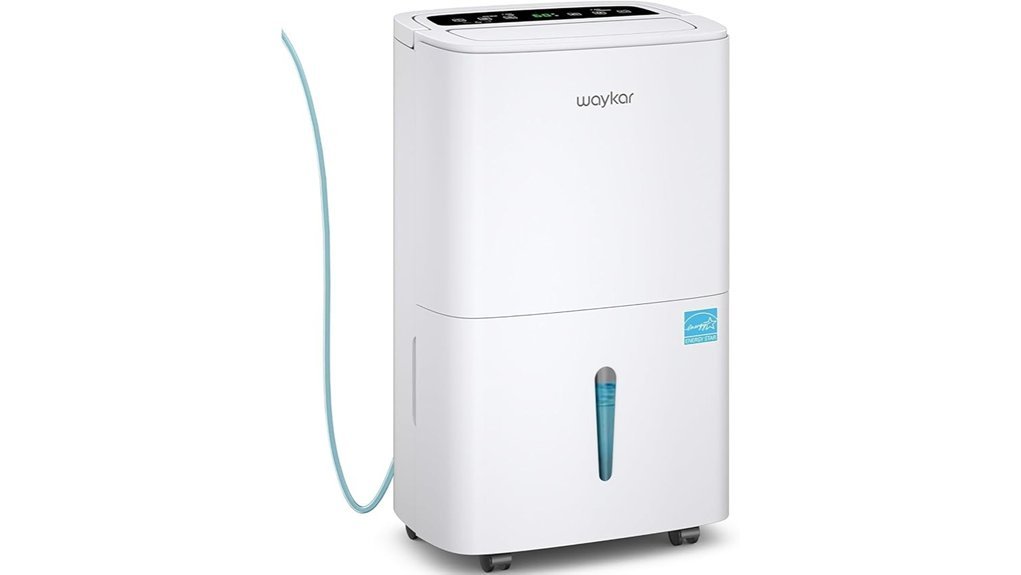
The Waykar is the strongest fit when your garage has a heavy moisture load and no convenient floor drain. Its headline 150-pint figure applies to hot, saturated test conditions, while standard-condition output is lower. The built-in pump can move condensate upward, and the unit also supports gravity drainage and tank collection.
Why You’ll Like It: The pump can simplify installation in a basement garage, workshop, or storage space where the drain is above the unit or farther away.
Best For: Large heated garages, commercial-style work areas, or persistent dampness that overwhelms smaller units.
Who Should Avoid It: Buyers with a small garage, light seasonal humidity, limited floor space, or no need for pumped drainage.
Pros:
- High maximum extraction capacity for demanding conditions.
- Built-in pump plus gravity-drain and tank options.
- Auto defrost, smart humidity control, timer, washable filter, and automatic restart.
Cons:
- Likely oversized for a small or only mildly damp garage.
- Heavier and bulkier than the lower-capacity models.
- The 150-pint headline should not be treated as the expected daily output in a cool Canadian garage.
Yaufey Energy Star Certified 5,000 Sq. Ft. Dehumidifier
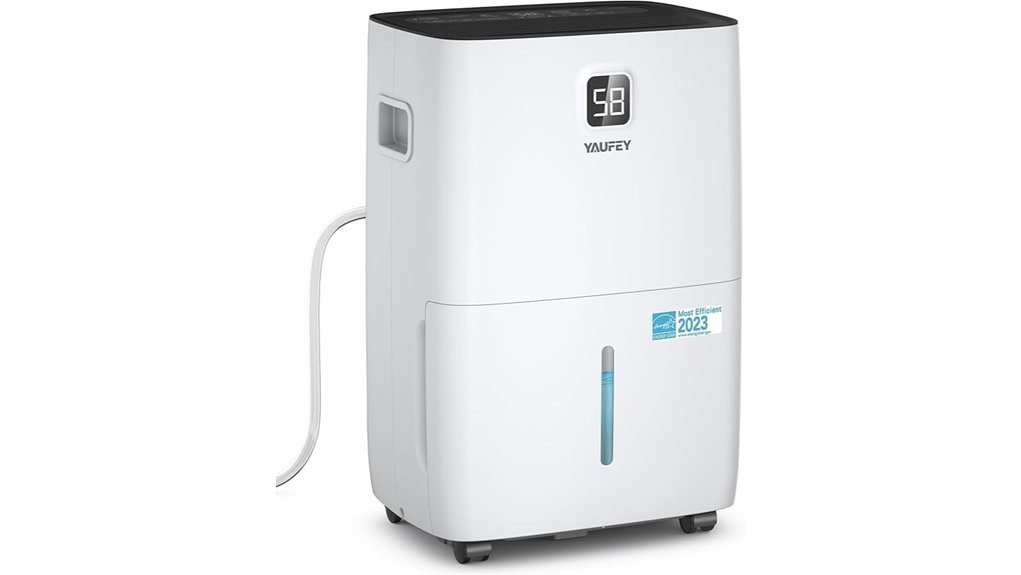
The Yaufey JD025Q-80 is a practical large-space option with an advertised maximum of 80 pints per day at 35°C and 90% relative humidity. It includes adjustable humidity control, preset operating modes, auto defrost, a timer, a washable filter, a removable tank, and continuous drainage. The 1.06-gallon tank is useful when a hose is not available, although continuous drainage is easier for long garage run times.
Why You’ll Like It: The controls are straightforward, and the combination of a humidistat, timer, wheels, and drain hose suits homeowners who want low-effort moisture management.
Best For: Large, enclosed garages that stay within the manufacturer’s approved temperature range.
Who Should Avoid It: Anyone who needs a built-in pump or expects the full 80-pint output during cold weather.
Pros:
- Large advertised coverage and useful automatic humidity settings.
- Tank and continuous-drain operation.
- Portable design with castors, handle, washable filter, and automatic restart.
Cons:
- No built-in pump on the linked model.
- The tank still needs frequent emptying under heavy moisture loads if a hose is not used.
- Published maximum capacity is measured in warmer, wetter conditions than many Canadian garages.
Tehanld 3,000 Sq. Ft. 30 Pint Dehumidifier
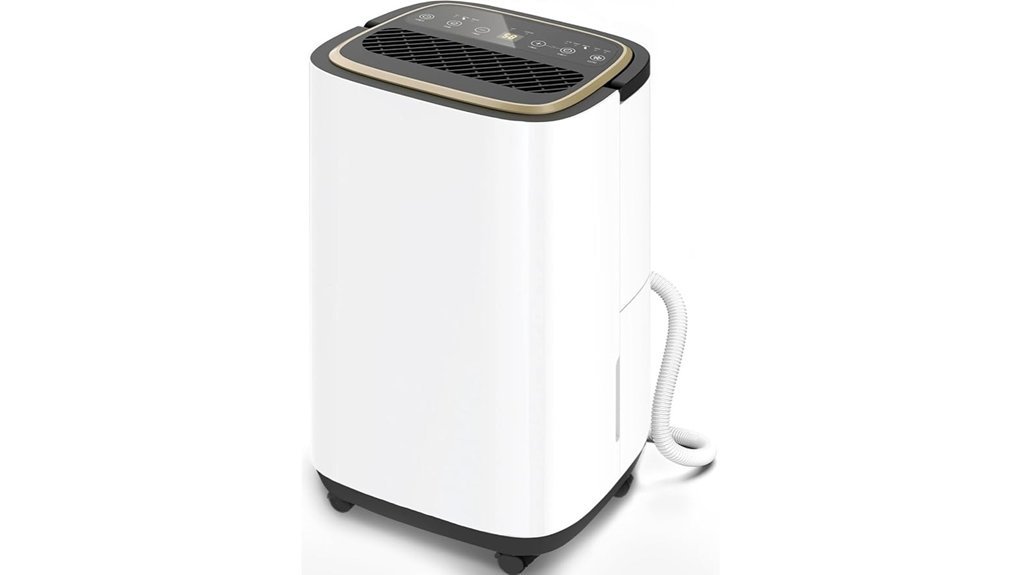
This Tehanld compressor dehumidifier is advertised for spaces up to 3,000 sq. ft. and up to 30 pints of moisture removal per day. It includes adjustable humidity control, a digital display, timer, child lock, 0.7-gallon tank, wheels, and continuous drainage. It is a more sensible choice than a 150-pint unit when the garage is moderately damp rather than wet.
Why You’ll Like It: It offers the core features most garage owners need without the bulk of a high-capacity pump model.
Best For: One- or two-car heated garages with moderate seasonal humidity and access to a nearby drain.
Who Should Avoid It: Buyers dealing with standing water, chronic leaks, severe condensation, or a cold unheated garage.
Pros:
- Compact capacity for moderate garage moisture.
- Continuous drainage, tank auto shut-off, timer, and child lock.
- Wheels and handles simplify repositioning.
Cons:
- The small tank can fill quickly in very damp conditions.
- No built-in pump is listed.
- Brand support and Canadian warranty terms should be confirmed before purchase.
Tehanld 2,500 Sq. Ft. 35 Pint Dehumidifier
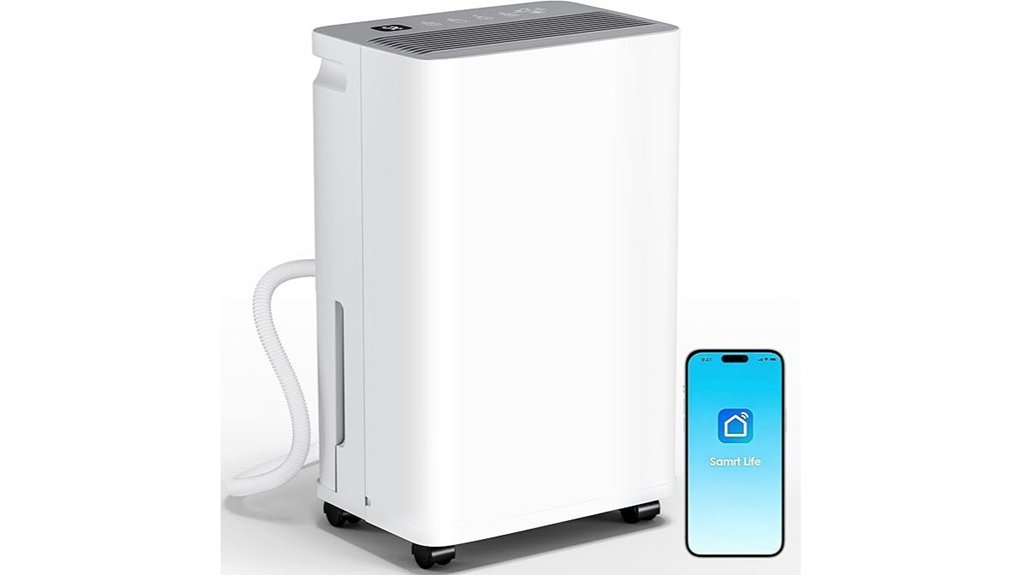
This second Tehanld model is advertised for up to 2,500 sq. ft. with maximum moisture removal of 35 pints per day. It includes Auto, Manual, and Drying modes, a removable tank, continuous drainage, auto defrost, timer, digital controls, and a portable cabinet. The original app-control claim could not be confirmed, so it should not be a deciding factor.
Why You’ll Like It: It is easier to place in a tighter garage and provides slightly higher advertised extraction than the 30-pint Tehanld model.
Best For: Smaller enclosed garages, laundry-adjacent garages, or buyers who want a compact unit with hose drainage.
Who Should Avoid It: Large workshops, severe moisture problems, or installations that require pumping water upward.
Pros:
- Compact footprint with wheels and an ergonomic handle.
- Multiple operating modes, auto shut-off, auto defrost, and continuous drainage.
- Suitable capacity for moderate humidity in a smaller garage.
Cons:
- App control was not verified for the linked model.
- The internal tank may require frequent emptying if no drain hose is used.
- Confirm minimum operating temperature and Canadian service support before ordering.
Factors to Consider When Choosing a Dehumidifier for a Garage in Canada
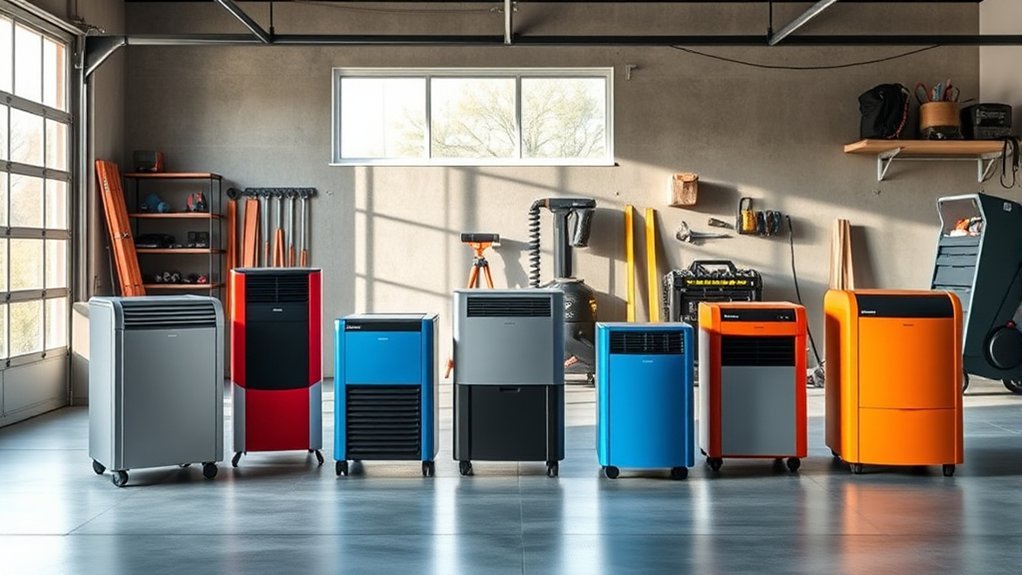
A garage dehumidifier should be chosen by temperature, actual moisture load, drainage access, energy efficiency, and maintenance needs, not square-foot coverage alone. The following checks matter most in Canadian conditions.
Garage Temperature and Auto Defrost
Compressor dehumidifiers remove less moisture as the air gets colder, and frost can form on the coils. If your garage regularly falls below 18°C, choose a model specifically rated for lower-temperature operation and verify the exact minimum temperature in the manual. Auto defrost helps, but it does not make every portable unit suitable for freezing conditions. Do not operate a unit below its stated range.
Capacity and Test Conditions
Large pint numbers are often measured in hot, extremely humid conditions. A unit advertised at 80 or 150 pints per day may remove much less water in a cool garage. Compare the standard rated capacity, integrated energy factor, temperature range, and tank or hose setup. It is usually safer to choose slightly more capacity than your estimated need, but extreme oversizing can add cost, noise, and bulk without solving leaks or water intrusion.
Coverage Area Requirements
Measure the garage floor area and consider ceiling height, insulation, air leakage, parked wet vehicles, snowmelt, laundry, and whether the garage door opens often. Manufacturer coverage figures are broad marketing guides, not guarantees. A tightly sealed 800 sq. ft. garage can be easier to dry than a drafty 400 sq. ft. garage.
Energy Efficiency Ratings
Look for a current ENERGY STAR certification and compare the integrated energy factor, shown in litres of water removed per kilowatt-hour. For Canadian purchases, also check whether the exact model appears in the relevant certified-product database or carries an EnerGuide label. Avoid unsupported savings promises because electricity costs vary by province, run time, temperature, and humidity.
Drainage Options Available
A continuous gravity hose is the easiest setup when a floor drain is lower than the unit. Choose a built-in pump when water must travel upward or across a longer route. Keep the hose protected from freezing, kinks, and vehicle traffic, and route it away from outlets, extension cords, and other electrical connections.
Humidity Setting
For many garages, a starting target around 45% to 50% RH is reasonable. Lower the setting only if condensation persists and the garage remains warm enough. During cold weather, an unnecessarily low RH target can waste energy and may not be achievable. A separate hygrometer helps confirm whether the unit’s built-in sensor is representative of the whole garage.
Noise and Dust
Noise matters if the garage doubles as a workshop, gym, or office. Also consider dust: sanding, woodworking, and vehicle debris can clog filters and coils. Place the unit where air can circulate freely, keep it away from direct spray or snowmelt, and clean the filter more often in a working garage than in a bedroom.
Before You Buy in Canada
- Confirm the exact model’s minimum operating temperature.
- Verify 115/120-volt compatibility, plug type, and grounded-outlet requirements.
- Check shipping to your postal code, currency, duties, taxes, and return costs.
- Confirm whether warranty service is valid in Canada.
- Measure the path to the drain and decide whether you need gravity drainage or a pump.
- Fix roof leaks, foundation seepage, or snowmelt entry before relying on a dehumidifier.
Maintenance and Support
Clean or wash the filter according to the manual, inspect the hose for blockage, keep the intake and exhaust clear, and check the tank float and auto shut-off. Before winter storage or long shutdowns, drain and dry the unit fully. Brand support, replacement parts, and a warranty that applies in Canada can be more valuable than an extra marketing feature.
Frequently Asked Questions
Can a Dehumidifier Run in an Unheated Canadian Garage?
Only if the model is rated for the actual temperature. Standard compressor units can frost up and lose efficiency in cool conditions. If the garage approaches freezing, stop using the unit unless the manufacturer explicitly approves operation at that temperature.
What Humidity Should I Set in My Garage?
Start near 45% to 50% RH and monitor condensation, odour, and stored materials. In colder weather, a slightly lower setting may help with condensation, but the unit must remain within its operating range.
How Often Should I Empty the Water Tank?
It depends on the tank size and moisture load. In wet weather, a tank may fill in hours. Use continuous drainage when possible, and still inspect the hose and tank regularly to catch clogs or leaks.
Do I Need a Built-In Pump?
You need a pump when the drain is above the dehumidifier or gravity cannot move the water safely. If a nearby floor drain is lower than the unit, a gravity hose is simpler and usually less expensive.
Are Square-Foot Ratings Accurate?
They are rough guides. Temperature, insulation, air leakage, ceiling height, moisture sources, and door-opening frequency can matter more than floor area. Use the rating as a starting point, then compare capacity and operating conditions.
Do Dehumidifiers Use a Lot of Electricity?
Energy use depends on wattage, run time, humidity, and temperature. An efficient model with a humidistat can cycle off when the target is reached. Sealing air leaks and using continuous drainage can also reduce unnecessary run time.
How Do I Maintain My Garage Dehumidifier?
Clean the filter, vacuum dust from the intake and exhaust, inspect the drain hose, empty and wash the tank, and keep clearance around the unit. Follow the manual’s coil-cleaning and storage instructions.
Final Recommendation
Choose the Vellgoo for the best overall balance in a heated or insulated garage. Pick the Waykar when a built-in pump and very high maximum capacity are genuinely useful. The Yaufey is a strong alternative for a large garage with a floor drain, while the two Tehanld models make more sense for moderate moisture loads and tighter budgets.
Whichever model you choose, verify its minimum operating temperature and Canadian warranty before ordering. A dehumidifier can control airborne moisture, but it will not repair leaks, stop snowmelt entry, or replace proper drainage and ventilation.