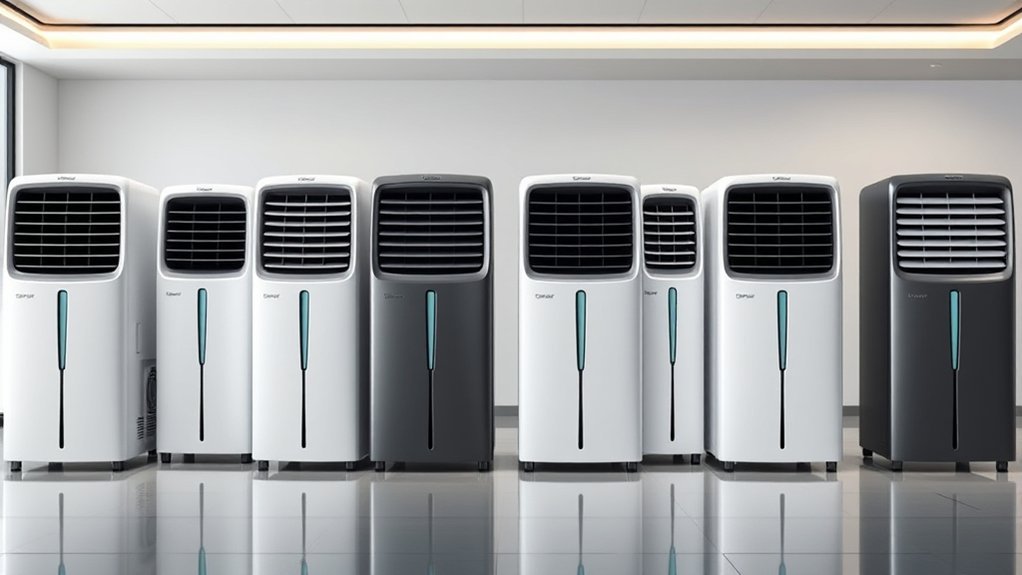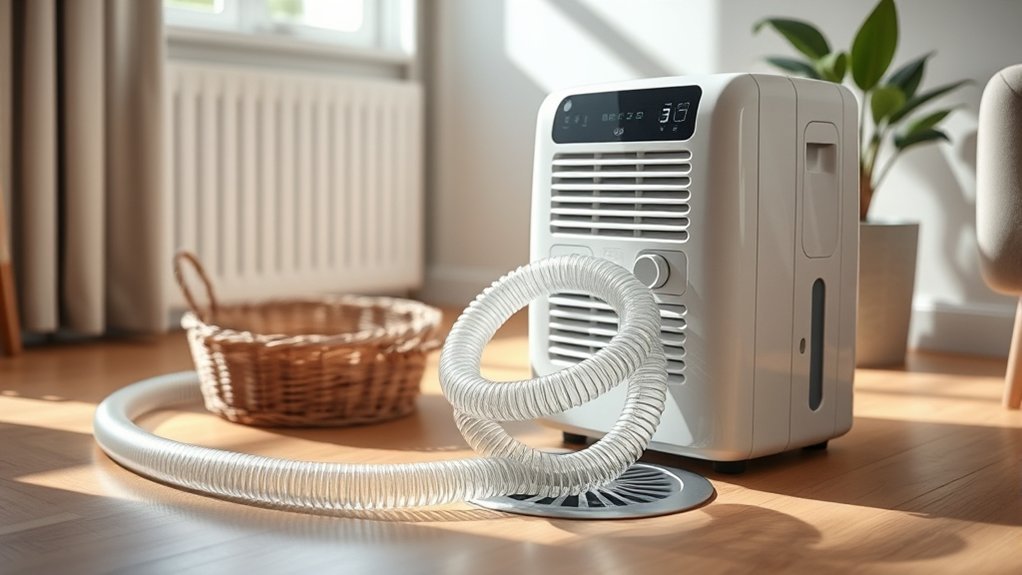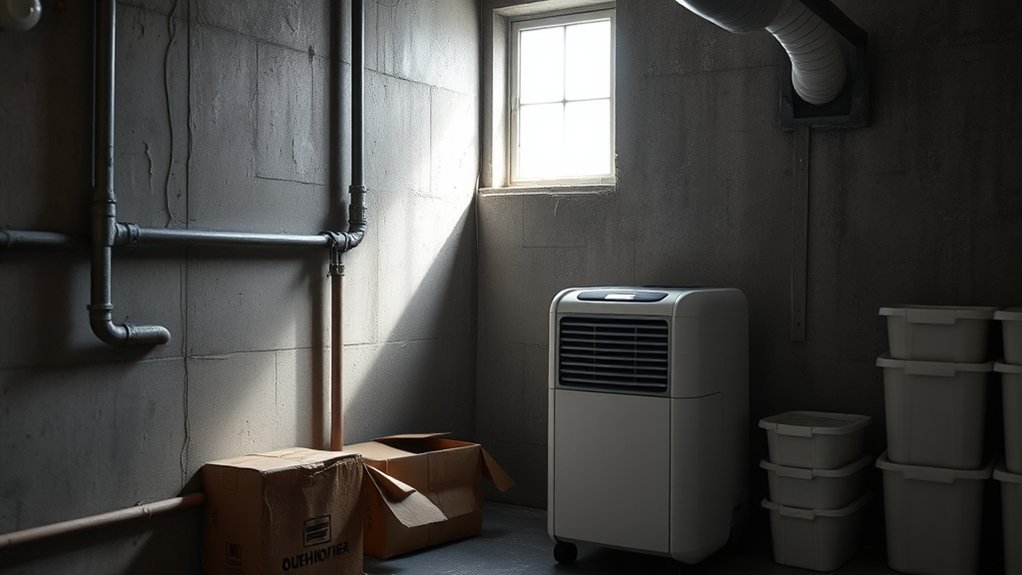
Do you need a dehumidifier in your basement? Yes, if it smells musty, feels clammy, shows condensation, or stays above 60% relative humidity (RH). A dehumidifier controls moisture, while an air purifier only helps with airborne particles and odors. The right setup depends on basement size, dampness, drainage options, and whether you already have leaks or visible mold.
Quick Answer
You need a basement dehumidifier if a hygrometer reads above 60% RH, the space smells musty, condensation forms on windows or pipes, or mold and water stains appear. Aim for about 45% to 50% RH in most basements. Add an air purifier only as a second step for particles and odors.
Key Takeaways
- Keep basement humidity below 60% RH; the EPA recommends 30% to 50% RH when possible.
- A dehumidifier helps stop the damp conditions that support mold, mildew, dust mites, odors, wood rot, and peeling paint.
- An air purifier does not fix moisture, but a true HEPA unit can reduce airborne particles, and carbon can help with some odors.
- Choose dehumidifier size by square footage and dampness level, not just by old 30-, 50-, or 70-pint labels.
- Fix leaks, drainage problems, and standing water first. A dehumidifier should manage humidity, not replace waterproofing or mold cleanup.
At a Glance
| Time Required | 10 minutes to check humidity; 30 to 60 minutes to set up a portable unit |
| Difficulty | Easy for humidity monitoring and portable setup; moderate if adding continuous drainage |
| Tools Needed | Digital hygrometer, dehumidifier, drain hose if available, flashlight, and basic cleaning supplies |
| Cost | About $10 to $30 for a hygrometer; commonly $150 to $350+ for a portable basement dehumidifier |
Why Basements Trap Moisture
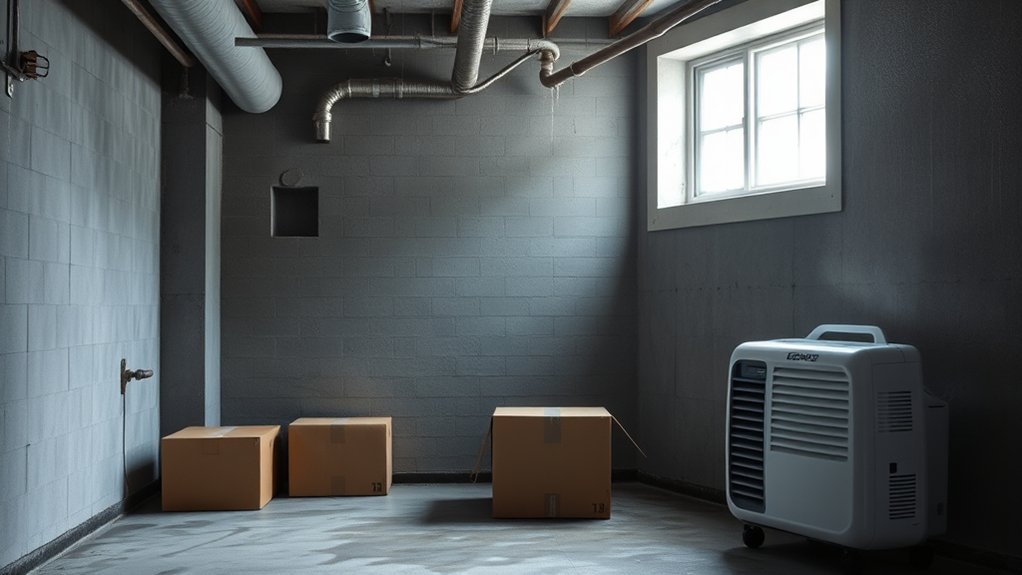
Basements trap moisture because they sit below ground level. Soil around the foundation holds water, and that moisture can move through cracks, wall seams, porous concrete, window wells, or plumbing leaks. Once damp air gets inside, poor ventilation lets it linger.
Condensation is another common cause. Warm indoor air can hit cooler basement walls, pipes, floors, or windows and turn into water droplets. Furnaces, laundry areas, cold cellars, and uninsulated pipes can make this worse. Over time, the cycle leaves water stains, peeling paint, swollen trim, musty odors, and conditions that support mold growth.
A basement dehumidifier helps by pulling excess water vapor from the air. It will not seal a foundation crack or stop a plumbing leak, but it can keep the basement drier after water sources are corrected.
The goal is not to make the basement bone-dry. The goal is to keep relative humidity low enough that mold, mildew, condensation, and dust mites have a harder time thriving.
Signs You Need a Dehumidifier in Your Basement
The easiest way to know is to use a digital hygrometer. Place it in the basement for at least a few hours, away from direct airflow from the dehumidifier, HVAC vent, laundry dryer, or open window. If the reading stays above 60% RH, your basement is too humid. In most homes, a target around 45% to 50% RH is a practical setting.
Note: In colder climates, you may need a lower winter target, such as 30% to 40% RH, if condensation forms on windows or cold surfaces.
| Sign | What It Usually Means | What To Do |
|---|---|---|
| Musty odor | Moisture is lingering in materials or air | Measure RH, run a dehumidifier, and inspect for leaks or hidden mold |
| Condensation on windows or pipes | Warm humid air is hitting cold surfaces | Lower RH and insulate cold pipes or surfaces |
| Visible mold or mildew | Moisture has already supported growth | Fix moisture, clean safely, and use a dehumidifier to reduce regrowth risk |
| Water stains, peeling paint, warped wood | Long-term dampness or seepage | Find the water source before relying on equipment |
| RH above 60% | Mold and dust mite risk rises | Use a properly sized dehumidifier and reduce moisture sources |
How High Humidity Damages Your Basement
High basement humidity does more than make the air feel heavy. When relative humidity stays elevated, moisture can settle into wood, cardboard, drywall, carpet, stored furniture, and insulation. That creates a basement that smells stale, feels uncomfortable, and slowly damages the materials inside it.
Mold Growth Risks
Mold needs moisture to grow. The EPA recommends keeping indoor relative humidity below 60%, ideally between 30% and 50% when possible. That does not mean mold magically appears at 61%, but it does mean prolonged dampness raises the risk.
A dehumidifier helps reduce the moisture that allows mold to spread. If mold is already visible, however, the EPA’s mold cleanup guidance says to fix the water problem, scrub mold from hard surfaces with detergent and water, dry materials completely, and discard some porous materials if they cannot be cleaned.
Warning: Do not enter standing water in a basement if electricity may be involved. If water has reached outlets, appliances, extension cords, or the electrical panel, stay out and call a qualified professional.
Structural Damage From Moisture
Repeated dampness can swell and warp wood, rust metal fixtures, corrode stored tools, loosen paint, and weaken finishes. It can also make foundation cracks and seepage easier to spot because water stains keep returning in the same places. A dehumidifier can reduce airborne moisture, but persistent seepage usually needs drainage, grading, gutter, sump pump, or foundation repair.
Poor Air Quality Effects
Damp basements often smell musty because moisture feeds microbial growth and lets odors cling to surfaces. The CDC notes that damp and moldy environments can cause health effects in some people, including stuffy nose, coughing, wheezing, irritated eyes, or skin irritation. People with asthma, mold allergy, weakened immune systems, or chronic lung disease may be more sensitive.
What a Basement Dehumidifier Prevents
A basement dehumidifier does not waterproof the house, but it helps prevent the air from staying damp after leaks and water sources are controlled. That can reduce the conditions behind many common basement problems.
| Problem | What It Can Cause | How a Dehumidifier Helps |
|---|---|---|
| High humidity | Mold, mildew, dust mites, stale air | Keeps RH in a safer target range |
| Condensation | Wet pipes, damp walls, water spots | Reduces water vapor in the air |
| Damp wood and stored items | Warping, swelling, rot, odor | Helps materials dry and stay drier |
| Musty air | Uncomfortable basement and odor transfer upstairs | Limits damp odor sources when paired with cleanup |
| Dust mites | Allergen buildup in stored fabrics and finished areas | Lower humidity makes the space less friendly to them |
Why Air Purifiers Help Basement Air Quality
An air purifier helps with what floats in the air. A dehumidifier helps with the moisture that allows mold and mildew to grow. They are different tools, and in a damp basement the dehumidifier usually comes first.
The EPA says portable air cleaners can reduce indoor air pollution, but they cannot remove all pollutants and they do not solve moisture problems. If your basement smells musty because mold is growing on damp materials, an air purifier may reduce some airborne particles or odors, but it will not fix the source.
HEPA Captures Mold Spores
A true HEPA filter is useful because it targets particles. According to the EPA’s HEPA definition, this type of filter can theoretically remove at least 99.97% of dust, pollen, mold, bacteria, and other airborne particles at 0.3 microns. For a basement, that can help reduce airborne mold spores, dust, and other irritants after moisture is controlled.
Carbon Filters Reduce Odors
Activated carbon filters can help reduce some gases and odors, including some musty smells, when the filter contains enough carbon. Performance varies by product, filter thickness, airflow, and how often the filter is replaced. Carbon is helpful for odor control, but it should not be used as a cover-up for active mold or water intrusion.
Note: Avoid air cleaners that intentionally produce ozone. The EPA warns that ozone is a lung irritant and that ozone-producing devices should not be used as a shortcut for indoor air cleanup.
How Dehumidifiers and Air Purifiers Work Together
A dehumidifier lowers moisture. An air purifier filters airborne particles and, if it has enough activated carbon, some odors. Together, they can make a basement feel cleaner, drier, and easier to use.
- Use the dehumidifier first to bring RH below 60%, ideally near 45% to 50% for most basements.
- Use a true HEPA air purifier if the basement is finished, used often, or connected to living areas.
- Use carbon filtration if odors linger after damp materials are cleaned or removed.
- Keep cleaning and source control in the plan because filters do not remove mold growing on walls, carpets, boxes, or furniture.
How to Choose the Right Dehumidifier Size
Choose dehumidifier size by basement square footage and how damp the space is without dehumidification. ENERGY STAR notes that dehumidifier capacity is measured in pints per 24 hours, and the right capacity depends on the size of the space and the existing conditions.
Current pint labels can be confusing. Older dehumidifiers were often described as 30-, 50-, or 70-pint units. Newer units may show lower pint capacities because DOE testing changed to cooler basement-like conditions. ENERGY STAR explains that a newer lower-capacity rating may still meet the same need as an older higher-capacity rating.
| Basement Condition | Typical RH / Clues | Small to Medium Room Under 2,000 Sq. Ft. | Large Room Over 2,000 Sq. Ft. |
|---|---|---|---|
| Slightly to moderately damp | Feels damp or smells musty sometimes; about 50% to 75% RH | 20 to 30 pints/day | 30+ pints/day |
| Very damp | Damp smell is consistent; damp spots appear; about 75% to 90% RH | 25 to 40 pints/day | 40+ pints/day |
| Wet | Walls or floors sweat; seepage or laundry moisture load is present; about 90% to 100% RH | 30 to 50 pints/day | 50+ pints/day |
Pro Tip: If you are between two sizes, choose the larger ENERGY STAR certified unit with a built-in humidistat and a continuous drain option. Undersized units run longer, fill faster, and may never reach the target RH.
Recommended Products

4,500 SQ. FT. DEHUMIDIFIER – Removes up to 50 pints of moisture per day with an adjustable humidity setting from 35% to 85%. Perfect for use in basement, bathroom, bedroom, office, kitchen, cellar, or crawlspace. Maintain a healthy 45%-55% humidity range

This dehumidifier delivers powerful performance — removing up to 80 pints of moisture per day and covering up to 5000 sq.ft, perfect for whole homes, basements, large living rooms, and garages. It effectively eliminates dampness and musty odors, keeping your entire large space dry and comfortable all day long, even in highly humid environments (90-100% relative humidity).

2500 Sq.Ft High Capacity Dehumidifier- The GoGuess basement dehumidifier is equipped with a quiet yet powerful compressor that efficiently extracts up to 34 pints of moisture per day (tested at 95°F and 90% RH). Perfect for use in basements, offices, bathrooms, bedrooms, kitchens, storage areas, living rooms, laundry spaces, garages, crawl spaces, and RVs. It helps maintain a healthy humidity level between 30% and 70%, promoting a more comfortable and healthier indoor environment.
Where to Place a Basement Dehumidifier
Placement affects performance. Put the dehumidifier where air can circulate freely and where drainage is practical. A central spot works well for one open basement. For a divided basement, place it near the dampest area or use fans to move air between rooms.
- Leave clearance around the intake and exhaust grilles.
- Keep doors and windows closed when outdoor air is humid.
- Do not push the unit tight against a wall, curtain, storage bin, or laundry pile.
- Use a gravity drain hose only if the hose can slope downward to a floor drain, sump pit, or utility sink.
- Choose a built-in pump if the water must move upward to a sink or higher drain.
- Keep the unit level so the bucket, float switch, and drainage system work correctly.
Other Ways to Lower Basement Humidity
Equipment helps, but the best moisture control starts outside and at the source. Before depending on a dehumidifier alone, look for the reasons water is entering or staying in the basement.
- Extend downspouts away from the foundation.
- Clean gutters and downspouts so water does not spill next to basement walls.
- Make sure soil slopes away from the house.
- Repair plumbing leaks and dripping outdoor faucets.
- Use bathroom and kitchen exhaust fans to remove moisture at the source.
- Vent clothes dryers outdoors, not into the basement.
- Insulate cold pipes to reduce condensation.
- Use a vapor barrier or waterproofing system only when it fits your basement construction and drainage plan.
- Keep stored items off the floor and away from exterior walls so air can move around them.
When a Dehumidifier Is Not Enough
A dehumidifier is for humidity, not bulk water. If the basement has standing water, active seepage, sewage backup, floodwater, a failed sump pump, or mold spreading across large areas, solve that problem first. Running a dehumidifier in those conditions may dry the air temporarily while the real issue keeps damaging the basement.
Call a qualified waterproofing, plumbing, mold remediation, HVAC, or electrical professional when you see:
- Water entering through cracks, floor joints, window wells, or walls after rain.
- Repeated sump pump failure or no backup pump in a wet basement.
- Mold returning quickly after cleaning.
- Wet drywall, carpet, insulation, or ceiling tiles.
- Electrical outlets, appliances, or extension cords near water.
- Respiratory symptoms that worsen when you spend time in the basement.
How to Maintain a Basement Dehumidifier
Routine care keeps the dehumidifier efficient and prevents avoidable breakdowns. Most units are simple, but they still need airflow, clean filters, and a working drain or bucket.
- Check the bucket daily until you know how fast it fills.
- Clean or rinse the filter according to the owner’s manual, often every few weeks to a few months depending on dust.
- Inspect the drain hose for kinks, clogs, algae, or an uphill section that stops gravity flow.
- Watch for frost or ice on the coil, especially in cool basements.
- Vacuum intake and exhaust grilles so airflow stays strong.
- Set the humidistat instead of running the unit blindly all day.
- Use a separate hygrometer if the built-in reading seems inaccurate.
An ENERGY STAR certified model can reduce operating costs because certified dehumidifiers use more efficient components. ENERGY STAR states that certified models use about 20% less energy than similarly sized conventional units.
Basement Dehumidifier Troubleshooting
| Problem | Likely Cause | Fix |
|---|---|---|
| Unit runs constantly | Too small, target RH set too low, or moisture source remains | Raise target to 45% to 50%, check leaks, or use a larger unit |
| RH will not drop below 60% | Open windows, poor airflow, seepage, or undersizing | Close openings, improve airflow, fix water intrusion, and verify capacity |
| Bucket fills very fast | High moisture load | Use continuous drainage and inspect for leaks or wet materials |
| Coils freeze | Basement is too cold or airflow is restricted | Clean the filter, improve clearance, and use a low-temperature model if needed |
| Musty smell persists | Moldy or damp materials remain | Clean or remove affected materials; add HEPA/carbon filtration after source control |
Recommended Products

【The Undisputed Champion — Industry‑Leading Dehumidifier Brand】When you choose AEOCKY, you get double market validation. In 2025, AEOCKY was an industry‑leading dehumidifier brand on Amazon US. This means you’re not just choosing a flagship from a market leader, but the top choice proven by millions of real users—representing the ultimate combination of performance, quality, and trust.
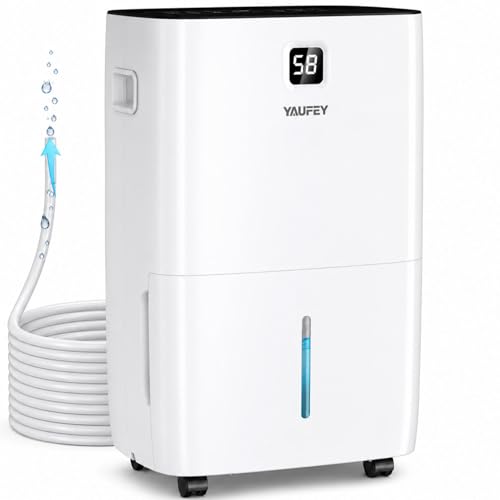
Dehumidifier for Basement: This dehumidifier for home removes up to 150 pints (95℉, 90% RH) of moisture per day and with a maximum dehumidification area of 8500 square feet. This dehumidifier with drain hose has a dehumidification range of 30% to 80%, increasing or decreasing by 5% at a time, which you can adjust to your preferred humidity level. In addition, this basement dehumidifier has 3 modes for you to choose from - Living Area (50% RH), Basement (45% RH) and Continuous (CO).

HIGH CAPACITY PERFORMANCE: Removes up to 90 pints of moisture per day with a high-efficiency compressor, covering large spaces up to 5000 sq. ft., including basements, garages, and living rooms.
Frequently Asked Questions
What humidity should I set my basement dehumidifier to?
A good target for most basements is about 45% to 50% RH, and below 60% to reduce mold risk. In cold weather, lower the target if condensation appears on windows, pipes, or walls.
Where should I put a dehumidifier in the basement?
Put it where air can circulate freely, near the dampest area if the basement is divided, with clearance around the grilles. Make sure the drain hose or pump can reach a suitable drain.
What months do you need a dehumidifier in the basement?
Most basements need one during humid spring and summer months, after heavy rain, or in winter if condensation forms. Use a hygrometer and run the unit whenever RH rises above your target range.
What are the downsides of using a dehumidifier?
The main downsides are electricity use, noise, filter cleaning, emptying the bucket, and upfront cost. An undersized unit may run constantly without solving the problem, so size it correctly and fix moisture sources first.
Does a dehumidifier run up your electric bill?
Yes, it adds to your electricity use, especially when it runs for long periods. Cost depends on wattage, runtime, dampness, and your rates, and an ENERGY STAR model with a humidistat helps control it.
Can an air purifier replace a basement dehumidifier?
No. An air purifier filters airborne particles and some odors but does not remove moisture. Fix moisture and run a dehumidifier first, then add an air purifier if you want better particle and odor control.
Conclusion
If your basement has musty odors, condensation, visible mold, water stains, or RH above 60%, a basement dehumidifier is a smart first step. Use it to keep humidity under control, but do not ignore leaks, drainage problems, wet materials, or active mold. Add an air purifier when you also want help with airborne particles and odors. The winning formula is simple: measure humidity, fix water sources, choose the right-size dehumidifier, maintain it well, and keep the basement dry enough that moisture stops running the space.
Sources
- U.S. EPA — Mold Course Chapter 2 — backs the below-60% RH and ideal 30% to 50% indoor humidity guidance.
- U.S. EPA — Basic Mold Cleanup Steps — backs moisture control, cleaning hard surfaces, drying materials, and discarding some moldy porous materials.
- CDC — About Mold — backs mold-related health effects and higher concern for people with asthma, allergies, immune compromise, or chronic lung disease.
- U.S. EPA — What Is a HEPA Filter? — backs the true HEPA 99.97% at 0.3 microns performance standard.
- U.S. EPA — Guide to Air Cleaners in the Home — backs air purifier limitations, CADR guidance, carbon filter guidance, and ozone cautions.
- ENERGY STAR — Dehumidifiers and Dehumidifier Testing and Capacity — back current sizing, capacity, humidistat, efficiency, and DOE testing-change guidance.