Affiliate disclosure: This article contains Amazon affiliate links. We may earn a commission from qualifying purchases at no extra cost to you.
Last updated: August 2026
A good 50-pint dehumidifier for a Canadian home should combine dependable moisture removal, practical drainage, an adjustable humidistat, and controls that suit the room. The five models below are all designed for large residential spaces, but advertised coverage figures are only a starting point. Basement temperature, starting humidity, room layout, and air leakage can change real-world performance.
Important for Canadian buyers: The protected affiliate links in this article open Amazon.com. Before ordering, confirm that the exact model ships to your Canadian address and check the final cost, warranty coverage, return terms, voltage, plug, and recognized Canadian electrical certification shown on the product or packaging.
Selection note: Recommendations are based on listed specifications and buyer use cases, not hands-on testing.
Quick verdict
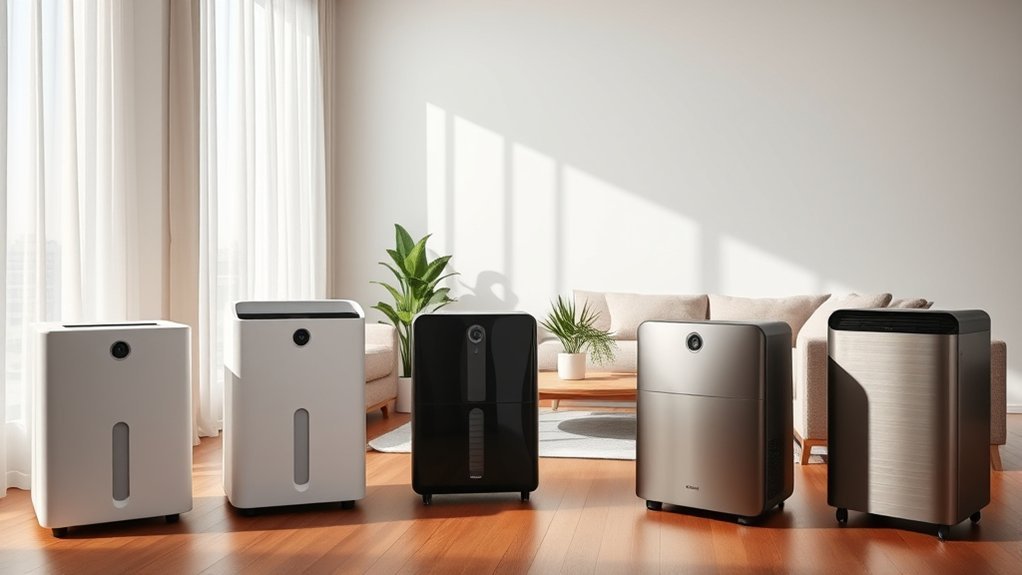
Choose the Keystone for straightforward controls and a larger 1.8-gallon tank, the GE Smart Dry for automatic fan adjustment, the Midea for app control and pump-assisted drainage, the AEOCKY for a compact footprint, or the Amazon Basics for a simple large-room model with a drain pump.
Quick Comparison of 50-Pint Dehumidifiers
| Model | Best for | Drainage | Notable feature | Main limitation | Amazon |
|---|---|---|---|---|---|
| Keystone KSTAD504F | Simple large-room use | Tank or gravity drain | 1.8-gallon tank | No app or built-in pump listed | Check Details |
| GE Smart Dry | Automatic humidity control | Tank, hose, and listing-indicated pump | Smart Dry fan adjustment | Confirm pump hose and lift details | Check Details |
| Midea 50 Pint with Pump | Smart control and hands-free drainage | Bucket or built-in pump | App and voice control | Heavy to carry between floors | Check Details |
| AEOCKY 3500 Sq. Ft. | Tighter spaces | Small tank or gravity hose | Compact cabinet | Small tank fills quickly | Check Details |
| Amazon Basics 50 Pint | Straightforward pump drainage | Tank or drain pump | Auto-restart and overflow protection | Fewer smart features | Check Details |
Keystone 50-Pint Portable Dehumidifier for Large Rooms
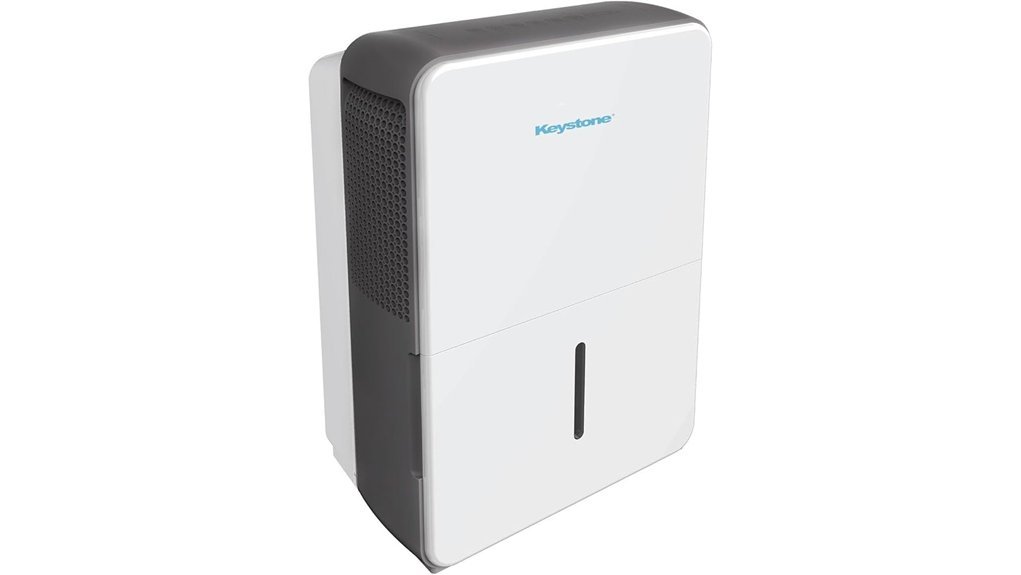
The Keystone KSTAD504F is a practical choice when you want a traditional 50-pint dehumidifier without app setup. The manufacturer lists coverage up to 4,500 square feet, a 1.8-gallon tank, normal and turbo fan settings, auto-defrost, auto-restart, and continuous gravity drainage through a standard garden hose connection. The larger tank is useful when a floor drain is not available.
Why you’ll like it: It keeps operation familiar and easy to understand while offering the features most basement owners actually use.
Best For: Basements, garages, living areas, and buyers who prefer physical controls and a larger water tank.
Who Should Avoid It: Buyers who need app control or a built-in pump to move water uphill.
Pros:
- Listed to remove up to 50 pints of moisture per day under rated conditions.
- Large 1.8-gallon tank with full-bucket alert and automatic shutoff.
- Auto-restart, auto-defrost, washable filter, timer, casters, and gravity-drain support.
Cons:
- The garden hose is not listed as included.
- At roughly 41 pounds, it is easier to roll than carry between floors.
- Advertised square-foot coverage should not replace sizing for actual dampness and temperature.
GE Portable Dehumidifier, 50 Pint with Smart Dry
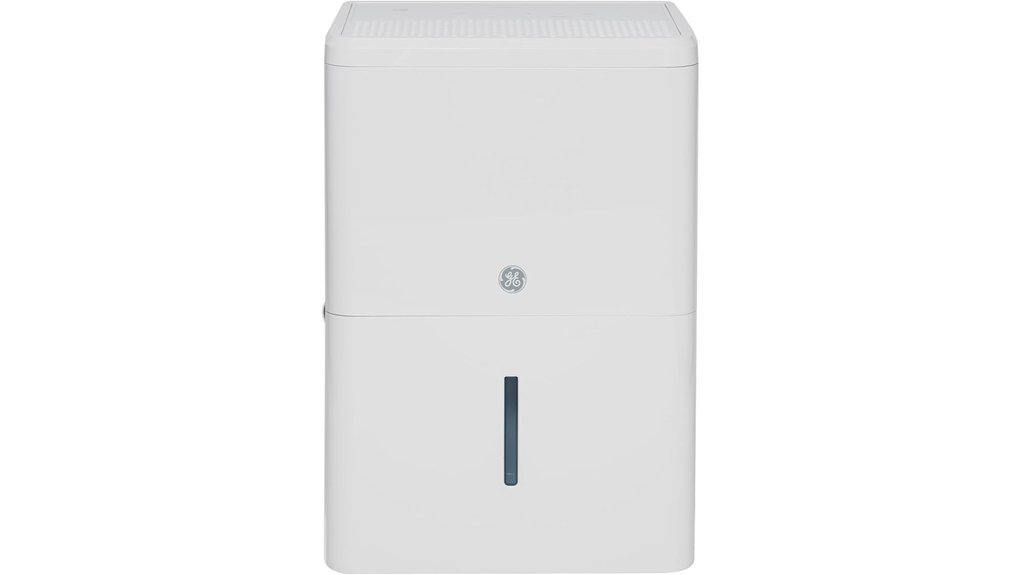
GE’s 50-pint Smart Dry model suits buyers who want the fan speed to respond automatically as room humidity changes. It also provides an adjustable humidistat, bucket and filter alerts, auto-restart, and auto-defrost. The linked listing indicates pump-assisted drainage; because hose length and vertical lift can vary by exact version, confirm those details on the current product page before ordering.
Why you’ll like it: Smart Dry reduces the need to keep changing fan settings as the room moves toward your chosen humidity target.
Best For: Damp basements, garages, and buyers who want automatic operation with flexible drainage.
Who Should Avoid It: Buyers who need a small, lightweight unit for frequent carrying.
Pros:
- 50-pint rated capacity for high-moisture residential spaces.
- Smart Dry automatically adjusts fan speed based on room conditions.
- Includes useful bucket, filter, restart, and defrost functions.
Cons:
- Pump hose and lift specifications should be checked on the exact listing.
- The tall cabinet requires dedicated floor space.
- Humidity shown by a built-in sensor can differ from a separate room hygrometer.
Midea 50 Pint Dehumidifier With Pump Included
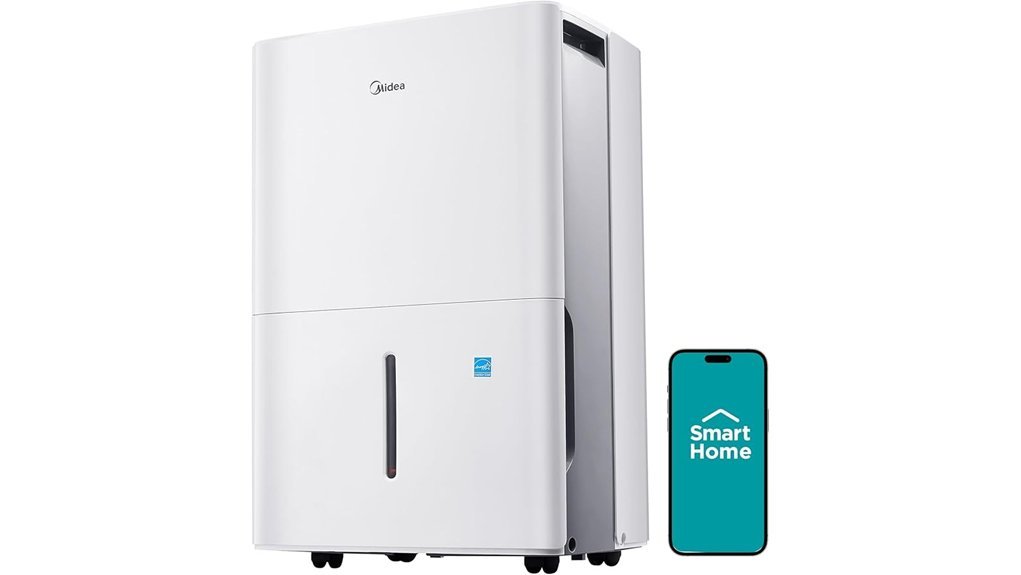
The Midea 50 Pint Dehumidifier with pump is the strongest fit here for buyers who want hands-free drainage and remote control. The model is listed for spaces up to 4,500 square feet, with adjustable humidity settings, app control, voice-assistant compatibility, wheels, and a built-in pump that can send water to a suitable drain point. A pump is especially useful when gravity drainage is impossible.
Why you’ll like it: You can monitor or adjust the unit remotely and avoid carrying a full bucket when the pump is set up correctly.
Best For: Basements, crawlspaces, offices, and larger rooms where the nearest drain is above or away from the unit.
Who Should Avoid It: Buyers who do not need Wi-Fi or who plan to carry the machine up and down stairs regularly.
Pros:
- Built-in pump supports more flexible drainage than a gravity hose alone.
- SmartHome app and compatible voice control add remote access.
- Adjustable humidity control, wheels, and multiple operating options.
Cons:
- At about 42 pounds, it is bulky to lift.
- Smart features depend on network setup and app support.
- Confirm Canadian warranty service and shipping eligibility before importing.
AEOCKY 3500 Sq.Ft Compressor Dehumidifier with Drain Hose
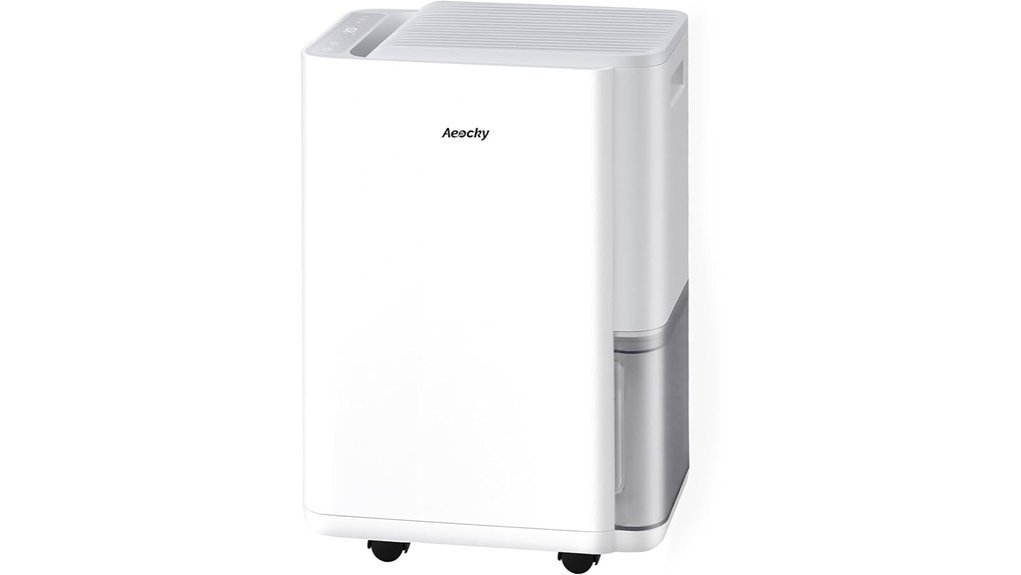
AEOCKY’s compact 50-pint model is intended for buyers who need stronger compressor-based moisture removal without a full-size cabinet. It is listed for up to 3,500 square feet and includes adjustable humidity control, sleep and automatic modes, a small tank, and a drain hose for continuous gravity drainage. Its compact size is useful in a bathroom, RV, or tight basement corner, provided there is enough clearance for airflow.
Why you’ll like it: The narrow cabinet is easier to place where a conventional 50-pint unit may feel intrusive.
Best For: Tight rooms, bathrooms, RVs, and basements with a nearby low-level drain.
Who Should Avoid It: Buyers who cannot use continuous drainage and do not want to empty a small tank frequently.
Pros:
- Compact cabinet compared with many traditional 50-pint models.
- Drain hose and garden-hose adapter support longer gravity-drain setups.
- Adjustable humidistat and automatic safety functions improve everyday usability.
Cons:
- The small tank can fill quickly in very damp conditions.
- Gravity drainage requires the hose outlet to stay below the unit’s drain port.
- Do not assume it will dehumidify an entire multi-room floor from one closed-off location.
Amazon Basics 50-Pint Dehumidifier with Pump
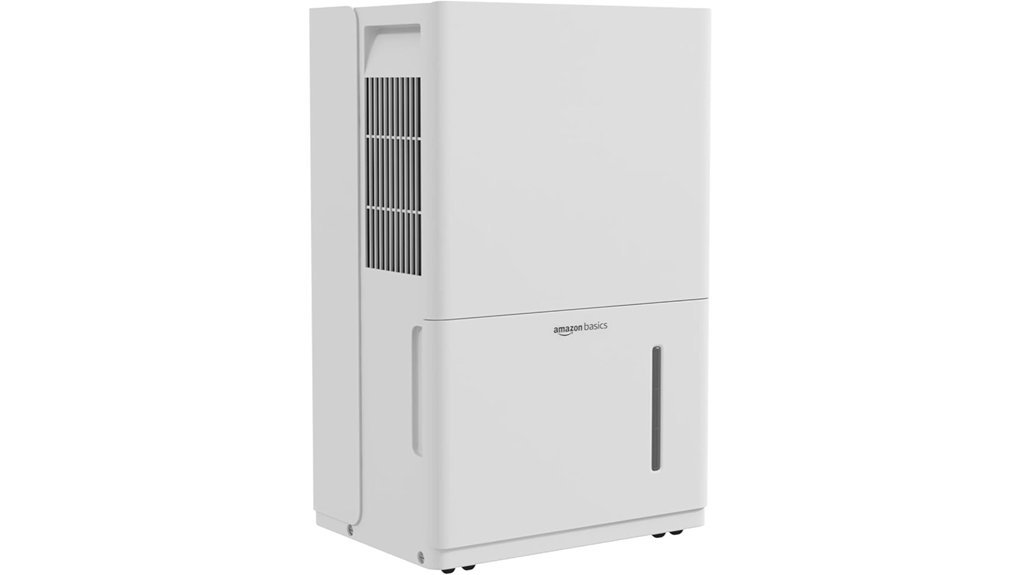
The Amazon Basics 50-pint model focuses on low-maintenance operation for larger residential spaces. Its listed features include a drain pump, adjustable humidity control, auto-defrost, auto-restart, overflow protection, a timer, a reusable filter, and caster wheels. It is a sensible alternative when you want pump drainage but do not need app or voice control.
Why you’ll like it: It combines the most useful set-and-forget functions without making smart-home features the main selling point.
Best For: Basements, rec rooms, and open areas where pump drainage is more practical than emptying a tank.
Who Should Avoid It: Buyers who want remote monitoring or who only need moisture control in a small room.
Pros:
- Drain pump reduces reliance on manual bucket emptying.
- Auto-restart, auto-defrost, timer, and overflow protection support unattended operation.
- Reusable filter helps keep routine maintenance simple.
Cons:
- No app or voice control is listed.
- Pump setup and hose routing still need to follow the manual.
- Check current certification, warranty, and Canadian delivery details for the exact model.
Factors to Consider When Choosing a 50 Pint Dehumidifier in Canada
Room Size and Dampness
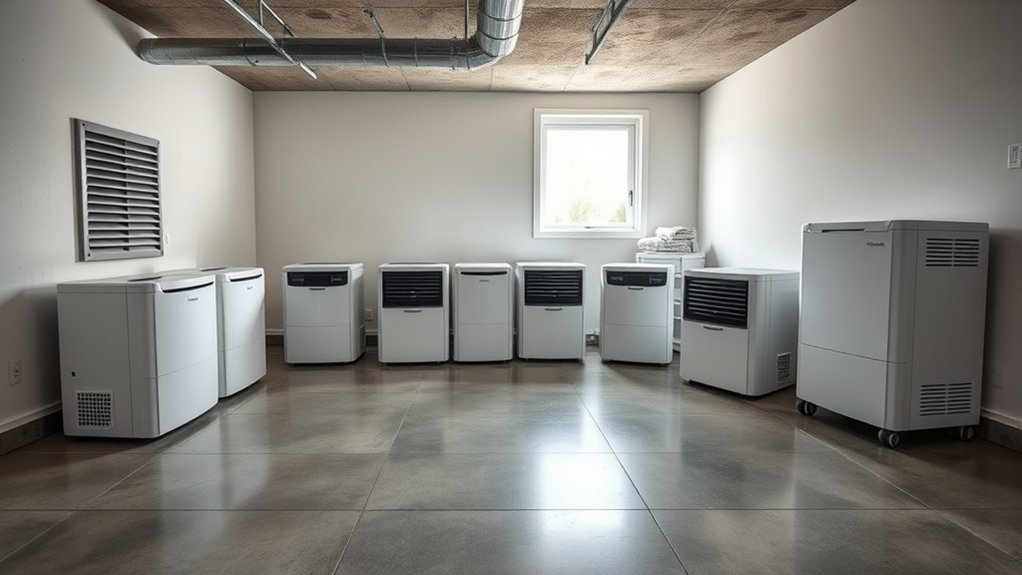
Do not choose by advertised square footage alone. A cold, very damp basement may need more runtime than a warmer open room of the same size. Check the unit’s rated pint capacity, airflow, minimum operating temperature, drainage setup, and the starting relative humidity. Keep doors and windows closed while it runs unless the manual says otherwise.
Humidity Target
For most Canadian homes, a target within 30% to 50% relative humidity is a useful range. In colder weather, a lower setting may be needed to limit window and wall condensation. Use a separate hygrometer to compare readings, and avoid running the unit so aggressively that the room becomes uncomfortably dry.
Gravity Drain Versus Built-In Pump
A gravity hose is simple and reliable, but the entire hose must slope downward to a suitable drain. A built-in pump can move water horizontally or upward, making it more practical for some basements. Before buying, confirm whether the hose is included, the allowed vertical lift, the outlet size, and what happens if the pump or power fails.
Cold Basement Operation
Auto-defrost helps protect the coils, but it does not make every compressor dehumidifier effective at every low temperature. Check the manufacturer’s minimum operating temperature. In a cold unfinished basement, solving water entry, insulating condensation-prone surfaces, improving drainage, or adding appropriate heat may matter as much as dehumidifier capacity.
Energy Efficiency
Look for a current ENERGY STAR label tied to the exact model number rather than relying only on an old product title. An accurate humidistat, clean filter, unobstructed airflow, and properly sized unit can also reduce unnecessary runtime. Compare the listed integrated energy factor when it is available.
Noise and Placement
Compressor and fan noise is more noticeable in bedrooms and offices than in utility rooms. Compare the listed low and high fan noise levels, but remember that room surfaces can amplify sound. Leave the airflow clearance required by the manual and use a stable, level floor to limit vibration.
Canadian Purchase Checklist
- Confirm delivery to your postal code and the final landed cost.
- Check the exact model number, voltage, plug, and recognized Canadian electrical certification.
- Confirm who provides warranty service in Canada and who pays return shipping.
- Verify whether the drain hose, pump hose, or garden-hose adapter is included.
- Measure the route to the drain and check pump lift or gravity-slope requirements.
- Use the model’s rated capacity and operating temperature, not square footage alone.
Moisture-control note: A dehumidifier can lower indoor humidity, but it will not repair foundation seepage, plumbing leaks, poor grading, or an active mould problem. Correct the moisture source and seek qualified help when damage is extensive or keeps returning.
Frequently Asked Questions
How Often Should I Clean a 50-Pint Dehumidifier Filter?
Follow the exact manual. A two-week inspection is a reasonable starting point for many washable filters, with more frequent cleaning in dusty rooms or homes with pets. Let a washed filter dry fully before reinstalling it.
Can I Run a Dehumidifier Continuously in a Canadian Winter?
Only when the room temperature is within the model’s operating range and the humidity level actually calls for it. Canadian homes often need a lower humidity target in cold weather to reduce condensation, but continuous operation can waste energy or over-dry the room. Use a humidistat and hygrometer rather than leaving the unit on without monitoring.
What Humidity Level Is Best for Basements?
A practical target is generally within 30% to 50% relative humidity. Many basement owners aim near 40% to 50% during humid weather, then adjust lower if cold surfaces begin to collect condensation.
Do I Need a Built-In Pump?
You need one when the water must travel upward or when no lower floor drain is available. A gravity hose is usually simpler when a nearby drain sits below the dehumidifier outlet.
Does a 50-Pint Dehumidifier Really Cover 5,000 Square Feet?
Coverage claims are estimates, not guarantees. A 50-pint rating describes daily water removal under defined test conditions. Actual coverage depends on temperature, humidity, room layout, ceiling height, air leakage, and the moisture source.
Will a Dehumidifier Remove Mould?
No. It can reduce the excess humidity that supports mould growth, but visible mould and the underlying moisture source still need proper cleanup and repair.
Conclusion
The Keystone KSTAD504F is the clearest all-around choice for buyers who value a large tank and straightforward controls. Choose the Midea when smart control and pump drainage matter most, the GE Smart Dry for automatic fan adjustment, the AEOCKY for tighter spaces, or the Amazon Basics for a simpler pump-equipped design. For Canadian buyers, the final decision should also include shipping eligibility, certification, warranty service, drainage layout, and cold-basement operating limits.
Final recommendation: Start with the Keystone for a conventional gravity-drain setup or the Midea when you need pump-assisted drainage and remote control.
Check the exact model details before ordering because product specifications, certification status, included accessories, and Canadian delivery options can change.