Affiliate disclosure: This article contains Amazon affiliate links. If you buy through these links, we may earn a commission at no extra cost to you.
If you’re choosing the best dehumidifier for a basement in Canada in 2026, focus on capacity, quiet operation, cold-weather performance, energy efficiency, and easy drainage. Canadian basements can stay damp for long periods, especially if they are partly below grade, poorly ventilated, or cooler than the rest of the home.
The best choice depends on your basement size, humidity level, drain access, and how often you want to empty the tank. For most full basements, a compressor dehumidifier with a humidistat, auto-defrost, and continuous drainage is a better fit than a small compact moisture absorber.
Quick Verdict
Best overall for most damp basements: AEOCKY 50 Pint Compressor Dehumidifier.
Best high-capacity pick: AEOCKY 4500 Sq.Ft Energy Star Dehumidifier 80 Pint.
Best for medium basements: GE Portable Dehumidifier 25 Pint for 1,500 sq. ft.
Best smaller-basement option: GoGuess 1600 Sq.ft Dehumidifier if you need a lighter unit for a modest damp space.
Key Takeaways
- Choose 50 pints or more if your basement smells musty, feels damp, or runs humid most days.
- Pick continuous drainage if you have a floor drain or utility sink nearby.
- Look for auto-defrost if your basement gets cool in winter.
- Use the listed pint capacity as a guide, not a guarantee, because real moisture removal changes with temperature and humidity.
- Keep basement humidity around 30% to 50% and fix leaks instead of relying only on a dehumidifier.
Capacity Note for Canadian Basements
Many dehumidifier capacity ratings are based on warm, high-humidity conditions. In a cooler Canadian basement, actual daily water removal may be lower. For best results, match the unit to both room size and moisture severity, not square footage alone.
Quick Comparison
| Product | Best For | Coverage / Capacity | CTA |
|---|---|---|---|
| AEOCKY 50 Pint Compressor Dehumidifier | Best overall for damp basements | Up to 3,500 sq. ft. / 50 pints | Check Price on Amazon |
| AEOCKY 4500 Sq.Ft Energy Star 80 Pint | High-capacity use | Up to 4,500 sq. ft. / 80 pints | Check Price on Amazon |
| GE Portable Dehumidifier 25 Pint | Medium basements | Up to 1,500 sq. ft. / 25 pints | Check Price on Amazon |
| SEMKAP 32 Pint Dehumidifier | Quiet larger rooms | Up to 2,500 sq. ft. / 32 pints | Check Price on Amazon |
| Tehanld 2500 Sq.Ft Smart Dehumidifier | Smart control | Up to 2,500 sq. ft. / about 34–35 pints | Check Price on Amazon |
| BANABIE 2500 Sq.Ft 32 Pint Smart Dehumidifier | Quiet daily basement use | Up to 2,500 sq. ft. / 32 pints | Check Price on Amazon |
| PLUSCENT 32 Pint Dehumidifier | Large rooms and storage areas | Up to 2,500 sq. ft. / 32 pints | Check Price on Amazon |
| GoGuess 1600 Sq.ft Dehumidifier | Small to medium damp spaces | Up to 1,600 sq. ft. / 21 pints | Check Price on Amazon |
AEOCKY 50 Pint Compressor Dehumidifier with Drain Hose
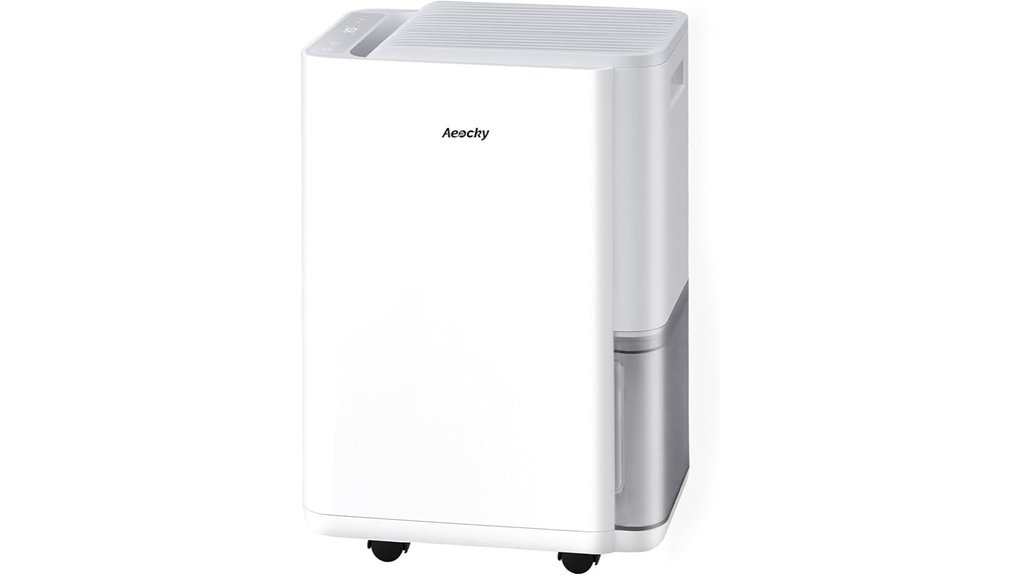
AEOCKY’s 50-pint compressor dehumidifier is the best overall fit here for many damp Canadian basements. It is listed for spaces up to 3,500 sq. ft. and is designed for stronger moisture removal than smaller 20- to 32-pint models. That makes it useful if your basement feels muggy, smells musty, or needs daily humidity control.
You also get a drain hose option, multiple operating modes, adjustable humidity control, and a compact body that can fit near a drain, utility area, or basement wall. Like most compressor dehumidifiers, it will perform best in warmer basement conditions, so use auto-defrost and a humidistat instead of running it blindly all winter.
Why You’ll Like It: The 50-pint capacity gives you a strong middle ground. It is more capable than compact units but not as bulky as the largest high-capacity basement models.
Best For: Homeowners with damp basements, garages, laundry rooms, or large lower-level spaces that need steady moisture removal and continuous drainage.
Who Should Avoid This: It may be more than you need for a small bedroom, closet, bathroom, or lightly damp basement corner.
Pros:
- Listed to remove up to 50 pints per day for larger damp spaces.
- Drain hose option helps reduce daily tank emptying.
- Good fit for musty basements that need stronger moisture control.
Cons:
- Real-world moisture removal can drop in cooler basement temperatures.
- May be overkill for small rooms or occasional humidity control.
- As a compressor model, it is less compact than small portable units.
AEOCKY 4500 Sq.Ft Energy Star Dehumidifier (80 Pint)
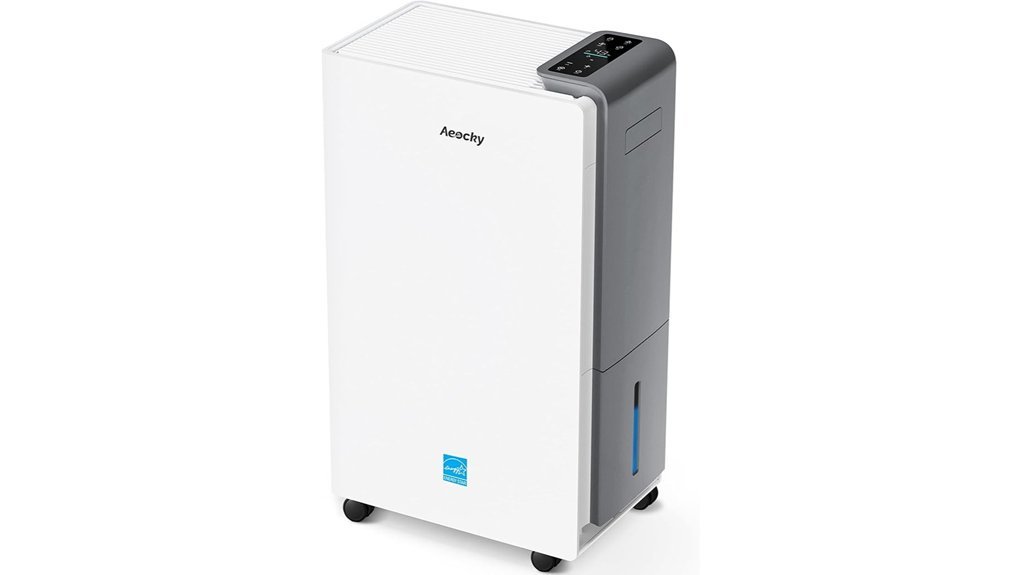
If you want the strongest basement dehumidifier in this list, the AEOCKY RHEA-001 is the high-capacity option to consider. It is listed for up to 4,500 sq. ft. with up to 80 pints per day of moisture removal, making it a better match for larger, wetter, or more open basement layouts.
It is marketed with ENERGY STAR Most Efficient 2025 positioning, smart humidity sensing, power-off memory, drain hose support, and quiet operation. Those features matter if your basement needs long daily runtime. Still, treat the 80-pint rating as a maximum listed capacity. Cooler basement air and lower humidity can reduce actual water removal.
Why You’ll Like It: This model gives you the most headroom for larger basements, heavier humidity, and longer unattended operation when paired with continuous drainage.
Best For: Homeowners who need a high-capacity dehumidifier for a large basement, storage area, or damp lower level.
Who Should Avoid This: It may be too powerful and too heavy for small rooms, occasional use, or lightly damp apartment spaces.
Pros:
- Listed for up to 80 pints per day and spaces up to 4,500 sq. ft.
- Useful for large basements where smaller units may run constantly.
- Smart sensing, memory restart, and drainage support improve hands-off use.
Cons:
- Higher-capacity models usually cost more upfront than smaller units.
- Large capacity may be unnecessary for a modest or only mildly damp basement.
- At this size class, it may be less convenient to move between floors.
GE Portable Dehumidifier 25 Pint for 1500 Sq Ft
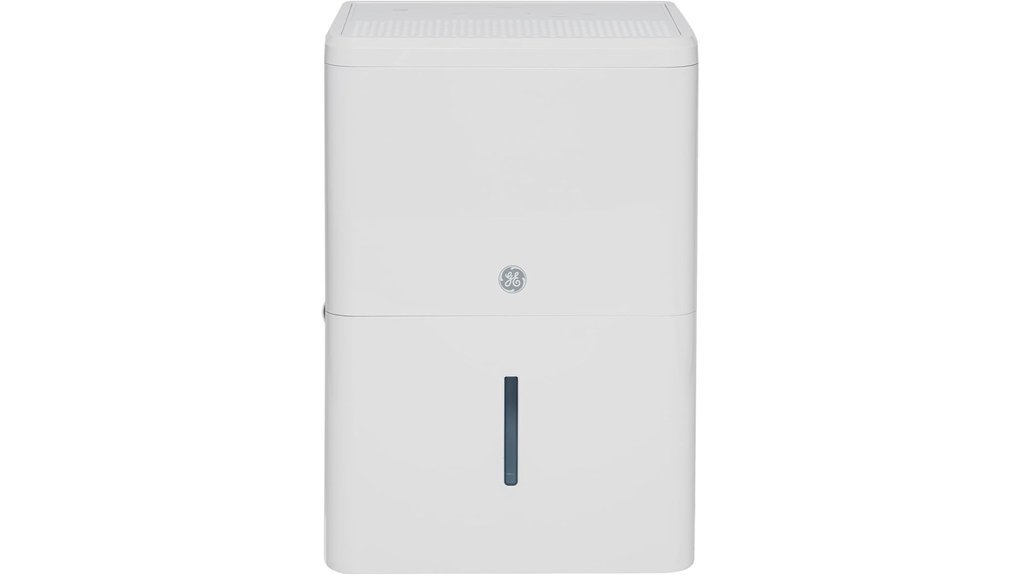
If you need a dependable dehumidifier for a basement up to 1,500 sq. ft., the GE Portable Dehumidifier 25 Pint is a practical fit. It removes up to 25 pints of moisture per day, so it can manage moderately damp basements, garages, and lower-level rooms without feeling oversized.
Smart Dry Technology adjusts fan speed to match humidity, while the adjustable humidistat lets you set a target comfort range. You’ll also get a bucket alarm, filter reminder, continuous drain option, auto restart, and auto defrost. Wheels and handles make it easier to move when you need to reposition it.
Why You’ll Like It: This model is simple, practical, and less intimidating than many oversized basement units. It works well if your basement is damp but not severely wet, and the continuous drain option helps reduce daily tank emptying.
Best For: Homeowners who need a portable, easy-to-use dehumidifier for medium-sized basements, garages, or damp rooms up to 1,500 sq. ft.
Who Should Avoid This: Skip it if your basement is very large, has standing moisture issues, or needs heavy-duty drying after leaks or floods.
Pros:
- Removes up to 25 pints of moisture per day for moderately damp areas.
- Smart Dry Technology and an adjustable humidistat help maintain comfortable humidity.
- Bucket alarm, filter reminder, continuous drain option, and easy mobility add convenience.
Cons:
- 25-pint capacity may be too small for very large or extremely wet spaces.
- Requires periodic filter cleaning and tank maintenance unless using continuous drain.
- Best suited for residential use, not heavy-duty commercial drying.
SEMKAP 32 Pint Dehumidifier for Home and Basement
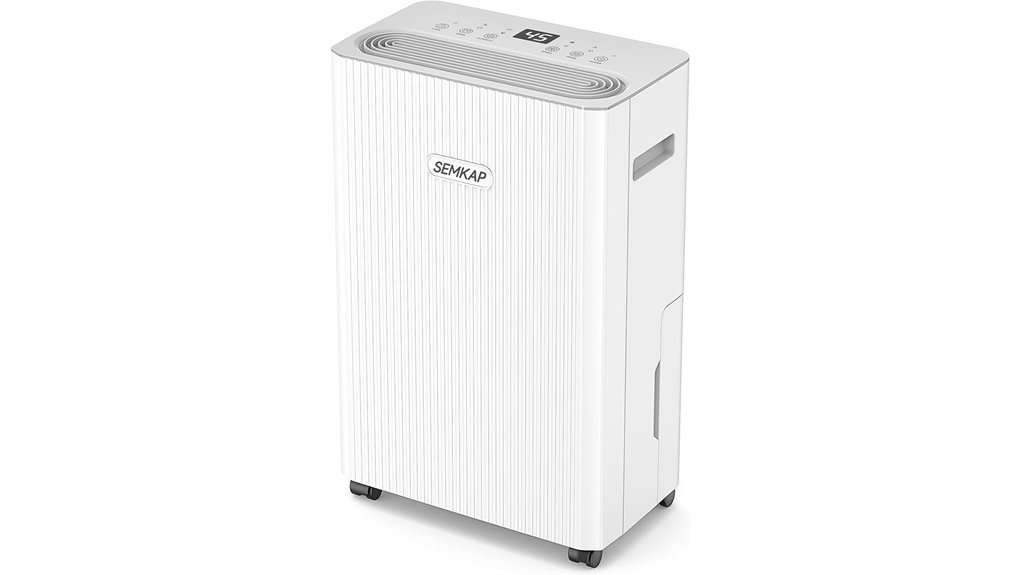
The SEMKAP 32 Pint Dehumidifier suits you if you need quiet, reliable moisture control for a medium to large basement. It is listed for up to 2,500 sq. ft. and removes up to 32 pints a day under the manufacturer’s stated conditions.
You can use Auto, Continuous, or Custom modes to keep basement humidity in a more comfortable range. The design includes a removable 2.5L tank, continuous drain support, 360° wheels, and an ergonomic handle. It is also listed with automatic defrost, which is helpful if your basement gets cool.
Why You’ll Like It: SEMKAP gives you a balanced mix of quiet operation, medium-large coverage, and flexible drainage. It is a good choice when you want a basement unit that can also work in laundry spaces or storage rooms.
Best For: Homeowners or renters with larger basements, garages, laundry rooms, or storage spaces who want quiet humidity control and flexible drainage options.
Who Should Avoid This: If your basement is extremely damp or much larger than 2,500 sq. ft., a stronger 50-pint or 80-pint option may be a better fit.
Pros:
- Covers up to 2,500 sq. ft. and removes up to 32 pints of moisture per day.
- Auto, Continuous, and Custom modes make operation easier.
- Manual and continuous drainage options reduce maintenance flexibility issues.
Cons:
- The 2.5L tank may need frequent emptying in very damp environments if not using the drain hose.
- Best performance may require letting the unit sit upright before first use.
- May not be powerful enough for severe moisture or very large basements.
Tehanld 2500 Sq.Ft Dehumidifier with Drain Hose, Smart Control
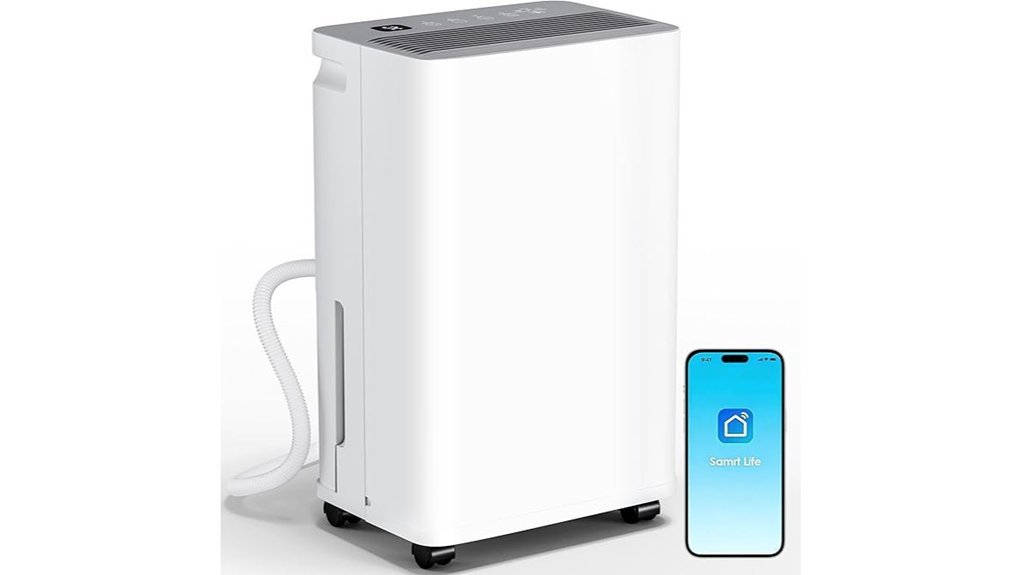
Tehanld’s 2500 sq. ft. smart dehumidifier fits basements where you want remote monitoring instead of checking the unit manually. It is listed around the mid-30-pint range, making it a suitable option for medium to larger spaces that need regular moisture control.
The Smart Life app lets you monitor humidity, switch modes, and set the timer from your phone. You can also use Auto, Manual, or Drying mode depending on whether you are controlling everyday dampness or helping laundry dry indoors. A drain hose and auto shutoff make it easier to run with less attention.
Why You’ll Like It: This is a practical choice if you want app control instead of walking downstairs to check the humidity. It is especially helpful for basements that need regular monitoring.
Best For: Homeowners who want smart controls, app monitoring, and flexible modes for basements, garages, and living areas.
Who Should Avoid This: Avoid it if you prefer simple buttons and do not want app-based features or smart controls.
Pros:
- Covers up to 2,500 sq. ft. for medium to larger basement spaces.
- Smart Life app control lets you monitor humidity, change modes, and set the timer remotely.
- Drain hose support helps reduce manual emptying.
Cons:
- Smart features may be unnecessary if you only want basic operation.
- Real-world output may vary with basement temperature and humidity.
- Portable, but still bulkier than small room dehumidifiers.
BANABIE 2500 Sq.Ft 32 Pint Smart Dehumidifier with Drain Hose
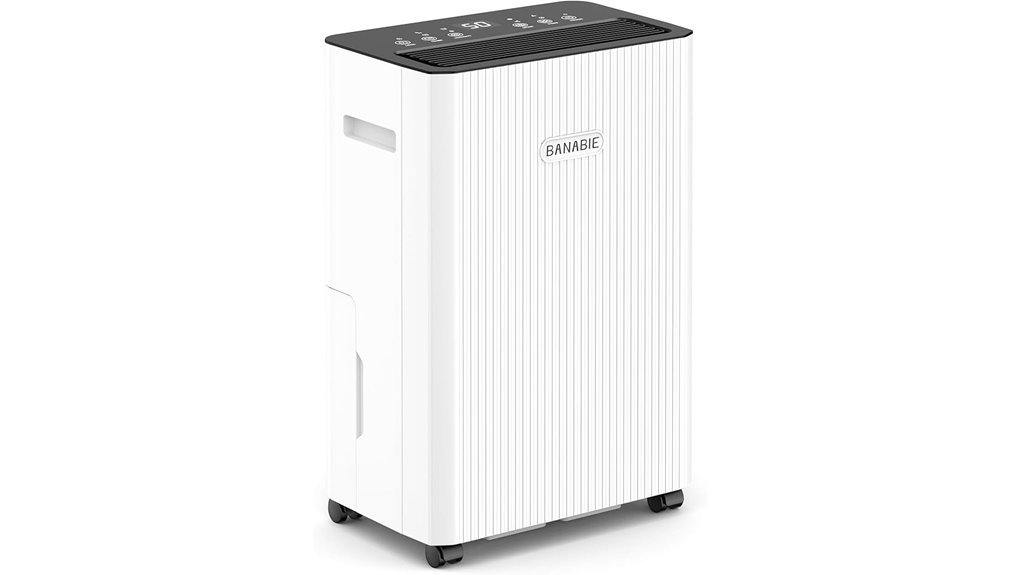
Need reliable basement moisture control for a medium to large space? This 2,500 sq. ft. 32-pint dehumidifier is built for everyday dampness, not emergency drying. Its high-efficiency compressor and smart airflow design help it manage regular humidity without requiring constant adjustment.
You can choose the gravity drain hose for continuous drainage or use the removable tank with auto shutoff. Smart controls help keep humidity in a comfortable range, while quiet operation, wheels, handles, child lock, and memory features make daily use simpler.
Why You’ll Like It: This model is built around convenience. The quiet operation, child lock, memory feature, and drain hose make it suitable for people who want steady humidity control with less daily effort.
Best For: Homeowners or renters needing quiet, smart humidity control for medium to large basements, bedrooms, bathrooms, or RVs.
Who Should Avoid This: If you need the highest moisture removal possible for a very wet basement, choose a higher-capacity unit instead.
Pros:
- Covers up to 2,500 sq. ft. and removes up to 32 pints of moisture per day.
- Offers flexible drainage with a gravity hose or removable tank.
- Quiet operation plus wheels, handles, child lock, and memory features help with daily use.
Cons:
- The 32-pint capacity may be less ideal for extremely damp or very large problem areas.
- Manual tank use may require frequent emptying during humid weather.
- Smart features may be more than needed for users wanting a very basic dehumidifier.
PLUSCENT 32 Pint Dehumidifier for Large Room
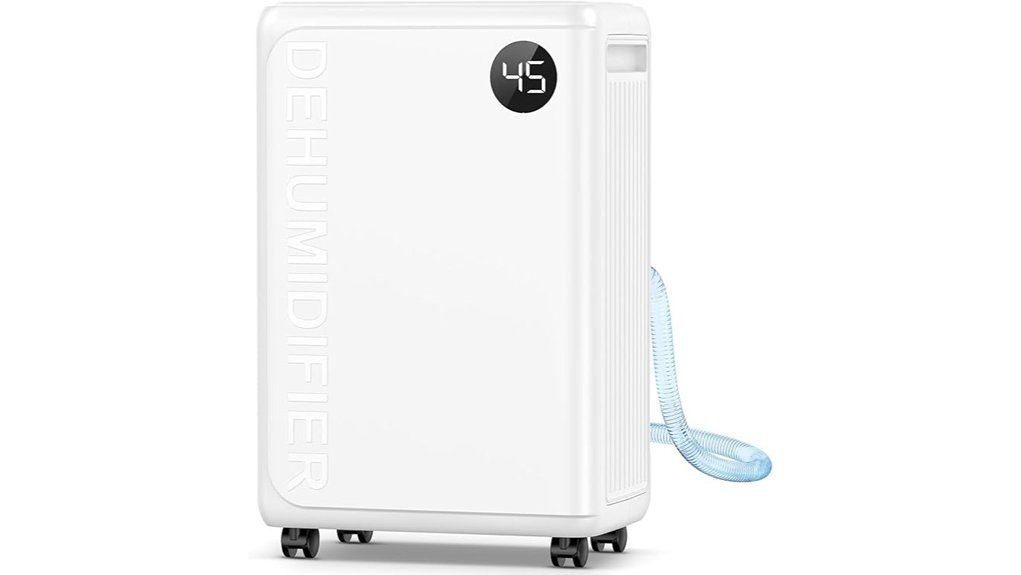
PLUSCENT’s 32-pint dehumidifier fits basements up to 2,500 sq. ft. with steady moisture control. You can set DEHU for target humidity, switch to CONT for heavier dampness, or use DRY mode when you need help with indoor laundry moisture.
The 24-hour timer lets you manage runtime, while the quiet operation makes it easier to use in finished basements, storage rooms, or lower-level living areas. Choose continuous drainage with the included hose or use the removable tank with auto-stop. You’ll also get a washable filter, child lock, auto-defrost, and easy-roll wheels.
Why You’ll Like It: PLUSCENT is useful for basements, storage rooms, laundry areas, and RV spaces where you want flexible modes and a washable filter without making the setup complicated.
Best For: Homeowners, renters, and RV users who need a quiet, compact dehumidifier for large spaces like basements, bedrooms, bathrooms, or storage areas.
Who Should Avoid This: If your room is much larger than 2,500 sq. ft. or you need commercial-level performance, this may not be enough.
Pros:
- Handles rooms up to 2,500 sq. ft. with 32-pint daily moisture removal.
- Includes useful everyday features like child lock, auto-defrost, and a 24-hour timer.
- Offers both continuous drainage and a removable tank for flexible use.
Cons:
- The tank may need frequent emptying in very damp conditions.
- Best unattended performance depends on using the drain hose.
- Not ideal for extremely large or commercial-scale spaces beyond 2,500 sq. ft.
GoGuess 1600 Sq.ft Dehumidifier with Drain Hose & Humidity Control
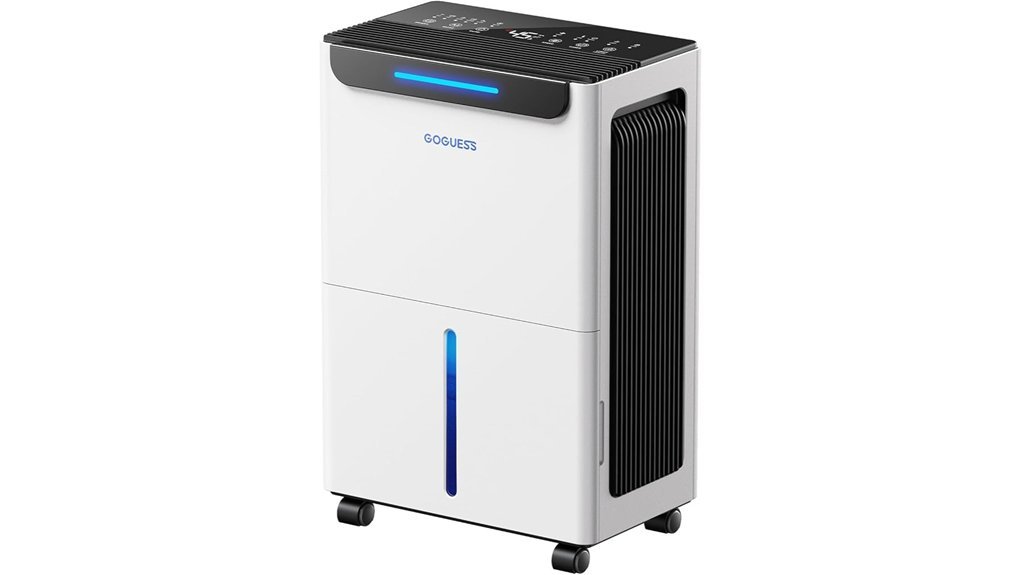
GoGuess’s 1600 sq.ft dehumidifier suits you if you need quiet, automatic basement moisture control in a smaller space. It is listed at 21 pints per day, which can help in basements, bathrooms, bedrooms, garages, and other damp spaces up to 1600 sq.ft.
Use DEHU mode to set humidity from 30% to 80%, TURBO for faster drying, or SLEEP for low-noise operation. You can drain manually or connect the hose for continuous use. Auto shutoff, a full-tank indicator, and an LED humidity display help make daily use easier.
Why You’ll Like It: This is a good middle-ground option if small compact dehumidifiers feel too weak but you do not need a large 50-pint or 80-pint basement model.
Best For: Homeowners or renters who need quiet, automatic moisture control in small to medium spaces such as modest basements, bathrooms, garages, and laundry rooms.
Who Should Avoid This: Avoid it for extra-large basements, very wet spaces, or layouts where the hose cannot reach a drain comfortably.
Pros:
- Removes up to 21 pints of moisture per day for smaller damp indoor spaces.
- Offers DEHU, TURBO, and SLEEP modes plus customizable humidity settings.
- Includes manual and continuous drainage options with auto shutoff.
Cons:
- The water tank may require frequent emptying if continuous drainage isn’t used.
- At 1600 sq.ft., it may be less suitable for very large or extremely wet areas.
- The drain hose length may be too short for some basement layouts.
Factors to Consider When Choosing a Dehumidifier for Basement Canada
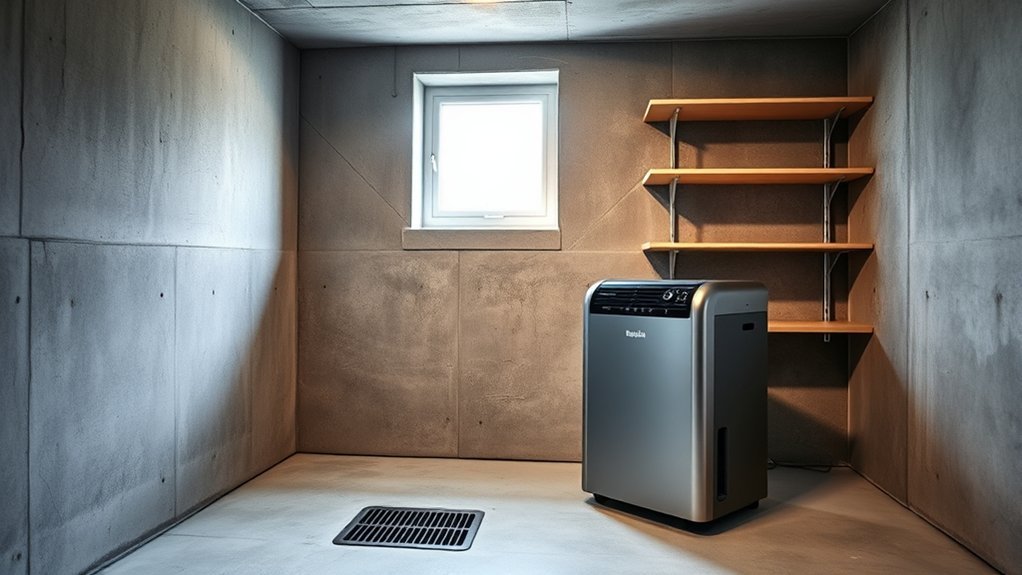
When you choose a dehumidifier for your Canadian basement, start by matching its coverage area and pint capacity to the room size and moisture level. You’ll also want to check drainage options, noise level, energy efficiency, auto-defrost, and warranty support. The right balance helps you keep your basement dry without extra hassle.
Before You Buy Checklist
- Measure your basement square footage before choosing pint capacity.
- Check whether you have a floor drain, utility sink, or sump area for continuous drainage.
- Look for auto-defrost if the basement gets cool in winter.
- Choose a lower dB rating if the basement is used as a bedroom, office, gym, or living space.
- Pick a model with wheels or handles if you plan to move it between rooms.
- Use a hygrometer or built-in humidity display to avoid over-drying the air.
- Check plug type, voltage, shipping, warranty, and return terms when buying from a U.S. Amazon listing for use in Canada.
Basement Size Coverage
For a basement dehumidifier in Canada, size coverage should be one of your first checks, since most basement-ready portable units are designed for small, medium, or large spaces. You should match the unit to your basement’s actual footprint so it can control moisture without running harder than needed.
If your basement stays damp, feels muggy, or has a history of seepage, choose a more robust model that suits those conditions. Also look for adjustable humidity settings so you can keep levels near 30% to 50%. In a basement, reliable drainage matters too, because continuous water removal helps maintain performance with less upkeep.
Pint Capacity Needs
Pint capacity matters because it determines how much moisture your dehumidifier can pull from the air each day. For a basement up to 1,500 sq. ft., a 20- to 30-pint unit can work if the space is only moderately damp. If your space is larger or smells musty often, look for 50 pints or more. If your basement stays very wet or covers a larger footprint, an 80-pint option may make more sense.
Focus on the moisture removal rate your space actually needs rather than buying only by square footage. A smaller unit may run constantly in a wet basement, while a larger unit can reach the target humidity faster.
Drainage Options
Drainage options matter just as much as capacity, especially if you don’t want to be emptying the tank all the time. If you’re okay with occasional upkeep, a manual drain tank can work well, but make sure it’s large enough for your basement’s humidity level.
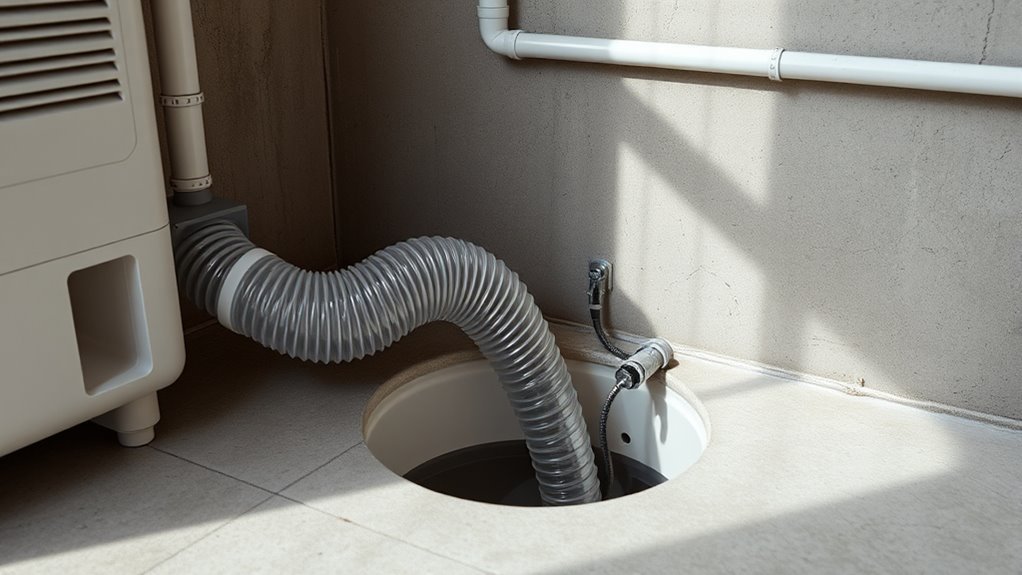
For easier use, choose continuous drainage and connect a hose to a nearby drain. If your basement has a floor drain, a gravity-feed model lets water flow out on its own, which cuts down on effort. You should also look for auto shut-off protection. It stops the unit when the tank fills or drainage fails, helping you avoid spills and water damage.
Noise Level
Noise level is worth checking if you plan to run your basement dehumidifier regularly, especially in finished spaces or near bedrooms. You’ll usually see it listed in decibels, or dB, and quieter models often run in the 30 to 45 dB range. Higher fan settings may sound louder, especially in open basement rooms.
If you want the calmest environment, choose a model with sleep mode, adjustable fan speeds, or a lower listed dB rating. Choosing the right noise level lets you keep your basement comfortable without disrupting sleep, work, or everyday conversations.
Energy Efficiency
After considering how quietly a unit runs, check how much power it may use. You can reduce operating costs by choosing an energy-efficient dehumidifier, especially if the unit runs for many hours per day. ENERGY STAR models are worth considering for frequent basement use.
Match capacity to your basement size, because an appropriately sized unit finishes the job sooner and runs less often. Smart humidity control helps maintain the right level automatically, and auto shut-off prevents wasted energy once the target is reached.
Cold-Weather Performance
Cold weather can make some dehumidifiers struggle, especially when basement temperatures dip below 65°F (18°C). In an unheated basement or garage, frost can form on standard compressor coils and reduce moisture removal. Choose a unit with auto-defrost if your basement gets cool.
If your basement stays very cold through winter, a standard compressor unit may not be the best year-round solution. Warm the space if needed, use the unit within its rated temperature range, and rely on a humidity meter so you do not run the dehumidifier when the air is already dry.
Tank Size and Maintenance
Tank size affects how often you need to empty the unit. A small tank can work if your basement is only mildly damp, but it becomes annoying if the unit fills several times a day. If you want less upkeep, choose a model with continuous drainage or a larger water tank.
Also check whether the filter is washable, easy to remove, and supported by a reminder light. Regular filter cleaning helps keep airflow strong, reduces strain on the motor, and keeps the dehumidifier working more efficiently.
Smart Features and Controls
Smart controls are not required, but they can make basement humidity easier to manage. App control, memory restart, child lock, timers, humidity displays, and automatic modes are useful if your basement is used daily or you do not want to keep adjusting settings.
If you prefer simple operation, choose a model with clear buttons and basic auto mode instead. The best control setup is the one you will actually use consistently.
Pro Tips for Better Basement Results
- Place the dehumidifier where air can move freely around the intake and outlet.
- Keep basement doors and windows closed while the unit runs.
- Use continuous drainage if the basement stays damp for long periods.
- Clean the filter regularly so the unit does not lose airflow.
- Fix leaks, seepage, and poor ventilation instead of relying only on a dehumidifier.
Safety Note
A dehumidifier can help control damp air, but it should not replace repairs for water leaks, foundation seepage, plumbing issues, or active flooding. Always follow the manufacturer’s setup instructions, keep the unit upright before first use when required, and use a safe electrical outlet away from standing water.
Frequently Asked Questions
How Often Should Basement Dehumidifier Filters Be Cleaned?
You should clean your basement dehumidifier filter every 2 to 4 weeks, or more often if you run it daily, notice dust buildup, or live in a damp, dusty basement. Check the manual, too, because filter access and cleaning instructions can vary by model.
Do Dehumidifiers Work in Unheated Canadian Basements?
Yes, you can use one in an unheated basement, but you’ll need a unit rated for the temperature conditions. Standard compressor models may lose efficiency in cool spaces, and some can frost up if they do not have auto-defrost or low-temperature support.
What Humidity Level Is Best for Basement Mold Prevention?
You’ll want to keep basement humidity between 30% and 50%, ideally around 40% to 45% for many homes. That range helps reduce dampness, protect stored items, and avoid overly dry air.
Can Basement Dehumidifiers Run Continuously in Winter?
Yes, you can run basement dehumidifiers continuously in winter if your basement stays damp and the unit supports the temperature conditions. If the air feels dry or humidity is already low, running it nonstop may waste energy. Use the humidistat or a separate humidity meter to decide.
Are ENERGY STAR Dehumidifiers Worth It in Canada?
Yes, ENERGY STAR dehumidifiers can be worth it in Canada, especially if you run your unit often. They can help reduce electricity use while still controlling moisture, which matters in basements that need daily operation.
Is a Compact Dehumidifier Enough for a Basement?
A compact dehumidifier may help with a small damp corner, closet, bathroom, or storage area, but it is usually not enough for a full basement. For a musty smell, wet walls, high humidity, or daily dampness, choose a compressor model with higher pint capacity and continuous drainage.
Should I Use the Tank or Continuous Drainage?
Use the tank if your basement is only mildly damp or if you move the unit between rooms. Use continuous drainage if the basement stays damp daily, the tank fills quickly, or you want the dehumidifier to run with less maintenance.
What Size Dehumidifier Is Best for a Damp Basement?
For a mildly damp medium basement, a 25- to 32-pint model can work. For a larger or mustier basement, a 50-pint model is usually a better starting point. For very large or consistently wet spaces, consider a higher-capacity model and fix the moisture source.
Final Recommendation
For most Canadian basements, start with the AEOCKY 50 Pint because it offers stronger moisture removal than mid-size units without jumping straight to the largest option. Pick the AEOCKY 80 Pint if your basement is larger, wetter, or needs more drying headroom. Choose the GE 25 Pint for medium damp spaces where a large unit would be too much.
If your basement is smaller or you need a lighter unit, GoGuess gives you a more modest basement-ready option. The best dehumidifier is the one that matches your space, has the drainage setup you need, and can run comfortably without too much noise or maintenance.
Conclusion
Choosing the right basement dehumidifier in Canada comes down to your space, moisture level, winter conditions, and how much convenience you want. You’ll want a unit that works hard without making daily maintenance harder.
Pick a model with the right pint capacity, use continuous drainage when possible, clean the filter regularly, and keep humidity near 30% to 50%. With the right setup, you can keep dampness in check and make your basement feel cleaner, drier, and more comfortable.