Affiliate note: This article contains Amazon affiliate links. If you buy through these links, we may earn a small commission at no extra cost to you.
For basement asthma concerns, you want a dehumidifier that helps keep indoor humidity around 30% to 50%, runs quietly, and removes enough moisture for the size of your basement. A dehumidifier is not a medical treatment, but the right model may help reduce damp conditions that can support mold, mildew, and dust mites. Top picks in this guide include the Ludatido 80-pint, DECIUU 100-pint with pump, 95OZ compact model, AEOCKY 3,500-sq.-ft. unit, PLUSCENT 32-pint, hOmeLabs Wi-Fi model, and Gasbye 2026 Energy Star option. Choose based on basement size, drainage setup, noise level, tank capacity, and how much hands-free control you need.
Quick Verdict
Best for large damp basements: DECIUU 100 Pint with Pump or Gasbye 2026 Energy Star Dehumidifier.
Best for quiet everyday use: Ludatido 80 Pint/Day or PLUSCENT 32 Pint.
Best for smart control: hOmeLabs Wi-Fi Dehumidifier.
Best for smaller rooms, RVs, or light dampness: 95OZ compact dehumidifier.
Best buying tip: If your basement is very damp, choose a compressor model with continuous drainage instead of relying only on a small tank.
Quick Comparison Table
| Product | Best For | Main Strength | Amazon |
|---|---|---|---|
| Ludatido 2026 ENERGY STAR Dehumidifier, 80 Pint/Day | Large basements and whole-home moisture control | Quiet high-capacity operation | Check Price |
| DECIUU 100 Pint Energy Star Dehumidifier with Pump | Large basements that need pump drainage | Built-in pump and strong moisture removal | Check Price |
| 95OZ Dehumidifier for Home 1000 Sq.Ft, Quiet Auto Shut Off | Small spaces, bedrooms, RVs, and light dampness | Compact size and quiet sleep mode | Check Price |
| AEOCKY 3500 Sq.Ft Compressor Dehumidifier with Drain Hose | Medium to large damp basements | Compressor power with continuous drainage | Check Price |
| PLUSCENT 32 Pint Dehumidifier for Large Rooms | Quiet basement and large-room use | Low noise, timer, modes, and easy rolling | Check Price |
| hOmeLabs Wi-Fi Dehumidifier for 7,000 Sq Ft | Very large spaces and remote control needs | Wi-Fi control and strong coverage | Check Price |
| Gasbye 2026 Energy Star Dehumidifier for Basement & Large Rooms | High-capacity basement moisture control | Multiple modes and drainage options | Check Price |
Important Asthma Note
A dehumidifier can help manage humidity, but it does not diagnose, treat, or cure asthma. If basement air seems to trigger breathing symptoms, also look for leaks, mold, poor ventilation, dust buildup, and allergens. Speak with a qualified health professional for asthma care and contact a remediation professional if you see or smell mold.
Ludatido 2026 ENERGY STAR Dehumidifier, 80 Pint/Day
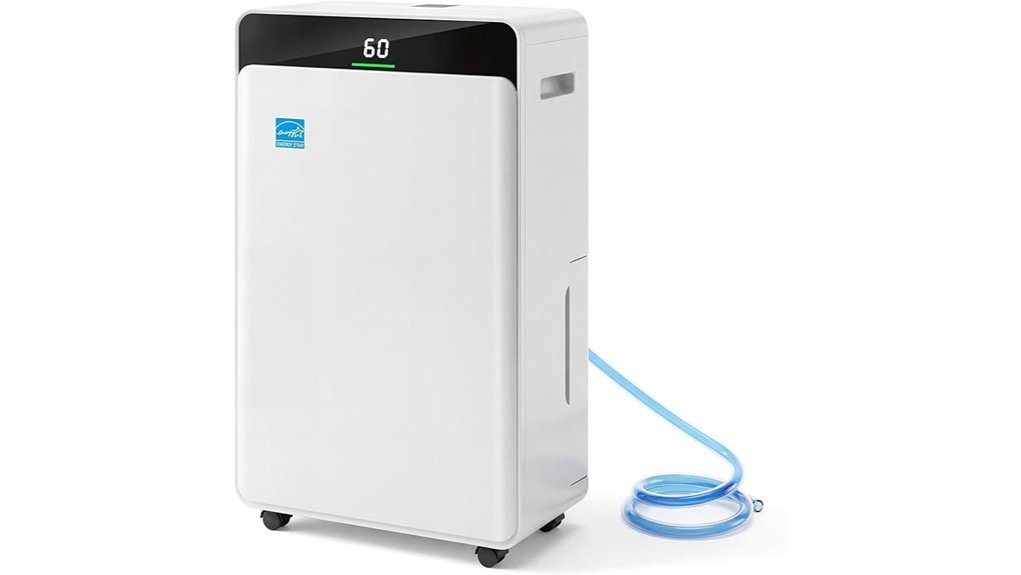
Best Quiet High-Capacity Pick
The Ludatido 2026 ENERGY STAR Dehumidifier, 80 Pint/Day is a strong pick if you need powerful moisture control for a large, damp basement and want a less humid environment without high daily hassle. You get up to 80 pints of removal daily, plus coverage for spaces up to 5,000 sq. ft. It uses 40% less energy than conventional models, so you can run it more efficiently when basement humidity rises. The 1.72-gallon tank, auto drain option, and full-tank shutoff cut down on maintenance. At just 35dB, it is positioned as a quieter option for basements near living spaces, and its child lock and overheat protection add peace of mind.
Why You’ll Like It: This model fits buyers who want strong capacity but do not want a loud, harsh machine running all day. The combination of large-area coverage, quiet operation, and continuous drain support makes it useful for a damp basement that needs steady humidity control.
Best For: Homeowners with large, very humid spaces like basements, garages, or whole houses who want powerful dehumidifying with low energy use and quiet operation.
Who Should Buy This: Choose it if your basement feels damp often, you have a nearby drain, and you want a quieter unit that can run for long periods.
Who Should Avoid This: Skip it if you only need light moisture control in a tiny room, because a smaller unit may be easier to move and less expensive upfront.
Pros:
- Removes up to 80 pints of moisture per day and covers areas up to 5,000 sq. ft.
- ENERGY STAR certified and uses 40% less energy than conventional models.
- Quiet 35dB operation with helpful features like auto drain, shutoff, child lock, and overheat protection.
Cons:
- The 1.72-gallon tank may still need regular emptying if you don’t use the drain hose.
- Best suited for larger spaces, so it may be more than needed for small rooms.
- No mention of smart app control or advanced connectivity features.
DECIUU 100 Pint Energy Star Dehumidifier with Pump
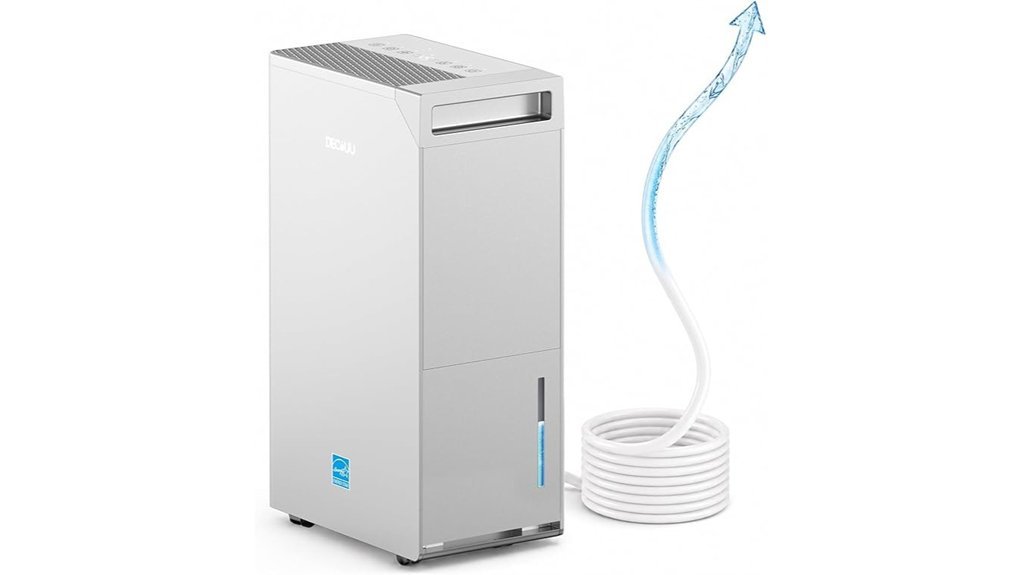
Best With Built-In Pump
If you need serious basement moisture control, the DECIUU 100 Pint Energy Star Dehumidifier with Pump fits large spaces up to 5,000 sq. ft. You can count on up to 100 pints a day in hot, humid conditions, while its Energy Star Most Efficient 2024 rating helps you save power. Set your target humidity from 35% to 80%, and the smart memory restores your last setting. Use the hose or pump for drainage up to 16.4 feet. Its washable filter, wheels, timer, and child lock make daily use easier.
Why You’ll Like It: The built-in pump is the key advantage. If your basement drain is not lower than the unit, the pump gives you more placement options than a basic gravity-drain model.
Best For: Homeowners, renters, or property managers who need powerful, energy-efficient moisture control for large spaces like basements, garages, and crawlspaces up to 5,000 sq. ft.
Who Should Buy This: Buy it if you want a high-capacity basement dehumidifier that can move water upward to a sink, utility drain, or other higher drainage point.
Who Should Avoid This: Avoid it if you have a small basement with only mild dampness, because the extra capacity and pump may be more than you need.
Pros:
- Strong dehumidification capacity for large areas, reaching up to 100 pints per day in very humid conditions.
- Energy Star Most Efficient 2024 rating helps reduce power use while maintaining performance.
- Flexible drainage options, including continuous hose drainage and a built-in pump for upward drainage.
Cons:
- May be larger and heavier than smaller dehumidifiers, so it could be less convenient in tight spaces.
- The 1.45-gallon tank may require frequent emptying if continuous drainage is not used.
- Higher-capacity models can be noisier than compact units during operation.
95OZ Dehumidifier for Home 1000 Sq.Ft, Quiet Auto Shut Off
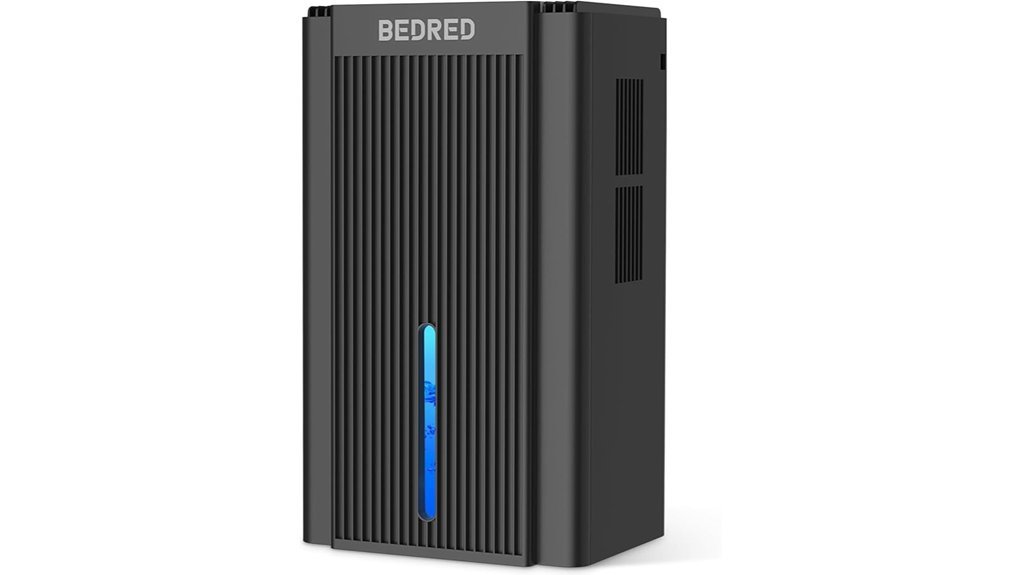
Best Compact Pick
Need a compact dehumidifier for a basement room, bedroom, closet area, or RV? This 95-ounce semiconductor model handles spaces up to 1,000 square feet, so you can tame light dampness without a bulky unit. You’ll get quiet, intermittent operation, plus sleep mode that cuts noise and switches off the 7-color ambient light for easier rest. When the tank fills, auto shutoff powers it down, so you don’t have to worry about overflow. Its slim 6.7 x 8.7 x 14.6-inch PP body fits neatly in living rooms, basements, and RVs, helping improve comfort where heavy-duty drying is not required.
Why You’ll Like It: This is the easiest option to place in smaller spaces. It is not the strongest choice for a wet basement, but it can be useful for lighter moisture, small rooms, and buyers who care about quiet operation.
Best For: Homeowners, renters, or RV users who want a compact, quiet dehumidifier for small to medium spaces like bedrooms, basements, and living rooms.
Who Should Buy This: Choose it if you need a simple, portable unit for mild dampness, a small basement area, or a room where a large compressor unit would feel excessive.
Who Should Avoid This: Avoid it for very wet basements, water intrusion, strong musty odors, or large open basement spaces that need fast moisture removal.
Pros:
- Covers up to 1,000 sq. ft., making it versatile for several room types.
- Quiet operation with sleep mode and optional 7-color ambient lighting.
- Auto shutoff helps prevent overflow when the water tank is full.
Cons:
- 95-ounce capacity may require frequent emptying in damp conditions.
- Semiconductor models are typically less powerful than compressor dehumidifiers.
- Best suited for moderate moisture control rather than heavy-duty dehumidification.
AEOCKY 3500 Sq.Ft Compressor Dehumidifier with Drain Hose
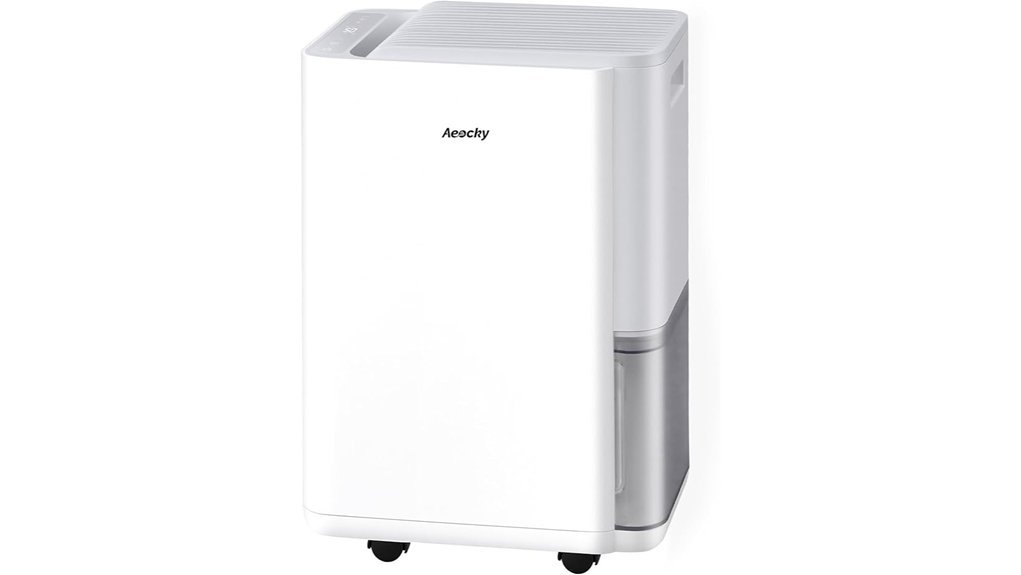
Best Mid-Size Basement Pick
AEOCKY’s 3,500 sq. ft. compressor dehumidifier suits you if your basement stays damp and allergy-prone. You’ll pull up to 50 pints a day in extreme humidity, and its brushless DC motor helps cut energy use by 50%. The compact body fits tight spaces, while 360° casters and a hidden handle make moving it easy. You can set humidity from 40% to 80% and choose Sleep, Auto, or Continuous mode. Continuous gravity drainage means less emptying, and the quiet design won’t disturb you. A 3-year warranty adds peace of mind.
Why You’ll Like It: This model balances basement-ready compressor performance with easier portability. It is a practical choice when you need more power than a compact unit but do not want the biggest machine in the roundup.
Best For: Homeowners needing a powerful, energy-efficient dehumidifier for large damp spaces like basements, bedrooms, RVs, or laundry areas.
Who Should Buy This: Buy it if you want a drain-hose option, adjustable humidity settings, and enough capacity for many medium to large basement layouts.
Who Should Avoid This: Avoid it if your drain point is above the unit and you need pump drainage, because this section highlights gravity drainage rather than a built-in pump.
Pros:
- Removes up to 50 pints per day and covers spaces up to 3,500 sq. ft.
- Energy-efficient brushless DC motor and quiet operation make it practical for daily use.
- Easy to move and use with 360° casters, hidden handle, and continuous drainage.
Cons:
- May be larger and more powerful than needed for small rooms.
- Continuous drainage works best only if a suitable drain location is available.
- Higher-performance units can be more expensive upfront than basic dehumidifiers.
PLUSCENT 32 Pint Dehumidifier for Large Rooms
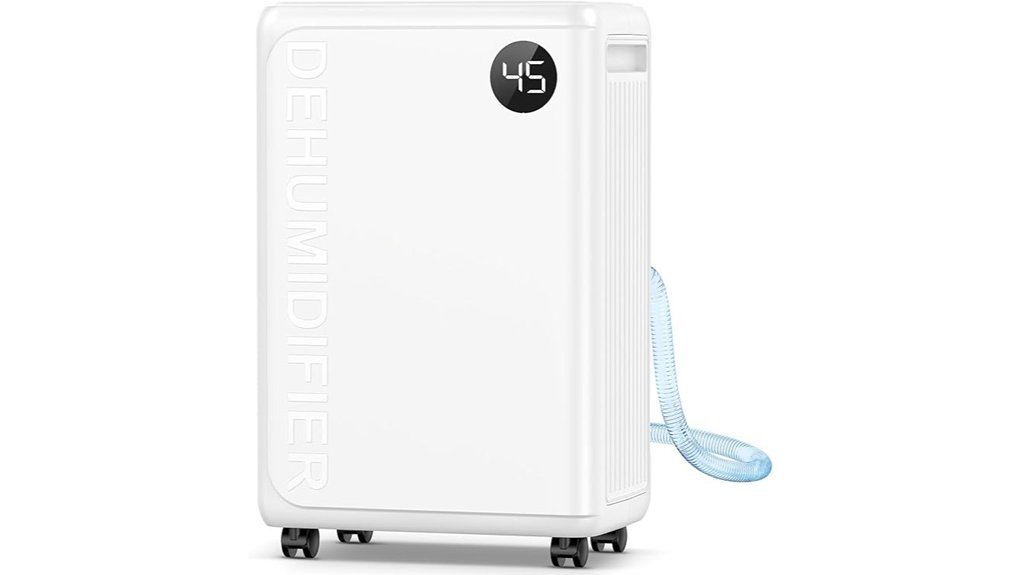
Best Quiet Large-Room Pick
The PLUSCENT 32 Pint Dehumidifier suits you if your basement needs quiet, steady moisture control. It removes up to 32 pints of moisture a day and covers spaces up to 2,500 sq. ft., so it works well in large basements, bedrooms, and living areas with moderate moisture. You can choose DEHU, CONT, or DRY mode, set the 24-hour timer, and drain water continuously through the 39.4-inch hose. At 39-42 dB, it stays unobtrusive. You’ll also appreciate the child lock, washable filter, auto-defrost, smart energy control, and easy-roll wheels for simple moving.
Why You’ll Like It: This is a good everyday comfort pick. It focuses on quiet operation, useful modes, and easy movement rather than extreme basement drying power.
Best For: Homeowners who need a quiet, large-room dehumidifier for basements, bedrooms, or living areas with flexible drainage and easy portability.
Who Should Buy This: Choose it if your basement is damp but not soaked, and you want a quieter unit with timer control, auto-defrost, and continuous drain support.
Who Should Avoid This: Avoid it if your basement is very large, very wet, or needs rapid moisture removal after leaks or heavy seasonal humidity.
Pros:
- Covers up to 2,500 sq. ft. and removes up to 32 pints of moisture per day.
- Quiet operation at 39–42 dB with smart energy control for efficient use.
- Includes useful features like DEHU/CONT/DRY modes, a 24-hour timer, child lock, washable filter, and auto-defrost.
Cons:
- The 2L water tank may require frequent emptying if continuous drainage isn’t used.
- Best performance is tied to specific humidity and temperature conditions.
- Larger spaces may still need a more powerful unit in extremely damp environments.
hOmeLabs Wi-Fi Dehumidifier for 7,000 Sq Ft
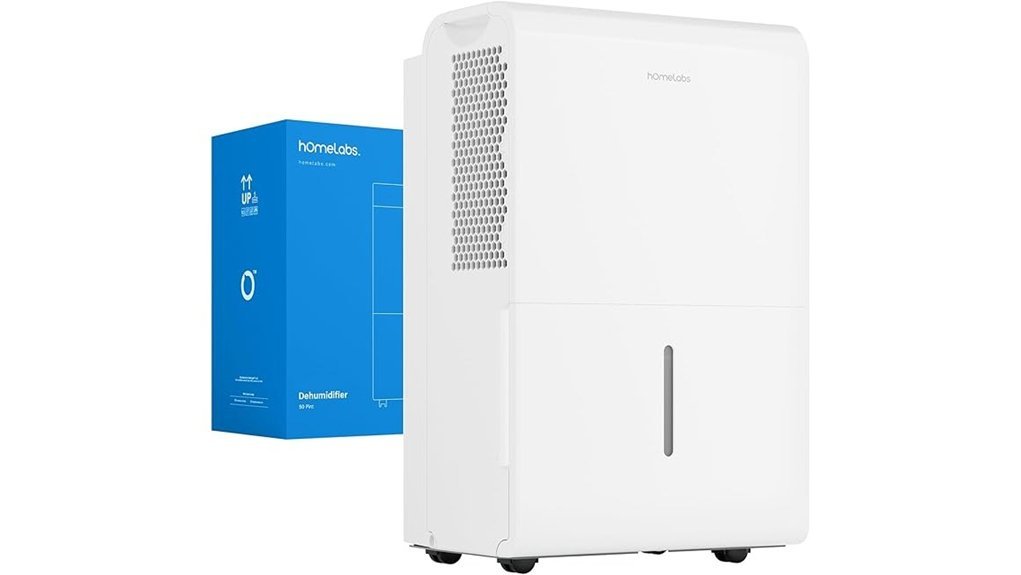
Best Smart-Control Pick
With Wi-Fi control and coverage up to 7,000 square feet, hOmeLabs suits large, moisture-heavy basements. You can adjust humidity remotely, so you won’t have to head downstairs to tweak settings. It pulls 50 pints a day at 80°F/60% RH and can reach 120 pints in extreme conditions. Turbo mode boosts airflow for faster drying, while auto shut-off helps prevent overflow. The washable filter simplifies upkeep. Wheels and handles make it easier to move, and its quiet operation supports a more comfortable basement environment.
Why You’ll Like It: Remote control is useful if your basement is not easy to access or you want to adjust humidity without walking downstairs. The large coverage claim also makes it attractive for open basement layouts or mixed-use lower levels.
Best For: Homeowners, renters, or small business users who need a Wi-Fi-enabled dehumidifier for large, damp spaces like basements and want remote control, strong moisture removal, and easy portability.
Who Should Buy This: Buy it if smart control, large-space coverage, washable filter maintenance, and mobility matter more to you than having the lightest possible unit.
Who Should Avoid This: Skip it if you prefer simple manual controls or do not want to rely on Wi-Fi features for day-to-day humidity adjustments.
Pros:
- Wi-Fi control lets you adjust settings remotely without going downstairs.
- Handles large spaces up to 7,000 sq ft with strong dehumidification performance.
- Washable filter, wheels, and handles make maintenance and movement easier.
Cons:
- At 41.2 pounds, it may still be cumbersome for some users despite the wheels.
- Best performance depends on proper placement and room conditions, especially in very large spaces.
- The 1.6-gallon tank may require frequent emptying in very humid environments.
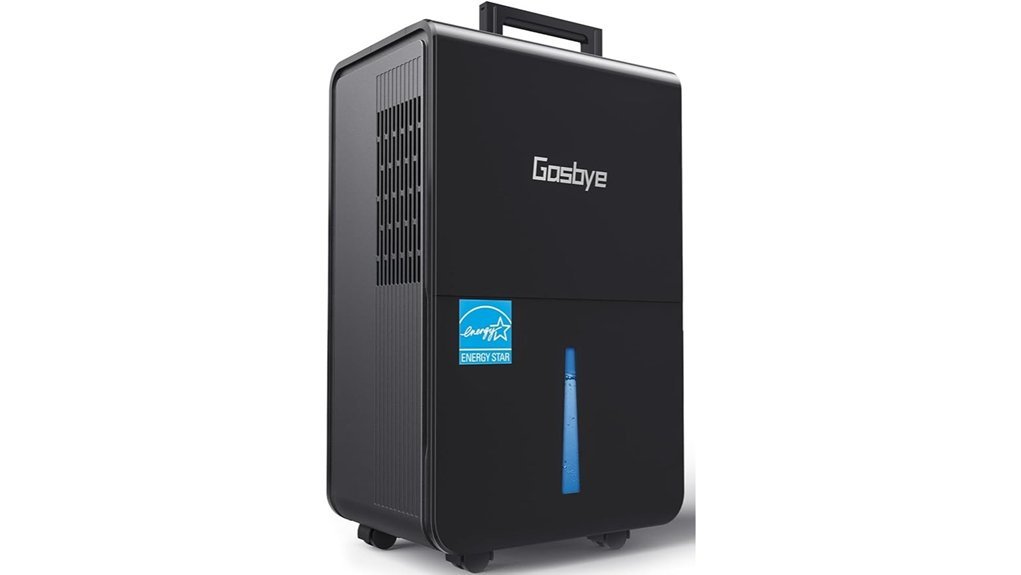
Gasbye 2026 Energy Star Dehumidifier for Basement & Large Rooms
Best Premium High-Capacity Pick
Gasbye’s 2026 Energy Star dehumidifier suits you if you need quiet, high-capacity moisture control. You get the DryPrime 4500, built for basements and large rooms up to 4,500 sq. ft. It removes up to 115 pints a day, runs at about 45 dB, and moves 12,600 cubic feet of air per hour. You can choose Normal, Turbo, Comfort, or Continuous mode, and the unit auto-shuts off and restarts with changing humidity. Use the 1.7-gallon tank, 5-foot hose, or garden adapter. Its washable filter, copper tubing, and 2-year warranty add confidence.
Why You’ll Like It: This model is built for buyers who want serious drying capacity without giving up useful controls. The multiple modes make it easier to match performance to your basement’s moisture level.
Best For: Homeowners or renters needing a quiet, high-capacity dehumidifier for basements or large rooms up to 4,500 sq. ft.
Who Should Buy This: Choose it if your basement regularly feels damp, you want a high-capacity model, and you value several drainage options plus a washable filter.
Who Should Avoid This: Avoid it if you only need a compact unit for one small room, because its size and capacity are aimed at bigger moisture problems.
Pros:
- Energy Star 2026 certified for improved efficiency and lower operating costs.
- Strong moisture removal up to 115 pints per day with multiple drainage options.
- Quiet operation at about 45 dB, with useful modes like Normal, Turbo, Comfort, and Continuous.
Cons:
- At 43 pounds, it may be somewhat heavy to move around.
- The 1.7-gallon tank may still require frequent emptying in very damp spaces if not using a hose.
- Large-capacity performance may be more than needed for small rooms, making it less cost-effective there.
Pro Tips for Better Basement Results
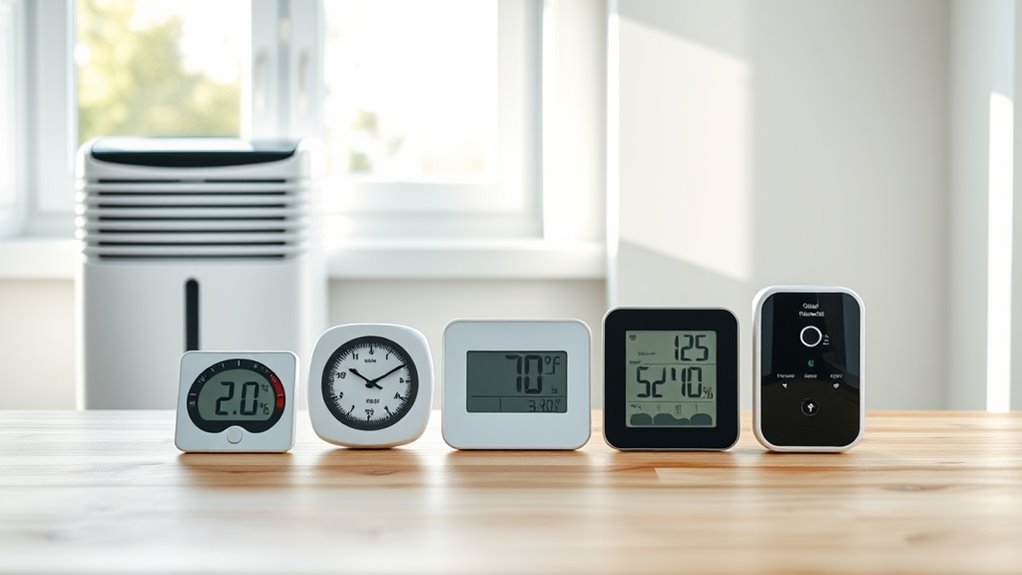
- Use a separate hygrometer: A small humidity meter can help you confirm whether your basement is really staying in the 30% to 50% range.
- Fix water sources first: A dehumidifier helps with air moisture, but it cannot solve leaks, foundation seepage, or standing water.
- Place the unit correctly: Keep space around the air intake and exhaust so the machine can move air efficiently.
- Use continuous drainage when possible: This reduces overflow risk and makes the unit easier to run during humid seasons.
Factors to Consider When Choosing a Dehumidifier for Basement Asthma
When you choose a dehumidifier for basement asthma concerns, focus first on moisture removal capacity so it can handle damp air effectively. You’ll also want quiet operation, a continuous drain option, and accurate humidity control to keep conditions steady without constant upkeep. Look for mold prevention features, since they can help reduce damp conditions that often make basements feel unhealthy and uncomfortable.
Moisture Removal Capacity
Moisture removal capacity is one of the most important factors to check because it tells you how much water a dehumidifier can pull from the air each day, usually measured in pints per day. For a basement with asthma concerns, you should usually look for a unit that removes at least 50 to 100 pints daily, especially if humidity runs high. Bigger basements need stronger capacity, since more air and surface moisture can overwhelm a small unit. You’ll also benefit from adjustable settings, which let you match output to your current humidity level. If your basement stays cold, damp, or extremely humid, choose a model built for tough operating conditions so it keeps working efficiently and helps reduce mold-friendly moisture.
Quiet Operation Levels
Noise matters just as much as performance, especially if you’ll run the dehumidifier in a basement where you spend time or sleep. You should check the decibel rating before you buy, since quieter models can run at about 35 dB, which is bedroom-friendly. Many suitable units stay around 39 to 42 dB, keeping your space calmer if you are sensitive to constant hums. Look for a sleep mode that lowers fan noise and dims lights at night, so you can rest without distraction. Whisper-quiet operation helps you control humidity without interrupting work, reading, or sleep. High-performance models may also use noise-reduction technology, giving you strong moisture control while keeping your basement more comfortable.
Continuous Drain Options
Continuous drain options can make basement humidity control much easier because you won’t have to keep emptying the tank by hand. You can set up a gravity hose to send water to a nearby drain, which works well if your basement has a floor drain or low outlet. If your setup needs more flexibility, choose a model with a built-in pump so you can lift water to a sink or even out a window. This helps you place the unit where it works best without worrying about constant tank checks. Look for auto shut-off too, since it stops the dehumidifier when the tank fills and helps prevent overflow. For easier daily use, hands-off drainage keeps moisture under control and reduces the chance that the unit sits full and idle.
Humidity Control Accuracy
Accurate humidity control is one of the most important features to look for if you’re managing basement asthma concerns, because keeping indoor humidity between 30% and 50% can help limit damp conditions that support mold, dust mites, and other irritants. You should look for a dehumidifier that senses changes quickly and adjusts automatically, so your basement stays within a comfortable range. High-precision sensors help the unit react to spikes before they linger, which supports steadier air quality. Adjustable humidity settings let you choose the exact level you want instead of settling for a rough estimate. Smart memory features are useful too, since they can restore your preferred setting after a power outage. With precise control, you can maintain more consistent comfort and avoid over-drying the air.
Mold Prevention Features
When you’re choosing a dehumidifier for basement asthma concerns, mold prevention should be a top priority, and that starts with enough moisture-removal power for a damp space, often up to 100 pints per day in high-humidity basements. You should also aim to keep indoor humidity between 30% and 50%, because mold is more likely to grow in persistently humid spaces. Look for continuous drainage with a hose so water does not sit in the tank longer than necessary. Auto shut-off is another must-have; it stops overflow and helps keep stagnant water out of the unit. If you want lower operating costs, choose an ENERGY STAR model that can run efficiently for long-term humidity control. With these features, you can reduce mold-friendly moisture and create a more comfortable basement.
Tank Size and Maintenance
Tank size matters because a small tank can fill quickly in a damp basement. If you plan to run your dehumidifier daily, compare the water tank capacity with the unit’s moisture-removal rating. A high-capacity machine with a small tank may shut off often unless you connect a drain hose. Also check whether the filter is washable, how easy the tank is to remove, and whether the unit has reminders for cleaning. Regular filter cleaning helps airflow, supports performance, and keeps the machine from working harder than necessary.
Basement Size and Placement
Match the dehumidifier to the actual area you want to dry. A finished basement, open basement, crawlspace, laundry room, and storage area can all behave differently. If doors stay open, the unit may need to cover more air volume. If the basement has cold corners, poor ventilation, or concrete walls, moisture may return quickly. Place the dehumidifier on a level surface with open space around it, keep it away from walls when possible, and make sure the drain hose does not kink or rise unless the unit has a pump.
Before You Buy Checklist
- Measure your basement or estimate the square footage you need to dry.
- Decide whether you need gravity drainage, pump drainage, or tank-only use.
- Check the noise rating if the basement is used for sleep, work, or family time.
- Look for a built-in humidistat and adjustable humidity settings.
- Choose a washable filter if you want easier long-term maintenance.
- Confirm that the unit can operate well in your basement temperature range.
- Use a separate humidity meter if you want more confidence in the reading.
Frequently Asked Questions
How Often Should I Clean a Basement Dehumidifier Filter?
You should clean your basement dehumidifier filter every 2 to 4 weeks, and more often if you notice dust, pet hair, musty smells, or reduced airflow. Check it monthly, since dirty filters can cut performance and make the machine work harder.
Can Dehumidifiers Help Reduce Dust Mites and Mold Spores?
Yes, a dehumidifier can help by lowering humidity and making your space less friendly to dust mites and mold growth. You’ll still need cleaning, leak control, and ventilation, though, because a dehumidifier alone cannot remove existing mold or dust buildup.
What Humidity Level Is Best for Asthma Sufferers?
You’ll usually want indoor humidity between 30% and 50%, with many people aiming for around 40%. Avoid letting the air get too damp, but also avoid over-drying it, since very dry air can feel irritating for some people.
Should I Choose a Dehumidifier With a Built-In Humidistat?
Yes, a built-in humidistat is useful because it helps the unit maintain your target humidity instead of running blindly. This can save energy, reduce over-drying, and make basement humidity control easier.
Can I Run a Dehumidifier Safely Overnight in a Basement?
Yes, you can run a dehumidifier safely overnight in a basement if you keep it level, clear of clutter, and use a model with auto-shutoff. Empty the tank first or connect a drain hose so the unit does not shut off early when the tank fills.
Is a Small Dehumidifier Enough for a Basement?
A small dehumidifier can work for a small room, closet, RV, or lightly damp area, but it is usually not enough for a large or very wet basement. If you smell mustiness, see condensation, or empty the tank constantly, you may need a larger compressor dehumidifier with continuous drainage.
Do I Still Need to Clean if I Use a Dehumidifier?
Yes. A dehumidifier helps control moisture, but it does not replace cleaning. Vacuum, dust, wash fabrics, clean filters, and remove visible mold safely. If mold covers a large area or keeps returning, consider professional inspection.
Final Recommendation
If your basement is large, damp, and hard to drain, the DECIUU 100 Pint Energy Star Dehumidifier with Pump is one of the most practical choices because the pump gives you more drainage flexibility. If you want quiet high-capacity performance, the Ludatido 80 Pint/Day is a strong option. For smart control, the hOmeLabs Wi-Fi Dehumidifier is the most convenient. For smaller spaces or light moisture, the 95OZ Dehumidifier may be enough.
For most basement asthma concerns, choose a model that can hold humidity near 30% to 50%, supports continuous drainage, and has enough capacity for your actual basement size.
Conclusion
Think of your basement like a sealed garden after rain. If you let moisture linger, mold and dust mites can thrive, and the air may feel heavy and uncomfortable. But when you choose the right dehumidifier, you help restore balance and create a drier, more comfortable space. Pick the model that fits your basement size, drain setup, noise needs, and budget. Then pair it with cleaning, leak control, and regular filter maintenance so you can protect your home and breathe easier with more confidence.