Affiliate disclosure: This article contains Amazon affiliate links. We may earn a commission from qualifying purchases at no additional cost to you. Updated: August 2026.
The best dehumidifier for your home depends on the size and dampness of the area, the unit’s verified moisture-removal capacity, and how you plan to drain it. For basements, laundry rooms, open living areas, or persistent humidity, a compressor dehumidifier such as the Waykar 34 Pint or PLUSCENT 32 Pint is usually the more practical choice. Compact thermoelectric dehumidifiers such as the AMEIFU and BEDRED models are quieter and easier to place, but they are better for localized moisture in bedrooms, bathrooms, closets, offices, and RVs than for a wet basement or whole-floor humidity problem.
Key Takeaways
- Choose by pints per day and dampness level, not by tank size or a broad square-foot claim alone.
- Waykar 34 Pint is the best-balanced option for recurring household humidity and gravity drainage.
- PLUSCENT 32 Pint is the strongest alternative when laundry mode, caster wheels, and continuous drainage matter.
- AMEIFU and BEDRED are compact thermoelectric choices for mild, localized moisture rather than structural dampness.
Quick Verdict
Best Overall: The Waykar 34 Pint offers the highest verified daily extraction rating in this roundup, adjustable humidity control, two drainage methods, and a 2025 ENERGY STAR Most Efficient listing.
Best Multi-Mode Compressor Pick: The PLUSCENT 32 Pint adds DEHU, CONT, and DRY modes, plus auto-defrost, a drain hose, and caster wheels.
Best Compact Large-Tank Option: The AMEIFU PC-450 pairs a 135-ounce tank with timer settings, sleep mode, and thermoelectric operation for targeted spaces.
Best with Ambient Lighting: The BEDRED CT11 combines a 95-ounce tank, automatic shutoff, sleep mode, and seven-color lighting.
Quick Comparison
| Product | Type | Verified Rating / Tank | Best For | Main Limitation | Amazon |
|---|---|---|---|---|---|
|
Waykar 34 Pint Best Overall |
Compressor | 34 pints per day; 0.6-gallon tank | Basements, living areas, bedrooms, and recurring humidity | Gravity drainage needs a lower drain outlet | Check Price |
|
PLUSCENT 32 Pint Best Multi-Mode Pick |
Compressor | 32 pints per day; 2-liter tank | Basements, laundry rooms, larger rooms, and continuous drainage | Small tank may fill quickly without the hose | Check Price |
|
AMEIFU PC-450 Best Compact Large Tank |
Thermoelectric | 135-ounce tank; no reliable verified pints-per-day rating | Bedrooms, closets, bathrooms, offices, and RVs | Not suitable for heavy basement moisture | Check Details |
|
BEDRED CT11 Best Ambient Light |
Thermoelectric | 95-ounce tank; no clear verified pints-per-day rating | Bedrooms, offices, bathrooms, and mild localized moisture | Seller coverage claims may overstate practical reach | Check Details |
Important: Water-tank volume and daily moisture-removal capacity are different measurements. A larger tank may reduce emptying frequency, but it does not prove faster extraction. For damp basements and larger rooms, prioritize a verified pints-per-day rating and an adjustable humidistat.
Waykar 34 Pint Energy Star Dehumidifier for Home
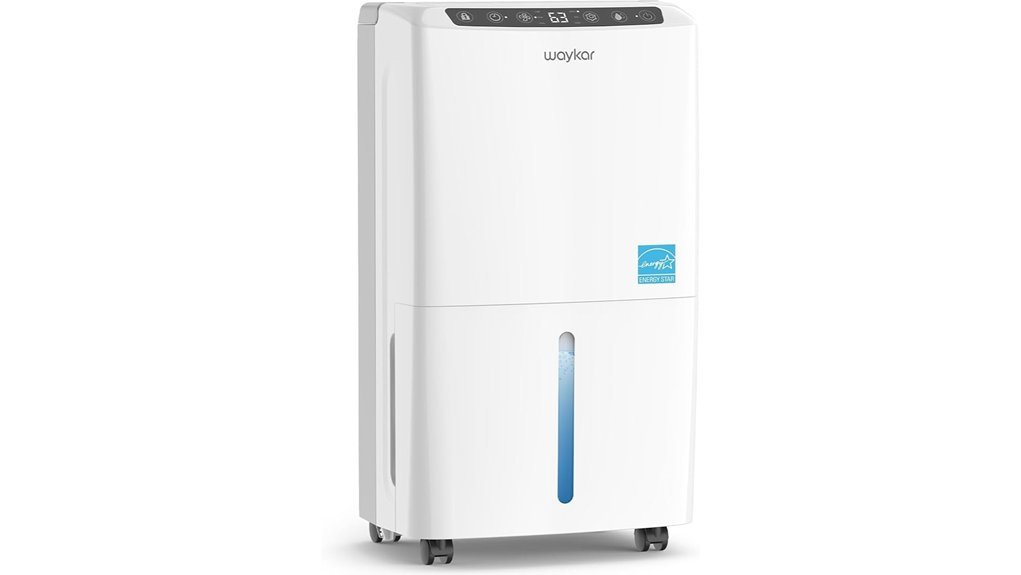
Best Overall
The Waykar PD160B-PRO is the strongest all-around option in this comparison for recurring household humidity. The listing states a 34-pint-per-day capacity under its specified test conditions and markets the unit for spaces up to 2,000 square feet. Treat the coverage number as a comparison guide rather than a guaranteed room size.
The linked model is listed as ENERGY STAR Most Efficient 2025 and includes adjustable humidity control, two fan speeds, a 24-hour timer, automatic defrost, automatic restart, a child lock, and a washable filter. You can use its removable tank or connect the included hose for continuous gravity drainage.
Because it is a compressor model, expect more airflow and mechanical sound than from a small thermoelectric unit. Placement, fan speed, and room acoustics will affect how noticeable it is.
Why You’ll Like It: It combines measurable moisture-removal capacity, automatic humidity control, and two drainage choices in one portable unit.
Who Should Avoid It: Choose a smaller thermoelectric model when you only need occasional moisture control in a closet, compact bathroom, or other small enclosed spot.
Best For: Basements, living rooms, bedrooms, offices, and medium-to-large areas with recurring humidity.
Pros:
- Rated to remove up to 34 pints of moisture per day under listed test conditions.
- Listed as ENERGY STAR Most Efficient 2025.
- Removable tank and continuous gravity-drain options.
- Adjustable humidistat, washable filter, child lock, and auto-defrost.
Cons:
- Larger and heavier than compact thermoelectric models.
- Gravity drainage requires a hose route that stays below the drain outlet.
- Actual extraction and effective coverage vary with temperature, humidity, airflow, and room layout.
PLUSCENT 32 Pint Dehumidifier for Home
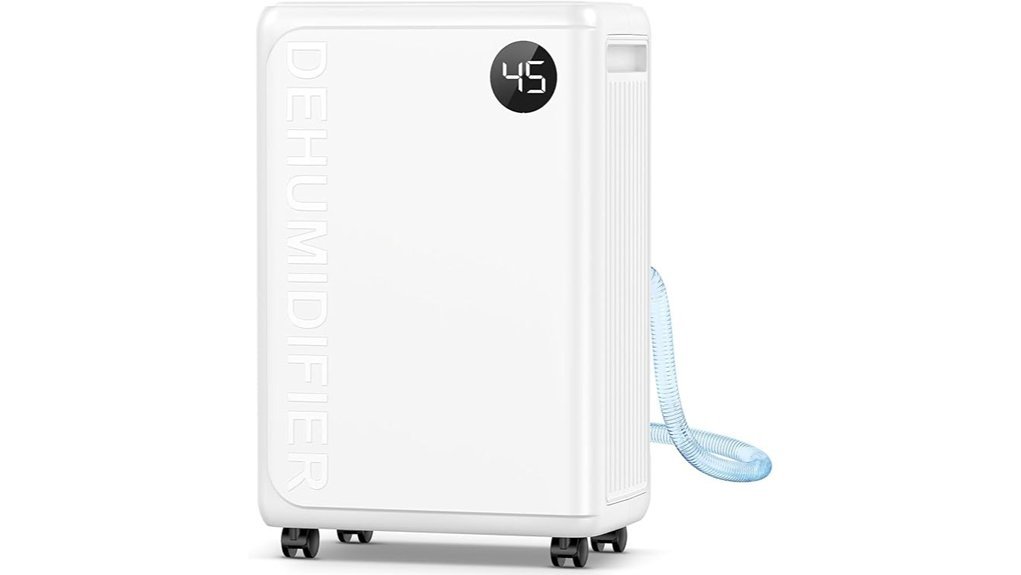
Best Multi-Mode Compressor Pick
The PLUSCENT PD10 is a 32-pint compressor dehumidifier marketed for spaces up to 2,500 square feet. Its DEHU, CONT, and DRY modes support automatic humidity control, continuous operation, or higher-output use for laundry and damp materials.
The removable 2-liter tank has automatic full-tank protection. For lower-maintenance operation, connect the included 39.4-inch drain hose and keep it sloping continuously toward a suitable lower drain. The unit also includes auto-defrost, automatic restart, a 24-hour timer, child lock, a washable filter, and caster wheels.
Why You’ll Like It: It offers compressor-grade moisture removal, multiple operating modes, continuous drainage, and easy room-to-room movement.
Who Should Avoid It: It is more machine than most buyers need for a tiny closet, compact bathroom, or occasional light condensation.
Best For: Basements, larger bedrooms, open living areas, laundry rooms, and homes with recurring high humidity.
Pros:
- Rated to remove up to 32 pints of moisture per day.
- Three operating modes and adjustable humidity control.
- Includes a drain hose for continuous gravity drainage.
- Auto-defrost, timer, child lock, washable filter, and caster wheels.
Cons:
- The 2-liter tank may fill quickly in high humidity when the drain hose is not used.
- Continuous drainage depends on correct hose placement and a lower drain outlet.
- Compressor operation is more noticeable than a small thermoelectric unit.
AMEIFU PC-450 Dehumidifier with 135 OZ Tank
Best Compact Large-Tank Pick
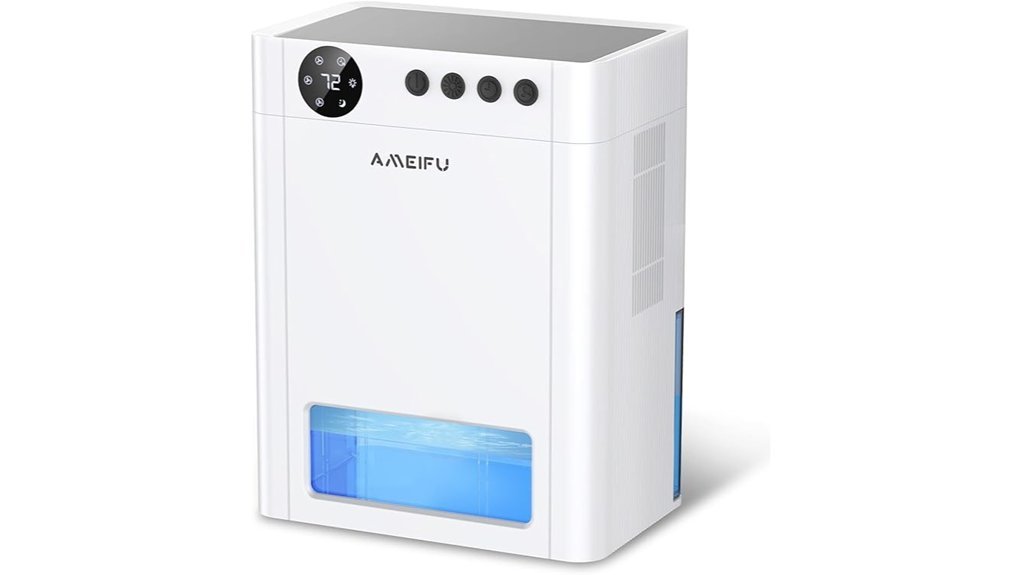
The AMEIFU PC-450 is a compact thermoelectric dehumidifier for targeted moisture control. The current listing identifies a 135-ounce removable tank, timer settings, sleep mode, automatic shutoff, automatic defrost, and seven-color LED lighting. Its listing data does not provide a dependable real-world daily extraction figure for comparison with compressor models.
The main advantage is convenience. Its large reservoir may reduce emptying frequency compared with smaller tabletop units, while the compact body is easier to place in bedrooms, closets, bathrooms, offices, and RVs. Thermoelectric operation also avoids compressor noise, but moisture removal is slower.
Why You’ll Like It: It offers a large tank for a compact unit and includes useful nighttime and timer controls.
Who Should Avoid It: Choose a compressor model if you need fast, measurable moisture removal from a damp basement, large open floor, or room with recurring water intrusion.
Best For: Buyers who want a compact, quieter dehumidifier for a bedroom, bathroom, closet, office, or RV with mild localized humidity.
Pros:
- Large 135-ounce removable water tank.
- Sleep mode, timer settings, automatic shutoff, and automatic defrost.
- Compact footprint for rooms where floor space is limited.
Cons:
- No reliable verified pints-per-day rating for direct capacity comparison.
- Thermoelectric performance is lower than a compressor dehumidifier.
- No continuous-drain feature is listed, so the tank needs regular checking and emptying.
BEDRED CT11 95 OZ Dehumidifier with Ambient Light
Best Ambient-Light Pick
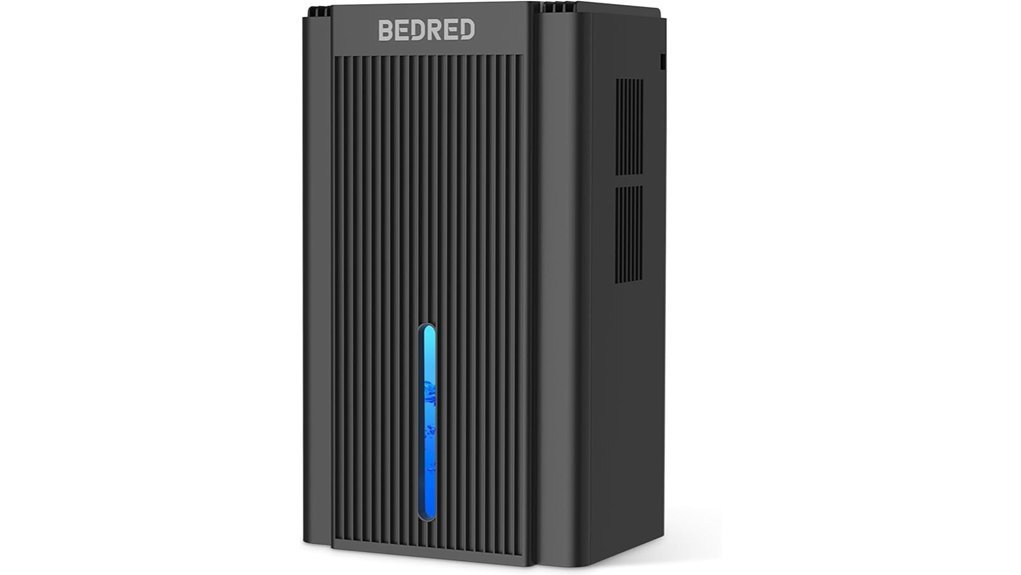
The BEDRED CT11 combines a 95-ounce water tank with automatic shutoff, sleep mode, and seven-color ambient lighting. Its compact thermoelectric design is intended for localized residential moisture control in places such as a bedroom, bathroom, home office, closet, or RV.
The selectable light may appeal to buyers who want a dehumidifier that doubles as a soft accent light. Sleep mode turns off the decorative lighting and reduces disruption at night. The seller advertises broad room coverage, but no clear verified pints-per-day extraction rating is provided, so it should not be compared directly with the Waykar or PLUSCENT on square footage alone.
Why You’ll Like It: It is easy to place, has a relatively large tank for a compact unit, and lets you turn off the lighting at night.
Who Should Avoid It: It is not the right choice for flooding, structural dampness, or a basement that needs measurable high-capacity extraction.
Best For: Bedrooms, offices, bathrooms, closets, and other smaller areas where quiet operation and appearance matter.
Pros:
- Compact design with a 95-ounce water tank.
- Seven-color ambient light with a light-off sleep mode.
- Automatic shutoff helps prevent tank overflow.
Cons:
- No clear verified pints-per-day extraction rating.
- Seller square-foot claims may overstate practical performance in open or very damp rooms.
- Thermoelectric technology is less suitable for heavy-duty basement moisture.
How We Compared These Dehumidifiers
We compared the products by dehumidifier type, listed moisture-removal capacity, tank size, humidistat controls, drainage method, operating modes, portability, maintenance, and the seriousness of the moisture problem each model can reasonably address. Broad seller coverage claims were treated as secondary because room layout, temperature, starting humidity, and moisture entry can change real-world results.
Factors to Consider When Choosing a Dehumidifier for Your House
Start with the moisture problem rather than choosing by appearance, tank size, or an advertised square-foot number. A compact thermoelectric model may help with mild condensation in a closet or bathroom, while persistent basement dampness normally calls for a compressor dehumidifier with a verified pints-per-day rating and adjustable humidistat.
Compressor vs. Thermoelectric Dehumidifiers
Compressor dehumidifiers circulate more air and remove substantially more moisture, making them the better fit for basements, living rooms, laundry areas, and recurring high humidity. They are larger, heavier, and usually louder.
Thermoelectric dehumidifiers use a Peltier cooling system. They are compact and quiet but work more slowly. They are most useful for smaller enclosed areas or localized moisture rather than serious structural dampness.
Room Size and Coverage Claims
Manufacturer coverage figures are useful for basic comparison, but square footage alone does not predict performance. Ceiling height, doors, airflow, temperature, outdoor humidity, and the amount of moisture entering the room all matter.
For an open basement or whole-floor application, prioritize a compressor model with a pints-per-day rating. For a closet, bathroom, bedroom corner, or RV, a compact thermoelectric model may be sufficient.
Moisture-Removal Capacity
Daily extraction capacity is measured in pints per 24 hours under specified test conditions. ENERGY STAR explains that capacity should be selected according to both room size and dampness. In this roundup, the Waykar is listed at 34 pints per day and the PLUSCENT at 32 pints per day; actual collection will change with temperature and relative humidity. See ENERGY STAR dehumidifier sizing guidance.
Do not confuse extraction capacity with tank volume. The AMEIFU’s 135-ounce tank can hold more water than the BEDRED’s 95-ounce tank, but that does not show which unit removes moisture faster.
Humidistat and Target Humidity
A built-in humidistat lets you choose a target relative-humidity level and allows the compressor to cycle as needed. This is more convenient and efficient than running continuously without measuring the room.
For most homes, a target between 30% and 50% relative humidity is a practical range. The U.S. EPA recommends keeping indoor humidity below 60% and ideally between 30% and 50% to help limit condensation and mold-supporting moisture. Read the EPA moisture-control guidance.
Tank and Drainage Options
Manual collection works when the unit is easy to reach and the tank does not fill too often. For a basement, laundry room, or other continuously damp area, a gravity drain hose can reduce maintenance.
A gravity hose must run downward without loops, kinks, or raised sections. If the drain is above the unit, you need a model with a built-in pump or a separate condensate pump.
Noise Level
Thermoelectric units are generally quieter because they do not contain a refrigeration compressor. Compressor models move more air and create more mechanical sound, although sleep modes and lower fan speeds can reduce disruption.
When shopping for a bedroom, check whether the display and decorative lighting can be turned off as well as the listed sound level.
Energy Efficiency
ENERGY STAR certification is a more useful efficiency signal than vague descriptions such as “low energy.” Compare the current certification status, capacity, integrated energy factor when available, power consumption, and whether the unit can cycle automatically at the selected humidity. The Waykar listing references a 2025 Most Efficient designation; buyers should confirm the current certification and model number before ordering because program specifications change.
A smaller unit is not automatically cheaper to operate if it must run continuously without reaching the desired humidity.
Operating Temperature and Auto-Defrost
Compressor coils can collect frost in cooler rooms. An auto-defrost function pauses dehumidification when needed so the ice can melt. Check the manufacturer’s operating-temperature range before using a unit in a cold basement, garage, or seasonal property.
Safety Features
Useful safety and convenience features include automatic full-tank shutoff, tank-position detection, overload protection, child lock, automatic restart, and power-outage memory. Place the unit on a level surface, keep air openings clear, follow the manual’s clearance requirements, and keep electrical parts away from direct splashes or standing water.
A dehumidifier should not be used as a substitute for repairing roof leaks, plumbing leaks, foundation seepage, or flooding. Address the water source first and use professional remediation when damage is extensive.
Maintenance and Portability
Choose a model with an accessible tank and a removable, washable filter. Clean the tank regularly, allow it to dry, and inspect the filter according to the manual. Dust buildup can restrict airflow and reduce moisture removal.
If you plan to move the unit between rooms, look for caster wheels, a secure carrying handle, and manageable weight. Avoid moving a compressor model immediately after tipping it; follow the manual’s instructions before restarting it.
Before You Buy
- Measure the area and check its current humidity with a separate hygrometer.
- Match capacity to both room size and how damp the space becomes.
- Choose thermoelectric convenience only for mild, localized moisture.
- Compare pints per day, not only water-tank volume or seller coverage claims.
- Confirm that a suitable lower drain is available before relying on gravity drainage.
- Check the operating-temperature range for basements, garages, and seasonal properties.
- Verify the current model number, specifications, included accessories, warranty, and Amazon availability before ordering.
Frequently Asked Questions
How Large of a Dehumidifier Do I Need?
Choose capacity according to both the size and dampness of the area. A compact thermoelectric model may be enough for a closet, small bathroom, or light condensation. For a basement, laundry room, larger bedroom, or humidity that regularly stays above 60%, choose a compressor model with a pints-per-day rating, adjustable humidistat, and practical drainage plan.
Will a Compact 1,000-Square-Foot Dehumidifier Work in a Large Room?
A 1,000-square-foot figure on a compact product page is a seller coverage claim, not proof of high extraction. Thermoelectric units generally work best in smaller enclosed spaces. For a genuinely damp 1,000-square-foot basement or open floor, a compressor dehumidifier with a verified pints-per-day capacity is the safer choice.
How Often Should I Empty the Dehumidifier Tank?
Empty it whenever the full-tank indicator appears or before the water reaches the fill line. During humid weather, a small tank may need daily attention. Continuous gravity drainage can eliminate routine emptying when the hose is installed correctly.
Can a Dehumidifier Help With Allergies?
A dehumidifier does not treat allergies. Maintaining moderate humidity may make the environment less favorable for mold and dust mites, but existing mold still needs appropriate cleanup and the underlying moisture source must be corrected.
What Is the Ideal Humidity Level for a Home?
A practical target for most homes is 30% to 50% relative humidity. Use a hygrometer and adjust for climate, season, comfort, and condensation rather than relying only on how the air feels.
Are Dehumidifiers Noisy During Operation?
Thermoelectric models are normally quieter than compressor units. Compressor dehumidifiers produce fan and mechanical noise but remove more moisture. Look for sleep mode, adjustable fan speed, and switchable display lighting when choosing a bedroom model.
Should I Run a Dehumidifier Continuously?
A unit with an adjustable humidistat can cycle automatically after reaching the selected humidity. Continuous mode is useful for laundry or severe dampness, but the tank, drain hose, filter, and room conditions still require regular checks. Follow the product manual’s limits and safety instructions.
Does a Dehumidifier Remove Mold?
No. It can reduce the moisture that supports future mold growth, but it does not remove established mold or repair a leak. Clean affected materials appropriately and correct the underlying water problem.
How Energy-Efficient Are Modern Dehumidifiers?
Efficiency varies by technology, capacity, operating time, humidity setting, and current certification standard. ENERGY STAR-certified compressor models provide a more reliable benchmark than general “energy-saving” marketing claims. Correct sizing, a working humidistat, a clean filter, and proper drainage can also prevent unnecessary runtime.
Conclusion
For recurring household humidity, the Waykar 34 Pint is the best-balanced option because it combines the highest listed daily extraction rating in this roundup, adjustable humidity control, continuous gravity drainage, and a 2025 ENERGY STAR Most Efficient listing. The PLUSCENT 32 Pint is the strongest alternative for basements, laundry areas, and buyers who value multiple operating modes and caster wheels.
The AMEIFU PC-450 and BEDRED CT11 are better for quieter, localized moisture control. Their compact designs and larger reservoirs are convenient in bedrooms, bathrooms, closets, offices, and RVs, but neither should be expected to match a compressor dehumidifier in a persistently damp or open area.
Final Recommendation
Choose the Waykar for the best overall balance of measurable capacity, humidity control, and drainage flexibility.
Choose the PLUSCENT when laundry mode, continuous drainage, and easy mobility are priorities.
Choose the AMEIFU or BEDRED only when portability, lower operating noise, and mild small-space moisture control matter more than extraction speed.