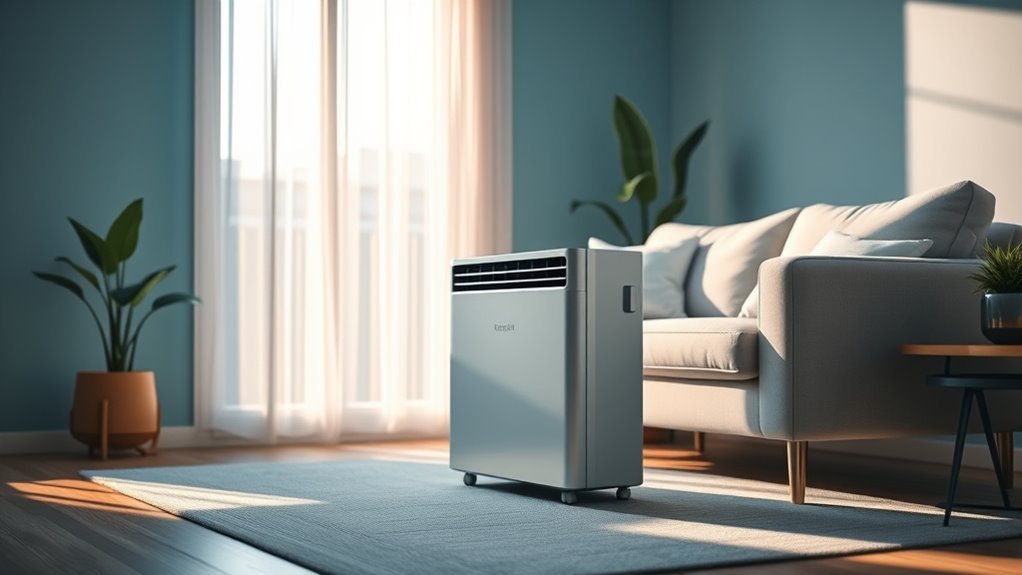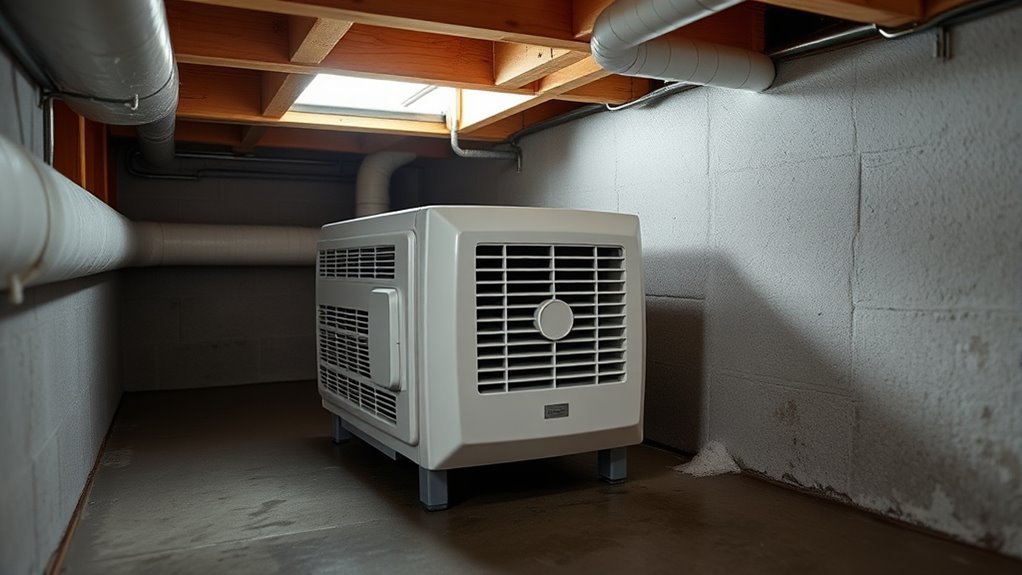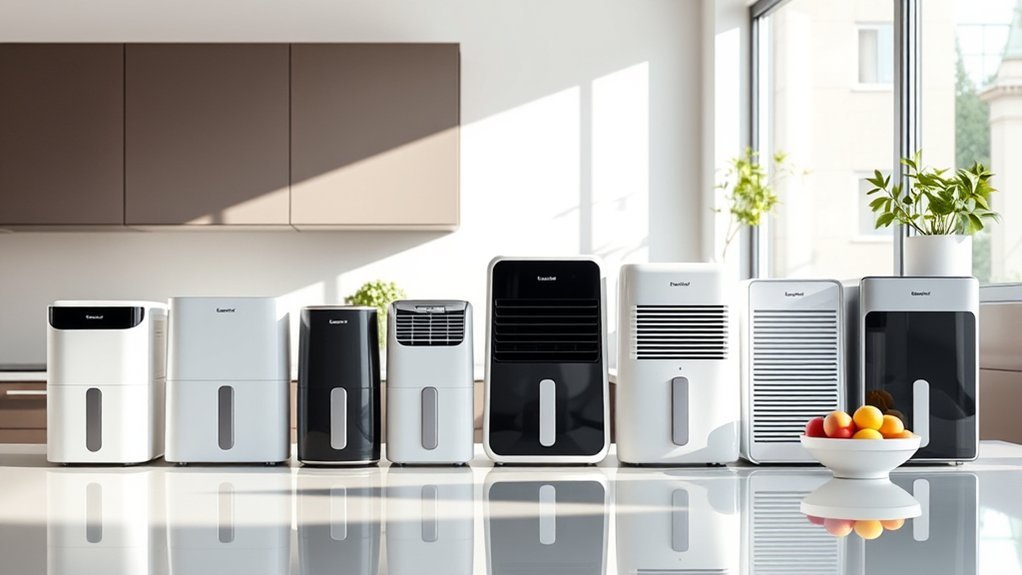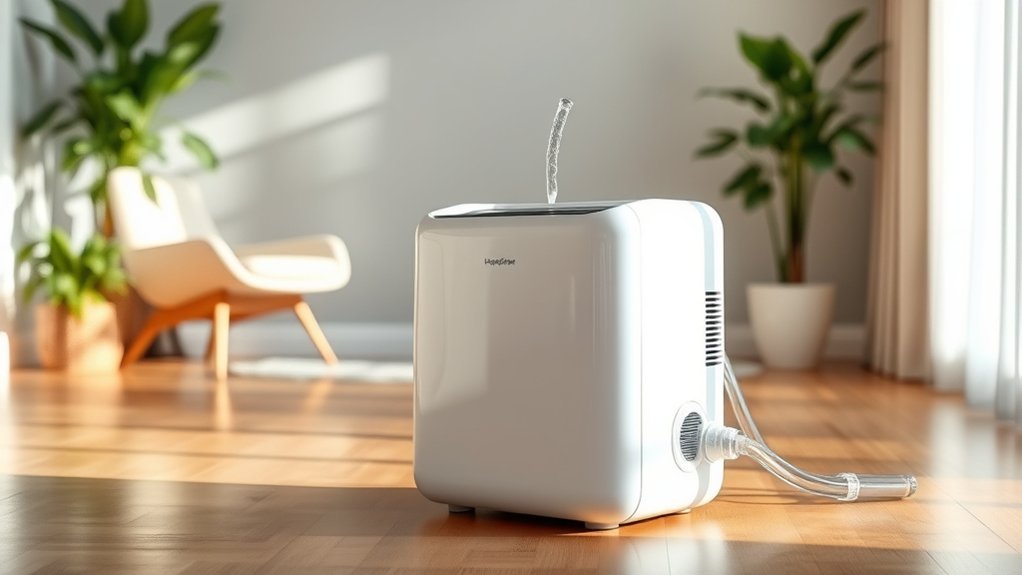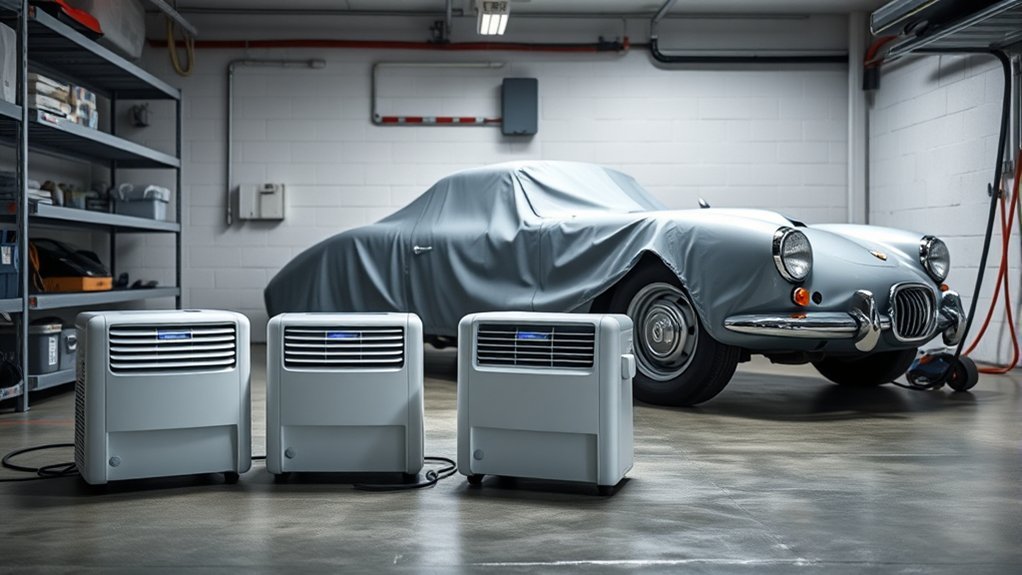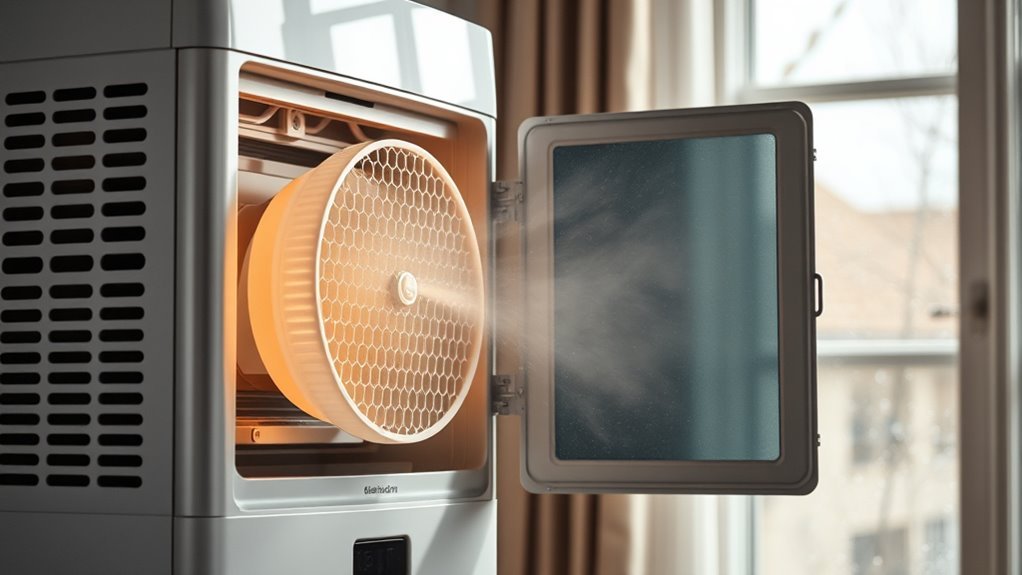
A desiccant dehumidifier removes moisture with a drying material instead of relying only on cold coils. It is especially useful in cool rooms, garages, crawl spaces, storage areas, boats, and some industrial spaces where a compressor dehumidifier may lose performance. The right choice depends on room temperature, humidity level, energy cost, and how dry the space needs to be.
Quick Answer
A desiccant dehumidifier uses a moisture-absorbing material, often on a rotating wheel, to pull water vapor from the air. A heater then dries the desiccant so it can keep working. It is best for cooler spaces and low-humidity control, while compressor models are usually cheaper to run in warm, damp rooms.
Key Takeaways
- Choose a desiccant dehumidifier for cool or unheated spaces where a compressor model may frost up or remove moisture slowly.
- For most homes, aim for a relative humidity range near 30% to 50%; avoid over-drying the air.
- Desiccant units often add a little warmth and can be quieter, but they may use more electricity than compressor models in warm rooms.
- A dehumidifier controls moisture in the air; it does not repair leaks, remove existing mold, or replace proper ventilation.
What Is a Desiccant Dehumidifier?
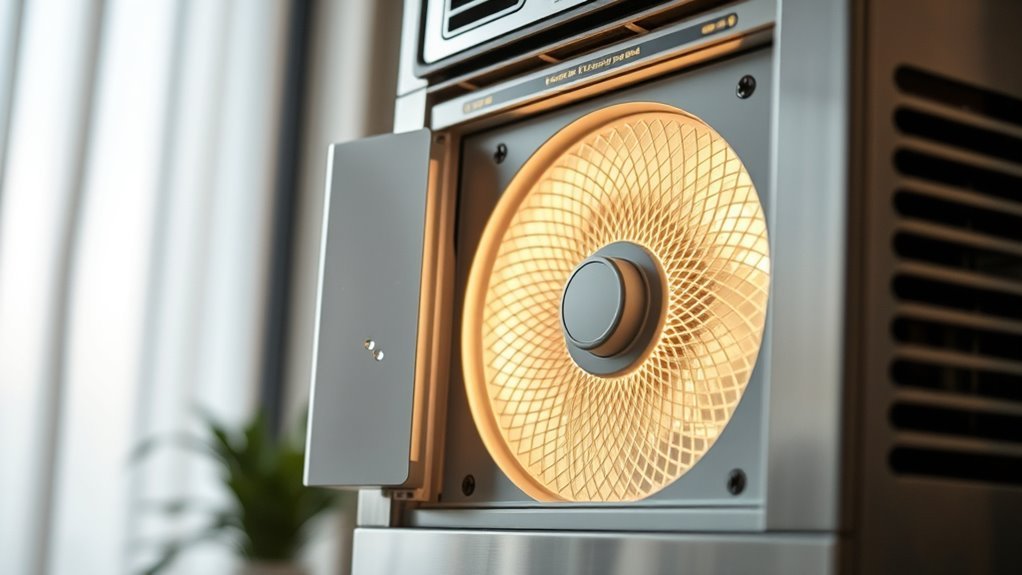
A desiccant dehumidifier is a moisture-control device that uses a drying material, called a desiccant, to attract water vapor from the air. Many full-size desiccant units use a rotating wheel coated with silica gel or a similar adsorbent material. As humid air passes through the wheel, moisture sticks to the desiccant surface. A small heated air stream then dries that section of the wheel so the cycle can continue.
This makes desiccant dehumidifiers different from compressor dehumidifiers. A compressor model cools air until moisture condenses on cold coils. A desiccant model removes moisture through adsorption, so it can keep working well in spaces where cold coils may frost or become less efficient. ENERGY STAR notes that condensation-style dehumidifiers may lose performance when room temperatures fall below 65°F unless they are designed for lower-temperature use.
Note: Some industrial desiccant systems can reach very low dew points for dry rooms, battery production, pharmaceuticals, and storage. Most household desiccant dehumidifiers are not designed to reach extreme industrial humidity levels; they are mainly used to control dampness, condensation, and musty air.
How Does a Desiccant Dehumidifier Work?
A desiccant dehumidifier works in two repeating steps: moisture capture and regeneration.
- Humid air enters the unit. A fan pulls room air through the dehumidifier.
- The desiccant captures water vapor. Moisture sticks to the desiccant material instead of condensing on a cold coil first.
- Dry air returns to the room. The unit sends drier air back into the space, often slightly warmer than the incoming air.
- The desiccant is regenerated. A small heater dries the moisture-loaded section of the wheel or desiccant bed so it can absorb moisture again.
In many home models, the removed moisture still ends up as water in a collection tank or through a drain hose. In some commercial and industrial systems, the warm, wet reactivation air may be exhausted outdoors instead. Always check the product manual because drainage design varies by model.
Desiccant Dehumidifier vs. Compressor Dehumidifier
The main difference is how the two systems remove moisture. A compressor dehumidifier cools air over coils until water condenses. A desiccant dehumidifier uses a drying material and heat regeneration. Both can work well, but they suit different rooms.
| Feature | Desiccant Dehumidifier | Compressor Dehumidifier |
|---|---|---|
| Best temperature range | Cool or unheated rooms, depending on model rating | Warm, damp rooms |
| Moisture-removal method | Adsorbs water vapor onto a desiccant material | Condenses water on cold coils |
| Heat output | Often blows warmer air because of the regeneration heater | May slightly warm the room, but usually less noticeably |
| Running cost | Can cost more in warm rooms because it uses heat | Often more efficient in warm, humid spaces |
| Noise | Often quieter because there is no compressor, though fan noise still matters | May be louder because of compressor and fan operation |
| Best use | Garages, basements, boats, storage rooms, cold utility rooms, specialist drying | Living rooms, bedrooms, basements, and warm humid areas needing high water removal |
Recommended Products

【The Undisputed Champion — Industry-Leading Dehumidifier Brand】Choose AEOCKY, getting double market validation. According to data independently verified by Stackline, a leading third-party data analytics company, AEOCKY was an industry‑leading dehumidifier brand on Amazon U.S. in 2025. Meanwhile, it stands as a technology-leading rotary desiccant dehumidifier brand on Amazon. This isn’t just an appliance—it’s a complete humidity-control solution for small spaces. Skip low-performance alternatives and trust a brand recognized by the market.

✔ EASY TO USE: This mini dehumidifier is spill and mess free. Just hang and go! Non-toxic, child and pet safe! Your small rooms will be dry and odor free. Works for areas up to 333 cubic feet.

Semiconductor dehumidifiers use thermoelectric cooling to remove moisture from the air. They create a drier, more comfortable environment by reducing humidity and improving air quality.
Desiccant Drying Process
The desiccant drying process is continuous. One part of the wheel captures moisture from the room air while another part is being dried by warm regeneration air. That is why desiccant units can be effective in cold spaces where condensation-style dehumidifiers may struggle.
This process also explains why the air leaving a desiccant dehumidifier often feels warmer. The heat is not wasted if you are drying a cold room, but it can be less comfortable in summer or in already-warm spaces.
Compressor Unit Comparison
A compressor dehumidifier is usually the better first choice for a heated room, warm basement, or humid living area. It removes a lot of water efficiently when the air is warm enough. For cool rooms, however, frost can form on the coils and reduce performance. If the space often drops below 65°F, choose a unit specifically rated for low-temperature use or consider a desiccant model.
Pro Tip: Use a small hygrometer near the problem area. A dehumidifier should be chosen based on actual relative humidity, room temperature, and moisture load—not just the size of the room.
Best Environments for Desiccant Dehumidifiers
A desiccant dehumidifier is most useful when the room is cool, the humidity target is strict, or the space needs steady drying without relying on cold coils. It is not always the most economical choice for a warm room, but it can be the better tool in cold or variable conditions.
Recommended Products

COLD-RATED TO 34°F — WORKS WHERE COMPRESSORS QUIT: Rotary desiccant technology pulls moisture at temperatures that shut conventional compressor dehumidifiers down. Unheated crawl spaces, garages, basements, and cabins stay dry through fall and winter, not just summer.
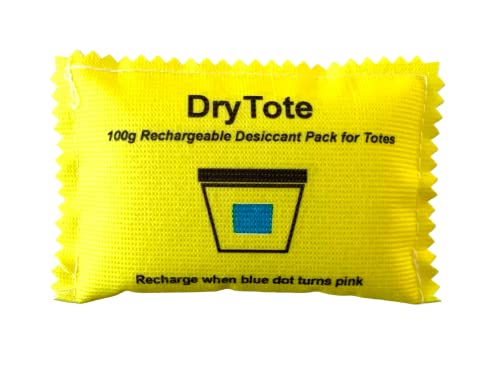
RECHARGES IN THE MICROWAVE OR OVEN: Dry the pack out in minutes and reuse it for years - no throwaway packets. Great for 3D printer filament, suitcases, closets, and seasonal storage.
![wisedry 4 x 500 Grams [4.4 lbs] Rechargeable Silica Gel Car Dehumidifier, Microwave Fast Reactivated Desiccant Packets Large for Gun Safe Closet Basement Garage Storage Moisture Absorber Bag Reusable](https://m.media-amazon.com/images/I/51pHUtcOd3L._SL500_.jpg)
✅ [ NO MORE FOGGY WINDOWS ] - Wisedry car dehumidifier bag reduces the misting on car windows which can be a problem in cold winter mornings. Thanks to its high moisture absorption, each 500g silica gel adsorbs 150g(max 180g) of moisture! Also suitable for preventing moisture in other larger spaces like cupboard, gun safes, storage room, tool shop, garage, RV, boat, basement etc.
Cold, Unheated Spaces
Desiccant dehumidifiers are a strong fit for:
- Garages
- Boats and RVs
- Unheated basements
- Storage rooms
- Winter construction drying
- Cold utility rooms
- Workshops where compressor coils may frost
In these spaces, a compressor unit may cycle into defrost mode or remove very little water. A desiccant model can keep drawing moisture from the air as long as it is used within the manufacturer’s temperature range.
Industrial Moisture Control
Commercial and industrial desiccant dehumidifiers are used where humidity affects products, materials, or process stability. Examples include pharmaceutical manufacturing, food storage, electronics, dry rooms, archives, museums, and some battery-production areas. In those settings, the target may be stated as relative humidity, dew point, or grains of moisture per pound of dry air.
For industrial spaces, do not choose a unit by room size alone. The correct system depends on air leakage, process moisture load, outdoor air, temperature, required dew point, ventilation rate, and whether wet reactivation air must be exhausted outdoors.
What Humidity Level Should You Set?
For most homes, a practical indoor relative humidity target is about 30% to 50%. The EPA recommends keeping indoor humidity below 60% and ideally between 30% and 50% to help prevent mold growth. ENERGY STAR also describes 30% to 50% RH as the generally recommended range for buildings.
In cold climates during heating season, you may need to stay closer to 30% to 40% RH to reduce window condensation. In warm humid seasons, 45% to 50% may feel comfortable while still controlling dampness.
Warning: Do not use a dehumidifier as a substitute for fixing leaks, roof problems, plumbing issues, or existing mold. A dehumidifier can reduce air moisture, but wet materials and mold growth still need the moisture source corrected.
How Much Power Do Desiccant Dehumidifiers Use?
Desiccant dehumidifier power use varies by model, fan speed, heater setting, and room conditions. Small home units may use a few hundred watts, while larger commercial systems can use much more. The important number is not just wattage; it is how many kilowatt-hours the unit uses over time.
Use this simple formula:
Watts ÷ 1,000 × hours used = kilowatt-hours (kWh)
For example, a 650-watt unit running for 5 hours uses:
650 ÷ 1,000 × 5 = 3.25 kWh
Then multiply kWh by your electricity rate to estimate running cost. A desiccant model may be worth the higher wattage in a cold room if a compressor unit would barely remove moisture there. In a warm room, a compressor dehumidifier is often the more economical choice.
When comparing units, look for:
- Rated power: watts used during operation
- Moisture removal: pints or liters per day
- Operating temperature range: especially for garages or unheated rooms
- Humidistat: automatic cycling to avoid over-drying
- Drainage options: tank, hose, pump, or exhaust design
Which Desiccant Dehumidifier Type Is Right for You?
Choose the smallest unit that can realistically handle the moisture load. Oversizing can waste energy, but undersizing means the unit runs constantly and still may not reach the target humidity.
| Type | Best Use | Limits |
|---|---|---|
| Disposable desiccant packs | Closets, small bins, safes, camera cases, storage boxes | Low capacity; must be replaced or dried when saturated |
| Rechargeable mini desiccant units | Small cupboards, wardrobes, gun safes where legal, and compact storage spaces | Not suitable for rooms or active damp problems |
| Portable home desiccant dehumidifier | Cool rooms, garages, boats, laundry areas, basements, and winter damp | Can use more electricity than compressor units in warm rooms |
| Commercial desiccant dehumidifier | Construction drying, warehouses, archives, manufacturing, and process drying | Requires proper sizing, ducting, drainage or exhaust planning, and higher power supply |
Recommended Products

Effective Moisture Control for Home Use: OWAAE dehumidifier is designed to reduce excess moisture and help maintain comfortable humidity levels in everyday living spaces. It works best in moderate-to-high humidity environments, improve overall air comfort at home

Upgrade High Efficient Dehumidification: Dehumidifier utilize semi conductor condensation technology, ensuring quiet operation while effectively extracting moisture from the air. This advanced feature helps keep humidity levels below 45%
How to Use a Desiccant Dehumidifier Effectively
Good placement and maintenance make a big difference. Use these steps before assuming the unit is too small:
- Measure humidity first. Use the unit’s humidistat or a separate hygrometer.
- Close outside doors and windows. Otherwise, the unit keeps drying incoming outdoor air.
- Leave space around the vents. Follow the manual’s clearance requirements so airflow is not blocked.
- Set a realistic target. For most homes, 40% to 50% RH is a good starting point; go lower only if condensation persists in cold weather.
- Empty the tank or set up drainage correctly. Keep hoses sloped and away from electrical cords.
- Clean the filter. Dust reduces airflow and moisture removal.
- Let the unit cool down. Some desiccant models run a fan after shutdown to cool the heater; do not unplug them mid-cycle unless the manual says it is safe.
Note: Stop using the dehumidifier and unplug it if you notice a burning smell, unusual heat, damaged cord, water near electrical parts, or repeated error shutdowns. Have the unit inspected or replaced.
When Not to Use a Desiccant Dehumidifier
A desiccant unit is not always the answer. Avoid running one when:
- The room is already below your target humidity.
- Dry air is causing irritated eyes, dry skin, static, or cracked wood.
- There is an active leak that has not been repaired.
- Condensation is mainly caused by poor ventilation or uninsulated cold surfaces.
- The damp area is large water damage that needs professional drying equipment.
- The room is warm and humid enough for a compressor dehumidifier to work more efficiently.
Frequently Asked Questions
What are the disadvantages of a desiccant dehumidifier?
The main disadvantages are higher electricity use in warm rooms, added heat, smaller water-removal capacity on many home models, and the need to keep filters, tanks, and air paths clean. Desiccant units are excellent for cool spaces, but a compressor dehumidifier may be cheaper to run in a warm, damp room.
Do desiccant dehumidifiers use a lot of electricity?
They can use more electricity than compressor units because they use heat to regenerate the desiccant material. The real cost depends on wattage, fan setting, run time, and your electricity rate. Compare models by their power rating, moisture-removal capacity, and operating-temperature range.
When should you use a desiccant dehumidifier?
Use one when the space is cool, unheated, or prone to condensation and a compressor model struggles. Common examples include garages, boats, utility rooms, storage rooms, and winter drying jobs. In a warm humid room, compare running costs because a compressor model may be more efficient.
Does a desiccant dehumidifier collect water?
Many portable home desiccant dehumidifiers collect water in a tank or allow continuous hose drainage. Some commercial systems remove moisture through a separate warm, wet exhaust air stream. Check the product manual before buying if drainage location matters.
Should you use a dehumidifier if you have COPD?
A dehumidifier may help if your home is damp, musty, or mold-prone, because mold and damp indoor environments can worsen respiratory symptoms for some people. The CDC notes that people with chronic lung disease can be more vulnerable to mold-related health effects. If you have COPD, ask your clinician what humidity range is safest for you and avoid making the air overly dry.
Conclusion
A desiccant dehumidifier is best when you need reliable moisture removal in cool or unheated spaces. It uses a desiccant material to capture water vapor, then heat to dry the material so the cycle can continue. Compared with a compressor dehumidifier, it can perform better in cold rooms and may run more quietly, but it can also use more electricity in warm conditions.
For most homes, start with a humidity target near 40% to 50%, fix leaks first, and choose the unit type based on room temperature. If the room is warm and damp, a compressor model may be the better value. If the room is cold, musty, or prone to condensation, a desiccant dehumidifier may be the right tool.
Sources
- U.S. EPA: A Brief Guide to Mold, Moisture and Your Home — supports indoor humidity targets, mold prevention, and moisture-control guidance.
- ENERGY STAR: Dehumidifiers — supports dehumidifier sizing, operating-temperature cautions, efficiency metrics, humidistat guidance, and RH targets.
- CDC: About Mold — supports mold health cautions, chronic lung disease caveat, and humidity control guidance.