Affiliate disclosure: As an Amazon Associate, this site may earn from qualifying purchases. Product details can change, so always confirm capacity, dimensions, drainage setup, warranty terms, and current availability on Amazon before buying.
If tropical humidity is making your rooms feel sticky, musty, or hard to keep comfortable, the right energy-efficient dehumidifier can make a major difference. This guide compares five Amazon dehumidifiers that fit different home needs, from large 5,000+ sq. ft. spaces to bedrooms, basements, garages, and smart-home setups. The Waykar 80 Pints model is a strong large-room pick, the AEOCKY 105 Pint model is built for heavier moisture loads, and the Midea Cube is a smart-control option for smaller spaces. You’ll also find practical buying tips, drainage advice, noise-level guidance, and honest limitations so you can choose a dehumidifier that fits your climate, room size, and daily use.
Quick Verdict: Best Dehumidifiers for Tropical Climate
For tropical climates, prioritize high pint capacity, continuous drainage, washable filters, Energy Star efficiency, adjustable humidity control, and manageable noise. Larger homes usually need a higher-capacity model, while bedrooms and smaller rooms can work well with quieter compact or smart-control units.
- Best for large humid homes: Waykar 80 Pints Energy Star Dehumidifier
- Best for extreme moisture: AEOCKY 105 Pint Energy Star Dehumidifier
- Best smart-control option: Midea Cube 20 Pint Dehumidifier
- Best for large multipurpose spaces: Yaufey 5000 Sq. Ft. Dehumidifier
- Best quiet home and basement pick: Waykar Energy Star Dehumidifier for Home & Basement
Humidity Target Note
EPA guidance recommends keeping indoor relative humidity below 60% and ideally around 30% to 50% when possible. In tropical climates, you may need a higher-capacity unit, continuous drainage, and regular filter cleaning to stay close to that range.
| Product | Best For | Key Strength | Amazon |
|---|---|---|---|
| Waykar 80 Pints Energy Star Dehumidifier | Large humid rooms and homes | High capacity with quieter operation | Check Current Amazon Availability |
| AEOCKY 105 Pint Energy Star Dehumidifier | Extreme tropical humidity | Very high moisture removal capacity | Check Current Amazon Availability |
| Midea Cube 20 Pint Dehumidifier | Smaller spaces and smart homes | App control and flexible design | Check Current Amazon Availability |
| Yaufey 5000 Sq. Ft. Dehumidifier | Offices, garages, bedrooms, and large spaces | Smart humidity control and portability | Check Current Amazon Availability |
| Waykar Energy Star Dehumidifier for Home & Basement | Bedrooms, basements, and everyday home use | Quiet operation and multiple modes | Check Current Amazon Availability |
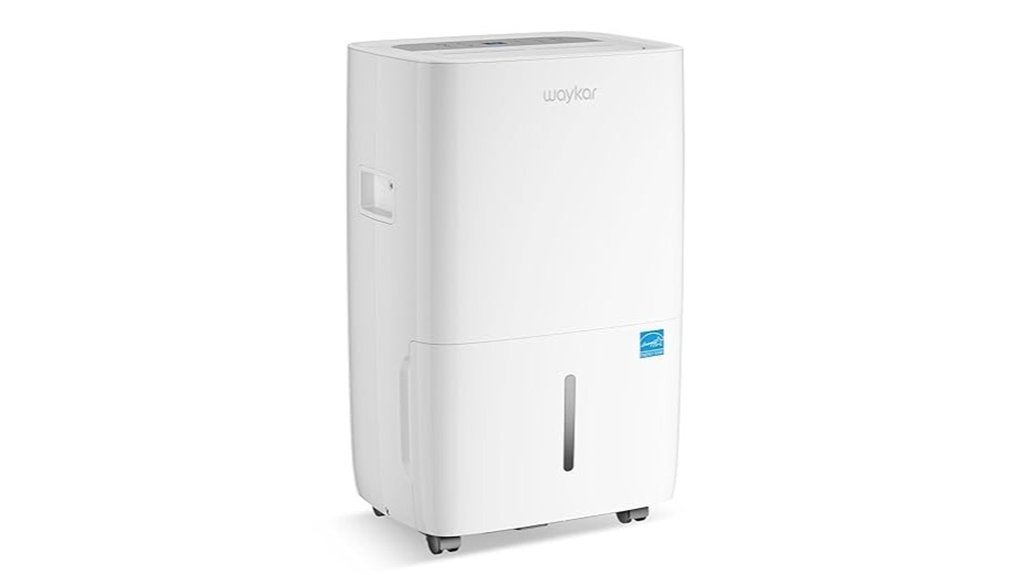
Waykar 80 Pints Energy Star Dehumidifier for Home
Best for Large Humid Homes
If you’re battling steady tropical humidity, the Waykar 80 Pints Energy Star Dehumidifier is a strong large-room option. Amazon currently identifies this ASIN as an 80-pint Waykar model and shows Energy Star certification, but some product-detail fields on the same listing show different capacity and coverage values. Because those fields are inconsistent, confirm the exact variant, coverage area, and current specifications on Amazon before buying. The listing also describes adjustable humidity control and quiet operation, which are useful features for long-running moisture control.
The listed quiet operation, at approximately 42 dB, makes it easier to use in bedrooms, offices, or shared living spaces without constant distraction. Its Energy Star certification is also helpful for tropical climates because dehumidifiers often need to run for long periods. Flexible drainage options make it more practical during heavy humidity seasons, especially if you do not want to empty the tank repeatedly.
Why You’ll Like It: This model works best when you need steady moisture control in a large area but still want a unit that feels manageable for everyday home use. It balances capacity, energy efficiency, and quieter performance better than many basic high-capacity models.
Who Should Buy This: Choose this if your home feels damp most of the year, you have a large room or basement, and you want adjustable humidity settings with energy-conscious operation.
Who Should Avoid This: Skip it if you only need dehumidification for a small bedroom, closet, or bathroom. A large-capacity unit may be more than you need for compact spaces.
Best For: Large humid rooms, open living areas, basements, and homes where moisture returns quickly after rain.
Pros:
- Energy Star certified for efficiency-focused long-running moisture control.
- Adjustable humidity control allows personalized comfort with a range of 30% to 80% RH.
- Listed quiet operation makes it suitable for many bedrooms, offices, and shared living spaces.
Cons:
- Manual tank emptying can become frequent in extremely humid conditions, so continuous drainage is preferable when practical.
- Initial cost may be higher compared to basic smaller dehumidifiers.
- Size and weight may make it less portable for some users.
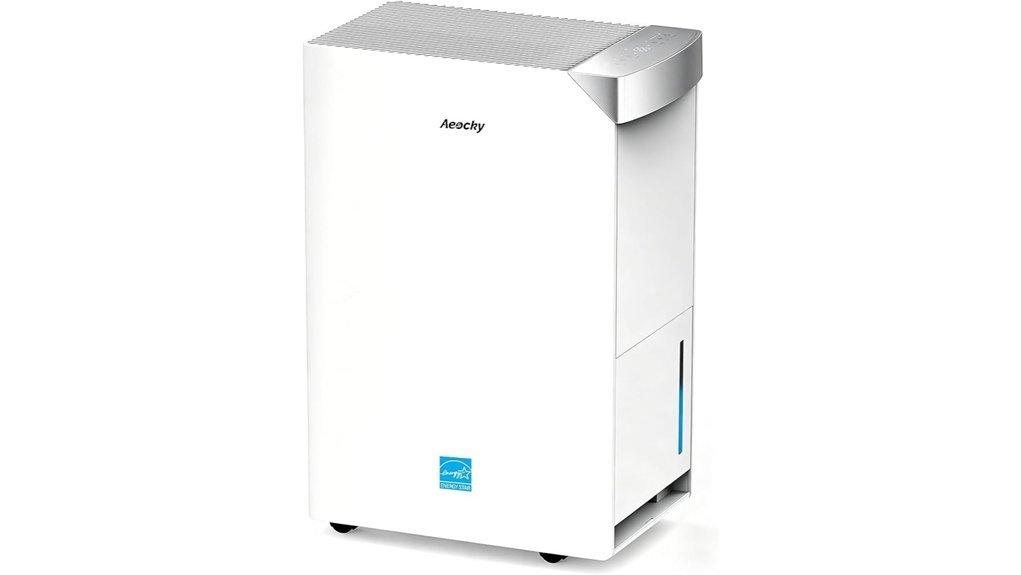
AEOCKY 105 Pint Energy Star Dehumidifier
Best for Extreme Moisture
The AEOCKY 105 Pint Energy Star Dehumidifier is aimed at homeowners dealing with high humidity in tropical climates. The current listing rates it at up to 105 pints per day under very hot, very humid conditions and gives a lower removal figure under milder test conditions, so real-world output will vary with temperature and relative humidity. That still makes it a strong candidate for large rooms, wet basements, and homes where humidity returns quickly after rain or hot weather.
It is designed for areas up to 5,500 sq. ft., and features like smart humidity control, a drain hose, and an intelligent humidistat help the unit adjust to changing indoor conditions. The high capacity makes it appealing for tough moisture problems, but continuous drainage is still the better setup if your space stays damp for many hours each day.
Important Note: Energy savings depend on electricity rates, humidity level, usage hours, room size, and the model being compared. Instead of buying based only on a savings estimate, compare capacity, energy rating, drainage setup, and total running needs.
Why You’ll Like It: This is the most aggressive moisture-removal option in this list, making it attractive for homes where lower-capacity dehumidifiers struggle to keep up.
Who Should Buy This: Choose it if your space stays damp even with ventilation, you have a large area to dry, or you need stronger daily moisture removal.
Who Should Avoid This: Avoid it for small bedrooms, apartments, or lightly humid spaces where a smaller and less powerful unit would be easier to place and maintain.
Best For: Large rooms, very damp basements, tropical homes, and high-moisture spaces that need stronger daily water removal.
Pros:
- High capacity: Listed to remove up to 105 pints per day under high-humidity test conditions.
- Energy-focused design: Designed with Energy Star positioning for more efficient long-running moisture control.
- Large-space coverage: Suitable for bigger rooms and homes where humidity is hard to control.
Cons:
- Size: May be too much machine for small rooms or apartments.
- Price: Higher-capacity models often cost more upfront than basic compact units.
- Maintenance: Requires regular tank emptying or proper setup for continuous drainage.
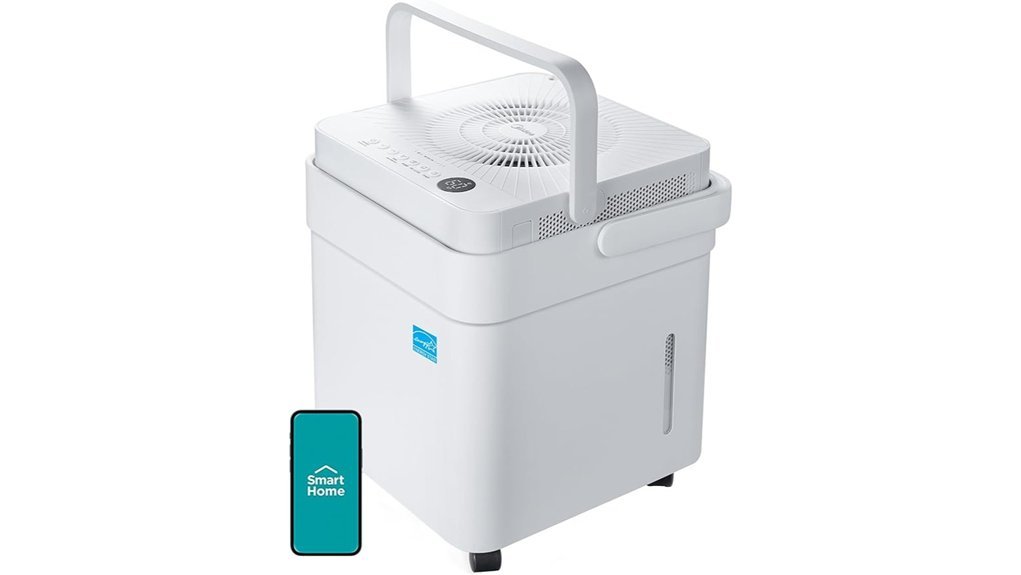
Midea Cube 20 Pint Dehumidifier with Smart Control
Best Smart-Control Pick
For anyone managing humidity in a smaller tropical-climate space, the Midea Cube 20 Pint Dehumidifier stands out because of its smart control features and flexible design. Covering up to 1,500 sq. ft., it collects 20 pints of moisture daily under listed conditions, making it more suitable for bedrooms, offices, laundry areas, or smaller living spaces rather than very large open rooms.
You can manage the unit through the SmartHome app, with compatibility for Alexa and Google Assistant. This is helpful if you want to check or adjust humidity settings without walking over to the unit. The cube design also helps with flexible operation and storage, while multiple drainage options simplify maintenance. With Energy Star certification, adjustable humidity control, and a manufacturer-listed 1-year warranty, it fits buyers who want convenience, efficiency, and a cleaner setup.
Why You’ll Like It: It is a practical choice for people who want modern controls, simple monitoring, and a compact design instead of a large-capacity machine.
Who Should Buy This: Choose this if your priority is a smart dehumidifier for a bedroom, home office, small apartment, or medium room.
Who Should Avoid This: Skip it if you need to dry a large basement, full home, or very damp space where 20 pints per day may not be enough.
Best For: Smart homes, bedrooms, offices, laundry rooms, and smaller tropical-climate spaces up to the listed coverage range.
Pros:
- Smart control via a user-friendly app, compatible with Alexa and Google Assistant.
- Energy-efficient operation with Energy Star certification.
- Flexible design allows for easy storage and multiple drainage options.
Cons:
- Limited to a maximum listed coverage of 1,500 sq. ft., which may not be enough for larger areas.
- Requires a Wi-Fi connection for full smart functionality.
- May feel heavy for some users to move frequently.
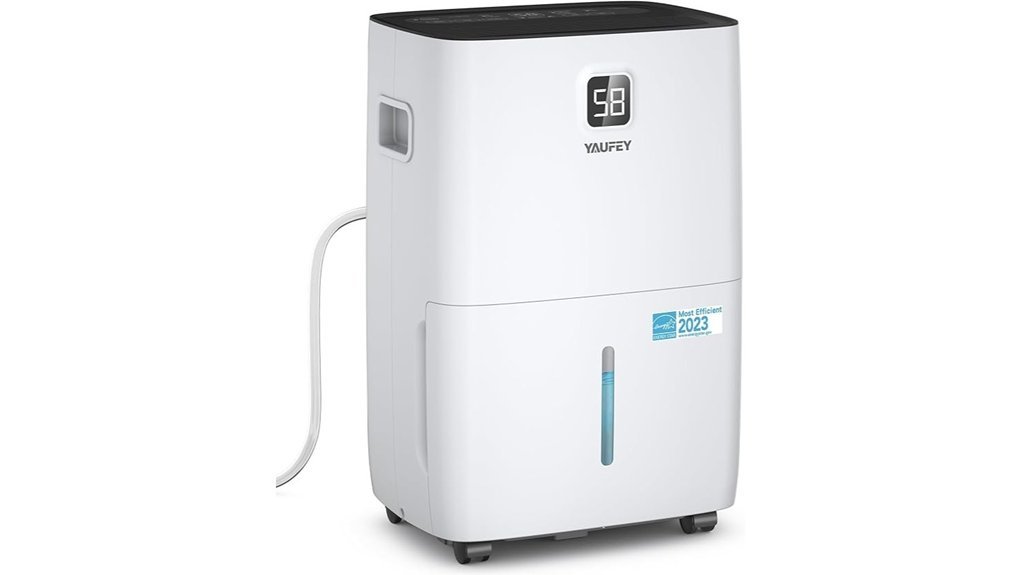
Yaufey 5000 Sq. Ft. Dehumidifier
Best for Large Multipurpose Spaces
Looking for a powerful solution to combat humidity in large spaces? The Yaufey 5000 Sq. Ft. Dehumidifier is designed for larger home areas, garages, offices, bedrooms, and basements where moisture control matters every day. The current Amazon product details list a 5,000 sq. ft. coverage area, 80-pint dehumidification capacity, adjustable humidity control, and continuous drainage.
Its smart sensors help maintain humidity between 30% and 80%, which gives you better control over indoor comfort. The listing describes quiet operation and three adjustable fan speeds, making it more flexible than a one-speed unit. It also lists a 1.06-gallon tank with automatic shut-off and portability features, so it can be moved between rooms when needed.
Why You’ll Like It: This model is a strong fit if you want one dehumidifier that can serve several different areas of the home, especially when you need large-space coverage and adjustable settings.
Who Should Buy This: Choose this if you want a large-space dehumidifier for mixed use, such as a garage one week and a basement or bedroom the next.
Who Should Avoid This: Avoid it if you need the quietest possible bedroom unit or if your space is small enough for a compact 20 to 30 pint model.
Best For: Large multipurpose spaces, garages, basements, offices, and rooms where portability matters.
Pros:
- Listed for 80-pint moisture removal capacity with adjustable humidity control and continuous drainage.
- Smart humidity control with precise detection and adjustable fan speeds for tailored comfort.
- Portable design with a 1.06-gallon tank and continuous drainage options for convenience.
Cons:
- Initial setup may require a bit of time for optimal placement and drainage configuration.
- The 1.06-gallon tank may require frequent emptying in very humid conditions.
- The listed noise level may be noticeable in very quiet bedrooms.
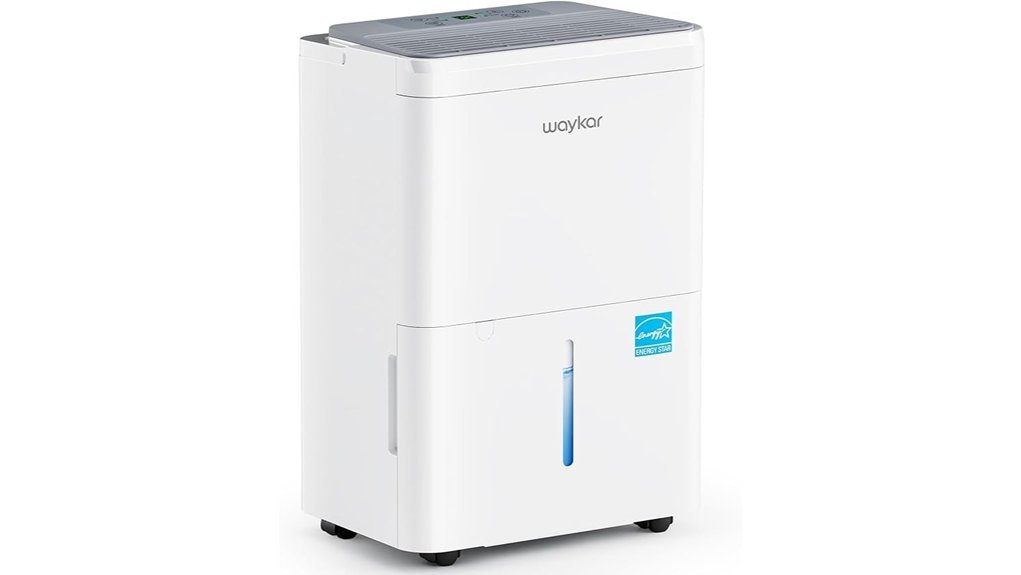
Waykar Energy Star Dehumidifier for Home & Basement
Best Quiet Home and Basement Pick
Struggling with humidity in your home? The Waykar Energy Star Dehumidifier is a practical everyday option for homeowners who want a quieter unit for basements, bedrooms, and general living areas. With a listed capacity to extract up to 30 pints daily, it covers areas up to 2,000 sq. ft., making it a better fit for medium spaces than the larger 80 and 105 pint models above.
You can adjust the humidity settings from 15% to 80% RH and choose between four modes tailored to different needs. Listed quiet operation at approximately 35 dB makes it appealing for sleeping areas, nurseries, offices, and living rooms where noise matters. Its removable tank and wheels add convenience, while technical support can help reduce buyer hesitation.
Why You’ll Like It: This model is easier to place in everyday rooms and may feel less overwhelming than a large-capacity unit. It is a useful choice when you want comfort-focused humidity control without a loud machine running in the background.
Who Should Buy This: Choose it if you need a quiet dehumidifier for a bedroom, basement, or medium room and you value multiple operating modes.
Who Should Avoid This: Avoid it if your space is larger than 2,000 sq. ft. or if you have extreme tropical humidity that needs stronger daily moisture removal.
Best For: Bedrooms, medium basements, bathrooms, offices, and everyday home humidity control.
Pros:
- Energy Star certified for efficiency-focused everyday operation.
- Listed quiet operation at approximately 35 dB makes it suitable for bedrooms and living areas.
- Versatile modes tailored for different environments, including Comfort, Dry, Turbo, and Continuous modes.
Cons:
- Initial cost may be higher than non-Energy Star compact models.
- Limited coverage for larger spaces beyond 2,000 sq. ft.
- Tank size may require frequent emptying in high-humidity conditions.
How to Choose Between These Dehumidifiers
- Choose AEOCKY 105 Pint if your home has severe dampness, a large wet basement, or moisture that returns quickly after rain.
- Choose Waykar 80 Pint if you want a balanced large-room model with strong capacity and quieter listed operation.
- Choose Yaufey 80 Pint if you want a large-space unit you can move between garages, offices, basements, and bedrooms.
- Choose Midea Cube 20 Pint if you want smart controls for a bedroom, office, laundry room, or smaller space.
- Choose Waykar 30 Pint if you want a quieter medium-room option for everyday home or basement humidity control.
Before You Buy: Tropical Climate Dehumidifier Checklist
- Match capacity to room size: Bigger rooms and wetter climates need higher pint ratings.
- Plan drainage first: Continuous drainage is valuable if humidity stays high for long periods.
- Check noise level: Choose quieter models for bedrooms, nurseries, and home offices.
- Look for washable filters: They reduce long-term maintenance costs and help keep airflow clean.
- Consider weight and wheels: Portability matters if you plan to move the unit between rooms.
- Use safe placement: Leave clearance around vents and keep the unit on a stable, level surface.
Factors to Consider When Choosing a Dehumidifier for Tropical Climate
When choosing a dehumidifier for a tropical climate, you need to consider several key factors. Think about the dehumidification capacity you require, energy efficiency, and how noisy the unit might be. Also, look into drainage options and the size or portability of the dehumidifier to make sure it fits your space.
Dehumidification Capacity Requirements
Selecting the right dehumidifier for a tropical climate starts with understanding your room size and dampness level. A model’s capacity is usually measured in pints per 24 hours, but real-world performance depends on temperature, humidity, airflow, and how wet the space is. For large rooms, basements, or persistent tropical humidity, a higher-capacity model can help prevent the unit from running constantly without catching up.
For smaller bedrooms, offices, and apartments, a 20 to 30 pint model may be easier to use and more practical. Next, consider the size of your space; choose a unit that covers the square footage of your area and gives you enough moisture removal for the conditions. It’s also essential to evaluate the humidity removal efficiency, especially in extreme conditions like hot weather, heavy rain, poor ventilation, or damp basements. Finally, assess drainage options because continuous drainage can save you from frequent tank emptying in high-humidity situations.
Energy Efficiency Ratings
How can you help your dehumidifier stay both effective and energy-conscious in a tropical climate? Start by looking for Energy Star certification, which indicates the unit is designed to meet efficiency standards while removing moisture. In high-humidity areas, choose models with higher capacity ratings when the space is large because an undersized unit may run constantly and still fail to control humidity.
Adjustable humidity control settings, often covering ranges like 30% to 80% RH depending on the model, allow you to optimize energy use based on your environment. Also, consider dehumidifiers with continuous operation modes; they maintain comfort without requiring frequent manual restarts during prolonged humidity. Advanced features like smart humidity detection and auto-defrost systems can help the unit respond to changing indoor conditions.
Noise Level Considerations
What factors should you consider regarding noise levels when choosing a dehumidifier for tropical climates? For bedrooms or quiet environments, look for lower listed decibel ratings, sleep-friendly modes, or adjustable fan speeds. A dehumidifier that sounds fine in a garage may feel too loud in a bedroom at night.
Many modern dehumidifiers offer quiet modes or adjustable fan speeds, allowing you to reduce noise while managing humidity. If you need continuous operation because of high humidity, a lower noise rating will help protect your comfort throughout the day and night.
Drainage Options Available
When living in a tropical climate, managing humidity goes beyond just choosing a quiet dehumidifier. Effective drainage options are key to maintaining comfort. Look for models with continuous drainage systems to efficiently deal with high humidity levels. Having a drain hose included makes connecting to a floor drain or sink easier, saving you from frequent tank emptying.
Opt for a unit with a large water tank capacity if you cannot use continuous drainage, especially during peak humidity. It’s also beneficial to choose dehumidifiers that offer both manual and continuous drainage modes, giving you flexibility. Finally, evaluate how easy it is to access the tank and drainage system because a well-designed setup simplifies maintenance.
Size and Portability Factors
Selecting the right size and portability features for your dehumidifier can make a significant difference in managing humidity in tropical climates. First, consider the coverage area; your unit should effectively handle the space where you plan to use it. The dehumidifier’s capacity is essential, too. Look for models that can handle your room size and dampness level without being harder to place than necessary.
Portability is key if you want to move the unit between rooms. Choose units with built-in wheels and handles for easier movement. Also, compact dimensions can improve portability, ensuring the dehumidifier fits in tighter spaces while maintaining efficient performance.
Humidity Control Features
To effectively manage humidity in tropical climates, you’ll want to focus on key control features that enhance your dehumidifier’s performance. Look for models with adjustable humidity control ranges so you can respond to changing moisture levels. Smart humidity detection technology is useful because it adjusts settings based on real-time measurements for better performance.
Continuous operation modes are useful in damp regions, allowing your unit to run without frequent manual restarts. Additionally, features like auto-defrost systems can help maintain efficient operation in cooler indoor conditions by reducing frost buildup. Finally, selecting a dehumidifier with multiple fan speeds allows for customizable airflow, helping distribute dehumidified air evenly throughout your space.
Safety and Compliance Standards
Ensuring your dehumidifier meets safety and compliance standards is important, especially in tropical climates where humidity levels can fluctuate dramatically. First, look for Energy Star certification if energy efficiency matters to you. It’s also wise to choose units designed to follow recognized safety standards, ensuring they perform safely in humid conditions.
Features like an auto-defrost system can prevent frost buildup in cooler spaces, keeping your unit running smoothly. Additionally, choose models backed by clear warranties and reliable customer support for peace of mind. Finally, review the product materials, manual, and placement requirements before use so the dehumidifier operates safely in your home.
Maintenance and Support Services
While high humidity can make your home feel uncomfortable, maintaining your dehumidifier is vital for keeping it running efficiently in tropical climates. Regular maintenance, like cleaning or replacing filters, is critical for peak performance. Choosing a model with a washable filter can lower long-term costs and improve airflow without frequent replacements.
Confirm your dehumidifier has flexible drainage options, such as continuous drainage, to handle high moisture levels with less effort. Additionally, look for brands that offer dependable customer support and warranty services; this provides peace of mind for any operational issues. A manufacturer known for strong technical support can improve your experience, especially in challenging tropical conditions.
Common Mistakes to Avoid When Using a Dehumidifier
- Buying too small: A compact unit may run nonstop in a large tropical room without removing enough moisture.
- Ignoring drainage: Small tanks fill quickly in humid climates, so continuous drainage can be a major convenience upgrade.
- Blocking airflow: Keep the intake and outlet clear so the unit can pull in moist air and push out drier air efficiently.
- Skipping filter cleaning: Dirty filters reduce airflow, increase strain, and can hurt long-term performance.
- Setting humidity too low: Extremely dry settings may increase runtime and energy use without improving comfort much.
- Expecting it to fix leaks: A dehumidifier helps manage air moisture, but it cannot solve roof leaks, plumbing leaks, or water intrusion.
Frequently Asked Questions
How Do Dehumidifiers Affect Indoor Air Quality?
Dehumidifiers can support better indoor comfort by reducing excess humidity, helping limit damp conditions, and reducing musty odors. They do not replace cleaning, ventilation, leak repair, or air purification, but they can reduce the moisture conditions that often make indoor air feel heavy and uncomfortable.
Can I Use a Dehumidifier in a Garage?
Yes, you can use a dehumidifier in your garage if the unit is suitable for the garage’s temperature range and dust level. For garages, choose a unit with enough capacity, stable placement, and a drainage plan. If the garage gets very hot, cold, or dusty, check the product manual to confirm the operating temperature range and cleaning requirements.
What Maintenance Do Dehumidifiers Require?
To maintain your dehumidifier, clean the tank regularly, check the filter monthly, and keep the coils free of dust. You should also ensure proper airflow and check for leaks, unusual noises, or error codes. In tropical climates, maintenance matters even more because the unit may run for longer periods and collect more water each day.
Are Dehumidifiers Energy-Efficient in Tropical Climates?
Yes, dehumidifiers can be energy-efficient in tropical climates when you choose models with strong energy ratings and use them wisely during peak humidity. For best results, match the unit size to the room, use continuous drainage when needed, keep filters clean, and avoid setting the target humidity lower than necessary.
How Noisy Are Modern Dehumidifiers During Operation?
Noise varies by size, compressor design, fan speed, and room placement. Many modern home dehumidifiers are quiet enough for living areas, but bedrooms usually need lower listed decibel ratings or a sleep-friendly mode. If noise matters, compare the listed dB rating and choose a model with adjustable fan speeds.
What Humidity Level Should I Set in a Tropical Climate?
Many homeowners aim for a balanced indoor range rather than choosing the lowest possible number. In tropical climates, a moderate setting helps reduce sticky air, musty odor, and condensation without forcing the unit to run harder than needed. Start around a comfortable middle setting, then adjust based on room moisture, comfort, and how often the tank fills.
Is Continuous Drainage Worth It?
Yes, continuous drainage is worth it if your home has persistent humidity or if the unit runs for many hours each day. It reduces the need to empty the tank manually and lowers the chance of the machine shutting off because the tank is full. Just make sure the hose is installed correctly and drains safely to a floor drain, sink, or other suitable outlet.
Does a Dehumidifier Remove Mold?
No, a dehumidifier does not remove existing mold from walls, furniture, or stored items. It helps reduce excess moisture, which can make conditions less favorable for future mold growth. If you already see mold, address the moisture source and clean or remediate the affected area safely.
Final Recommendation
For tropical humidity, the best dehumidifier depends on how large and damp your space is. If you need maximum moisture removal, the AEOCKY 105 Pint model is the heavy-duty option. If you want a balanced large-room pick, the Waykar 80 Pints model is a strong choice. If you need one unit for different large spaces, the Yaufey 5000 Sq. Ft. model is practical. For smaller spaces and smart-home users, the Midea Cube is easier to manage. For quieter everyday rooms, the Waykar home and basement model is the better fit.
Before buying, consider capacity, room size, drainage, noise level, portability, and maintenance. A well-selected dehumidifier can improve comfort, reduce musty odors, and help protect your home from moisture-related problems in a tropical climate.