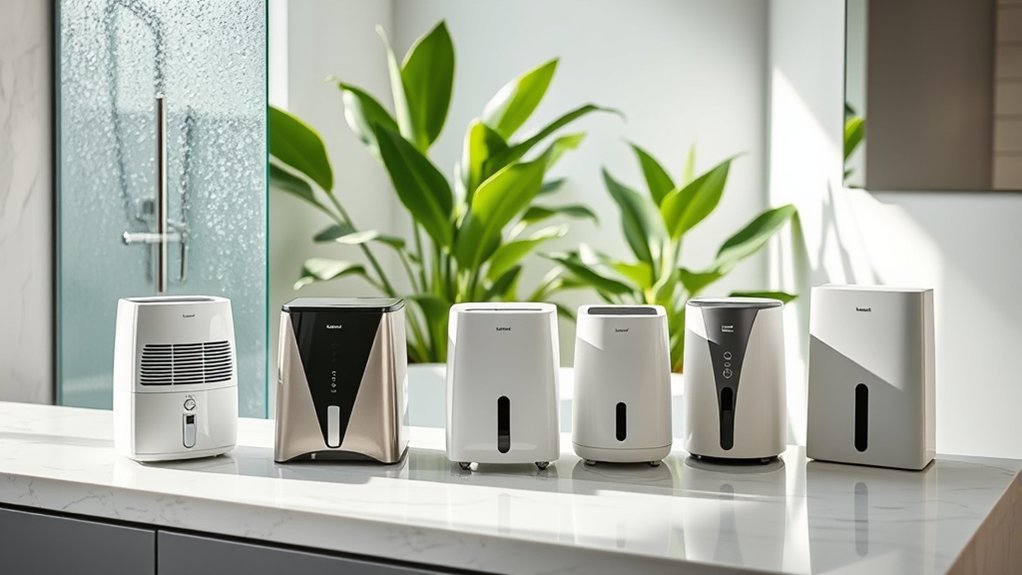
A separate digital hygrometer can help you check whether a dehumidifier is reducing moisture throughout the room instead of only near its built-in sensor. For most homes, the best option is an indoor humidity meter that is easy to place, reasonably consistent, and readable from the distance where you plan to check it.
Among these options, the JEDEW 6 Pack Digital Hygrometer Thermometer Monitor is the strongest all-around choice for comparing several rooms. The 4-Pack Mini Hygrometer Thermometer has the tightest claimed humidity tolerance and works well in compact fitted locations, while the Serundo Auto Mini Digital Hygrometer 2 Pack is more practical when you only need a main reading and one comparison point.
How we compared these hygrometers:
- Pack size and usefulness for one room, two zones, or multiple rooms
- Claimed relative-humidity accuracy and measurement range
- Display visibility and suitability for close-range or room viewing
- Mounting flexibility, refresh information, and °F/°C controls
- Honest limitations, including the lack of app alerts or recorded history
We did not independently laboratory-test these products. Specifications below are based on the linked product listings and should be confirmed on the current Amazon page before purchase.
Quick Comparison
| Product | Best For | Pack Size | Claimed Humidity Accuracy | Listed Refresh | Amazon |
|---|---|---|---|---|---|
| JEDEW 6 Pack | Best overall for multiple rooms | 6 | ±3% RH | 10 seconds | Check on Amazon |
| 4-Pack Mini LCD Monitor | Best for compact fitted mounting | 4 | ±2% RH | 10 seconds | Check on Amazon |
| EWPJDK Mini Indoor Hygrometer | Best value for several small spaces | 6 | ±5% RH | Not clearly stated | Check on Amazon |
| Serundo Auto Mini Digital Hygrometer | Best for two-zone monitoring | 2 | ±3% RH | 10 seconds | Check on Amazon |
| JJMTDS 6 Pack Mini Hygrometer | Best for cabinets and enclosed spaces | 6 | ±5% RH | 10 seconds | Check on Amazon |
JEDEW 6 Pack Digital Hygrometer Thermometer Monitor — Best Overall
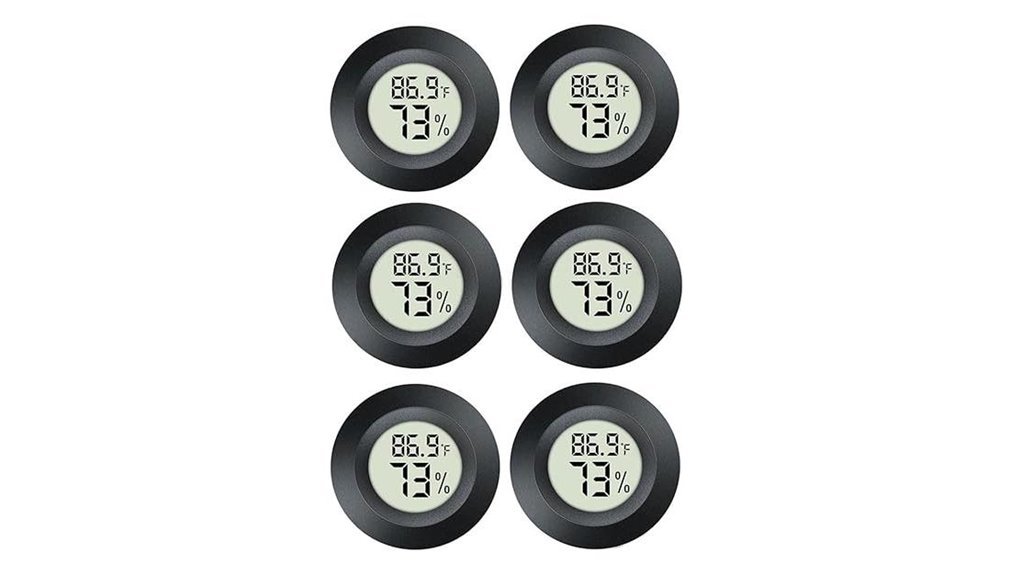
JEDEW’s six-pack is the most practical option here when you want to compare humidity in several rooms or find out whether moisture is concentrated in one area. Each compact unit displays temperature and relative humidity, switches between Fahrenheit and Celsius, and is listed with a 10-second refresh rate. The seller claims accuracy of ±1°F and ±3% RH across a 32°F to 158°F temperature range and a 10% to 99% RH humidity range.
Problem It Solves: Moving one humidity meter between rooms makes direct comparisons difficult because the readings are taken at different times. Six matching meters let you observe several areas under similar conditions.
Why You’ll Like It: You can leave monitors in a basement, bedroom, bathroom, office, laundry area, or storage room instead of carrying one meter throughout the day.
Who Should Buy It: Homeowners using one or more dehumidifiers, especially where humidity varies by floor or room.
Who Should Avoid It: Buyers who need a large across-the-room display, app alerts, history graphs, remote monitoring, or a professionally calibrated instrument.
Pros:
- Six units for simultaneous room-by-room monitoring
- Claimed ±3% RH humidity accuracy and 10-second updates
- Switchable Fahrenheit and Celsius display
- Useful for identifying which areas need more dehumidification
Cons:
- No app, alarms, min/max history, or data logging
- Small display can be difficult to read across a large room
- Accuracy claims are seller-provided rather than independently verified here
- Individual units should be compared together before use
4-Pack Mini Hygrometer Thermometer with LCD Monitor — Best for Compact Mounting
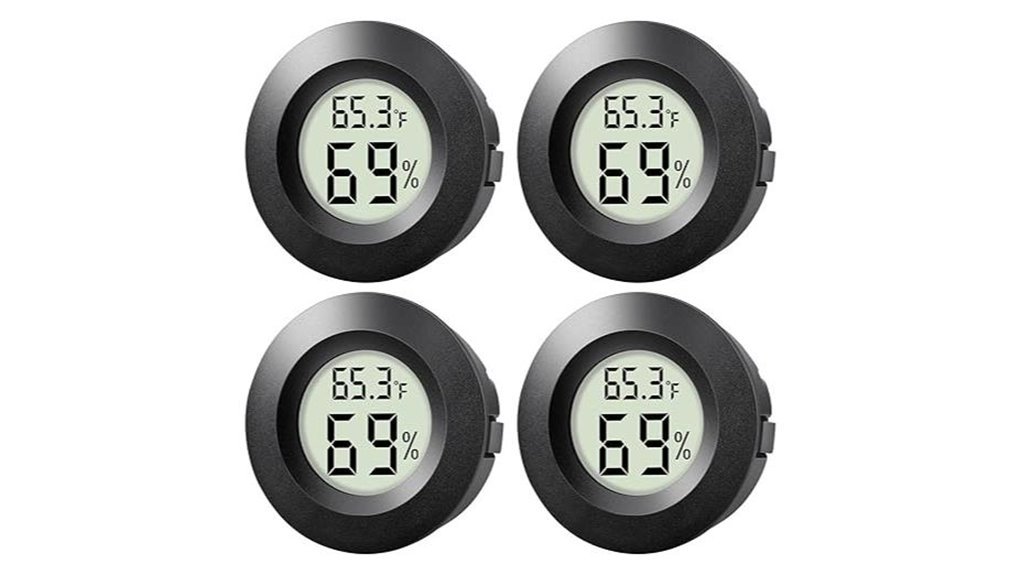
This four-pack is a good fit when you need compact round meters for fitted openings, taped mounting, jars, cabinets, tanks, cases, or small storage zones. The units display temperature and humidity, switch between °F and °C, and are listed with a 10-second refresh rate. The seller claims a -58°F to 158°F temperature range, a 10% to 99% RH humidity range, ±1°F temperature accuracy, and ±2% RH humidity accuracy.
Problem It Solves: A normal tabletop humidity gauge may be too large for a narrow cabinet, storage case, or fitted panel.
Why You’ll Like It: The round shape and flexible mounting style work well when a freestanding room meter would be awkward.
Who Should Buy It: Buyers who want four close-range monitors and prioritize the tightest claimed humidity tolerance in this group.
Who Should Avoid It: Anyone who needs a large room display, min/max memory, alerts, remote access, or easy reading from several feet away.
Pros:
- Four compact units for several monitoring points
- Tightest claimed humidity tolerance in this comparison
- Can be mounted with tape or installed in a compatible opening
- Switchable Fahrenheit and Celsius readings
Cons:
- Small screen can be difficult to read from a distance
- No logging, smart connectivity, alarm, or history function
- Accuracy is a seller claim, not an independent test result
- Dimensions must be confirmed before cutting a permanent opening
EWPJDK Mini Indoor Hygrometer Thermometer 6 Pack — Best Value for Small Spaces
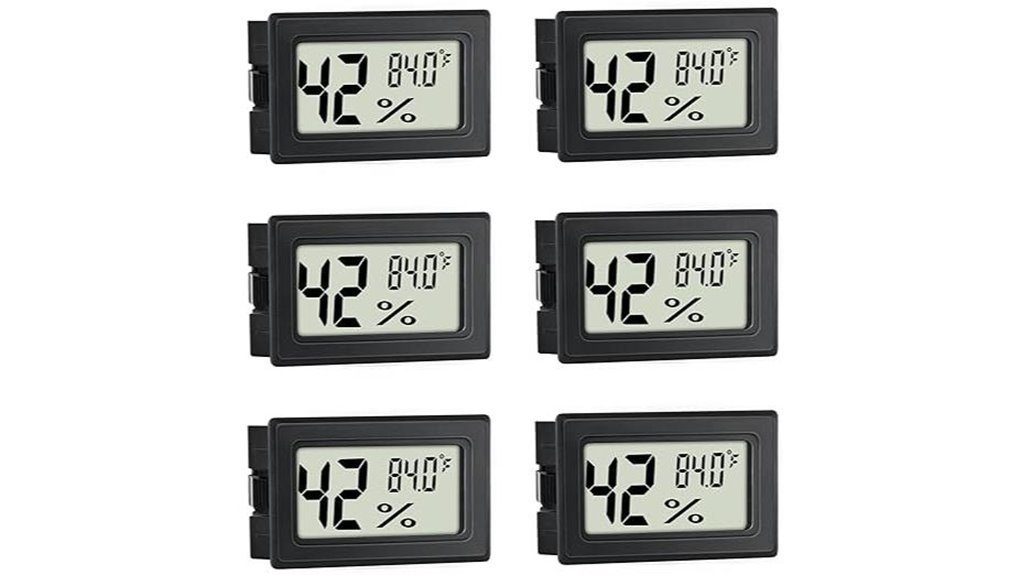
The EWPJDK Mini Indoor Hygrometer Thermometer 6 Pack is useful when quantity and flexible placement matter more than advanced features or close-tolerance measurement. The listing describes six digital temperature-and-humidity monitors with built-in probes, a -58°F to 158°F temperature range, a 10% to 99% RH humidity range, and claimed accuracy of ±2°F and ±5% RH. The units can be fitted into a compatible opening or attached with double-sided tape.
Problem It Solves: Moisture can remain high inside closets, cabinets, cellars, and storage spaces even when the main room feels dry.
Why You’ll Like It: You can leave one monitor near each problem area and identify where the dehumidifier has the greatest or weakest effect.
Who Should Buy It: Buyers monitoring closets, storage areas, cellars, small rooms, cabinets, greenhouse areas, or other compact indoor spaces.
Who Should Avoid It: Buyers who require tighter accuracy claims, a large screen, app notifications, or recorded humidity trends.
Pros:
- Six units provide coverage for several small areas
- Wide listed temperature and humidity ranges
- Flexible fitted or tape-mounted installation
- Useful for finding localized moisture pockets
Cons:
- Claimed ±5% RH accuracy is less precise than some alternatives here
- Small displays are not ideal for viewing across a room
- The source listing does not clearly state a refresh interval
- No alerts, memory, or smart-home connection
Serundo Auto Mini Digital Hygrometer Thermometer 2 Pack — Best for Two Zones
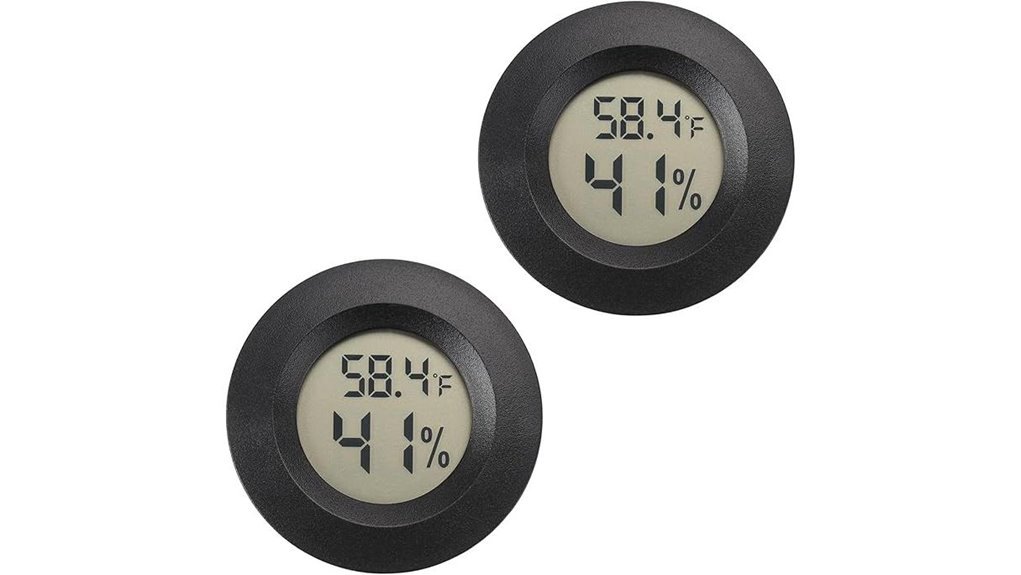
This two-pack is the simplest choice when you only need a main-room reading and one comparison reading. The seller listing claims a 32°F to 158°F temperature range, a 10% to 99% RH humidity range, ±1°F temperature accuracy, ±3% RH humidity accuracy, and a 10-second refresh rate. The display can switch between Fahrenheit and Celsius, and button-cell batteries are listed as included.
Problem It Solves: A dehumidifier’s built-in sensor may only reflect conditions near the appliance. A second meter can show whether a distant corner or nearby room is responding differently.
Why You’ll Like It: Two meters are enough to compare the area near a dehumidifier with a second room, hallway, closet, or far corner without purchasing unused extras.
Who Should Buy It: Apartment residents, bedroom users, office users, or anyone with one dehumidifier and two important monitoring points.
Who Should Avoid It: Larger homes that need simultaneous readings from several rooms or users who need an easy-to-read large display.
Pros:
- Practical two-unit pack without unnecessary extras
- Claimed ±3% RH accuracy and 10-second refresh rate
- Switchable °F/°C display
- Useful for near-versus-far humidity comparisons
Cons:
- Only two monitoring points
- No alerts, history, data export, or wireless connection
- Compact display may be difficult to read at a distance
- Seller accuracy claims were not independently verified here
JJMTDS 6 Pack Mini Hygrometer Thermometer — Best for Compact Enclosed Spaces
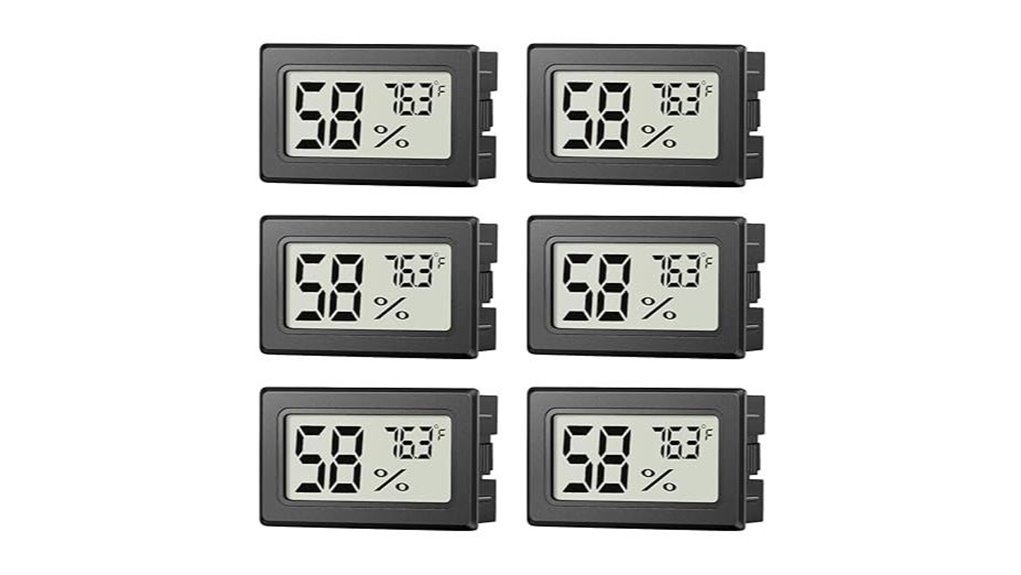
Although this JJMTDS six-pack is frequently marketed for reptile tanks, jars, humidors, and other small enclosures, it can also provide basic humidity checks in cabinets, storage boxes, closets, cases, and compact indoor areas. Each unit combines a thermometer and hygrometer with a small digital display. The seller claims a 10-second update interval, -58°F to 158°F temperature range, 10% to 99% RH humidity range, ±2°F temperature accuracy, and ±5% RH humidity accuracy.
Problem It Solves: A large room hygrometer may not fit inside a narrow cabinet, sealed storage box, case, or other enclosed moisture-prone area.
Why You’ll Like It: The compact format lets you monitor several enclosed or hard-to-reach spaces where a larger humidity gauge may not fit.
Who Should Buy It: Buyers monitoring tanks, cases, cabinets, storage containers, closets, humidors, or similar close-range locations.
Who Should Avoid It: Buyers who mainly want an easy-to-read hygrometer for a large basement, bedroom, or living room.
Pros:
- Six compact monitors for several small spaces
- Listed 10-second refresh rate
- Wide seller-listed measurement ranges
- Useful where normal tabletop meters will not fit
Cons:
- Small-enclosure design is less convenient for across-the-room viewing
- Claimed ±5% RH accuracy is intended for general monitoring, not fine control
- No smart alerts, history, or remote access
- Button-cell compartments require careful handling around children
Factors to Consider When Choosing a Hygrometer for a Dehumidifier
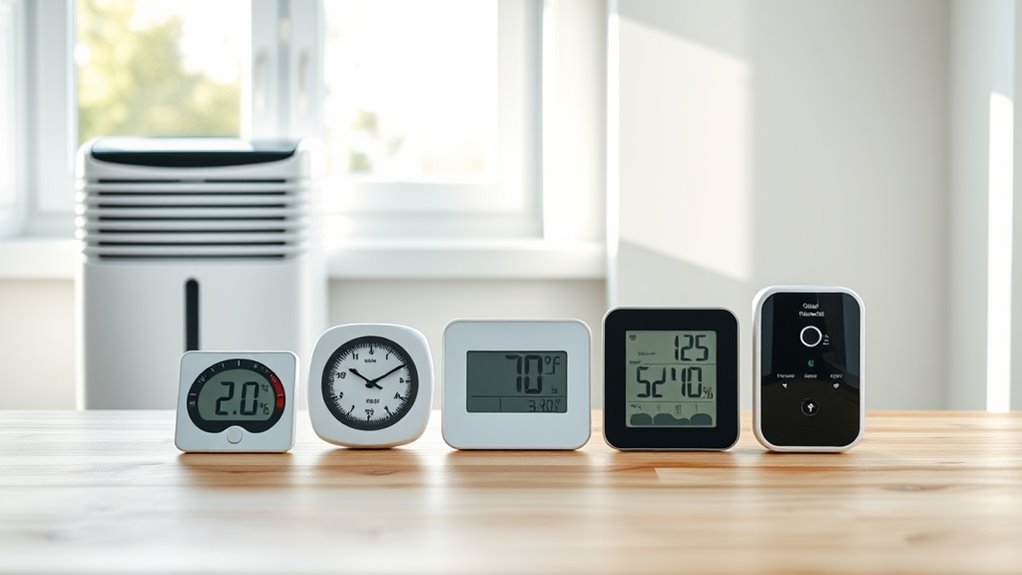
The best hygrometer for dehumidifier monitoring is not necessarily the model with the largest pack size or most aggressive accuracy claim. Focus on humidity consistency, display visibility, placement, pack size, battery safety, and whether you need alerts or recorded history. A basic mini meter can show general conditions, but it cannot automatically control a normal dehumidifier unless the two devices are specifically designed to communicate.
Claimed Accuracy and Unit-to-Unit Consistency
Humidity accuracy matters more than temperature accuracy for this use. The products above carry claimed tolerances from ±2% to ±5% RH, but those numbers come from manufacturers or sellers and were not independently verified for this article.
When you receive a multi-pack, place all units together in the same stable indoor location for several hours. A meter that remains consistently a few percentage points higher or lower than the group may still help you track trends. A unit that changes unpredictably or remains far outside the group is less dependable as your main reference.
Placement Near a Dehumidifier
Do not place the hygrometer directly against the dehumidifier’s intake, exhaust, water tank, a cold exterior wall, an open window, a heating vent, or an active moisture source. Those locations can create a local reading that does not represent the occupied area.
Place the meter in the part of the room you actually want to evaluate. For a large room, use one meter near the main occupied area and another farther from the dehumidifier. Allow the reading time to settle after moving the meter.
Measurement Range
A broad measurement range can be useful, but most home users will spend far more time in the middle of the scale than at its limits. All five products list humidity coverage reaching 10% to 99% RH. For ordinary dehumidifier use, repeatable readings around normal indoor conditions are more important than an extreme temperature specification.
Update Frequency
A 10-second refresh rate makes the display feel responsive, but whole-room humidity normally changes more slowly. Do not adjust the dehumidifier every time the display moves by one percentage point. Look for a stable pattern over time, especially after showering, cooking, opening doors, using an exhaust fan, or moving the meter.
Display Size and Mounting
Mini displays save space but can be difficult to read from across a basement, bedroom, or living room. Choose a location where you can approach the meter easily, or select a larger-display hygrometer instead when frequent distance viewing matters.
Round or fitted designs are useful for cabinets, storage boxes, tanks, and cases. Confirm the exact meter and opening dimensions on the current product page before cutting a permanent mounting hole.
Pack Size
A two-pack is enough for one dehumidifier zone plus a comparison area. Four- and six-packs are more useful when you have a basement, several bedrooms, closets, storage areas, or multiple moisture-prone spaces. Extra meters also make it easier to identify one unit that reads differently from the rest.
Smart Features and Recorded History
These five products are basic standalone displays. They do not provide phone alerts, remote readings, downloadable history, or humidity graphs. Choose a compatible smart hygrometer instead when you need to know what happened while you were away or want an alert when humidity crosses a chosen limit.
Power, Battery Life, and Safety
These compact monitors use button-cell batteries. Battery life depends on the model, battery quality, temperature, and storage conditions. Keep compatible replacements available and recheck a meter if its display fades, stops updating, or becomes erratic. Confirm the exact battery type on the current product page before ordering replacements.
Before you buy:
- Count how many rooms, closets, or zones you need to monitor at the same time.
- Decide whether a miniature screen will be readable from your intended location.
- Confirm the dimensions before making a fitted opening.
- Check whether you need °F/°C switching or only one temperature scale.
- Choose a smart model instead when you need alerts, remote access, or recorded history.
- Inspect the current listing for battery type, included accessories, and seller warranty information.
Frequently Asked Questions
How Do I Check a New Hygrometer?
Place all new meters together in the same stable indoor location for several hours and compare their readings. Small differences can be normal within the claimed tolerance. If one unit stays far from the group or changes erratically, avoid using it as your main reference.
This comparison checks consistency between the units; it does not provide a formal calibration against a certified reference instrument.
Where Should I Place a Hygrometer With a Dehumidifier?
Place it in the part of the room you want to evaluate, away from the dehumidifier’s direct airflow, vents, windows, exterior walls, heating equipment, and obvious moisture sources. A second meter in a distant part of the room can show whether humidity is being controlled evenly.
What Humidity Range Is Best for Dehumidifier Control?
The U.S. Environmental Protection Agency recommends keeping indoor humidity below 60% and ideally between 30% and 50% relative humidity. The most comfortable and practical setting can vary with the season, outdoor conditions, building materials, and personal preference. See the EPA’s moisture and mold guidance.
Use condensation, persistent dampness, musty odors, and visible moisture as additional warning signs rather than trying to maintain one exact number at all times.
Can One Hygrometer Monitor Multiple Rooms Effectively?
One meter only shows conditions where it is currently placed. You can move it between rooms, but readings taken at different times are harder to compare because weather, doors, showers, cooking, and dehumidifier operation may have changed. A multi-pack is more useful when humidity varies by floor or room.
Do These Hygrometers Control the Dehumidifier?
No. These products are standalone displays. They help you observe temperature and relative humidity, but they do not switch a normal dehumidifier on or off. Automatic control requires a dehumidifier with its own humidistat or a separate controller that is specifically compatible with the appliance.
Should I Choose a Smart Hygrometer Instead?
A smart hygrometer is a better choice when you need phone alerts, remote access, recorded history, graphs, or notifications when humidity crosses a chosen limit. A basic mini hygrometer is usually enough when you only need to check current conditions while you are at home.
Do Digital Hygrometers Need Battery Replacements?
Yes. Replace the button-cell battery when the display weakens, the meter stops updating, or readings become unreliable. Use the battery type specified for the exact model, keep spare and used cells away from children, and inspect the battery compartment before returning the meter to service.
Why Does My Hygrometer Disagree With the Dehumidifier?
The two sensors may be in different locations, exposed to different airflow, or built to different tolerances. The dehumidifier’s internal sensor is often close to its intake, while a separate meter may be across the room. Compare trends over time and avoid assuming that either display is perfectly calibrated.
Final Recommendation
Best overall: The JEDEW 6 Pack is the most useful choice for comparing several rooms and carries a stronger claimed humidity tolerance than the two generic-style six-packs.
Best for compact mounting: The 4-Pack Mini LCD Monitor has the tightest claimed humidity tolerance and a round design suited to compatible fitted openings, cabinets, and cases.
Best for a simple setup: The Serundo Auto Mini Digital Hygrometer 2 Pack gives you one main reading and one comparison point without purchasing four or six units.
Best for several small spaces: The EWPJDK and JJMTDS six-packs are practical for closets, cabinets, storage containers, and other close-range monitoring points, but their small screens and ±5% RH claims make them less attractive for precise whole-room viewing.
Need alerts or history? Skip these basic displays and choose a smart hygrometer with remote access and recorded data.
A hygrometer is most helpful when you use it to watch trends, compare locations, and check whether your dehumidifier is improving conditions throughout the room. Choose the pack size that matches your space, keep the meters away from direct airflow, compare multi-pack units before relying on them, and treat small changes within the claimed accuracy range as normal rather than constantly changing the dehumidifier setting.