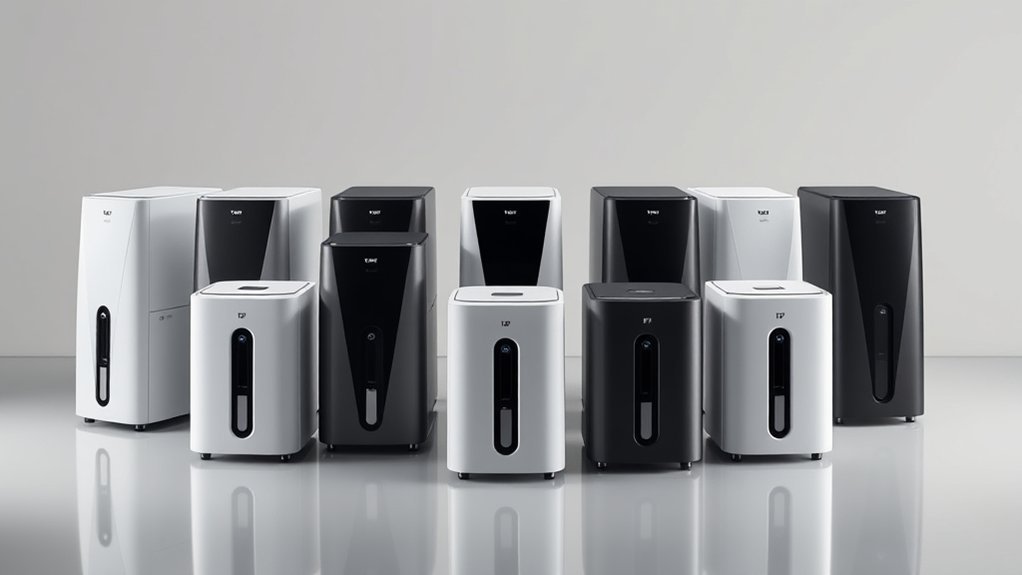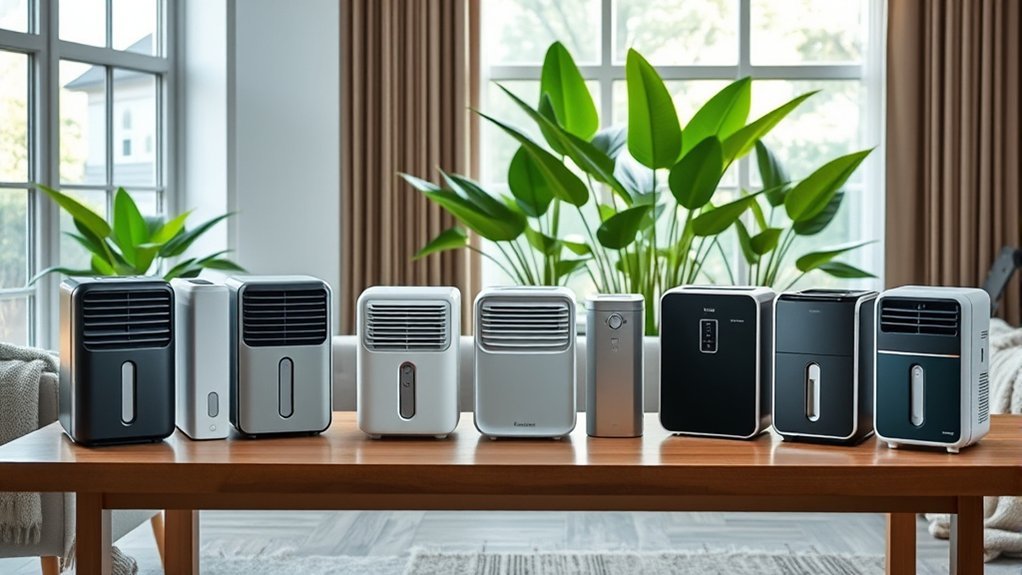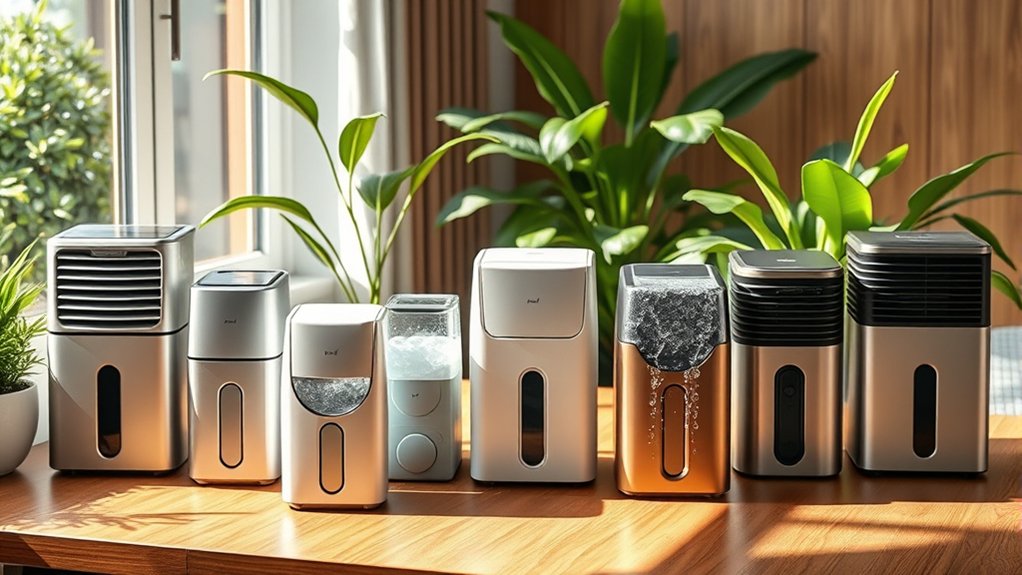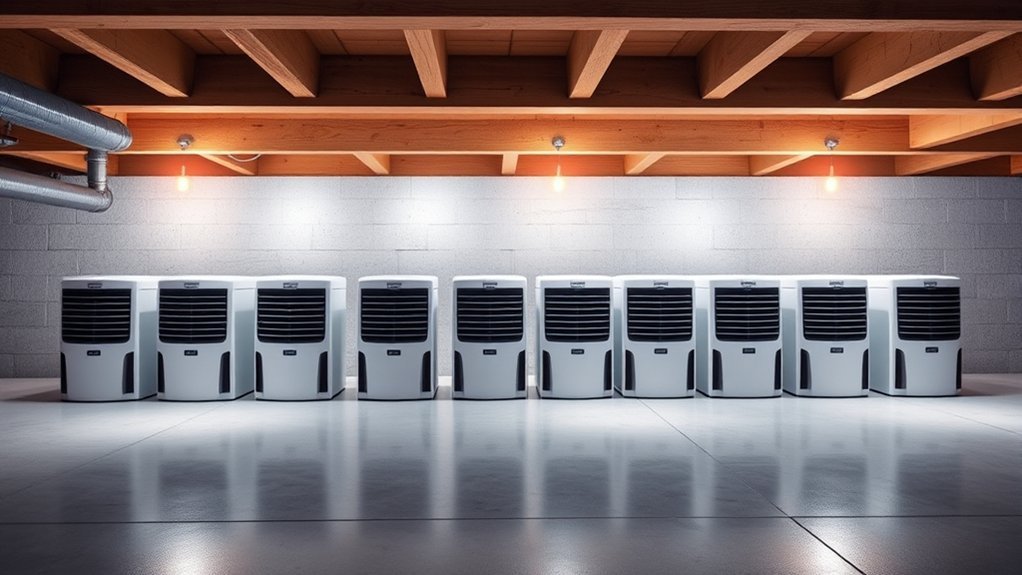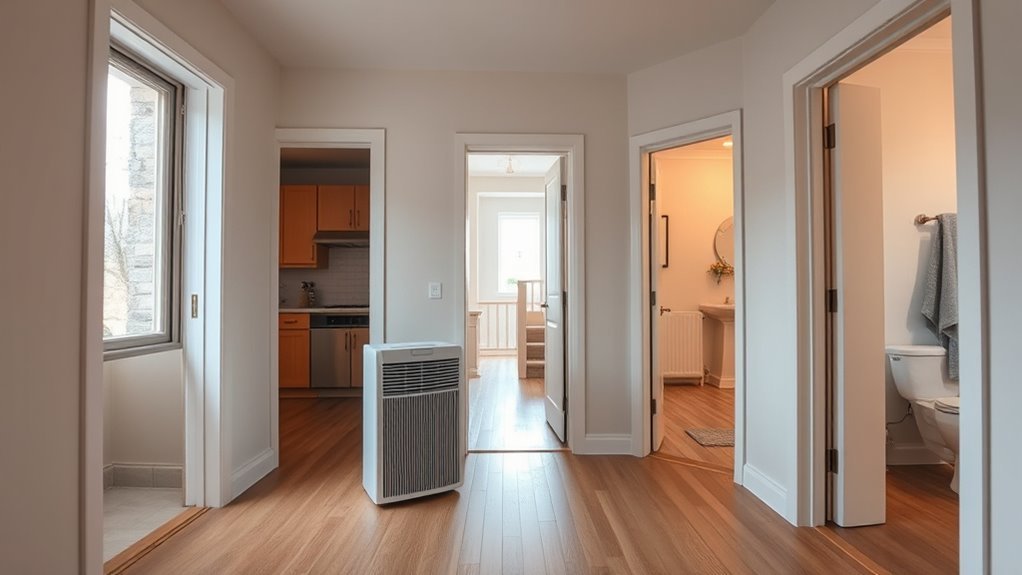
A portable dehumidifier can control humidity in one room, a basement, or sometimes a small open-plan home, but it is not automatically a whole-house solution. The result depends on the unit’s moisture-removal capacity, the home’s layout, air movement, temperature, and the amount of moisture entering the building. In homes with closed rooms or humidity throughout several floors, a properly sized whole-house dehumidifier usually provides more even control with less daily attention.
Quick Answer
One portable dehumidifier may help a small, open home or a connected basement, but it usually cannot maintain the same humidity in separated rooms or across several floors. Choose by pints removed per day and moisture load, then confirm the result with hygrometers in multiple rooms.
Key Takeaways
- Do not judge a dehumidifier by square footage alone. Capacity in pints per day and the severity of the dampness matter.
- A portable unit works best in one room, one open zone, or at the main source of moisture.
- A whole-house model distributes dry air through ductwork and is better suited to widespread humidity.
- Use separate hygrometers to check whether distant rooms stay near your target humidity.
- Fix leaks, drainage problems, and poor exhaust ventilation before relying on any dehumidifier.
Will a Portable Dehumidifier Work for a Whole House?
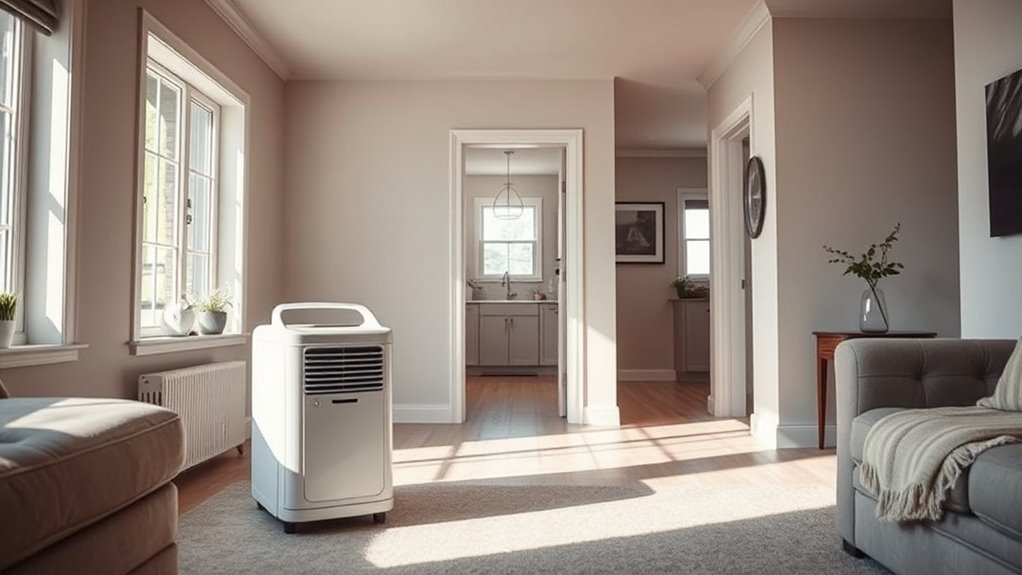
A portable dehumidifier can lower humidity beyond the room where it sits when the home is small, doors are open, and air can circulate freely. However, portable room dehumidifiers are primarily designed for a single room or space, while whole-home models use ducting to treat one or more areas. ENERGY STAR recommends sizing by both the area and the moisture condition, with capacity measured in pints of water removed per 24 hours, not by a single square-foot cutoff. See the current ENERGY STAR dehumidifier guidance.
One portable unit is less likely to control an entire house when bedrooms stay closed, the home has several floors, the basement is isolated from the living area, or moisture enters in several places. In those cases, the unit may reach its set point nearby while distant rooms remain damp.
Note: A dehumidifier’s advertised coverage is an estimate under specified conditions. A wetter space, lower temperature, air leakage, or frequent door opening can increase the moisture load and reduce real-world coverage.
Why Portable Dehumidifiers Fall Short
Portable dehumidifiers often fall short as a whole-house solution because they remove moisture only from the air that reaches the unit. Walls, closed doors, stairways, and weak air circulation slow that movement. The result can be acceptable humidity near the machine but higher humidity in distant rooms.
Limited Coverage
There is no reliable universal limit such as 300, 500, or 900 square feet for every portable dehumidifier. ENERGY STAR’s current sizing guidance groups portable units by room size and dampness, with recommended capacities ranging from about 20 pints per day for a slightly damp smaller space to 50 pints or more for wet or larger spaces. The correct choice depends on all of the following:
- Moisture load: A space with seepage, wet laundry, or frequent condensation needs more capacity than a mildly musty room.
- Home layout: Open rooms share air more easily than closed bedrooms or separate floors.
- Temperature: Standard refrigerant dehumidifiers can lose performance when the room becomes cool enough for frost to form on the coils.
- Air leakage: Open windows, outdoor humidity, foundation moisture, and unsealed ducts add moisture faster than the unit may remove it.
If one room reaches 45% relative humidity while another stays at 60%, the system is providing localized control rather than whole-home control.
Higher Maintenance Needs
Portable units need regular filter cleaning and either bucket emptying or a correctly installed drain hose. The original claim that portable units do not drain automatically is too broad. Many models support gravity drainage, and some include a condensate pump. A full bucket normally triggers an automatic shutoff, which prevents overflow but also stops moisture removal until the bucket is emptied.
| Task | Why It Matters |
|---|---|
| Empty the bucket or check the drain | A stopped or blocked drain ends moisture removal and may cause water problems. |
| Clean the filter | Restricted airflow reduces performance and can increase run time. |
| Keep the intake and outlet clear | The unit needs free airflow around its vents. |
| Check humidity in distant rooms | The built-in humidistat measures conditions near the machine, not throughout the house. |
| Inspect for frost or short cycling | Cool conditions can reduce water removal unless the model is rated for low-temperature use. |
When a Portable Dehumidifier Makes Sense
A portable model is often the practical choice when humidity is concentrated in a basement, laundry area, bedroom, bathroom-adjacent space, or another defined zone. It is also useful for seasonal humidity, temporary drying after a minor clean-water leak, or a home without suitable ductwork.
- You need targeted control without permanent installation.
- The damp area has enough airflow for one unit to treat it effectively.
- You can route a hose to a safe drain or empty the bucket as needed.
- Humidity readings in the rest of the home are already within the desired range.
Portable does not always mean inefficient. Compare the unit’s Integrated Energy Factor (IEF), stated in liters of water removed per kilowatt-hour. A higher IEF indicates better tested efficiency. ENERGY STAR-certified dehumidifiers use about 20% less energy than comparable non-certified models, but that does not mean every whole-house unit is automatically four times as efficient as every portable unit.
Pro Tip: Place a separate hygrometer in the farthest bedroom and another near the dehumidifier. Check both during several humid days. If distant rooms remain above the target while the nearby room is dry, one portable unit is not distributing dry air evenly enough.
What Whole-House Dehumidifiers Do Better
A whole-house dehumidifier is designed to move larger volumes of air through ducting and discharge the condensate to a drain. When it is sized and installed correctly, it can provide steadier control across several rooms without portable tanks or machines occupying living areas.
Recommended Products

【The Undisputed Champion — Industry-Leading Dehumidifier Brand】When you choose AEOCKY, you get double market validation. According to data independently verified by Stackline, a leading third-party data analytics company, AEOCKY was an industry‑leading dehumidifier brand on Amazon U.S. in 2025. This means you’re not just choosing a flagship product from a market leader, but a top-performing brand backed by independent market data and trusted by millions of real users, delivering the ultimate combination of performance, quality and trust.

2500 Sq. Ft Dehumidifier - SEMKAP dehumidifier for basement features a quiet, high-performance compressor that removes up to 32 pints of moisture per day (at 95°F, 90% RH). Ideal for basements, offices, bathrooms, bedrooms, kitchens, stockrooms, living rooms, laundry rooms, garages, crawlspaces, or RVs. It helps maintain optimal humidity between 40%–60%RH for healthier, more comfortable living

POWERFUL 2,500 SQ. FT. COVERAGE - Stop letting sticky, heavy air dictate your comfort. The BANABIE dehumidifier utilizes a high-efficiency rotary compressor to deliver heavy-duty moisture removal, extracting 32 pints daily (at 95°F, 90%RH). Engineered with a smart integrated airflow system, this unit effectively covers up to 2,500 Sq. Ft., ensuring that your basement, crawl space, or large open floor plans stay bone-dry
Whole-Home Humidity Control
Whole-home systems treat air through existing HVAC ducts or dedicated ductwork. This allows them to reach separated rooms more consistently than a portable unit sitting in one location. They are most useful when humidity readings are elevated throughout the home rather than in one isolated room.
- They distribute dehumidified air to multiple rooms.
- They normally use permanent drainage instead of a removable bucket.
- They can operate independently of cooling when the home needs moisture removal but little temperature reduction.
- They keep equipment and most operating noise outside occupied rooms when installed in a suitable mechanical area.
ENERGY STAR says a properly sized whole-home model may suit a relatively well-sealed home with central air conditioning when humidity remains above about 55% throughout the house. Professional sizing and installation are important because duct design, airflow, drainage, and the home’s moisture load all affect performance.
Better Capacity And Efficiency
Whole-home models generally offer greater moisture-removal capacity and air distribution than typical room units. However, efficiency should be compared using the published IEF for specific models, not a blanket “four times more efficient” claim. Current ENERGY STAR criteria use different product classes and test thresholds for portable and whole-home equipment, so category-wide multiples are not a fair comparison.
A whole-home system can also reduce the need to run several portable units. Whether it lowers total operating cost depends on the equipment efficiency, run time, electricity rate, installation quality, air sealing, duct leakage, and humidity target.
The best dehumidifier is not the one with the largest coverage claim. It is the one that holds the occupied areas near the target humidity without constant running, overflowing buckets, or damp rooms elsewhere.
Portable vs. Whole-House Dehumidifiers
Portable and whole-house dehumidifiers solve different moisture-control problems. Use the comparison below as a starting point, then confirm the choice with humidity readings and equipment specifications.
| Factor | Portable Dehumidifier | Whole-House Dehumidifier |
|---|---|---|
| Best use | One room, basement, or open zone | Humidity across multiple rooms or floors |
| Air distribution | Depends on room airflow and open pathways | Uses existing or dedicated ductwork |
| Drainage | Bucket, gravity hose, or pump depending on model | Usually permanent drain or condensate pump |
| Installation | Usually plug-in setup | Professional sizing, ducting, electrical, and drainage work |
| Maintenance | Frequent filter and water-management checks | Filter, drain, and HVAC-related service at scheduled intervals |
| Noise | Audible in the occupied room | Often less noticeable when equipment is outside living areas |
| Efficiency comparison | Compare IEF and expected run time | Compare IEF, duct losses, and expected run time |
| Upfront cost | Usually lower | Higher because equipment and installation are required |
Service life varies by product quality, run time, environment, maintenance, and repairability. The original fixed estimates of about five years for portable units and 8 to 15 years for whole-house models were not supported by an authoritative source, so they should not be used as a universal buying rule.
Recommended Products

【Reduce humidity - Enhance comfort】:Massive Capacity + Wide Coverage. This dehumidifier has dehumidification capacity ranging 45- 80 pints—outperforming standard units while covering 4,500 sq. ft. of living space. Great dehumidifier for basements, large house, garages, bedroom, bathroom and gyms where excess humidity triggers cause unpleasant odors and discomfort. The result? A noticeably drier, fresher, and more comfortable environment for your entire family.
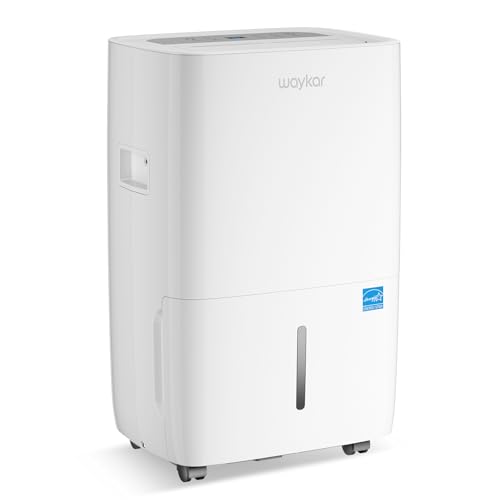
【80 Pint Capacity for Up to 5,000 Sq.Ft Spaces】Quickly removes excess moisture from basements, bathrooms, bedrooms, RVs, and other large living areas, delivering 80 pints per day (95°F, 90% RH).conditions. Designed as a powerful dehumidifier for basement, home, and large spaces, it helps eliminate damp air, condensation—and pet-related odors caused by excess humidity. Even during humid seasons, it works continuously to maintain a dry, comfortable, and healthier indoor environment.
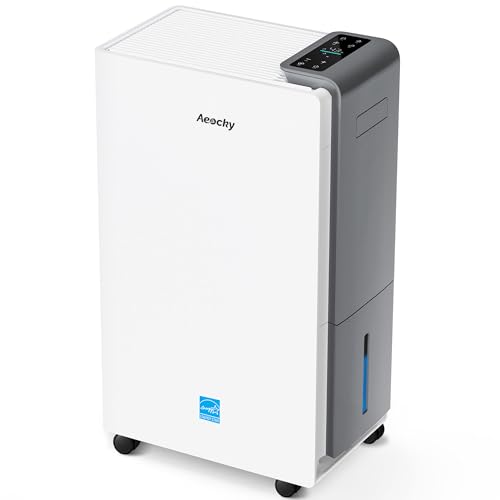
【ENERGY STAR 25 ≠ ENERGY STAR Most Efficient 2025】Don't fall for competitors' word games. With only 2.6% of ENERGY STAR models earning "Most Efficient 2025" title, these options are exceptionally rare on the market. RHEA-001 is one of the few to truly hold this top-tier certification. Many brands use misleading phrases like "Energy Star Efficient 25" or "Energy Star 25" to imply a standard they haven't met. Choosing them is a risk.With AEOCKY, you get verified performance and the peace of mind of authentic, top-tier efficiency.
How to Choose Between the Two
Start with measurements rather than guesswork. Place hygrometers in the dampest area, a main living area, and a distant bedroom. The U.S. Environmental Protection Agency recommends keeping indoor relative humidity below 60% and ideally between 30% and 50% to reduce moisture and mold risk. In cold weather, the practical target may need to be lower to prevent window condensation.
- Find the source. Repair plumbing leaks, improve foundation drainage, vent clothes dryers outdoors, and use kitchen and bathroom exhaust fans.
- Map the problem. Determine whether high humidity occurs in one zone or across most of the home.
- Estimate the moisture load. Consider square footage, current relative humidity, seepage, laundry, occupancy, outdoor air leakage, and temperature.
- Choose capacity. Use the manufacturer’s pints-per-day rating under the current DOE test method and compare it with ENERGY STAR sizing guidance.
- Plan drainage. A continuous drain should flow safely without kinks, electrical hazards, or an uphill run unless a pump is designed for it.
- Verify performance. Check readings in several rooms during normal humid weather instead of relying only on the built-in humidistat.
Choose a portable unit when the problem is localized and accessible. Consider a whole-home system when humidity is widespread, doors remain closed, several portable units would be required, or you want automatic ducted control.
Warning: Plug the dehumidifier into a properly grounded outlet, keep drainage away from electrical cords and connections, and follow the manufacturer’s clearance instructions. Also check the model against the U.S. Consumer Product Safety Commission dehumidifier recall page. Stop using any recalled unit.
Recommended Products

Energy Efficient Whole House Dehumidifier: 90 pints per day at AHAM condition, 70 Pint at DOE, up to 2300 sq. ft, widely used in short buildings, crawlspace, Basement, multi-bedroom, commercial ,storage area, home, garage, large room, large-area housing, etc. quickly and effectively removes moisture with less energy than conventional dehumidifiers without racking up the energy bill, saving money, It will be the best crawl space dehumidifiers you will ever use

Semiconductor dehumidifiers use thermoelectric cooling to remove moisture from the air. They create a drier, more comfortable environment by reducing humidity and improving air quality.

[Commercial Grade Dehumidifier] This Airzentti crawl space dehumidifier with large capacity removes moisture from basement, attic, large room and small rooms efficiently up to 155 pints per day under nearly saturated condition (70 PPD in AHAM), with 220 CFM airflow, it is ideal for space up to 7,500 square feet.
When to Upgrade to Whole-House
Consider upgrading when humidity remains high across several rooms even after you have corrected obvious moisture sources and operated a properly sized portable unit. Strong signs include:
- Humidity stays above your target throughout most of the home.
- Closed bedrooms or upper floors remain damp while the room with the portable unit is dry.
- You need several portable units to maintain acceptable readings.
- Buckets fill frequently or the drainage setup is unreliable.
- Your central air conditioner reaches the temperature setting but the home still feels humid.
- You want permanent, quieter, ducted control and accept the installation cost.
An HVAC contractor should calculate the moisture load, confirm airflow, select a suitable capacity, and design the return, supply, and drainage connections. Air sealing and duct sealing can improve performance and reduce wasted energy.
Frequently Asked Questions
Can one portable dehumidifier do a whole house?
Sometimes, but only when the home is relatively small and open, the unit has enough pints-per-day capacity, and air can reach it from the occupied areas. In a multi-floor home or a layout with closed rooms, one portable unit usually provides uneven control. Confirm with hygrometers in several locations.
Should you use a dehumidifier if you have COPD?
A dehumidifier may help when high humidity, mold, or dust mites worsen indoor air quality, but it does not treat COPD. Very dry air can also be uncomfortable or irritating. Use a hygrometer, avoid over-drying, keep the unit clean, and ask your healthcare professional what humidity range is appropriate for your symptoms and treatment plan.
Will a dehumidifier help dry out plaster?
It can help remove moisture from the room after the leak or water source has been fixed. Drying must still suit the plaster and wall construction. Avoid aggressive forced drying in older buildings or with traditional lime plaster because drying too quickly can cause cracking or deterioration. Follow the plaster manufacturer’s guidance or seek conservation advice for historic materials.
Can a dehumidifier help with dust mites?
Yes. Dust mites thrive in humid conditions, and the American Lung Association recommends keeping indoor humidity below 50% in homes where dust mites are a concern. A dehumidifier can support that goal, but bedding covers, hot-water washing, HEPA vacuuming, and reducing dust-holding materials may also be needed.
What humidity should I set my dehumidifier to?
A setting near 45% to 50% is a practical starting point for many homes. EPA guidance says indoor humidity should stay below 60% and ideally between 30% and 50%. Adjust lower in cold weather if condensation appears on windows or other cold surfaces.
Should doors and windows be open while a portable dehumidifier runs?
Keep exterior doors and windows closed so the unit does not continually pull in humid outdoor air. Interior doors can stay open when you are intentionally trying to share air between connected rooms, but closed rooms may need separate treatment or a ducted system.
Conclusion
A portable dehumidifier can be effective for one damp room, a basement, or a small open zone. It may even influence nearby rooms when airflow is good, but it should not be assumed to provide consistent whole-home control. Size the equipment by pints per day and moisture load, correct the source of the dampness, and verify results with hygrometers in several rooms. When high humidity affects most of the home, a professionally sized whole-house dehumidifier is usually the more reliable solution.
Sources
- ENERGY STAR: Dehumidifiers — portable and whole-home use, sizing, drainage, placement, humidity targets, and efficiency guidance.
- ENERGY STAR: Dehumidifier Testing and Capacity — current pints-per-day ratings and DOE test-method changes.
- U.S. EPA: A Brief Guide to Mold, Moisture and Your Home — moisture control, mold prevention, and recommended indoor humidity.
- American Lung Association: Dust Mites — humidity control and other dust-mite reduction measures.
- U.S. Consumer Product Safety Commission: Dehumidifiers — recall and fire-hazard information.
- Historic England: Drying Flood-Affected Buildings — cautions about aggressive drying of traditional materials.