Affiliate disclosure: This article contains Amazon affiliate links. As an Amazon Associate, we may earn from qualifying purchases at no extra cost to you.
When you’re looking for the best dehumidifiers for grow rooms in 2026, the right pick depends on your grow space, plant stage, drainage setup, heat load, and how much moisture your plants release each day. A small tent may only need a compact unit with steady humidity control, while a larger grow room may need a higher-capacity dehumidifier with continuous drainage and quiet operation.
This guide compares options like the MARS HYDRO 18L/Day for small tents, the SAHAUHY 80 Pints for larger areas, the AEOCKY 50 Pint for energy-conscious buyers, and the Midea model for app-based control. You’ll also find plant-focused choices from AC Infinity and SPIDER FARMER, plus compact options for very small enclosed spaces.
Quick Picks for Grow Room Humidity Control
- Best for small grow tents: MARS HYDRO 18L/Day Compressor Dehumidifier
- Best for large grow rooms: SAHAUHY 80 Pints Dehumidifier for Large Rooms
- Best smart plant-focused option: AC Infinity HYDRONE 7 Smart Plant Dehumidifier
- Best app-controlled home option: Midea 1,500 Sq. Ft. Energy Star Dehumidifier
- Best all-in-one climate unit: AC Infinity TERRAFORM 8 Plant Air Conditioner & Heater
- Best compact enclosed-space option: Automatic Mini Dehumidifier with Temperature Control
Always check the current Amazon listing before buying, because product details, availability, included accessories, drainage parts, and coverage claims can change.
Quick Verdict
If you run a small grow tent, start with the MARS HYDRO 18L/Day or AC Infinity HYDRONE 7 because both are more aligned with plant humidity control than basic household models. If you need stronger room coverage, compare the AEOCKY 50 Pint, PLUSCENT 32 Pint, VEAGASO 2500 Sq.Ft, and SAHAUHY 80 Pints models based on drain setup, noise level, and floor space.
For growers who want one system to manage temperature and humidity together, the AC Infinity TERRAFORM 8 is the most complete option in this list. For tiny enclosed areas such as storage cabinets or propagation boxes, the Automatic Mini Dehumidifier is a small helper, not a full grow-room solution.
Grow Room Dehumidifier Comparison Table
| Product | Best For | Moisture Removal / Capacity Mentioned | Key Features | CTA |
|---|---|---|---|---|
| MARS HYDRO 18L/Day Compressor Dehumidifier | Small grow tents up to 4×4 ft | Up to 38 pints daily | Digital humidity control, smart auto mode, washable filter, air duct feature | Check Price on Amazon |
| PLUSCENT 32 Pint Dehumidifier for Home | Grow rooms, basements, and larger home spaces | Up to 32 pints daily | Three operating modes, 24-hour timer, dual drainage options, quiet operation | Check Price on Amazon |
| AEOCKY 50 Pint Dehumidifier for Home and Basement | Hot, damp, or medium-to-large spaces | Up to 50 pints daily | Energy-saving design, intelligent humidistat, quiet operation around 40dB | Check Price on Amazon |
| SPIDER FARMER 38 Pints Plant Dehumidifier | Grow tents and plant rooms needing adjustable humidity | Up to 32 pints daily | Digital display, 30% to 80% humidity settings, washable filter, 360° wheels | Check Price on Amazon |
| Midea 1,500 Sq. Ft. Energy Star Dehumidifier | Grow rooms where app control matters | Up to 22 pints daily | ENERGY STAR certification, Wi-Fi control, voice control, turbo mode | Check Price on Amazon |
| VEAGASO 2500 Sq.Ft Dehumidifier with Drain Hose | Humid grow areas needing continuous drainage | Up to 34 pints daily | LED touch panel, DEHU/DRY/CONT modes, drain hose, quiet operation at ≤40dB | Check Price on Amazon |
| AC Infinity HYDRONE 7 Smart Plant Dehumidifier | Plant growers using tents up to 8×8 ft | Plant-focused smart humidity control | AI-driven humidity and VPD controls, 10 drying levels, drain hose | Check Price on Amazon |
| AC Infinity TERRAFORM 8 Plant Air Conditioner & Heater | Growers needing heating, cooling, and dehumidifying | 12,000 BTU cooling capacity with dehumidifying | Dynamic AI, WiFi connectivity, self-evaporative design, multi-mode climate control | Check Price on Amazon |
| SAHAUHY 80 Pints Dehumidifier for Large Rooms | Large grow rooms and broad humidity-control spaces | Up to 80 pints daily | Four modes, adjustable fan speeds, multiple drainage options, automatic operation | Check Price on Amazon |
| Automatic Mini Dehumidifier with Temperature Control | Small cabinets, closets, or enclosed spaces | 800 ml tank capacity | Compact design, temperature sensor, quiet operation, simple installation | Check Price on Amazon |
Before You Buy
- Match capacity to moisture load: Plant count, watering frequency, outdoor humidity, and ventilation all affect how hard the unit must work.
- Plan drainage first: Continuous drainage is much easier than emptying a tank during humid periods or late flowering.
- Check heat output: Compressor dehumidifiers can add warmth to the room, which matters if grow lights already raise temperatures.
- Confirm fit: Measure floor space, tent clearance, hose routing, outlet access, and maintenance space before ordering.
- Verify current listing details: Amazon listings can change, so confirm specs, accessories, and warranty details before buying.
MARS HYDRO 18L/Day Compressor Dehumidifier
Best For: Indoor growers seeking efficient moisture control in grow tents up to 4×4 ft.
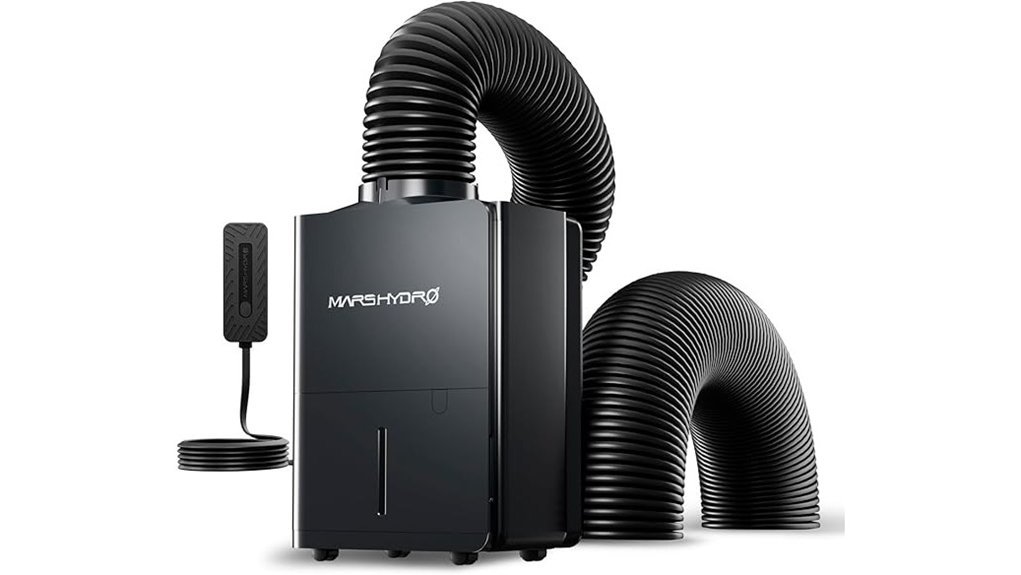
The MARS HYDRO 18L/Day Compressor Dehumidifier is a strong choice for indoor growers who need effective moisture control in a small grow tent. With a listed capacity of up to 38 pints of moisture per day, it is designed for grow tents up to 4×4 ft and can help reduce excess humidity after watering, during dense canopy growth, or in humid rooms.
Its compact design, measuring 13.2D x 8.7W x 18H inches and weighing 29.3 pounds, makes it easier to place near a tent without taking over the entire setup. The air duct feature is especially helpful because it allows external placement, which can reduce heat buildup inside the grow space. The digital humidity control and smart auto mode also make it easier to set a target range and let the unit cycle as needed.
Why You’ll Like It: This model solves one of the most common small-tent problems: fast humidity spikes in a tight space. If your tent gets damp after watering or when the canopy fills in, a compact grow-focused dehumidifier with ducting support can be easier to manage than a large household floor unit.
This model is best for growers who want a plant-focused dehumidifier instead of a generic household unit. It is not the best fit for large grow rooms, but for a smaller tent where humidity swings happen fast, the size and ducting features make it practical.
Pros:
- High capacity: Removes up to 38 pints of moisture daily, ideal for maintaining optimal humidity levels.
- Smart features: Digital humidity control and auto mode simplify operation and monitoring.
- Easy maintenance: Washable filter and automatic shut-off when the tank is full enhance convenience.
- Grow tent friendly: The air duct feature can help manage humidity without adding extra heat directly inside the tent.
Cons:
- Size limitations: Best suited for smaller grow tents, may not be effective for larger spaces.
- Weight: At 29.3 pounds, it may be less portable for some users compared to lighter models.
- Noise level: Compressor operation can be noisier than desiccant dehumidifiers.
Who Should Buy This: Buy it if you want a dedicated grow-tent dehumidifier for a compact setup and you value humidity control, ducting flexibility, and a washable filter.
Who Should Skip It: Skip this model if you are managing a large grow room or need a dehumidifier that can handle several tents at once. You may need a higher-capacity unit with a larger drainage setup.
PLUSCENT 32 Pint Dehumidifier for Home

Best For: Those seeking an efficient solution for humidity control in large spaces, such as basements, grow rooms, or open-concept areas.
Looking for a reliable dehumidifier that can serve both a grow room and a larger home space? The PLUSCENT 32 Pint Dehumidifier is built to remove up to 32 pints of moisture daily in spaces up to 2,500 sq.ft. That makes it useful for growers who need more coverage than a tiny tent unit but do not want an oversized commercial dehumidifier.
With three operating modes, you can adjust the unit based on the humidity level, the stage of plant growth, or the room’s moisture load. The 24-hour timer helps with energy-efficient operation, while the dual drainage options reduce maintenance if you can route water to a drain. Its quiet operation is useful if your grow room is near a living area or bedroom.
Why You’ll Like It: This is a practical pick if your grow room is also part of a basement, utility room, or living space. It gives you more room coverage than tiny models while still focusing on everyday convenience, rolling mobility, and flexible drainage.
The easy-roll wheels and ergonomic design are practical if you move equipment between a basement, grow room, drying room, or storage area. Safety features like a child lock also add peace of mind in shared home spaces.
Pros:
- High Capacity: Effectively removes up to 32 pints of moisture daily, perfect for large areas.
- Customizable Settings: Three operating modes and a 24-hour timer for optimal energy-efficient use.
- User-Friendly Design: Features easy-roll wheels for portability and a sleek touch screen for straightforward operation.
- Flexible drainage: Dual drainage options can reduce daily tank-emptying work when the unit is used in a humid grow area.
Cons:
- Limited Coverage: Best suited for spaces up to 2,500 sq.ft; not ideal for larger areas.
- Initial Setup: Requires some initial setup for drainage options which may be cumbersome for some users.
- Noise Level: Although quiet, some users may still find the sound noticeable in very quiet environments.
Who Should Buy This: Buy it if you want one dehumidifier that can support a grow room, basement, or damp household area without moving into commercial-size equipment.
Who Should Skip It: Skip this model if your grow tent is very small and you only need light moisture control. In that case, a compact plant-focused model may be easier to fit and manage.
AEOCKY 50 Pint Dehumidifier for Home and Basement
Best For: The AEOCKY 50 Pint Dehumidifier is best for homeowners and gardeners seeking an efficient solution to control humidity in various environments, including grow rooms and basements.
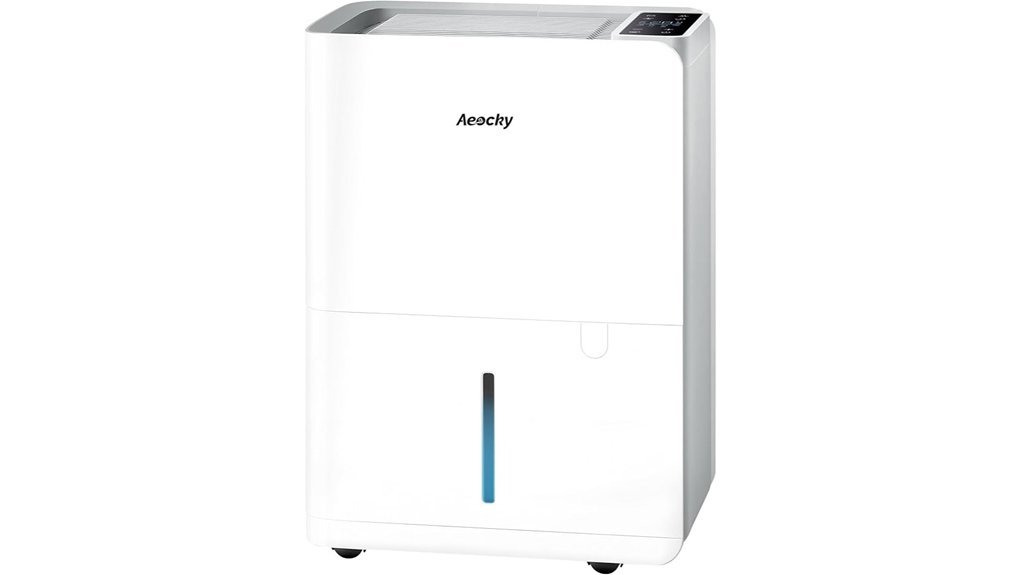
If you need an efficient solution for controlling humidity in your grow room, the AEOCKY 50 Pint Dehumidifier is a strong mid-to-large-space option. It is described as extracting up to 50 pints daily, which can help in damp basements, hot rooms, or grow areas where plants release a lot of moisture through transpiration.
Its energy efficiency claim is one of its biggest selling points, with the article noting that it can cut power consumption by up to 50%. For growers who run lights, fans, pumps, and environmental controls, energy use matters. A dehumidifier that runs often should be chosen with operating cost in mind, not just purchase price.
Why You’ll Like It: This model is attractive for growers who need stronger moisture removal but still care about noise and power use. It also works well for buyers who want a dehumidifier that can serve the grow area and other damp parts of the home.
With a noise level around 40dB, easy-roll casters, and an intelligent humidistat, this model suits buyers who want a practical home-and-grow-room dehumidifier with less daily adjustment. It is especially useful when you need stronger moisture removal than a small tent unit but do not need a massive commercial machine.
Pros:
- High capacity: Extracts up to 50 pints of moisture per day, suitable for both hot and damp conditions.
- Energy efficient: Can reduce power consumption by up to 50%, saving on electricity bills.
- Quiet operation: Runs at approximately 40dB, allowing for minimal disturbance during use.
- Easy to reposition: Casters make it easier to move around a basement, grow room, or utility space.
Cons:
- Initial cost: Higher upfront investment compared to some standard dehumidifiers.
- Maintenance required: Manual emptying may be needed depending on drainage setup.
- Size and weight: May be bulky for smaller spaces or difficult to move without assistance.
Who Should Buy This: Buy it if you need a stronger household-style dehumidifier for a damp grow room, hot basement, or medium-to-large space where efficiency and quiet operation matter.
Who Should Skip It: Skip this option if your grow space is only a small tent and you do not have room for a larger floor unit. It may be more dehumidifier than you need for a compact setup.
SPIDER FARMER 38 Pints Plant Dehumidifier
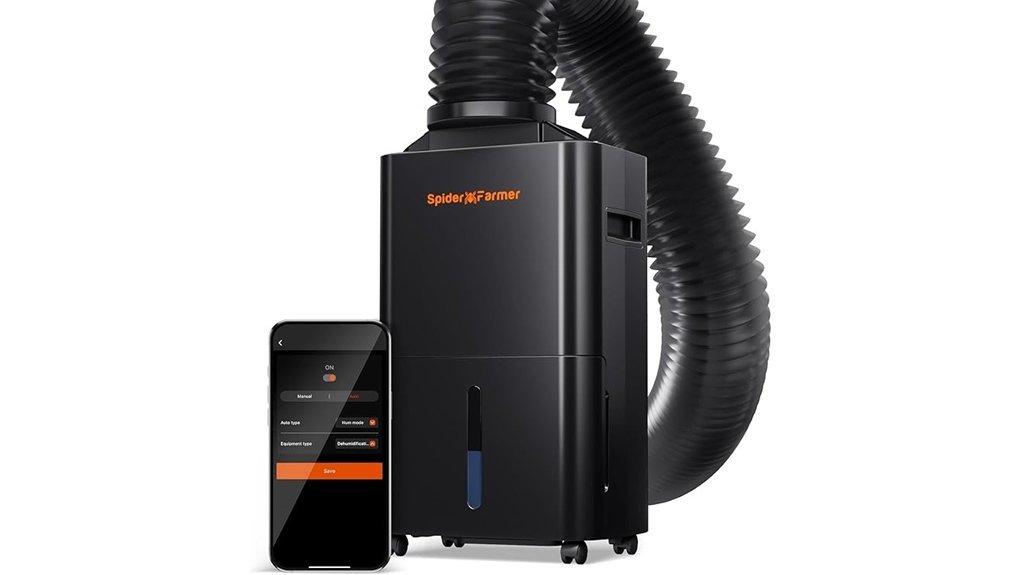
Best For: Growers looking for efficient moisture control in various spaces, including grow tents and basements, up to 2000 square feet.
For growers seeking efficient moisture control from a plant-focused brand, the SPIDER FARMER 38 Pints Plant Dehumidifier stands out. This compressor unit is described as removing up to 32 pints of moisture daily, making it useful for grow tents, plant rooms, basements, and other humid spaces up to 2000 square feet.
You can adjust the humidity levels between 30% and 80%, which gives you room to adapt as plants move from vegetative growth to flowering or as your room humidity changes with the season. The 24-hour timer may also help reduce energy costs by limiting operation to the periods when moisture is highest.
Why You’ll Like It: The biggest appeal is grow-room practicality. Adjustable humidity settings, a washable filter, a digital display, and mobility features make it easier to keep your room stable without constant manual adjustment.
The digital display, washable filter, air duct feature, and 360° wheels make this model easier to use in real grow-room layouts. The design can help minimize heat impact on plants, which matters if your grow lights already make the room warm.
Pros:
- High dehumidification capacity of up to 32 pints per day, suitable for high humidity environments.
- User-friendly features like a digital display, adjustable humidity settings, and a washable filter for easy maintenance.
- Mobility and design tailored for growers, with 360° rotating wheels and an air duct to minimize heat impact on plants.
- Adjustable humidity range helps growers manage different plant stages and seasonal humidity swings.
Cons:
- Manual emptying of the water tank may be inconvenient for some users.
- Potential noise from the compressor could be disruptive in quiet spaces.
- Initial cost may be higher compared to basic dehumidifiers.
Who Should Buy This: Buy it if you want a plant-focused dehumidifier with adjustable humidity controls and easy movement around your grow room or tent area.
Who Should Skip It: Skip this unit if you only need occasional humidity control in a dry climate. It is better suited to growers who actively monitor humidity and need a dedicated plant-room solution.
Midea 1,500 Sq. Ft. Energy Star Dehumidifier
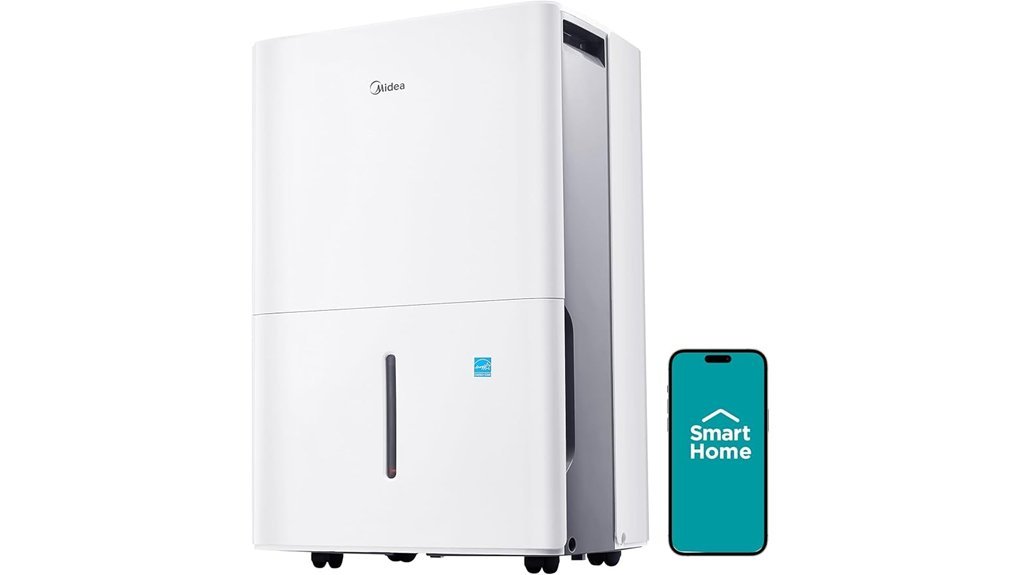
Best For: Those seeking an efficient and quiet solution to manage humidity in spaces up to 1,500 sq. ft., particularly in grow rooms or living areas.
The Midea 1,500 Sq. Ft. Energy Star Dehumidifier is a good fit if you want a household-style unit that can also support a grow room. It removes up to 22 pints of moisture daily and is designed for coverage up to 1,500 sq. ft. For growers, that can be useful in a lung room, basement grow area, or small plant room where comfort and control both matter.
Its humidity range of 35% to 85% gives you flexibility when dialing in ideal humidity levels for plant health. The ultra-quiet operation at 47 dBA helps if your grow space is near an office, bedroom, or shared living area. Remote control through the SmartHome app, Alexa, or Google Assistant can also be convenient if you monitor humidity away from the room.
Why You’ll Like It: This is a good choice for buyers who want familiar home-dehumidifier features with smart controls. It is especially appealing if you use a lung room or basement space and want to check settings without standing next to the unit.
The portable design includes 360° wheels for mobility, plus features like turbo mode and a continuous drainage option. The 0.8-gallon tank may require frequent emptying if you do not use a drain hose, so plan your drainage setup before buying.
Pros:
- ENERGY STAR certified for significant energy savings.
- Wi-Fi enabled for convenient remote control and voice activation.
- Ultra-quiet operation at 47 dBA, making it suitable for bedrooms and offices.
- Portable design with 360° wheels makes it easier to move between rooms.
Cons:
- Water tank capacity of 0.8 gallons may require frequent emptying.
- Initial setup may require a learning curve for app integration.
- Limited to a maximum operating temperature of 96°F, which may be restrictive in hotter environments.
Who Should Buy This: Buy it if you want app control, voice-control compatibility, and a quieter home unit for a small plant room, lung room, basement, or shared living area.
Who Should Skip It: Skip this model if your grow space regularly gets very hot or produces heavy moisture. A higher-capacity grow-room-specific unit may be a better match.
VEAGASO 2500 Sq.Ft Dehumidifier with Drain Hose
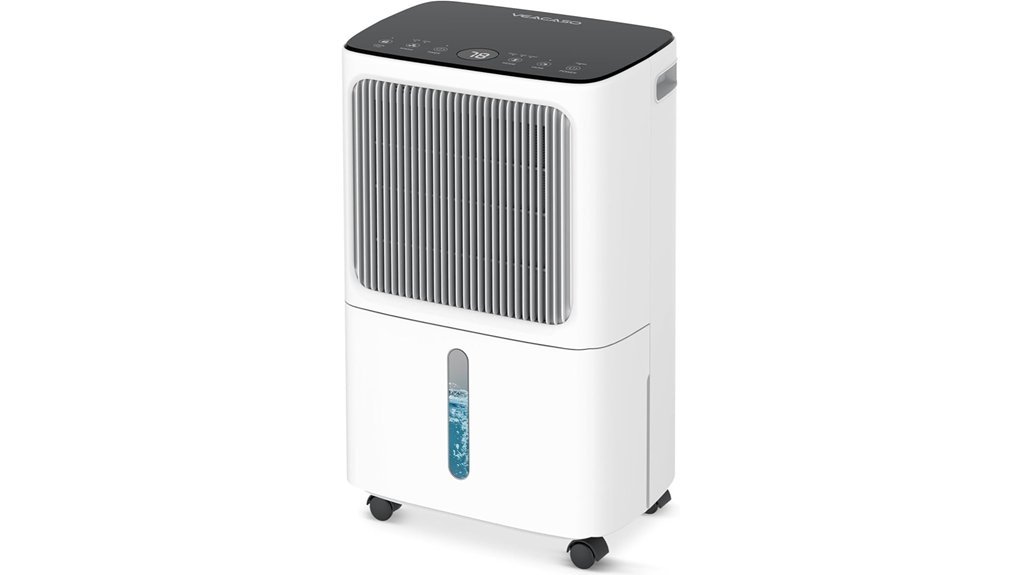
Best For: Growers in humid environments looking for an efficient and quiet dehumidification solution for spaces up to 2500 square feet.
Growers in humid environments will appreciate the VEAGASO 2500 Sq.Ft Dehumidifier with Drain Hose for its ability to remove up to 34 pints of moisture daily. This model is designed to cover up to 2500 square feet, which makes it a practical option for grow rooms, basements, drying areas, and other moisture-prone spaces.
You can switch between DEHU, DRY, and CONT modes using the LED touch panel. For grow rooms, the continuous mode is especially useful when humidity rises after watering or when plants are transpiring heavily. The continuous drainage option also reduces the need to empty a tank throughout the day.
Why You’ll Like It: This model is useful if you want a straightforward dehumidifier with a drain hose and simple mode choices. It helps reduce one of the biggest annoyances in humid grow rooms: frequent tank emptying.
It operates quietly at ≤40dB, making it suitable for nighttime use or for setups near living spaces. Integrated casters make it easier to move the unit where humidity is highest, though tank size and hose placement still matter for daily convenience.
Pros:
- High Capacity: Removes up to 34 pints of moisture daily, ideal for maintaining ideal humidity levels.
- User-Friendly: Simple LED touch panel for easy mode switching and real-time humidity display.
- Quiet Operation: Runs at ≤40dB, making it suitable for nighttime use without disturbing your environment.
- Drain hose included: Continuous drainage can reduce maintenance in grow rooms with steady moisture buildup.
Cons:
- Weight: May be cumbersome for some users to move despite integrated casters.
- Tank Size: The manual drainage tank may require frequent emptying for larger areas.
- Limited Aesthetic Options: While modern, the design may not suit all home decors.
Who Should Buy This: Buy it if you want continuous drainage, quiet operation, and simple controls for a humid grow area, basement, or drying space.
Who Should Skip It: Skip this model if you do not have a convenient place to route the drain hose and do not want to empty the tank often in a humid grow room.
AC Infinity HYDRONE 7 Smart Plant Dehumidifier
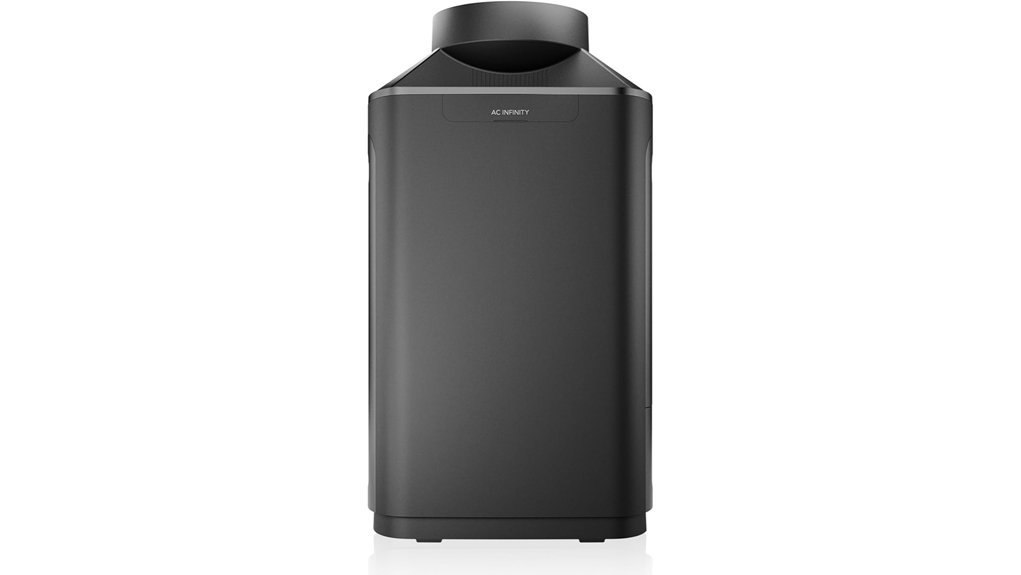
Best For: Growers managing indoor plants in tents up to 8×8 feet who need precise moisture control.
If you’re managing a grow tent up to 8×8 feet, the AC Infinity HYDRONE 7 Smart Plant Dehumidifier is one of the most grower-focused options in this list. It is built to self-regulate moisture levels, helping maintain stable conditions when your plants, lights, and ventilation system all affect the room environment.
You can choose from 10 distinct drying levels, and the unit includes advanced AI-driven humidity and VPD controls. VPD, or vapor pressure deficit, is useful for growers who want a more precise way to balance humidity and plant transpiration instead of only chasing a single relative humidity number.
Why You’ll Like It: This is one of the most targeted options for growers who think beyond basic room humidity. If you want to manage humidity alongside plant stress, temperature, and airflow, the VPD-focused controls make it more specialized than a standard home dehumidifier.
The proprietary PWM-controlled rotary motor offers instant on-off response, which can improve efficiency when the unit needs to react quickly. With dimensions of 11.45D x 14.05W x 24.44H inches, it fits into many grow setups and includes a drain hose for easier maintenance.
Pros:
- Advanced AI controls allow for precise humidity and VPD adjustments.
- Ten distinct drying levels provide customizable moisture management.
- Compact design makes it easy to integrate into various growing setups.
- Includes a drain hose, which is helpful for long grow cycles and high-humidity conditions.
Cons:
- Limited to grow tents up to 8×8 feet, which may not suit larger operations.
- Requires power for operation, limiting its use in non-electrified areas.
- Initial cost may be higher compared to basic dehumidifiers.
Who Should Buy This: Buy it if you actively manage indoor plant conditions and want smart plant-specific humidity control instead of a basic room dehumidifier.
Who Should Skip It: Skip this model if you only want a simple plug-in household dehumidifier. Its smart plant controls are most useful for growers who actively manage humidity and VPD.
AC Infinity TERRAFORM 8 Plant Air Conditioner & Heater
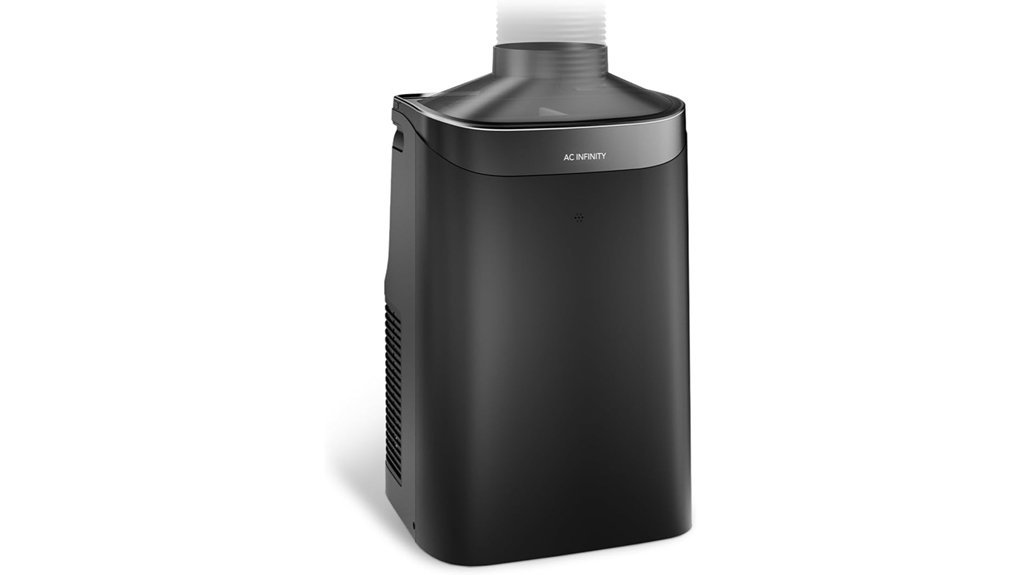
Best For: Indoor gardeners seeking a versatile climate control solution for their grow tents and rooms.
Perfect for indoor gardeners who need more than simple moisture removal, the AC Infinity TERRAFORM 8 combines cooling, heating, and dehumidifying in one compact climate-control unit. With a listed 12,000 BTU cooling capacity, it is designed for grow tents and rooms where temperature and humidity need to be managed together.
This model uses dynamic AI to automatically switch between modes based on your set temperature or VPD. That can be helpful if your grow room runs hot during lights-on periods but needs different environmental support at night. The self-evaporative design helps reduce drain frequency, which can make maintenance less demanding.
Why You’ll Like It: This is the most complete climate-control option here because it addresses more than humidity. It makes sense when your grow room has linked problems, such as high heat from lights, nighttime temperature drops, and moisture buildup.
WiFi connectivity lets you control the unit remotely and track data. At 70.55 pounds, it is heavier than a standard dehumidifier, so installation planning matters. You should also check your window opening and exhaust requirements before choosing this unit.
Pros:
- All-in-one functionality allows for seamless cooling, heating, and dehumidifying.
- Dynamic AI automatically adjusts modes for optimal environment management.
- Self-evaporative design reduces maintenance by minimizing drain frequency.
- WiFi connectivity helps growers monitor and adjust room conditions remotely.
Cons:
- Weight of 70.55 pounds may require additional assistance for installation.
- Window opening requirements may limit installation options in some spaces.
- Higher initial investment compared to standard air conditioning units.
Who Should Buy This: Buy it if your grow room needs cooling, heating, and dehumidifying in one integrated system and you are ready to plan the installation carefully.
Who Should Skip It: Skip this model if you only need to lower humidity. A dedicated dehumidifier will usually be simpler if cooling and heating are not part of your grow room problem.
SAHAUHY 80 Pints Dehumidifier for Large Rooms
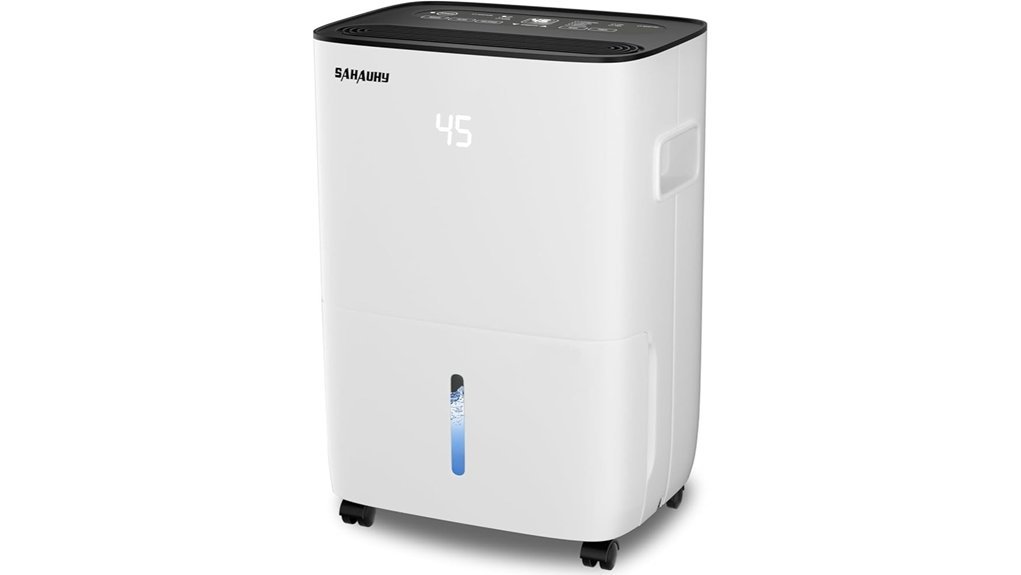
Best For: Those seeking an effective solution for moisture control in large spaces, such as basements, grow rooms, and offices.
The SAHAUHY 80 Pints Dehumidifier is one of the strongest options in this roundup for anyone managing a large grow room. With its listed capacity to remove up to 80 pints of moisture daily, it is designed to cover areas up to 5,200 square feet and can support grow rooms, basements, offices, and other large moisture-prone areas.
You’ll appreciate the energy-efficient design, which helps lower your bills while maintaining ideal humidity levels. Its user-friendly features, including automatic operation and multiple drainage options, make it easier to run for long periods without constant monitoring.
Why You’ll Like It: Large grow rooms can overwhelm small dehumidifiers, especially when plant mass increases. This model is positioned for stronger moisture control, longer operation, and flexible settings in bigger humidity-control spaces.
Four operational modes and adjustable fan speeds let you tailor performance to your room conditions. At 15.44 kg, it is movable but not featherlight, so it works best when placed in a planned location with drainage access.
Pros:
- High Capacity: Removes up to 80 pints of moisture daily, ideal for large areas up to 5,200 sq. ft.
- Energy Efficient: Operates with lower energy consumption, helping to reduce electricity bills.
- User-Friendly Features: Automatic operation and multiple drainage options simplify maintenance.
- Flexible controls: Four modes and adjustable fan speeds help match the unit to changing grow room conditions.
Cons:
- Weight: At 15.44 kg, it may be cumbersome to move frequently.
- Tank Size: The 1.14-gallon tank may require regular emptying if not using continuous drainage.
- Limited Compatibility: Requires a separate purchase for garden hoses for continuous drainage setup.
Who Should Buy This: Buy it if you have a large grow room, basement grow area, or high-moisture space where a small or mid-size dehumidifier cannot keep up.
Who Should Skip It: Skip this model if you have a small grow tent or limited floor space. Its larger coverage makes it better for rooms with serious moisture loads.
Automatic Mini Dehumidifier with Temperature Control
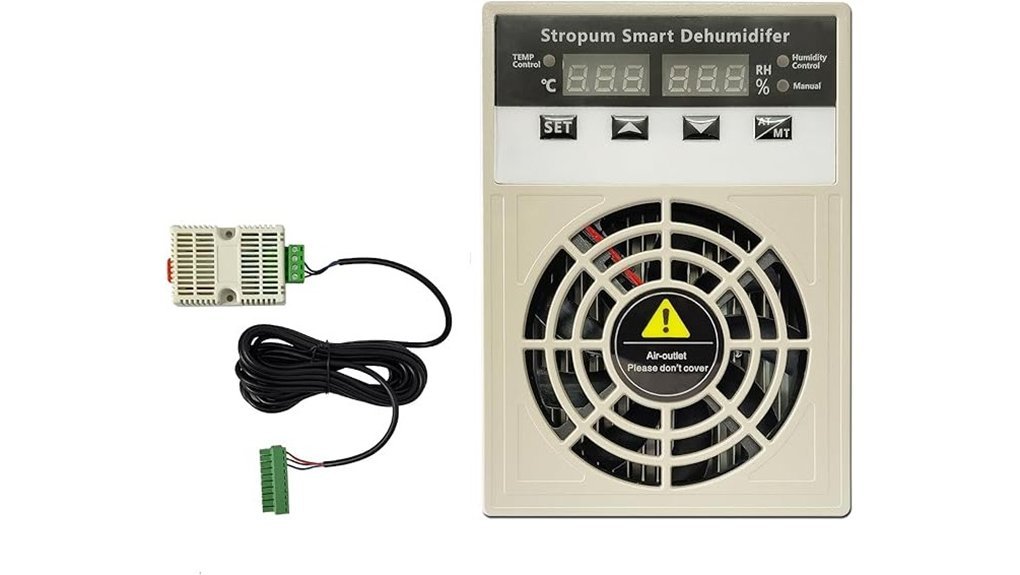
Best For: Growers and hobbyists looking for an efficient solution to control humidity in small spaces.
For growers needing moisture control in a very small enclosed area, the Automatic Mini Dehumidifier with Temperature Control may be worth considering. This compact unit from Stropum measures just 2.35D x 3.9W x 5.9H inches and is better suited to cabinets, closets, seed storage areas, propagation boxes, or other tight spaces rather than a full grow room.
With a tank capacity of 800 milliliters, it is designed for small-scale moisture management. The article notes that it can lower humidity from 80% to 45% in about 50 minutes, while the built-in temperature sensor adjusts operation based on your settings.
Why You’ll Like It: This model fills a different role than the large floor units. It is useful when you need a tiny humidity helper for enclosed grow-related storage or a small cabinet where a normal dehumidifier would be oversized.
This is not the right choice for a large tent full of mature plants. Instead, it works best as a compact humidity helper where a normal dehumidifier would be too large. Installation is straightforward, making it a simple addition to a small grow-related setup.
Pros:
- Compact Design: Easily fits in tight spaces like cabinets and closets.
- Efficient Humidity Reduction: Lowers humidity levels quickly from 80% to 45%.
- Temperature Control: Built-in sensor adjusts operation for optimal conditions.
- Simple installation: Small size and straightforward setup make it easy to place in enclosed spaces.
Cons:
- Limited Capacity: 800 milliliters may require frequent emptying in larger areas.
- Small Coverage Area: Best suited for very small spaces, limiting versatility.
- Wattage: Uses 45 watts, which may be a consideration for energy-conscious users.
Who Should Buy This: Buy it if you need small-space humidity support for a cabinet, closet, seed storage area, or compact enclosed grow-related setup.
Who Should Skip It: Skip this model if you need to control humidity in a full grow room or a medium-to-large tent. It is a small-space unit, not a main grow room dehumidifier.
Factors to Consider When Choosing Dehumidifiers for Grow Rooms
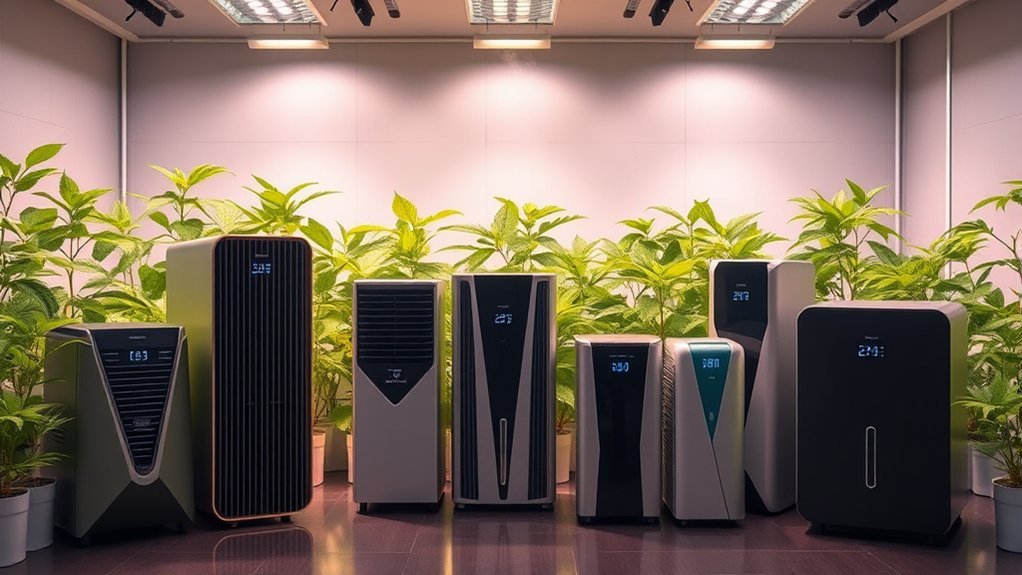
When choosing a dehumidifier for your grow room, you’ll want to contemplate several key factors. Think about the dehumidification capacity you’ll need, the coverage area of your space, and how much noise the unit generates. Also, look into drainage options and energy efficiency to guarantee you make the best choice for your setup.
Dehumidification Capacity Requirements
Choosing the right dehumidifier for your grow room hinges on understanding its dehumidification capacity. You should look for a unit that can effectively remove moisture, typically measured in pints per day. For grow tents sized 3×3 to 4×4 feet, aim for 32 to 38 pints daily to maintain ideal humidity levels. Keep in mind that humidity can vary based on plant type and growth stage, so a flexible dehumidifier is essential.
Additionally, consider the ambient temperature and relative humidity; units generally perform best at around 95°F and 90% RH. If you’re in a larger or more humid environment, you might need a model capable of handling up to 80 pints per day. If your room has many mature plants, heavy watering, poor ventilation, or humid outdoor air entering the space, choose more capacity than the bare minimum.
Space Coverage Area
Selecting the right dehumidifier for your grow room involves understanding the space coverage area. Different models cater to varying sizes, from small grow tents to wide areas up to 5,200 sq. ft. It’s essential to verify the dehumidifier’s capacity matches your space; typically, units that remove 32 to 50 pints of moisture daily work well for many mid-sized areas.
Keep in mind that performance can fluctuate based on environmental factors like temperature and humidity levels, so these should be factored into your decision. For peak results, choose a dehumidifier specifically designed for your space size, and always check the manufacturer’s specifications to confirm it can effectively manage the moisture load in your grow room.
Noise Level Considerations
After you’ve determined the right size dehumidifier for your grow room, the next thing to evaluate is noise level. Noise levels are typically measured in decibels (dB), with quieter models operating around 39-47 dB, making them ideal for sensitive environments. Opt for a dehumidifier with noise-reducing technology to minimize disturbances, especially if your grow room is near a bedroom, office, or shared living area.
For peak comfort, aim for a unit that operates at or below 40 dB when possible. Also consider the operational mode, since some settings may produce more noise during intensive moisture removal. A compressor dehumidifier may be more effective for moisture removal, but it can be louder than some compact or specialty options.
Drainage Options Available
When it comes to managing humidity in your grow room, drainage options play an essential role in maintaining ideal conditions. Many dehumidifiers offer continuous drainage, letting you connect a hose directly to a floor drain or sink. This feature is perfect for larger grow rooms where uninterrupted operation is critical.
Alternatively, some models come with removable water tanks that automatically shut off when full, making maintenance simpler and preventing overflow. These tanks can vary in capacity, with some holding up to 2.1 liters. If you prefer manual drainage, be prepared to empty the tank regularly, which can be less convenient during humid periods or late flowering stages.
Energy Efficiency Ratings
Managing humidity effectively in your grow room doesn’t just stop at drainage options; energy efficiency is another key factor to evaluate. Look for dehumidifiers rated in pints removed per kilowatt-hour (kWh), as this shows how much moisture they can eliminate relative to energy use.
An ENERGY STAR certification can help identify more efficient home units. Choosing a more energy-efficient model may lower electricity costs compared to conventional options. Higher efficiency units often come with smart features like humidity control and auto shutoff, optimizing performance while conserving energy. Ultimately, understanding wattage helps you assess long-term operational costs.
User-Friendly Controls
How can user-friendly controls enhance your experience with dehumidifiers in a grow room? With digital displays showing real-time humidity levels, you can easily make precise adjustments, ensuring ideal conditions for your plants. Many models come equipped with smart auto modes that automatically tweak humidity settings within a specified range, adding convenience and efficiency to your setup.
A programmable timer lets you operate the dehumidifier during off-peak hours, saving energy and costs. Intuitive control panels, often featuring touch screens, simplify switching between operational modes like continuous or automatic. Some advanced models even connect to smart home systems, enabling remote control and monitoring via mobile apps or voice commands, making your gardening experience smoother.
Portability and Mobility Features
While maintaining ideal humidity levels is essential for plant health, portability and mobility features in dehumidifiers can make your grow room management much easier. Look for models with integrated handles and smooth-rolling caster wheels to easily reposition them as needed. Lightweight designs are also beneficial, allowing you to adjust the unit without strain, especially in tight spaces.
A compact design guarantees it fits in corners or under benches without taking up too much floor space. Additionally, features like external air ducts can help manage humidity without adding heat and enhance mobility. Finally, opt for dehumidifiers that offer tool-free assembly to simplify installation and reduce setup time, making your growing experience more efficient.
Grow Stage and Humidity Targets
Your ideal humidity range may change as your plants grow. Young plants often tolerate more humidity, while dense flowering plants usually need tighter control to reduce moisture-related risks. A dehumidifier with adjustable settings gives you more control than a basic on/off unit.
If you use a plant-focused system with VPD controls, you can manage humidity alongside temperature for a more complete view of plant comfort. If you use a simpler unit, pair it with a separate hygrometer so you can check whether the dehumidifier is actually holding the room near your target range.
Heat Output and Room Temperature
Many dehumidifiers add some heat to the room during operation. In a grow room with strong lights, that extra heat may matter. If your room already runs hot, consider a model with ducting, smart controls, or climate-control features that help reduce the temperature impact.
For small tents, placing the dehumidifier outside the tent and ducting air when supported may help. For larger rooms, make sure your ventilation, air conditioning, and dehumidifier work together instead of fighting each other.
Pro Tips for Better Grow Room Humidity Control
- Use a separate hygrometer near the plant canopy instead of relying only on the dehumidifier’s built-in reading.
- Route continuous drainage before peak humidity season so you are not emptying the tank several times a day.
- Clean or rinse washable filters regularly because dusty filters can reduce airflow and performance.
- Check humidity after watering, during lights-off periods, and when the canopy gets dense, because these are common spike times.
- Do not oversize blindly. A very powerful unit in a tiny tent may add heat, cycle often, or take up too much usable space.
How to Choose the Right Dehumidifier for Your Grow Room
Start with your grow space size, then match the unit to the moisture load. A small tent with a few plants needs a different setup than a basement grow room with many mature plants. Also consider whether you can use continuous drainage, because that one feature can make daily maintenance much easier.
- For small tents: Look for compact units, ducting options, and reliable humidity settings.
- For medium grow rooms: Choose a 32 to 50 pint model with wheels, timer settings, and a clear display.
- For large rooms: Consider higher-capacity models, multiple drainage options, and adjustable fan speeds.
- For smart growing: Look for app control, VPD support, humidity automation, or AI-based environmental controls.
- For low-maintenance setups: Prioritize continuous drainage and washable filters.
Safety and Setup Notes
Grow rooms often combine water, electricity, heat, fans, and drainage equipment. Place your dehumidifier on a stable surface, keep cords away from standing water, avoid blocking air intake or exhaust vents, and follow the manufacturer’s spacing and electrical instructions. If you use continuous drainage, make sure the hose slopes properly and cannot leak near outlets or power strips.
Frequently Asked Questions
How Often Should I Empty the Dehumidifier’s Water Tank?
You should empty your dehumidifier’s water tank every day or two, depending on humidity levels, tank size, and whether you use continuous drainage. In a very humid grow room, the tank may fill faster, so check it often at first. Regularly checking it helps performance and prevents overflow.
Can a Dehumidifier Improve Air Quality in My Grow Room?
Yes, a dehumidifier can help improve the growing environment by reducing excess moisture that can support mold, mildew, and musty odors. It should be used alongside good airflow, clean filters, proper spacing, and regular room maintenance for the best results.
What Size Dehumidifier Do I Need for My Grow Room?
You’ll need a dehumidifier that can handle your specific room size, plant count, humidity level, and watering routine. Small grow tents may work with compact or 32 to 38 pint units, while larger or wetter grow rooms may need 50 to 80 pint models. Always compare the unit’s rated moisture removal with your real grow room conditions.
How Noisy Are These Dehumidifiers During Operation?
Noise depends on the model, fan speed, and compressor operation. Some quieter models are listed around 40 to 47 dB, while larger units or high fan settings may be more noticeable. If your grow room is near a bedroom or office, prioritize a lower dB rating and adjustable fan speeds.
Do Dehumidifiers Consume a Lot of Electricity?
Dehumidifiers can use a noticeable amount of electricity because they may run for long periods in damp grow spaces. Look for energy-efficient models, humidity sensors, timers, auto modes, and ENERGY STAR certification where available. Also consider continuous drainage, because a full tank can stop the unit before it finishes the job.
Is Continuous Drainage Worth It for a Grow Room?
Continuous drainage is worth it for many grow rooms because plants can release a lot of moisture, especially after watering and during dense growth. A drain hose can reduce daily maintenance and help the dehumidifier run without interruption. Before buying, check whether you have a nearby floor drain, sink, condensate pump, or safe drainage route.
Can I Use a Household Dehumidifier in a Grow Room?
Yes, a household dehumidifier can work in some grow rooms, especially lung rooms, basements, and shared spaces. However, plant-focused units may offer features that are more useful for growers, such as VPD controls, ducting support, fast response, or grow-tent-friendly design. Choose based on your setup, not only on advertised square footage.
Conclusion
The best dehumidifier for your grow room depends on how much moisture you need to remove and how much control you want. For a small grow tent, the MARS HYDRO 18L/Day and AC Infinity HYDRONE 7 are practical grower-focused choices. For larger rooms, the SAHAUHY 80 Pints, AEOCKY 50 Pint, PLUSCENT 32 Pint, and VEAGASO 2500 Sq.Ft models offer stronger coverage and more room-friendly features.
If you want app control, the Midea model is easy to consider. If you need cooling, heating, and dehumidifying in one system, the AC Infinity TERRAFORM 8 is the most complete climate-control option here. And if you only need help in a tiny enclosed space, the Automatic Mini Dehumidifier gives you a compact alternative.
Choose the unit that matches your room size, drainage setup, noise tolerance, and grow stage. The right dehumidifier can make your grow room more stable, reduce moisture problems, and help your plants stay in a healthier environment.