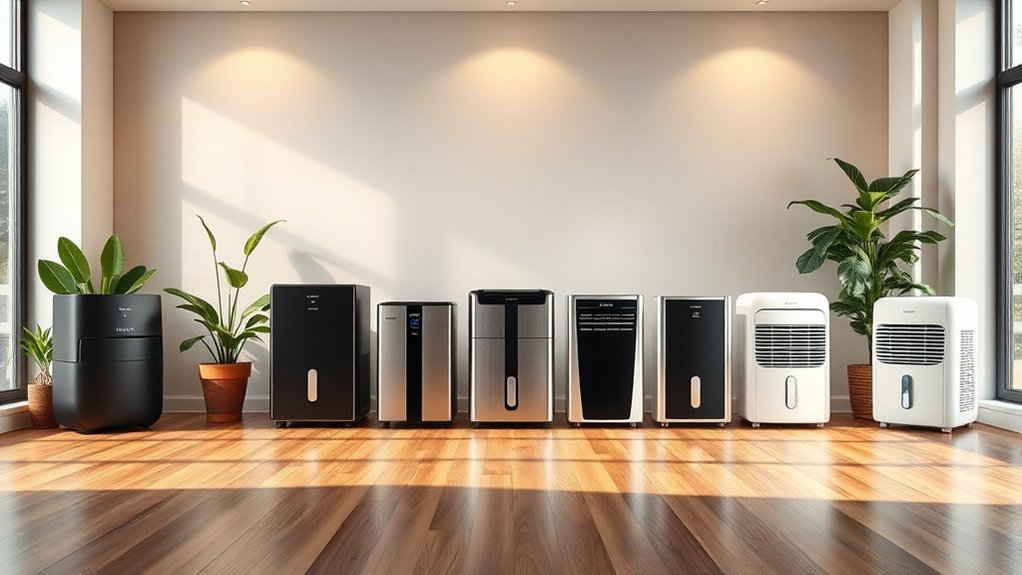
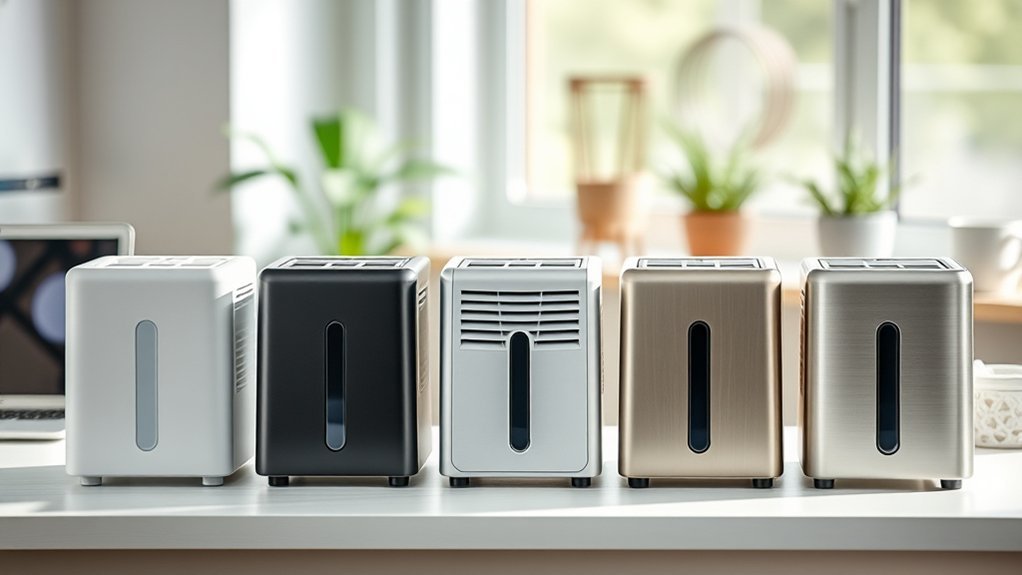
Kitchen humidity can rise quickly from boiling, simmering, dishwashing, and poor ventilation. The best dehumidifier depends on whether you need light moisture control in a small enclosed kitchen or stronger compressor-based drying for an open-plan area. Among the products reviewed here, the Waykar PD160B is the most balanced choice for ongoing room humidity, the AEOCKY smart compressor model suits larger or persistently damp spaces, and the TABYIK 35 OZ is a compact option for mild condensation in a small kitchen.
Affiliate disclosure: This article contains Amazon affiliate links. We may earn a commission from qualifying purchases at no extra cost to you.
Updated: August 2026. Product specifications and marketplace availability can change, so confirm the current listing and manufacturer instructions before ordering.
Quick Verdict
- Best overall for a typical kitchen or open living area: Waykar PD160B Energy Star Dehumidifier
- Best for a large open-plan area or heavier moisture load: AEOCKY Smart Compressor Dehumidifier
- Best compact option for mild condensation: TABYIK 35 OZ Peltier Dehumidifier
- Best compact model with timer and defrost functions: NeedDuck B-2 44 OZ Dehumidifier
- Best large-tank semiconductor option: ToLife 95 OZ Dehumidifier
| Product | Type | Best For | Drainage | Main Limitation | Check Details |
|---|---|---|---|---|---|
| Waykar PD160B | Compressor | Ongoing humidity in a small-to-medium kitchen or connected living area | Tank or gravity drain hose | Larger and louder than a mini semiconductor unit | Check Price on Amazon |
| AEOCKY Smart Compressor | Compressor | Large open-plan kitchens, adjoining rooms, or persistent dampness | Tank or drain hose | Oversized for a small closed kitchen; maximum pint claims use hot, humid test conditions | Check Price on Amazon |
| TABYIK 35 OZ | Thermoelectric/Peltier | Mild condensation in a small enclosed kitchen | Manual tank | Not suitable for heavy moisture, leaks, or a large open room | Check Price on Amazon |
| NeedDuck B-2 44 OZ | Thermoelectric/Peltier | Small kitchens where a timer and compact footprint matter | Manual tank | Low extraction capacity compared with a compressor model | Check Price on Amazon |
| ToLife 95 OZ | Thermoelectric/Peltier | Light moisture control with less-frequent tank emptying | Manual tank | Advertised room-size claims should not be treated like compressor capacity ratings | Check Price on Amazon |
Before You Buy: Use a separate hygrometer to confirm that humidity is consistently high. A dehumidifier can reduce airborne moisture, but it does not replace a working range hood, proper ventilation, plumbing repairs, or cleanup after a leak.
Placement tip: Keep the unit away from stove heat, sink splashes, and blocked airflow. Follow the clearance, outlet, drainage, and operating-temperature instructions in the product manual.
Waykar PD160B Energy Star Dehumidifier
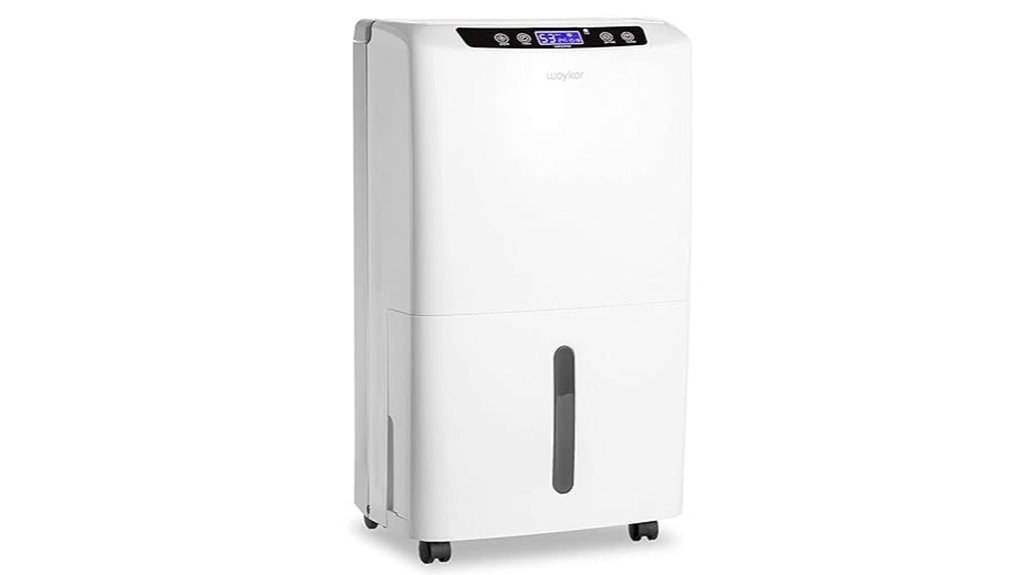
Best Overall: The Waykar PD160B is the strongest all-around option in this list for a kitchen that stays humid beyond cooking time. Unlike a mini Peltier unit, it uses a compressor, includes automatic humidity control, and supports either tank collection or continuous gravity drainage. That makes it better suited to an open kitchen, kitchen-dining area, or nearby living space where moisture is persistent.
The product is often marketed with a higher “34-pint” figure measured in hot, very humid conditions. The current ENERGY STAR listing for model PD160B reports a standardized water-removal capacity of about 9.8 pints per day, so buyers should compare standardized ratings rather than headline numbers alone.
Why You’ll Like It: It can cycle according to the selected humidity level, offers adjustable airflow and fan settings, and can drain through a hose when a suitable lower drain is available.
Best For: Small-to-medium kitchens, open-plan living areas, or homes where humidity remains high after cooking.
Who Should Avoid It: Buyers who only need occasional moisture control in a tiny enclosed kitchen may prefer a smaller, quieter thermoelectric model.
Pros:
- Compressor-based moisture removal is more appropriate for sustained room humidity.
- Automatic humidity control reduces unnecessary run time.
- Tank and continuous-drain options support different kitchen layouts.
- ENERGY STAR certification can be checked by model number.
Cons:
- Needs more floor space than a countertop-sized mini unit.
- Gravity drainage requires a properly positioned lower drain.
- Marketing capacity and standardized capacity are not the same measurement.
AEOCKY 4,500 Sq. Ft. Smart Compressor Dehumidifier
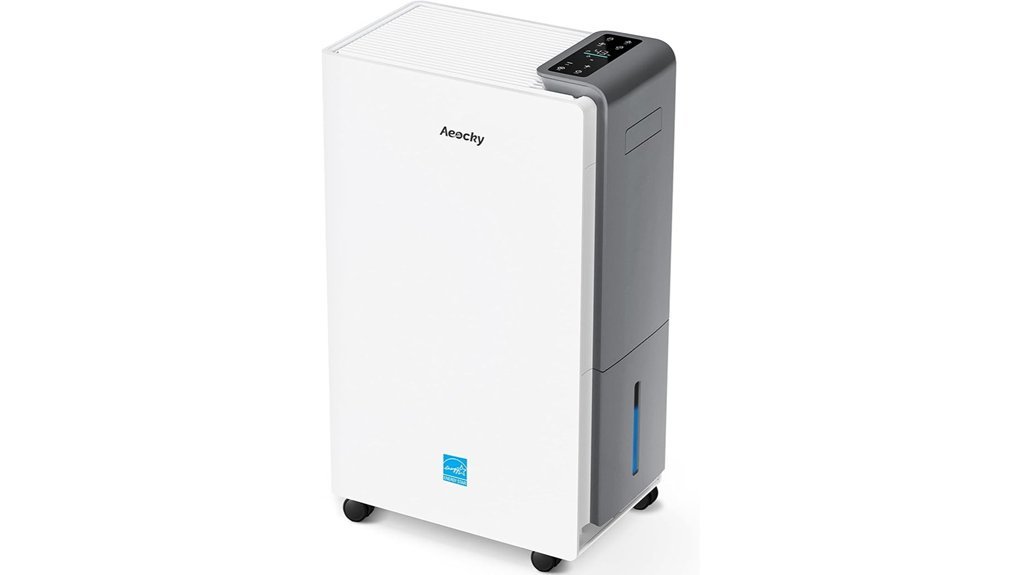
Best for Large or Open-Plan Spaces: The AEOCKY model is the highest-capacity option retained in this guide. It is more appropriate when the kitchen opens into a dining room, living room, basement, or other large area, or when humidity remains high throughout the home rather than only during cooking.
The listing promotes a maximum removal rate of up to 80 pints per day under hot-saturation conditions. That number should not be compared directly with a standardized DOE capacity rating. The practical result will vary with room temperature, starting humidity, airflow, and how often doors or windows are opened.
Why You’ll Like It: The compressor design, adjustable humidistat, drain-hose support, child lock, and low-temperature operation make it more capable than a compact semiconductor unit.
Best For: Large open-plan kitchens, connected living spaces, or heavier and more persistent moisture loads.
Who Should Avoid It: It is unnecessary for a small closed kitchen with only brief cooking condensation, and it requires suitable floor space and drainage planning.
Pros:
- High-capacity compressor design for larger spaces.
- Adjustable humidity control and continuous-drain capability.
- Automatic operation can reduce repeated manual adjustments.
Cons:
- Maximum pint claims use different test conditions from standardized ratings.
- Heavier and less convenient to move than compact models.
- May be excessive for a small kitchen with mild humidity.
TABYIK 35 OZ Dehumidifier for Small Kitchens
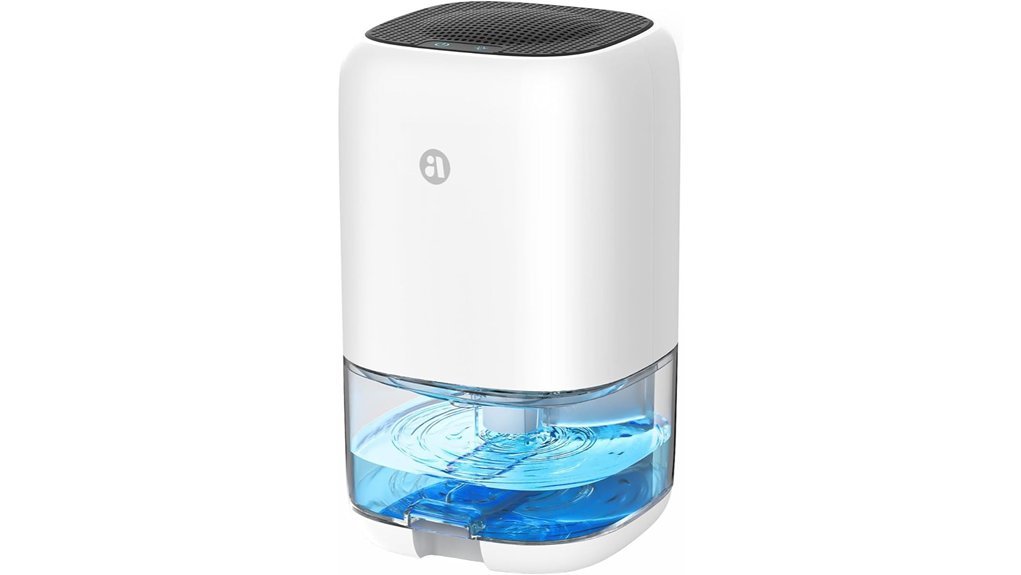
Best Compact Pick: The TABYIK 35 OZ is a small Peltier dehumidifier intended for light moisture in enclosed spaces. Its compact footprint, built-in handle, transparent tank, low operating noise, and automatic shut-off make it easier to place in a small kitchen than a full-size compressor model.
It is best viewed as a condensation-control helper, not as a solution for a wet room, an active plumbing leak, or a large open-plan kitchen. Semiconductor performance also falls as room temperature drops.
Why You’ll Like It: It is simple to move, easy to monitor, and quiet enough for a kitchen near a bedroom or living space.
Best For: Small enclosed kitchens with mild seasonal humidity or occasional window condensation.
Who Should Avoid It: Choose a compressor dehumidifier if humidity remains above your target for long periods or moisture returns quickly after the unit stops.
Pros:
- Compact size and built-in handle.
- Quiet thermoelectric operation.
- Automatic shut-off helps prevent tank overflow.
- Transparent tank makes the water level easy to check.
Cons:
- Limited moisture-removal rate compared with compressor units.
- Manual tank emptying is required.
- Not designed for large, cold, or heavily damp spaces.
NeedDuck B-2 Dehumidifier with 44 OZ Water Tank
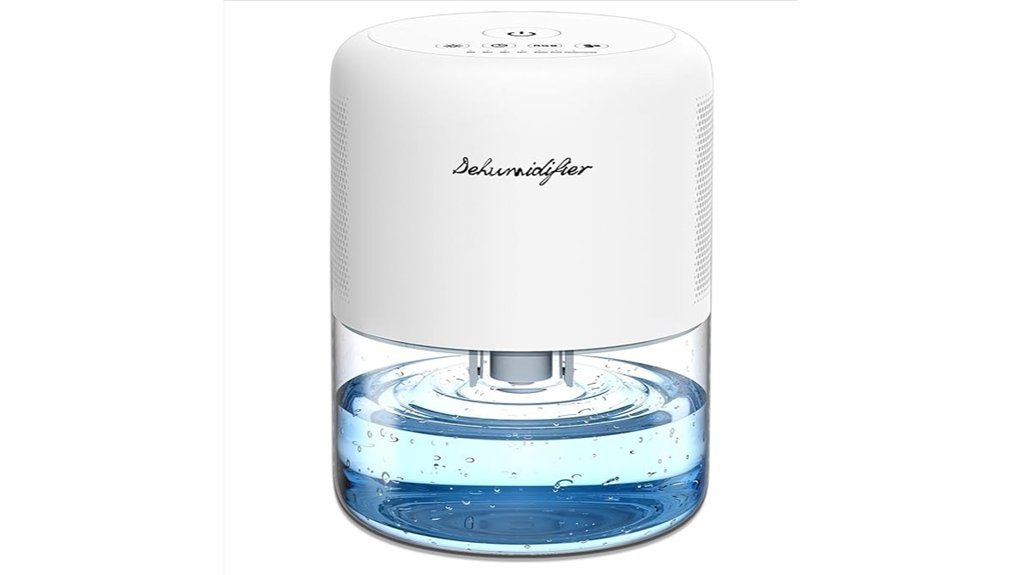
Best Compact Pick with Timer: The NeedDuck B-2 is another small thermoelectric option for localized kitchen moisture. Its 44-ounce tank, timer choices, operating modes, automatic shut-off, and defrost function provide more control than a basic one-button mini dehumidifier.
The advertised coverage figure should be treated as a placement guide rather than proof that the unit can control a whole room under every condition. Actual extraction depends heavily on temperature and relative humidity.
Why You’ll Like It: The timer can limit operation to the hours when condensation is most likely, while the compact cabinet is easier to fit on a stable surface away from food preparation and water splashes.
Best For: Small kitchens where mild dampness is the main concern and a timer is useful.
Who Should Avoid It: It is not a replacement for a range hood, exhaust fan, leak repair, or compressor dehumidifier in a persistently wet room.
Pros:
- Compact and lightweight.
- Timer and multiple operating modes improve flexibility.
- Automatic shut-off and defrost functions add convenience.
Cons:
- Lower extraction capacity than compressor models.
- Tank may need frequent emptying during humid weather.
- Coverage claims do not show standardized moisture-removal performance.
ToLife Dehumidifier for Home with 95 OZ Tank
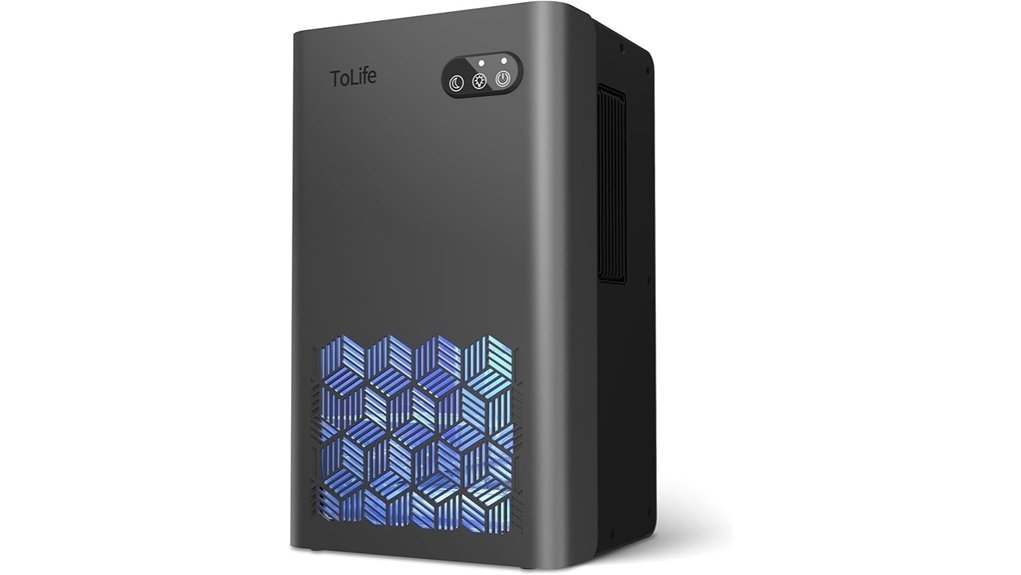
Best Large-Tank Semiconductor Pick: The ToLife model combines a 95-ounce tank with a portable thermoelectric design. It can be convenient for light kitchen moisture because the larger reservoir may require less frequent emptying than smaller 35- or 44-ounce units.
Its advertised square-foot coverage and extraction figures are not equivalent to standardized compressor ratings. For that reason, it is better suited to localized condensation or mild humidity than to a large kitchen that remains damp all day.
Why You’ll Like It: Powerful and sleep modes let you choose between faster operation and reduced noise, while automatic shut-off helps prevent overflow when the tank fills.
Best For: Buyers who want a compact dehumidifier with a larger tank for light moisture control.
Who Should Avoid It: Choose a compressor unit if you need automatic humidistat control, continuous drainage, or reliable performance across a larger open area.
Pros:
- Larger tank than many mini dehumidifiers.
- Two operating modes for flexibility.
- Automatic shut-off and portable design.
Cons:
- No continuous drain hose on this listed version.
- Room-size marketing can overstate practical whole-room performance.
- Still requires manual emptying and regular cleaning.
Factors to Consider When Choosing a Dehumidifier for the Kitchen
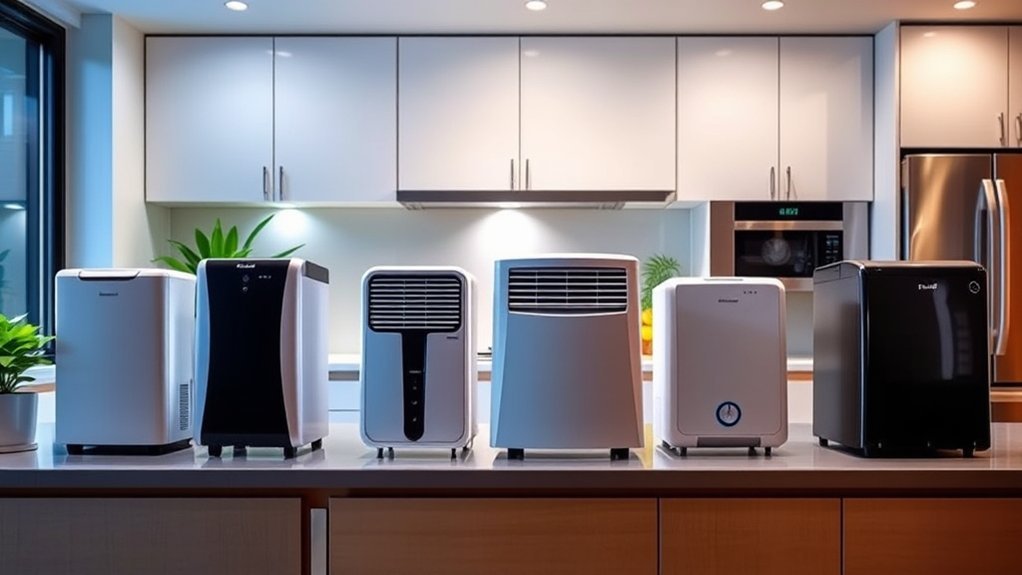
A kitchen dehumidifier should be selected by the actual moisture load, room layout, drainage options, operating temperature, and required controls—not by tank size or advertised square footage alone.
Measure Humidity First
Use a separate hygrometer before buying. The U.S. EPA generally recommends keeping indoor relative humidity between 30% and 50% and below 60% where possible. If the kitchen is only humid while cooking and returns to normal soon afterward, improving ventilation may be more useful than running a dehumidifier continuously.
Compressor vs. Thermoelectric
Compressor dehumidifiers remove much more water and usually include an adjustable humidistat, washable filter, tank, and hose-drain option. They are the better choice for persistent room humidity. Thermoelectric or Peltier models are smaller and quieter but work best for mild moisture in small, warm, enclosed spaces.
Capacity and Test Conditions
Capacity is normally expressed as pints removed in 24 hours under specified test conditions. Do not compare a “maximum” rating measured at very high heat and humidity with a DOE or ENERGY STAR standardized rating as though they are the same. For a meaningful comparison, check the exact model number in the ENERGY STAR Product Finder or the manufacturer’s current documentation.
Use Kitchen Ventilation First
Cooking adds moisture to indoor air. Run a vented range hood or exhaust fan during cooking and for a period afterward, cover pots when practical, and repair leaks promptly. A dehumidifier treats moisture already in the air; it does not remove grease, smoke, combustion pollutants, or cooking odors the way proper ventilation can.
Drainage Options
A removable tank is simple but requires monitoring and cleaning. Continuous gravity drainage is more convenient for frequent use, but the hose must slope downward to a suitable drain. Do not route a drain hose where it can create a trip hazard or discharge near food-storage or preparation areas.
Noise and Placement
Mini thermoelectric models are usually quieter, while compressor models move more air and produce more sound. Place the unit on a stable, level surface with the manufacturer’s required clearance. Keep it away from stove heat, direct steam, sink splashes, and blocked vents.
Energy Efficiency
For compressor models, look for an ENERGY STAR certification tied to the exact model number. ENERGY STAR uses an Integrated Energy Factor that relates moisture removal to electricity use under standardized conditions. Timers, humidistats, and automatic cycling can also reduce unnecessary operation.
Maintenance and Cleaning
Empty and wash the tank regularly, clean or replace the air filter as directed, keep the intake and outlet free of grease and dust, and inspect the hose for blockage. Unplug the unit before cleaning and follow the product manual rather than spraying cleaner directly into the appliance.
Frequently Asked Questions
Do I Need a Dehumidifier If I Have a Range Hood?
Possibly, but ventilation should come first. A properly vented range hood removes moisture and cooking pollutants at the source. A dehumidifier can help when humidity remains high after cooking or when the kitchen shares air with a damp adjoining area.
What Humidity Level Is Best for a Kitchen?
A practical target is generally 30% to 50% relative humidity. Avoid driving the room excessively dry, and investigate leaks or ventilation problems if humidity stays above 60%.
What Size Dehumidifier Do I Need for a Small Kitchen?
Choose by measured humidity and moisture load, not square footage alone. A mini thermoelectric model may help with mild condensation in a small enclosed kitchen. Persistent dampness, frequent wet windows, or humidity that affects adjoining rooms usually calls for a compressor model with a humidistat.
Can a Dehumidifier Remove Cooking Odors?
Not effectively. It may make a damp room feel fresher, but it is not designed to capture grease, smoke, gases, or odor molecules. Use a vented range hood, exhaust fan, and normal cleaning for cooking odors.
Can I Place a Dehumidifier on a Kitchen Counter?
Only when the manufacturer allows that placement and the unit can sit on a stable, dry surface with adequate clearance. Keep it well away from the sink, stove, direct steam, food preparation, and any area where the cord could be pulled or splashed.
How Often Should I Empty and Clean the Water Tank?
Empty it whenever the full-tank indicator activates and check it daily during humid periods. Wash and dry the tank regularly to prevent residue and odor, following the cleaning instructions for the specific model.
Conclusion
Final Recommendation: Choose the Waykar PD160B for the best balance of automatic humidity control, compressor performance, and drainage flexibility in a typical kitchen or connected living area. Choose the AEOCKY only when you need to manage a larger or more persistent moisture load. For a small enclosed kitchen with mild condensation, the TABYIK 35 OZ is the simplest compact choice.
Whichever model you choose, confirm the exact capacity standard, keep the unit away from heat and splashes, and treat ventilation or water-source problems before relying on dehumidification alone.