The best refrigerant dehumidifiers for 2026 use a compressor and cooling coil to remove substantially more moisture than small thermoelectric models. For large or persistently damp spaces, the AEOCKY RHEA 4500 Sq. Ft, Waykar Max 80 Pint, and Vellgoo DryTank offer high advertised capacity and continuous-drain support. The AEOCKY LEO is the strongest fit when you need a built-in pump, while the AEOCKY BOREAS and BANABIE 2500 Sq. Ft are easier to match to medium-size or moderately damp rooms.
We compared compressor type, capacity context, drainage options, tank size, automatic controls, low-temperature features, portability, and efficiency claims. Capacity numbers are not always measured under the same temperature and humidity conditions, so treat “maximum pints per day” and square-foot coverage as comparison aids rather than guarantees. Before ordering, confirm the exact model number, standardized capacity, operating-temperature range, hose or pump requirements, warranty, and current certification status.
Quick verdict
- Best overall: AEOCKY RHEA 4500 Sq. Ft for a strong balance of large-space capacity, useful controls, and gravity drainage.
- Best with a pump: AEOCKY LEO 4500 Sq. Ft when water must be lifted to a sink, window, or raised drain.
- Best large-space value: Waykar Max 80 Pint for high advertised output and a straightforward continuous-drain setup.
- Best efficiency-focused option: Vellgoo DryTank for buyers comparing model-level ENERGY STAR information.
- Best mid-capacity pick: AEOCKY BOREAS for medium to large residential spaces.
- Best compact compressor pick: BANABIE 2500 Sq. Ft for moderate dampness in smaller rooms.
Quick Comparison of the Best Refrigerant Dehumidifiers
| Model | Best For | Advertised Maximum | Drainage | Details |
|---|---|---|---|---|
| AEOCKY RHEA 4500 Sq. Ft | Best overall | Up to 80 pints/day under hot, humid test conditions | Tank or gravity hose | Check Current Amazon Availability |
| AEOCKY LEO 4500 Sq. Ft with Pump | Best pump model | Up to 80 pints/day under hot, humid test conditions | Tank, gravity hose, or pump | Check Current Amazon Availability |
| Waykar Max 80 Pint | Large rooms and basements | Up to 80 pints/day under hot, humid test conditions | Tank or gravity hose | Check Current Amazon Availability |
| Vellgoo DryTank 4500 Sq. Ft | Efficiency-focused buyers | Up to 70 pints/day under peak conditions | Tank, drain hose, or compatible garden hose | Check Current Amazon Availability |
| AEOCKY BOREAS 3500 Sq. Ft | Mid-capacity home use | Up to 50 pints/day under hot, humid test conditions | Tank or gravity hose | Check Current Amazon Availability |
| BANABIE 2500 Sq. Ft | Smaller rooms and moderate dampness | Up to 32 pints/day | Tank or gravity hose | Check Current Amazon Availability |
Capacity note: The maximum figures in the table are seller-advertised outputs measured under warm, highly humid conditions. Standardized ratings can be lower and are the better basis for comparing efficiency and expected performance.
Drainage note: Gravity hoses must run continuously downhill. Choose a pump model only when the drain point is above the unit or a downhill route is not practical.
How We Compared These Refrigerant Dehumidifiers
This guide focuses on portable compressor dehumidifiers that support meaningful moisture removal in bedrooms, laundry rooms, basements, garages, and other residential spaces. We compared each model’s advertised output, drainage setup, tank size, humidistat controls, defrost features, portability, and certification language. We did not treat square-foot coverage or maximum-condition pint figures as guaranteed real-world performance.
Product listings and certification databases can use different model names or capacity standards. When a claim could not be tied confidently to the exact model number, the article uses cautious wording and directs buyers to verify the current listing, manual, and certification record before purchase.
AEOCKY RHEA 4500 Sq. Ft Smart Compressor Dehumidifier
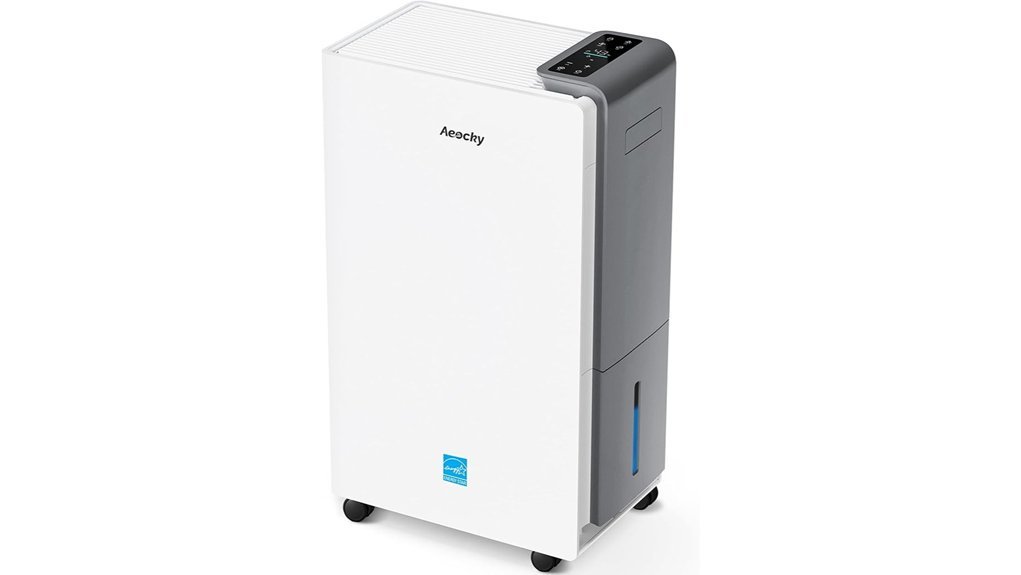
Best Overall
The AEOCKY RHEA is a large-space compressor dehumidifier marketed for up to 4,500 square feet and up to 80 pints per day under hot, highly humid conditions. The corresponding RHEA model family appears in the ENERGY STAR database with a standardized water-removal figure of roughly 45 pints per day. That is lower than the maximum-condition marketing figure, so compare standardized ratings rather than headline numbers whenever possible.
Best For: Large basements, open-plan areas, and buyers who want strong efficiency credentials without paying for a built-in pump.
Why You’ll Like It: The RHEA combines an intelligent humidistat, automatic operation, sleep and drying modes, a timer, child lock, auto defrost, and continuous gravity drainage. The listed 1.45-gallon tank is also larger than the buckets on several competing models.
Before You Buy: “Smart” should be understood as automatic humidity management unless the exact listing clearly confirms Wi-Fi or app control. Use the included hose only where water can flow downhill.
Skip It If: You need to drain upward or across a flat floor without adding a separate condensate pump.
Pros:
- ENERGY STAR Most Efficient model-family recognition.
- Large 1.45-gallon tank plus continuous-drain capability.
- Useful operating modes and automatic humidity control.
Cons:
- The 80-pint maximum is measured under hotter, wetter conditions than the standardized rating.
- No built-in pump for upward drainage.
- Wi-Fi or voice-assistant support should not be assumed.
AEOCKY LEO 4500 Sq. Ft Dehumidifier with Pump
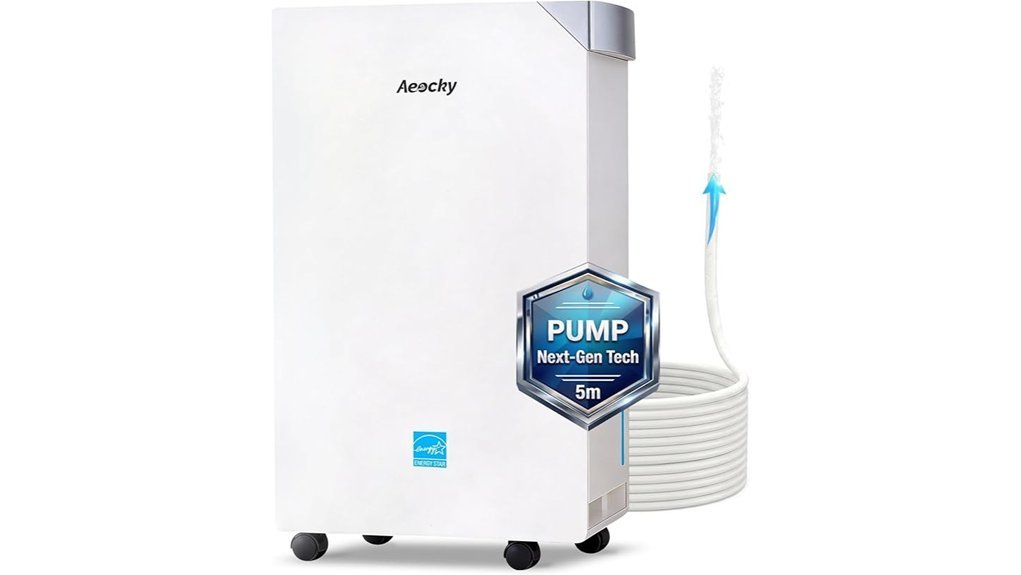
Best with a Built-In Pump
The AEOCKY LEO 4500 Sq. Ft model adds a built-in pump to a high-capacity refrigerant compressor platform. It is advertised to remove up to 80 pints per day under hot, very humid conditions and includes automatic humidity control, a drain hose, a removable tank, and pump-assisted drainage.
Best For: Basements without a convenient floor drain, especially when water must be routed upward to a sink, window, or raised drain point.
Why You’ll Like It: The pump reduces the placement limits of gravity-only models. You can still use the tank or a downhill drain route, but pump drainage gives you more flexibility for unattended operation.
Before You Buy: Check the exact model number, maximum pump lift, included hose, and routing requirements in the current manual. A pump adds convenience, but it also adds a component that needs periodic inspection and cleaning.
Skip It If: You already have a nearby floor drain and do not need the extra cost or maintenance of a built-in pump.
Pros:
- Built-in pump supports more flexible drain placement.
- High advertised maximum output for large damp spaces.
- Automatic humidistat, auto defrost, and multiple drainage choices.
Cons:
- Usually costs more than a comparable gravity-drain model.
- Pump maintenance adds another ownership task.
- The maximum pint rating is condition-dependent.
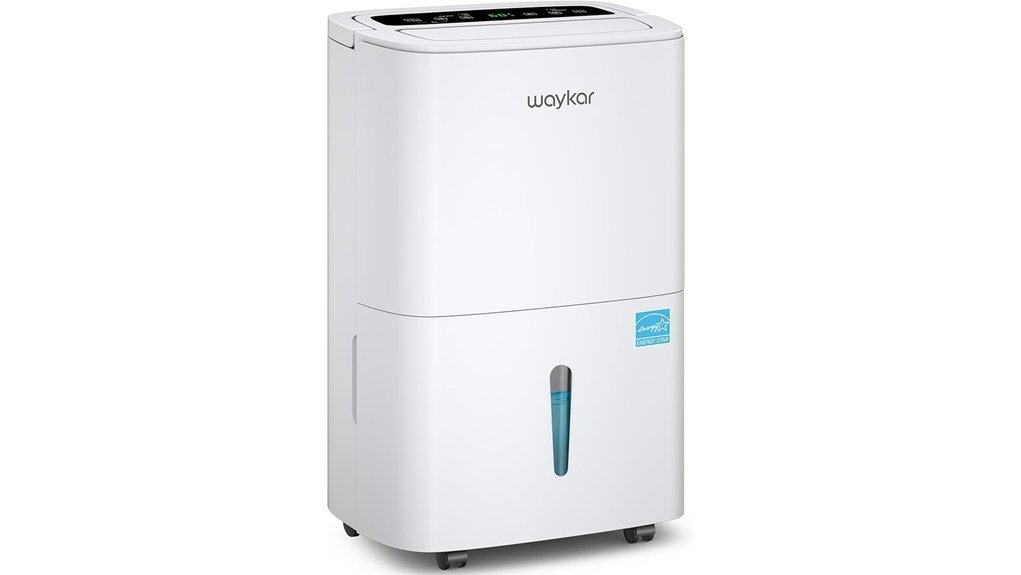
Waykar Max 80 Pint ENERGY STAR Home Dehumidifier
Best Large-Space Value
The Waykar Max 80 Pint is a compressor-based dehumidifier designed for large rooms, basements, laundry areas, and other persistently damp spaces. The listing advertises removal of up to 80 pints per day under hot, very humid conditions and coverage up to 5,000 square feet. Its digital controls, adjustable humidity setting, automatic defrost, timer, washable filter, and included drain hose make it practical for long operating periods.
Best For: Buyers who want high advertised moisture removal, a straightforward gravity-drain setup, and a model whose current certification details can be confirmed before purchase.
Why You’ll Like It: It combines a portable cabinet with a rotary compressor, continuous drainage, automatic restart, and a swing-air function. The 300-watt listed input is relatively modest for a large compressor model, although real energy use depends on runtime and room conditions.
Before You Buy: The “80 pint” figure is a maximum-condition rating, not a promise of daily collection in a normal basement. The approximately 0.92-gallon tank can fill quickly in wet conditions, so the drain hose is the better choice for unattended use. Match the exact model number to any ENERGY STAR claim shown on the listing.
Skip It If: Your drain point is above the unit or you need pump-assisted drainage.
Pros:
- High advertised moisture-removal capacity for large damp areas.
- Seller-listed energy-efficiency credentials and automatic humidity control.
- Continuous drainage, auto defrost, auto restart, and washable filter.
Cons:
- Maximum capacity depends on unusually warm and humid test conditions.
- The water bucket is small relative to the advertised daily output.
- At about 28.6 pounds, it is portable on one floor but less convenient on stairs.
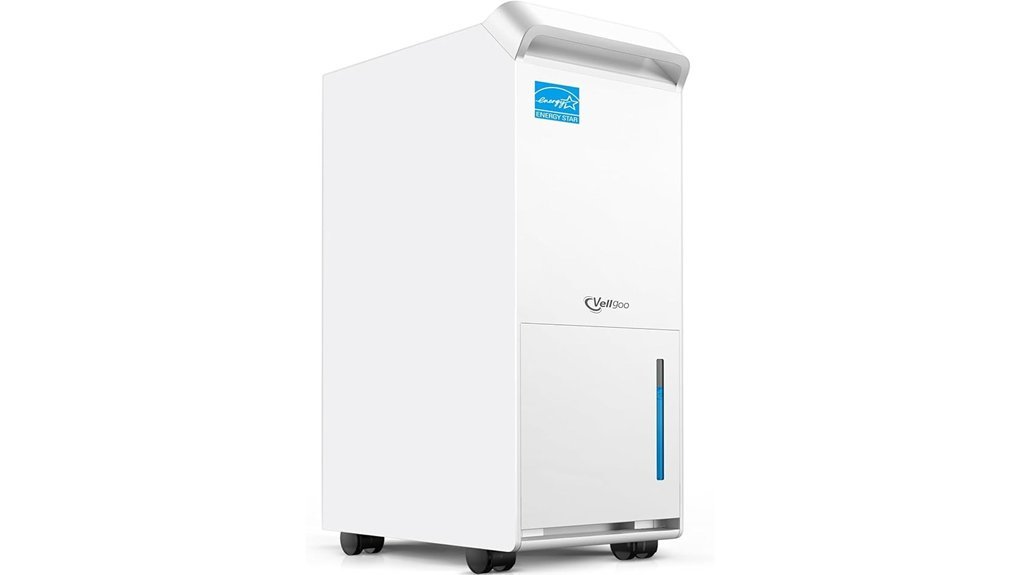
Vellgoo DryTank ENERGY STAR Dehumidifier for Home
Best for Energy Efficiency
The Vellgoo DryTank is a refrigerant compressor dehumidifier aimed at large residential spaces. The Amazon listing promotes coverage up to 4,500 square feet and up to 70 pints per day in peak summer conditions. For an apples-to-apples comparison, note that standardized ENERGY STAR capacity for the qualifying Vellgoo model family is lower than the maximum-condition marketing figure.
Best For: Buyers who prioritize model-level efficiency verification, continuous drainage, and large-room moisture control.
Why You’ll Like It: It uses a rotary compressor and supports manual tank collection, a standard drain hose, and compatible garden-hose drainage. Automatic humidity control helps the compressor cycle rather than run continuously after the target level is reached.
Before You Buy: Vellgoo listings can show different pint figures, coverage claims, and model-family names. Confirm the exact model number, standardized capacity, and current ENERGY STAR record before comparing it with another unit.
Skip It If: You need a built-in pump or cannot provide a continuous downhill drain route.
Pros:
- Model-family efficiency credentials that can be checked before purchase.
- Multiple drainage methods for long-term basement use.
- Large-space design with automatic humidity control.
Cons:
- Capacity labels can be confusing because maximum and standardized figures differ.
- Heavier and bulkier than compact 20- to 32-pint compressor units.
- No built-in pump is stated for this exact listing.
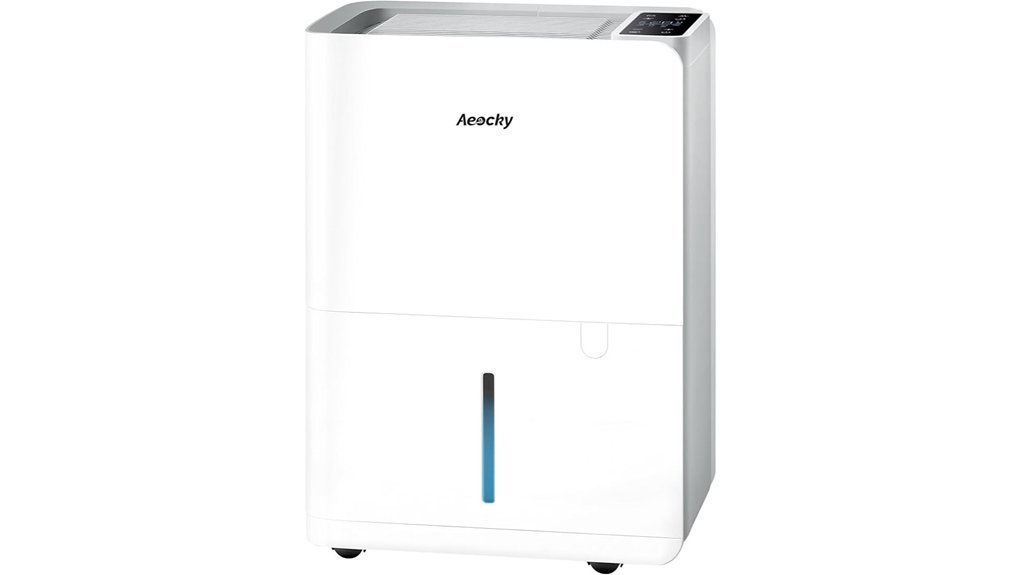
AEOCKY BOREAS 50 Pint Compressor Dehumidifier for Home
Best Mid-Capacity Pick
The AEOCKY BOREAS is a refrigerant compressor dehumidifier marketed for spaces up to 3,500 square feet and up to 50 pints per day under hot, humid test conditions. It includes an intelligent humidistat, a 0.8-gallon water tank, a drain hose, and automatic operating features for basements, garages, bedrooms, and general home use.
Best For: Buyers who need more capacity than a compact 20- to 32-pint unit but do not need a 4,500-square-foot model or built-in pump.
Why You’ll Like It: The BOREAS offers a practical middle ground in size and output. Continuous gravity drainage helps reduce tank-emptying work, while automatic humidity control prevents unnecessary compressor runtime after the target level is reached.
Before You Buy: The seller’s noise and 3,500-square-foot coverage figures are best treated as reference points. Room layout, moisture sources, temperature, and fan speed can change real-world results.
Skip It If: You need upward drainage, a larger bucket, or a unit sized for severe water intrusion.
Pros:
- Balanced capacity for medium to large residential spaces.
- Tank and continuous gravity-drain options.
- Automatic humidity control and compressor-based moisture removal.
Cons:
- No built-in pump.
- The 0.8-gallon tank may fill quickly in a wet basement.
- Advertised maximum output depends on warm, humid test conditions.
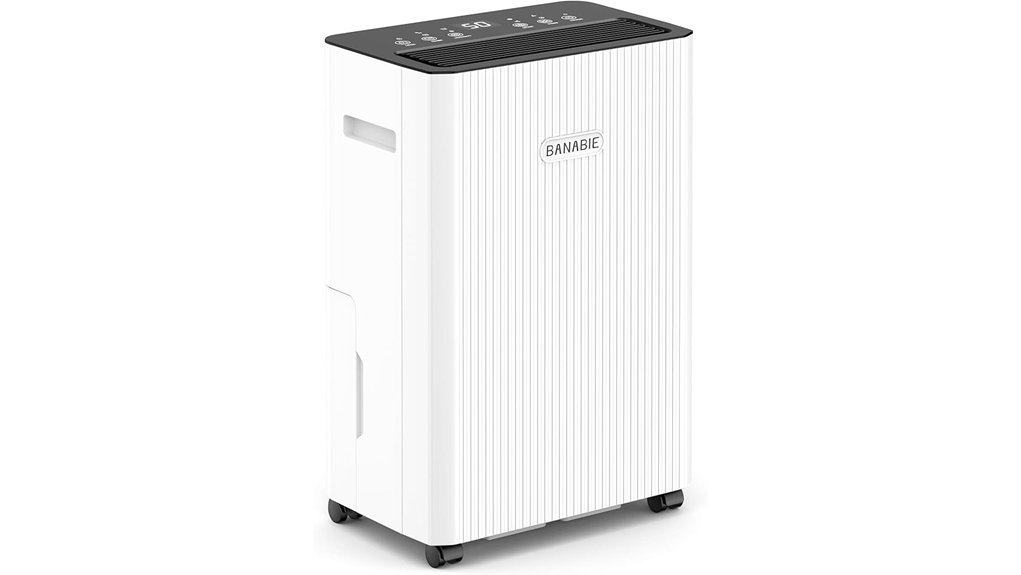
BANABIE 2500 Sq. Ft Dehumidifier with Smart Humidity Control
Best Compact Compressor Pick
The BANABIE 2500 Sq. Ft dehumidifier is a smaller compressor model advertised to remove up to 32 pints per day. It offers adjustable humidity control, a 2.5-liter tank, automatic shutoff, rolling casters, a timer, and an included drain hose. That combination makes it easier to manage moderate dampness without moving up to a heavier 4,500- or 5,000-square-foot model.
Best For: Bedrooms, laundry rooms, apartments, finished basements, and other moderate-size spaces where a compact compressor unit is preferred.
Why You’ll Like It: The controls let you set a target humidity level, while the hose connection supports continuous gravity drainage. The seller advertises low-noise operation, but placement, fan speed, and room acoustics will affect perceived sound.
Before You Buy: A 2.5-liter tank may need frequent emptying in high humidity. Continuous drainage also requires a downward hose path to a suitable drain because this model does not advertise a pump. Treat the 32-pint and 2,500-square-foot figures as seller claims until confirmed for the exact model.
Skip It If: You are dealing with severe basement dampness or want independently verified efficiency data.
Pros:
- Smaller footprint than the high-capacity models in this guide.
- Adjustable humidistat, timer, auto shutoff, and portable wheels.
- Includes a hose for continuous gravity drainage.
Cons:
- Seller-provided noise and coverage claims may not match every room.
- The 2.5-liter tank is better suited to occasional manual emptying than very wet spaces.
- No built-in pump for draining upward to a sink or window.
Which Refrigerant Dehumidifier Should You Choose?
| Your Priority | Best Match | Why |
|---|---|---|
| Upward drainage | AEOCKY LEO | The built-in pump reduces dependence on a downhill floor drain. |
| Large space without a pump | AEOCKY RHEA | It combines a larger tank, automatic controls, and gravity drainage. |
| High advertised output and value | Waykar Max 80 Pint | It offers a simple large-room setup with a supplied drain hose. |
| Efficiency-focused comparison | Vellgoo DryTank | It is the strongest fit when you are willing to verify the exact model against current certification data. |
| Medium-size residential area | AEOCKY BOREAS | It sits between compact units and the larger 4,500-square-foot class. |
| Moderate dampness in a smaller room | BANABIE 2500 Sq. Ft | Its smaller tank and cabinet are easier to match to lighter-duty use. |
Factors to Consider When Choosing a Refrigerant Dehumidifier
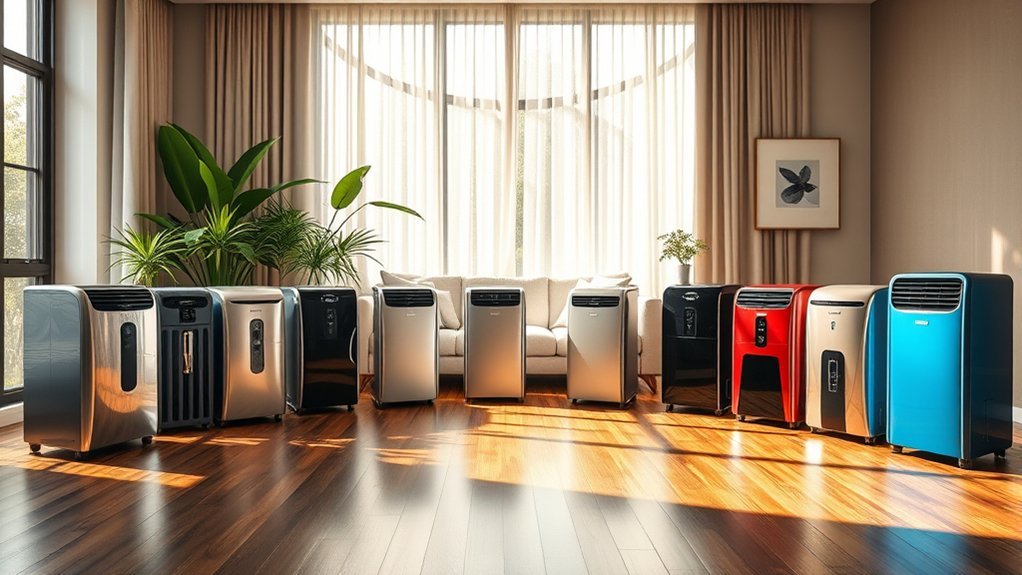
A refrigerant dehumidifier should be sized for the moisture load, not selected only by the largest square-foot number on the box. Compare the compressor type, standardized capacity, drainage method, operating-temperature range, tank size, energy efficiency, noise, filter access, warranty length, and the seller or manufacturer responsible for support.
Confirm It Is a Compressor Refrigerant Model
Refrigerant dehumidifiers use a compressor and cold coil to condense water from the air. Small thermoelectric or semiconductor units use a different technology and usually remove far less moisture. Look for clear wording such as compressor dehumidifier, automatic defrost, a refrigerant label, or an ENERGY STAR listing. Do not assume that a large tank or a “1,000 sq. ft.” marketing claim means the appliance is refrigerant-based.
Coverage Area and Moisture Load
Measure the room or connected area, but also judge how wet it is. A slightly damp finished basement may need less capacity than a smaller room with seepage, wet laundry, or frequent condensation. ENERGY STAR guidance recommends increasing capacity as conditions move from moderately damp to very damp or wet. It is often more practical to choose a modestly oversized unit with an automatic humidistat than an undersized unit that runs continuously without reaching the target.
Moisture Extraction Capacity
Capacity is measured in pints of water removed in 24 hours, but not every seller uses the same test conditions. For reference, 20 U.S. pints equal about 9.5 liters, 50 pints equal about 23.7 liters, and 80 pints equal about 37.9 liters. A model advertised at 80 pints under 95°F and very high humidity may have a much lower standardized capacity under cooler conditions. Compare standardized ratings whenever possible and treat maximum-condition claims separately.
Energy Efficiency Ratings
For portable refrigerant dehumidifiers, look for ENERGY STAR certification and compare the Integrated Energy Factor (IEF), measured in liters of water removed per kilowatt-hour. A higher IEF means the unit removes more water for the electricity used under the standard test. Programmable timers and automatic humidistats can also reduce unnecessary runtime, but they do not replace an efficient compressor and correctly sized unit.
Drainage Options
A removable tank works for occasional use, but a drain hose is more convenient in persistently damp spaces. Gravity drainage requires the hose to slope downward without kinks or a submerged end. A built-in pump is useful when water must travel upward to a sink, window, or raised drain. Check the included hose length, connection type, pump lift limit, and whether a garden-hose adapter is supplied.
Noise Level
Compressor dehumidifiers create fan and compressor noise, so seller dB figures should be treated as estimates. Compare low and high fan modes, read the manual for the stated test method, and avoid placing the unit directly beside a bed or work desk when possible. Rubber feet, a level floor, clean filters, and clearance around the air inlet can also reduce vibration and excess sound.
Low-Temperature Operation and Defrost
Refrigerant models lose efficiency as room temperature falls because frost can form on the coil. Choose a unit with automatic defrost for cool basements and confirm its minimum operating temperature. A compressor dehumidifier is not always the best choice for an unheated space that stays near freezing.
Portability Features
For room-to-room use, look for casters, recessed handles, cord storage, and a tank that is easy to remove without spilling. Also compare total weight. A 30- to 36-pound unit may roll easily on one floor but still be awkward to carry upstairs.
Controls and Automatic Operation
A useful control panel should show current humidity, let you select a target level, and support automatic restart after a power interruption. Timers, child locks, fan-speed controls, and drying modes can improve convenience. Do not assume the word “smart” means Wi-Fi or app support; confirm connected features on the exact model page.
Warranty and Seller Support
Warranty terms can vary by model, seller, and registration requirement. Before ordering, confirm the written warranty length, who handles claims, whether return shipping is covered, and how replacement parts or service are provided. Save the order record, model number, serial number, and manual in case support is needed later.
Maintenance and Filter Care
Inspect the filter regularly and clean it according to the manual, especially in dusty basements or homes with pets. Empty and wash the tank before slime or odor develops, keep the drain hose clear, and make sure the inlet and outlet remain unobstructed. Let a washable filter dry completely before reinstalling it. If the unit was transported on its side, follow the manufacturer’s instructions for how long it should stand upright before use.
Before you buy
- Confirm that the exact model is compressor-based.
- Compare standardized capacity, not only maximum-condition pints.
- Choose gravity drainage or a pump based on the drain location.
- Check the minimum operating temperature for cool basements.
- Verify the model number, warranty, hose accessories, and current ENERGY STAR status.
Frequently Asked Questions
How Do Refrigerant Dehumidifiers Work?
A fan pulls humid air across a cold evaporator coil. Water vapor condenses into liquid and collects in the tank or flows through a drain hose. The air then passes across a warmer coil and returns to the room slightly warmer and drier.
What Is the Ideal Indoor Humidity Level?
A practical target is generally 30% to 50% relative humidity. Many households set a basement dehumidifier around 45% to 50% and adjust it based on comfort, condensation, and local conditions. Fix leaks and water intrusion instead of relying on the appliance alone.
Why Do Similar Dehumidifiers Show Different Pint Ratings?
Brands may publish a standardized rating and a higher “maximum” figure measured in hotter, wetter air. Because warm air can hold more moisture, the same machine may collect much more water at 95°F and very high humidity than it does in a cooler basement. Compare ratings measured under the same standard.
Can I Use a Refrigerant Dehumidifier in Winter?
Yes, provided the room stays within the model’s operating-temperature range. In a cool basement, choose automatic defrost and monitor whether the unit cycles into defrost frequently. For near-freezing spaces, another moisture-control approach may work better.
How Often Should I Empty the Water Tank?
Empty it whenever the full-tank indicator activates. In a wet room, that may be more than once per day. Continuous drainage is usually the better setup for basements or unattended operation, provided the hose is installed correctly.
Are Semiconductor Dehumidifiers Refrigerant Models?
No. Thermoelectric or semiconductor dehumidifiers use a Peltier cooling element rather than a refrigerant compressor. They can be useful in small enclosed spaces, but they should not be compared directly with full-size compressor dehumidifiers.
Are Square-Foot Coverage Ratings Reliable?
They are useful as broad marketing guides, but they do not account for ceiling height, air movement, room connections, temperature, water intrusion, or how damp the space is. Use standardized pint capacity and the actual moisture load as the main sizing tools.
Do I Need a Built-In Pump?
You need a pump only when the drain point is above the dehumidifier or a continuous downhill hose route is not available. If a floor drain is nearby, a gravity-drain model is usually simpler and has one fewer component to maintain.
Can a Dehumidifier Remove Mold?
A dehumidifier can help control the moisture conditions that support mold growth, but it does not remove existing mold, replace remediation, or repair leaks. Address the water source, dry wet materials promptly, and clean or replace affected materials as appropriate.
Conclusion
Final recommendation
For most buyers, the AEOCKY RHEA 4500 Sq. Ft offers the best balance of large-space capacity, useful automatic controls, a larger tank, and continuous gravity drainage. Choose the AEOCKY LEO when a built-in pump is essential, the Waykar Max 80 Pint for a straightforward high-output gravity-drain option, the Vellgoo DryTank when model-level efficiency verification is your priority, the AEOCKY BOREAS for mid-capacity use, or the BANABIE 2500 Sq. Ft for moderate dampness in a smaller room.
Whichever model you choose, compare standardized capacity rather than headline maximums, confirm the exact model number, and plan the drainage route before ordering. The right refrigerant dehumidifier should maintain your target humidity without running nonstop or forcing you to empty a small tank several times a day.
Also verify the current warranty, operating-temperature range, included hose or pump accessories, and certification record. Product listings can change, so the exact model page and manual should be the final check before purchase.