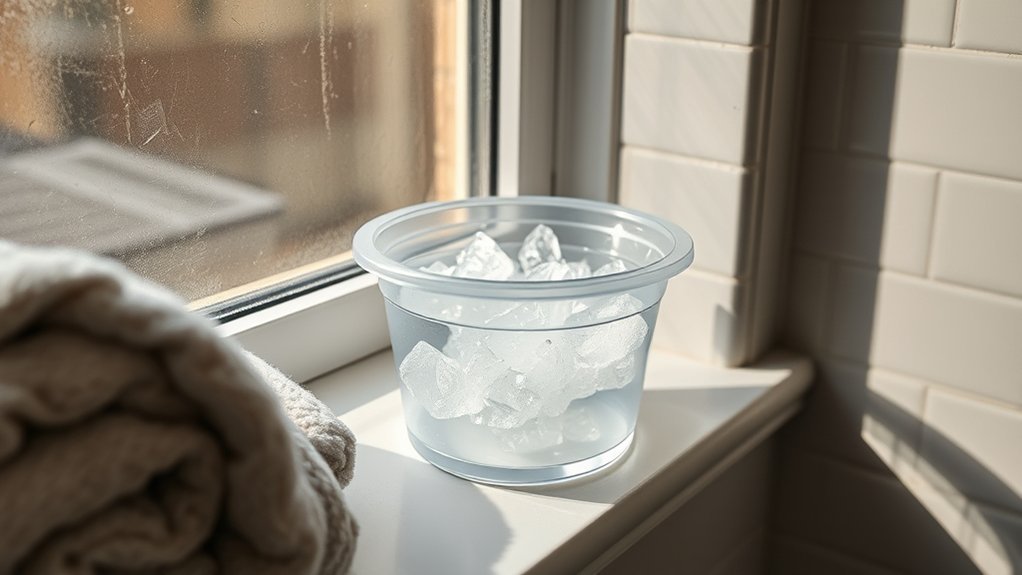
Disposable dehumidifiers do work, but only within a limited role. Their moisture-absorbing crystals passively collect water vapour from the surrounding air, making them useful for wardrobes, cupboards, windowsills, stored vehicles, and other small areas with mild dampness. They are not powerful enough to control persistent whole-room humidity, stop an active leak, or replace proper ventilation and building repairs.
Quick Answer
Yes, disposable dehumidifiers absorb moisture from the air, but they work best in small, enclosed spaces with minor condensation. Their capacity, coverage, and lifespan vary by product. For a damp room, recurring mould, a leak, or consistently high humidity, ventilation, repairs, or an electric dehumidifier will be more effective.
Key Takeaways
- Disposable moisture absorbers genuinely collect airborne moisture, usually by turning hygroscopic crystals into liquid brine.
- They are most useful in wardrobes, cupboards, storage spaces, caravans, and isolated condensation spots.
- Capacity and runtime are product-specific. Follow the label and replacement indicator rather than assuming a fixed number of weeks.
- They cannot repair leaks, remove existing mould, or keep up with continuous steam and whole-room humidity.
- Keep the unit upright and away from children, pets, leather, metal, and surfaces that may be damaged by salty liquid.
At a Glance
| Time Required | About 1–2 minutes to activate and position |
| Difficulty | Easy, provided the label and safety instructions are followed |
| Tools Needed | No tools; a digital hygrometer is helpful for measuring room humidity |
| Cost | Varies by capacity, brand, fragrance, pack size, and whether the container is disposable or refillable |
Are Disposable Dehumidifiers Worth It?
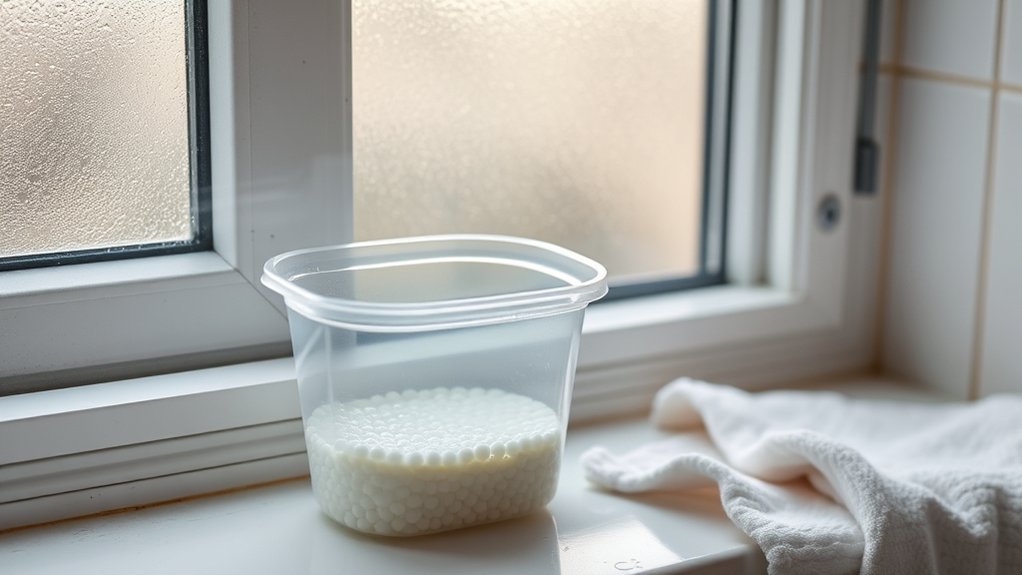
Disposable dehumidifiers can be worth using when the moisture problem is mild, localised, and temporary. They require no electricity, make no noise, and can be placed where a powered appliance would be inconvenient.
Good examples include a wardrobe that smells slightly musty, a cupboard with limited airflow, a stored caravan, or one windowsill that develops light winter condensation. In these situations, a passive absorber can collect some of the moisture that would otherwise remain in the enclosed air.
They become poor value when several units must be replaced frequently or when the surrounding room remains humid. In that situation, the incoming moisture is exceeding the absorber’s passive collection rate. Improving ventilation, fixing the moisture source, or using an electric dehumidifier is usually more effective.
| Situation | Likely value | Better response if needed |
|---|---|---|
| Slightly damp wardrobe | Good | Improve spacing and airflow |
| One condensation-prone windowsill | Moderate | Ventilate and wipe the surface |
| Steamy occupied bathroom | Limited | Use an extractor fan or suitable ventilation |
| Wet basement or recurring mould | Poor | Investigate the source and use powered drying if appropriate |
| Leaking roof or pipe | Not suitable | Repair the leak |
What Is a Disposable Dehumidifier?
A disposable dehumidifier, also called a passive moisture absorber, is a non-electrical container or hanging bag filled with hygroscopic material. Calcium chloride is a common active ingredient, although the exact formulation varies by manufacturer.
Hygroscopic crystals attract water vapour from the surrounding air. As they absorb more water, they may harden, partially dissolve, and eventually form a concentrated salty liquid that collects in a lower chamber. This process is explained in the manufacturer’s description of crystal moisture absorption.
These products are designed for passive moisture control. They do not contain a fan, compressor, humidistat, pump, or heating element, so they cannot circulate and process room air at the rate of an electric dehumidifier.
Note: The liquid in the reservoir is not clean water. It is usually concentrated brine containing the dissolved moisture-absorbing material. Do not drink, reuse, or pour it onto plants.
Types of Passive Moisture Absorbers
Products sold as disposable dehumidifiers do not all have the same design or capacity. Check which type you are buying before comparing price or expected runtime.
- Disposable tubs: The crystals sit above a lower collection chamber. The entire unit is discarded when the crystals are exhausted or the label’s replacement point is reached.
- Hanging bags: These are designed for wardrobes, lockers, and other narrow spaces. The liquid collects in a sealed lower pouch.
- Refillable containers: The outer container is reused while the crystal bag, tablet, or block is replaced.
- Compact sachets: Small hanging or enclosed packs are intended for drawers, cupboards, shoes, or other confined spaces.
- Rechargeable desiccants: Some silica-gel products can be dried and reused. They normally suit very small enclosed storage areas rather than damp rooms.
For example, current manufacturer labels show products ranging from compact sachets intended for confined spaces to larger refill systems advertised for rooms up to a stated area. A product’s crystal weight, container design, area rating, and replacement indicator are more useful than assuming every absorber performs alike.
How Do Disposable Dehumidifiers Work?
Disposable dehumidifiers work through passive moisture absorption. Once you remove the outer packaging or foil seal as directed, humid air reaches the hygroscopic material.
- The crystals are exposed to humid air. Water molecules are attracted to the hygroscopic material.
- The crystals absorb moisture. They may clump or harden during the early stage. This can be normal and does not necessarily mean the product has stopped working.
- The material begins to dissolve. As more moisture is collected, liquid brine drips into the reservoir or lower bag.
- The unit reaches its replacement point. Depending on the design, you replace it when the crystals dissolve, the reservoir reaches a marked line, or the manufacturer’s indicator changes.
Because there is no fan, the unit depends on natural movement of air around the crystals. It works gradually and treats the air immediately around it more effectively than air throughout a large, open room.
Measure the Humidity Before Relying on One
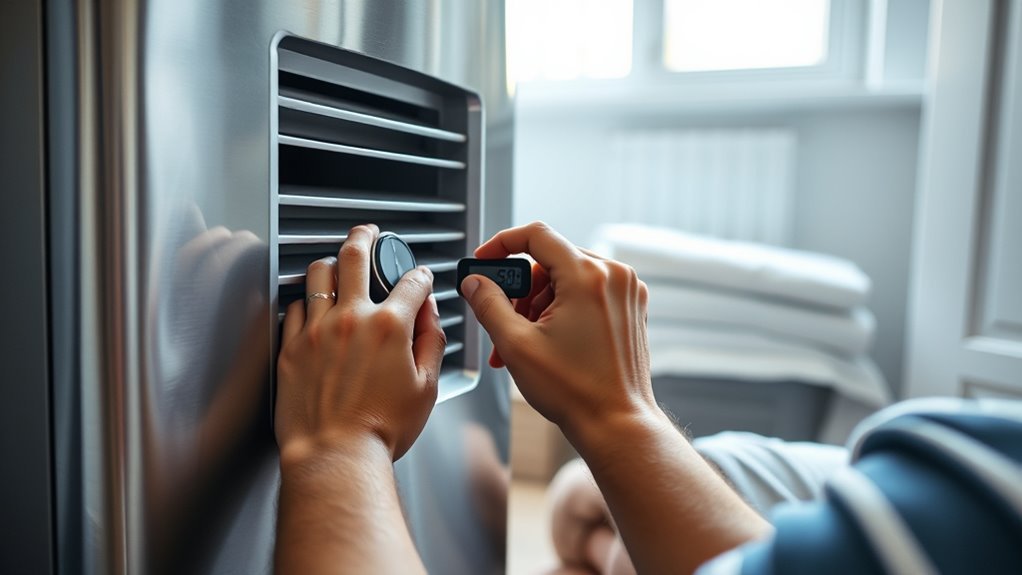
A small digital hygrometer can show whether you have a minor local problem or sustained whole-room humidity. Place it away from direct sunlight, radiators, open windows, showers, and the moisture absorber itself. Allow the reading to stabilise before making a decision.
The US Environmental Protection Agency recommends keeping indoor relative humidity below 60%, ideally around 30% to 50% where practical. The correct level can vary with climate, building conditions, and personal comfort, so the goal is to control excess moisture without making the air uncomfortably dry. See the EPA’s indoor moisture guidance.
- Occasional readings near the upper end of the range: Ventilation and a local absorber may be enough for a small problem area.
- Readings that regularly remain above 60%: Investigate moisture sources and consider powered dehumidification.
- Visible leaks, wet plaster, peeling finishes, or spreading mould: Treat the building problem rather than relying on a tub of crystals.
Pro Tip: Record humidity at the same times each day for a week. A before-and-after trend is more useful than one isolated reading taken after cooking, showering, or opening a window.
Where Disposable Dehumidifiers Work Best
You will usually get the best results in small or partly enclosed locations where moisture builds slowly. Place the product on a stable surface or hang it exactly as the label directs, leaving enough open space for air to reach it.
Recommended Products

EFFECTIVE DEHUMIDIFICATION: The CLEVAST dehumidifier bags feature spherical calcium chloride particles that can attract and absorb excess moisture quickly and efficiently. Moisture absorbers are designed with premium one-way moisture-permeable paper that will securely lock the moisture inside.

DON'T JUST COVER UP ODORS, ELIMINATE THEM: DampRid Lavender Vanilla Hanging Moisture Absorbers attract and trap excess moisture from the air, eliminating musty odors and creating fresher, cleaner air. Includes three - 16-ounce bags.

EFFECTIVE DEHUMIDIFICATION: The CLEVAST dehumidifier bags feature spherical calcium chloride particles that can attract and absorb excess moisture quickly and efficiently. Moisture absorbers are designed with a premium one-way moisture-permeable paper that will securely lock the moisture inside.(WHEN the temperature drops sharply or the humidity is low, crystals may appear inside the bag, and no water droplets at the bottom. This is normal, please be patient for the product to work)
Windowsills and Cold Spots
Windowsills and cold corners commonly develop condensation because warm, moist indoor air cools when it reaches a colder surface. A passive absorber placed nearby may collect some airborne moisture before it condenses, but it should be treated as a supporting measure.
Wipe away existing droplets, keep trickle vents open where appropriate, use extractor fans, and improve air circulation. UK government guidance explains that condensation is only one form of damp and that underlying causes can include inadequate ventilation, insufficient heating, building defects, and cold surfaces.
| Placement | Possible benefit | Important limitation |
|---|---|---|
| Stable windowsill | Collects some moisture near a condensation point | Must not be knocked over or exposed to curtains |
| Cold room corner | May reduce a small stagnant moisture pocket | Will not correct cold bridging or insulation defects |
| Behind furniture | May help where airflow is restricted | Furniture should also be moved away from the wall |
Closets and Corner Spaces
Wardrobes, cupboards, lockers, and storage corners are strong use cases because they contain a relatively small volume of air and often have limited circulation. A hanging bag or compact tub can help reduce musty conditions around stored clothing and shoes.
Do not pack items tightly around the absorber. Leave a gap between clothing and walls, avoid storing damp garments, and check the product regularly. Some manufacturers warn against positioning moisture absorbers above or next to leather and metal because leaked brine can stain or damage materials.
Seasonal Condensation Problems
Disposable absorbers are often most practical during a limited damp season. You can place them before condensation becomes severe, monitor the collection chamber, and remove them when conditions improve.
Seasonal use does not eliminate the need for ventilation. Cooking, bathing, indoor laundry, and poor extraction can produce moisture faster than a passive unit can absorb it. Run extractor fans, keep suitable vents open, and wipe persistent condensation from surfaces.
How Long Do Disposable Dehumidifiers Last?
There is no universal lifespan. Current product claims range from a few weeks to 45 or 60 days, while some larger refill tablets are advertised to last up to several months under specified conditions. These are maximum claims rather than guarantees.
Temperature, humidity, product size, room volume, placement, and the rate at which new moisture enters the area all affect runtime. A damp environment may produce liquid quickly but also exhaust the unit sooner.
Average Lifespan
Use the product label and physical replacement indicator instead of relying on a general calendar estimate.
| Factor | Likely effect |
|---|---|
| High relative humidity | Faster absorption and earlier replacement |
| Large or open room | Limited effect on overall humidity |
| Larger crystal or tablet capacity | Potentially longer service life |
| Greater exposure to humid air | May improve absorption but fill the unit sooner |
| Low moisture load | Slower collection and potentially longer runtime |
Humidity Impact
A reservoir that fills quickly shows that the product is collecting moisture, but it can also indicate that the area has a larger moisture load than the unit can control. Check the room with a hygrometer rather than judging performance only by the amount of liquid in the tub.
In a mildly damp wardrobe, the absorber may last much longer than it would near indoor laundry or a frequently used shower. If the room remains above 60% relative humidity or condensation continues across several surfaces, move beyond passive treatment.
Replacement Frequency
Replace or refill the product when the manufacturer’s stated indicator is reached. Common indicators include:
- The crystals have fully dissolved.
- The collected liquid has reached a marked fill line.
- A hanging bag has reached its printed replacement level.
- The product no longer appears to be collecting moisture despite continued dampness.
- The packaging is damaged, leaking, or no longer stable.
Do not puncture, squeeze, shake, or dismantle a sealed hanging absorber unless the instructions specifically tell you to do so.
How to Tell If a Disposable Dehumidifier Is Working
Visible liquid collection is the simplest sign, although some products first harden or clump before liquid appears. A manufacturer notes that several days may pass before moisture begins dripping into the lower chamber.
Use three checks:
- Inspect the crystals and reservoir. Look for normal hardening, dissolving crystals, or collected liquid.
- Track local conditions. Note whether the wardrobe smells less musty or whether a specific windowsill develops less condensation.
- Measure relative humidity. Compare hygrometer readings taken under similar conditions before and after placement.
A full reservoir does not automatically mean that the whole room is drier. It proves that the product absorbed water, but the amount may be small compared with the moisture continually entering a large room.
A disposable absorber can collect real moisture without being powerful enough to control the humidity of an entire room.
What Disposable Dehumidifiers Can’t Handle
Passive absorbers cannot keep up with every moisture problem. They are not suitable as the main response to standing water, an active leak, flooding, widespread mould, wet building materials, or a large occupied room with continuously high humidity.
| Condition | Disposable absorber | Required response |
|---|---|---|
| Steam from regular bathing | Usually too slow by itself | Use suitable extraction and ventilation |
| Roof, window, or plumbing leak | Cannot stop incoming water | Repair the defect and dry affected materials |
| Existing mould | Does not remove it | Address the moisture source and clean or remediate safely |
| Minor wardrobe dampness | Often useful | Combine with spacing and dry storage |
| Whole-room RH consistently above 60% | Unlikely to provide reliable control | Investigate the source and consider an electric unit |
The UK government’s damp and mould guidance stresses the importance of identifying building deficiencies, leaks, inadequate ventilation, condensation, and other underlying causes. Simply reducing a small amount of airborne moisture will not correct those problems.
Signs You Need More Than a Disposable Absorber
Stop relying on passive tubs as the main solution if you notice any of the following:
- Relative humidity remains above 60% for extended periods.
- Several windows or walls develop daily condensation.
- Mould returns after cleaning.
- Plaster, paint, flooring, furniture, or stored items feel wet.
- The product fills unusually quickly and must be replaced repeatedly.
- There is a visible leak, water stain, tide mark, damaged seal, or musty wall cavity.
- The room is occupied and produces continuous moisture from bathing, cooking, or drying laundry.
- Anyone in the home develops respiratory symptoms that appear worse in the damp area.
In rented accommodation, report leaks, mould, and suspected building defects promptly to the landlord or responsible housing provider. Photograph the affected area and keep a record of dates and humidity readings.
Disposable or Electric Dehumidifier?
Choose based on the rate and scale of the moisture problem. A passive absorber is quiet and simple, but an electric dehumidifier actively draws air through the appliance and is rated to remove a much larger amount of water per day.
Recommended Products
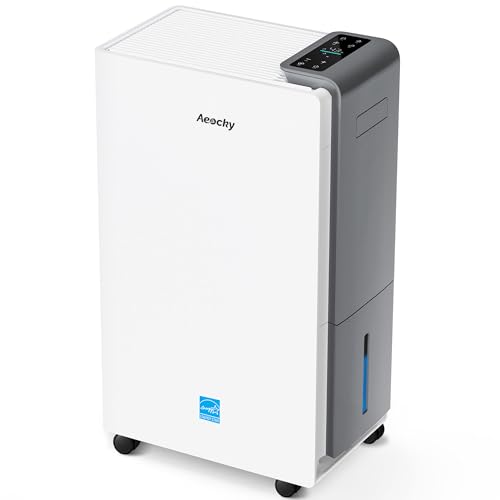
【ENERGY STAR 25 ≠ ENERGY STAR Most Efficient 2025】Don't fall for competitors' word games. With only 2.6% of ENERGY STAR models earning "Most Efficient 2025" title, these options are exceptionally rare on the market. RHEA-001 is one of the few to truly hold this top-tier certification. Many brands use misleading phrases like "Energy Star Efficient 25" or "Energy Star 25" to imply a standard they haven't met. Choosing them is a risk.With AEOCKY, you get verified performance and the peace of mind of authentic, top-tier efficiency.

Effective against moisture: this BonAura dehumidifier is an effective moisture killer and helps you optimally with mould stains, musty odours and condensation on windows.

2500 Sq. Ft High-Efficiency Dehumidifier – The KNKA basement dehumidifier features a quiet, high-performance compressor that removes up to 34 pints of moisture per day (at 95°F, 90% RH). Ideal for basements, offices, bathrooms, bedrooms, kitchens, stockrooms, living rooms, laundry rooms, garages, crawlspaces, or RVs. It helps maintain optimal humidity between 50%–70% for healthier, more comfortable living
Disposable Dehumidifier Basics
A disposable unit is generally the better fit when:
- The space is small or enclosed.
- The dampness is mild or seasonal.
- There is no practical electrical outlet.
- Silence is important.
- You only need to protect stored belongings or reduce a musty smell.
- You are prepared to inspect and replace the unit regularly.
Setup usually involves removing the specified outer seal while leaving any permeable safety membrane in place, replacing the lid if required, and positioning the unit on a flat surface.
Electric Dehumidifier Tradeoffs
An electric unit is generally the better fit when:
- A whole room remains humid.
- Relative humidity needs to be maintained near a selected target.
- Moisture is generated every day.
- Laundry is dried indoors.
- A basement, utility area, or living space needs continuous control.
- Passive absorbers fill too quickly to be economical.
Electric models cost more upfront, use electricity, create some noise, and require filter and water-tank maintenance. In return, they circulate room air, remove moisture at a rated daily capacity, and often include a humidistat. The US Department of Energy publishes information about consumer dehumidifier capacity and efficiency standards.
| Feature | Disposable absorber | Electric dehumidifier |
|---|---|---|
| Best area | Small, enclosed zones | Rooms and larger spaces |
| Air movement | Passive | Fan-driven |
| Humidity control | No target setting | Usually includes a humidistat |
| Noise | Silent | Produces fan and compressor noise |
| Ongoing cost | Replacement units or refills | Electricity and maintenance |
| Persistent damp | Usually inadequate | More suitable after the source is addressed |
Real-World Results From Disposable Dehumidifiers
Realistic results include visible liquid in the collection chamber, less musty odour in a cupboard, and reduced condensation in one small problem spot. The change may take several days because passive products do not force room air across the crystals.
Results are less impressive in an open bedroom, bathroom, basement, or kitchen where humid air is continually replaced. In those spaces, the unit may collect water while making little measurable difference to the overall relative humidity.
- Place the absorber in a stable position near the local moisture problem.
- Record the starting humidity and visible condensation.
- Check the crystals and reservoir without moving or tipping the unit.
- Compare humidity under similar conditions after several days.
- Escalate to source control or powered dehumidification if the room remains damp.
For best results, combine the absorber with ventilation, dry storage practices, adequate heating where possible, and prompt correction of leaks.
How to Make Disposable Dehumidifiers Work Better
Correct placement and realistic expectations improve performance.
- Choose the right product type. Use a hanging bag in a wardrobe and a stable tub on a shelf or windowsill.
- Read the label. Check the stated area, crystal weight, activation method, warnings, and replacement indicator.
- Place it near the local problem. Position it where dampness develops, but not where it can be knocked over.
- Leave room around it. Do not bury the unit behind tightly packed clothing or cover its air openings.
- Reduce the moisture source. Use extractor fans, cover cooking pans, vent dryers correctly, and avoid storing wet items.
- Monitor humidity. A hygrometer will show whether the whole room is improving.
- Replace it on time. A full or exhausted unit cannot continue collecting moisture safely.
| Action | Why it helps |
|---|---|
| Match the design to the space | Improves placement and reduces spill risk |
| Leave the air openings clear | Allows humid air to reach the crystals |
| Ventilate during cooking and bathing | Removes moisture before it spreads |
| Track RH with a hygrometer | Shows whether room humidity is actually falling |
| Replace at the marked limit | Prevents overflow and restores absorption capacity |
Safety, Spills, and Disposal
Warning: Keep moisture absorbers and collected liquid away from children and pets. Avoid eye and skin contact, do not ingest the crystals or brine, and seek appropriate medical advice if exposure occurs. Always follow the exact first-aid instructions on the product label.
Place tubs on a level, water-resistant surface where they cannot be kicked, shaken, or pulled down. Keep hanging bags clear of sharp objects and do not position them directly above clothing, electronics, leather, metal, or valuable furniture.
If a unit leaks:
- Keep children and pets away from the spill.
- Put on suitable gloves and follow the product’s safety label.
- Absorb the liquid without spreading it across a larger area.
- Clean the surface as instructed by the manufacturer.
- Check metal, leather, wood, fabric, and painted surfaces for damage.
- Wash your hands after handling the product.
Disposal instructions differ. Some disposable products are designed to be discarded intact, while some refillable systems instruct users to empty the liquid through a toilet before adding new crystals. Never assume the instructions are interchangeable. Follow the label for the exact brand and local waste rules. DampRid’s official safety and disposal guidance also advises keeping its products away from children and pets and avoiding ingestion or eye contact.
Cost and Environmental Trade-Offs
Disposable absorbers have a low entry cost, but the long-term cost depends on how frequently they need replacing. Compare products using:
- Crystal or tablet weight
- Stated coverage area
- Expected runtime under the listed test conditions
- Price per unit or refill
- Whether the outer container can be reused
- Packaging and disposal requirements
If several disposable tubs are being replaced every few weeks, a refillable system or appropriately sized electric dehumidifier may cost less over time. However, an electric model also has an upfront price, electricity use, noise, and maintenance requirements.
Single-use tubs and bags create repeated plastic and chemical waste. A refillable passive unit may reduce packaging, although it still requires replacement crystals or tablets. The most sustainable response is to correct avoidable moisture sources so that less dehumidification is needed.
Recommended Products
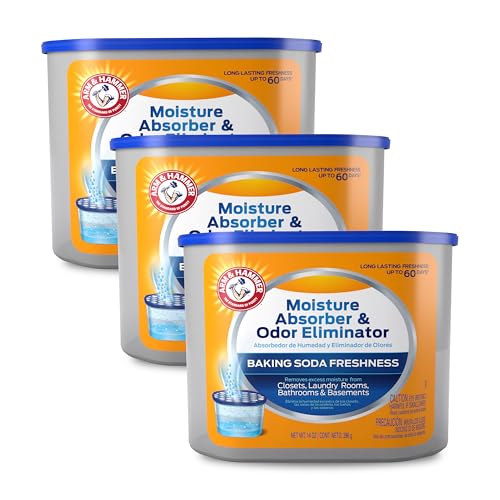
Arm & Hammer Refillable Moisture Absorber and Odor Eliminator attracts and traps excess moisture, eliminating musty odors.

【Value-for-money Reusable Moisture Absorbers Set】 Farewell to the disposable moisture eliminator, which includes 6pcs 27.05 oz /800 ml dehumidification barrels (empty) and a 52.9oz/1.5 kg supplement. This refillable moisture absorber reduces plastic waste. Only the dissolved crystals need to be replaced, instead of throwing away the whole dehumidifier bucket.This helps reduce plastic waste and is a smart choice for long-term humidity control.

【Value-for-money Reusable Moisture Absorbers Set】 Farewell to the disposable moisture eliminator, which includes 6pcs 37.20 oz /1100 ml dehumidification barrels (empty) and a 52.9oz/1.5 kg supplement. This refillable moisture absorber reduces plastic waste. Only the dissolved crystals need to be replaced, instead of throwing away the whole dehumidifier bucket. This helps reduce plastic waste and is a smart choice for long-term humidity control.
Who Should Use a Disposable Dehumidifier?
A disposable moisture absorber may suit you when:
- You have mild seasonal condensation in one small location.
- A wardrobe, cupboard, locker, or storage container smells musty.
- You are protecting a stored caravan, vehicle, boat cabin, shed, or similar enclosed area.
- You need silent, electricity-free moisture collection.
- You can position and inspect the unit safely.
- A hygrometer does not show persistent whole-room humidity.
It is less suitable when:
- The room has daily steam or indoor laundry moisture.
- Mould is spreading or returning.
- A leak or building defect is present.
- The absorber fills rapidly and repeatedly.
- The area is accessible to small children or pets and cannot be made secure.
- You need a controlled humidity target rather than limited passive absorption.
Frequently Asked Questions
Is a disposable dehumidifier effective?
Yes, but mainly in small, enclosed spaces with a limited moisture load. A disposable absorber may help a wardrobe, cupboard, stored vehicle, or local condensation spot. It is unlikely to control a large room or persistent humidity because it has no fan or humidistat.
Do disposable dehumidifiers lower room humidity?
They remove some moisture from the surrounding air, but the effect on whole-room relative humidity may be small. Measure the room with a hygrometer. If humidity remains above 60% or condensation continues across several surfaces, improve ventilation, investigate the source, or use a suitable electric dehumidifier.
Can a disposable dehumidifier stop mould?
It may reduce a small amount of local moisture, but it cannot remove existing mould or fix the condition causing it. Leaks, inadequate ventilation, cold surfaces, insulation defects, and persistent condensation must be addressed. Recurring or extensive mould may require professional assessment.
How long does a disposable dehumidifier take to work?
The crystals begin absorbing moisture after activation, but visible liquid may take several days to appear. Temperature, humidity, airflow, crystal weight, and container design affect the speed. Hardening or clumping can be a normal early stage.
Are disposable dehumidifiers safe around pets and children?
They should be kept out of reach. The crystals and collected brine must not be swallowed, and contact with skin or eyes should be avoided. Place the unit where it cannot be pulled down or tipped, and follow the product label’s first-aid instructions if exposure occurs.
Would a dehumidifier help with COPD?
A dehumidifier is not a treatment for COPD. Controlling damp and mould may reduce some indoor irritants, while very humid weather can worsen breathing for some people. Humidity needs vary, so anyone with COPD should follow their clinical care plan and ask a healthcare professional about indoor conditions that affect their symptoms.
Will a dehumidifier help with gnats?
It is not the primary solution. Fungus gnats usually breed in moist potting soil, so correct watering, drainage, soil-surface drying, and appropriate traps are more effective. The University of Minnesota Extension provides detailed fungus gnat management guidance.
Are dehumidifiers good for dry scalp?
No. A dehumidifier is not a dry-scalp treatment, and making indoor air too dry may worsen skin and scalp dryness. The American Academy of Dermatology notes that low humidity and cold weather can contribute to a dry scalp. Persistent itching, scaling, redness, or hair loss should be assessed by a qualified healthcare professional.
Conclusion
Disposable dehumidifiers work, but their value depends on matching the product to the problem. They are convenient for mild, localised moisture in wardrobes, cupboards, storage spaces, and isolated condensation areas. Their crystals genuinely collect water vapour, although capacity and runtime vary by product and conditions.
Do not rely on a passive absorber for recurring mould, standing water, leaks, wet building materials, or consistently high whole-room humidity. Measure the space with a hygrometer, improve ventilation, correct the moisture source, and switch to an appropriately sized electric dehumidifier when passive collection cannot keep up.
Sources
- US Environmental Protection Agency: Improving Your Indoor Environment — recommended indoor humidity range and moisture-control guidance.
- UK Government: Understanding and Addressing the Health Risks of Damp and Mould — causes, health concerns, ventilation, and corrective action.
- DampRid: How Moisture-Absorbing Crystals Work — crystal hardening, dissolution, brine collection, and replacement process.
- US Department of Energy: Consumer Dehumidifiers — electric dehumidifier capacity and efficiency information.
- University of Minnesota Extension: Managing Insects on Indoor Plants — fungus gnat causes and source-control methods.
- American Academy of Dermatology: Dry Scalp Conditions — low humidity and other causes of scalp dryness.