By Editorial Team · Reviewed for accuracy · Last updated August 2026
If you need to control a cool, damp basement in 2026, choose a dehumidifier with enough pint capacity, reliable drainage, and low-temperature protection. Small desktop-style units can look appealing, but most cool basements need a stronger compressor model that can keep up with musty air, concrete moisture, laundry humidity, and seasonal dampness.
This guide focuses on basement-ready options from Yaufey, AEOCKY, KNKA, DECIUU, and Midea. You’ll find picks for large basements, low-temperature performance, quieter operation, heavy moisture, medium spaces, and smart controls, plus the key buying checks that matter before you connect a drain hose and run the unit for long periods.
Affiliate disclosure: This article includes Amazon affiliate links. If you buy through these links, we may earn a commission at no extra cost to you. Product specs can change, so always confirm capacity, drainage setup, warranty, ENERGY STAR status, and low-temperature rating on the Amazon product page before buying.
Quick Verdict
Best overall for most large cool basements: Yaufey 5000 Sq. Ft. Energy Star Dehumidifier, because it combines high listed capacity, hose drainage, humidity control, and automatic defrost.
Best energy-focused cool-basement pick: AEOCKY 4500 Sq.Ft Smart Compressor Dehumidifier, because its listing emphasizes efficient compressor operation, low-temperature performance, humidity control, and quieter running.
Best quiet mid-size option: KNKA 2500 Sq.Ft Dehumidifier with Drain Hose, because it combines a 34-pint listed capacity, auto-defrost, multiple modes, and an included drain hose.
Best heavy-moisture option: DECIUU 100 Pint Dehumidifier, because it offers the highest listed maximum capacity in this roundup plus automatic defrost and flexible drainage.
Best smart medium-basement pick: Midea 22 Pint Energy Star Dehumidifier, because it adds auto-defrost, Wi-Fi app control, voice control, and continuous-drain support in a smaller format.
Top Picks for Cool Basements
|
Category |
Product |
Best Fit |
Check Price |
|---|---|---|---|
|
Best Overall |
Yaufey 5000 Sq. Ft. Energy Star Dehumidifier |
Large damp basements needing strong daily moisture removal and hose drainage |
|
|
Best Cool-Basement Efficiency |
AEOCKY 4500 Sq.Ft Smart Compressor Dehumidifier |
Cool basements where low-temperature performance, efficiency, and automatic humidity control matter |
|
|
Best Quiet Mid-Size Option |
KNKA 2500 Sq.Ft Dehumidifier with Drain Hose |
Medium cool basements needing auto-defrost, an included drain hose, and quieter operation |
|
|
Best for Heavy Moisture |
DECIUU 100 Pint Dehumidifier |
Very damp basements that need high listed capacity, auto-defrost, and flexible drainage |
|
|
Best Smart Medium-Basement Pick |
Midea 22 Pint Energy Star Dehumidifier with Reusable Filter |
Medium basements that need auto-defrost, smart controls, and steady humidity management |
How We Chose These Basement Dehumidifiers
We focused on compressor dehumidifiers that fit real basement use, not tiny moisture absorbers or desktop mini units. The main checks were listed pint capacity, basement suitability, auto-defrost or low-temperature guidance, continuous drainage support, humidity control, portability, filter access, and clear buyer fit.
For this August 2026 update, we also checked the remaining Amazon ASINs for product match. Models whose links no longer matched the article description or were currently unavailable were removed instead of being kept with warning labels.
Compare moisture-removal ratings carefully. Current standardized portable-dehumidifier testing is designed to better reflect basement conditions, while some listings also advertise much larger “maximum” pint figures measured in hotter, more humid air. Use ratings measured under the same test conditions when comparing models.
How to Choose by Basement Condition
- Slightly to moderately damp space under 2,000 sq. ft.: A standardized 20 to 30 pint-per-day class is often a useful starting range.
- Larger space over 2,000 sq. ft.: Start around 30 pints per day or higher, then size up for heavier moisture loads.
- Very damp basement: Look around the 40-pint-per-day class or higher under comparable test conditions, and plan continuous drainage if possible.
- Cool basement below normal room temperature: Check for auto-defrost, anti-frost protection, and the listed operating temperature range before buying.
- Basement with standing water: Fix leaks, drainage, grading, or plumbing first. A dehumidifier helps with air moisture, but it cannot solve water intrusion.
Yaufey 5000 Sq. Ft. Energy Star Dehumidifier
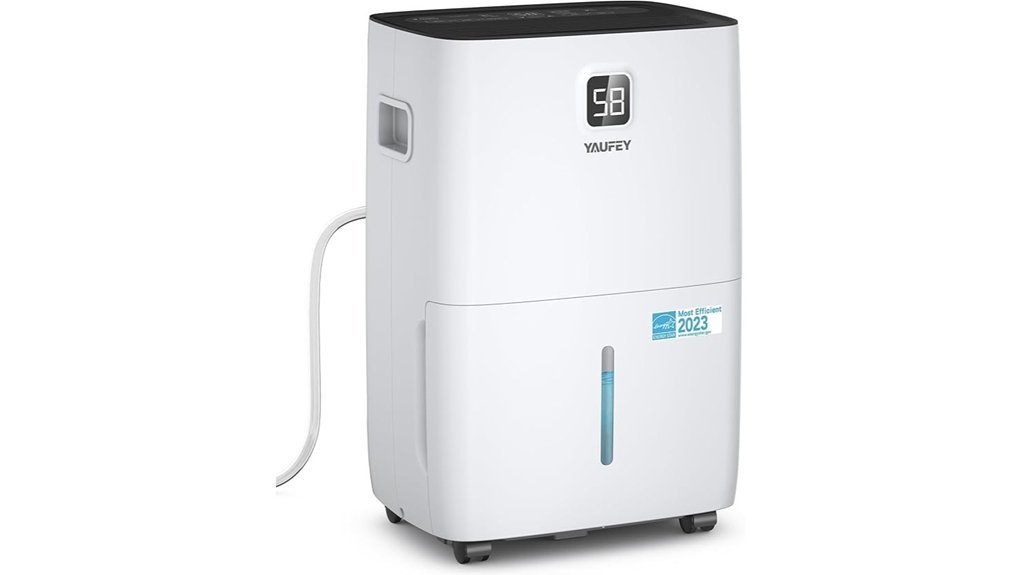
Best Overall: Yaufey’s 5000 sq. ft. Energy Star dehumidifier is a strong match if your basement feels damp, smells musty, or needs a compressor unit that can run for long stretches. The current listing advertises up to 80 pints per day at 95°F/90% RH and a 30% to 80% humidity setting range, so treat the 80-pint figure as a hot, high-humidity maximum rather than a directly comparable standard basement rating.
You can use the tank for occasional moisture control or connect the hose for continuous drainage to a floor drain or sump area. Automatic defrost is a useful feature for cooler rooms, while wheels, preset humidity modes, auto shut-off, washable filtration, and simple controls make daily use easier. It is best for larger basements, garages, and utility spaces where a compact dehumidifier would struggle.
Best For: Homeowners, renters, or small business users who need an energy-conscious dehumidifier for a large damp basement, garage, office, or storage area.
Why You’ll Like It: It gives you a strong balance of capacity, drainage flexibility, and simple controls without requiring app setup.
Who Should Avoid It: Skip it if you only need to dry a small finished room or if you cannot place the drain hose safely.
Pros:
- Listed for areas up to 5,000 sq. ft. with up to 80 pints per day under 95°F/90% RH conditions.
- Automatic defrost and flexible tank or hose drainage suit basement use.
- Wheels, preset humidity modes, auto shut-off, and washable filtration improve everyday convenience.
Cons:
- The 80-pint figure is a maximum measured in very hot, humid conditions, so compare standard ratings carefully.
- May be more unit than you need for a small finished room.
- Continuous drainage still requires correct hose placement near a safe drain.
AEOCKY 4500 Sq.Ft Smart Compressor Dehumidifier
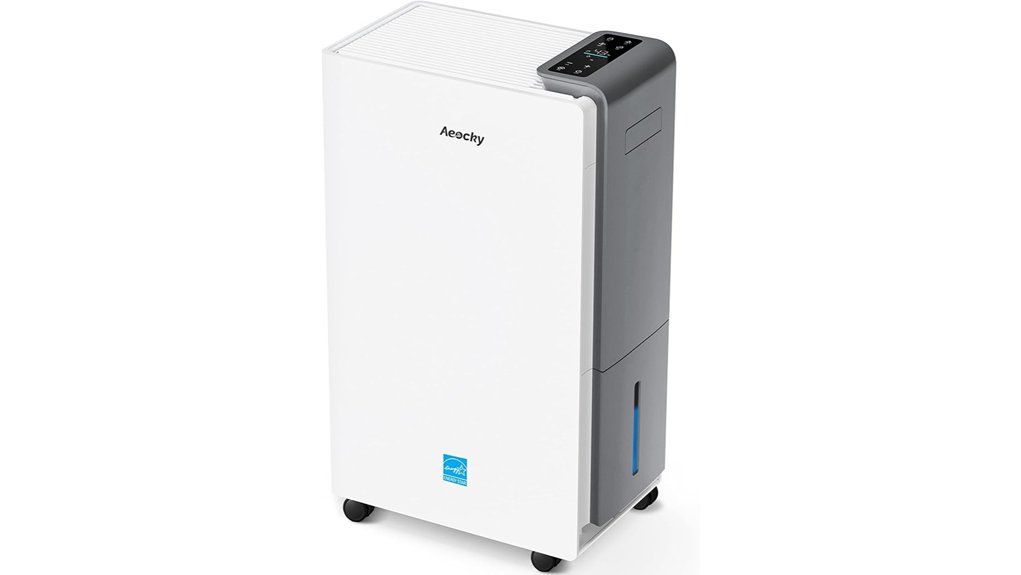
Best Cool-Basement Efficiency Pick: AEOCKY’s RHEA-001 is worth a close look if you want strong moisture control with extra attention to cooler-room performance. The current Amazon listing identifies the model as RHEA-001, lists up to 4,500 sq. ft. coverage and an 80-pint maximum, and specifically emphasizes low-temperature performance, humidity control, power-off memory, and quiet operation.
The 80-pint figure is a maximum claim, so compare it with other products only when the test conditions match. For a cool basement, the more useful buying checks are the verified model number, low-temperature guidance, humidity controls, drain setup, and the current standardized pint rating shown for the exact unit.
Best For: Homeowners or renters who want an efficient, high-capacity dehumidifier for a damp basement, bedroom, utility room, or garage up to the listed coverage range.
Why You’ll Like It: It is built around set-and-monitor humidity control, so you can focus on your target humidity instead of constantly changing fan settings.
Who Should Avoid It: Skip it if you want the lowest upfront cost or if you cannot confirm the exact model and certification details before ordering.
Pros:
- Listing emphasizes low-temperature performance for cooler-room use.
- Smart humidity control and continuous-operation modes support set-and-monitor use.
- Quiet-focused operation, included drain hose, and power-off memory add convenience.
Cons:
- The 80-pint and square-footage figures are marketing claims that should not be compared with other units unless test conditions match.
- Certification wording and coverage figures can change, so confirm the exact RHEA-001 listing before ordering.
- Real moisture removal still depends on basement temperature, humidity, airflow, and drainage setup.
KNKA 2500 Sq.Ft Dehumidifier with Drain Hose
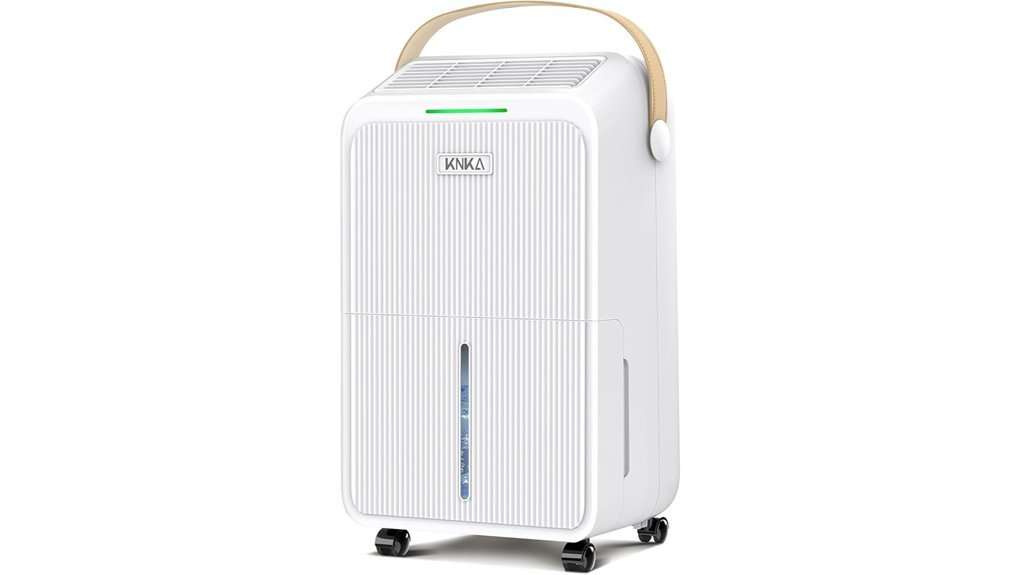
Best Quiet Mid-Size Option: The KNKA 2500 sq. ft. dehumidifier is a practical choice for a medium cool basement where you want steady moisture control without jumping to the biggest machine on the list. The current listing shows up to 34 pints per day, a 3L tank, an included drain hose, DEHU/DRY/CONT modes, automatic defrost, and a real-time humidity display.
Use DEHU mode when you want to set a target humidity, DRY mode for laundry areas, or CONT mode when the basement stays damp and you have a drain nearby. Automatic defrost is especially relevant in cooler rooms, while the child lock, timer, washable filter, 360° wheels, and quiet-focused operation make it easier to live with in a finished basement or utility space.
Best For: Homeowners or renters with medium basements, garages, laundry rooms, or crawlspaces who want flexible humidity control and both manual and continuous drainage options.
Why You’ll Like It: It gives you a drain hose, multiple modes, and easy movement in a smaller package than the largest high-capacity picks.
Who Should Avoid It: Skip it for very wet or oversized basements where a higher standardized pint capacity would be a better match.
Pros:
- Listed for up to 2,500 sq. ft. with up to 34 pints per day.
- Automatic defrost plus DEHU, DRY, and CONT modes suit varied basement conditions.
- Included drain hose, quiet-focused operation, child lock, timer, washable filter, and wheels add convenience.
Cons:
- The included drain hose may be short for some basement layouts.
- The 3L tank may need frequent emptying during wet weather if you do not use continuous drainage.
- Not the highest-capacity choice for very wet or oversized basements.
DECIUU 100 Pint Dehumidifier
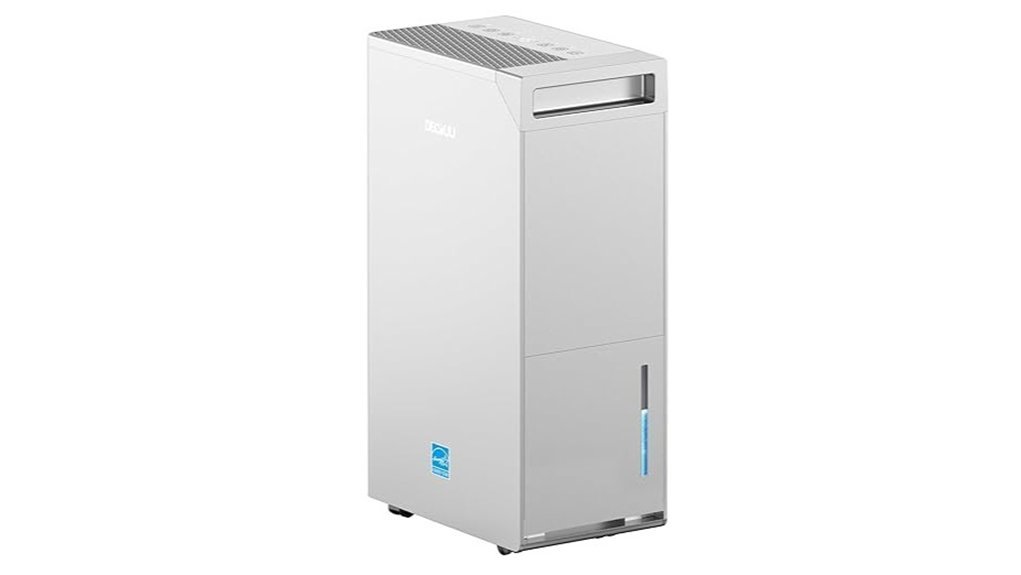
Best for Heavy Moisture: DECIUU’s 100-pint dehumidifier is the right kind of option when your basement is more than just slightly damp. The current listing shows up to 5,000 square feet, a 100-pint maximum, adjustable humidity control, automatic defrost, automatic restart, continuous draining, and three fan speeds.
The humidity control range is listed at 35% to 80%, while the 1.45-gallon tank and continuous-drain option give you two practical ways to manage collected water. A timer, child lock, wheels, and washable filter make regular basement use easier. Because the 100-pint number is a maximum claim, compare the exact rating conditions before using it to judge performance against other models.
Best For: Homeowners with large, damp basements up to the listed coverage range who want a powerful dehumidifier with flexible drainage and straightforward controls.
Why You’ll Like It: It is the strongest listed-capacity pick here, so it makes sense for basements that overwhelm smaller units.
Who Should Avoid It: Skip it if your basement is only mildly damp or if you want the smallest, lightest unit possible.
Pros:
- Highest listed maximum capacity in this roundup at up to 100 pints per day.
- Automatic defrost, automatic restart, humidity control, and continuous drainage suit basement use.
- 1.45-gallon tank, three fan speeds, timer, child lock, wheels, and washable filter add flexibility.
Cons:
- The 100-pint figure is a maximum claim, so do not compare it directly with standardized ratings from other models.
- May be oversized for smaller basements or mild seasonal dampness.
- The 1.45-gallon tank can still fill quickly during very humid weather if you skip continuous drainage.
Midea 22 Pint Energy Star Dehumidifier with Reusable Filter
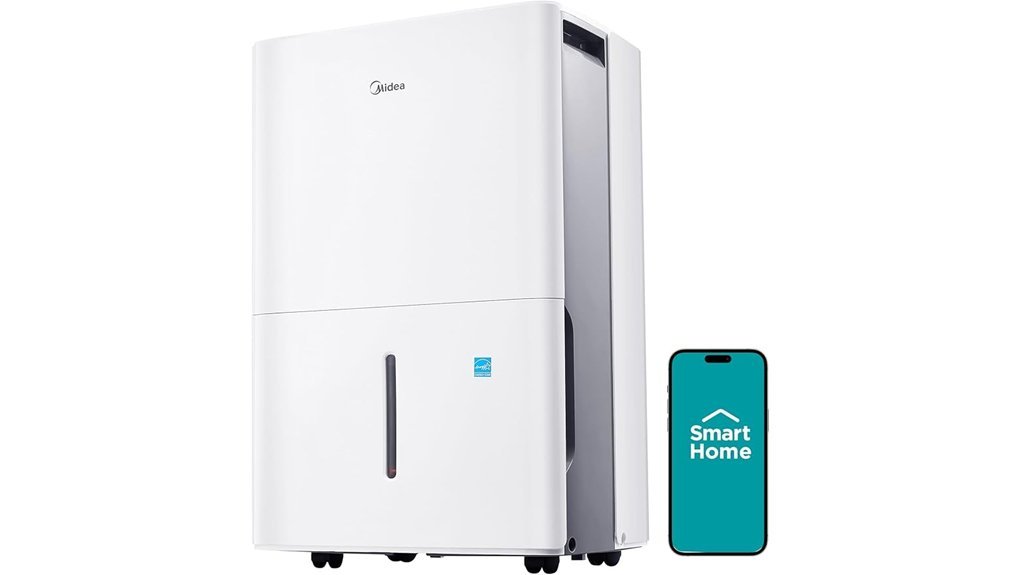
Best Smart Medium-Basement Pick: The Midea 22 Pint dehumidifier is a sensible choice when your basement is not huge but still needs real moisture control. The current listing shows a 22-pint rating, up to 1,500 square feet of listed coverage, and a 35% to 85% adjustable humidity range.
Automatic defrost makes it better suited to cooler basement conditions than a basic unit without frost protection. Wi-Fi support, SmartHome app control, and Alexa or Google Assistant compatibility make remote adjustment easier, while the 0.8-gallon tank or a separately purchased standard hose can handle drainage.
Best For: Homeowners or renters needing a quiet, energy-conscious dehumidifier for medium basements, bedrooms, offices, or storage areas with smart app and voice control.
Why You’ll Like It: It is easier to place in medium spaces and still gives you smart controls, reusable filtration, and hose drainage support.
Who Should Avoid It: Skip it for oversized, very damp, or laundry-heavy basements that need higher daily moisture removal.
Pros:
- 22-pint rating and 1,500 sq. ft. listed coverage suit medium basement spaces.
- Automatic defrost plus Wi-Fi, SmartHome app, Alexa, and Google Assistant support improve cool-room usability and control.
- Reusable filter, wheels, tank drainage, and hose-drain support make upkeep easier.
Cons:
- Continuous drainage requires a separate hose.
- At more than 30 lbs, it may feel heavy despite the wheels.
- The 0.8-gallon tank may require frequent emptying during very humid weather.
Factors to Consider When Choosing a Dehumidifier for Cool Basement
When you choose a dehumidifier for a cool basement, do not shop by square footage alone. Check the pint capacity, operating temperature range, drainage setup, noise level, energy efficiency, and how easy it is to clean the filter. Those details help you keep humidity under control without wasting power or emptying a tank every few hours.
Humidity Removal Capacity
Humidity removal capacity tells you how much moisture a dehumidifier can pull from the air in 24 hours under a specified test condition. For slightly to moderately damp spaces under 2,000 sq. ft., a standardized 20 to 30 pint-per-day class can be a useful starting point. Larger or very damp basements generally need more capacity, especially with laundry humidity, seepage, or persistent musty odors.
Square-footage claims can be optimistic, so compare standardized pint ratings measured under the same conditions before looking at headline coverage. If you choose too small a unit, it may run constantly and still fail to lower humidity. A properly sized unit with a humidistat can reach the target and cycle as needed instead of relying on nonstop operation.
Low-Temperature Performance
Cool basements need special attention because dehumidifiers can lose efficiency when the air gets cold. If your basement often drops below about 65°F, look for a model that is rated for lower-temperature operation or includes auto-defrost or anti-frost protection. This helps prevent frost on the coils and reduces stop-start cycling that removes little moisture.
Do not rely only on the highest advertised pint number. Check the product page for operating temperature, defrost details, and whether the unit is designed for basement use. A strong compressor model with proper frost protection is usually a better fit than a tiny tank model in a cool, damp space.
Drainage Options
Drainage matters because a basement dehumidifier may collect water every day during humid weather. A bucket is fine for occasional use, but continuous drainage is much easier if you have a floor drain, sump area, or safe drain path nearby. Make sure the hose slopes correctly and does not cross a walkway where someone could trip.
Also check whether the hose is included. Some models have a drain outlet but require you to buy the hose separately. If you cannot use continuous drainage, choose a model with a larger tank, a clear full-tank alert, and auto shut-off.
Gravity Drainage vs Pump Drainage
Most portable basement dehumidifiers use gravity drainage. That means the hose must run downward from the unit to the drain. If the drain sits higher than the outlet or across the room, you may need a model with a built-in pump or a separate condensate pump.
Before buying, look at your basement floor drain, sump pit, utility sink, or safe drain point. A powerful dehumidifier will still shut off if the bucket fills and the drain path is not set up correctly.
Noise Level
Noise level matters if your basement is a family room, office, gym, or laundry area. A lower decibel rating can make the unit easier to live with, but compare the mode used for that rating. Sleep mode may be quiet, while turbo or high-power mode may be much louder.
If you are noise-sensitive, choose a model with multiple fan speeds and place it away from seating areas when possible. Also keep the filter clean, because a clogged filter can make the fan work harder and sound louder.
Energy Efficiency
A basement dehumidifier can run for many hours, so energy efficiency matters. Look for current ENERGY STAR information, check the exact model number, and compare the integrated energy factor if it is shown. Higher efficiency can reduce operating cost over time, especially in basements that stay damp for much of the year.
Smart humidity controls also help. A built-in humidistat lets the unit cycle on and off instead of running nonstop. Keep doors and windows closed while the unit runs, clean the filter, and keep airflow clear around the dehumidifier so it does not waste energy.
Basement Size Coverage
Match the unit to your real basement, not just the largest number in the listing. ENERGY STAR sizing guidance starts around 20 to 30 pints per day for slightly to moderately damp rooms under 2,000 sq. ft., around 30 pints or more for larger rooms, and around 40 pints or more for very damp large spaces. If your basement has standing water or active leaks, fix the moisture source first because a dehumidifier cannot solve water intrusion by itself.
For best results, use a separate hygrometer near the problem area. Keep indoor relative humidity below 60% and, when practical, around 30% to 50%. Adjust the setting by season and watch for condensation on cold walls, pipes, or windows.
Before You Buy Checklist
- Measure the space: Know the basement size and whether it is slightly damp, very damp, or wet.
- Check the pint rating: Use capacity, not just square footage, to compare units.
- Confirm low-temp operation: Look for auto-defrost or a listed basement-friendly operating range.
- Plan the drain path: Decide whether you will use a tank, hose, floor drain, sump area, or pump-assisted drainage.
- Check the hose: Some models include one, while others require a separate purchase.
- Confirm exact specs: Verify current ENERGY STAR status, warranty, dimensions, model number, and included accessories on Amazon before ordering.
Basement safety note: Do not run a drain hose across a walkway, extension cord, or stair path. Keep the unit on a stable, level surface, leave space around the air intake and exhaust, and clean the filter as directed by the manual.
Frequently Asked Questions
How Often Should I Empty a Dehumidifier in a Cool Basement?
You may need to empty the tank daily in a very damp basement, every few days in a moderately damp one, or much less often if the unit collects little water in cool weather. If you want steady control with less work, use continuous drainage whenever your basement layout allows it.
Can a Dehumidifier Prevent Mold in Damp Basement Corners?
A dehumidifier can help reduce mold risk by lowering humidity, but it cannot fix every cause of mold. You still need airflow, dry surfaces, clean materials, and repaired leaks. If water keeps entering through a wall, floor, pipe, or window, fix that source first.
What Humidity Level Is Best for a Cool Basement?
Keep indoor relative humidity below 60% and, when practical, aim for about 30% to 50%. Use a hygrometer so you can check the actual basement humidity instead of guessing, and lower the setting only as needed if you still see condensation on cold surfaces.
Do Dehumidifiers Work Efficiently in Low-Temperature Basements?
Yes, but only if the unit is suited to cooler conditions. Cold air holds less moisture, and frost can form on the coils of some compressor units. Choose a model with low-temperature support, auto-defrost, or an anti-frost sensor if your basement often stays cool.
Should I Use a Drain Hose or Manual Tank Emptying?
Use a drain hose if you have a safe drain nearby and the hose can slope correctly. It keeps humidity control steady and prevents the tank from stopping the unit when full. Manual tank emptying is fine when you need portability or do not have a drain close to the dehumidifier.
Is a 22 Pint Dehumidifier Enough for a Basement?
A 22 pint dehumidifier can be enough for a medium basement with mild to moderate dampness. It is usually not the best choice for a large unfinished basement, a laundry-heavy space, or a room with persistent musty odors. For those conditions, choose a higher standardized pint capacity based on the room size and moisture level rather than relying on the largest marketing number.
Why Do Pint Ratings Look Different Between Products?
Pint ratings can use different test conditions. Current standardized portable-dehumidifier testing uses cooler conditions intended to better reflect basement use, while some brands also advertise much larger “maximum” figures measured in very hot, humid air such as 95°F/90% RH. Compare ratings measured under the same conditions, not just the largest number in the title.
Conclusion
Picking the right dehumidifier for your cool basement starts with comparable pint capacity, temperature performance, and drainage. For most large damp basements, the Yaufey is the best overall starting point because it combines high listed capacity with automatic defrost and hose drainage. If low-temperature performance and energy-focused operation matter most, look closely at the AEOCKY RHEA-001.
For very damp basements, the DECIUU gives you the highest listed maximum capacity in this roundup. For medium spaces, the KNKA adds an included drain hose and auto-defrost, while the Midea is the stronger smart-control choice with Wi-Fi, voice support, and auto-defrost. Whichever model you choose, confirm the exact current rating conditions, operating-temperature guidance, warranty, and drain setup on Amazon before ordering. Keep humidity below 60% and ideally around 30% to 50%, fix active water intrusion first, and use continuous drainage when your basement layout allows it.