
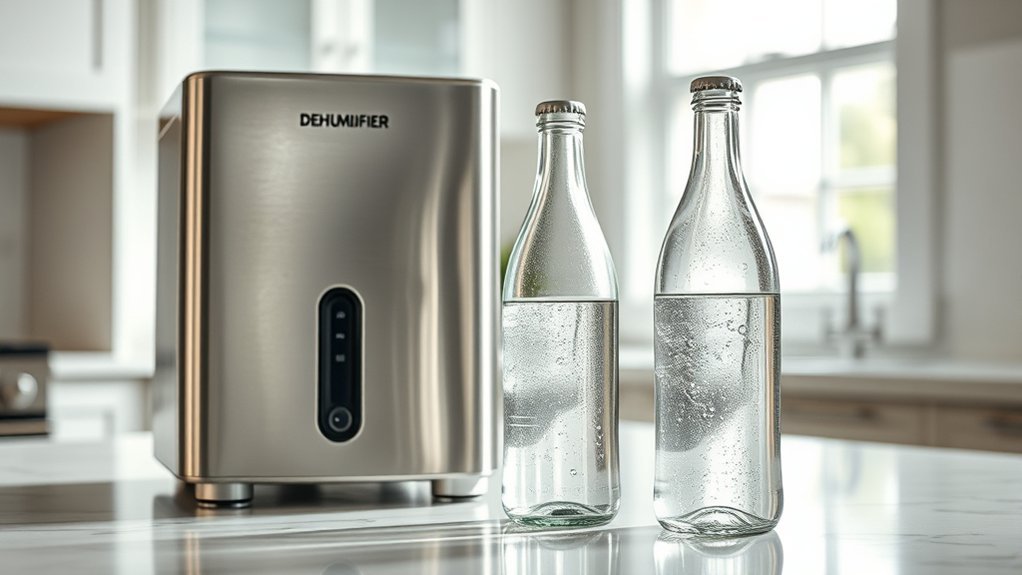
Is dehumidifier water the same as distilled water? No. A dehumidifier collects condensate from room air, while distilled water is made by boiling water and condensing the steam under controlled conditions. Here is how dehumidifier water vs distilled water compares in practice.
Dehumidifier water may look clear and may be low in minerals, but it can pick up dust, mold, bacteria and residue inside the machine, so it is not safe to drink. Our guide on whether dehumidifier water is safe to drink covers the health side.
Dehumidifier Water vs Distilled Water: Side by Side
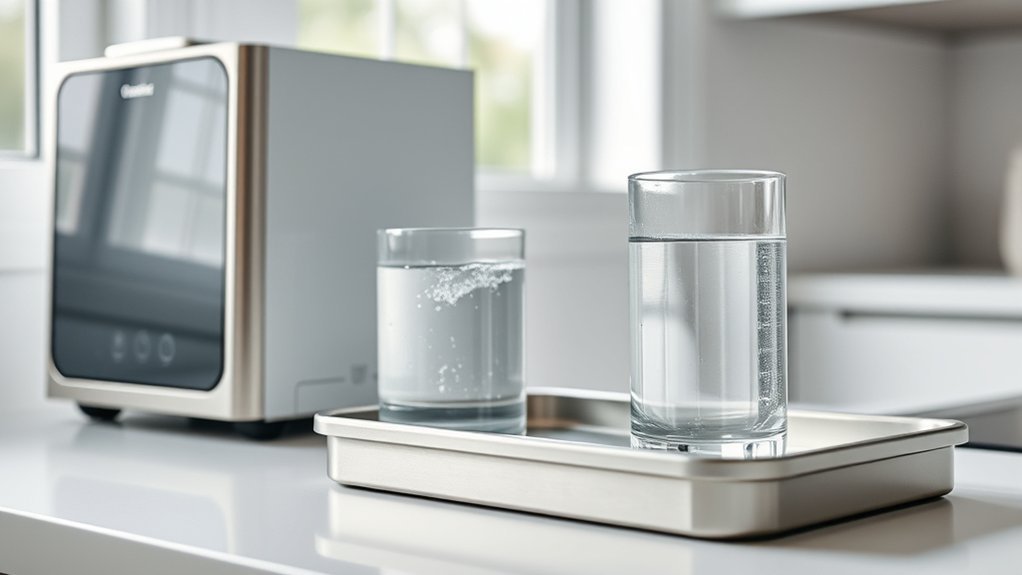
| Feature | Dehumidifier water | Distilled water |
|---|---|---|
| How it forms | Moist indoor air condenses on cold coils | Water is boiled, then the steam is condensed |
| Purification | None, and it varies with the machine | Controlled process |
| Possible contaminants | Dust, mold spores, bacteria, tank residue, cleaning residue, possibly metal traces | Most dissolved minerals removed; storage and handling still matter |
| Safe to drink? | No | Only if sold or produced and stored as drinking water |
| Best use | Limited non-food, non-body-contact reuse | Uses where the device maker specifies distilled water |
What Is Dehumidifier Water?
It is the condensate that forms when a dehumidifier pulls moist air across cold internal coils. Water vapor cools into liquid and drains into the bucket, hose or pump. That is condensation, like droplets on a cold glass, not distillation.
On the way, the water can touch dust, pollen, mold spores, metal surfaces, plastic parts, biofilm and standing water in the tank. A clean unit lowers the risk but does not turn the water into distilled water. For the full process, see where dehumidifier water comes from.
Warning: Do not drink dehumidifier water or use it for cooking, ice, pet bowls, baby formula, medical equipment, humidifiers, or anything that touches your body or food.
Why It Is Not Distilled
Distillation heats water to steam and cools the steam back into liquid, which leaves most dissolved minerals behind. EPA describes distillation as the most effective demineralization method for humidifier water.
Dehumidifier water skips that step. It comes from air moving through a household machine, so even if it has few minerals, it can be contaminated after touching the coils, drain path, hose or bucket.
Manufacturers say the same. A Honeywell manual states that the water collected in the tank must be discarded, should never be used for drinking, and “is not clean.” UMass Amherst’s environmental health office also notes that standing water in a dehumidifier catch basin can grow mold and bacteria, and that dirty filters can harbor microorganisms.
A TDS meter reads dissolved minerals only. It cannot show whether the water is free of bacteria, mold or cleaning chemicals.
When Can You Reuse Dehumidifier Water?
Think of it as reclaimed utility water, suitable only for low-risk, non-food, non-body-contact uses.
| Possible use | OK? | Why |
|---|---|---|
| Flushing toilets | Usually yes | No food, skin or inhalation contact |
| Watering non-edible ornamental plants | Sometimes | Only from a clean tank; avoid sick plants, seedlings and edible crops |
| Rinsing outdoor tools | Usually yes | Low-risk utility use; dry the tools afterward |
| Mopping garage or basement floors | Sometimes | Avoid kitchens, food areas, nurseries and porous surfaces |
| Drinking, cooking, ice, pets, bathing | No | Not drinking-quality or sanitary water |
| Humidifiers, CPAP, aquariums, batteries, lab work | No | These need clean, predictable water and may spread contaminants |
For more ideas, see what to do with water from a dehumidifier.
Do You Put Water in a Dehumidifier?
For a standard household dehumidifier, no. You do not add distilled, tap or any other water. It removes moisture from the air and collects it in a bucket or drain line. People often confuse it with a humidifier, which adds moisture and needs water added to its tank. More on that in do you put water in a dehumidifier.
If tap water accidentally gets into the bucket, unplug the unit, empty and dry the bucket, and reinstall it correctly. Never pour water into the air intake, outlet, drain port, control panel or internal parts.
Where Distilled Water Does Belong
Distilled water helps in appliances that use water, especially humidifiers. EPA recommends low-mineral water such as distilled in home humidifiers so minerals are not released into indoor air. Ultrasonic and impeller humidifiers spread tap-water minerals especially well, which can leave white dust on surfaces.
For portable humidifiers, EPA advises emptying, drying and refilling the tank with fresh water each day, and cleaning the unit every three days. Rinse any cleaner thoroughly. Distilled water does not remove the need for cleaning.
For CPAP humidifier chambers, aquariums and batteries, use the water type your device or product manual specifies. Do not substitute dehumidifier water.
Can You Use Dehumidifier Water for Plants?
Sometimes, for non-edible ornamental plants, with caution. More in our guide to using dehumidifier water on plants.
- Use water only from a clean, regularly maintained tank.
- Use it soon after collection; do not store it for days.
- Do not use it on vegetables, herbs, fruiting plants, sprouts or microgreens.
- Do not use it on plants with fungal disease, root rot or musty soil.
- Stop if the soil smells bad, algae appears, or the plant declines.
How to Keep Dehumidifier Water Cleaner for Limited Reuse
- Empty the bucket often. Do not let water sit.
- Wash and dry the tank regularly, following the manual.
- Clean or replace the filter. A dirty filter can hold dust and microorganisms.
- Keep the drain hose clean. Slime or biofilm can contaminate the water.
- Rinse the tank well after using any cleaner.
- Store the unit dry at the end of the season.
Even with good maintenance, the water is still not drinkable. Cleaning reduces risk but does not make condensate into distilled water. When in doubt, pour it down the drain.
Best Practice for Long-Term Dehumidifier Use
Do not add water to the unit. Let it collect moisture, then empty or drain the water safely. For the room, EPA recommends indoor relative humidity below 60% and ideally between 30% and 50% where possible. Keep doors and windows closed while it runs, leave clearance for airflow, clean the filter, and fix leaks instead of relying only on the appliance.
Related Guides
- Is dehumidifier water safe to drink?
- Can you make dehumidifier water safe to drink?
- What to do with water from a dehumidifier
- Can you use dehumidifier water to water plants?
- Where does dehumidifier water come from?
Frequently Asked Questions
Can I use dehumidifier water instead of distilled water?
No. Dehumidifier water is not a safe substitute in humidifiers, CPAP machines, steam appliances, aquariums, batteries, lab work, medical devices or anything food-related. It may be low in minerals, but it is not purified or sterile.
Is dehumidifier water safe to drink if I boil it?
No. Boiling can kill some germs, but it does not reliably remove metals, cleaning residues or other dissolved contaminants picked up from the coils, hose or tank. Dehumidifier manuals say not to drink the collected water.
Can I use dehumidifier water in a humidifier?
No. A humidifier can release droplets and dissolved material into the air you breathe, so do not fill it with dehumidifier condensate. Use distilled or low-mineral water if the manual recommends it, and clean the tank regularly.
Can I use dehumidifier water in a CPAP machine?
No. A CPAP humidifier sends moistened air into your breathing circuit, so it needs clean, predictable water. Use the water type your CPAP manufacturer recommends, which is commonly distilled water, and check your manual.
Can I water edible plants with dehumidifier water?
Do not use it on vegetables, herbs, sprouts, microgreens or fruiting plants. If you reuse dehumidifier water, limit it to non-edible ornamental plants and use fresh water from a clean, well-maintained tank.
Sources
- Honeywell dehumidifier manual
- U.S. EPA: Use and Care of Home Humidifiers
- UMass Amherst EHS: Humidifiers and Dehumidifiers
- U.S. EPA: Mold Course, Chapter 2


[…] Dehumidifier Water: 7 Safe Uses, Risks & Myths Explained […]
[…] For a full breakdown of how appliance condensate differs from laboratory or bottled water, see is dehumidifier water the same as distilled water. […]
[…] Dehumidifier Water: 7 Safe Uses, Risks & Myths Explained […]