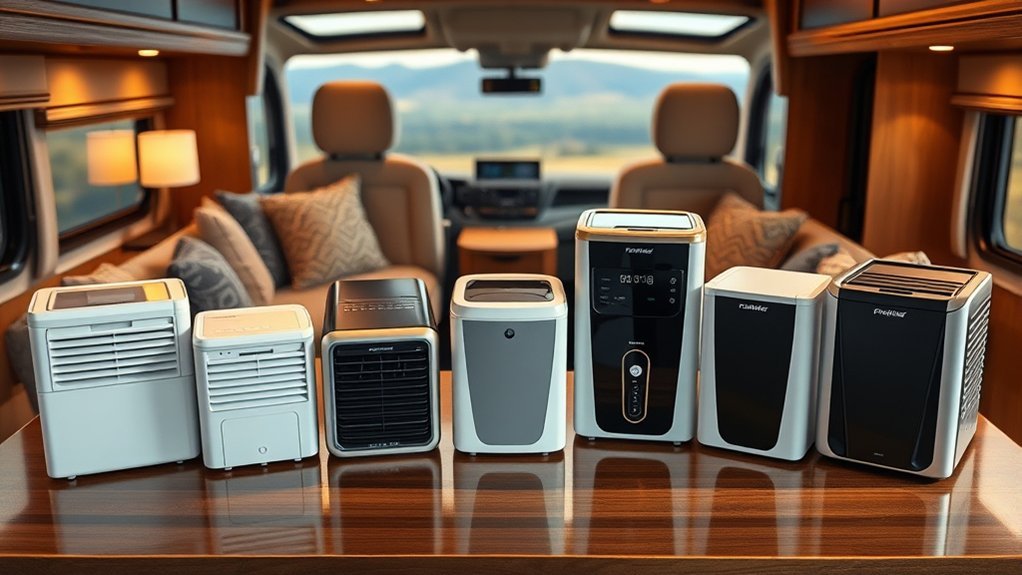
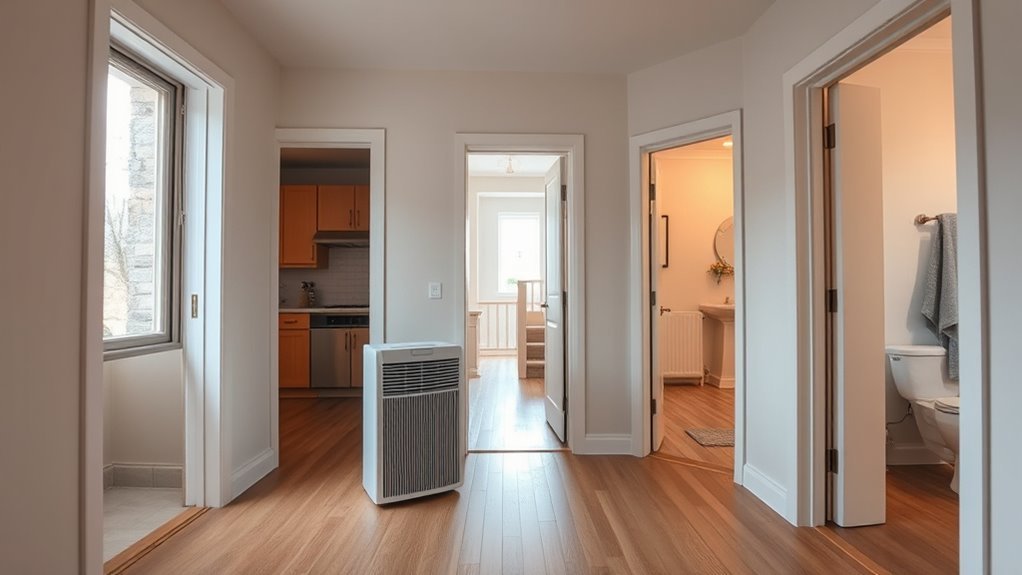
If you are comparing the best small dehumidifiers for Australian homes in 2026, focus on daily extraction, room temperature, noise, tank size and electrical compatibility rather than the largest advertised coverage figure. The three compact models retained below are the large-tank Natrogix, the space-saving AlohaAir and the straightforward ToLife TZ-C2.
All three are thermoelectric or semiconductor dehumidifiers. They can be useful in enclosed bedrooms, bathrooms, wardrobes, caravans and other moisture-prone zones, but they are not direct substitutes for high-capacity compressor dehumidifiers in severely damp, cold or open-plan areas.
Key Takeaways
- A large tank reduces emptying frequency but does not prove faster moisture removal.
- Compact thermoelectric models work best in warm, enclosed spaces with doors and windows closed.
- Seller-listed 1,000-square-foot coverage should not be treated as guaranteed whole-room control.
- Confirm Australian voltage, plug, RCM, warranty and return support before importing any unit.
- Choose a compressor dehumidifier for persistent dampness, large rooms or heavy condensation.
Quick Verdict
Best overall among the retained options: Natrogix 106 OZ Dehumidifier
Best for a very small room or wardrobe: AlohaAir 34 OZ Dehumidifier
Best simple two-mode option: ToLife TZ-C2 95 OZ Dehumidifier
Selection note: These recommendations are based on the current product type, listed features, intended use, tank capacity and stated operating modes. The products were not independently laboratory tested for this article. Seller-listed extraction and coverage figures should be treated as conditional claims rather than guaranteed performance, and Amazon availability can change.
Small Dehumidifier Comparison
| Product | Best For | Tank Capacity | Seller-Listed Extraction | Notable Feature | Main Limitation | Amazon |
|---|---|---|---|---|---|---|
| Natrogix | Warm, enclosed rooms where a larger tank is useful | 106 oz, about 3.1 L | Up to about 1.18 L/day at 30°C and 80% RH | Dual semiconductor design, timer and sleep mode | Maximum output depends on warm, humid conditions | Check Current Availability |
| AlohaAir | Wardrobes, caravans and very small rooms | 34 oz, about 1 L | Up to 280 ml/day in favourable conditions | Compact size, transparent tank and low listed energy use | Much lower extraction than larger models | Check Current Availability |
| ToLife TZ-C2 | Simple two-mode operation in enclosed rooms | 95 oz, about 2.8 L | Not clearly stated in the supplied product information | Power and sleep modes with automatic shutoff | Seller-listed area may overstate practical coverage | Check Current Availability |
Natrogix Dehumidifier for Home (106 OZ Tank)
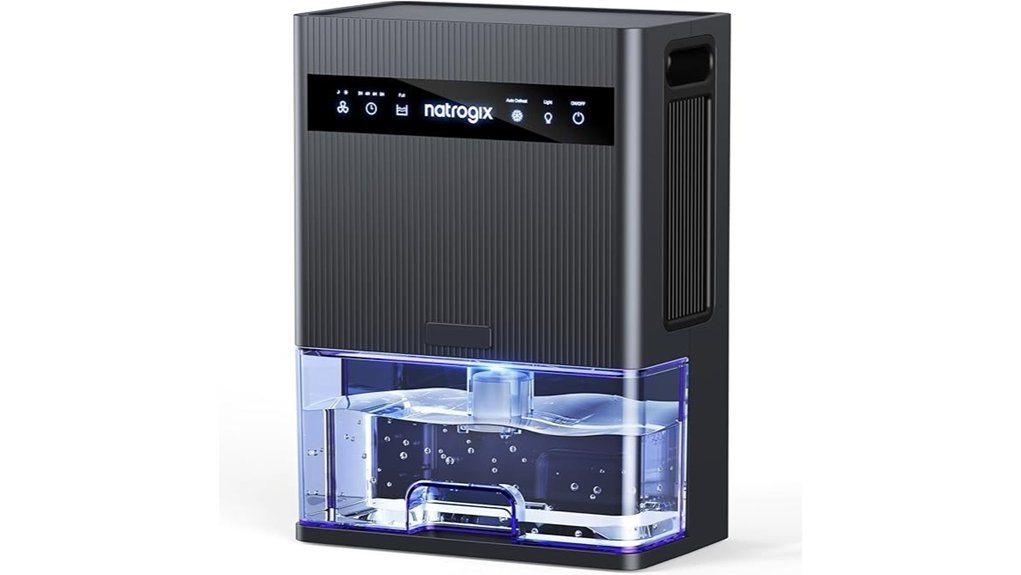
Best Overall Among the Retained Options
The Natrogix model has the largest tank in this roundup at 106 ounces, or approximately 3.1 litres. Its dual semiconductor design offers a stronger power mode for daytime moisture collection and a quieter sleep mode for overnight use.
The seller states that maximum extraction can reach about 40 ounces, or 1.18 litres, per day at approximately 30°C and 80% relative humidity. Real extraction will be lower in cooler or less humid rooms, so this figure should not be treated as typical year-round performance.
Why You’ll Like It: The larger reservoir can reduce tank-emptying frequency, while the timer and two operating modes make it easier to match operation to daytime or overnight use.
Best For: Warm, humid bedrooms, bathrooms, caravans or enclosed utility areas where a larger tank is convenient.
Who Should Avoid It: Buyers expecting a compact thermoelectric unit to control a large cold basement, a serious building-moisture problem or an entire open-plan floor.
Pros:
- Largest water tank among the retained products.
- Separate power and sleep modes.
- Automatic shutoff helps prevent overflow.
- Timer and light controls improve day-to-day convenience.
Cons:
- The highest extraction figure depends on unusually warm and humid test conditions.
- Its seller-listed 1,000-square-foot coverage is not independently verified.
- The tank still requires manual emptying unless the current listing includes a drain option.
- Australian plug, mains compatibility, RCM status and warranty support require confirmation.
AlohaAir Small Dehumidifier with Night Light
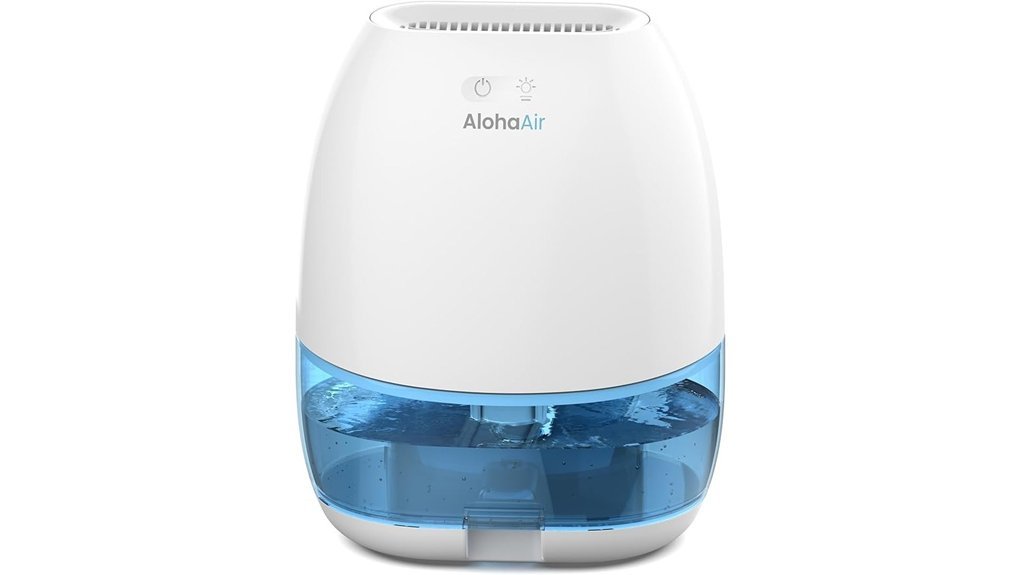
Best for Very Small Spaces
The AlohaAir is the most genuinely compact option in this comparison. It has a 1,000 ml transparent tank, a built-in carry handle and seller-listed moisture extraction of up to 280 ml per day in an area of approximately 200 square feet, or 19 square metres.
That lower extraction rate makes it better suited to a wardrobe, ensuite, caravan, small bedroom or other enclosed space than a large basement. The transparent reservoir makes it easy to check the water level, while automatic shutoff stops operation when the tank is full.
Why You’ll Like It: It takes up less room than the larger 95-to-106-ounce models and is easier to move or position on a shelf.
Best For: Wardrobes, compact bathrooms, caravans, small bedrooms and occasional localised moisture control.
Who Should Avoid It: Buyers dealing with heavy condensation, water ingress, a large basement or a consistently damp open-plan area.
Pros:
- Compact dimensions and built-in handle improve portability.
- Transparent one-litre tank makes the water level easy to monitor.
- Seller-listed energy use is below 1 kWh per day.
- Automatic shutoff and night-light options add convenience.
Cons:
- Maximum extraction is much lower than that of a compressor dehumidifier.
- Its practical use is limited to small, enclosed areas.
- The one-litre tank may need frequent emptying during humid weather.
- Warranty coverage and electrical compliance for an Australian import must be confirmed before purchase.
ToLife Dehumidifier for Home with 95 OZ Tank
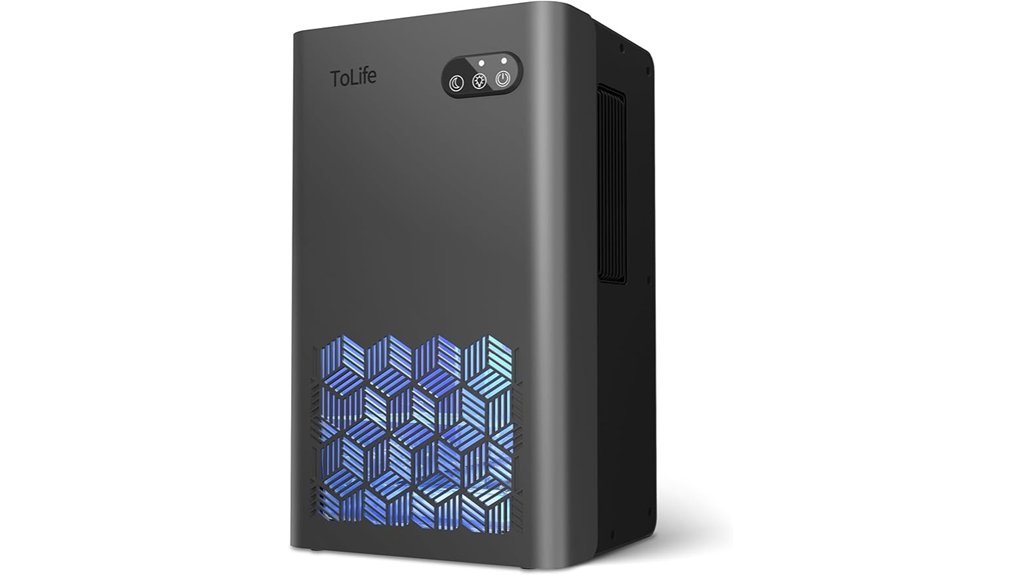
Best Simple Two-Mode Option
The ToLife TZ-C2 is a straightforward 95-ounce thermoelectric dehumidifier with two operating modes. Power mode prioritises moisture collection, while the lower-speed sleep mode is intended for quieter overnight use.
The removable tank, automatic shutoff and built-in handle make it simple to operate and relocate. Its seven-colour lighting is optional decoration, while the core buying appeal is the large tank and uncomplicated controls.
Why You’ll Like It: It provides the main features most buyers expect without the drain-hose or fragrance functions found on more specialised models.
Best For: Bedrooms, bathrooms, home offices and other enclosed spaces where a large tank and simple controls are priorities.
Who Should Avoid It: Buyers who need a humidity display, continuous drainage or verified whole-basement extraction.
Pros:
- Large 95-ounce tank for a compact thermoelectric model.
- Two operating modes accommodate daytime and nighttime use.
- Automatic shutoff helps prevent overflow.
- Portable design makes room-to-room use easier.
Cons:
- The listing does not provide enough evidence to guarantee control of a 1,000-square-foot room.
- The tank requires regular manual emptying.
- Power mode may be more noticeable than sleep mode.
- Australian plug, mains compatibility, compliance labelling and warranty require confirmation.
Factors to Consider When Choosing a Small Dehumidifier in Australia
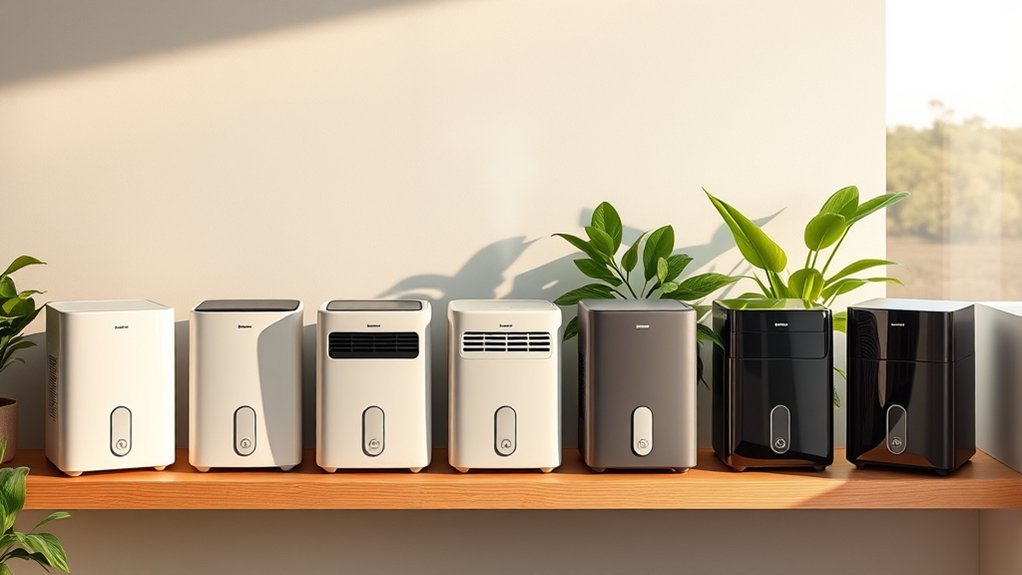
A useful compact dehumidifier should match the size and conditions of the area where it will operate. Tank volume, advertised floor area and decorative features are secondary to daily moisture extraction, temperature, airflow, electrical compatibility and the severity of the dampness problem.
1. Australian Electrical Compatibility
Check this before comparing any other feature. Confirm that the exact model supports Australian mains power, includes a suitable plug and carries appropriate local compliance information. Look for the Regulatory Compliance Mark and confirm whether the seller or importer provides Australian warranty and return support.
Do not assume that a travel adapter makes an incompatible appliance safe. An adapter may change the plug shape without changing the electrical voltage supplied to the unit.
2. Thermoelectric Versus Compressor Technology
All products in this roundup use thermoelectric semiconductor condensation. These units are generally compact, light and quiet, making them convenient for wardrobes, bedrooms, caravans and bathrooms.
A compressor dehumidifier is usually the stronger choice for persistent dampness, large rooms, extensive condensation or high daily water removal. It will normally be larger and noisier but can remove substantially more moisture.
3. Moisture Extraction Capacity
Daily extraction tells you more about dehumidification performance than tank size. A large tank only stores more collected water; it does not automatically mean that the unit removes moisture faster.
Compare extraction figures only when the test temperature and relative humidity are disclosed. Thermoelectric units often achieve their highest output in warm, very humid test conditions and collect less water in cooler rooms.
4. Realistic Room Size
Two retained models advertise areas of up to 1,000 square feet, or about 93 square metres. Treat this as a seller-listed placement figure rather than a guarantee that the unit can control the humidity of an entire area that size.
For better results, use a small dehumidifier in an enclosed zone, close doors and windows while it operates, and measure the humidity with a separate hygrometer. If humidity remains high or condensation returns quickly, consider a higher-capacity compressor model.
5. Tank Size and Drainage
A larger tank reduces how often you need to empty it but also increases the unit’s dimensions. The retained products range from about one litre to just over three litres.
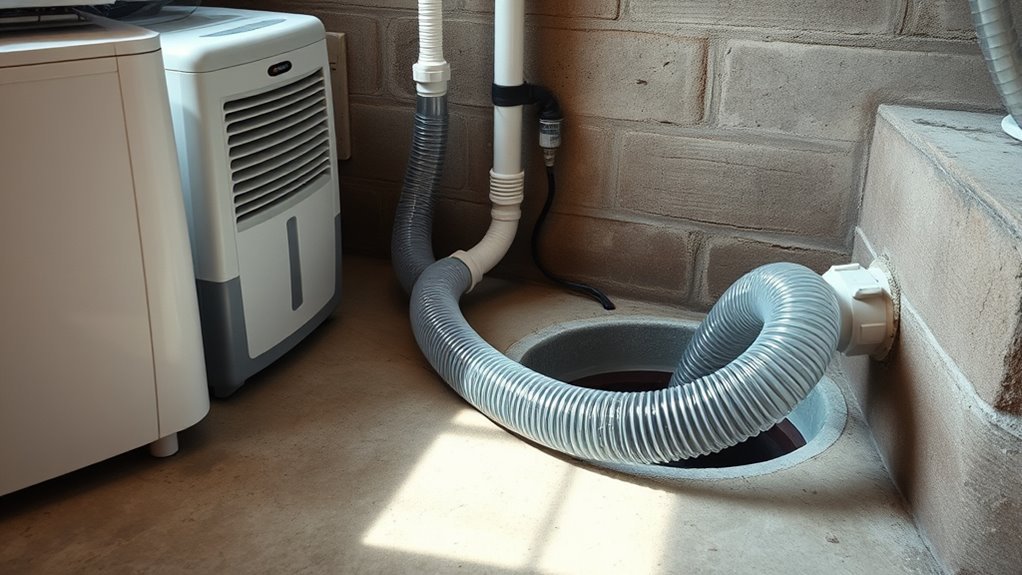
None of the retained options should be assumed to include continuous drainage unless the current listing and manual clearly confirm it. If continuous drainage is essential, verify that a hose is included and that it can run downward without kinks to a safe drain.
6. Noise Level
Look for a low-speed or sleep mode if the unit will run beside a bed or desk. Remember that manufacturer noise figures may be measured under controlled conditions, and power mode will usually be louder than sleep mode.
Noise quality also matters. A steady fan sound may be less distracting than vibration, rattling or water-tank movement even when the measured decibel level is similar.
7. Energy Use and Controls
Compare listed wattage, extraction per day and the number of hours you expect to run the unit. A lower-wattage appliance is not automatically more efficient if it must operate continuously while collecting very little water.
Useful controls include timers, automatic shutoff, adjustable speeds and a real-time humidity display. Decorative lighting does not improve dehumidification and should be treated as an optional preference.
8. Temperature and Room Conditions
Thermoelectric dehumidifiers tend to perform better in warm, humid rooms. Their extraction can fall in cold basements, garages or winter conditions. Check the manufacturer’s recommended operating-temperature range before ordering.
A dehumidifier should not be used as a substitute for repairing plumbing leaks, roof leaks, rising damp or inadequate bathroom ventilation.
9. Safety Features
Choose a model with automatic shutoff when the tank is full or incorrectly positioned. Place the unit on a stable, level surface with clear airflow around its intake and outlet.
Keep the appliance and its power connection away from bath, shower and sink splash zones. Use the supplied power adapter, follow the clearance instructions and unplug the unit before cleaning or removing the tank.
Before You Buy Checklist
- Confirm Australian mains, plug and RCM compatibility.
- Check whether the product ships from Australia or is imported.
- Verify current Amazon availability, seller identity, warranty and return arrangements.
- Compare extraction per day, not only tank size.
- Treat advertised floor area as a maximum claim, not a guarantee.
- Choose a sleep mode if the unit will run beside a bed.
- Confirm drainage requirements if you do not want to empty a tank manually.
- Use a hygrometer to check whether the unit is producing a meaningful result.
- Choose a compressor model for severe or widespread dampness.
Frequently Asked Questions
Are These Dehumidifiers Suitable for Australia?
They are relevant by product type, but the links lead to Amazon.com listings and their Australian electrical suitability is not confirmed in the source material. Before buying, verify mains compatibility, the supplied plug, RCM labelling, warranty coverage, shipping and return terms for the exact model.
Can a Small Dehumidifier Really Cover 1,000 Square Feet?
A seller may list 1,000 square feet as a maximum area, but that does not mean a compact thermoelectric unit can maintain the target humidity throughout a 93-square-metre open room. Daily extraction, room temperature, airflow and moisture load are better performance indicators.
How Do I Maintain My Small Dehumidifier?
Empty and rinse the tank regularly, clean the air intake and filter as directed, remove dust from the vents and keep the unit on a level surface. Unplug it before cleaning and allow the tank to dry if the appliance will be stored.
How Long Does a Small Dehumidifier Last?
Service life varies by model, build quality, operating hours, room conditions and maintenance. Check the current warranty and replacement support instead of relying on a universal lifespan estimate. Keeping vents clean and preventing water or dust from entering the electrical components may help reduce premature failure.
Can a Dehumidifier Help With Allergies?
Reducing excessive indoor humidity may make the environment less favourable for some dampness-related allergens. However, a dehumidifier is not a medical treatment and will not remove every allergen. Address leaks, ventilation, cleaning and medical concerns separately.
Are Small Dehumidifiers Energy-Efficient?
They often use less power than large compressor models, but they also remove less water. Compare wattage with litres collected per day and expected operating time. A low-power unit that runs continuously without reaching the target humidity may not be the most effective option.
How Noisy Are Small Dehumidifiers?
Compact thermoelectric models are generally designed for quieter operation than many compressor units, and some include a dedicated sleep mode. Actual noise can vary with fan speed, placement, vibration and room acoustics. Put the unit on a stable surface and leave space around the air vents to reduce unnecessary noise.
Should I Buy a Thermoelectric or Compressor Dehumidifier?
Choose a thermoelectric model for a small enclosed room, wardrobe, caravan or localised moisture problem where portability and quiet operation matter. Choose a compressor model when you need faster extraction, large-room coverage or control of persistent dampness.
What Indoor Humidity Level Should I Aim For?
Use a separate hygrometer and follow local guidance for your climate and building. The practical goal is to reduce persistent excess moisture and condensation without over-drying the room. If humidity stays high despite continuous operation, the unit may be undersized or the room may have an unresolved moisture source.
Final Recommendation
The Natrogix is the strongest all-round choice among the retained products because it combines the largest tank, two operating modes, a timer and the highest clearly stated conditional extraction figure. It is still a compact thermoelectric unit, so its best use is a warm, enclosed room rather than an entire damp house.
Choose the AlohaAir for a wardrobe, caravan or genuinely small room where compact size matters more than extraction speed. Choose the ToLife TZ-C2 when you prefer a larger tank and simple power and sleep modes without extra controls.
Whichever model you choose, confirm current Amazon availability and Australian electrical compatibility before ordering. Do not rely on a 1,000-square-foot marketing claim alone. Match the unit to the room’s actual moisture load, temperature and ventilation, and move to a compressor dehumidifier when a compact model cannot maintain the desired humidity.