Disclosure: As an Amazon Associate, we earn from qualifying purchases made through links on this page. This comes at no extra cost to you.
Excess moisture in your home can lead to condensation on windows, damp walls, musty odours, and mould-friendly conditions. A compact electric dehumidifier can help bring everyday humidity under control, especially in bedrooms, bathrooms, closets, RVs, and smaller living areas.
This guide compares three practical options for different needs: the versatile ToLife 1000 sq.ft Dehumidifier, the quiet TABYIK 35OZ Small Dehumidifier, and a large-tank home dehumidifier for more persistent damp. These units are best for everyday moisture control. If you have leaks, flooding, serious structural damp, or visible mould spreading across walls, fix the moisture source first and consider professional help.
Quick Verdict: Which Dehumidifier Should You Choose?
- Choose the ToLife 1000 sq.ft Dehumidifier if you want the best all-round pick for larger rooms, bathrooms, closets, and flexible daily use.
- Choose the TABYIK 35OZ Dehumidifier if you need a quiet, compact model for a bedroom, small bathroom, RV, closet, or office.
- Choose the large-tank home dehumidifier if you want higher listed moisture removal, timer options, and less frequent tank emptying.
Quick Comparison: Best Dehumidifiers for Damp
| Model | Best For | Coverage | Tank Size | Noise Level | Moisture Role | Check Price |
|---|---|---|---|---|---|---|
| ToLife 1000 sq.ft | Large rooms, flexible use | Up to 1,000 sq.ft | 95 OZ | Sleep mode under 30 dB | Light-to-moderate damp in enclosed rooms | Check Price |
| TABYIK 35OZ | Bedrooms & small spaces | Up to 280 sq.ft | 35 OZ / 1,000 ml | 28 dB | Up to 16 oz/day in warm, humid test conditions | Check Price |
| Large-Tank Home Dehumidifier | Heavier damp, larger rooms | Up to 1,000 sq.ft | Large removable tank | Sleep mode as low as 20 dB | Up to 40 oz/day under listing conditions | Check Price |
ToLife 1000 sq.ft Dehumidifier with 95 OZ Tank
⭐ Best Overall Pick
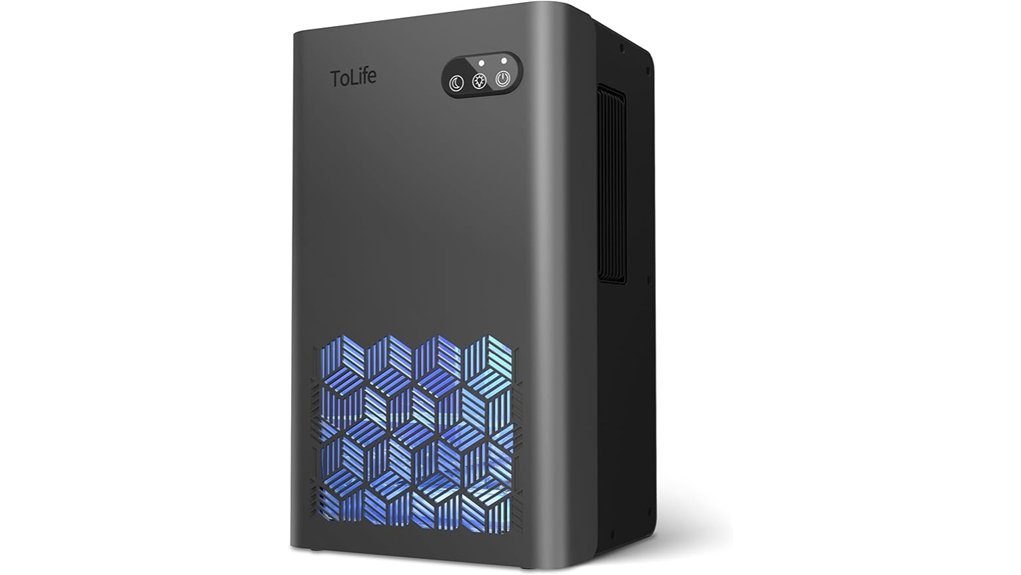
The ToLife 1000 sq.ft Dehumidifier is the best all-round choice here if you want a compact electric unit that can move between damp-prone rooms. It uses semiconductor condensation technology, includes a 95 OZ water tank, and is listed for spaces up to 1,000 sq.ft. That makes it a practical pick for bedrooms, bathrooms, closets, laundry areas, and medium living spaces where humidity feels uncomfortable.
The main appeal is convenience. The automatic shut-off helps prevent overflow when the tank fills, while the low-speed sleep mode keeps noise under 30 dB for night use. The built-in handle also makes it easier to carry from room to room. The listing says the unit is designed to help keep humidity below 45%, but treat that as a target under suitable room conditions, not a guarantee against mould if the room has leaks, poor airflow, or cold surfaces.
Why You’ll Like It: It gives you a balanced mix of tank size, quiet operation, portability, and simple automatic shut-off protection without taking up much floor space.
Best For: Those who need everyday humidity control across medium-to-large rooms up to 1,000 sq.ft and want a portable unit that can move around the home as needed.
Who Should Avoid It: Skip this model if you need a heavy-duty compressor dehumidifier for a wet basement, active leak, flooded room, or severe structural damp.
Pros:
- Good Everyday Moisture Control: Semiconductor condensation technology suits bedrooms, bathrooms, closets, and enclosed living areas.
- Quiet Sleep Mode: Runs under 30 dB in low-speed mode, making it more suitable for bedrooms and nighttime use.
- Portable Design: Built-in handles and a compact body make it easier to move between rooms.
Cons:
- Not a Heavy-Duty Basement Unit: It is better for everyday damp than serious water intrusion or very wet spaces.
- Tank Emptying Still Required: The 95 OZ tank may need regular attention during humid weather.
- Needs a Power Outlet: It is not suitable for spaces without safe electrical access.
Small Quiet Dehumidifier for Bedroom and Home
🔇 Best for Bedrooms
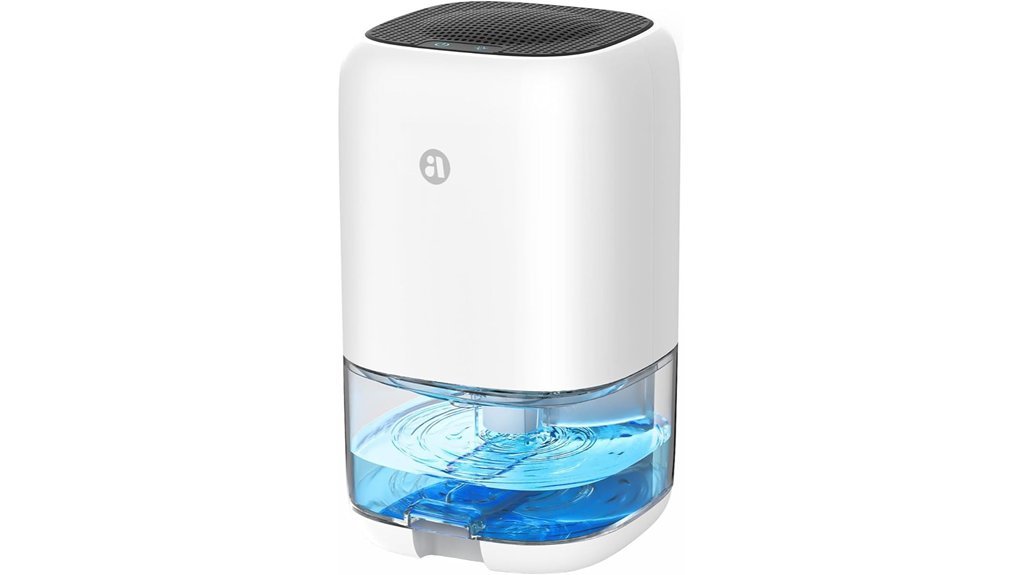
For bedrooms, bathrooms, closets, RVs, or small offices, the TABYIK 35OZ Dehumidifier is the most compact and bedroom-friendly option in this roundup. It is listed for spaces up to 280 sq.ft, has a 1,000 ml tank, and uses Peltier-style dehumidification for quiet operation.
Under warm, humid test conditions, the listing says it can collect up to 16 oz, or about 450 ml, of water in 24 hours. Real-world output will vary based on room temperature, humidity level, airflow, and whether the door stays closed. At 28 dB, it is quiet enough for many bedrooms, and the 7-colour atmospheric lighting can work as a soft night light if you like ambient lighting.
Why You’ll Like It: It is small, quiet, easy to place on a shelf or bedside surface, and simple to empty thanks to its transparent tank.
Best For: Those who want a near-silent, energy-efficient dehumidifier for bedrooms, bathrooms, home offices, RVs, closets, or other small enclosed spaces up to 280 sq.ft.
Who Should Avoid It: Skip it if you need to dry an open-plan room, large basement, laundry room with heavy moisture, or any space with serious damp.
Pros:
- Very Quiet Operation: Runs at 28 dB, making it practical for bedrooms and workspaces.
- Compact Footprint: Measures 5.9 x 5.9 x 10.1 inches, so it fits neatly in tight spaces.
- Automatic Shut-Off: Stops when the tank reaches capacity, helping prevent overflow.
Cons:
- Small-Space Only: It is not suited to larger rooms or more serious damp problems.
- Lower Daily Extraction: The 16 oz/day figure depends on warm, humid, enclosed conditions.
- Frequent Emptying Possible: The 35 OZ tank may fill faster in humid bathrooms or RVs.
Large-Tank Dehumidifier for Home with Timer Settings
💧 Best for Heavier Damp
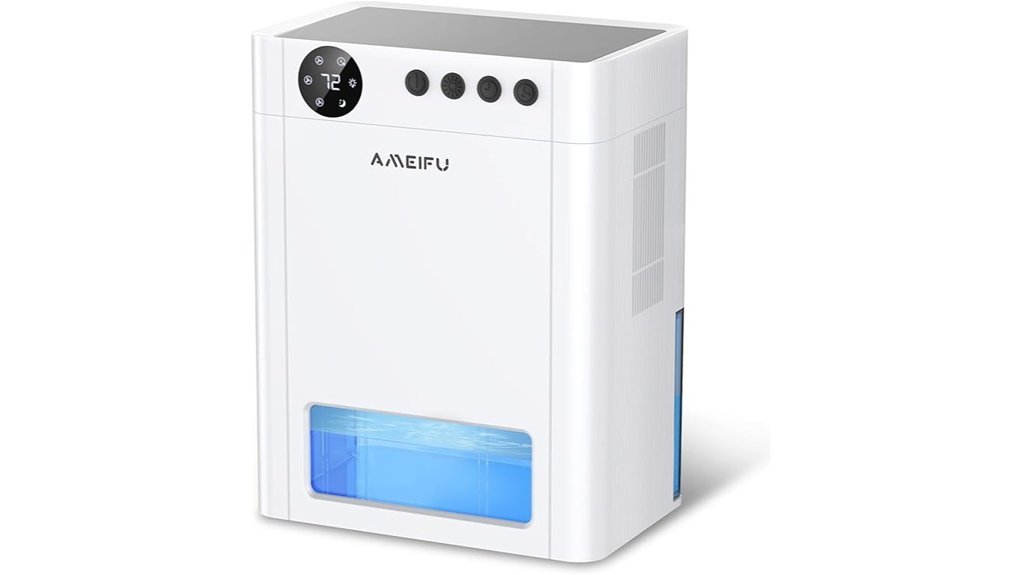
For homeowners dealing with more persistent damp, this large-tank home dehumidifier offers the strongest listed daily moisture removal of the three options reviewed here. The Amazon listing describes dual-semiconductor condensation technology and states that it can collect up to 40 oz, or about 1,182 ml, of moisture per day under suitable conditions.
It is also the most feature-rich option in this roundup. The listing highlights sleep-mode operation as low as 20 dB, automatic shut-off, a removable tank, 7 colour light settings, and 8 timer options ranging from 1 hour to 72 hours. That makes it easier to run on a schedule and reduce unnecessary power use.
Important Note: Product titles and feature bullets can change over time. The listing may show different wording for the tank size, so check the current Amazon details before buying if exact tank capacity matters to you.
Why You’ll Like It: It gives you higher listed moisture removal, quieter sleep-mode operation, and longer timer control than the smaller models above.
Best For: Homeowners with more persistent damp who want a quiet, large-tank dehumidifier with timer settings for bedrooms, bathrooms, living rooms, closets, RVs, or utility areas up to 1,000 sq.ft.
Who Should Avoid It: Skip it if you need a full-size compressor dehumidifier with a drain hose, built-in pump, or verified pint-per-day capacity for a large wet basement.
Pros:
- Higher Listed Daily Moisture Removal: Collects up to 40 oz per day under listing conditions, making it the strongest performer in this compact roundup.
- Very Quiet Sleep Mode: Runs as low as 20 dB, which is useful for bedrooms and living spaces.
- Useful Timer Options: Includes 1H, 2H, 4H, 8H, 12H, 24H, 48H, and 72H settings for scheduled operation.
Cons:
- Not for Severe Water Problems: It is still a compact home unit, not a restoration-grade dehumidifier.
- Tank Details Should Be Checked: Verify the current listing if exact tank size is important.
- More Settings to Learn: The timer and lighting controls may take a few minutes to set up correctly.
Before You Buy a Dehumidifier for Damp
- Measure humidity first: A simple hygrometer helps you see whether your room stays above the ideal range.
- Fix the moisture source: A dehumidifier helps manage damp air, but it will not repair leaks, blocked gutters, poor ventilation, or cold-wall condensation.
- Match the unit to the room: Compact units work best in enclosed spaces. Large, open, cold, or wet rooms need stronger equipment.
- Check tank access: You will empty the tank often, so choose a model that is easy to remove, carry, and clean.
- Think about noise: For bedrooms, choose a model with a low dB rating or a dedicated sleep mode.
Factors to Consider When Choosing a Dehumidifier for Damp
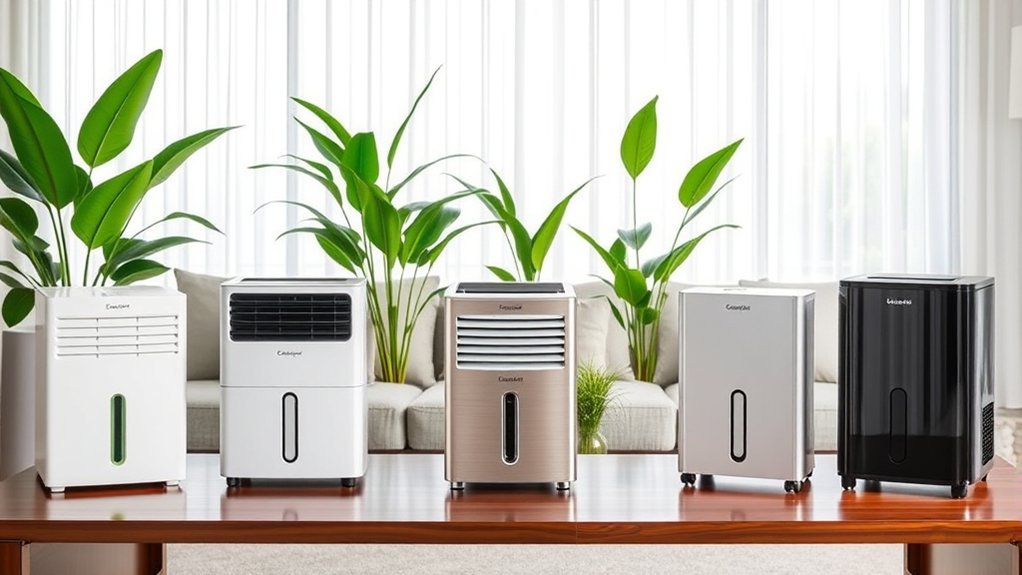
When choosing a dehumidifier for damp conditions, focus on room size, extraction capacity, noise level, energy use, tank size, and ease of maintenance. The right model should fit your room and your routine, not just the advertised square footage.
Room Size Compatibility
Dehumidifier coverage varies from compact models for about 280 sq.ft to larger compact units listed for up to 1,000 sq.ft. For a small bedroom, closet, RV, or bathroom, a small tank model may be enough. For a larger living room or more persistent damp, choose a unit with a larger tank and stronger listed moisture removal.
Remember that coverage claims depend on room conditions. A warm, enclosed room with light damp is much easier to manage than a cold basement, poorly ventilated laundry room, or room with water entering through walls or floors.
Dehumidification Capacity Rating
Dehumidification capacity tells you how much moisture a unit can remove in a set period. Compact semiconductor models often list output in ounces or millilitres per day. Those figures usually depend on warm, humid test conditions, so your room may produce less water in cooler weather or lower humidity.
For everyday damp, a compact unit can help reduce condensation and musty air. For serious damp, flooding, or large basement moisture, consider a full-size compressor model with a verified pint-per-day rating.
Healthy Humidity Targets
The U.S. EPA advises keeping indoor relative humidity below 60% and ideally between 30% and 50% where possible. You can read the EPA guidance here: EPA mould and humidity guidance.
A dehumidifier can help you move toward that range, but it works best alongside ventilation, leak repair, regular cleaning, and proper heating. If you already see visible mould, clean it safely and address the moisture source instead of relying on a dehumidifier alone.
Noise Level Considerations
Dehumidifiers measure noise in decibels, or dB. Units below 30 dB are generally easier to live with in bedrooms, offices, and nurseries. Sleep modes can reduce fan speed and noise, but they may also reduce moisture removal speed.
If you plan to run your dehumidifier overnight, prioritise quiet operation, automatic shut-off, and a tank that is large enough to run without constant attention.
Energy Efficiency Ratings
Energy use matters if you plan to run the unit daily. Compact semiconductor dehumidifiers often use less power than larger compressor models, but they also remove less moisture. Check wattage, timer options, and whether the unit has a sleep or low-power mode.
Regular maintenance also supports efficiency. Keep vents clear, clean the water tank, and avoid placing the unit against walls, curtains, or furniture that can block airflow.
Tank Size and Maintenance
Tank size directly affects how often you need to empty the unit. A 35 OZ tank works well in compact spaces but may need frequent emptying in humid bathrooms. A larger tank gives you longer uninterrupted use and suits bigger rooms better.
Look for a tank that is easy to remove, pour, rinse, and reinstall. Automatic shut-off is important because it stops the unit when the tank fills, helping prevent overflow while you sleep or leave the house.
Safety Features Included
Useful safety features include automatic shut-off, a full-tank light, stable casing, leak-resistant tank design, and clear instructions. Also check that the power cord and adapter suit the room where you plan to use the unit.
A dehumidifier should sit on a flat, stable surface with open airflow around it. Avoid placing it where it could fall into water or block a bathroom walkway.
Portability and Design
If you plan to use one dehumidifier in several rooms, portability matters. Built-in handles, compact dimensions, and a lightweight body make daily use easier. Small units can sit on shelves, counters, desks, or bedside tables, while larger units usually work better on the floor.
Design also affects maintenance. A removable tank, visible water level, and simple controls make the unit easier to use consistently.
Additional Features Offered
Helpful extras include timer settings, ambient lighting, sleep mode, full-tank alerts, and removable tanks. These features do not replace moisture-removal capacity, but they can make the unit more convenient for daily use.
If you only care about performance, prioritise extraction capacity, tank size, and room fit first. If you plan to use the unit in a bedroom, noise and lighting controls may matter just as much.
Frequently Asked Questions
How Often Should I Empty My Dehumidifier’s Water Tank?
This depends on humidity level, room temperature, tank size, and daily runtime. In damper conditions, you may need to empty a small tank every day. Larger tanks need less frequent attention, but they still require regular emptying and cleaning. Models with automatic shut-off stop running when the tank fills, which helps prevent overflow.
Are Dehumidifiers Energy-Efficient for Long-Term Use?
Many compact electric dehumidifiers use relatively low power, especially semiconductor or Peltier-style models. They can be efficient for small rooms, closets, bathrooms, and bedrooms, but they remove less moisture than full-size compressor units. Use timer settings, keep vents clear, and clean the tank regularly to support efficient operation.
Can Dehumidifiers Help Reduce Allergens in the Home?
Dehumidifiers can help reduce excess moisture, which may make a room less favourable for mould and dust mites. They do not remove allergens the way a HEPA air purifier does, and they are not a medical treatment. For better indoor air quality, combine humidity control with cleaning, ventilation, leak repair, and dust reduction.
Can a Compact Dehumidifier Fix Serious Damp?
No. A compact dehumidifier can help with everyday damp air, condensation, and musty odours, but it will not fix structural damp, roof leaks, plumbing leaks, foundation moisture, or flooding. If the room keeps getting wet, solve the source of moisture first.
What Size Dehumidifier Do I Need for My Space?
For small rooms up to about 280 sq.ft, a compact 35 OZ model can be enough if the damp is mild. For larger rooms up to 1,000 sq.ft, choose a unit with a larger tank and stronger listed moisture removal. If your room is cold, open-plan, or seriously damp, look at a larger compressor dehumidifier instead.
Where Should I Place a Dehumidifier?
Place the dehumidifier on a flat, stable surface with open airflow around the intake and outlet. Keep it away from curtains, walls, bedding, and furniture that can block airflow. In bathrooms, place it safely away from direct water contact and follow the product’s electrical safety instructions.
How Do I Maintain My Dehumidifier for Longevity?
Rinse the water tank regularly, wipe the exterior, keep vents clear, and check for residue or blockages. Empty the tank before long storage, and store the unit in a dry location when not in use. Also inspect the power cord and adapter for wear before regular operation.
Conclusion
Choosing the right dehumidifier comes down to your room size, damp level, noise preference, and how often you want to empty the tank. For a flexible all-round option, the ToLife 1000 sq.ft Dehumidifier is the strongest overall pick in this lineup. For bedrooms, small bathrooms, closets, RVs, and quiet workspaces, the TABYIK 35OZ Dehumidifier is the easiest compact choice. For more persistent damp and longer scheduled operation, the large-tank home dehumidifier gives you the strongest listed daily output and the most timer control of the three.
For best results, pair your dehumidifier with a hygrometer, better ventilation, regular cleaning, and proper leak control. That combination gives you a better chance of keeping damp, condensation, and musty odours under control for the long term.