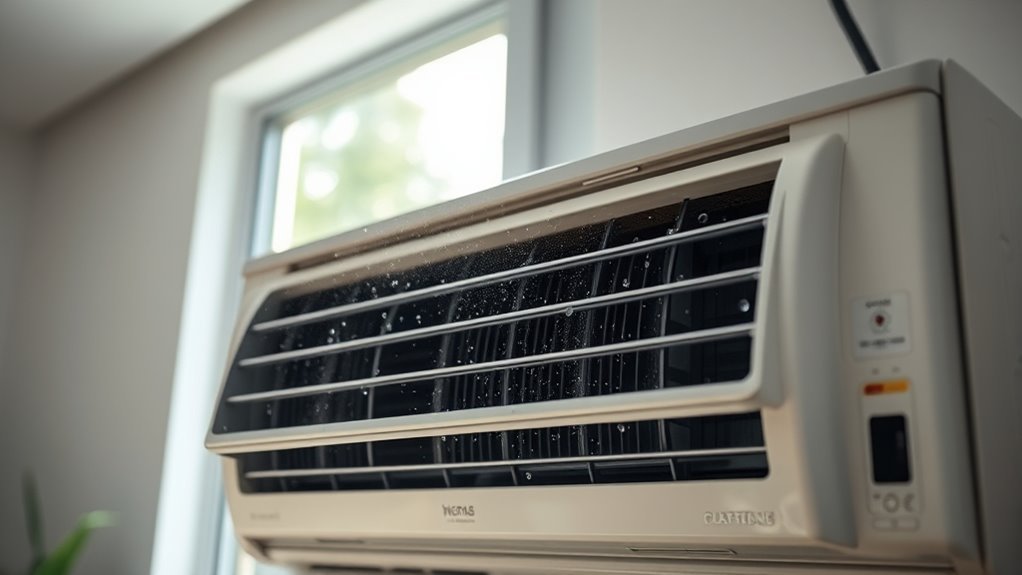
Air conditioners do more than lower the temperature. While cooling your home, an AC can also remove water vapor from the indoor air. Warm, humid air passes over a cold evaporator coil, moisture condenses into liquid water, and the water drains out of the system. How much humidity the AC removes depends on coil temperature, runtime, airflow, equipment size, outdoor conditions, and the amount of moisture entering the home.
Quick Answer
An air conditioner dehumidifies by cooling indoor air below its dew point as the air passes over the evaporator coil. Water vapor then condenses on the coil, flows into a drain pan, and exits through the condensate line. The system returns cooler air with less actual moisture to the room.
Key Takeaways
- The evaporator coil removes heat and moisture at the same time.
- The coil must be colder than the air’s dew point for water to condense.
- An oversized AC may cool too quickly and shut off before removing enough moisture.
- During humid weather, the thermostat fan setting should usually be on AUTO rather than ON.
- Persistent indoor humidity may require equipment service, moisture-source control, or a dedicated dehumidifier.
How Does an AC Dehumidify Air?
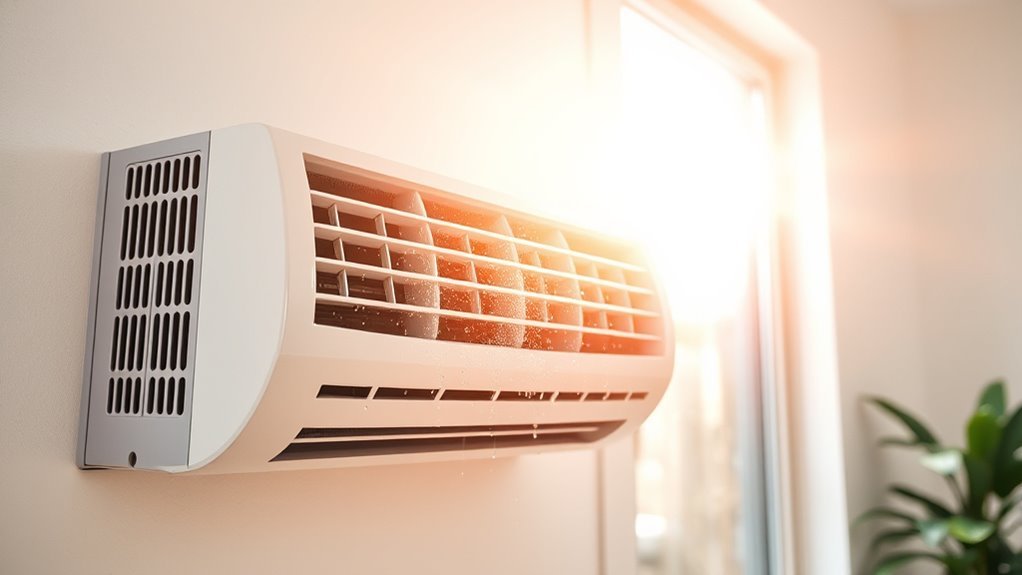
An air conditioner dehumidifies indoor air as part of the normal cooling cycle. A blower pulls warm indoor air through the return system and moves it across the cold evaporator coil. Refrigerant inside the coil absorbs heat, which lowers the air temperature.
When the coil surface is colder than the air’s dew point, some of the water vapor in the air changes into liquid droplets. Those droplets collect on the coil, fall into the condensate pan, and leave through the drain line. The system then sends cooler air with less actual moisture back into the room.
- Warm indoor air enters the return grille.
- The filter catches dust and debris before the air reaches the coil.
- The evaporator coil absorbs heat from the air.
- Moisture condenses on the cold coil surface.
- Condensate drains away while cooler, drier air returns to the room.
Note: An AC does not pull moisture out merely because the room becomes cooler. Condensation occurs only when the coil cools the passing air below its dew point.
Air conditioning systems are designed mainly to control temperature. Their humidity removal is important, but it is tied to the cooling cycle. A standard AC cannot always control temperature and humidity independently. In a persistently damp climate or during mild, rainy weather, the system may not run long enough to remove all the moisture entering the home.
What Happens on the Evaporator Coils?
The evaporator coil performs two jobs at once. It removes sensible heat, which lowers the air temperature, and latent heat, which is associated with water vapor changing into liquid. This combined heat and moisture removal produces the cool, less-clammy air people expect from air conditioning.
Warm Air Meets the Cold Coil
Refrigerant enters the indoor evaporator coil at a low temperature and pressure. As the blower moves indoor air across the coil, heat flows from the warmer air into the refrigerant. The refrigerant absorbs that heat and evaporates inside the tubing.
- Indoor air gives up heat to the refrigerant-filled coil.
- The air temperature falls as heat leaves the airstream.
- The refrigerant carries the absorbed heat toward the outdoor unit.
- The blower returns conditioned air to the occupied rooms.
The amount of cooling and dehumidification depends on the coil temperature, airflow rate, refrigerant charge, indoor moisture load, and the length of each cooling cycle.
Moisture Condenses on the Coil
As the air cools below its dew point, water vapor condenses on the coil fins. This is similar to water forming on the outside of a cold glass, although the AC is designed to collect and drain the water safely.
| Stage | What the AC Does | Result |
|---|---|---|
| Air intake | The blower pulls warm indoor air through the filter. | Air reaches the evaporator coil. |
| Heat transfer | The cold coil absorbs heat from the passing air. | The air temperature falls. |
| Condensation | The coil cools the air below its dew point. | Water vapor becomes liquid droplets. |
| Drainage | Droplets move into the condensate pan and drain line. | Moisture leaves the indoor space. |
| Air delivery | The blower sends conditioned air through the supply ducts. | The room receives cooler air with less moisture. |
The amount of water removed is not fixed. On a hot, humid day, a properly operating system may produce a steady flow of condensate. During cooler or drier weather, little or no visible water may leave the drain even when the AC is working normally.
Water Drains Away
Condensed water runs off the evaporator coil and enters the primary drain pan. From there, the condensate line carries it to an approved drain or outdoor discharge point. The pan and drain are not meant to store standing water during normal operation.
- The drain pan directs water toward the outlet.
- The condensate line carries water away from the air handler.
- A float switch may shut the system off if water rises too high.
- Some installations have a secondary pan or emergency drain for added protection.
Warning: Pooled water, ceiling stains, repeated float-switch shutdowns, or water leaking around the air handler are not normal. Turn the system off if water could reach electrical parts, and arrange service before serious water damage occurs.
A clogged drain may allow water to back up, overflow, or trigger a safety switch. The U.S. Environmental Protection Agency recommends keeping AC drip pans clean and drain lines unobstructed. See the EPA’s mold and moisture guidance.
What Are Sensible and Latent Cooling?
HVAC professionals divide a building’s cooling load into two main parts:
- Sensible load: Heat that changes the measured air temperature.
- Latent load: Moisture that must be condensed and removed from the air.
An air conditioner must handle both loads to keep a home comfortable. A room can reach the thermostat setting while still feeling damp if the system removes sensible heat faster than latent moisture.
Good summer comfort depends on both temperature and humidity. A cool room can still feel clammy when the AC satisfies the thermostat before removing enough moisture.
This is one reason equipment sizing, blower setup, and runtime matter. A system should not simply be large enough to create a rapid temperature drop. It should be selected and configured to handle the home’s temperature and moisture loads together.
Why Does Air-Conditioned Air Feel Less Humid?
Air-conditioned air often feels less humid because the system removes water vapor as it cools. Lower moisture allows sweat to evaporate from the skin more readily, which helps the body release heat and improves comfort.
However, cooling and relative humidity have a more complicated relationship than the phrase “cold air holds less moisture” suggests. A typical hygrometer displays relative humidity, which compares the moisture in the air with the maximum amount possible at that temperature. If air is cooled without removing water, its relative humidity rises.
An AC improves humidity conditions when the coil removes enough water through condensation. Because the temperature and moisture content are changing at the same time, a room’s RH reading may fall, remain steady, or briefly rise even while the total amount of water vapor decreases.
| Change | What It Means |
|---|---|
| Temperature falls and moisture is removed | The room usually feels cooler and less clammy. |
| Temperature falls but little moisture is removed | Relative humidity may rise and the room may feel cool but damp. |
| Moisture is removed while temperature changes slightly | The room may feel more comfortable even without a large temperature drop. |
Do All Air Conditioners Dehumidify the Same Way?
Most vapor-compression air conditioners can remove moisture while cooling, but their effectiveness and drainage arrangements differ.
Central Air Conditioners
A central AC moves air from the home across an indoor evaporator coil and distributes it through ductwork. Moisture drains from the air handler through a condensate line. Equipment sizing, duct leakage, blower settings, and thermostat operation all affect humidity control.
Window Air Conditioners
A window unit also condenses moisture on a cold indoor coil. Depending on the design, water may drain outside, collect in the base pan, or be used to help cool the outdoor coil before evaporating outside. Installation angle and drainage instructions vary, so the manufacturer’s manual should be followed.
Portable Air Conditioners
Portable models may collect water in a tank, discharge it through a hose, or evaporate part of it through the exhaust. Single-hose units can draw unconditioned outdoor air into the room through building leaks, which may reduce humidity performance in a damp climate.
Mini-Split and Inverter Systems
Mini-splits use an indoor coil and outdoor compressor like other split systems. Many inverter models can reduce compressor output instead of switching fully on and off. This can provide longer, steadier operation, although humidity control still depends on the model, fan behavior, load, and settings.
Heating and Fan-Only Modes
An AC or heat pump does not normally remove indoor moisture in fan-only mode because the refrigerant coil is not cold. Heating mode also does not provide the same cooling-coil condensation process inside the home. Some systems include separate drying or reheat functions, but operation is model-specific.
What Does Dry Mode Do?
Dry mode, sometimes shown with a water-drop symbol, changes how a compatible air conditioner runs to emphasize moisture removal. Depending on the model, the system may use a lower indoor fan speed, adjust compressor capacity, cycle differently, or respond to a humidity sensor.
Dry mode can be useful during warm, damp weather when the room feels muggy but does not need maximum cooling. It is not identical across all brands, and it is not a replacement for the operating manual.
Note: There is no universal rule that dry mode must run for two, three, or four hours. Use a hygrometer, watch the room temperature, and follow your model’s instructions. Change modes or stop the unit if the room becomes uncomfortably cold.
Dry mode may be less effective when the room is already cool, when outdoor moisture is entering faster than the system can remove it, or when the evaporator coil does not stay cold enough to create steady condensation.
What Limits AC Moisture Removal?
An air conditioner may cool normally but still leave the home too humid. Common causes include equipment sizing, short run times, airflow problems, moisture entry, drainage faults, and mechanical issues.
- Oversized equipment: The thermostat is satisfied quickly, so the compressor shuts off before enough moisture condenses.
- Mild but humid weather: The home has a high moisture load but little need for temperature cooling, so the AC runs infrequently.
- Continuous blower operation: A fan set to ON may blow air across the wet coil after the compressor stops and return some moisture to the room.
- Dirty filter or coil: Restricted airflow and poor heat transfer can reduce performance or contribute to coil icing.
- Incorrect blower airflow: Air moving too quickly or too slowly for the equipment can affect coil temperature and latent capacity.
- Low refrigerant or a refrigerant-system fault: The evaporator may not operate at the intended temperature.
- Blocked condensate drain: Water may back up, leak, or trigger a float switch.
- Open windows and air leaks: Warm, damp outdoor air can continually enter the home.
- Unvented moisture sources: Showers, cooking, indoor clothes drying, plumbing leaks, and damp basements can overwhelm the AC.
- Leaky return ducts: Ducts in an attic, crawl space, or garage may draw humid air into the system.
ENERGY STAR notes that poor airflow can lead to reduced efficiency, damp indoor air, and reduced comfort. Its HVAC quality-installation guidance recommends verifying system airflow, refrigerant charge, and equipment sizing.
How Do You Know Your AC Isn’t Removing Enough Moisture?
The clearest sign is a humidity reading that remains high while the system is cooling. Use a separate digital hygrometer rather than relying only on how the room feels. Place it away from a supply vent, exterior wall, kitchen, or bathroom so the reading better represents the room.
Other warning signs include:
- Sticky or clammy indoor air
- Condensation on windows, pipes, or supply registers
- Musty odors
- Mold or mildew growth
- Damp closets, fabrics, or bedding
- An AC that starts and stops every few minutes
- A thermostat that reaches its temperature setting while RH remains high
- Water around the air handler or repeated drain-switch shutdowns
- Ice on the refrigerant line or evaporator coil
- Weak airflow or unusually long cooling cycles
The EPA recommends keeping indoor relative humidity below 60% and ideally between 30% and 50% when practical. The best setting can vary with climate, outdoor temperature, building construction, and personal comfort. Very low indoor humidity can also cause discomfort.
Does AC Size Affect Humidity Control?
Yes. AC capacity affects both temperature control and moisture removal. An oversized system may lower the temperature rapidly and shut off before the coil has removed enough water. This can produce a cool but clammy home.
An undersized system may run for long periods and still fail to maintain the desired temperature during peak weather. Longer runtime can support dehumidification, but only if the coil, airflow, refrigerant circuit, ducts, and drainage are working correctly. An undersized system is not a humidity-control solution.
For a whole-home system, equipment should be selected with a professional load calculation that considers more than floor area. The calculation should account for insulation, windows, orientation, air leakage, duct location, occupancy, ventilation, local design weather, and latent moisture load.
The recognized residential method in the United States is ACCA Manual J. ENERGY STAR also warns that oversized cooling equipment may cycle too frequently and reduce comfort.
Pro Tip: Do not approve a replacement system based only on the size of the old unit or a simple square-foot rule. Ask the contractor to show the load calculation and explain how the selected equipment will handle both sensible and latent loads.
How Can You Improve AC Dehumidification?
Start with safe, simple checks. If humidity remains high, move to professional testing rather than changing refrigerant, blower, or electrical settings yourself.
Recommended Products

Face Icon Comfort Indicator: Humidity temperature gauge features face icons to indicate DRY/COMFORT/WET air conditions, quickly informs you how to adjust your humidifier or dehumidifier to achieve optimal comfort.
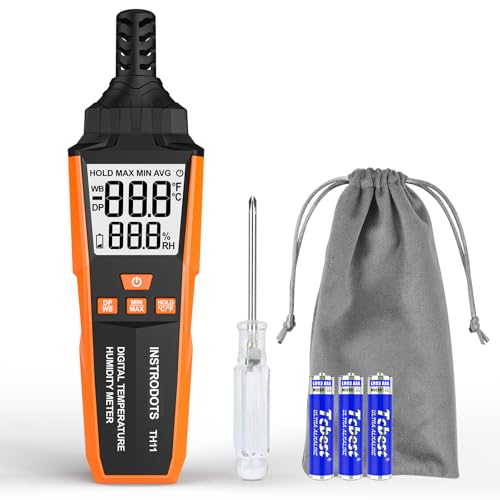
HIGH-PRECISION THERMOMETER HYGROMETER - Unlike traditional temperature humidity meter, this digital hydrometer adopts a high-precision semiconductor sensor from SWITZERLAND to ensure measurements accurately and quickly. With short response time and strong anti-interference ability, more secure and accurate, the humidity meter can be used for a wide range of applications.

【Readings be Switched Between Fahrenheit and Celsius】 Round Digital Thermometer ease to achieve the mutual conversion between Fahrenheit (°F) and Celsius (°C),(with temperature switch button- °C/°F mode)
Measure Indoor Humidity First
Use a reliable hygrometer to track humidity over several days. Record the indoor RH, outdoor weather, thermostat setting, and how long the system runs. A single reading near a vent or immediately after a shower may not represent the whole home.
If one room is damp while the rest of the home is normal, investigate a local moisture source, closed supply register, blocked return path, plumbing leak, or poorly sealed exterior surface.
Inspect and Clean Filters Regularly
A dirty filter restricts airflow and makes the system work harder. ENERGY STAR recommends inspecting, cleaning, or changing central HVAC filters monthly. Replacement frequency depends on the filter type, household dust, pets, smoke, remodeling activity, equipment use, and manufacturer instructions.
- Turn the system off before removing the filter.
- Use the correct filter dimensions.
- Install disposable filters with the airflow arrow facing the equipment.
- Do not install a highly restrictive filter unless the system can support it.
- Allow reusable filters to dry fully before reinstalling them.
Review the ENERGY STAR maintenance checklist for additional owner and contractor maintenance tasks.
Set the Thermostat Fan to AUTO
During humid weather, set the central system’s blower fan to AUTO unless the manufacturer or HVAC designer gives different instructions. AUTO stops the blower when the cooling cycle ends. This gives water on the coil more time to drain.
With the fan set to ON, air continues moving across the wet coil after the compressor stops. Some of that moisture may evaporate back into the airstream. ASHRAE specifically cautions against continuous fan operation when humidity control is a concern.
Use Dry Mode When Appropriate
If the AC has a dry or dehumidify mode, use it during warm, muggy conditions when full cooling is unnecessary. Check the manual because some units limit temperature or fan adjustments in this mode.
Do not rely on a fixed runtime. Monitor the room with a hygrometer and stop or change modes when humidity reaches a comfortable range or the room becomes too cold.
Keep the Condensate Drain Clear
Look for pooled water, algae, sludge, a disconnected line, or a kinked drain. A homeowner may be able to clean an accessible drain opening according to the equipment manual, but internal clogs, attic installations, and repeated backups are better handled by a professional.
- Check that water is not collecting around the air handler.
- Confirm the drain outlet is not buried, blocked, or submerged.
- Test the condensate float switch during professional maintenance.
- Do not mix bleach, acids, drain opener, or other chemicals in the line.
- Repair cracked pans and damaged drain fittings rather than relying on sealant alone.
Reduce Moisture Entering the Home
An AC cannot maintain low humidity if moisture enters faster than the system removes it. Reduce the load before assuming the equipment has failed.
- Close windows and exterior doors when outdoor air is humid.
- Use bathroom exhaust fans during showers and for a short period afterward.
- Use a vented kitchen hood while cooking.
- Vent clothes dryers outdoors.
- Repair plumbing, roof, and foundation leaks.
- Seal major air leaks around penetrations, attic hatches, and exterior doors.
- Address damp crawl spaces and basements at the moisture source.
- Have return ducts in unconditioned spaces inspected for leakage.
Have Refrigerant and Airflow Checked Professionally
Low or incorrect refrigerant charge can reduce cooling performance, change evaporator-coil conditions, and increase equipment strain. However, refrigerant does not get “used up” during normal operation. A low charge usually means there is a leak or a previous service error.
Homeowners can watch for symptoms such as weak cooling, ice, unusual hissing, long cycles, or rising energy use. A qualified technician should measure charge, locate leaks, adjust airflow, and service the sealed refrigerant circuit.
Warning: Do not connect gauges, add refrigerant, open sealed lines, or bypass safety controls unless you are properly trained and legally authorized. Refrigerants can cause frostbite, displace oxygen, damage equipment, and harm the environment. In the United States, Section 608 rules apply to work that may release refrigerant.
The EPA advises homeowners to use companies with technicians certified to handle refrigerants. See its homeowner refrigerant guidance.
How Do You Troubleshoot High Humidity With the AC Running?
- Confirm the reading. Check humidity with a separate hygrometer placed away from vents and moisture-producing areas.
- Check the thermostat. Make sure the system is in cooling mode and the central blower is set to AUTO.
- Inspect the filter. Clean or replace it if dirty, using the correct size and type.
- Check airflow. Open normal supply registers and make sure return grilles are not blocked by furniture.
- Look for water problems. Check for drain backups, plumbing leaks, damp materials, and condensation.
- Reduce moisture sources. Close windows, run exhaust fans, and vent dryers outdoors.
- Observe the cycle. Frequent short cycles may point to oversizing, thermostat location, control trouble, or another fault.
- Arrange professional service. Ask the technician to test airflow, coil condition, drain operation, refrigerant charge, temperature split, duct leakage, controls, and equipment sizing.
If the system has always struggled with humidity, the problem may be its design or installation. If the problem appeared suddenly, maintenance, drainage, airflow, refrigerant, duct, or building-moisture issues are more likely.
Recommended Products

Wellness Indicator: This humidity meter with humidity level icon indicates air conditions - DRY/COMFORT/WET, allowing this humidity sensor to ensure you’re always aware of changes to your home/household with just a quick glance

Smart Features: The Govee Wireless Thermometer Hygrometer supports all basic functions as well as smart functions such as remote monitoring and temp humidity graphs. Our humidity meters are reliable and easy to use for homes, greenhouses and more.(Only supports 164ft Bluetooth connection)

2-in-1 Thermometer Hygrometer Meter: Built-in probe for unparalleled precision. It serves as both a digital electronic thermometer and a hygrometer, meticulously engineered for indoor environmental monitoring.
AC vs. Dehumidifier: What Is the Difference?
An air conditioner and a refrigerant dehumidifier both condense water on a cold coil, but they handle the resulting heat differently.
| Feature | Air Conditioner | Dedicated Dehumidifier |
|---|---|---|
| Main purpose | Lower indoor temperature | Lower indoor humidity |
| Heat handling | Moves absorbed heat outdoors | Usually releases slightly warmer, drier air into the room |
| Humidity control | Usually tied to cooling demand | Can respond directly to a humidistat |
| Best use | Hot and humid weather | Damp conditions with little need for cooling |
| Typical drainage | Condensate line, pan, or model-specific drain system | Tank or continuous drain hose |
A dehumidifier is not automatically more efficient in every situation. If the AC already needs to run for cooling and keeps RH in a comfortable range, running both appliances may be unnecessary. A dedicated dehumidifier becomes more useful when moisture remains high without much cooling demand.
Recommended Products

Semiconductor dehumidifiers use thermoelectric cooling to remove moisture from the air. They create a drier, more comfortable environment by reducing humidity and improving air quality.

Engineered with Dual Semiconductor Technology - Mecmic dehumidifier is designed with two semiconductor modules work together to remove moisture more efficiently than traditional single-semiconductor designs, up to 34 oz (1000 ml) of moisture per day under ideal conditions,helping your space feel fresher and more comfortable in less time. Specifically for bedrooms, bathrooms, closets, laundry rooms, RVs, and other compact areas.

【Efficient Dehumidification】With 360° dual cooling semiconductor technology, the dehumidification area reaches up to 650sq ft. The Levoair safe dehumidifier with 2000ml(68oz)water tank could absorb up to 35oz (1000ml) of moisture per day in a humid environment (Temperature: 86°F, Humidity: 80%RH) and keep moisture below 45%. Say goodbye to humidity!
When Do You Need a Dehumidifier, Too?
Consider a dedicated dehumidifier when indoor humidity remains above the preferred range after obvious moisture sources and AC problems have been addressed.
Common situations include:
- Cool, rainy weather when the AC rarely runs
- A damp basement or laundry area
- A coastal or tropical climate with a high latent load
- A tightly controlled home that needs independent humidity management
- An older home with persistent dampness
- Indoor RH that regularly remains near or above 60%
- Musty odors or recurring condensation despite normal cooling
A portable dehumidifier works well for one room or a limited area. A whole-house unit connects to the HVAC system or dedicated ductwork and can provide more even control across several rooms. Either type must be sized, drained, and maintained correctly.
Before buying another appliance, make sure the moisture is not coming from a roof leak, plumbing problem, wet foundation, unvented dryer, or major air leak. A dehumidifier may manage the symptom without correcting the source.
How Do You Keep Humidity in Check Year-Round?
Year-round humidity control requires a combination of equipment maintenance, moisture-source control, ventilation, and monitoring.
- Keep indoor RH below 60% and ideally near 30–50% when practical.
- Check the HVAC filter monthly.
- Schedule professional cooling-system maintenance before the hot season.
- Keep evaporator and condenser coils clean.
- Keep the condensate pan and drain unobstructed.
- Use the thermostat’s AUTO fan setting during humid cooling weather.
- Run kitchen and bathroom exhaust fans when producing moisture.
- Vent the clothes dryer outdoors.
- Repair water leaks and dry wet materials promptly.
- Keep windows closed when outdoor dew point and humidity are high.
- Use dry mode or a dehumidifier when appropriate.
- Investigate persistent room-to-room humidity differences.
The EPA’s indoor air quality guidance recommends using a humidity gauge and keeping indoor humidity between 30% and 50% when possible.
Frequently Asked Questions
Do air conditioners naturally dehumidify?
Yes. Most vapor-compression air conditioners remove some moisture whenever the evaporator coil cools humid air below its dew point. The moisture condenses on the coil and drains away. The amount removed depends on runtime, coil temperature, airflow, equipment design, and the indoor moisture load.
What is the three-minute rule for air conditioners?
The three-minute rule usually refers to the protective delay before the compressor restarts after the AC has been switched off or its mode has changed. Restarting immediately can place stress on the compressor. Many modern systems enforce the delay automatically, so the indoor fan may run before cooling resumes.
What is the $5,000 rule for AC repair or replacement?
The $5,000 rule is a rough repair-versus-replacement guideline. Multiply the equipment’s age in years by the estimated repair cost. If the result exceeds $5,000, replacement may deserve serious consideration. It is not a spending limit, and the final decision should also consider warranty coverage, efficiency, condition, refrigerant type, comfort, and future repair risk.
How long should you run dry mode?
There is no universal runtime. Follow the manufacturer’s instructions and monitor the room with a hygrometer. Continue while humidity is falling and the room remains comfortable. Switch to cooling, fan, or off when the target is reached or the room becomes too cold.
Does fan mode remove humidity?
Fan-only mode normally circulates air without cooling the evaporator coil, so it does not create new condensation or remove meaningful moisture. On a central system, running the blower continuously after cooling may re-evaporate moisture left on the coil.
What indoor humidity level should you aim for?
The EPA recommends keeping indoor relative humidity below 60% and ideally between 30% and 50% when practical. The best target depends on outdoor temperature, climate, building construction, condensation risk, and personal comfort.
Why is my house humid even though the AC is cold?
The system may be oversized, short-cycling, set to continuous fan, poorly drained, incorrectly charged, or moving the wrong amount of air. Humidity may also be entering through leaks, open windows, wet foundations, unvented dryers, bathrooms, or leaky ducts. Measure the RH, complete the basic maintenance checks, and arrange professional testing if the problem continues.
Conclusion
An air conditioner dehumidifies by cooling indoor air below its dew point, condensing water on the evaporator coil, and draining that water out of the building. The process works best when the equipment is correctly sized, the coil and filter are clean, airflow is properly set, the drain is clear, and cooling cycles last long enough.
If your home stays humid, check the hygrometer, filter, thermostat fan setting, condensate drain, exhaust ventilation, and possible moisture sources. Persistent problems may require airflow and refrigerant testing, duct repairs, a load calculation, or a dedicated dehumidifier. Correcting the cause will provide better comfort than simply lowering the thermostat.
Sources
- U.S. Environmental Protection Agency: A Brief Guide to Mold, Moisture and Your Home — supports indoor humidity targets, drain maintenance, and moisture-control guidance.
- ENERGY STAR HVAC Maintenance Checklist — supports filter, coil, refrigerant, airflow, and condensate-drain maintenance recommendations.
- ENERGY STAR HVAC Quality Installation — supports proper equipment sizing, airflow setup, and refrigerant-charge verification.
- Air Conditioning Contractors of America: Manual J — supports residential heating and cooling load calculations.
- ASHRAE: Top Ten Things Consumers Should Know About Air Conditioning — supports AC humidity limitations, AUTO fan guidance, and the possible need for dedicated dehumidification.
- U.S. EPA Refrigerant Guidance for Homeowners — supports the use of certified technicians for refrigerant service.