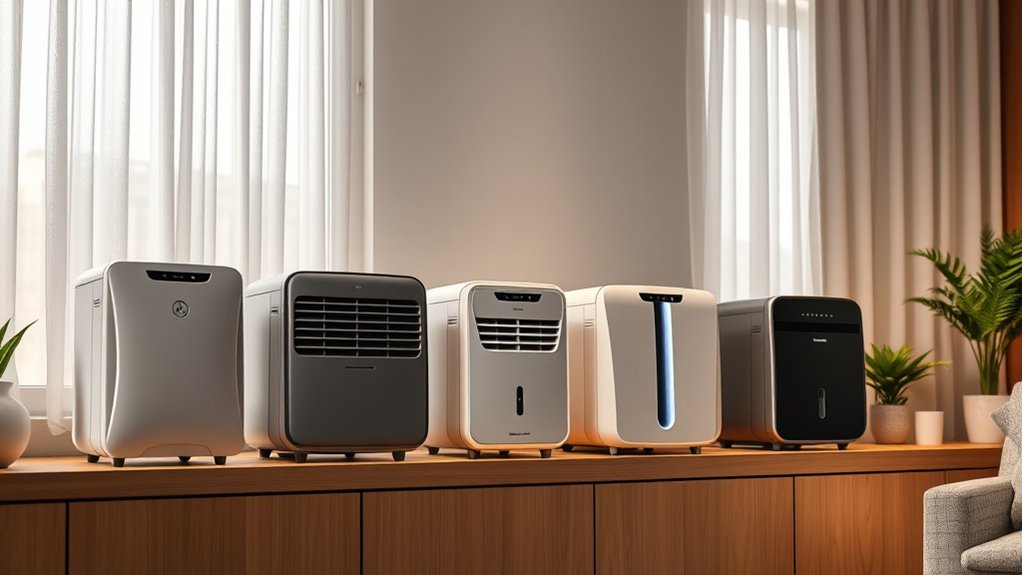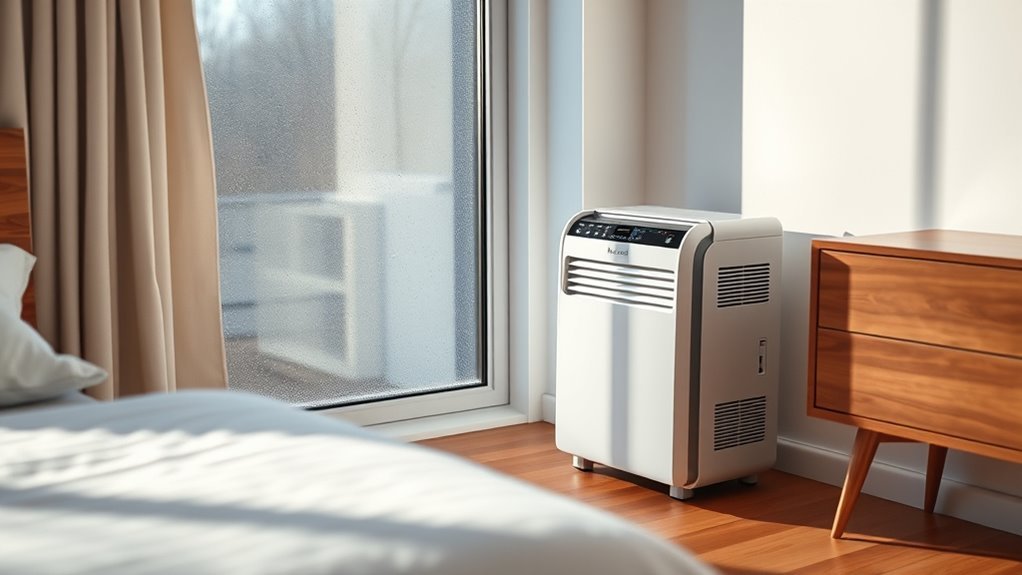
Bedroom dehumidifier size depends on how damp the room is as much as on its square footage. ENERGY STAR’s chart for a room under 2,000 square feet points to 20 to 30 pints per day for a slightly damp room, 25 to 40 for a very damp one, and 30 to 50 if surfaces sweat or there is seepage. Most bedrooms land in the first or second band.
Check relative humidity with a hygrometer before you buy, aim for 30 to 50 percent, and move up a size if the room is musty, sits next to a bathroom, or is hard to ventilate.
Bedroom Dehumidifier Size by Dampness Level
| Bedroom condition | Typical signs | ENERGY STAR range (under 2,000 sq. ft.) |
|---|---|---|
| Slightly to moderately damp (about 50-75% RH) | Feels a little damp, intermittent musty smell | 20-30 pints/day |
| Very damp (about 75-90% RH) | Always smells damp, damp spots on walls or floors, musty closet | 25-40 pints/day |
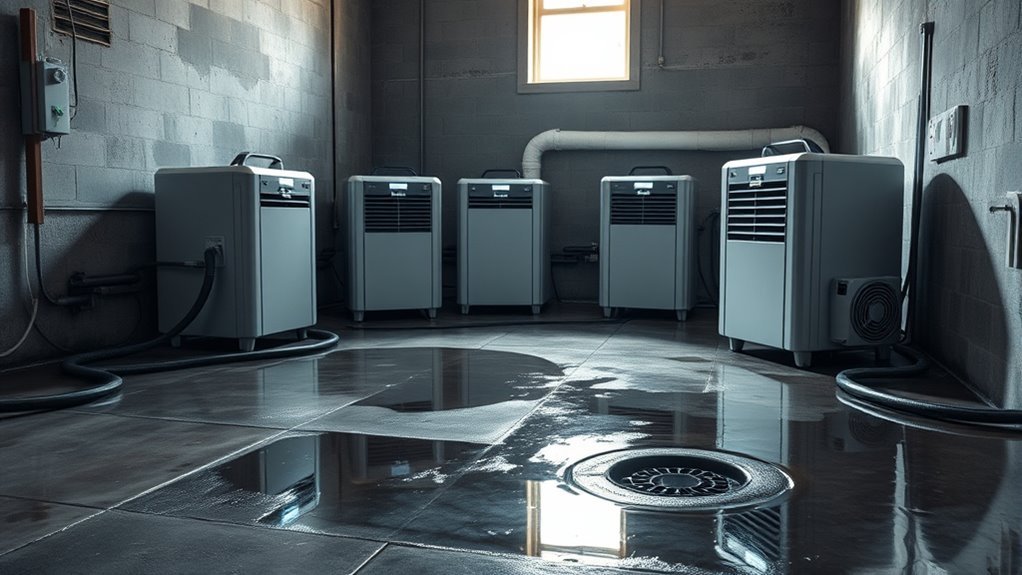
| Wet (about 90-100% RH) | Sweating walls or floors, seepage | 30-50 pints/day |
These ranges come from ENERGY STAR’s dehumidifier guidance, which also advises oversizing rather than undersizing. Within a range, lean toward the higher end for a larger bedroom, an attached bathroom, exterior walls, poor airflow, or window condensation.
The goal is not bone-dry air. The EPA recommends keeping indoor humidity below 60 percent, ideally between 30 and 50 percent if possible, and the CDC advises no higher than 50 percent all day to help prevent mold.
Note on ratings: ENERGY STAR explains that portable units are now tested at 65°F instead of 80°F, so current pint ratings look lower than older ones. An old 70-pint rating is roughly 40 to 45 pints today. Compare current labels with current labels.
How Big Is Your Bedroom and How Humid Is It?
- Measure square footage. A 12 by 14 foot bedroom is 168 square feet.
- Check relative humidity with a hygrometer for at least a full day. Humidity can rise overnight, after showers, in rainy weather, or when windows stay closed.
- Look for symptoms. Musty smells, damp bedding, condensation, peeling paint, or visible mildew point to a stronger unit and a moisture source to fix.
- Consider the layout. Attached bathrooms, exterior walls, poor airflow, and musty closets often call for more capacity than square footage suggests.
Tip: Put the hygrometer near the bed or closet, not beside the dehumidifier. That shows the air you actually sleep in and the places moisture tends to collect. The EPA notes that a basic humidity meter can measure this.
Which Dehumidifier Type Is Best for Bedrooms?
Room temperature is the main factor. Most heated bedrooms do well with a compressor model, while cool rooms may need a low-temperature or desiccant model.
Recommended Products

2X SEMICONDUCTOR CONDENSERS: In order to improve the efficiency, our dehumidifiers equipped with DUAL semiconductor condensers which almost double the effect of other small dehumidifiers. It effectively absorb up to 700ml excess moisture per day (Tested in 86°F, 80% RH which can achieve optimal performance). Our dehumidifier can cover various small spaces such as bathrooms, kitchens, cloakrooms, RV, etc.

Quiet & High-Efficiency Dehumidifier: Featuring next-generation semiconductor cooling technology, this quiet dehumidifier delivers efficient moisture removal while running at ultra-low noise (≤40dB). Stable humidity levels are maintained, making your home environment more comfortable and pleasantly dry.

【Dual-Function Dehumidifier and Aromatherapy】Our dehumidifier efficiently removes excess moisture using semiconductor condensation technology. Enjoy a fresh, fragrant environment while reducing humidity—ideal for creating a calming bedroom ambiance or refreshing your living space. For optimal results, keep all doors and windows closed during use.
Compressor Units
Compressor dehumidifiers use cooled coils to condense moisture and are widely sold in 20, 30, 40, and 50 pint classes. They suit medium to large bedrooms, humid climates, and rooms with an attached bathroom. Look for a built-in humidistat, which ENERGY STAR says all certified dehumidifiers include, and for ENERGY STAR certification. For sleeping, compare published decibel ratings and look for a sleep or quiet mode. ENERGY STAR suggests choosing a unit specified for lower temperatures if the space often falls below 65°F.
Desiccant Units
A desiccant dehumidifier uses a moisture-absorbing material instead of a cold coil, so it can be a better fit for a cool guest room or lower-level bedroom. The tradeoff is that desiccant models can add warmth to the room and may use more energy than a compressor model. Compare the specific model rather than choosing by technology alone.
Small Bedrooms
A small bedroom does not always need the smallest unit. If humidity is only slightly high, a compact model in the 20 pint class matches ENERGY STAR’s lowest band. If the room has a musty closet, poor airflow, or an attached bathroom, a 25 to 30 pint model gives more margin without taking much more space. Prioritize quiet operation, a dimmable display, and auto shutoff, since a small tank can fill quickly in damp weather. See our guide to dehumidifiers for small spaces for compact options.
Large Bedrooms
For a large bedroom or primary suite, choose by dampness. A mildly humid room may be fine with 30 pints, while a musty room with condensation, a walk-in closet, or an attached bath is safer in the 40 to 50 pint class. Large rooms also need airflow, so keep the unit out of a crowded closet or tight against a wall. If humidity near the bed stays high while the unit runs, the unit may be too small or placed poorly. For very damp rooms, see our picks for the best dehumidifier for damp rooms.
Where to Place a Bedroom Dehumidifier
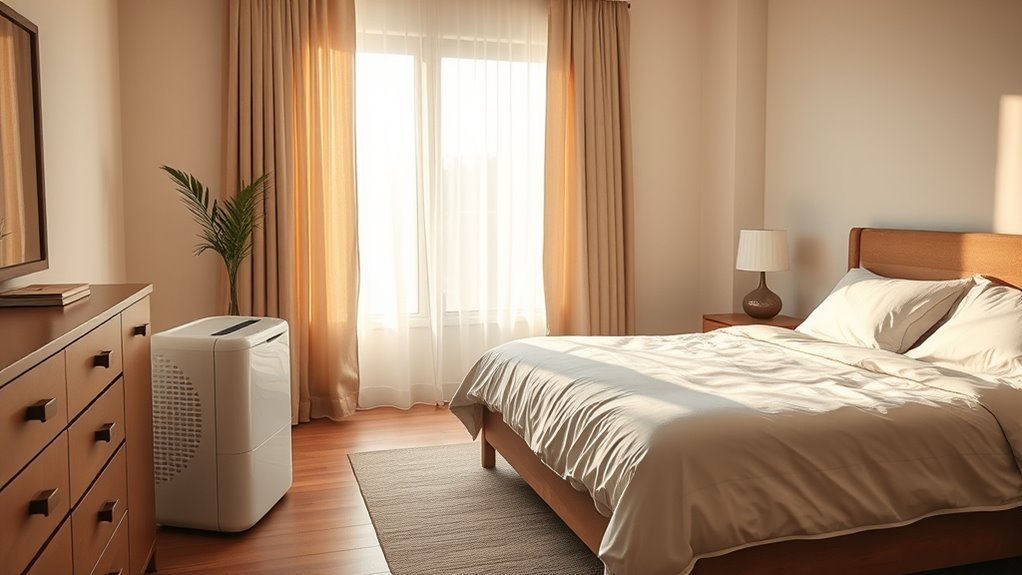
Place the unit in an open area where it can pull humid air in and push dry air out. A central spot is usually best, though a spot near the moisture source helps if dampness comes from an attached bathroom or exterior wall.
- Keep it away from walls, curtains, bedding, and furniture. ENERGY STAR says units without top-mounted air discharge need free air circulation.
- Close windows and doors while it runs so it dries the room instead of outdoor air.
- Keep closet doors open if the closet smells musty.
- Slope any drain hose downward to the drain unless the unit has a pump.
- Do not block the intake or exhaust grille.
Features That Make Daily Use Easier
- Quiet operation: Compare decibel ratings and pick a low fan speed or sleep mode for overnight use.
- Auto shutoff: Stops the unit when the tank is full, which matters for overnight use.
- Humidistat: Lets the unit stop when the room reaches your target instead of running nonstop.
- Easy tank handling: A removable, easy-to-pour tank, or continuous drainage or a pump if you do not want to empty it daily.
- Filter and auto restart: An easy-to-clean filter keeps airflow up, and auto restart resumes operation after a power outage.
Warning: A dehumidifier controls moisture in the air, but it does not fix leaks or remove existing mold. If you see visible mold, water damage, or recurring condensation, fix the moisture source first. Follow the manual’s electrical instructions. The Electrical Safety Foundation International says not to overload extension cords, not to use them in place of permanent wiring, and to use one cord for only one appliance.
How to Use a Bedroom Dehumidifier Correctly
- Set the target. Start around 45 to 50 percent RH and lower it only if the room still feels damp.
- Keep doors and windows closed while it runs.
- Check a separate hygrometer across the room against the unit’s built-in reading.
- Empty and rinse the tank regularly so standing water does not turn stale.
- Clean the filter as the manual directs. A clogged filter cuts airflow and moisture removal.
- Recheck after rain or seasonal changes.
If you are weighing whether to run one while you sleep, our guide on having a dehumidifier in a bedroom covers the pros and cons.
When a Bedroom Dehumidifier Is Not Enough
If humidity climbs back quickly after the unit shuts off, something is adding water to the room.
- Fix leaks first: Roof, plumbing, window, or wall leaks can overpower a portable unit.
- Improve bathroom ventilation: Use an exhaust fan that vents outdoors.
- Dry wet materials quickly: Wet carpet, drywall, or insulation can support mold.
- Do not over-dry: Below about 30 percent RH, the air may feel uncomfortable.
Related Guides
- What size dehumidifier do I need? General pint guide
- Can you have a dehumidifier in a bedroom?
- Bathroom dehumidifier size guide
- Basement dehumidifier size chart
- Apartment dehumidifier size
Frequently Asked Questions
What is a good size dehumidifier for a bedroom?
For a slightly to moderately damp bedroom under 2,000 square feet, ENERGY STAR points to 20 to 30 pints per day. Choose 25 to 40 pints if the room is very damp or musty, and 30 to 50 if surfaces sweat or there is seepage.
Can a dehumidifier help with dust mites?
Yes, it can help as part of a larger plan. The American Lung Association says humidity is the biggest factor in dust mite numbers and recommends keeping indoor humidity below 50 percent, noting that dehumidifiers can help in humid areas. Also wash bedding regularly and consider allergen covers.
Is it better to oversize or undersize a bedroom dehumidifier?
ENERGY STAR advises oversizing rather than undersizing. An undersized unit may run constantly and still leave the room damp. A slightly larger model with a humidistat can cycle off when the target is reached. Avoid going so large that the room becomes uncomfortably dry.
Can you sleep with a dehumidifier running?
Generally yes, if the unit is in good condition, has auto shutoff, and is used as the manual directs. Set the humidistat around 45 to 50 percent, use a quiet fan setting, and keep it away from bedding, curtains, and blocked airflow.
Will a dehumidifier cool a bedroom?
Not directly. Removing moisture can make a room feel less sticky, but a running dehumidifier can add some heat to the room. If the room is hot and humid, air conditioning plus dehumidification may feel better than dehumidification alone.
Should I use a dehumidifier if I have COPD?
A dehumidifier may help if a damp bedroom supports mold and dust mites, but it is not a COPD treatment, and very dry air can irritate breathing for some people. Measure humidity first and ask your clinician whether indoor air changes affect your symptoms.
Sources
- ENERGY STAR: Dehumidifiers
- ENERGY STAR: Dehumidifier Testing and Capacity
- U.S. EPA: Mold Course, Chapter 2
- U.S. EPA: A Brief Guide to Mold, Moisture and Your Home
- CDC: About Mold
- American Lung Association: Dust Mites
- Electrical Safety Foundation International: Extension Cord Safety Tips