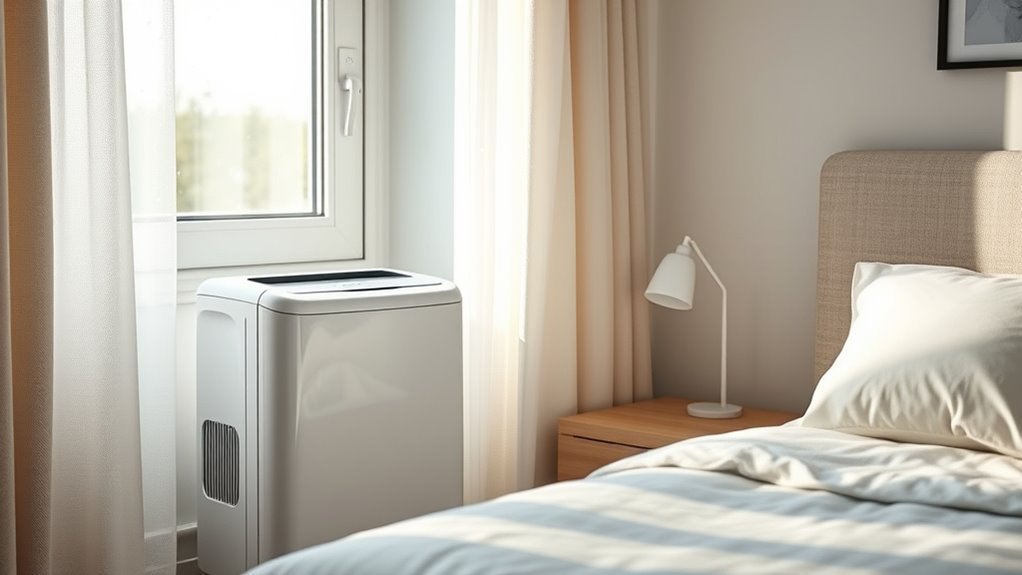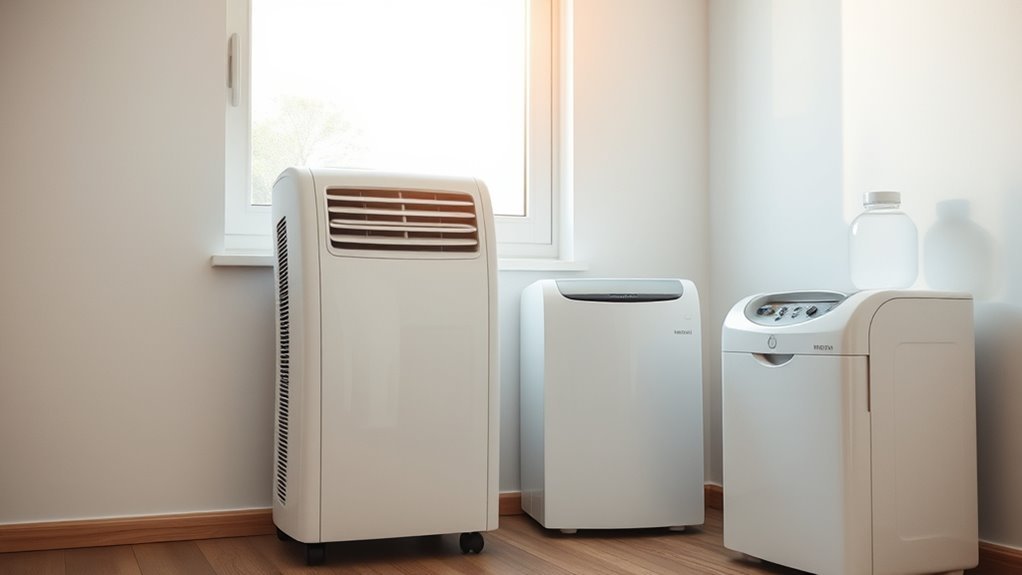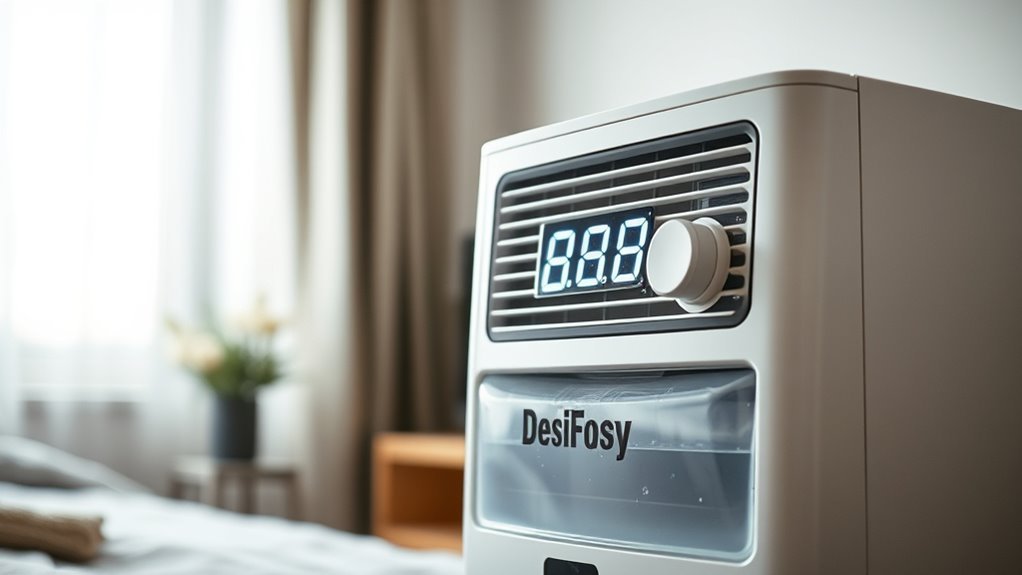
The numbers on a dehumidifier can mean several different things, depending on where you see them. A number on the product label usually means moisture-removal capacity in pints per day. A number on the digital screen usually means the room humidity, your target humidity setting, a timer, fan speed, or an alert. The key is knowing whether you are looking at capacity, tank size, or a control setting.
Quick Answer
The main number on a dehumidifier label is usually its capacity: how many pints of water it can remove from the air in 24 hours under test conditions. The digital display usually shows current humidity, your humidity setpoint, timer hours, fan speed, or a full-bucket/error alert.
Key Takeaways
- A pint rating, such as 20, 30, 35, or 50 pints, means moisture removed per 24 hours, not bucket size.
- Current dehumidifier labels may look smaller than older labels because DOE testing changed after 2019.
- For most homes, set the target humidity around 40% to 50%, while keeping indoor humidity below 60%.
- Choose size by both square footage and dampness level, not square footage alone.
- If you see leaks, standing water, or visible mold, fix the moisture source first; a dehumidifier alone is not a repair.
At a Glance
| Time Required | 5 to 10 minutes to measure the room and check humidity |
| Difficulty | Easy |
| Tools Needed | Tape measure, hygrometer, and the dehumidifier label or manual |
| Cost | A basic humidity meter is usually inexpensive if you do not already have one |
What Do the Numbers on a Dehumidifier Mean?
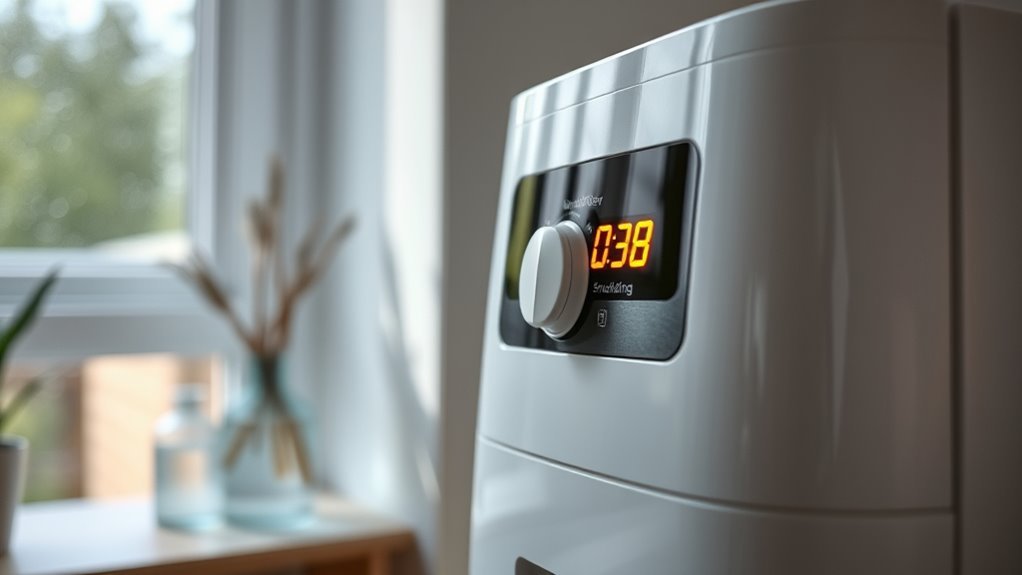
The numbers on a dehumidifier usually fall into three groups: capacity numbers, display numbers, and operating numbers. Capacity is the big shopping number. It tells you how much water the unit can remove from the air in 24 hours and is usually listed in pints per day. ENERGY STAR explains that capacity is measured at standardized test conditions, so it is best for comparing models, not predicting the exact amount of water you will empty every day.
Display numbers are different. If the screen says 48, 50, or 55, it may be showing the current room humidity or the humidity setting you selected. Many models also show timer hours, fan speed, defrost status, filter alerts, or full-bucket warnings. Check the label or manual before assuming every number means pint capacity. Our guide to what RH means on a dehumidifier explains the humidity reading.
Note: A modern 50-pint dehumidifier is not the same as every older 50-pint model. DOE testing changed after 2019, so older 70-pint labels may compare more closely with many newer large-capacity units.
What Is Dehumidifier Capacity?
Dehumidifier capacity is the amount of moisture the machine can remove from the air in one day. It is measured in pints per 24 hours. A higher pint rating means the unit can remove more moisture under the test conditions used for its label.
Recommended Products

4,500 SQ. FT. DEHUMIDIFIER – Removes up to 50 pints of moisture per day with an adjustable humidity setting from 35% to 85%. Perfect for use in basement, bathroom, bedroom, office, kitchen, cellar, or crawlspace. Maintain a healthy 45%-55% humidity range

【Ideal for Large Homes & Basements (Up to 5,000 Sq. Ft)】The Waykar 80 pint dehumidifier efficiently removes up to 80 pints of moisture per day in high-humidity conditions (95°F, 90% RH). In warmer, damp spaces like basements (86°F, 80% RH), it removes 62 pints/day. This dehumidifier for basement is perfect for large areas such as basements, bathrooms, bedrooms, and living rooms. Customize your space by adjusting the humidity level from 30% to 80%, creating a drier and healthier environment
Capacity Means Moisture Removal
Capacity does not mean the physical size of the appliance, and it does not mean the bucket holds that many pints. A 50-pint dehumidifier can remove up to 50 pints per day under rated test conditions, but its collection bucket may hold far less. If the bucket fills, the unit will usually shut off until you empty it or connect a drain hose.
Real-world water removal changes with room temperature, starting humidity, airflow, and whether the space has ongoing moisture sources such as laundry, seepage, or poor ventilation. Cooler air holds less moisture, so a basement unit may collect less water than its label suggests, especially once the room is already dry.
Pint Ratings Explained
Pint ratings are most useful when comparing one model with another (see also how dehumidifiers are rated). ENERGY STAR publishes a rough conversion from the older 30/50/70-pint labels many shoppers remember to the current test conditions. Actual changes vary by model, so check the manufacturer’s specifications.
| Number you may see | What it usually means |
|---|---|
| About 20 pints | Current label that roughly replaces many older 30-pint portable models |
| About 30 pints | Current label that roughly replaces many older 50-pint portable models |
| About 40 to 45 pints | Current label that roughly replaces many older 70-pint portable models |
| 70 pints | Often an older rating style; compare it carefully with current DOE-rated labels |
Match Capacity To Space
To match capacity to your space, look at both square footage and moisture level. A small room that is wet can need more capacity than a large room that is only slightly damp. This is why a room-size chart should also ask whether the space is slightly damp, very damp, or wet.
What Do Pint Ratings Tell You?
Pint ratings tell you how much moisture the dehumidifier can remove in 24 hours under rating conditions. They do not tell you the bucket size, the exact daily water collection in your home, or the amount of humidity that will disappear in one hour.
Use the pint number as a comparison tool. A 35-pint unit generally removes more moisture than a 22-pint unit. A 50-pint unit generally removes more than a 35-pint unit. But the right choice still depends on the room’s dampness, temperature, air movement, and whether new moisture keeps entering the space.
The best dehumidifier number is not always the biggest number. It is the smallest capacity that can hold your room near the target humidity without running nonstop.
What Do Digital Display Numbers Mean?
The digital numbers on a dehumidifier usually show one of these readings:
| Display number | Common meaning |
|---|---|
| 45%, 50%, 55% | Current room humidity or your target humidity setting |
| 1 to 24 | Timer hours before start or shutoff |
| 1, 2, 3 or low/high | Fan speed or operating mode |
| E1, E2, P1, FL, FO | Model-specific error, sensor, defrost, or full-bucket code |
If your display switches between two numbers, it may be alternating between current humidity and the set humidity. For example, the room may be at 58% while your target is 45%.
What Humidity Setting Should You Use?
For most homes, set the dehumidifier between 40% and 50% relative humidity. The EPA recommends keeping indoor humidity below 60% and ideally between 30% and 50% when possible. A 45% setting is a good starting point for many basements and damp rooms.
| Space or condition | Good starting setting | Why |
|---|---|---|
| Living areas | 45% to 50% | Balances comfort and moisture control |
| Basements | 40% to 50% | Helps reduce musty odor and mold risk |
| Very damp rooms | 40% to 45% | Gives stronger drying without over-drying most spaces |
| Cold winter rooms | Use only if humidity is high | Many heated rooms are already dry; watch for condensation |
Pro Tip: Use a separate hygrometer to confirm the room humidity. Built-in sensors can be affected by the air immediately around the dehumidifier.
How Much Humidity Should You Set?
Start at 45% and adjust after a day or two. If the room still smells musty or feels damp, lower the setting to 40%. If the air feels too dry, raise it toward 50%. Try not to run the room below 30% because very dry air can feel uncomfortable and may affect wood furniture, flooring, and skin comfort.
Do not use 60% to 70% as a normal target for a damp space. Humidity that high may allow musty odors, condensation, dust mites, and mold risk to continue. The EPA’s indoor air guidance recommends keeping indoor humidity between 30% and 50% where practical.
What Size Dehumidifier Do You Need?
The size you need depends on two things: the size of the space and how damp it is before dehumidification. ENERGY STAR’s buying guidance uses both room size and dampness condition when estimating minimum capacity.
| Condition without dehumidification | Small to medium room under 2,000 sq. ft. | Large room over 2,000 sq. ft. |
|---|---|---|
| Slightly to moderately damp; musty odor comes and goes | 20 to 30 pints per day | 30+ pints per day |
| Very damp; room consistently smells or feels damp | 25 to 40 pints per day | 40+ pints per day |
| Wet; sweating walls, seepage, or laundry drying load | 30 to 50 pints per day | 50+ pints per day |
If your room is near the upper end of a range, choose the larger unit. ENERGY STAR recommends choosing a slightly larger unit rather than a smaller one, especially when the room has persistent moisture.
Recommended Products

[The Undisputed Champion — Industry-Leading Dehumidifier Brand] When you choose AEOCKY, you get double market validation. According to data independently verified by Stackline, a leading third-party data analytics company, AEOCKY was an industry‑leading dehumidifier brand on Amazon U.S. in 2025. This means you’re not just choosing a flagship product from a market leader, but a top-performing brand backed by independent market data and trusted by millions of real users, delivering the ultimate combination of performance, quality and trust.
How Do Numbers Affect Room Size?
The pint number affects how much air moisture the unit can remove, but it does not create a fixed square-foot rule by itself. A 30-pint unit may work well in a moderately damp room, but the same room may need a larger unit if it has seepage, indoor laundry, or a constantly musty basement smell.
Room Square Footage
Measure the room’s length and width in feet, then multiply them to get square footage. A 20-foot by 30-foot basement is 600 square feet. A 40-foot by 50-foot open area is 2,000 square feet. Once you know the area, compare it with the dampness level rather than choosing from square footage alone.
Capacity Matches Space
A properly matched unit should gradually bring the room into the target range and cycle off instead of running constantly. If the dehumidifier never reaches the set humidity, it may be undersized, blocked by poor airflow, placed in the wrong spot, or fighting an active moisture source.
Do Bigger Dehumidifier Numbers Work Better?
Bigger numbers work better when the room actually needs more moisture removal. A larger-capacity model can dry a damp basement faster and may handle heavy moisture loads better than a small unit. But bigger is not automatically better for every room.
An oversized unit may cost more, take up more space, make more noise, and cycle on and off more than needed in a small room. A better comparison is capacity plus energy efficiency. ENERGY STAR describes efficiency as how many liters of water a dehumidifier removes per kilowatt-hour of electricity consumed, which is different from pint capacity.
What Humidity Level Stops Mold Growth?
No humidity setting can guarantee that mold will never grow, especially if there are leaks, damp materials, condensation, or existing mold. However, keeping indoor relative humidity below 60% and ideally between 30% and 50% helps reduce mold risk. That is why 40% to 50% is a common target for basements and damp rooms.
Warning: A dehumidifier does not fix roof leaks, plumbing leaks, foundation seepage, standing water, or existing mold contamination. Dry wet materials quickly, repair the moisture source, and consider professional help for large or recurring mold problems.
Humidity control is only one part of moisture control. Also look for condensation on windows or pipes, damp walls, blocked air movement, clogged air-conditioning drains, and poor bathroom or kitchen ventilation.
How Do You Choose the Right Size?
Choose the right size by working through the numbers in order: room square footage, dampness level, pint rating, drainage needs, and energy efficiency. This keeps you from buying a unit that is too weak, too expensive, or inconvenient to empty.
Measure Room Square Footage
Measure the length and width of the space in feet. Multiply them to get square footage. If the space has multiple connected rooms, measure the total open area the dehumidifier will serve. Closed doors, tight hallways, and separate rooms may need separate units or better airflow.
Match Capacity To Humidity
Use a hygrometer to check the room before buying. A space around 50% to 60% RH may need only moderate capacity. A space over 70% RH, or a room with visible damp spots or laundry moisture, needs more capacity. If humidity stays high even with a properly sized unit, look for leaks, seepage, or ventilation problems.
Check Tank, Drainage, and Efficiency Numbers
After pint capacity, check the other numbers on the product page or label. Bucket capacity tells you how often you may need to empty it. A hose drain lets water flow to a floor drain. A built-in pump can move water upward to a sink or drain line. Wattage and energy-efficiency ratings help estimate operating cost. Noise ratings in decibels matter if the unit will run near bedrooms or living areas.
Frequently Asked Questions
What number should be on a dehumidifier?
For most damp rooms, start by looking for a capacity that matches the room size and moisture level. Many current homes use 20- to 30-pint units for smaller or moderately damp spaces and 40- to 50+ pint units for basements, large rooms, or wet conditions. For the humidity setting, start around 45%.
What do the digital numbers mean on a dehumidifier?
The digital numbers usually show the current room humidity, the humidity target you set, timer hours, fan speed, or an alert code. If the number has a percent sign, it is usually humidity. If it counts down by hour, it is usually the timer.
What do the two numbers on a dehumidifier mean?
Two numbers often refer to two different things, such as pint capacity and bucket size, current humidity and set humidity, or timer and humidity setting. Pint capacity is daily moisture removal. Bucket size is how much water the tank can hold before it needs emptying.
Is a 70-pint dehumidifier better than a 50-pint dehumidifier?
Not always. Some 70-pint ratings come from older test standards, while many current large portable units are labeled around 40 to 50 pints. Compare current DOE-rated labels, room conditions, drainage features, and efficiency instead of relying only on the largest number.
What humidity setting should I use on a dehumidifier?
Most homes do well between 40% and 50% relative humidity, and 45% is a common starting point. The EPA recommends keeping indoor humidity below 60%, ideally between 30% and 50%.
Does the pint rating on a dehumidifier mean the bucket size?
No. The pint rating is how much moisture the unit can remove in 24 hours under test conditions. The bucket usually holds far less, so the unit shuts off when it is full unless you use a drain hose.
Conclusion
The numbers on a dehumidifier are easiest to understand when you separate them by purpose. The pint number is capacity, the tank number is storage, and the screen number is usually humidity, timer, fan speed, or an alert. For most homes, choose capacity by room size and dampness level, then set the unit around 40% to 50% relative humidity. If you are comparing an older 70-pint model with a newer dehumidifier, check the current DOE-rated capacity instead of assuming the numbers mean the same thing.
Sources
- ENERGY STAR: Dehumidifiers — capacity selection by room size and dampness condition
- ENERGY STAR: Dehumidifier Testing and Capacity — DOE capacity ratings, test changes, and efficiency metrics
- U.S. EPA: A Brief Guide to Mold, Moisture and Your Home — indoor humidity targets and moisture-control guidance
- U.S. EPA: Care for Your Air — indoor air quality and humidity guidance
- American Lung Association: Dust Mites — humidity reduction for dust mite control