
Affiliate disclosure: As an Amazon Associate, we may earn from qualifying purchases at no extra cost to you. Product offers and seller availability can change, so confirm the current listing before ordering.
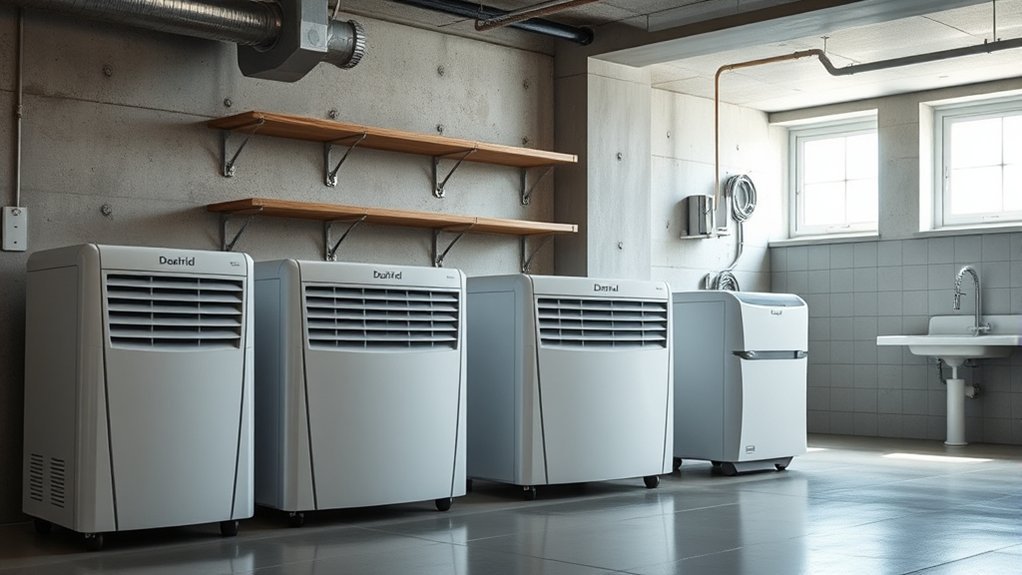
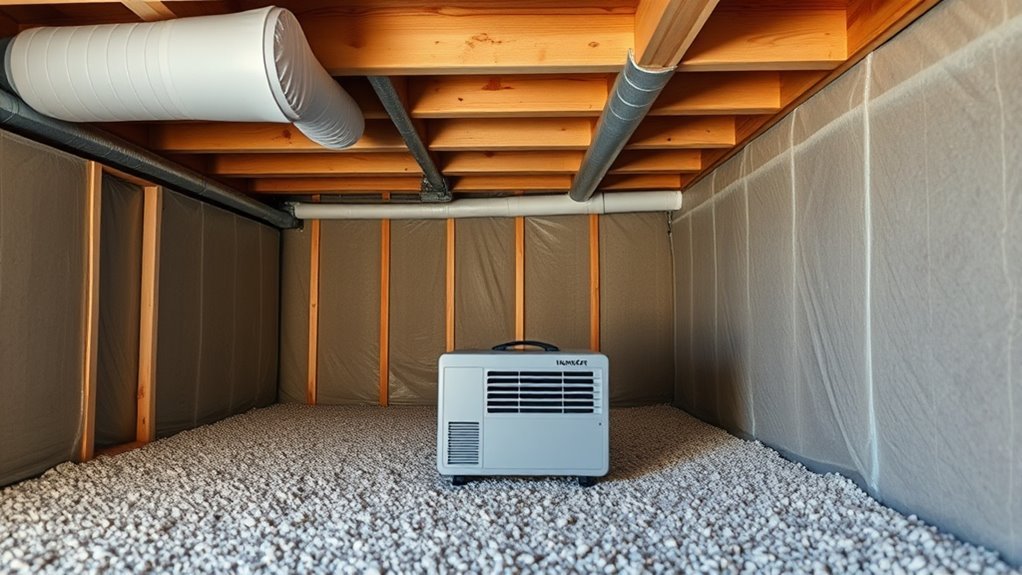
The best eco dehumidifier depends on the size of the space, how serious the moisture problem is, and how efficiently the unit removes water. For large basements and garages, a correctly sized compressor model with verified ENERGY STAR efficiency data is usually the practical choice. For bedrooms, bathrooms, closets, and RVs, a low-power thermoelectric or reusable desiccant unit may use less electricity, but it also removes far less moisture. This 2026 guide compares six relevant options and clearly separates high-capacity room dehumidifiers from small-space moisture-control devices.
Quick Verdict
- Best overall for a large damp area: Vellgoo 64 Pint Dehumidifier
- Best high-capacity option: Yaufey 80-Pint Dehumidifier
- Best mid-size compressor option: KNKA 34-Pint Dehumidifier
- Best quiet mini option: CLEVAST Small Dehumidifier
- Best low-wattage compact option: NeedDuck 44-Ounce Dehumidifier
- Best reusable option for enclosed spaces: Eva-Dry E-333
Quick Comparison of the Best Eco Dehumidifiers
| Product | Best For | Type | Listed Output or Coverage | Efficiency Advantage | Amazon |
|---|---|---|---|---|---|
| Vellgoo 64 Pint | Large basements, garages, and storage areas | Compressor | Amazon lists up to 64 pints/day at 90°F and 90% RH; up to 4,000 sq. ft. ENERGY STAR lists 24.5 pints/day for the certified model family. | ENERGY STAR certified and listed as Most Efficient; IEF 1.87 L/kWh | Check Amazon |
| Yaufey 80-Pint | Large rooms and very damp spaces | Compressor | Amazon lists up to 80 pints/day at 95°F and 90% RH and 60 pints/day at 86°F and 80% RH; up to 5,000 sq. ft. ENERGY STAR lists 24.93 pints/day. | ENERGY STAR certified; IEF 1.70 L/kWh; humidistat and continuous drain | Check Amazon |
| KNKA 34-Pint | Medium rooms, laundry areas, and basements | Compressor | Up to 34 pints/day at 95°F and 90% RH; up to 2,500 sq. ft. | Automatic humidity control and three drainage choices; no ENERGY STAR certification confirmed for this model | Check Amazon |
| CLEVAST Small | Bedrooms, bathrooms, closets, and RVs | Thermoelectric | Up to 10 oz/day at 86°F and 85% RH; 30-ounce tank; intended for small enclosed spaces | Listed at 0.55 kWh/day in high-efficiency mode; 24 dB quiet mode | Check Amazon |
| NeedDuck 44-Ounce | Small rooms and gentle humidity control | Thermoelectric | Listed for up to 215 sq. ft.; 44-ounce tank | 28-watt design with timers and automatic shutoff | Check Amazon |
| Eva-Dry E-333 | Closets, cabinets, cars, boats, and safes | Rechargeable desiccant | Up to 333 cubic feet; absorbs about 4 to 6 oz before recharging | Cordless, reusable, and designed for repeated recharging | Check Amazon |
Important: A low-wattage mini dehumidifier is not automatically more efficient at removing water. Compressor units use more power but can remove many times more moisture. Also, retailer “maximum pint” claims may use hotter and more humid test conditions than the capacity shown in an ENERGY STAR record. Compare test conditions, verified capacity, daily extraction, room size, and efficiency data rather than wattage alone.
Vellgoo 64 Pint Dehumidifier with Drain Hose — Best Overall for Large Spaces
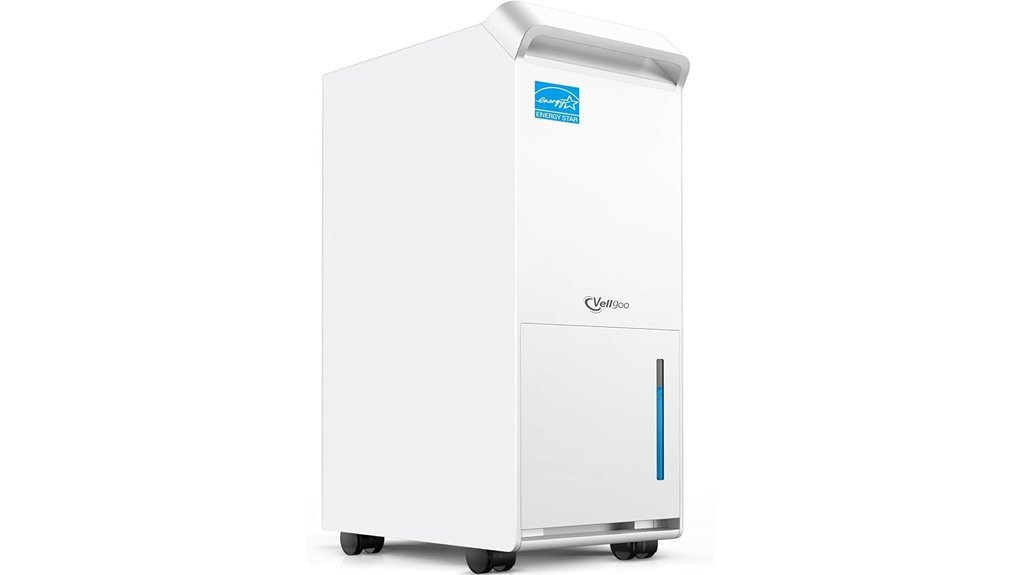
The Vellgoo 64 Pint Dehumidifier is the strongest all-around choice here for a large basement, garage, laundry room, or storage area. Amazon lists coverage up to 4,000 square feet and moisture removal up to 64 pints per day at 90°F and 90% RH. The Amazon model name is VGE033A3BS, which is included in an ENERGY STAR certified model family that lists 24.5 pints per day, an integrated energy factor of 1.87 L/kWh, and Most Efficient status. It also offers a built-in tank, an included 6.56-foot drain hose, and compatibility with a standard garden hose for longer continuous drainage.
Why You’ll Like It: Smart humidity control lets you select a target from 40% to 80% RH, while continuous mode helps with persistent dampness. Auto defrost, auto restart, casters, and a hidden handle make it easier to run and move.
Best For: Buyers who want strong large-space moisture control, flexible drainage, and independently verifiable efficiency data.
Who Should Avoid It: Anyone treating only a small bedroom or closet, where a large compressor unit may take up unnecessary space and use more power than needed.
Pros:
- High-capacity compressor design for large damp areas
- Three practical drainage methods
- Adjustable humidistat, continuous mode, auto defrost, and auto restart
Cons:
- The 64-pint retailer figure uses hotter, wetter conditions than the 24.5-pint capacity shown in the ENERGY STAR record, so the two numbers should not be treated as equivalent
- Large compressor units are heavier and louder than mini thermoelectric models
- Match the Amazon model name VGE033A3BS to the certified model information if the listing changes
Yaufey 80-Pint Dehumidifier — Best High-Capacity Option
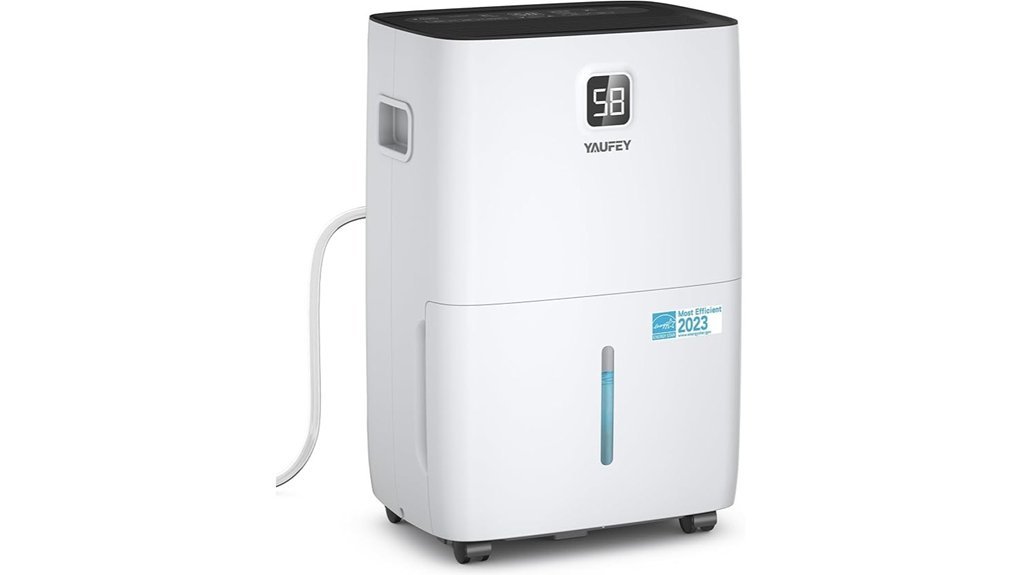
The Yaufey 80-Pint Dehumidifier targets large, damp spaces up to 5,000 square feet. Its Amazon listing separates maximum output by test condition: up to 80 pints per day at 95°F and 90% RH, or 60 pints per day at 86°F and 80% RH. The exact model number JD025Q-80 also appears in the ENERGY STAR Product Finder, where it is listed at 24.93 pints per day with an integrated energy factor of 1.70 L/kWh. This makes it easier to distinguish retailer maximum-output claims from standardized efficiency information.
Why You’ll Like It: You get a 1.06-gallon tank, automatic full-tank shutoff, an included 3.28-foot drain hose, and the option to connect a compatible garden hose. Four preset modes, three fan speeds, a 24-hour timer, and a 30% to 80% humidity range give you more control.
Best For: Large basements, living areas, garages, and other spaces with frequent or severe humidity.
Who Should Avoid It: Buyers with a small room or mild seasonal dampness who do not need a large-capacity compressor model.
Pros:
- High listed moisture-removal capacity with test conditions disclosed
- Manual and continuous drainage options
- Multiple humidity modes, fan speeds, and timer controls
Cons:
- The 80-pint and 60-pint retailer figures use warmer, wetter test conditions than the 24.93-pint capacity in the ENERGY STAR record
- The included hose may be too short for some room layouts
- The model is ENERGY STAR certified, but the current ENERGY STAR record does not mark it as Most Efficient
KNKA 2500 Sq.Ft Dehumidifier with Drain Hose — Best Mid-Size Compressor Pick
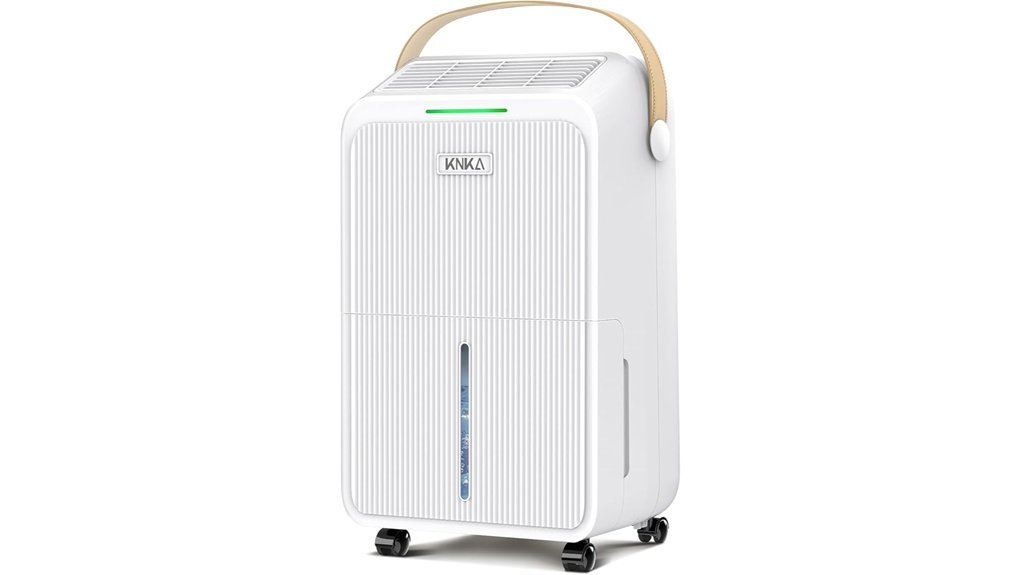
The KNKA 2500 Sq.Ft Dehumidifier is a useful middle ground between mini units and larger 4,000- to 5,000-square-foot machines. The listing states that it removes up to 34 pints per day at 95°F and 90% RH. You can select DEHU mode for target humidity, DRY mode for laundry, or CONT mode for nonstop operation.
Why You’ll Like It: It includes a 0.79-gallon tank and a 3.28-foot drain hose. A larger external tank is also sold separately. Automatic humidity control, a 24-hour timer, child lock, washable filter, and a listed 37 dB operating level add convenience.
Best For: Medium rooms, laundry areas, offices, and moderately damp basements where continuous drainage is available.
Who Should Avoid It: Buyers who need verified ENERGY STAR certification or who want a tiny unit for a closet or cabinet.
Pros:
- Useful balance of compressor capacity and manageable size
- DEHU, DRY, and continuous modes
- Tank, hose, and optional external-tank drainage choices
Cons:
- The 34-pint maximum uses hot, very humid test conditions
- The included hose may limit placement
- No ENERGY STAR certification was confirmed for this model
CLEVAST Small Quiet Mini Dehumidifier — Best Quiet Mini Option
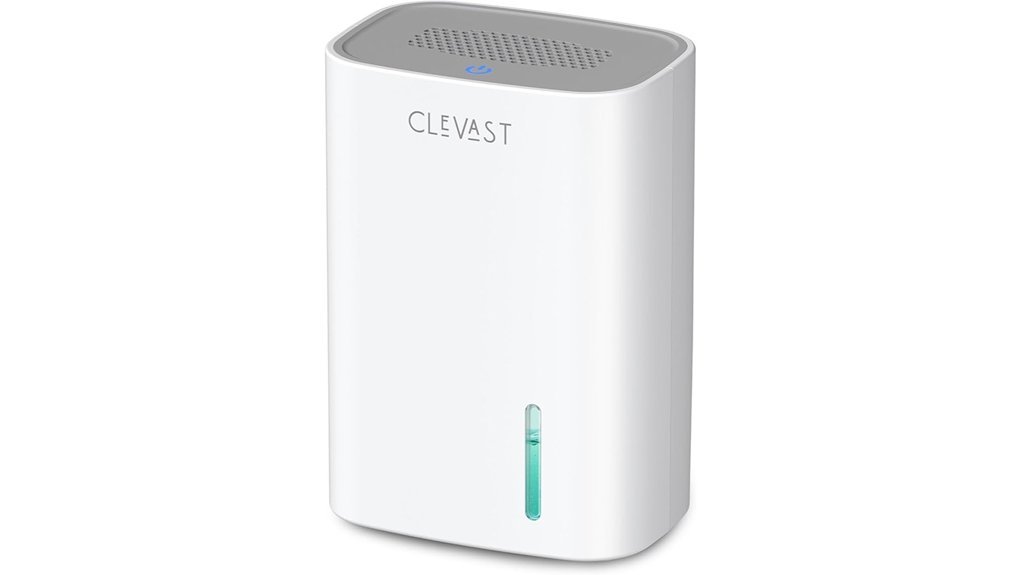
The CLEVAST Small Dehumidifier is designed for light moisture control in bedrooms, bathrooms, closets, campers, and RVs. Its current Amazon listing states up to 10 ounces of water collection in 24 hours at 86°F and 85% RH and a 30-ounce tank. Treat it as a small-space unit rather than relying on an exact square-foot coverage claim.
Why You’ll Like It: Quiet mode is listed at 24 dB, and high-efficiency operation is listed at about 0.55 kWh per day. The compact body, built-in handle, automatic shutoff, overheat protection, and removable tank make it easy to place and maintain.
Best For: Small warm rooms with light condensation or musty air, especially where low noise matters.
Who Should Avoid It: Anyone dealing with flooding, wet walls, a large basement, or heavy daily moisture. A compressor model will be more appropriate.
Pros:
- Compact and easy to move
- Very low listed noise in quiet mode
- Low daily electricity use compared with full-size compressor units
Cons:
- Removes ounces rather than pints per day
- Performance depends heavily on warm, humid room conditions
- Tank-only drainage requires manual emptying
NeedDuck Dehumidifier with 44-Ounce Tank — Best Low-Wattage Compact Pick
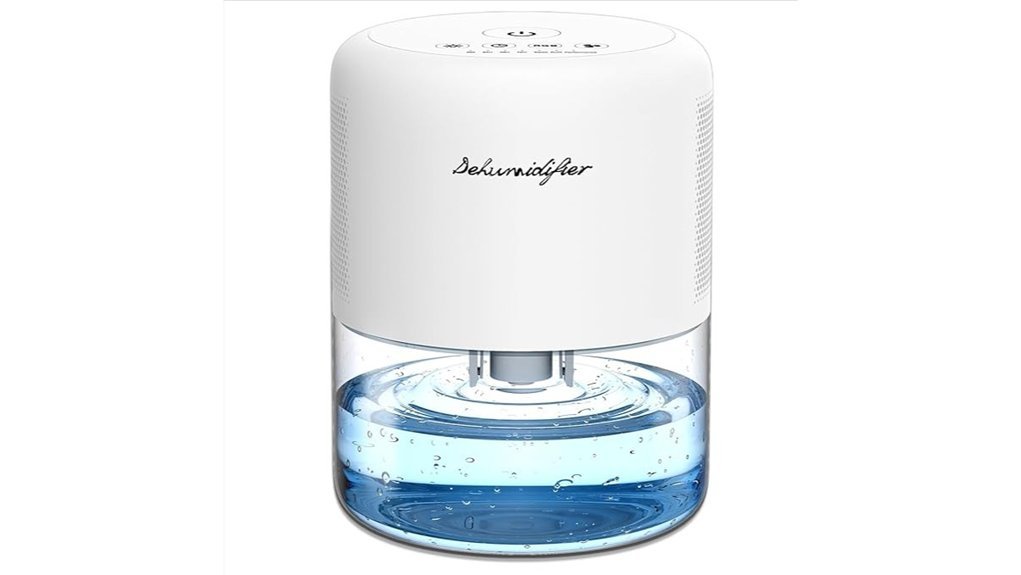
The NeedDuck 44-Ounce Dehumidifier is a compact 28-watt option for gradual humidity control in areas listed up to 215 square feet. It measures about 5.91 × 5.91 × 8.46 inches and weighs about 2.6 pounds, so it is easy to move between a bathroom, bedroom, closet, or RV.
Why You’ll Like It: The 44-ounce tank is larger than many mini units. Automatic shutoff, automatic defrost, three modes, four timer choices, and ten light settings add flexibility. Its gradual-control design is better suited to mild small-room humidity than heavy moisture removal.
Best For: Small rooms with mild humidity where compact size and low wattage matter more than fast extraction.
Who Should Avoid It: Buyers treating a wet basement, water intrusion, or a room that needs many pints of moisture removed each day.
Pros:
- Low 28-watt power draw
- Compact, about 2.6-pound design
- Automatic shutoff, defrost, timer, and multiple modes
Cons:
- The current listing does not provide a clearly verifiable daily moisture-removal figure
- Suitable only for light-duty small-space use
- Decorative lighting may not appeal to every buyer
Eva-Dry Wireless Mini Dehumidifier (E-333) — Best Reusable Closet Pick
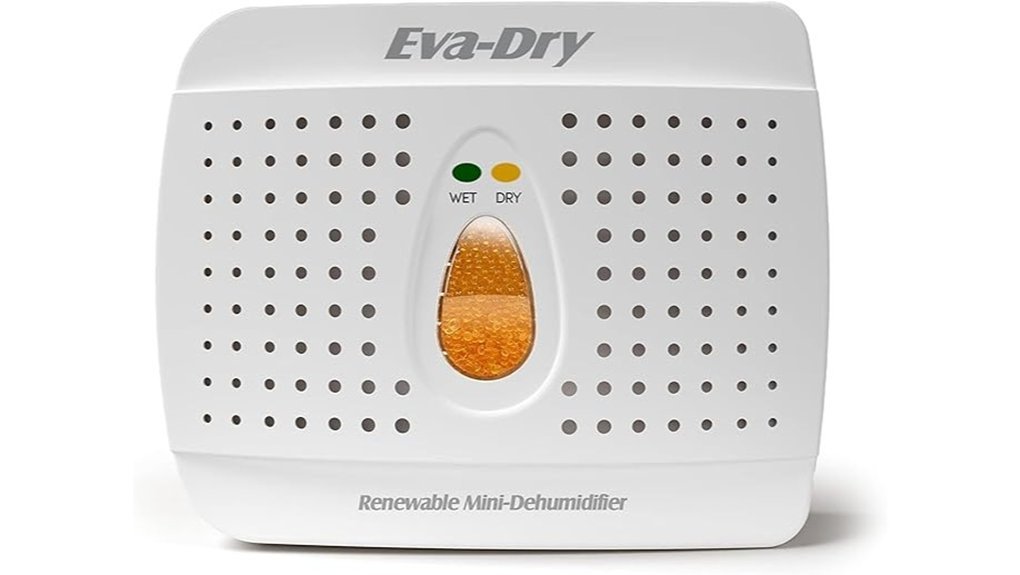
The Eva-Dry E-333 is a rechargeable desiccant moisture absorber for enclosed spaces up to 333 cubic feet. It is not a room dehumidifier, but it can be useful in closets, cabinets, cars, boats, gym bags, and safes where cords, tanks, and continuous drainage are impractical.
Why You’ll Like It: The unit absorbs about 4 to 6 ounces before recharging. Indicator beads change from orange to green when regeneration is needed, commonly after about 20 to 30 days depending on conditions. Eva-Dry states that its renewable silica-gel products, including the E-333, carry a five-year limited warranty, and the company describes its renewable line as built to last up to ten years.
Best For: Tiny enclosed spaces that need slow, cordless moisture absorption.
Who Should Avoid It: Anyone expecting it to dry a bedroom, bathroom, basement, or other open room.
Pros:
- Cordless, spill-resistant, and reusable
- No disposable refill packets
- Clear color indicator shows when recharging is needed
Cons:
- Coverage is measured in cubic feet, not square feet
- Absorbs only a few ounces before recharging
- Not suitable for active leaks or heavy room humidity
How We Selected These Dehumidifiers
For this update, we compared each product’s category, current linked Amazon listing, daily moisture-removal claim, test conditions, coverage guidance, drainage method, tank size, controls, noise claim, electricity use, and suitability for the article’s eco-focused buyer intent. Where a compressor model had an identifiable ENERGY STAR record, we also checked the certified capacity and integrated energy factor. We favored products that either provide meaningful efficiency evidence, use low power for an appropriate small-space job, or can be reused instead of replaced. We did not treat low wattage as proof of high dehumidification efficiency.
Factors to Consider When Choosing an Eco Dehumidifier
Start with the moisture problem, not the marketing label. A large, wet basement needs a different machine than a closet with occasional condensation. Compare standardized capacity, operating conditions, drainage, controls, noise, and maintenance before deciding which model is the greener choice for your space.
Energy Efficiency
For compressor dehumidifiers, an ENERGY STAR certification and an integrated energy factor provide more useful efficiency evidence than wattage alone. Match the model name or model number to the official certified record, and do not assume a retailer’s “maximum pints” figure uses the same test conditions as the capacity in that record. For a mini thermoelectric unit, check both daily energy use and daily water removal. A 28-watt device can use little power but still be a poor choice if it runs continuously without solving the humidity problem.
Refrigerant and Environmental Profile
For compressor dehumidifiers, energy use is only part of the environmental picture. When an official efficiency record provides refrigerant information, compare the refrigerant type and global warming potential along with efficiency, durability, correct sizing, and expected runtime. The current ENERGY STAR records for the Vellgoo and Yaufey models in this guide list HFC-32 refrigerant with a GWP of 675. Avoid calling a product “eco-friendly” based on a single feature.
Moisture Removal Capacity
Capacity figures are meaningful only when the test conditions are shown. Hotter, wetter air lets a dehumidifier collect more water, so a retailer “maximum” measured around 90% RH can be much higher than the standardized capacity shown for an ENERGY STAR model. Compare like-for-like figures when possible, use pints per day for compressor units and ounces per day for mini units, and do not treat those categories as direct substitutes.
Coverage Area Size
Square-foot coverage is a rough guide, not a guarantee. Ceiling height, room temperature, outdoor air leaks, drainage, and the severity of the moisture problem all affect results. Choose extra capacity for a very damp basement, but avoid oversizing a unit for a small bedroom if a lower-output model can maintain the space comfortably.
Noise Level
Thermoelectric models are usually quieter because they do not use a full compressor. Compressor units move much more air and remove more water, so they are normally more noticeable. Use listed decibel figures only as a comparison point because measurement distance, fan speed, and room acoustics can change what you hear.
Drainage Options
A tank works well for occasional use, but continuous drainage is more practical in a basement or laundry area. Check the included hose length, whether gravity drainage requires a floor drain below the outlet, and whether a garden hose is supported. Automatic shutoff is essential when you plan to use the tank.
Smart Humidity Controls
A humidistat can reduce unnecessary runtime by cycling the compressor around your selected level. Also look for auto restart, memory recovery, defrost protection, timer controls, and a clear humidity display. These features improve convenience, but they do not replace correct sizing or proper ventilation.
Before You Buy Checklist
- Measure the room and note whether it is mildly humid, damp, or visibly wet.
- Decide whether you need pints per day or only ounces per day.
- Check the capacity test temperature and relative humidity.
- Verify the exact model name or model number for any ENERGY STAR claim, and compare the certified capacity and integrated energy factor when available.
- Confirm tank size, drain-hose length, and drain location.
- Review the manual for minimum operating temperature and filter care.
- Fix plumbing leaks, rain entry, or foundation water before relying on a dehumidifier.
Moisture Safety Note: A dehumidifier can help manage airborne moisture, but it cannot repair a leak, remove standing water, or safely remediate established mold. Address the moisture source first and use qualified help when damage is extensive.
Frequently Asked Questions
What Makes a Dehumidifier Eco-Friendly?
Look for verified energy-efficiency certification, a correctly sized capacity, automatic humidity control, reusable filters, repair or warranty support, and a refrigerant or product design suited to the job. For tiny spaces, a rechargeable desiccant device may also reduce disposable waste.
Are Mini Dehumidifiers Good for Basements?
Usually not for a full basement. Mini thermoelectric units remove ounces of water per day, while compressor models remove pints. A mini unit may help in a small enclosed corner, but it should not be used as the main solution for serious basement dampness.
Do Eco Dehumidifiers Work in Cold Basements?
They can, but moisture-removal performance normally falls as temperature drops. Choose a model with automatic defrost and check its minimum operating temperature. If the basement is very cold, improve heating, airflow, drainage, and insulation as appropriate.
Can a Dehumidifier Stop Mold?
Lower humidity can make conditions less favorable for mold growth, but a dehumidifier does not remove existing mold or fix the water source. Clean or remediate affected material safely and repair leaks or condensation problems.
Are Rechargeable Dehumidifiers Worth Buying?
They are useful for closets, cabinets, safes, cars, and other small enclosed spaces. They are inexpensive to run and reusable, but they cannot replace a powered room dehumidifier when moisture is heavy.
How Much Electricity Does a Dehumidifier Use?
Check the wattage on the nameplate or listing. To estimate energy use, divide watts by 1,000 and multiply by the hours of operation. For example, a 300-watt unit running for eight hours uses about 2.4 kWh. Actual use may be lower when a humidistat cycles the unit off.
What Is the Difference Between Maximum Pints and ENERGY STAR Capacity?
A retailer may advertise a maximum moisture-removal figure measured in very hot, very humid air, while an ENERGY STAR record reports capacity under standardized test requirements. Those numbers can differ substantially even for the same product. When comparing compressor dehumidifiers, use the same test basis whenever possible.
How Often Should I Clean an Eco Dehumidifier?
Follow the manufacturer’s manual. As a general routine, check the filter and tank every two to four weeks, clean them sooner in dusty conditions, and keep the air inlet and outlet clear. Always unplug the unit before cleaning.
Final Recommendation
Choose the Vellgoo 64 Pint Dehumidifier for a large damp area where strong moisture control, continuous drainage, and verified efficiency matter most. Its current ENERGY STAR record supports the strongest verified compressor-efficiency case in this lineup. Pick the Yaufey 80-Pint when you want higher retailer-listed peak capacity with verified ENERGY STAR certification, or the KNKA 34-Pint for a medium-size compressor option.
For small rooms, the CLEVAST offers the clearest daily extraction and energy-use information, while the NeedDuck prioritizes low wattage and a larger mini-unit tank. For a closet, cabinet, car, or safe, the Eva-Dry E-333 is the most suitable reusable choice.
The key is correct sizing: the most eco-friendly dehumidifier is the one that solves your moisture problem without running a weak unit continuously or oversizing a high-power machine.


[…] Best Eco Dehumidifier 2026: 6 Efficient Picks Compared […]