Choosing the best dehumidifier for a small grow room is less about advertised square-foot coverage and more about the actual moisture load. Watering, wet growing media, plant transpiration, humid intake air, and lower lights-off temperatures can all cause relative humidity to rise quickly. The compact models below are intended for tiny, enclosed grow tents, cabinets, and lightly planted spaces with modest humidity problems.
These mini dehumidifiers should be treated as supplemental humidity-control tools rather than replacements for room-scale compressor units. Use a separate hygrometer, check humidity after watering and during lights-off, and judge each unit by whether it can hold your plant-specific target under real operating conditions.
- Listing-stated daily moisture removal under the stated test conditions.
- Continuous-drain capability and tank capacity.
- Automatic shutoff, restart behavior, timers, and operating modes.
- Suitability for tight spaces and ease of routine monitoring.
- Honest limitations involving temperature, plant moisture, heat output, and unattended use.
Quick Comparison
| Product | Best For | Listing-Stated Daily Removal | Tank | Drain Hose | Amazon (paid link) |
|---|---|---|---|---|---|
| Levoair 68oz | Best overall mini option | Up to about 1,000 ml/day in warm, highly humid conditions | 2,000 ml | Yes | Check Price on Amazon |
| Litever LL-VS-DH07 | Tiny tents and continuous drainage | Listed at about 300 to 360 ml/day | Small removable tank | Yes | Check Price on Amazon |
| NeedDuck B-2 | Controls and multi-mode operation | Not clearly disclosed in the supplied listing information | 44 oz | No | Check Price on Amazon |
| Bangnics Mini | Power-off memory and quiet use | Up to about 420 ml/day at 86°F and 80% RH | Compact removable tank | No | Check Price on Amazon |
| BeOkay DH-AA2 | Safety features and a larger reservoir | Listed at about 300 ml/day | Listed as 1,657 ml; confirm the selected variant | No | Check Price on Amazon |
| Deyagoo DY501 | Quiet, simple tank monitoring | Up to 300 ml/day at 86°F and 80% RH | 1,500 ml | No | Check Price on Amazon |
| Lonxfy 35OZ | Simple display and timer controls | Listing-stated up to 350 ml/day | About 1 liter | No | Check Price on Amazon |
Best Overall: Levoair 68oz Dehumidifier
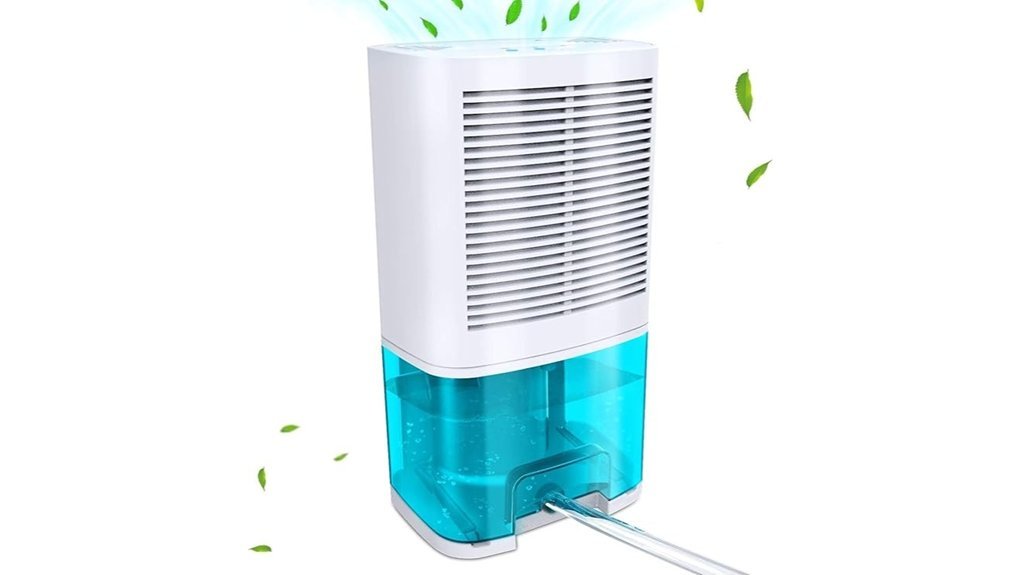
The Levoair 68oz model is the most capable mini option in this roundup on paper. It combines a 2,000 ml tank, a listing-stated maximum removal rate of about 1,000 ml per day in warm and highly humid conditions, and a continuous-drain connection. The drain option can reduce daily maintenance when the hose is installed with a steady downward slope into a safe collection point.
Why you may like it: It has the highest stated extraction rate in this group and provides both tank collection and continuous drainage.
Best For: Tiny grow rooms, small tents, or propagation spaces with a light to modest moisture load and access to a safe gravity drain.
Who should avoid it: Growers with dense mature plants, persistent condensation, frequent large humidity spikes, or a room that remains well above its target while ventilation is running.
Pros:
- 2-liter tank and continuous-drain option reduce routine emptying.
- Automatic shutoff helps prevent reservoir overflow.
- Higher listing-stated capacity than the other mini units compared here.
Cons:
- The maximum extraction figure depends on warm, highly humid test conditions and may be considerably lower in normal use.
- It does not replace a compressor dehumidifier when plant transpiration is high.
- The gravity hose must remain below the drain outlet without kinks, upward loops, or backflow.
Before buying: Confirm that the current listing includes the drain hose and matches the tank capacity and extraction specifications described above.
Best for Tiny Tents: Litever Small Portable Dehumidifier with Drain Hose
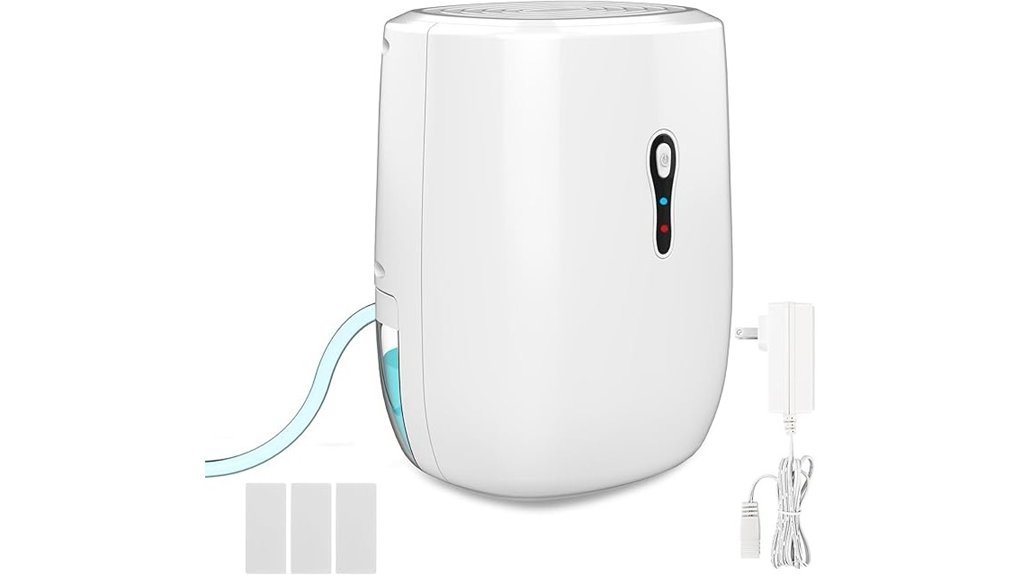
The Litever LL-VS-DH07 is designed for very small enclosed spaces. Its main advantage for a grow tent is the included drain-hose setup, which can allow continuous drainage instead of relying only on the small removable tank. Its compact 6 x 6.5 x 8.9-inch body is easier to position in a tent or cabinet without taking up much floor space.
Why you may like it: It is one of the smallest options here with a continuous-drain connection.
Best For: A tiny grow tent, propagation cabinet, seedling area, or lightly planted enclosure where floor space is limited.
Who should avoid it: Anyone expecting a mini unit to control a full room, a densely planted tent, or repeated severe humidity spikes.
Pros:
- Included drain-hose setup supports continuous drainage.
- Compact body fits into tight enclosures.
- Automatic shutoff provides backup protection when collecting water in the tank.
Cons:
- Its listed daily removal rate is modest compared with the moisture load of an active grow.
- Performance may fall when the enclosure is cool, open, or constantly supplied with humid air.
- The drain point must remain lower than the outlet for reliable gravity flow.
Before buying: Check the current listing for the included hose length, tank details, and stated operating temperature range.
Best Controls-Focused Pick: NeedDuck B-2 with 44oz Water Tank
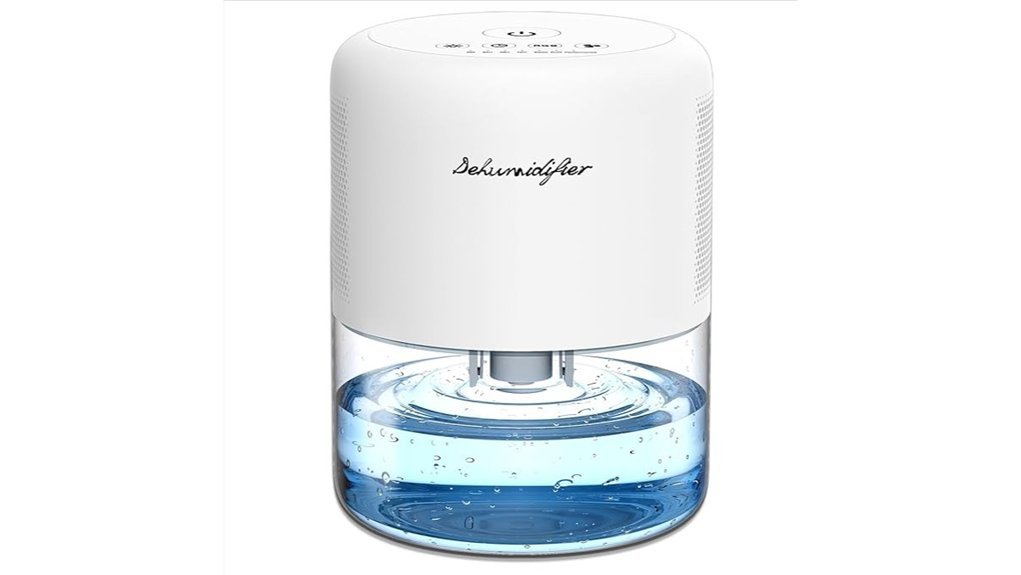
The NeedDuck B-2 is a compact 28-watt dehumidifier with a 44oz tank, automatic shutoff, auto defrost, timer choices, and three operating modes. Its small footprint and low weight make it easy to reposition as airflow, plant spacing, or equipment placement changes.
The main limitation is that the supplied listing information does not clearly disclose a dependable daily extraction figure. That makes it difficult to compare its moisture-removal performance directly with the other models.
Why you may like it: Its modes, timers, and auto-defrost function provide more control than a basic one-speed mini unit.
Best For: A small, warm enclosure that is already close to its target humidity and needs only light supplemental moisture removal.
Who should avoid it: Growers who need a verified extraction rate, continuous drainage, or rapid recovery after watering.
Pros:
- Three operating modes let you balance noise and moisture collection.
- Timer choices, automatic defrost, and shutoff improve convenience.
- Lightweight design is easy to reposition.
Cons:
- No clearly stated daily moisture-removal figure is available for confident comparison.
- No continuous-drain option is listed.
- The tank requires regular manual checking and emptying.
Before buying: Review the current product page for its extraction test conditions and confirm whether automatic restart after an outage is supported.
Best for Power-Off Memory: Bangnics Mini Electric Dehumidifier
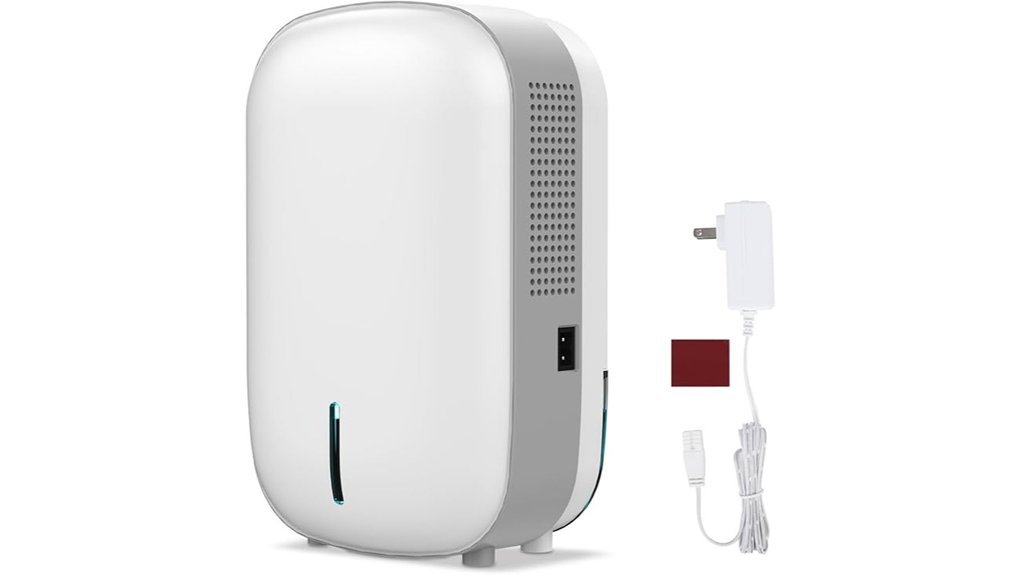
The Bangnics Mini Dehumidifier is marketed for small enclosed spaces and is listed to collect up to roughly 14.2 fluid ounces, or about 420 ml, per day at 86°F and 80% relative humidity. Its power-off memory is useful when brief outages occur because the unit is designed to resume its previous operating state after power returns.
Why you may like it: Power memory reduces the risk of finding the unit switched off after a short interruption, while its advertised low-noise operation suits a nearby room.
Best For: Tiny grow spaces needing quiet, supplemental moisture removal and automatic restart behavior.
Who should avoid it: Anyone who needs a drain hose, built-in humidistat, or high-capacity extraction.
Pros:
- Power-off memory can help after brief electrical interruptions.
- Compact and lightweight design.
- Automatic shutoff helps prevent tank overflow.
Cons:
- The maximum extraction figure is based on favorable warm and humid conditions.
- No continuous-drain connection is listed.
- A separate hygrometer is still required for dependable grow-room monitoring.
Before buying: Confirm the current tank size, restart behavior, and operating limits because product variants can change.
Best Safety Features: BeOkay DH-AA2 Dehumidifier
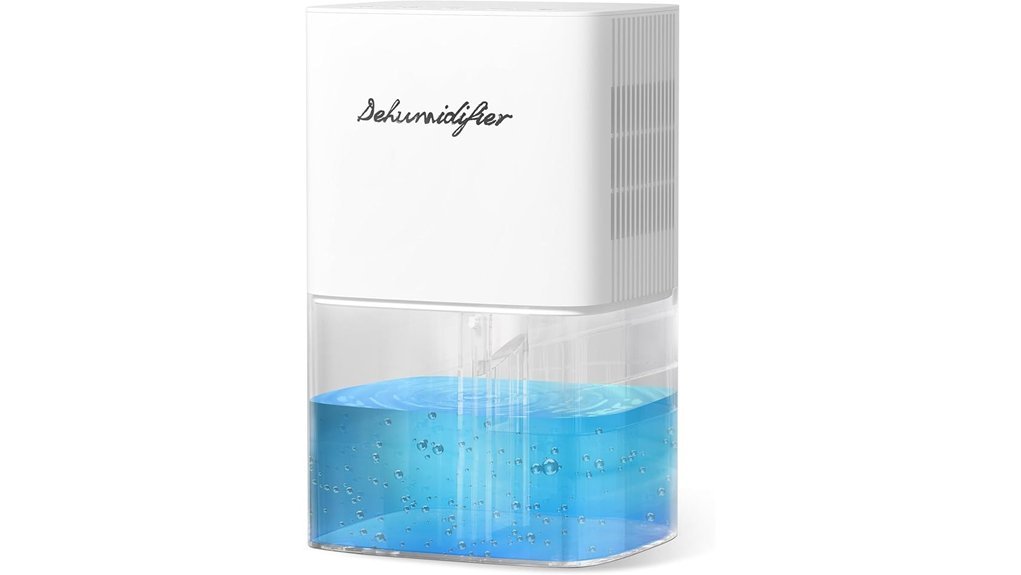
The BeOkay DH-AA2 combines a large reservoir with auto defrost, automatic shutoff, tilt protection, three operating modes, and timer controls. The supplied information identifies the tank as 1,657 ml or 58 oz, although some mirrored listings use different capacity wording. Confirm the exact size of the currently selected Amazon variant before ordering.
Its stated extraction rate is about 300 ml per day, so the larger reservoir mainly reduces emptying frequency. It does not increase the speed at which the machine removes moisture from the air.
Why you may like it: It offers a useful combination of shutoff, tilt, defrost, mode, and timer functions.
Best For: A small, low-moisture setup where protective controls and a larger tank matter more than fast extraction.
Who should avoid it: Growers who need continuous drainage, a built-in humidistat, or rapid humidity reduction.
Pros:
- Auto shutoff, tilt protection, and defrost functions.
- Large reservoir relative to the listed daily collection rate.
- Multiple modes and timers provide flexible operation.
Cons:
- About 300 ml per day is suitable only for a light moisture load.
- No continuous-drain hose is listed.
- Decorative lights add little value in a grow room and should remain off if they could interfere with the required dark period.
Before buying: Confirm the exact tank capacity, included features, and selected model variant on the current product page.
Best Quiet Simple Pick: Deyagoo DY501 1500ml Dehumidifier
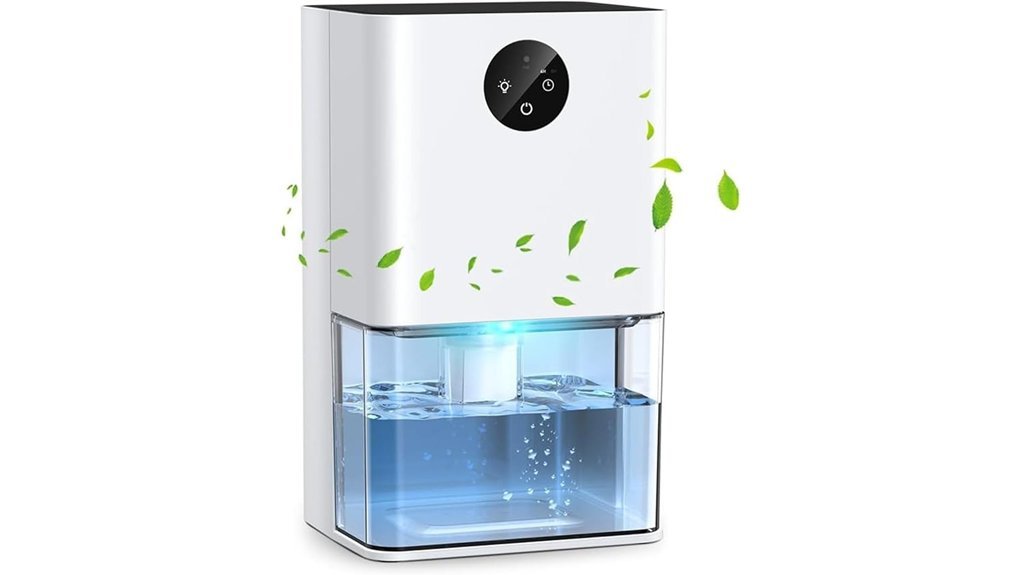
The Deyagoo DY501 uses a 1,500 ml transparent tank and is listed to remove up to 300 ml of moisture per day at 86°F and 80% relative humidity. Its advertised quiet operation and straightforward controls make it easy to monitor, but the lack of continuous drainage limits unattended use.
Why you may like it: The transparent tank makes the water level easy to inspect, and the reservoir is large relative to the unit’s stated collection rate.
Best For: A small grow area with a minor humidity problem and easy access for regular tank checks.
Who should avoid it: Growers who are away for long periods or experience substantial humidity spikes after watering.
Pros:
- Advertised quiet operation and straightforward controls.
- Large transparent tank for easy water-level monitoring.
- Automatic shutoff helps prevent overflow.
Cons:
- Limited listing-stated extraction rate.
- No continuous-drain hose is listed.
- No built-in target-humidity control is stated.
Before buying: Confirm the current noise specification, operating temperature range, and automatic-shutoff details in the listing or manual.
Best Simple Display: Lonxfy 35OZ Dehumidifier
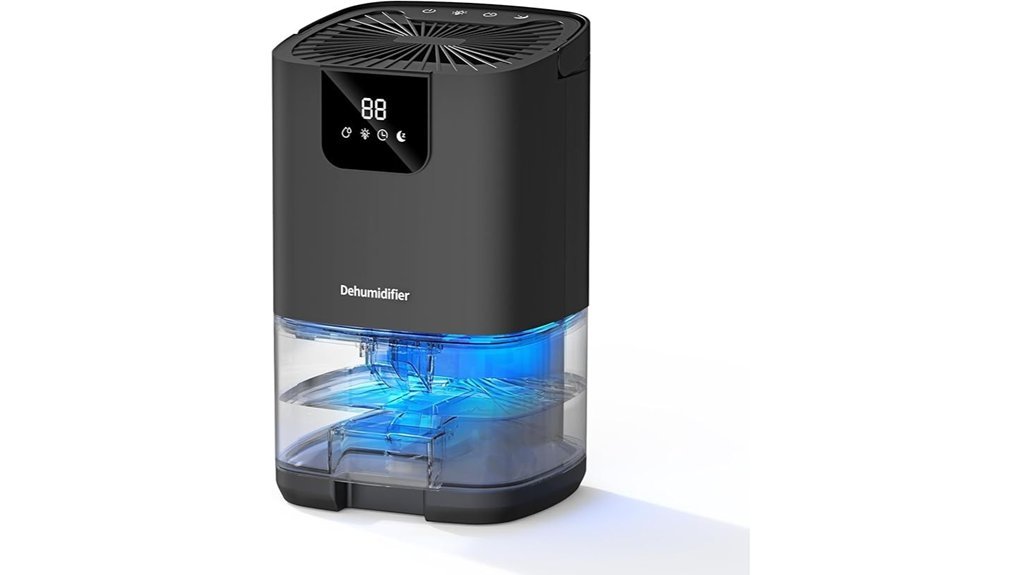
The Lonxfy 35OZ is a compact model with an approximately 1-liter tank, screen display, timer, and automatic shutoff. Its listing states a maximum collection rate of up to 350 ml per day. Treat that figure as a favorable-condition maximum rather than an expected result in every grow space.
Why you may like it: The screen and timer make operating status easier to check at a glance.
Best For: A very small grow tent with modest moisture and regular hands-on monitoring.
Who should avoid it: Anyone needing continuous drainage, a humidistat, or room-scale moisture removal.
Pros:
- Simple screen display and timer controls.
- Advertised quiet operation for nearby living spaces.
- Automatic shutoff helps prevent reservoir overflow.
Cons:
- The one-liter tank may require frequent checking when moisture collection is high.
- No built-in target-humidity control or app connection is stated.
- Advertised room coverage does not prove that it can manage an active grow’s moisture load.
Before buying: Confirm the current daily-removal claim, noise specification, tank size, and timer behavior on the Amazon listing.
Factors to Consider When Choosing a Dehumidifier for a Small Grow Room
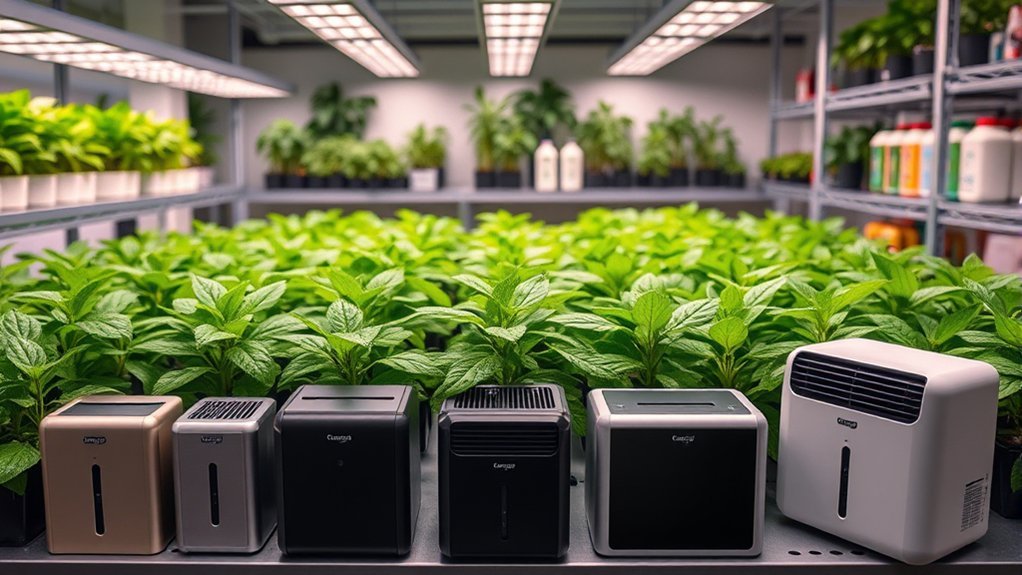
A grow room adds moisture through watering, evaporation, damp growing media, and plant transpiration. The right unit must therefore be chosen by measured humidity behavior, not marketing coverage alone. Use the guidance below before buying.
Moisture Load Versus Advertised Room Size
A small room can still have a high moisture load when it contains mature plants, open water, wet media, or humid intake air. Conversely, a slightly larger but lightly planted enclosure may be easier to control. Record relative humidity before watering, after watering, and during lights-off rather than choosing only by square footage.
Daily Moisture Removal
Daily extraction capacity matters more than tank size. A large tank only means less frequent emptying; it does not prove that the machine removes moisture quickly. Mini dehumidifiers commonly list maximum output under warm, high-humidity conditions, so expect lower collection in cooler or drier rooms.
Humidistat and Restart Behavior
A built-in humidistat is ideal because it lets a dehumidifier cycle around a selected relative-humidity target. Most mini units in this roundup do not provide that feature. Use a separate hygrometer and confirm whether the model automatically restarts after a power interruption before pairing it with any properly rated external controller.
Continuous Drainage
A drain hose is one of the most useful grow-room features because it can prevent the unit from stopping when its tank fills. Gravity drainage works only when the hose slopes downward continuously into a safe drain or container. Check for leaks, kinks, algae buildup, backflow, and accidental movement before leaving the setup unattended.
Temperature and Defrost
Compact thermoelectric-style dehumidifiers generally perform best in warm conditions. Extraction can fall sharply in a cool grow room, and moisture may freeze on the cold surface. Auto defrost is helpful, but it does not turn a mini unit into a high-capacity cold-room dehumidifier.
Airflow and Placement
Do not hide the dehumidifier behind dense foliage or press it against a tent wall. Leave the clearance required by the manual around the intake and outlet, keep the unit level, and use circulation fans so humid air can reach it. Avoid directing warm exhaust at leaves, flowers, seedlings, or temperature-sensitive equipment.
Noise and Heat
Mini dehumidifiers are generally marketed as quieter than compressor models, but they still release heat into the enclosure. Even a modest temperature increase can change ventilation demand and relative humidity. Compare temperature and humidity readings with the dehumidifier running and switched off.
Electrical and Drainage Safety
Grow rooms combine water with lights, fans, adapters, controllers, and other electrical equipment. Place the dehumidifier on a stable surface, create drip loops in cords, keep plugs and power adapters elevated, and use a properly installed GFCI-protected outlet where required. Follow the manufacturer’s manual and never let a tank or drain hose empty near live electrical connections.
Cleaning and Maintenance
Warm grow spaces can encourage dust, algae, and residue buildup. Empty and wash the tank regularly, clean the intake and filter according to the manual, inspect the drain hose, and keep leaves or growing media away from the air openings. Disconnect the unit from power before cleaning it.
- Record the room’s highest humidity after watering and during lights-off.
- Compare the listing-stated daily removal rate, not only claimed square-foot coverage.
- Choose continuous drainage when the tank could fill while unattended.
- Check whether the unit restarts automatically after a power interruption.
- Confirm the operating temperature range and required intake clearance.
- Make sure ventilation is not continuously bringing humid air into the enclosure.
- Plan a dry, stable location for the unit, adapter, cord, and drain hose.
Frequently Asked Questions
How Do I Determine the Right Size Dehumidifier for My Grow Room?
Measure the room, but also track the highest relative humidity after watering, during lights-off, and when plants are at their largest. Choose a unit with enough daily extraction to lower humidity under those real conditions. If a mini dehumidifier runs continuously without reaching the target, it is undersized.
Can I Use a Dehumidifier During Flowering?
Yes. A dehumidifier can help control excess moisture during flowering, but the correct humidity target depends on the plant and growth stage. Use a reliable hygrometer, avoid directing warm exhaust at flowers, and do not lower humidity beyond the crop’s recommended range.
What Maintenance Is Required?
Empty and wash the tank regularly, clean air inlets and filters according to the manual, inspect the drain hose for algae or kinks, and keep dust and plant debris away from the intake. Check the plug, adapter, and cord for heat, moisture, or damage before continued use.
Is a Mini Dehumidifier Enough for a Grow Tent?
It can be enough for a tiny, lightly planted, well-enclosed tent with a modest moisture load. It is usually not enough when humidity rises rapidly after watering, the enclosure contains many mature plants, condensation forms, or humid air is constantly entering through ventilation.
Should I Run the Dehumidifier All Day?
Run time should be based on measured humidity and temperature. A model with a humidistat can cycle automatically. With a basic mini unit, monitor the enclosure closely instead of assuming continuous operation is always necessary or sufficient.
Does a Larger Tank Mean Better Dehumidification?
No. Tank size tells you how much water the reservoir can hold. Daily moisture-removal capacity tells you how quickly the unit can pull water from the air. Compare both numbers separately.
When Should I Upgrade to a Compressor Dehumidifier?
Upgrade when a mini unit cannot maintain the required relative humidity, when condensation appears, when humidity rebounds rapidly after watering, or when mature plants create a large continuous moisture load. A compressor model with a humidistat and higher daily removal capacity is generally more appropriate for those conditions.
Will a Dehumidifier Raise the Grow-Room Temperature?
Yes, a dehumidifier releases some heat while operating. The increase may be small with a mini unit, but it can still matter inside a tightly controlled tent. Monitor both temperature and humidity after installation and adjust ventilation if necessary.
Final Recommendation
Choose the Levoair 68oz model when you want the best balance of listing-stated extraction, tank capacity, and continuous drainage from this group. Choose the Litever LL-VS-DH07 for a tiny tent or cabinet where compact dimensions and a gravity-drain hose are the main priorities.
The Bangnics is the more relevant specialty option when power-off memory matters. The NeedDuck, BeOkay, Deyagoo, and Lonxfy models are better viewed as quiet, supplemental choices for spaces that are already close to the desired humidity.
Whichever model you choose, judge it by the hygrometer reading after watering and during the most humid lights-off period. If it cannot hold the required target, improve ventilation or upgrade to a higher-capacity dehumidifier rather than relying on advertised room coverage.