Affiliate disclosure: As an Amazon Associate, this site may earn from qualifying purchases. This does not change your price or affect the products included in this guide.
Quick Verdict: If you want a powerful dehumidifier for a basement or large room, start with the Gasbye, Yaufey, Waykar, GoveeLife, Midea, hOmeLabs, Vellgoo Max, or PLUSCENT models. If you need a smaller unit for a bathroom, closet, bedroom, RV, or office, the Tenergy Sorbi and 95OZ models are easier to move and better suited to lighter moisture control.
Best way to choose: Match the unit to your room size first, then compare noise level, drainage style, energy use, smart controls, tank size, and how much maintenance you want to handle.
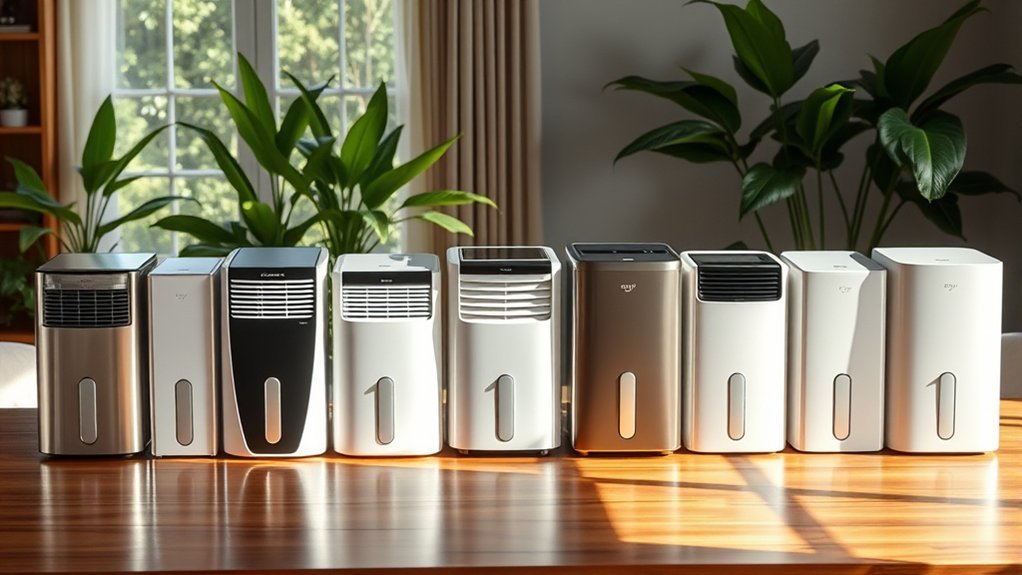
For 2026, you’ve got strong dehumidifier picks for every space. Gasbye and Yaufey handle large basements, while Vellgoo Max offers excellent energy savings. Tenergy Sorbi is a quiet choice for small rooms, and GoveeLife adds smart app control. Midea, 95OZ, hOmeLabs, Waykar, and PLUSCENT round out the list with solid options for bedrooms, apartments, basements, RVs, offices, and bigger areas. Your best pick depends on room size, noise, drainage, energy efficiency, and how damp your space gets, and the details below can help you narrow it down.
Before You Buy: Dehumidifier capacity can vary by temperature and humidity conditions. A unit rated for a large area may remove less moisture in cooler rooms, while a compact semiconductor model may work best in smaller spaces with moderate dampness.
Quick Comparison Table
| Product | Best For | Coverage / Capacity Focus | Key Advantage | Amazon |
|---|---|---|---|---|
| Gasbye DryPrime | Large basements and whole-floor spaces | Up to 4,500 sq. ft.; up to 115 pints/day | High capacity with Energy Star 2026 rating | Check Price on Amazon |
| Tenergy Sorbi | Small rooms, closets, bathrooms, and offices | Up to 200 sq. ft.; up to 750ml/day | Quiet dehumidifier plus True HEPA filter | Check Price on Amazon |
| Vellgoo Max | Large damp rooms and energy-conscious homes | Up to 4,000 sq. ft.; 64-pint class | Energy Star 2024 Most Efficient rating | Check Price on Amazon |
| Yaufey 5000 Sq. Ft. | Large humid homes, garages, offices, and RVs | Up to 5,000 sq. ft.; up to 80 pints/day | Multiple modes with smart humidity control | Check Price on Amazon |
| GoveeLife Smart Dehumidifier | Smart homes and large rooms | Up to 4,500 sq. ft.; 50 to 137 pints/day | App, Alexa, Google Assistant, and IFTTT control | Check Price on Amazon |
| Waykar 80 Pints | Large damp homes, basements, bathrooms, and RVs | Up to 5,000 sq. ft.; up to 80 pints/day | Quiet 42 dB operation with auto swing airflow | Check Price on Amazon |
| hOmeLabs Wi-Fi | Connected homes, basements, and offices | Up to 4,500 sq. ft.; 32-pint standard rating | Wi-Fi control with voice assistant support | Check Price on Amazon |
| Midea 50 Pint | Basements and medium-to-large rooms | Up to 4,500 sq. ft.; 50-pint class | Quiet smart control and flexible modes | Check Price on Amazon |
| 95OZ Dehumidifier | Bedrooms, bathrooms, RVs, and small-to-medium spaces | Up to 1,000 sq. ft.; 95-ounce tank | Lightweight design with sleep mode and ambient lights | Check Price on Amazon |
| PLUSCENT 32 Pint | Large rooms, laundry areas, basements, and RVs | Up to 2,500 sq. ft.; 32 pints/day | Three modes, wheels, washable filter, and drain hose | Check Price on Amazon |
Gasbye 4500 Sq.Ft. Energy Star Dehumidifier with Drain Hose
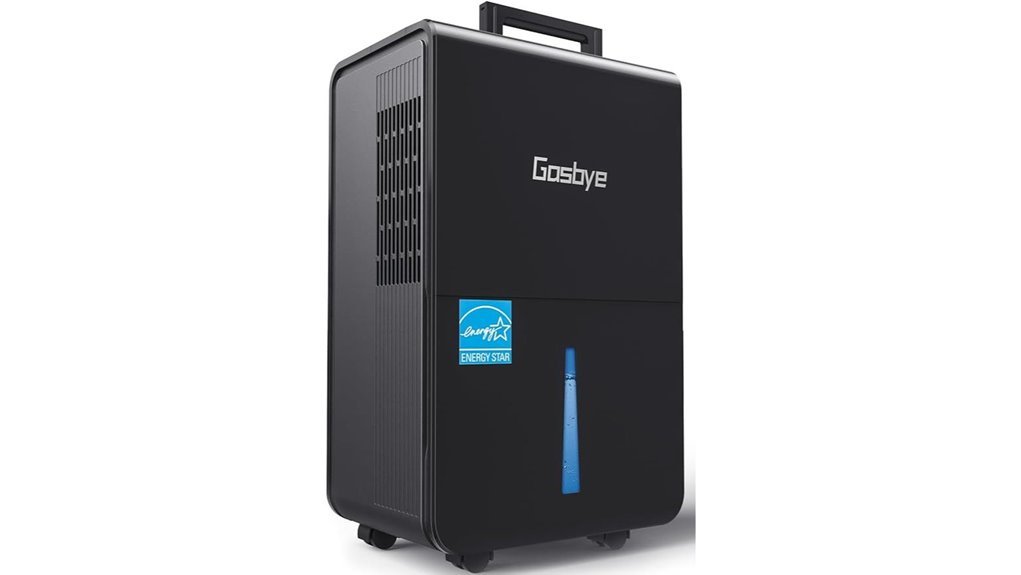
If you need a high-capacity dehumidifier for a large basement, whole-floor living area, or damp commercial space, the Gasbye DryPrime is a strong pick. You can cover up to 4,500 square feet and pull as much as 115 pints a day in muggy conditions. Its Energy Star 2026 rating helps you save power while using only 500 watts. You get Normal, Turbo, Comfort, and Continuous modes, plus quiet 45 dB operation. Drain it manually, use the 5-foot hose, or attach a garden hose. It even restores settings after outages and includes a 2-year warranty.
Why You’ll Like It: This model is built for people who want strong moisture removal without constant babysitting. The large-space coverage, flexible drainage, and multiple operating modes make it easier to use in a basement, storage room, shop, or humid open-plan area.
Best For: Homeowners, basement users, and small business owners who need a high-capacity, energy-efficient dehumidifier for large spaces with flexible drainage options.
Who Should Avoid This: Skip it if you only need light moisture control in a small bedroom, closet, or bathroom, because the size and capacity may be more than you need.
Pros:
- Covers up to 4,500 sq. ft. and removes up to 115 pints/day in humid conditions
- Energy Star 2026 certified and uses only 500 watts for better efficiency
- Quiet 45 dB operation with multiple drainage options, including a hose and garden hose adapter
Cons:
- 43-pound unit may be bulky to move around frequently
- 1.7-gallon tank may still require regular emptying if not using continuous drain
- Best performance is in larger spaces, so it may be more than needed for smaller rooms
Tenergy Sorbi 1000ml Air Dehumidifier with HEPA Filter
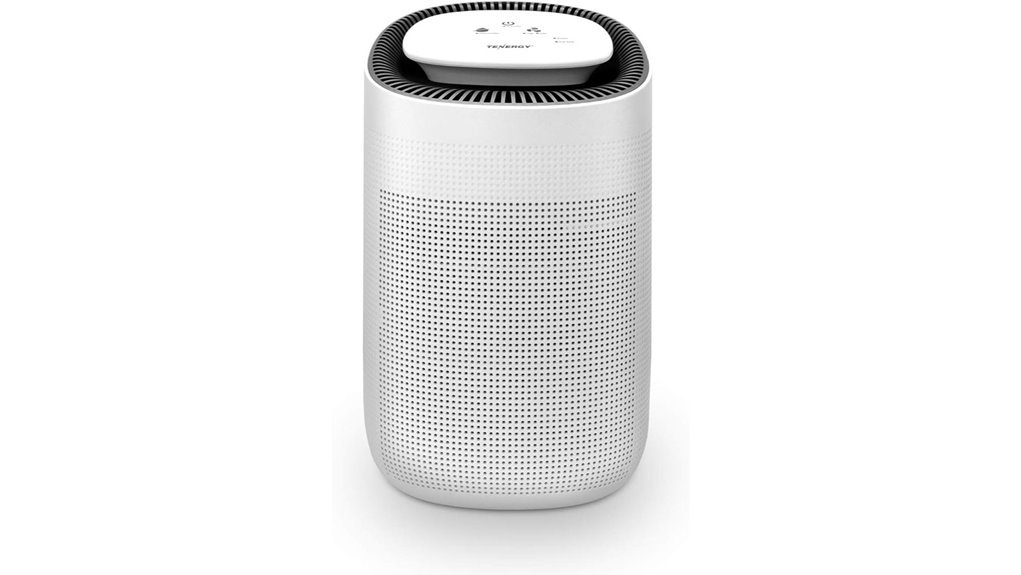
The Tenergy Sorbi is best if you need quiet moisture control in a small space. You get dehumidifying and air-cleaning in one compact unit, thanks to Peltier technology and a True HEPA filter. It removes up to 750ml of moisture per day in hot, humid conditions and covers spaces up to 200 square feet. At just 35 to 42 dB, it won’t disturb you. Use it in bathrooms, closets, basements, or small offices, and rely on auto shutoff, touch controls, and ETL and CARB certification.
Why You’ll Like It: This is one of the more practical choices when you care about quiet operation, portability, and basic air-cleaning support in one compact machine. It is not meant to replace a large basement dehumidifier, but it can make small damp areas feel fresher.
Best For: People who need a quiet, compact dehumidifier and air cleaner for small spaces like bathrooms, closets, basements, or small offices.
Who Should Avoid This: Avoid it for large rooms, very wet basements, or whole-floor humidity control, since its compact design is better for smaller areas.
Pros:
- Combines dehumidifying and air-cleaning in one unit with a True HEPA filter
- Ultra-quiet operation at 35–42 dB, making it suitable for bedrooms or workspaces
- Compact design with auto shutoff, touch controls, and coverage up to 200 sq ft
Cons:
- Best suited only for small areas, so it won’t handle larger rooms well
- 1-liter tank may need frequent emptying in very humid conditions
- Filter replacements are recommended to be Tenergy-branded for optimal performance
Vellgoo Max 64 Pint Dehumidifier with Drain Hose
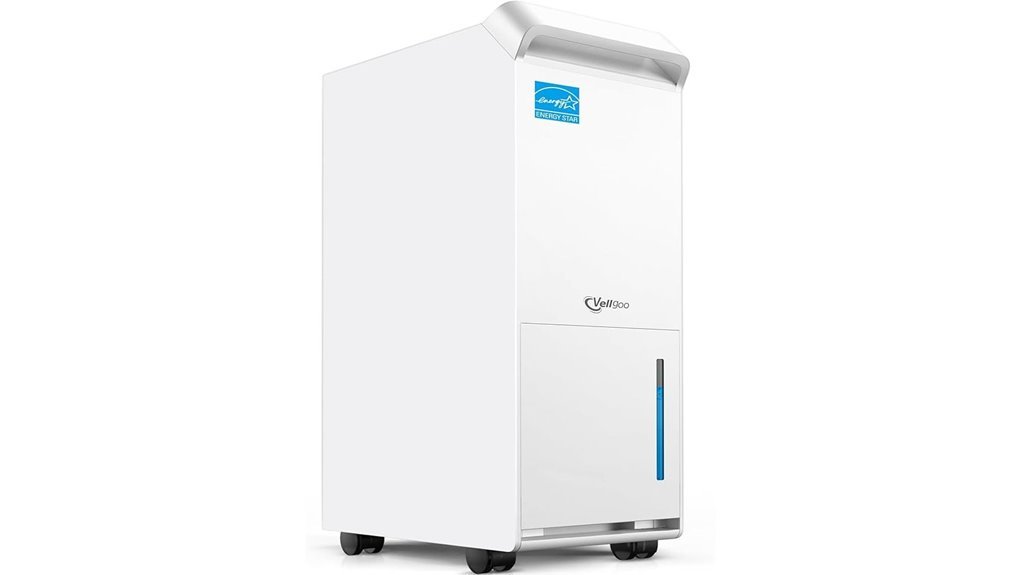
Vellgoo’s Max 64 Pint Dehumidifier is ideal for large, damp spaces up to 4,000 square feet. You get powerful moisture removal, even in hot, humid conditions up to 95°F and 90% RH. Its Energy Star 2024 Most Efficient rating helps you cut power use by up to 44%, so you’ll likely lower utility costs. Use Continuous, Comfort, or Humidity Control mode to match your needs. The included 6.56-foot hose lets you drain continuously, while the 5.5-liter tank and tool-free setup keep upkeep simple. It even handles musty garages and steamy bathrooms with ease.
Why You’ll Like It: This model is a good fit when you want large-room drying power but also care about long-term energy use. The included hose is helpful if you plan to run it in a basement, garage, laundry room, or other area with steady moisture.
Best For: Homeowners with large, damp spaces up to 4,000 sq. ft. who want an energy-efficient dehumidifier with flexible drainage and easy operation.
Who Should Avoid This: It may be too much for a tiny room or closet, especially if you do not need continuous drainage or a large-capacity unit.
Pros:
- Energy Star 2024 Most Efficient rating helps reduce power use and utility costs.
- Powerful 64-pint capacity handles hot, humid conditions effectively.
- Includes a 6.56-ft drain hose and tool-free setup for convenient continuous drainage.
Cons:
- Best suited for larger spaces, so it may be overkill for small rooms.
- 5.5-liter tank may still require emptying if continuous drainage isn’t used.
- Bulkier dimensions may make it less convenient to move or store in tight spaces.
Yaufey 5000 Sq. Ft. Energy Star Dehumidifier
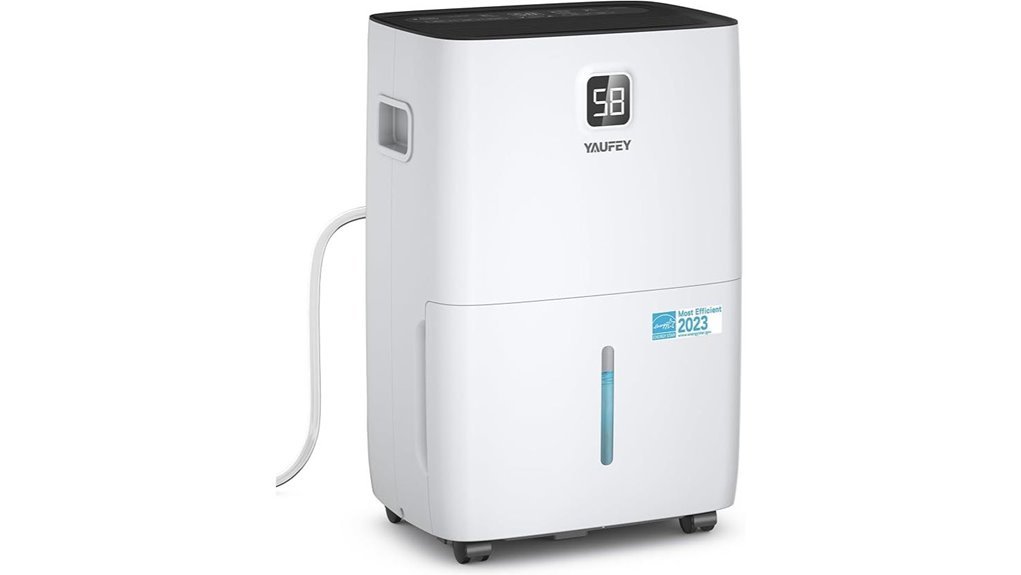
Need to cover a large, humid space? The Yaufey 5000 Sq. Ft. Energy Star Dehumidifier tackles up to 80 pints a day in damp conditions and keeps going efficiently. You can use it in bedrooms, garages, offices, kitchens, living rooms, or RVs, and it’ll hold humidity between 30% and 80%. Choose Sleep, Living, Basement, or Continuous mode, then pick one of three fan speeds. Smart sensors react fast, while the washable filter helps clean the air. Use the tank or drain hose, and rely on auto shut-off, auto-defrost, and child lock.
Why You’ll Like It: The Yaufey stands out for people who want a simple large-area option with useful presets. The Sleep, Living, Basement, and Continuous modes make it easier to match the dehumidifier to the room instead of guessing every setting.
Best For: Homeowners, renters, or RV users with large, humid spaces who want an efficient, easy-to-use dehumidifier with flexible drainage and smart humidity control.
Who Should Avoid This: Skip it if your main issue is a single closet or a very small bathroom, because a compact model may be easier to place and maintain.
Pros:
- Covers up to 5000 sq. ft. and removes up to 80 pints per day in humid conditions.
- Energy Star certified for better efficiency and lower operating costs.
- Offers multiple modes, three fan speeds, smart sensors, and both manual and continuous drainage.
Cons:
- Large-capacity units can still be bulky to move and store compared with smaller models.
- Best performance depends on room conditions, so output may be lower in less humid environments.
- Requires regular maintenance like emptying the tank or checking the drain hose and filter.
GoveeLife Smart Dehumidifier for Home (4,500 Sq.Ft)
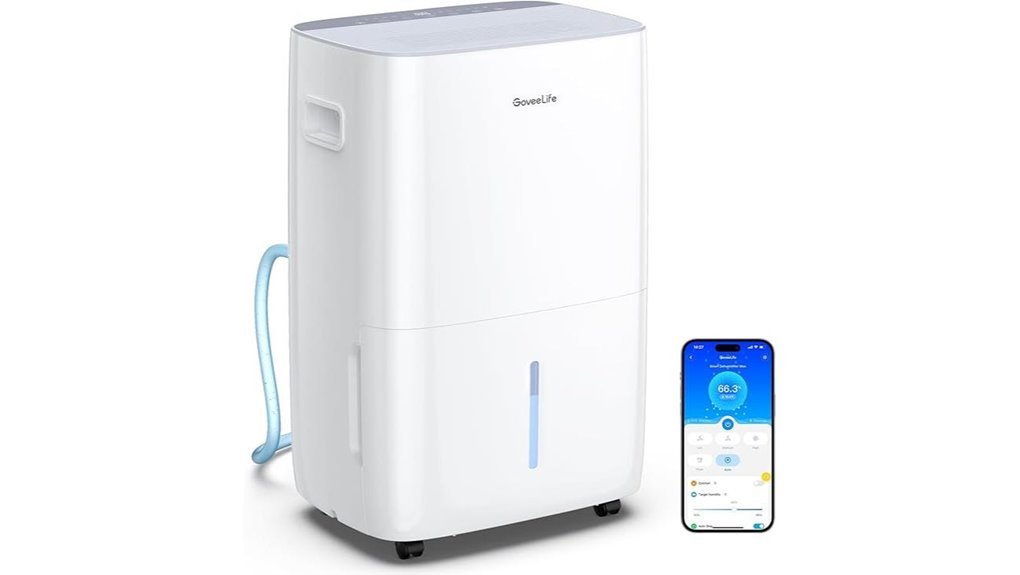
If you’re tackling a large, humid space, GoveeLife’s Smart Dehumidifier covers up to 4,500 sq. ft. with serious power. You can pull 50 to 137 pints of moisture daily, while the built-in sensor helps you hit your target humidity without constant tweaking. Control it through the app, Alexa, Google Assistant, IFTTT, or the touch panel. The 2.0-gallon tank, continuous drain option, and auto shutoff reduce hassle. It also uses washable filters, auto defrost, and efficient R32 refrigerant. At 39 pounds, it’s sturdy, reliable, and smartly built for demanding rooms.
Why You’ll Like It: This is the best fit if you like automation and remote control. You can adjust humidity from your phone, connect voice assistants, and use the built-in sensor to reduce constant manual changes.
Best For: Homeowners or renters with large, humid spaces who want a powerful, app-controlled dehumidifier with smart automation and easy drainage.
Who Should Avoid This: It may not be the best choice if you prefer basic button-only appliances or do not need app control, voice control, or smart-home integration.
Pros:
- Covers up to 4,500 sq. ft. and removes 50 to 137 pints of moisture per day
- Smart controls via app, Alexa, Google Assistant, IFTTT, and touch panel
- Features like washable filters, auto defrost, continuous drainage, and auto shutoff add convenience
Cons:
- At 39 pounds, it may be cumbersome to move around
- 850-watt operation may use a noticeable amount of electricity
- Continuous drain hose is included, but a compatible 3/4 garden hose is not included
Waykar 80 Pints Energy Star Dehumidifier for Home
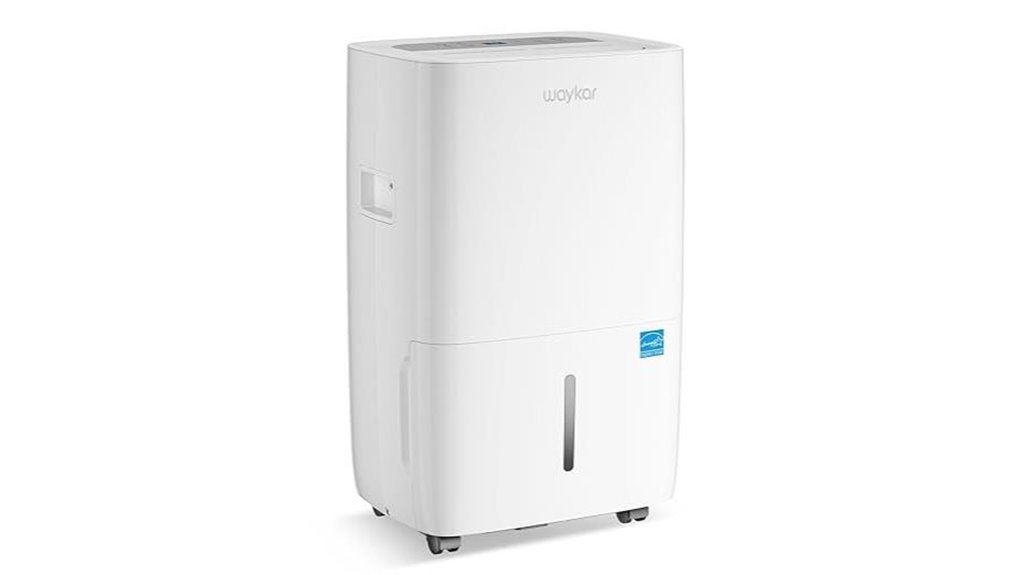
The Waykar 80 Pints Energy Star Dehumidifier suits large, damp spaces up to 5,000 sq. ft. You can use it in basements, bathrooms, bedrooms, or RVs to pull out up to 80 pints of moisture a day. Its 90° auto swing spreads dry air evenly, while smart humidity control lets you set levels from 30% to 80% RH. Energy Star certification helps keep power use low. You also get AI protection, auto defrost, quiet 42 dB operation, and flexible drainage with a tank or hose. Waykar backs it with strong U.S. support and warranty coverage.
Why You’ll Like It: The Waykar is appealing if you want large-space moisture control but do not want a loud appliance dominating the room. Auto swing airflow can help distribute dry air more evenly, and the hose option is useful for steady basement use.
Best For: Homeowners, renters, or RV users who need a high-capacity, energy-efficient dehumidifier for large damp spaces like basements, bedrooms, bathrooms, or areas up to 5,000 sq. ft.
Who Should Avoid This: It may not be necessary for a small closet, light bathroom humidity, or occasional moisture problems where a smaller unit would be easier to manage.
Pros:
- Removes up to 80 pints of moisture per day, making it effective for large spaces and severe humidity.
- Energy Star certified with quiet 42 dB operation, helping reduce energy use and noise.
- Offers smart humidity control, auto swing airflow, and flexible drainage options with tank or hose.
Cons:
- Large-capacity unit may be too bulky for smaller rooms or tight storage spaces.
- 1.14-gallon tank may require frequent emptying if continuous drainage is not used.
- Best performance depends on proper placement and drainage setup, which may take some adjustment.
hOmeLabs Wi-Fi Dehumidifier 4,500 Sq Ft, 32 Pint
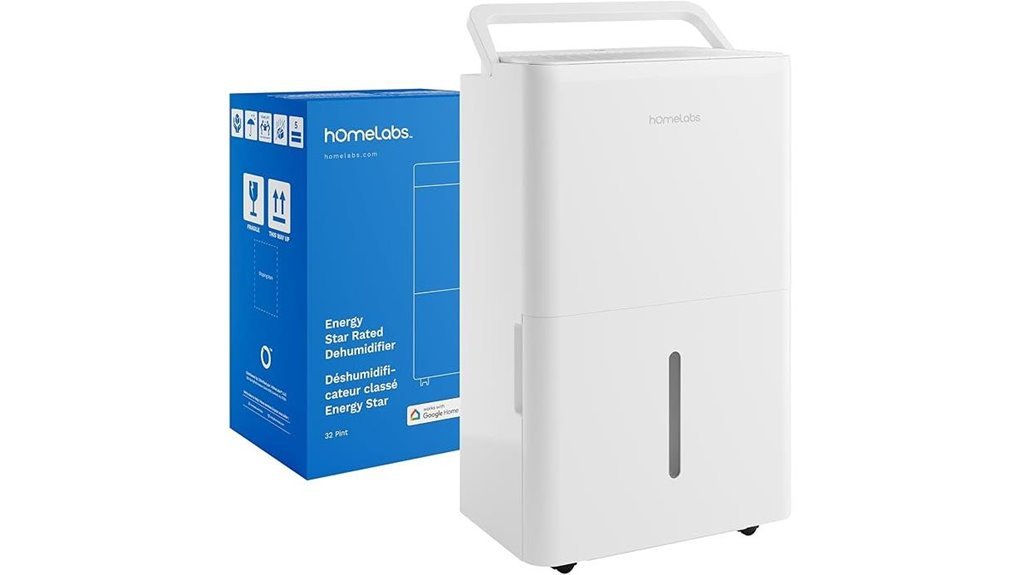
With Wi-Fi control and 4,500-square-foot coverage, this hOmeLabs dehumidifier suits large, connected spaces. You can manage it from your phone or with Alexa and Google Assistant, so you won’t need to walk over to tweak settings. It removes 32 pints per day under standard conditions and can handle up to 80 pints in tougher humidity. You get quiet operation, auto shut-off, automatic defrost, and adjustable humidity control. The 1-gallon tank includes a drain hose for continuous use, and the washable filter makes upkeep simple for your home, basement, or office.
Why You’ll Like It: This hOmeLabs model is useful when you want remote control without jumping to the most complex smart appliance. It gives you app and voice control, plus the everyday features people look for in a basement or office dehumidifier.
Best For: Homeowners, basement users, and office spaces needing a Wi-Fi-enabled dehumidifier for large areas with convenient remote control.
Who Should Avoid This: Avoid it if you do not need Wi-Fi or voice control and would rather pay only for simple manual controls.
Pros:
- Covers up to 4,500 sq ft, making it suitable for larger rooms and open spaces.
- Wi-Fi control works with Alexa and Google Assistant for easy remote adjustments.
- Includes auto shut-off, automatic defrost, a drain hose, and a washable filter for low-maintenance use.
Cons:
- At 28.3 pounds, it may be a bit heavy to move frequently.
- The 1-gallon tank may still need regular emptying without continuous drainage.
- Best performance is tied to specific humidity and temperature conditions, so capacity can vary.
Midea 50 Pint Dehumidifier for Basement and Rooms
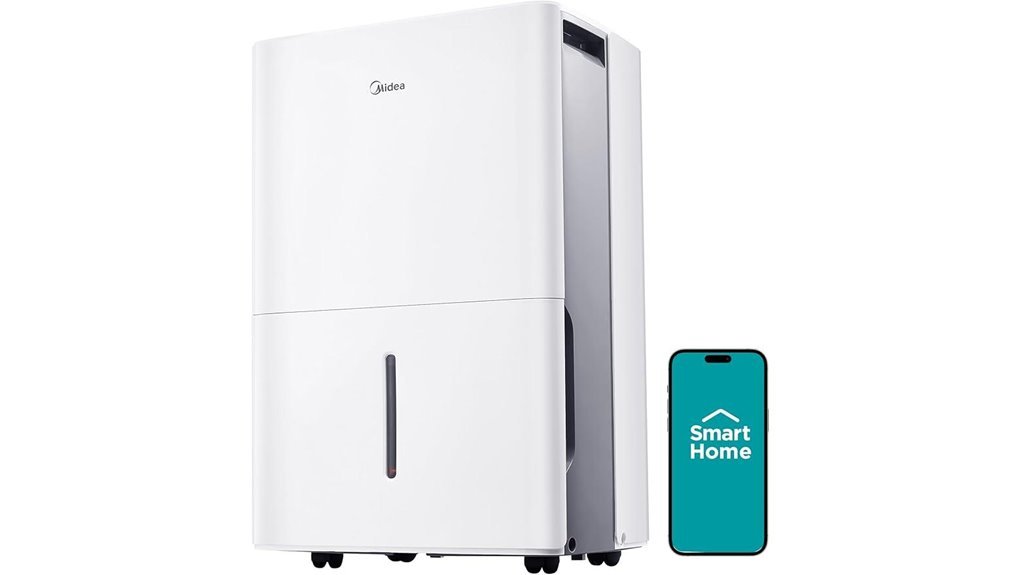
Midea’s 50-pint dehumidifier suits you when basement dampness needs quiet, smart control, and easy drainage. You can dry up to 4,500 square feet, and its adjustable humidity range helps you hold comfort between 45% and 55%. It runs at a whisper-quiet 47 dBA, so it won’t disrupt bedrooms, offices, or living spaces. Wi-Fi lets you manage it through the SmartHome app or Alexa and Google Assistant. You can choose comfort, continuous, or turbo mode, then drain manually or through a hose. The reusable filter and auto alerts simplify upkeep.
Why You’ll Like It: Midea is a practical pick if you want a familiar appliance-style dehumidifier with smart controls, quiet operation, and strong coverage. The reusable filter and auto alerts also make maintenance easier to remember.
Best For: Homeowners or renters who want a quiet, Wi-Fi-enabled dehumidifier for basements and medium-to-large rooms with flexible drainage and low-maintenance operation.
Who Should Avoid This: It may not be ideal if you want a model that includes every drainage accessory in the box, since continuous drainage requires a hose.
Pros:
- Quiet 47 dBA operation makes it suitable for bedrooms, offices, and living areas.
- Smart controls via app, Alexa, and Google Assistant add convenience.
- Multiple drainage and mode options, plus a reusable filter, simplify use and upkeep.
Cons:
- Continuous drainage requires a hose, which is not included.
- Best performance depends on room conditions and proper setup.
- One-year warranty is shorter than some competing appliances.
95OZ Dehumidifier for Home 1000 Sq.Ft
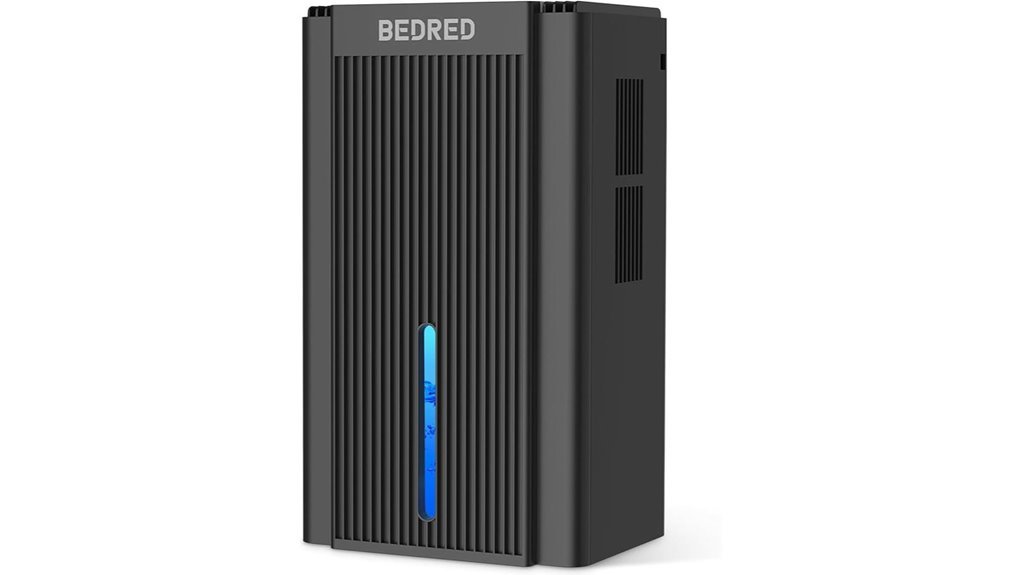
If you need a compact dehumidifier for up to 1,000 square feet, this 95-ounce model fits well. You get semiconductor cooling that pulls moisture from the air and helps your room feel fresher and more comfortable. Its 95-ounce tank and auto shutoff keep use simple and safe, while intermittent operation saves energy. At just 5.9 pounds, it’s easy to move between bedrooms, bathrooms, basements, living rooms, or your RV. The sleek black design blends in, and the 7-color ambient lights or sleep mode let you match its look and noise level to your space.
Why You’ll Like It: This model works well if you want something lightweight, simple, and easy to move. It is especially appealing for bedrooms, small apartments, RVs, and bathrooms where a large compressor unit would feel too bulky.
Best For: People who want a compact, easy-to-move dehumidifier for small to medium spaces like bedrooms, bathrooms, basements, living rooms, or RVs.
Who Should Avoid This: Do not choose it as your main solution for a very damp basement, flood-prone area, or high-humidity whole-floor space.
Pros:
- Covers up to 1,000 sq. ft., making it useful for a variety of home spaces.
- Auto shutoff and intermittent operation help with safety and energy savings.
- 7-color ambient lighting and sleep mode add convenience and customizable comfort.
Cons:
- Semiconductor dehumidifiers are generally less powerful than compressor-based models.
- Best suited for moderate moisture control rather than heavy-duty dampness.
- The 95-ounce tank may still require regular emptying in humid conditions.
PLUSCENT 32 Pint Dehumidifier for Large Room
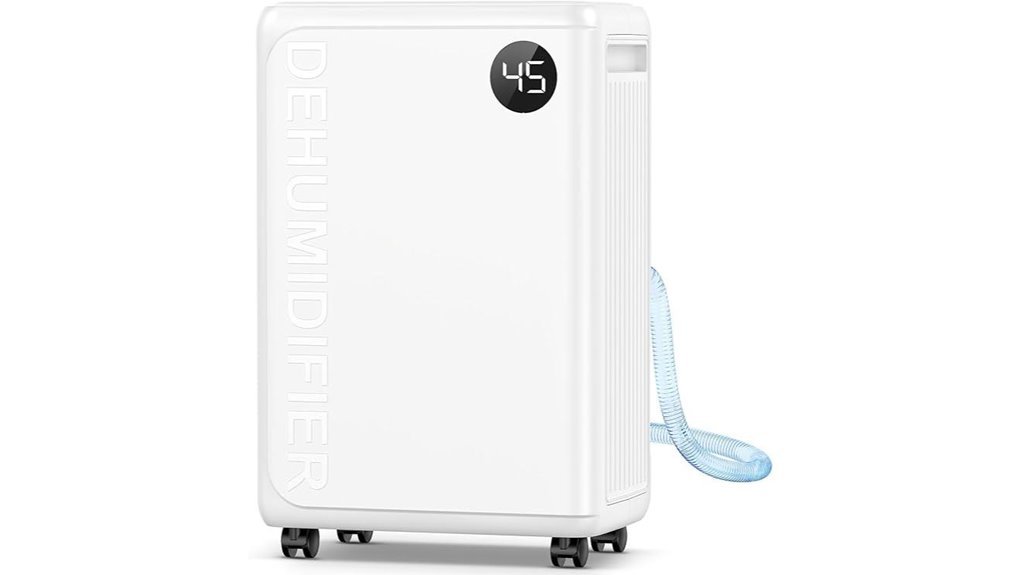
The PLUSCENT 32 Pint Dehumidifier suits large spaces up to 2,500 sq. ft. while running quietly. You can remove up to 32 pints of moisture a day, making it a solid pick for basements, living rooms, bedrooms, bathrooms, and RVs. Choose DEHU for normal humidity, CONT for heavy dampness, or DRY to speed up laundry drying. Use the 24-hour timer, auto defrost, and child lock for easier control. Drain water continuously with the included hose or empty the 2L tank. Its washable filter, wheels, and handles keep upkeep and moving simple.
Why You’ll Like It: PLUSCENT is a balanced option if you want a movable dehumidifier with several modes, a timer, and both manual and continuous drainage. The DRY mode also gives it extra usefulness in laundry rooms or damp indoor drying areas.
Best For: Homeowners or renters who need a quiet, easy-to-move dehumidifier for large spaces like basements, living rooms, bedrooms, bathrooms, or RVs.
Who Should Avoid This: Avoid it for extremely large or industrial spaces where a higher-capacity model would be more suitable.
Pros:
- Removes up to 32 pints of moisture per day and covers areas up to 2,500 sq. ft.
- Offers three useful modes, a 24-hour timer, auto defrost, and child lock for convenient operation.
- Includes both continuous drainage and a 2L tank, plus a washable filter and easy-roll wheels.
Cons:
- The 2L water tank may need frequent emptying in very damp conditions if not using the hose.
- Best performance is tied to specific humidity and temperature conditions, so results may vary by room.
- Compact size is convenient, but it may still be less ideal for extremely large or industrial spaces.
Factors to Consider When Choosing an Air Dehumidifier
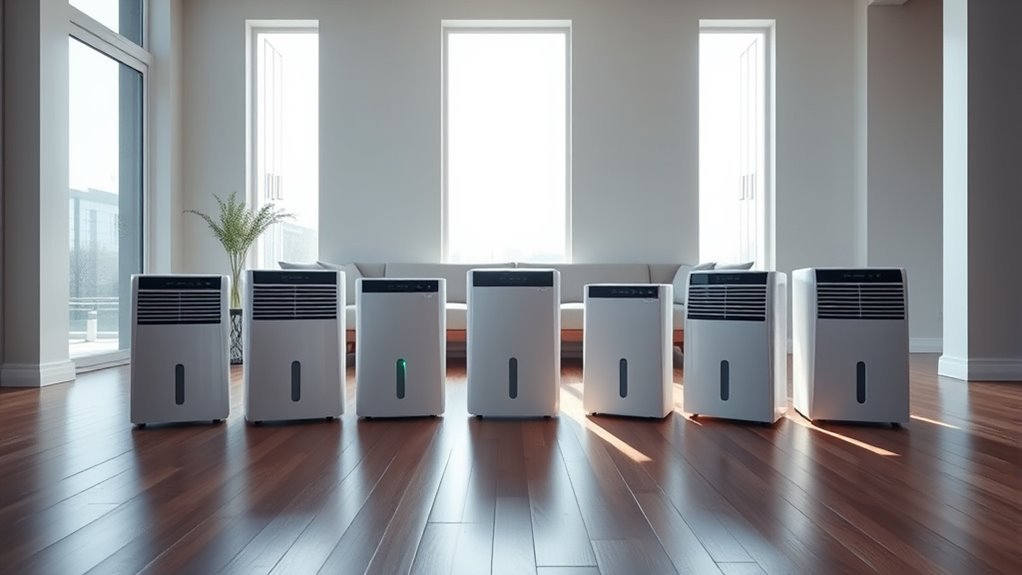
When you choose the right air dehumidifier, start by checking its moisture-removal capacity to match your room size and moisture level. You’ll also want strong energy efficiency, low noise, flexible drainage options, and smart controls that make daily use easier.
Simple buying rule:
- Small rooms, closets, bathrooms, and RVs: choose a compact model that is quiet and easy to empty.
- Bedrooms and offices: focus on low dB noise levels, sleep mode, and auto shutoff.
- Basements and large rooms: choose higher pint capacity, continuous drainage, auto defrost, and wheels.
- Smart homes: look for app control, humidity sensors, schedules, and voice assistant support.
Moisture-Removal Capacity
Capacity is one of the biggest factors to check, and it’s usually listed in pints per day, which tells you how much moisture a unit can pull from the air under specific temperature and humidity conditions. You’ll want to match that number to your room size, whether you’re covering 200 square feet or more than 5,000. A 30- to 32-pint model works well for many medium or large rooms, while an 80-pint unit fits humid climates or larger areas. Compact models may use milliliters or ounces instead of pints, so compare them carefully. Keep in mind that performance can drop in colder rooms or when humidity stays high, so you need to take into account the actual temperature and relative humidity where you’ll use it. Choosing the right capacity helps you remove moisture effectively without underpowering the unit.
Energy Efficiency
Energy efficiency matters because it affects both your utility bill and how well the dehumidifier fits your space. Look for Energy Star certification when available, since it can signal better efficiency than many non-certified models. You’ll also want to compare wattage: some compact units use very little power, while larger compressor models can draw much more. Adjustable modes like Normal, Turbo, Comfort, Sleep, and Continuous let you match power use to current humidity, so you don’t waste energy. Continuous drainage can help too, because it keeps the unit running without frequent manual emptying. Finally, check the dehumidification capacity in pints per day; a model built for high-humidity conditions often uses energy more effectively in the right space.
Noise Levels
Along with efficiency, noise level can make or break how comfortable a dehumidifier feels in your home. You’ll usually see it listed in decibels, and quieter models around 35 to 45 dB work well in bedrooms and offices. If you want near-silent performance, aim for 35 to 42 dB, where the machine stays ultra-quiet and won’t interrupt sleep or focus. Larger-capacity units often run louder because they use bigger compressors, so you may notice them more in very quiet rooms. Many modern models also offer auto shut-off, sleep mode, timers, and smart controls, letting you set humidity targets and run times more precisely. Match the sound level to the space, and you’ll get comfort without unnecessary distraction.
Drainage Options
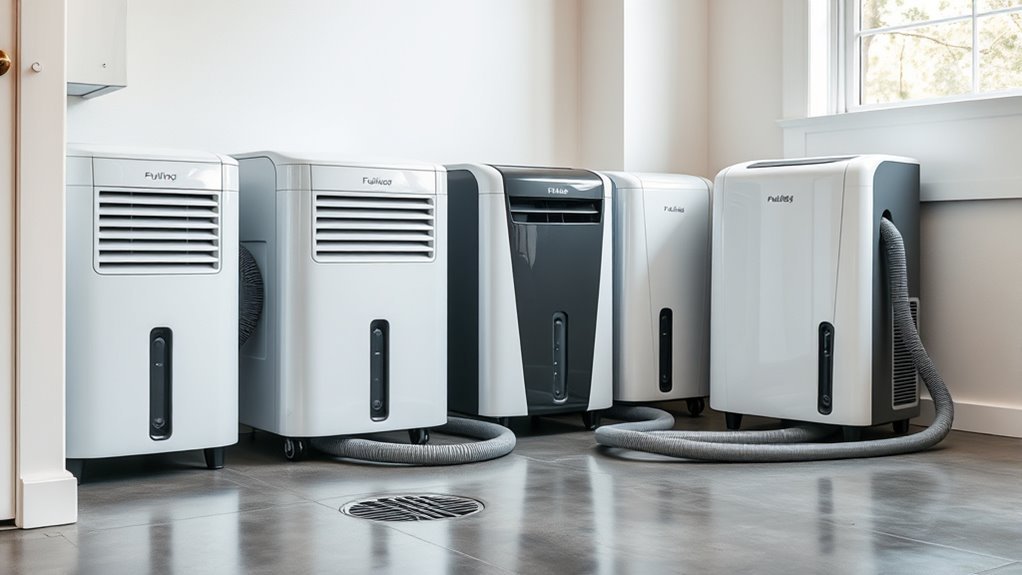
Drainage options can make a dehumidifier easy to live with or a constant chore. You can empty a built-in tank yourself, but smaller tanks may fill fast in humid rooms. If you want less upkeep, choose continuous drainage with a hose so water runs out hands-free. That setup works well in damp basements or laundry areas where moisture builds up all day. Some models add a garden hose adapter, which gives you extra reach and more flexible placement. If you can connect the unit directly to a floor drain, you’ll cut maintenance even more. Look for automatic shut-off, too, since it stops overflow when the tank’s full or drainage gets interrupted, helping you avoid messes and downtime.
Smart Controls
Smart controls can turn a dehumidifier from a basic appliance into a much easier one to manage. You can connect many models to Wi-Fi, then adjust settings from your phone or use Alexa or Google Assistant for hands-free control. Built-in humidity sensors help the unit react automatically to changing moisture levels, so you don’t waste energy running it harder than needed. If you want more precision, choose a model with customizable humidity targets for basements, bedrooms, or other spaces. Scheduling features let you run it only when you need it, which can cut costs. Mobile app alerts also tell you when the tank’s full or maintenance is due, so you can keep the unit working efficiently and avoid surprise shutdowns.
Portability and Placement
Portability matters if you plan to move your dehumidifier between rooms. Larger units may remove more moisture, but they can weigh 30 to 40 pounds or more. Look for wheels, side handles, cord storage, and top handles if you want easier movement. For a basement, garage, or laundry area, weight may matter less if the unit will stay in one place. For bedrooms, RVs, closets, and bathrooms, a compact model may be more practical. Also leave space around the air intake and exhaust so the machine can work properly. A poorly placed dehumidifier may run longer, sound louder, and remove less moisture.
Maintenance and Filter Care
Maintenance is another key buying point because every dehumidifier needs basic care. Washable filters help lower ongoing costs, while filter alerts make it easier to remember cleaning. Tanks should be emptied and rinsed often to prevent odors. If you use continuous drainage, check the hose for kinks, clogs, and proper slope. Auto defrost is useful in cooler spaces because it helps protect performance when frost forms on coils. A model with clear controls, easy tank access, and a simple filter design will usually be easier to live with long term.
Pro Tip: For basements, choose continuous drainage if you have a floor drain nearby. For bedrooms, prioritize lower noise and sleep mode. For bathrooms or closets, choose compact size and auto shutoff before chasing the highest capacity number.
Frequently Asked Questions
How Often Should I Clean a Dehumidifier Filter?
You should clean your dehumidifier filter every two to four weeks, and more often if you run it daily or see dust buildup. Check the manual, because your model might need different care. A clean filter helps airflow, reduces strain on the motor, and supports better moisture removal.
Can I Leave a Dehumidifier Running Overnight?
Yes, you can leave it running overnight if it’s in good condition, drains properly, and has auto shutoff. You’ll sleep better with lower humidity, but check the filter, water tank, and noise first. For bedrooms, a sleep mode or lower fan setting can make overnight use more comfortable.
What Humidity Level Is Ideal for Most Homes?
You’ll do best around 30–50% humidity. Think of your home like a garden: too much moisture breeds mold, too little dries everything out. Aim near 40% for comfort, health, and fewer damp problems. In very humid rooms, lower the level gradually so the unit does not run harder than needed.
Do Dehumidifiers Help Reduce Mold Growth?
Yes, you can help reduce mold growth with a dehumidifier by keeping humidity below 50%. You’ll limit the damp conditions mold needs, but you still need to clean existing mold and fix leaks. A dehumidifier helps control moisture, but it should not replace repairs for water intrusion, poor ventilation, or hidden leaks.
How Much Electricity Does a Dehumidifier Use?
You’ll usually use 300 to 700 watts per hour for many compressor-based home models, so running it eight hours can add 2 to 6 kWh daily. Energy use depends on size, humidity, temperature, fan speed, and settings, so choose efficient models and use humidity targets, timers, and continuous drainage wisely.
Is a Bigger Dehumidifier Always Better?
No, a bigger dehumidifier is not always better. Large units are helpful for basements and open areas, but they can be heavier, louder, and less convenient in small rooms. A compact unit may be better for closets, bathrooms, RVs, and bedrooms where portability and quiet operation matter more than maximum pint capacity.
Should I Use Manual Tank or Continuous Drainage?
Use the manual tank if you only run the dehumidifier occasionally or cannot place it near a drain. Use continuous drainage if the room stays damp, the tank fills quickly, or you want less daily maintenance. For basements, laundry rooms, and garages, continuous drainage is often the easier long-term setup.
Final Recommendation
Choose the Gasbye, Yaufey, Waykar, GoveeLife, Midea, hOmeLabs, Vellgoo Max, or PLUSCENT if you need serious drying power for basements, large rooms, garages, or open living spaces.
Choose the Tenergy Sorbi or 95OZ Dehumidifier if you want something lighter, quieter, and easier to move for small spaces, bathrooms, bedrooms, closets, offices, or RVs.
Conclusion
When you choose the right dehumidifier, you’re not just drying a room, you’re making the air feel cleaner, lighter, and easier to live in. The best model for you becomes a quiet guardian, pulling dampness away before it turns into musty smells, sticky air, or everyday discomfort. Whether you need power, smart features, energy savings, quiet operation, or portability, you now know what fits your space. Match the size and features to your room first, then choose the dehumidifier that makes daily use simple.