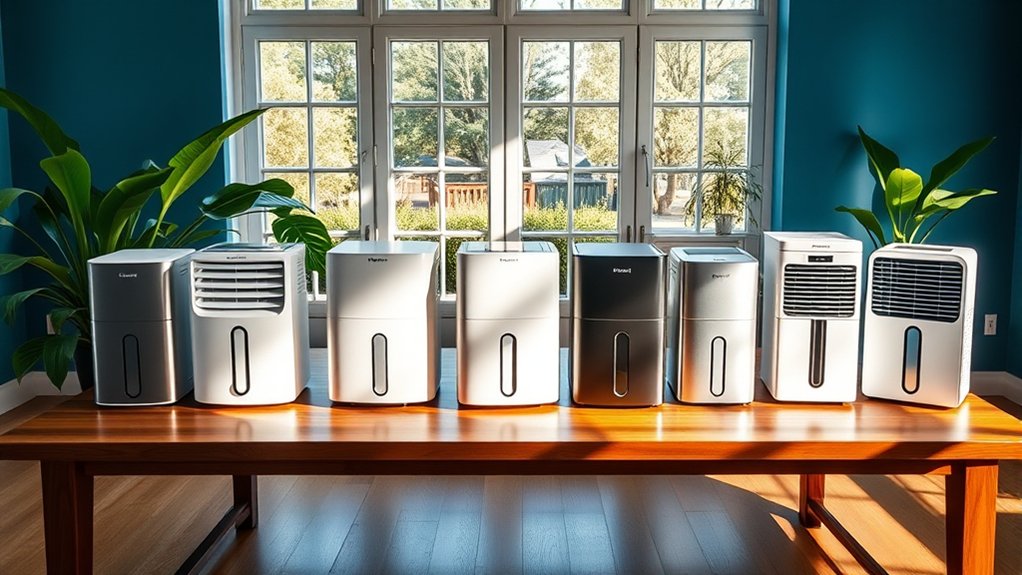
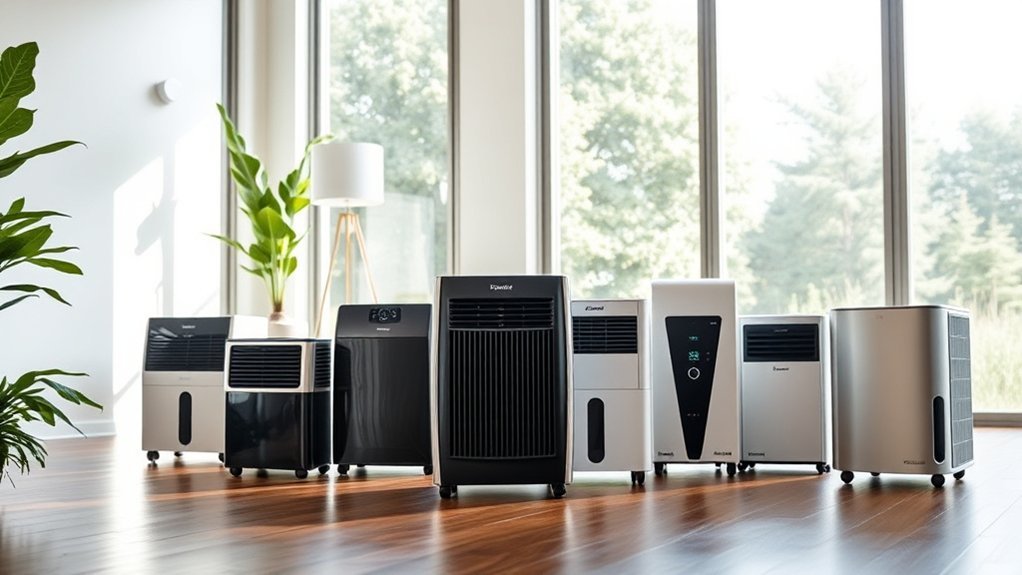
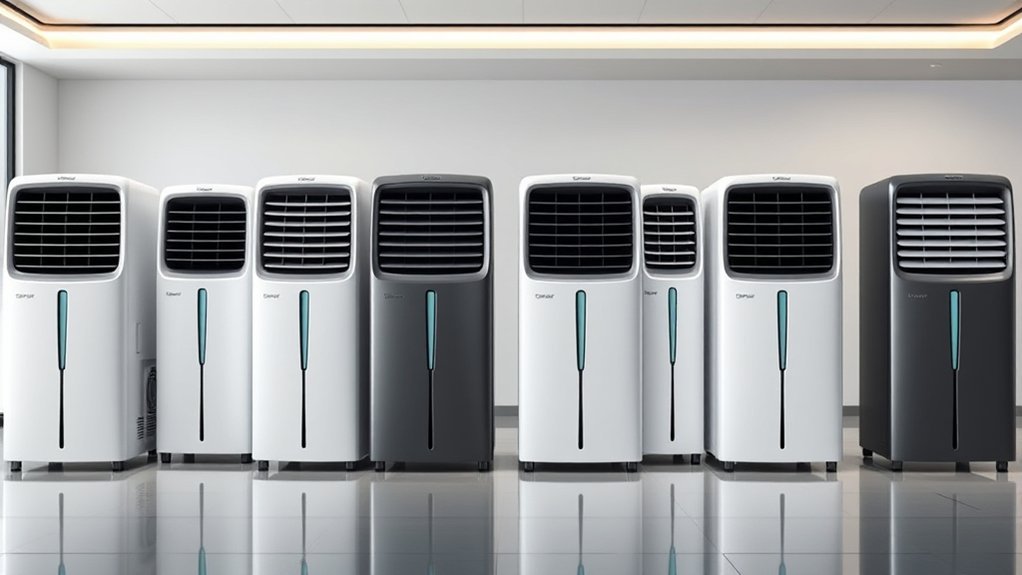
High humidity can make a basement feel clammy, slow laundry drying, create condensation, and place extra stress on stored belongings. The best dehumidifier for high humidity should be chosen by moisture-removal capacity, room conditions, drainage access, noise, and energy efficiency—not by square-foot claims alone. This updated 2026 guide compares eight compressor dehumidifiers that are better suited to sustained moisture control than small semiconductor models.
Affiliate disclosure: This article contains Amazon affiliate links. We may earn a commission from qualifying purchases at no extra cost to you.
Quick Answer: For a large, persistently humid basement, start with an 80-pint class model such as the Waykar 80-Pint, AEOCKY RHEA-001, or Yaufey 80-Pint. For a medium-size basement or living area, the KNKA, VEAGASO, or SEMKAP offers a more manageable 32- to 34-pint class. For smaller rooms, consider the GoGuess 21-Pint or the Waykar 30-Pint listing.
Selection note: Product specifications below are based on current manufacturer and retailer listing information, not independent laboratory testing. Confirm the current model, included accessories, certification, warranty, and availability before ordering.
Key Takeaways
- Choose capacity first: a high square-foot claim does not guarantee fast moisture removal.
- Use continuous drainage for severe humidity: small tanks can fill several times per day.
- Expect lower real-world collection: pint ratings are measured under specified temperature and humidity conditions.
- Fix the moisture source: a dehumidifier cannot repair leaks, stop groundwater intrusion, or remove existing mold.
- Aim for a practical humidity target: many homes are comfortable around 40%–50% relative humidity, adjusted for season and condensation risk.
Quick Comparison
| Product | Stated Maximum Capacity | Stated Coverage | Best Use | Amazon |
|---|---|---|---|---|
| AEOCKY RHEA-001 | 80 pints/day | Up to 4,500 sq. ft. | Premium efficiency pick | Check Amazon |
| Waykar 80-Pint | 80 pints/day | Up to 5,000 sq. ft. | Large basements | Check Amazon |
| Yaufey 80-Pint | 80 pints/day | Up to 5,000 sq. ft. | Large-space alternative | Check Amazon |
| KNKA | 34 pints/day | Up to 2,500 sq. ft. | Medium-size spaces | Check Amazon |
| VEAGASO | 34 pints/day | Up to 2,500 sq. ft. | Simple controls | Check Amazon |
| SEMKAP | 32 pints/day | Up to 2,500 sq. ft. | Quiet mid-size alternative | Check Amazon |
| Waykar 30-Pint | 30 pints/day | Up to 1,500 sq. ft. | Smaller rooms | Check Amazon |
| GoGuess | 21 pints/day | Up to 1,600 sq. ft. | Compact basements and bedrooms | Check Amazon |
Important: “Pints per day” and coverage figures are listing specifications. Actual removal depends on temperature, starting humidity, air circulation, room layout, and moisture entering the space.
Best Dehumidifiers for High Humidity
KNKA 2500 Sq. Ft. Dehumidifier with Drain Hose
Best Mid-Size Pick
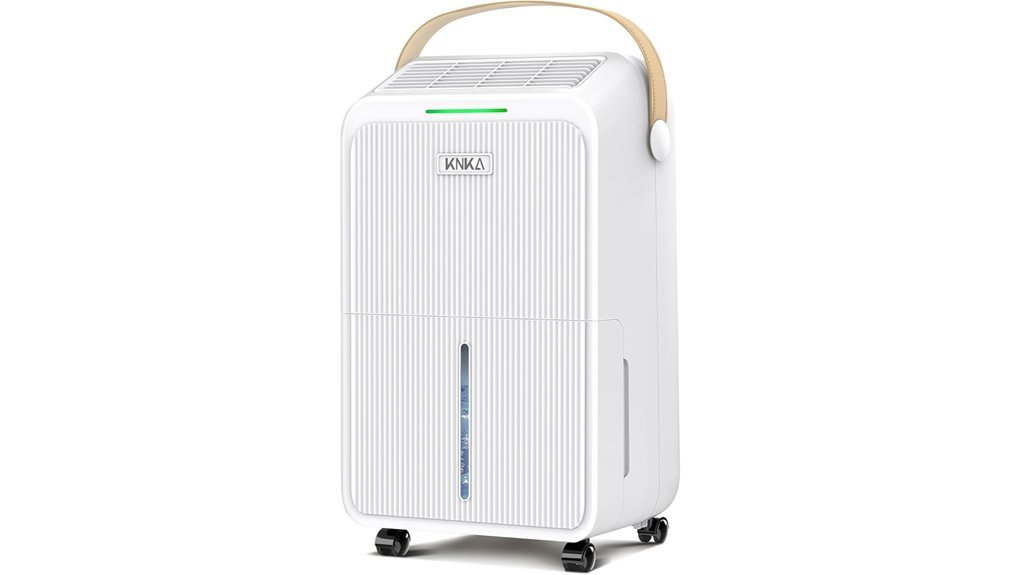
The KNKA is a practical compressor dehumidifier for damp basements, bedrooms, bathrooms, and other medium-size areas. Its listing states a maximum removal rate of 34 pints per day in hot, very humid test conditions, coverage up to 2,500 sq. ft., a 3-liter tank, and an included hose for continuous gravity drainage.
Why You’ll Like It
- Three operating modes support normal humidity control, laundry drying, and continuous operation.
- A built-in humidistat, timer, child lock, washable filter, and automatic shutoff simplify everyday use.
- The listing states a 37 dB low-speed noise level, which is useful when the unit is placed near a bedroom or work area.
Best For: Medium-size basements or living areas that need a capable compressor unit without moving to an 80-pint class model.
Who Should Avoid It: Very large, open, or persistently wet spaces where a higher-capacity unit would cycle less and remove moisture faster.
Pros:
- 34-pint maximum daily rating
- Three modes and smart humidity control
- Manual or continuous drainage
- Wheels and handle for room-to-room movement
Cons:
- The 3-liter tank can fill quickly in severe humidity
- Maximum capacity is based on hot, humid test conditions
- Continuous drainage needs a suitable lower drain point
Waykar 80-Pint ENERGY STAR Dehumidifier
Best for Large Spaces
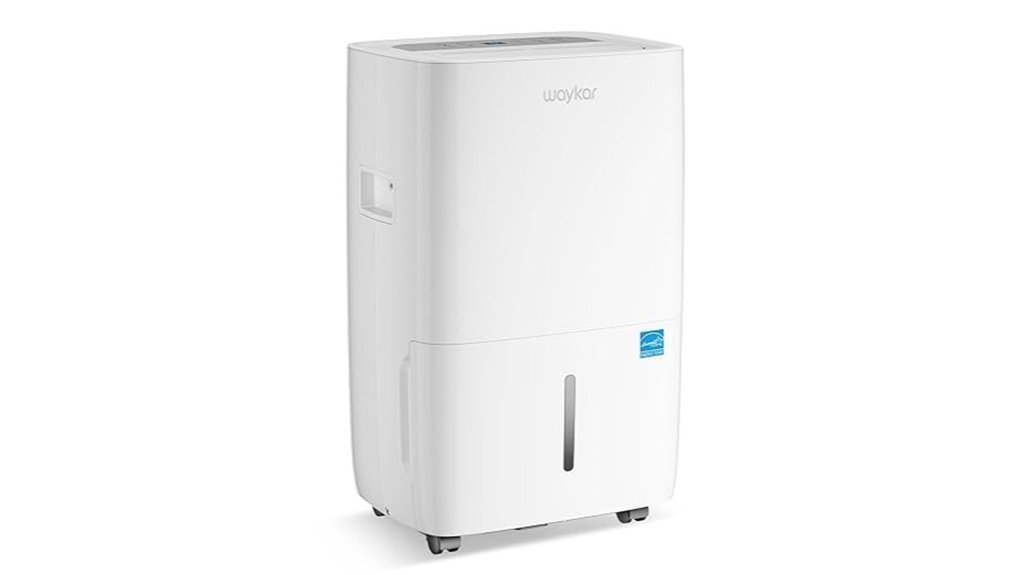
For a large basement or open floor plan, the Waykar offers a stronger moisture-removal class than the mid-size models. The listing specifies up to 80 pints per day at 95°F and 90% relative humidity, coverage up to 5,000 sq. ft., ENERGY STAR certification, a 4.3-liter tank, and an included drain hose.
Why You’ll Like It
- The higher stated capacity is better suited to heavy seasonal humidity and large rooms.
- A 30%–80% adjustable humidistat and 90° auto-swing airflow help distribute dry air more evenly.
- Manual tank drainage and continuous gravity drainage give you flexible installation choices.
Best For: Large basements, garages, open living areas, or homes with persistent summer humidity.
Who Should Avoid It: Small rooms where a lower-capacity unit would be easier to place and may cost less to buy.
Pros:
- 80-pint maximum daily rating
- ENERGY STAR certified
- Included hose and removable tank
- Approximate 42 dB low-speed operation stated by the listing
Cons:
- Larger footprint than mid-size models
- The tank still needs frequent emptying without a drain connection
- Real-world extraction falls as temperature and humidity decrease
GoGuess 1600 Sq. Ft. Dehumidifier with Humidity Control
Best for Smaller Basements
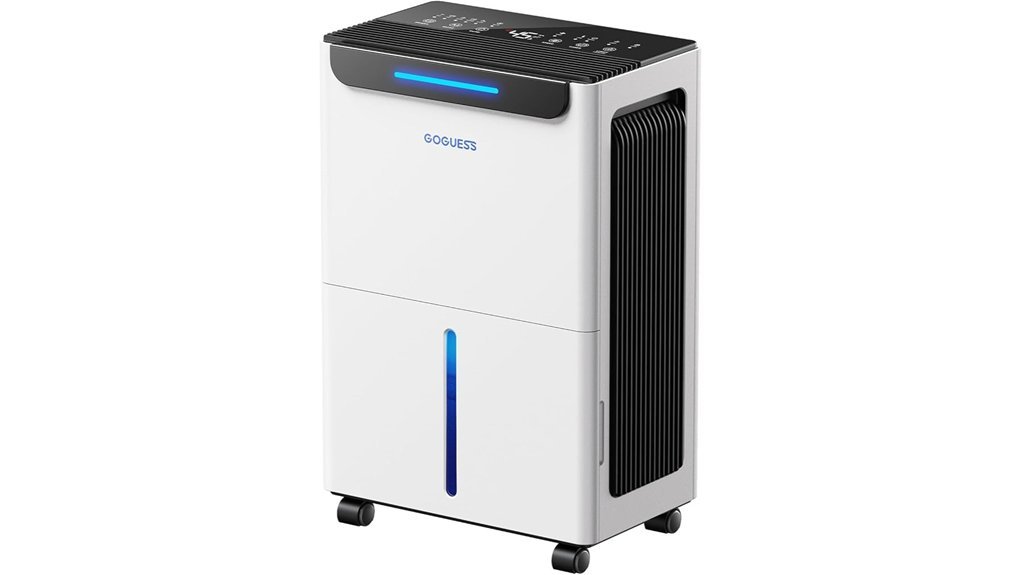
The GoGuess model targets smaller basements, bedrooms, bathrooms, and RV use. Its listing states a maximum removal rate of 21 pints per day, coverage up to 1,600 sq. ft., three operating modes, a timer, adjustable fan speed, and a hose connection for continuous drainage.
Why You’ll Like It
- The 21-pint class is easier to match to smaller spaces than an oversized 80-pint model.
- DEHU, TURBO, and SLEEP modes cover normal control, faster drying, and quieter nighttime operation.
- The display shows current humidity so you can adjust the target instead of running continuously by guesswork.
Best For: Bedrooms, bathrooms, RVs, and compact basements with moderate-to-high humidity.
Who Should Avoid It: Large flood-prone basements or spaces with active leaks that need source repair and substantially more capacity.
Pros:
- Appropriate size for smaller spaces
- Multiple operating modes
- Manual and continuous drainage
- Portable design
Cons:
- 21-pint maximum rating may be slow in severe dampness
- Small tank may need frequent emptying
- Turbo mode can be more noticeable
AEOCKY 4500 Sq. Ft. Smart Compressor Dehumidifier
Premium Efficiency Pick
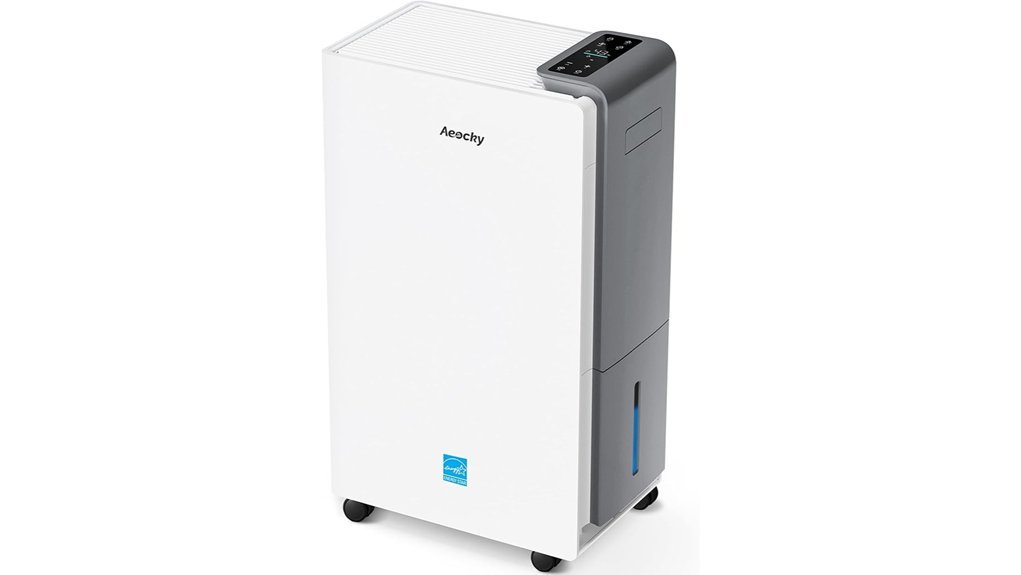
The AEOCKY RHEA-001 is aimed at buyers who want high moisture-removal capacity with an efficiency-focused compressor design. The product page lists coverage up to 4,500 sq. ft., a maximum 80-pint-per-day rating in extreme test conditions, a 1.45-gallon tank, and an included drain hose.
Why You’ll Like It
- The listing identifies this model as ENERGY STAR Most Efficient 2025.
- Its humidistat, power-loss memory, defrost controls, and continuous drainage support long basement run times.
- The listing states a 44 dB low fan setting and a 31-pound weight.
Best For: Large basements and buyers who prioritize energy efficiency, lower-speed noise, and strong capacity.
Who Should Avoid It: Shoppers who only need occasional moisture control in a small bedroom or bathroom.
Pros:
- High stated moisture-removal capacity
- Efficiency-focused certification
- Drain hose and large tank
- Power-loss memory and smart humidity control
Cons:
- Higher-capacity unit takes more floor space
- Premium features may raise upfront cost
- Certification year should be reconfirmed on the current listing
VEAGASO 2500 Sq. Ft. Dehumidifier with Drain Hose
Best Simple Controls
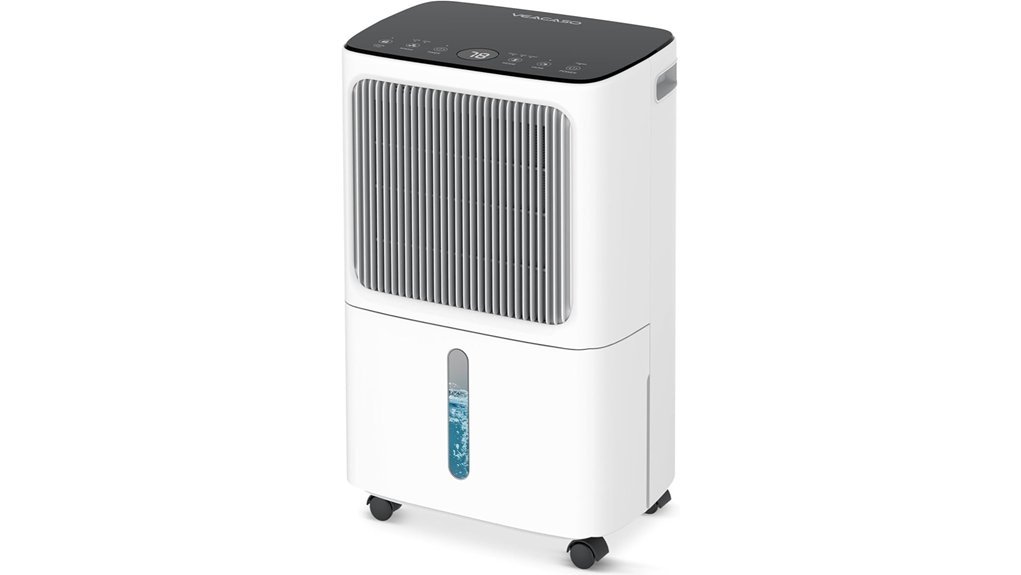
The VEAGASO is another 34-pint compressor option for medium-size damp spaces. Its listing specifies coverage up to 2,500 sq. ft., a 2-liter tank, an included hose, a 24-hour timer, and three modes for normal dehumidifying, laundry drying, and continuous operation.
Why You’ll Like It
- The touch panel keeps humidity target, fan speed, timer, and mode controls in one place.
- The included hose makes hands-free gravity drainage possible when a nearby drain is available.
- Automatic shutoff, automatic defrost, and power-failure memory support safer routine operation.
Best For: Basements, laundry areas, bathrooms, and bedrooms where straightforward controls matter.
Who Should Avoid It: Spaces larger than the stated coverage or locations without enough clearance for airflow and drainage.
Pros:
- 34-pint maximum daily rating
- Three useful modes
- Drain hose included
- Portable form with washable filter
Cons:
- Two-liter tank is small for severe humidity
- Gravity drainage requires correct hose slope
- Coverage claims should not replace capacity-based sizing
SEMKAP 2500 Sq. Ft. Dehumidifier with Drain Hose
Best Quiet Mid-Size Alternative
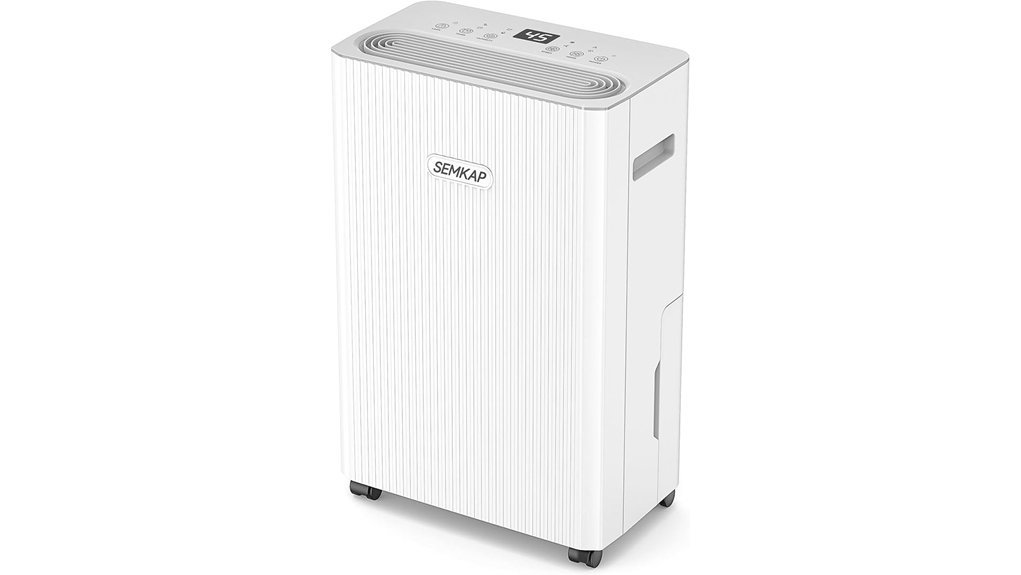
The SEMKAP listing positions this unit as a 32-pint compressor dehumidifier for spaces up to 2,500 sq. ft. It includes a drain hose, smart humidity controls, automatic shutoff, a timer, wheels, and a handle for easier placement.
Why You’ll Like It
- The 32-pint rating is a sensible middle ground for many basements and large rooms.
- Continuous drainage reduces the need to monitor a small internal tank during humid weather.
- The smart humidistat can cycle the compressor around the selected humidity target.
Best For: Medium-size living areas, offices, and basements where portability and automatic control are priorities.
Who Should Avoid It: Cold, unheated spaces below the operating range stated in the manual or extremely wet spaces needing commercial restoration equipment.
Pros:
- 32-pint maximum daily rating
- Included drain hose
- Timer, humidistat, and automatic shutoff
- Wheels and carrying handle
Cons:
- Tank drainage is frequent without the hose
- Brand support information should be checked before purchase
- Performance varies with room temperature and starting humidity
Yaufey 80-Pint ENERGY STAR Dehumidifier
Best Large-Space Alternative
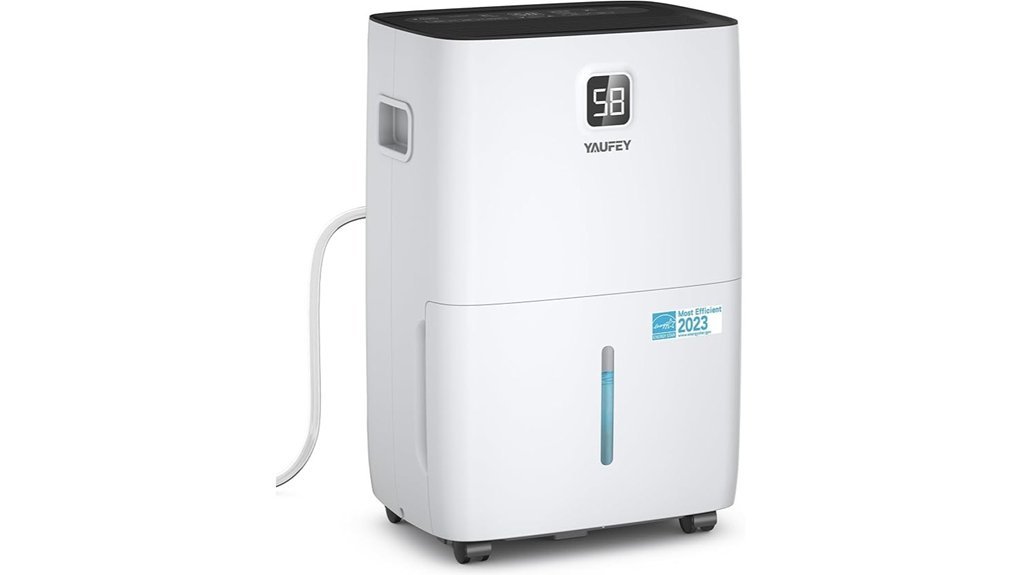
The Yaufey is a large-capacity alternative for buyers comparing 80-pint models. Its current listing identifies a maximum 80-pint daily rating, coverage up to 5,000 sq. ft., ENERGY STAR certification, a 1.06-gallon tank, intelligent humidity control, and both tank and hose drainage.
Why You’ll Like It
- The high stated capacity is designed for large, persistently humid rooms.
- Continuous drainage is useful for unattended basement operation.
- Automatic shutoff, timer controls, and a washable filter simplify routine ownership.
Best For: Large basements, garages, and open rooms where a high-capacity ENERGY STAR model is preferred.
Who Should Avoid It: Small rooms where the physical size and capacity would be unnecessary.
Pros:
- 80-pint maximum daily rating
- ENERGY STAR certified
- Dual drainage options
- Humidistat and timer controls
Cons:
- Bulky compared with 21- to 34-pint models
- No exact annual dollar savings can be promised
- Tank emptying remains frequent without continuous drainage
Waykar 1500 Sq. Ft. 30-Pint ENERGY STAR Dehumidifier
Best Energy-Efficient Small-Space Pick
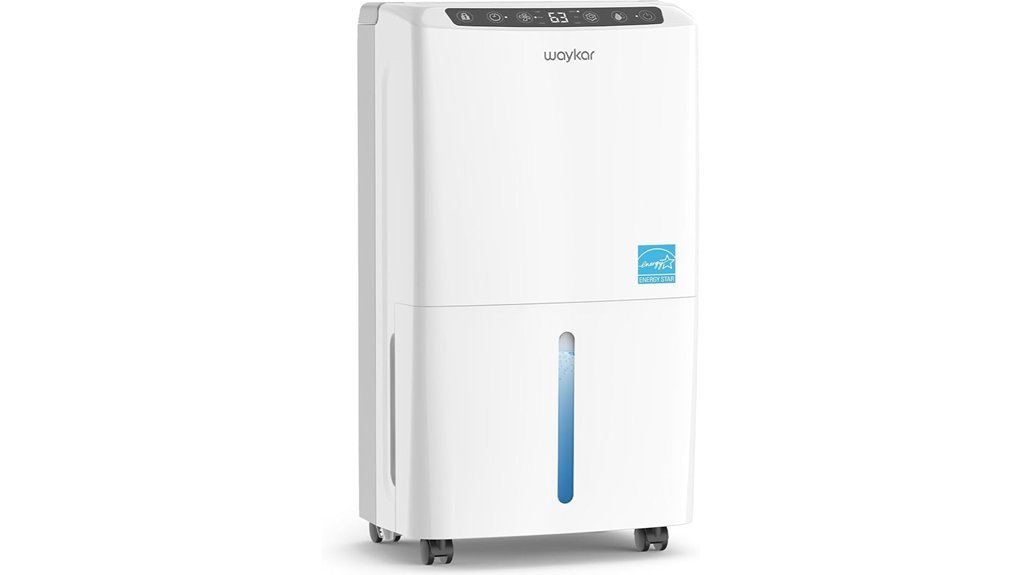
The current Waykar listing identifies this as a 1,500 sq. ft., 30-pint model. It offers automatic or manual drainage, a 0.62-gallon tank, adjustable humidity control, and ENERGY STAR positioning for buyers who need less capacity than the 80-pint Waykar.
Why You’ll Like It
- The smaller capacity is easier to match to bedrooms, offices, and compact basements.
- Automatic shutoff and drainage choices reduce overflow concerns.
- A humidistat lets the unit cycle instead of running at full output continuously.
Best For: Small-to-medium rooms that still need a compressor dehumidifier rather than a compact semiconductor unit.
Who Should Avoid It: Large basements or very wet conditions where an 80-pint class model is more appropriate.
Pros:
- 30-pint maximum daily rating
- ENERGY STAR positioning
- Manual or continuous drainage
- Compact alternative to large-capacity models
Cons:
- Correct coverage is 1,500 sq. ft. on the current listing
- 0.62-gallon tank can fill quickly
- Not intended for whole-home moisture control
Factors to Consider When Choosing a Dehumidifier for High Humidity
A high-humidity purchase should start with the space’s actual moisture problem. Measure relative humidity with a separate hygrometer, identify leaks or condensation sources, and then compare capacity, drainage, temperature range, and noise.
Choose a Compressor Model for Sustained High Humidity
Compressor dehumidifiers are the stronger fit for basements, large rooms, and persistent humidity. Small semiconductor or thermoelectric units may be useful in closets or tiny bathrooms, but their lower extraction rate makes them a weak match for a guide focused on sustained high humidity. Prioritize compressor capacity and drainage over decorative LED or fragrance features.
Match Pint Capacity to the Moisture Load
Capacity matters more than the largest square-foot number in a title. A 21- to 34-pint class can suit a smaller or medium-size area, while an 80-pint class is more appropriate for a large basement, open floor plan, or persistently damp environment. Remember that maximum capacities are measured under specified test conditions; a unit will normally collect less water in a cooler or less humid room.
Treat Coverage as a Screening Number
Coverage claims are useful for narrowing options, but they do not account for ceiling height, open doors, outside air leakage, laundry, showers, groundwater, or a divided floor plan. When two products claim similar coverage, compare pint capacity, airflow, drainage, and operating temperature before choosing.
Plan the Drainage Route Before Buying
In high humidity, continuous drainage is often more important than tank size. Gravity drainage requires the hose to slope downward without kinks. A sink or drain above the unit may require a model with a built-in pump, which the products in this guide do not all include. Keep the tank installed correctly even when the manual requires it for hose operation.
Compare Noise at the Mode You Will Use
A low-speed figure can sound attractive, but turbo or high-fan operation will be louder. For a bedroom, office, or finished basement, look for sleep mode, adjustable fan speed, vibration control, and enough capacity that the compressor does not need to run continuously.
Look for Verifiable Energy Efficiency
ENERGY STAR certification can help compare efficiency, but it does not justify a guaranteed annual dollar-saving claim. Your actual cost depends on local electricity rates, daily runtime, humidity setting, and the unit’s efficiency. Compare the current certification and model number rather than relying only on promotional percentages.
Useful Controls Versus Marketing Extras
The most useful features are an accurate humidistat, automatic restart, automatic defrost, a timer, washable filter, full-tank shutoff, and continuous drainage. Decorative lighting and fragrance features do not improve moisture-removal capacity and should not outweigh compressor size or drainage design.
Before You Buy Checklist
- Measure the room and check typical relative humidity.
- Confirm the exact model number and pint rating on the current listing.
- Check whether the stated capacity uses hot, humid maximum test conditions.
- Decide whether you will empty a tank or run a hose continuously.
- Confirm hose length, drain height, clearance, filter access, and operating temperature.
- Review warranty support and current seller availability.
- Use a grounded outlet and follow the manufacturer’s placement and electrical instructions.
Safety and moisture note: A dehumidifier manages airborne moisture; it does not replace plumbing, foundation, roof, or mold remediation work. Repair active leaks and dry water-damaged materials promptly.
Frequently Asked Questions
What Size Dehumidifier Do I Need for High Humidity?
Use pint capacity, room size, temperature, and moisture severity together. A smaller 21- to 34-pint class may work for a bedroom or compact basement, while a large, persistently damp basement is a better match for an 80-pint class model. When in doubt, choose enough capacity to reach the target without running nonstop.
How Often Should I Empty the Water Tank?
It can range from every few hours to every few days. High humidity, warm temperatures, and a small tank increase emptying frequency. For sustained dampness, use continuous drainage when the installation and manual allow it.
Can a Dehumidifier Remove Mold?
No. It can reduce the moisture that supports future growth, but it does not remove existing mold or repair the water source. Clean or remediate mold appropriately and fix leaks or condensation problems.
Can a Dehumidifier Help With Allergies?
Keeping humidity under control may make the environment less favorable for mold and dust mites, but a dehumidifier is not a medical treatment. Avoid making the room excessively dry, and consult a healthcare professional for persistent symptoms.
Are Compressor Dehumidifiers Noisy?
They produce fan and compressor noise. Low or sleep mode is quieter, while high-fan and laundry-drying modes are more noticeable. Place the unit on a level surface and keep airflow paths clear to reduce vibration and strain.
How Do I Maintain a Dehumidifier?
Clean the washable filter on the schedule in the manual, empty and rinse the tank, keep intake and exhaust areas clear, inspect the drain hose, and store the unit upright. Unplug it before cleaning and never immerse the appliance.
Where Should I Place It?
Place it near the dampest area on a level surface with the clearance required by the manual. Close exterior windows and doors while it runs, but do not block internal airflow between connected rooms if you expect one unit to serve them.
Conclusion
Final Recommendation: Choose the Waykar 80-Pint, AEOCKY RHEA-001, or Yaufey 80-Pint for a large, persistently humid space. Choose the KNKA, VEAGASO, or SEMKAP for a medium-size basement or living area. The GoGuess 21-Pint and Waykar 30-Pint are more sensible for smaller rooms.
The best result comes from matching capacity to the real moisture load, setting up reliable drainage, maintaining the filter, and repairing the source of unwanted water.