Affiliate Disclosure: This post contains affiliate links. As an Amazon Associate, I earn from qualifying purchases at no extra cost to you.
A good tiny home dehumidifier should fit into a narrow space, stay reasonably quiet, and remove moisture from the specific room or zone where you place it. Based on the listed tank size, moisture-removal rate, power use, noise, controls, and safety features, three compact electric models stand out: the BeOkay 58 OZ Dehumidifier, TABYIK 35 OZ Dehumidifier, and Windangel 44 OZ Dehumidifier.
All three are small thermoelectric or Peltier units. They are best suited to mild humidity in bedrooms, closets, lofts, RV interiors, small bathrooms, and other compact areas. They should not be treated as direct replacements for a full-size compressor dehumidifier when an entire tiny home stays damp, condensation appears often, or relative humidity remains above 60%.
Quick Verdict
- Best Overall: BeOkay 58 OZ Dehumidifier for its larger listed tank, 28-watt draw, three modes, timer options, and broad set of safety controls.
- Quietest Manufacturer-Listed Pick: TABYIK 35 OZ Dehumidifier for its stated 28 dB operation, simple one-button use, and lightweight body.
- Best Low-Power Pick: Windangel 44 OZ Dehumidifier for its listed 24-watt rating, three operating modes, timer, and portable size.
Selection note: These recommendations are based on published specifications, intended use, safety features, and product fit—not hands-on testing. Extraction, sound, coverage, and power figures are manufacturer or marketplace claims. Actual performance depends on temperature, relative humidity, airflow, placement, and room layout. Product listings can also change, so confirm the current details on Amazon before buying.
Before You Buy
- Use a digital hygrometer to confirm that excess humidity is the real problem.
- These mini units list maximum removal of roughly 0.3 to 0.45 liters per day under favorable conditions—less than one U.S. pint per day.
- Choose by daily moisture removal and room conditions, not square-foot coverage alone.
- Fix leaks and use kitchen or bathroom ventilation first; a dehumidifier should support moisture control, not replace it.
Quick Comparison of Tiny Home Dehumidifiers
| Product | Best Use | Listed Tank Size | Maximum Listed Removal | Noise | Power | Amazon |
|---|---|---|---|---|---|---|
| BeOkay 58 OZ | Flexible everyday spot use | 1657 ml / 58 oz listed | Up to 0.3 L per day listed | Under 40 dB in sleep mode listed | 28 W listed | Check Product Details |
| TABYIK 35 OZ | Bedrooms and quiet areas | 1000 ml / 35 oz | Up to 450 ml per day at 86°F and 80% RH | 28 dB listed | 40 W listed; under 1 kWh per day claimed | Check Product Details |
| Windangel 44 OZ | Low-power portable use | 1.3 L / 44 oz listed | Up to 349 ml per day at 86°F and 80% RH | Sleep mode; up to 44 dB listed | 24 W listed | Check Product Details |
BeOkay 58 OZ Small Dehumidifier: Best Overall
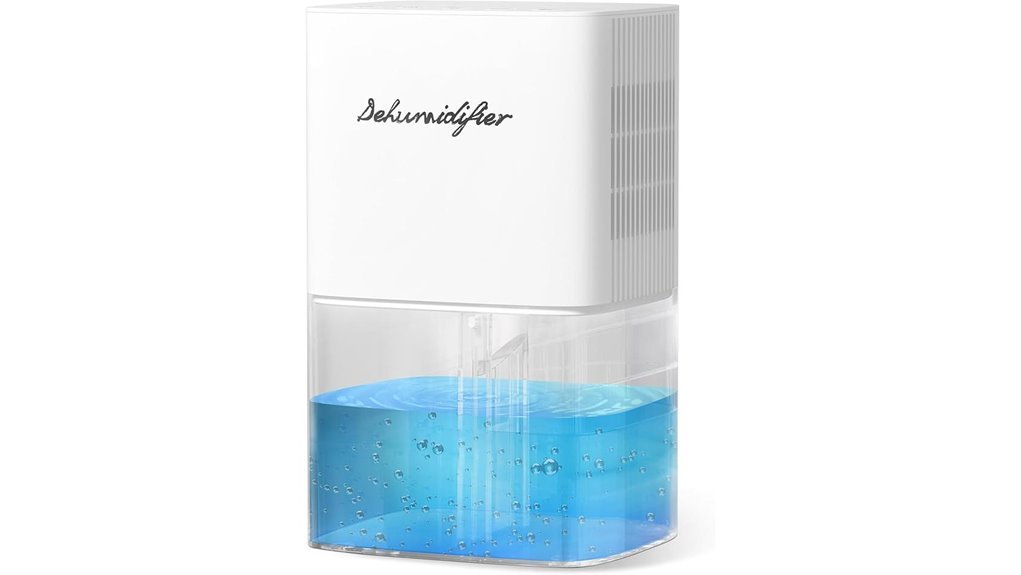
The BeOkay model offers the most flexible control set in this group. The listing reviewed for this article describes a 1657 ml or 58-ounce tank, a 28-watt power rating, three operating modes, multiple timer settings, and a compact body suited to shelves, counters, and other small-home locations.
Its listing states coverage up to 230 square feet and maximum extraction of 0.3 liters per day. Treat those figures as comparison points rather than guaranteed room performance. A Peltier unit normally removes less water when the air is cooler, humidity is moderate, doors are open, or new moisture enters from showers, cooking, or outdoor air.
You can choose sleep, normal, or performance mode. Sleep mode is listed below 40 dB. The safety system is designed to stop operation when the tank is full or removed, or when the unit tilts. Auto defrost is also listed to help manage frost on the semiconductor surface. Ten light colors are included, but the lighting is a convenience feature rather than a reason to overlook extraction capacity.
Best For: Tiny-home owners who want one compact unit with more operating choices for a bedroom, loft, closet, or small combined living area.
Why You’ll Like It: The larger listed reservoir can reduce emptying frequency, while three modes and timer settings make it easier to balance sound, runtime, and moisture collection.
Who Should Avoid It: Anyone dealing with standing water, an active leak, repeated wall condensation, visible mold growth, or persistent whole-home humidity above 60%.
Pros:
- 1657 ml listed tank provides more collection space than the other two picks
- Sleep, normal, and performance modes support different routines
- Auto shutoff, tilt protection, tank-removal detection, and defrost are listed
- 28-watt rating suits low-load spot use
Cons:
- Maximum daily extraction remains modest compared with a compressor dehumidifier
- Coverage claims may be optimistic in open, cool, or very damp layouts
- Online listing mirrors show some capacity and model-number inconsistencies, so current specifications should be confirmed before purchase
TABYIK 35 OZ Small Dehumidifier: Quietest Listed Pick
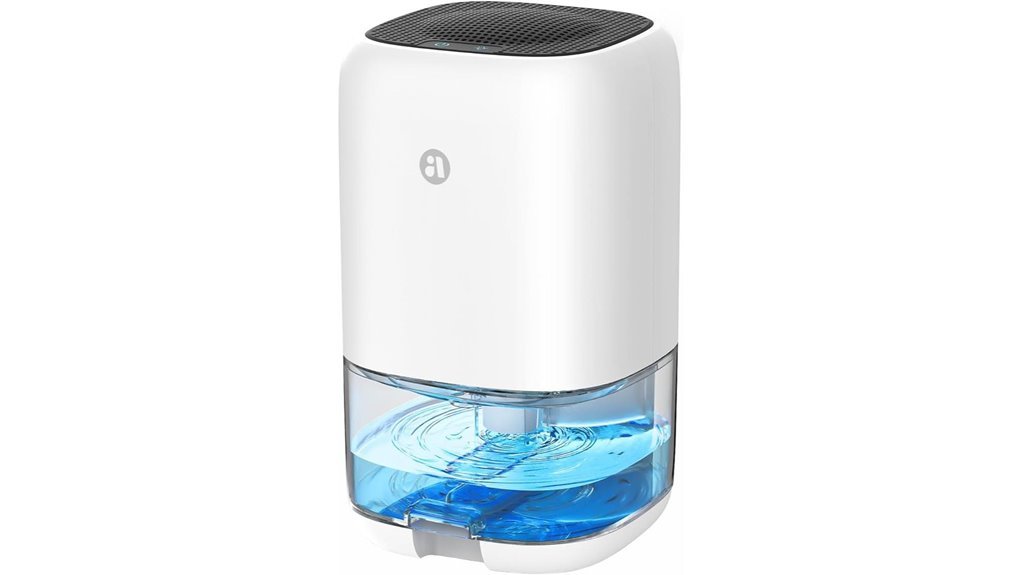
The TABYIK 35 OZ Dehumidifier is the simplest option in the group. It is designed for small bedrooms, closets, offices, RV interiors, and carefully chosen bathroom locations. The listed dimensions are approximately 5.9 by 5.9 by 10.1 inches, and the unit weighs about 2.2 pounds, making it easy to move with its built-in handle.
The manufacturer lists a maximum collection rate of 450 ml or 16 ounces per day in a closed space at 86°F and 80% relative humidity. Those are warm and very humid test conditions, so normal indoor collection may be much lower. The stated 280-square-foot coverage should be treated as a maximum small-room guideline, not a promise that it will control an entire tiny home.
Its transparent 35-ounce tank makes the water level easy to see. The auto-shutoff system is designed to stop the unit when the collected water reaches approximately 700 to 800 ml, leaving unused space below the tank’s full physical capacity. A flashing red light indicates that the tank needs to be emptied or checked.
The listed 28 dB sound level is the lowest stated figure among these three models. The unit has simple continuous operation rather than adjustable fan modes or a built-in humidistat. Seven-color lighting is included and can be turned off separately.
Best For: Light sleepers, students, RV owners, and tiny-home residents who want straightforward moisture collection without extra settings.
Why You’ll Like It: It is lightweight, easy to monitor, simple to empty, and has the lowest manufacturer-listed sound rating in the comparison.
Who Should Avoid It: Buyers who need adjustable humidity targets, several fan speeds, continuous drainage, or strong whole-home extraction.
Pros:
- Manufacturer-listed 28 dB operation suits bedrooms and work areas
- Transparent 1000 ml tank makes the water level easy to monitor
- Auto shutoff helps reduce overflow risk
- Compact body and built-in handle improve portability
Cons:
- Maximum extraction is based on unusually warm and humid conditions
- One continuous operating mode provides fewer adjustments than multi-mode models
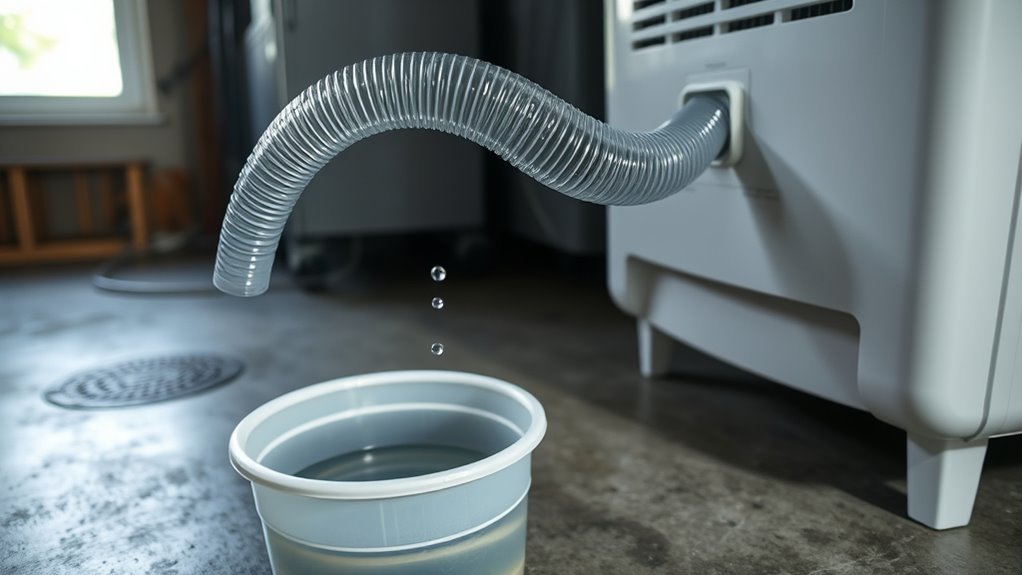
- No built-in humidistat or continuous-drain connection is listed
Windangel 44 OZ Small Dehumidifier: Best Low-Power Pick
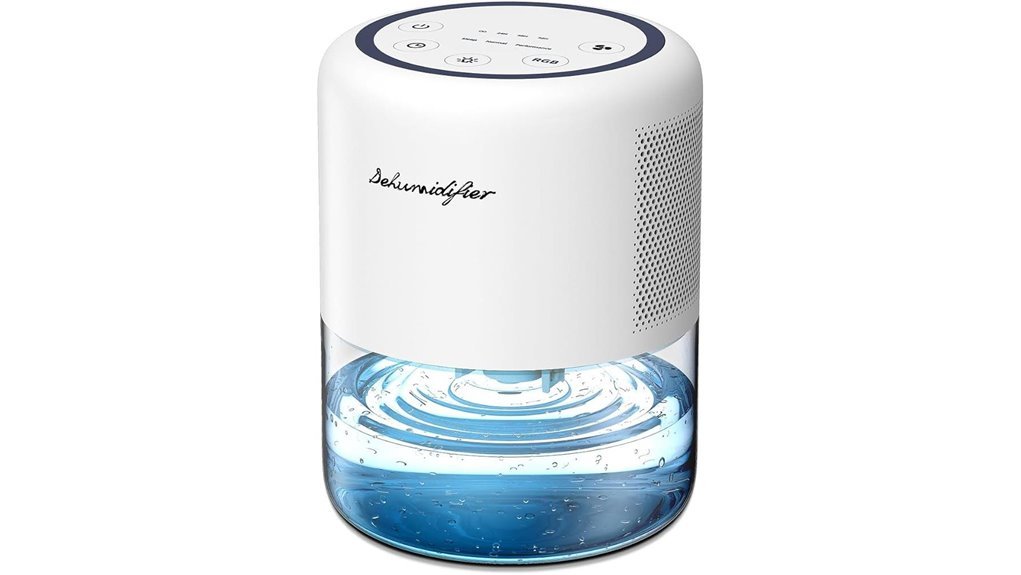
The Windangel 44 OZ Small Dehumidifier is designed for bedrooms, closets, RV interiors, and other compact areas up to a listed 215 square feet. Its 24-watt power rating is the lowest stated draw among the retained models, which may appeal to tiny-home owners managing a limited electrical load.
The manufacturer lists maximum extraction of approximately 349 ml or 11.8 ounces per day at 86°F and 80% relative humidity. Actual collection can be much lower in a cool room, at moderate humidity, or when the space receives constant moisture from showers, cooking, or outside air.
The product is advertised with a 44-ounce reservoir, while its auto-shutoff system is designed to activate at a lower collected-water level. That unused space is intended to reduce spill risk. The unit also lists sleep, normal, and performance modes, auto defrost, ten light colors, and four timer settings.
At 24 watts, continuous 24-hour operation would use approximately 0.576 kWh. Actual consumption will be lower when the unit is switched off, placed on a timer, or stopped by the full-tank sensor.
Best For: Buyers who want a low-wattage, portable dehumidifier for one small zone at a time.
Why You’ll Like It: Its low listed draw, three operating modes, timer, auto defrost, and compact design give it more flexibility than a basic one-mode unit.
Who Should Avoid It: Anyone who needs rapid drying after a leak, heavy daily bathroom moisture control, continuous drainage, or whole-home dehumidification.
Pros:
- Lowest listed power draw in the comparison at 24 watts
- Sleep, normal, and performance modes support different situations
- Auto shutoff, timer settings, and defrost add convenience
- Compact design is easy to move between small zones
Cons:
- Daily extraction is limited for severe humidity problems
- The auto-shutoff level is lower than the full listed reservoir volume
- Coverage may fall short in open layouts or spaces with frequent moisture generation
Factors to Consider When Choosing a Tiny Home Dehumidifier
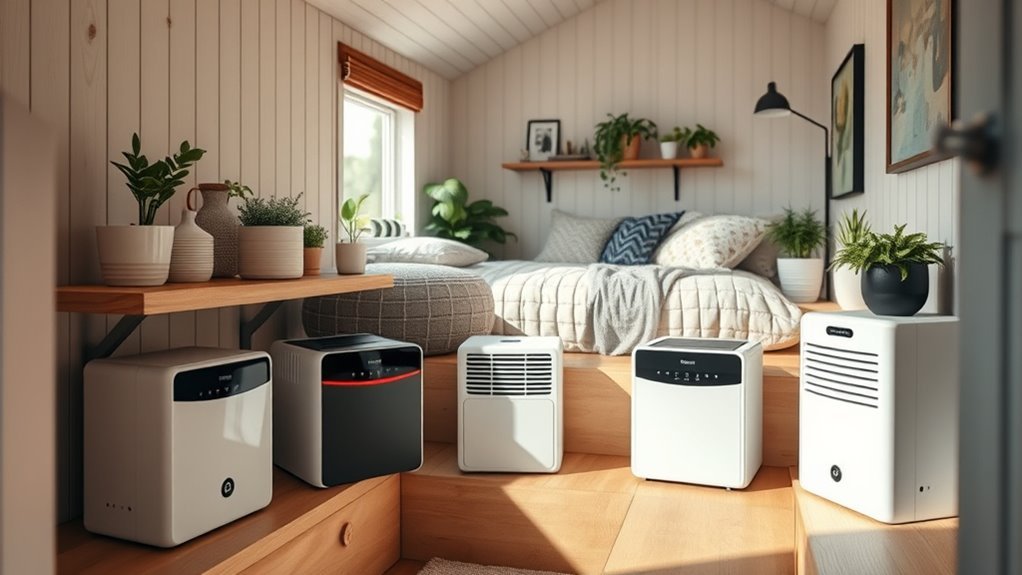
Choosing a tiny-home dehumidifier involves more than finding the smallest appliance. Compare measured humidity, daily moisture removal, tank capacity, sound, power consumption, safety features, room layout, and the source of the moisture.
Start With a Hygrometer
Use a separate digital hygrometer to measure indoor relative humidity before choosing a unit. A practical target is generally 30% to 50%, while humidity should remain below 60% where possible.
Take readings at different times of day and after cooking, showering, or drying clothes. A single reading may not show how high humidity climbs during normal tiny-home activities.
Mini Unit or Compressor Dehumidifier
The models in this guide use compact thermoelectric technology. They are usually light, quiet, and low-powered, but their listed extraction rates are all below one U.S. pint per day under favorable conditions. Full-size compressor models are designed to remove many pints per day and are better suited to consistently damp rooms.
A mini unit may be enough when one bedroom, closet, loft, or small bathroom feels slightly damp. Consider a larger compressor model with a humidistat and, where practical, continuous drainage when:
- Relative humidity stays above 60% after several days of operation
- Condensation regularly appears on windows, walls, or pipes
- The tiny home has several separated rooms
- Cooking, showering, or indoor clothes drying creates heavy moisture every day
- Water leaks, seepage, or damp building materials are present
A dehumidifier should supplement leak repairs, insulation improvements, and ventilation—not replace them.
Tank Capacity and Shutoff Level
A larger tank can reduce how often you empty the unit, but physical tank volume and automatic shutoff level are not always the same. Some products stop before the reservoir reaches its full stated capacity to leave space for movement and reduce spill risk.
Compare the shutoff level when that information is available. Also look for a tank that is easy to grip, remove, pour, rinse, and reinstall without disturbing the appliance.
Coverage Area and Daily Moisture Removal
Manufacturer coverage figures such as 215, 230, or 280 square feet are useful for a first comparison, but they do not describe humidity load, airflow, or room shape. Daily water-removal capacity is usually the more useful performance measure.
Check the temperature and humidity used for the stated capacity. A unit tested at 86°F and 80% RH will collect less water in a room at 70°F and 50% RH. Open lofts, high ceilings, frequent door opening, and outside air leaks can reduce performance further.
Noise Level
Sound carries easily in a tiny home. For bedrooms, offices, and shared living areas, look for a sleep mode and a clearly listed decibel rating. A lower number is generally preferable, but manufacturer ratings may use different test methods, and the character of the sound also matters.
Place the unit on a firm, level surface. A hollow shelf, loose panel, or uneven floor can amplify vibration.
Energy Use
Compare power in watts rather than relying only on phrases such as “energy efficient.” Energy use is measured in kilowatt-hours. To estimate daily use, divide the wattage by 1,000 and multiply by the number of operating hours.
For example, a 24-watt appliance running continuously for 24 hours uses approximately 0.576 kWh:
24 ÷ 1,000 × 24 = 0.576 kWh
Your actual cost depends on your electricity rate and runtime. Timers and full-tank shutoff can reduce operating time, but these three models do not provide the same automatic humidity control as a compressor unit with a humidistat.
Auto Shutoff and Defrost
Auto shutoff stops the dehumidifier when the tank reaches its designed limit. This feature is important in a tiny home because a spill can quickly reach flooring, furniture, or electrical cords.
Some models also stop when the tank is removed or the unit tilts. Auto defrost can help manage frost on the thermoelectric surface, but it does not make a mini Peltier unit equivalent to a low-temperature compressor dehumidifier.
Portability and Placement
A compact unit should be easy to move without becoming unstable. Check its weight, dimensions, handle design, cord length, and required clearance around the air inlet and outlet.
Do not squeeze a dehumidifier tightly against a wall, curtain, cabinet, or clothing. Restricted airflow can reduce collection and increase heat buildup. Follow the clearance instructions in the product manual.
Cleaning and Maintenance
Empty collected water regularly and wash the reservoir with mild soap and water as directed by the manual. Let it dry before reinstalling it. Wipe dust from the air inlet, outlet, and any washable screen so airflow remains clear.
Do not assume every mini dehumidifier has a replaceable filter. Check the manual before ordering replacement parts or using cleaners that could damage the tank or housing.
Warranty, Returns, and Replacement Parts
Warranty terms and seller support can vary by listing. Before buying, check the current Amazon seller, return window, warranty language, replacement-adapter availability, and contact method for support. Save the order details and manual in case the power adapter, tank sensor, or control panel develops a problem.
Timer Settings
A timer lets you match operation to your routine. You might run the unit after a shower, during cooking, overnight in a bedroom, or during the most humid part of the day.
Check whether the timer only turns the appliance off after a chosen period or also supports delayed starting. These are different functions, and listing language is not always clear.
Safety and Moisture Sources
Before You Run a Dehumidifier
- Place it on a stable, level, dry surface.
- Keep the air inlet and outlet clear.
- Keep cords away from children, pets, sinks, tubs, and walkways.
- Do not place the unit where water can splash directly onto it.
- Avoid using a damaged cord, adapter, or loose electrical outlet.
- Empty and clean the tank regularly.
- Fix leaks and use bathroom or kitchen ventilation where possible.
Frequently Asked Questions
What Humidity Level Is Ideal for a Tiny Home?
Aim for approximately 30% to 50% relative humidity and try to keep it below 60%. Use a hygrometer instead of judging humidity only by how the room feels. During cold weather, a lower indoor level may be needed to reduce window condensation.
Can a Mini Dehumidifier Control an Entire Tiny Home?
It may help in a small, mostly open tiny home with mild humidity, but it is not guaranteed. Room divisions, showers, cooking, outdoor humidity, air leaks, and temperature can overwhelm a compact Peltier unit. Check the hygrometer after several days. If humidity remains above 60%, improve ventilation, address the moisture source, or consider a compressor dehumidifier.
Should I Choose by Square Feet or Daily Water Removal?
Use both, but give more weight to daily water removal and the test conditions behind it. Square-foot figures do not account for ceiling height, room divisions, outdoor air leaks, shower steam, or other moisture sources. A smaller room with heavy moisture can need more capacity than a larger room with mild humidity.
How Long Does a Mini Dehumidifier Take to Collect Water?
There is no fixed answer. In warm, humid air, you may see water within several hours. In a cool room or at moderate humidity, collection can be slow and may take a day or longer to become obvious. Compare the tank level over several days and watch the hygrometer rather than judging performance after only a short run.
How Often Should Tiny Home Dehumidifier Filters Be Replaced?
Not every mini dehumidifier has a replaceable filter. Some use a washable intake screen, while others only require the intake grille to be cleaned. Inspect the intake monthly and follow the manufacturer’s instructions. Replace a filter only when the manual identifies it as replaceable and provides a schedule or part number.
Can Tiny Home Dehumidifiers Run Continuously Overnight?
A compact dehumidifier can normally run overnight when the manual permits continuous operation, the tank and auto-shutoff system work correctly, and the appliance sits on a stable, dry surface with clear airflow. Keep it away from direct splash areas and never cover the vents.
Do Tiny Home Dehumidifiers Increase Electricity Bills Significantly?
Small thermoelectric models normally draw less power than compressor units, but cost depends on wattage, operating time, and your electricity rate. Multiply watts by operating hours, then divide by 1,000 to estimate kWh. A low-wattage appliance can still add noticeable use if it runs continuously every day.
Can I Use a Small Dehumidifier in a Bathroom?
Use one in a bathroom only when the manual allows it and the unit can be placed safely away from the tub, shower, sink, and direct splashes. A bathroom exhaust fan should remain the first line of moisture control because it removes humid air at the source.
Are Tiny Home Dehumidifiers Safe Around Pets and Children?
They can be used in homes with pets and children when placed securely and operated according to the manual. Hide or secure the cord, prevent access to the water tank, keep vents clear, and position the appliance where it cannot be tipped or played with. No portable electrical appliance should be treated as childproof or pet-proof.
Conclusion
Final Recommendation
- Choose the BeOkay 58 OZ Dehumidifier for the largest listed tank and the broadest set of modes and safety controls.
- Choose the TABYIK 35 OZ Dehumidifier for simple operation and the lowest manufacturer-listed noise figure.
- Choose the Windangel 44 OZ Dehumidifier for the lowest stated power draw and flexible three-mode operation.
The BeOkay 58 OZ Dehumidifier is the strongest all-around fit here for buyers who want a larger listed reservoir, three modes, timer settings, and low 28-watt operation. The TABYIK 35 OZ Dehumidifier is a better match for a bedroom or quiet work area, while the Windangel 44 OZ Dehumidifier stands out for its listed 24-watt draw and portable design.
Whichever model you choose, monitor the space with a hygrometer instead of relying only on advertised coverage. If humidity remains above 60%, condensation continues, or dampness affects several areas, address ventilation and moisture sources and consider moving up to a properly sized compressor dehumidifier.