Affiliate disclosure: As an Amazon Associate, we may earn from qualifying purchases at no extra cost to you.
A good shed dehumidifier should match the shed’s moisture level, temperature, power access, and drainage setup. For a powered, enclosed shed with persistent dampness, a compressor model such as the Waykar 34 Pint, VEAGASO 34 Pint, or PLUSCENT 32 Pint offers stronger moisture removal and humidity control. For a small, lightly damp shed, a compact thermoelectric unit or a passive moisture absorber may be enough. The key is to fix leaks first, keep the shed weather-tight, and choose a unit that can operate safely in the shed’s temperature range.
Quick verdict
- Best overall for a powered shed: Waykar 34 Pint Energy Star Dehumidifier
- Best for a larger damp shed: VEAGASO 34 Pint Dehumidifier
- Best compact electric option: POOYUPPC 95 OZ Dehumidifier
- Best without electricity: Camco Moisture Absorber Bucket
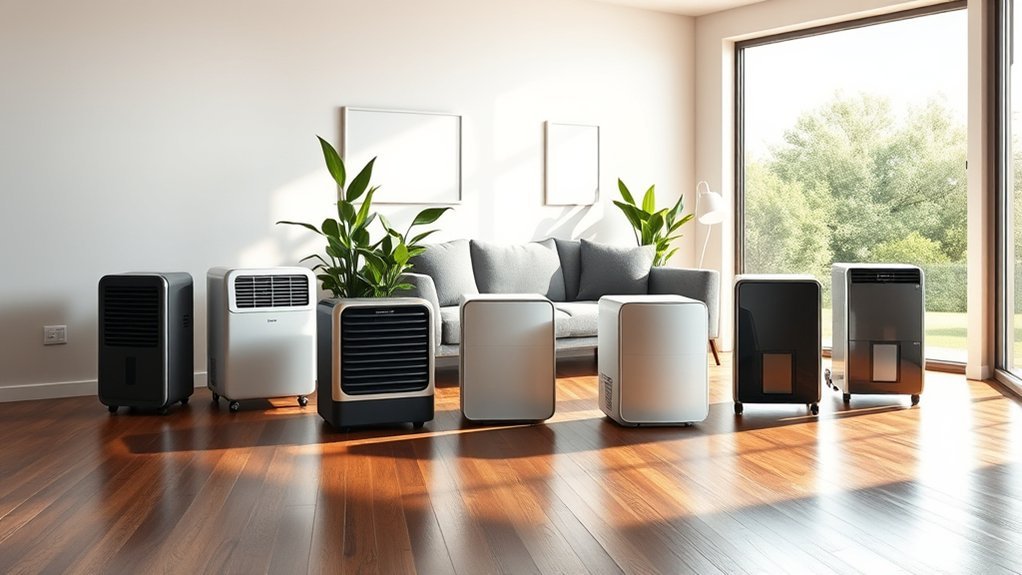
Quick Comparison of the Best Dehumidifiers for Sheds
| Product | Type | Best For | Key Consideration |
|---|---|---|---|
| Waykar 34 Pint | Compressor | Most powered, enclosed sheds | Check minimum operating temperature |
| VEAGASO 34 Pint | Compressor | Larger or persistently damp sheds | Small tank is easier with hose drainage |
| PLUSCENT 32 Pint | Compressor | Flexible modes and continuous drainage | Needs a safe grounded power source |
| 21 Pint 1500 Sq. Ft. Model | Compressor | Medium-size sheds | Verify the current listing details before buying |
| POOYUPPC 95 OZ | Thermoelectric | Small, insulated sheds with mild dampness | Lower output than compressor models |
| BEDRED 95 OZ | Thermoelectric | Quiet, compact moisture control | No continuous drain listed |
| Camco 5 lb Bucket | Passive absorber | Unpowered small sheds | Cannot maintain a precise humidity setting |
| DampRid Hanging Bags | Passive absorber | Closets, cabinets, and narrow shed areas | Must hang securely and stay upright |
| DampRid Charcoal Canisters | Passive absorber | Small sheds with musty odors | Best for light moisture, not active water entry |
Waykar 34 Pints Energy Star Dehumidifier
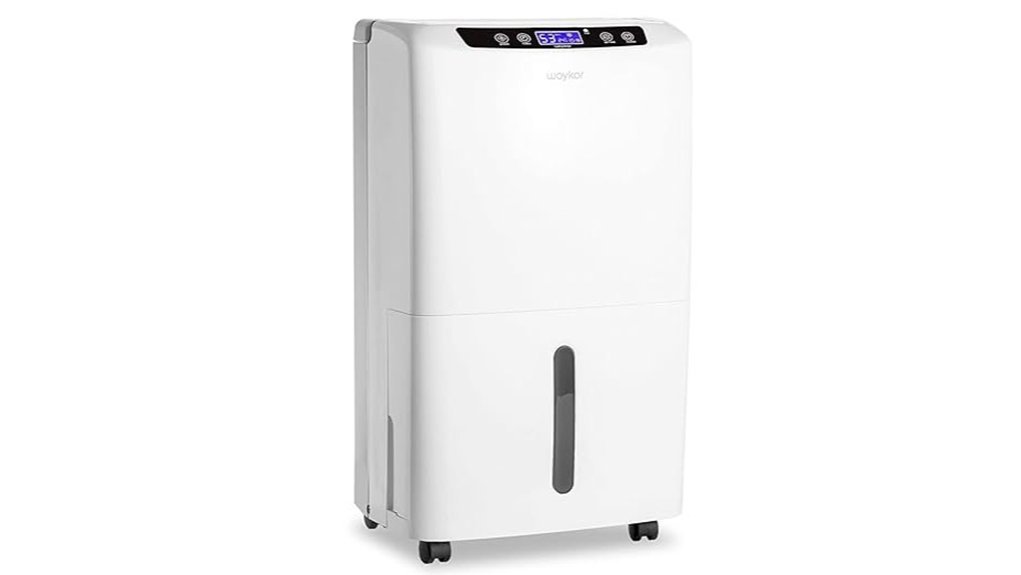
Best Overall for Powered Sheds
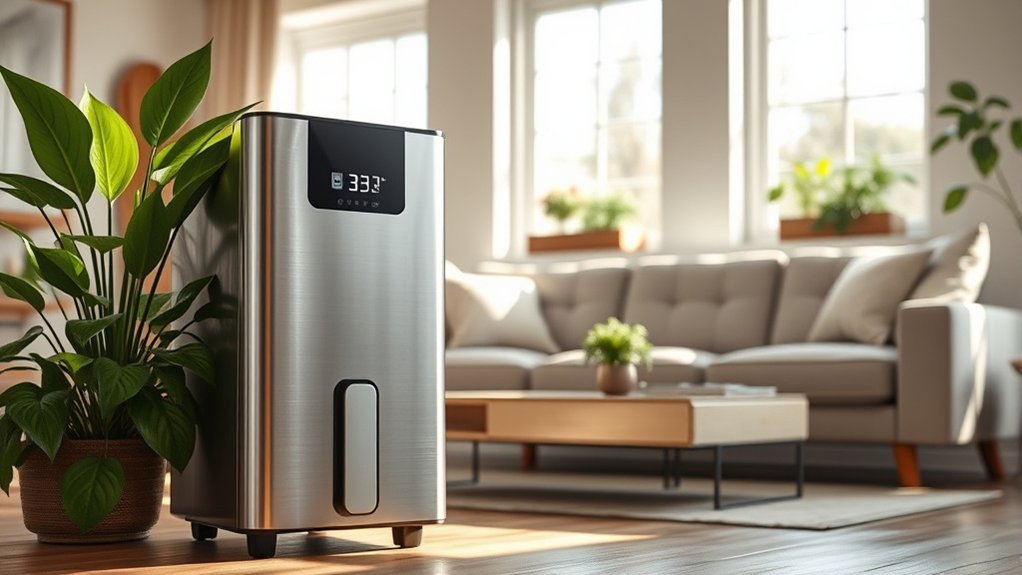
The Waykar 34 Pint model is the strongest all-around choice here for an enclosed shed with reliable electricity. Its current listing describes a 34-pint daily capacity, coverage up to 2,000 sq. ft., adjustable 30%–80% humidity control, automatic defrost, a drain hose, and a 0.66-gallon tank. Those features make it easier to maintain a set humidity level than with a passive absorber or small thermoelectric unit.
Why You’ll Like It: It combines a humidistat, timer, two drainage methods, and automatic defrost in a portable format. Continuous drainage is especially useful if you do not visit the shed every day.
Best For: Insulated or reasonably sealed sheds with moderate to heavy dampness and a safe grounded outlet.
Who Should Avoid It: Owners of unpowered sheds, very dusty woodworking spaces, or sheds that regularly fall below the unit’s stated operating range.
Pros:
- Higher moisture-removal capacity than compact thermoelectric models.
- Adjustable humidity control and automatic defrost.
- Manual tank collection or continuous hose drainage.
Cons:
- Requires electricity and enough clearance for airflow.
- Compressor performance may fall in cold sheds.
- The tank still needs emptying if a drain hose is not used.
VEAGASO 2500 Sq.Ft Dehumidifier with Drain Hose
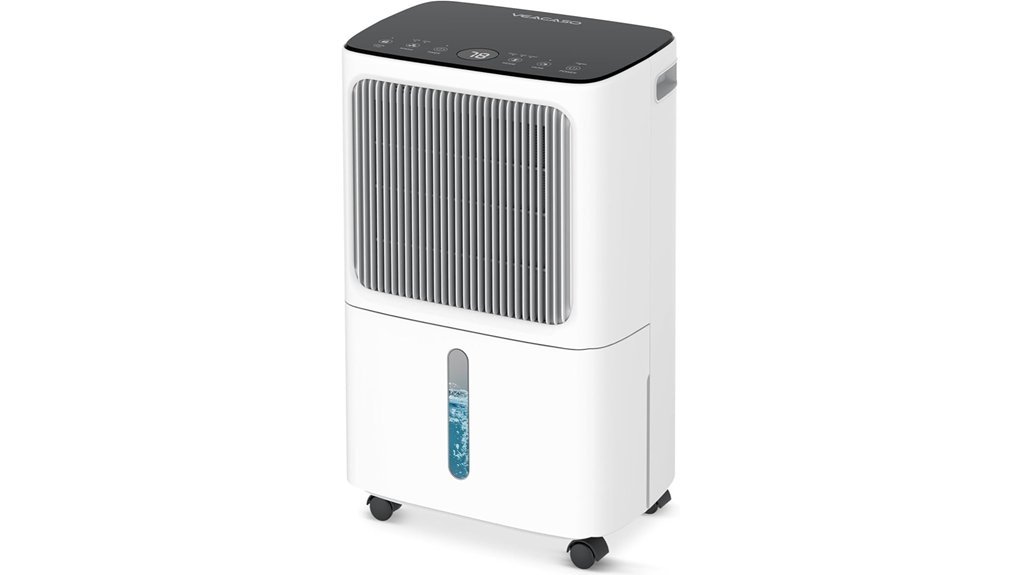
Best for Larger Damp Sheds
The VEAGASO model is listed to remove up to 34 pints per day in spaces up to 2,500 sq. ft. It includes DEHU, DRY, and CONT modes, a 24-hour timer, humidity controls, a 0.53-gallon tank, and a drain-hose option. In a shed, the practical benefit is not the large coverage claim alone; it is the combination of compressor output, automatic humidity management, and continuous drainage.
Why You’ll Like It: The three modes make it easy to switch between normal humidity control, continuous operation, and faster drying when the shed has recently become damp.
Best For: Larger enclosed sheds, garden workshops, or storage buildings with recurring moisture and access to a suitable drain.
Who Should Avoid It: Anyone who cannot provide a protected outlet, safe drainage route, or regular filter cleaning.
Pros:
- Strong listed capacity for persistent moisture.
- Multiple operating modes and intelligent humidity control.
- Continuous drainage reduces tank-emptying chores.
Cons:
- The 0.53-gallon tank can fill quickly in wet conditions.
- Coverage figures do not replace proper sizing for the actual moisture load.
- Not intended to solve roof, wall, or floor leaks.
PLUSCENT 32 Pint Dehumidifier for Home
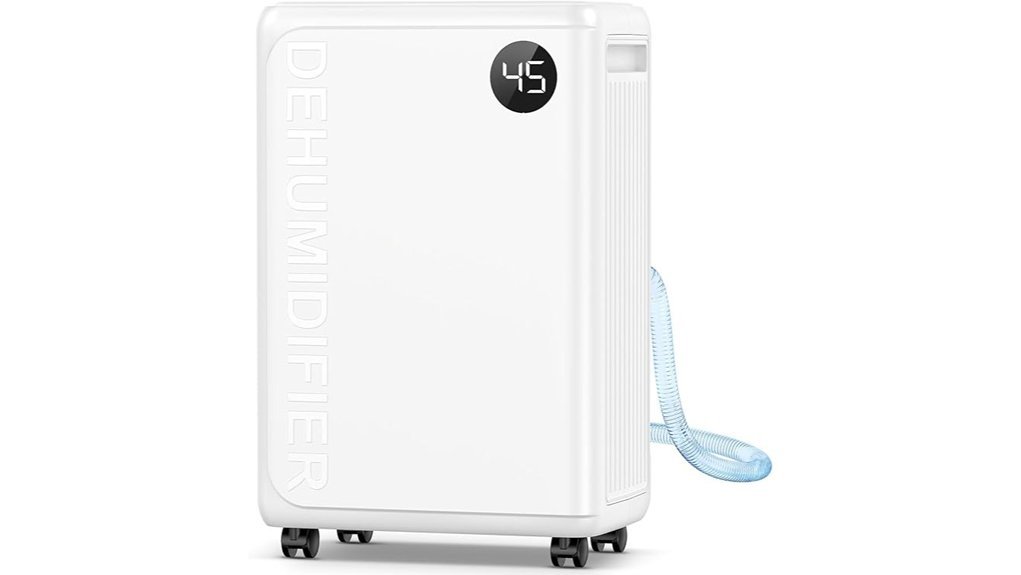
Best for Flexible Modes
The PLUSCENT 32 Pint dehumidifier is listed for areas up to 2,500 sq. ft. and includes three operating modes, a 24-hour timer, automatic defrost, smart humidity control, portability features, and a drain hose. It is a practical fit for a powered shed where you want more control than a compact semiconductor unit can provide.
Why You’ll Like It: The timer, humidity setting, auto-restart, and continuous drainage features support more hands-off operation.
Best For: Medium or larger sheds used for tool storage, hobby work, or seasonal equipment.
Who Should Avoid It: Buyers who only need mild moisture control in a tiny shed or who cannot protect the unit from dust and splashing water.
Pros:
- Compressor-level moisture removal for damp storage spaces.
- Automatic defrost and multiple operating modes.
- Easy to move and compatible with hose drainage.
Cons:
- The 2-liter tank may need frequent emptying without a hose.
- Needs a stable, level surface and clear airflow.
- Actual performance depends on temperature, air leakage, and moisture entry.
1500 Sq. ft Dehumidifier with Intelligent Humidity Control
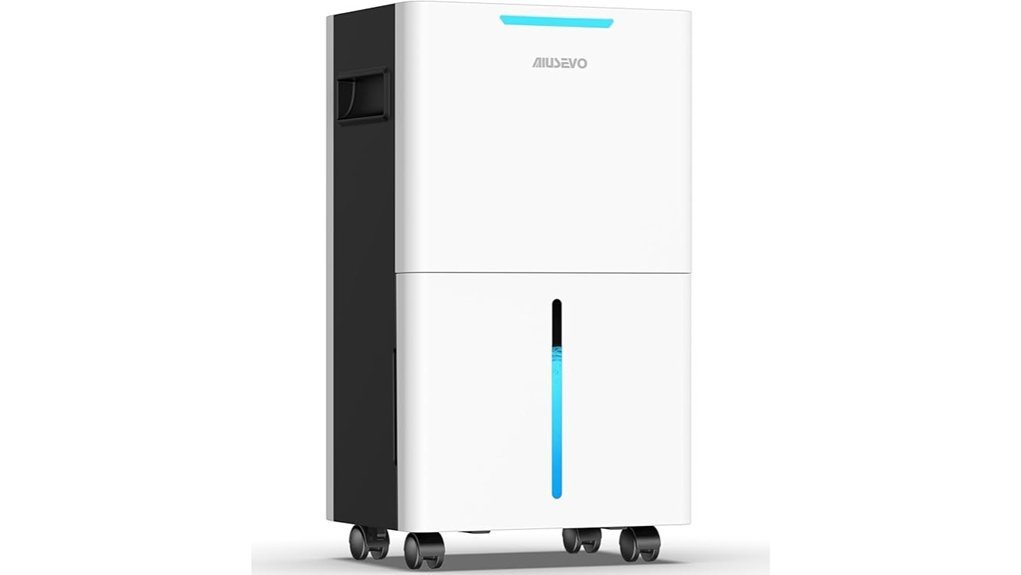
Best for Medium-Size Sheds
This 21-pint compressor dehumidifier is listed for spaces up to 1,500 sq. ft. with adjustable humidity control, three modes, a 24-hour timer, automatic defrost, a 2-liter tank, and a drain hose. It sits between the compact thermoelectric units and the 32- to 34-pint models, making it a reasonable option for a medium-size shed with moderate dampness.
Why You’ll Like It: It offers the controls buyers usually need in a shed without moving to the largest capacity in this roundup.
Best For: Enclosed sheds where a small thermoelectric unit is not enough but a larger 34-pint model would be unnecessary.
Who Should Avoid It: Owners of very wet buildings, unheated cold sheds, or spaces without safe drainage and electricity.
Pros:
- Adjustable humidity settings and multiple operating modes.
- Automatic defrost and continuous-drain support.
- Portable design with a smaller footprint than larger-capacity units.
Cons:
- Lower capacity than the 32- and 34-pint options.
- The current Amazon link redirects to the active listing, so product details should be rechecked before purchase.
- Tank collection still requires regular monitoring.
POOYUPPC Dehumidifier with 95 OZ Water Tank
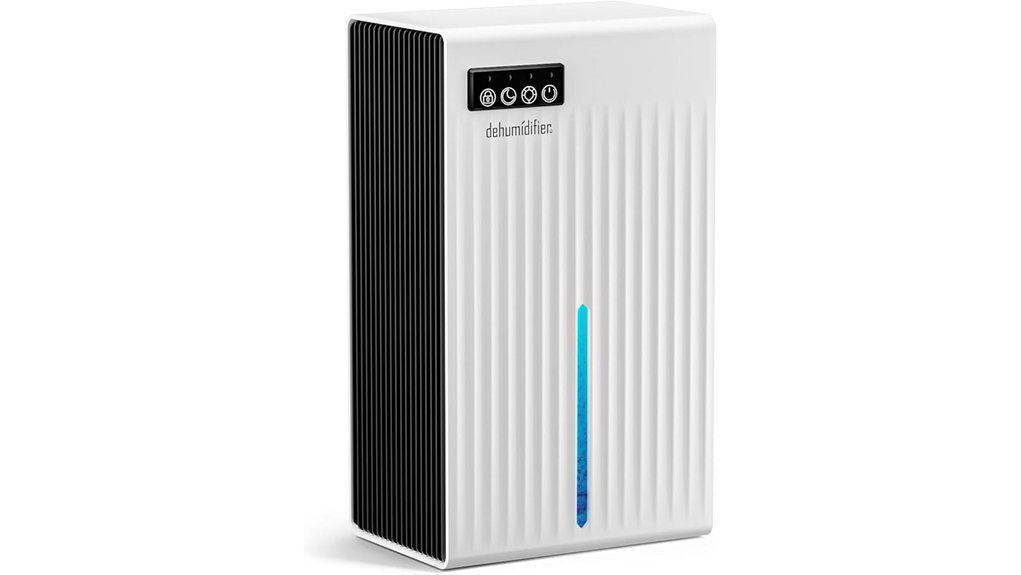
Best Compact Electric Option
The POOYUPPC uses thermoelectric technology rather than a compressor. Its listing describes a 95 oz tank, up to 25 oz of moisture removal per day under stated conditions, sleep mode, LED touch controls, a child lock, automatic shutoff, and a drain-hose option. Those features make it convenient for a small, reasonably sealed shed with mild seasonal dampness.
Why You’ll Like It: It is compact, simple to operate, and quieter than many compressor models.
Best For: Small insulated sheds, cabinets, or hobby spaces where moisture is mild rather than severe.
Who Should Avoid It: Buyers dealing with active leaks, standing water, very cold conditions, or heavy daily moisture loads.
Pros:
- Large tank for a compact thermoelectric unit.
- Auto shutoff, touch controls, child lock, and drain-hose support.
- Low-noise sleep mode.
Cons:
- Thermoelectric output is much lower than a 20- to 34-pint compressor unit.
- The seller’s 1,000 sq. ft. coverage claim should not be treated as equal to compressor-dehumidifier coverage.
- Performance drops when the shed is cold or poorly sealed.
BEDRED 95OZ Dehumidifier with Ambient Light
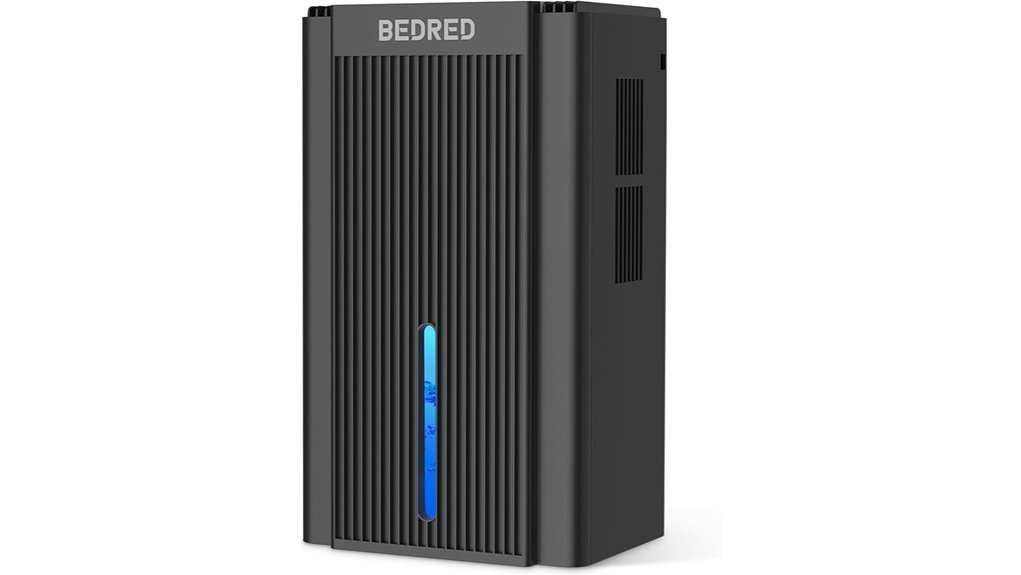
Best Quiet Compact Pick
The BEDRED 95OZ dehumidifier is another thermoelectric option for light-duty use. Its listing identifies a 95-fluid-ounce tank, automatic shutoff, sleep mode, a compact body, and seven-color ambient lighting. The lighting is not important for shed performance, but the quiet operation and small footprint can suit a hobby shed or enclosed storage area.
Why You’ll Like It: It is easy to place on a shelf or stable work surface and can run without the compressor noise of a larger unit.
Best For: Small sheds with mild condensation, light mustiness, and no major water intrusion.
Who Should Avoid It: Buyers who need continuous drainage, strong low-temperature performance, or rapid drying after leaks.
Pros:
- Compact 95 oz tank and automatic shutoff.
- Quiet sleep mode.
- Simple controls and small footprint.
Cons:
- No continuous-drain feature is listed.
- The 1,000 sq. ft. seller coverage claim is optimistic for a thermoelectric unit.
- Ambient lighting adds little value in a storage shed.
Camco Moisture Absorber Bucket for RVs and Campers
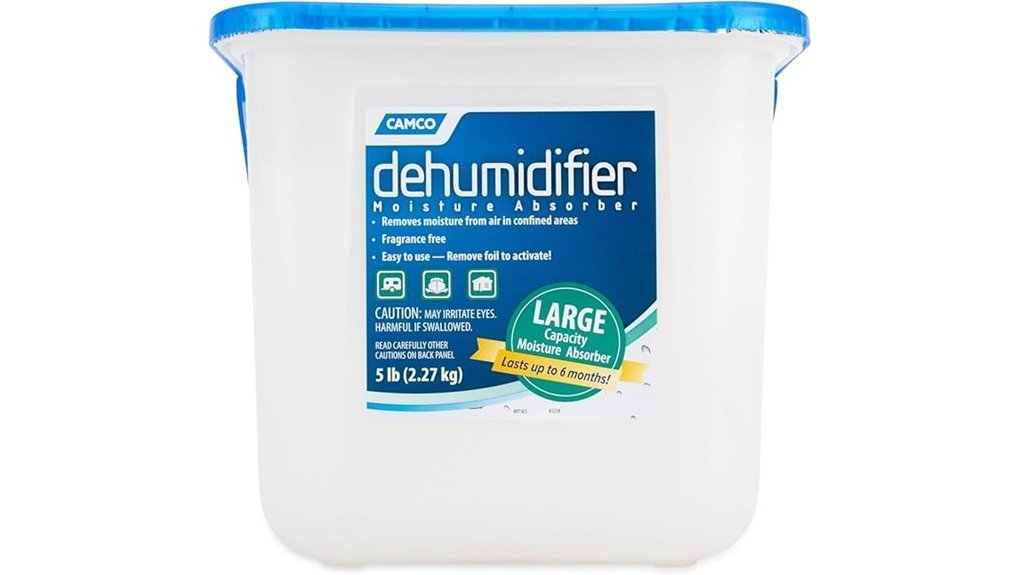
Best Passive Bucket for Unpowered Sheds
The Camco Moisture Absorber Bucket is a practical no-electricity option for a compact shed, storage locker, or cabinet. The current listing describes a 5 lb fragrance-free bucket that absorbs up to three times its weight in moisture and should be replaced when the beads become gel-like. It will not control humidity as precisely as an electric dehumidifier, but it can help with mild dampness and musty odors.
Why You’ll Like It: There is no cord, tank, fan, or drain hose to manage.
Best For: Small unpowered sheds, seasonal storage, and enclosed cabinets with light moisture.
Who Should Avoid It: Anyone facing visible condensation, active leaks, mold growth, or a large daily moisture load.
Pros:
- No electricity or setup required.
- Large passive capacity compared with small hanging bags.
- Fragrance-free formula.
Cons:
- Cannot maintain a selected relative-humidity level.
- Needs replacement after the material is spent.
- Must be kept stable to prevent spills.
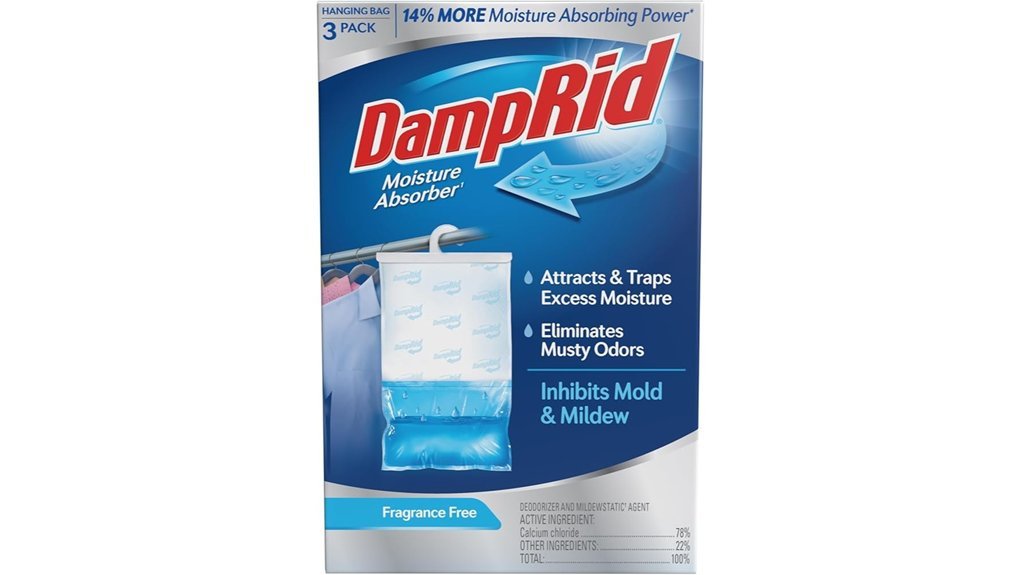
DampRid Fragrance Free Hanging Moisture Absorber, 3 Pack
Best Hanging Option for Narrow Spaces
This DampRid pack contains three 16 oz hanging bags designed to attract excess moisture and reduce musty odors. The listing states that each bag can last up to 60 days depending on temperature and humidity. In a shed, the hanging format is useful beside clothing, fabric, leather goods, or a narrow cabinet where a bucket would take up floor space.
Why You’ll Like It: The clear collection chamber makes it easy to see when the bag needs replacement.
Best For: Small sheds, lockers, cupboards, and fabric-storage zones with light dampness.
Who Should Avoid It: Buyers who need whole-shed humidity control or who cannot hang the bag securely away from tools and sharp edges.
Pros:
- No electricity needed.
- Space-saving hanging design.
- Visible moisture collection and simple replacement.
Cons:
- Not powerful enough for severe humidity or water intrusion.
- Creates disposable waste.
- Must remain upright and protected from punctures.
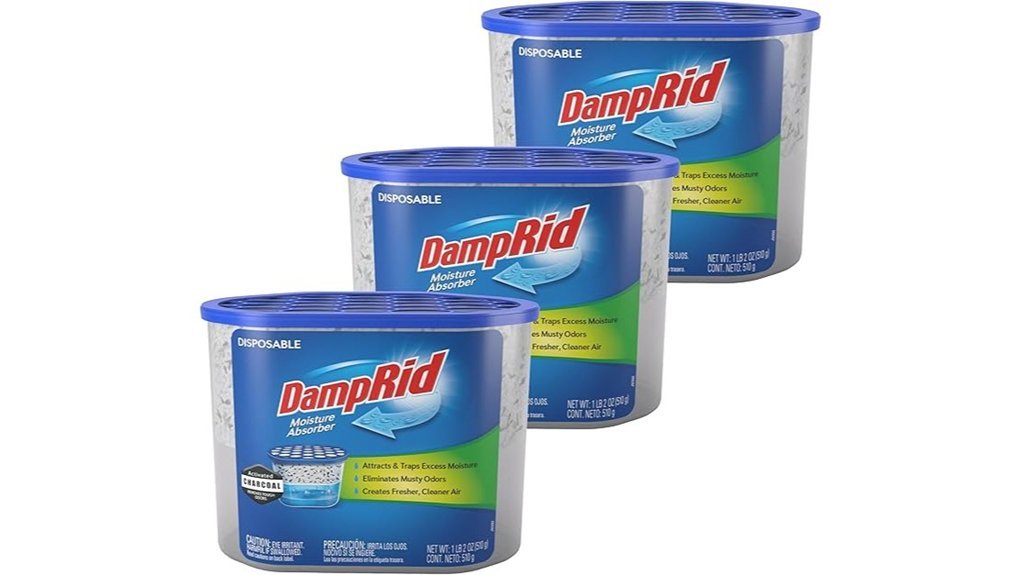
DampRid Fragrance-Free Moisture Absorber with Activated Charcoal
Best Passive Option for Musty Odors
This three-pack uses 18 oz disposable canisters with activated charcoal. The current listing states that each canister can last up to 60 days and requires no electricity. It is better suited to mild moisture and odor control than to drying a wet shed, but the stable canister format is convenient for shelves and corners.
Why You’ll Like It: Activated charcoal adds odor-control support while the crystals collect moisture.
Best For: Small sheds or storage cabinets that are slightly damp and smell musty.
Who Should Avoid It: Anyone who needs a humidistat, continuous drainage, or high-capacity moisture removal.
Pros:
- No power, noise, or moving parts.
- Activated charcoal helps with persistent musty odors.
- Simple canister design.
Cons:
- Limited moisture-removal rate.
- Disposable rather than refillable.
- Cannot compensate for leaks or open ventilation during humid weather.
Factors to Consider When Choosing a Dehumidifier for Sheds

A shed has different conditions from a bedroom or basement. Temperature swings, dust, air leaks, limited power, and the lack of a floor drain can all affect performance. Use the following checks before choosing a model.
Fix Water Entry Before Buying
A dehumidifier cannot repair a leaking roof, wet floor, damaged siding, blocked gutter, or poor ground drainage. Fix those moisture sources first. Otherwise, the unit may run continuously without bringing humidity under control.
Choose Between Compressor, Thermoelectric, and Passive
Compressor dehumidifiers remove much more moisture and are best for persistently damp powered sheds. Thermoelectric models are compact and quiet but better for light moisture in small, insulated spaces. Passive absorbers need no electricity but cannot maintain a precise humidity level or handle a major moisture problem.
Consider Shed Temperature
Many compressor dehumidifiers lose efficiency as the air gets colder, and frost can form on the coils. If the shed often falls below about 65°F, choose a model with automatic defrost and confirm the manufacturer’s minimum operating temperature. Turn the unit off for winter storage if conditions fall outside its rated range.
Match Capacity to Moisture, Not Just Floor Area
Square-foot coverage claims are only a starting point. A small but leaky shed may need more capacity than a larger, well-sealed one. Compare pints per day, actual humidity readings, ventilation, outdoor climate, and how much water enters the shed.
Plan Safe Drainage
Continuous drainage is valuable when you cannot empty the tank often. The hose must slope correctly to a suitable drain unless the unit includes a pump. Keep the hose away from electrical connections, walkways, and freezing conditions.
Check Electrical Safety
Use a properly grounded outlet and keep the dehumidifier dry. Do not place it where rain, roof drips, or splashing water can reach it. Avoid makeshift extension-cord setups unless the manufacturer specifically permits them. A dehumidifier designed for indoor use should only be used in a weather-tight enclosed shed.
Protect Airflow and Filters
Leave the manufacturer’s recommended clearance around the intake and exhaust. Sawdust, soil, and workshop dust can clog the filter and coils, so inspect and clean them more often than you would in a normal room.
Use a Hygrometer
A separate hygrometer helps you see whether the unit is actually controlling the space. For general moisture control, many owners aim for roughly 40%–55% relative humidity while keeping it below 60%. Extremely low settings can waste energy and may not be practical in a leaky shed.
Before You Buy
- Measure the shed and note whether it is insulated and weather-tight.
- Check the lowest and highest temperatures the shed reaches.
- Use a hygrometer to confirm the actual humidity problem.
- Decide whether you can empty a tank or need continuous drainage.
- Confirm access to a safe grounded outlet.
- Choose passive absorption only for light dampness, not leaks or standing water.
- Review the current Amazon listing and manufacturer instructions before purchase.
Frequently Asked Questions
Can a Dehumidifier Help Prevent Mold in My Shed?
It can reduce the excess humidity that supports mold growth, but it is not a cure for leaks or existing mold. Repair water entry, dry wet materials, improve drainage, and keep relative humidity below 60% whenever practical.
What Size Dehumidifier Is Best for a Small Shed?
For a small, sealed shed with mild dampness, a thermoelectric model or passive absorber may be enough. For persistent condensation or high humidity, a 20- to 34-pint compressor model is usually more suitable. Size the unit by moisture conditions and temperature, not floor area alone.
Will a Dehumidifier Work in a Cold Shed?
Performance can drop in cold air, especially with compressor units. Look for automatic defrost and verify the model’s minimum operating temperature. A passive absorber may be simpler during cold periods, although it removes moisture much more slowly.
Should I Use Continuous Drainage?
Continuous drainage is a good choice when the shed is visited infrequently or humidity is high. Make sure the hose has a safe downward route, cannot freeze, and does not create a trip or electrical hazard.
How Often Should I Clean the Filter?
Follow the manufacturer’s schedule, but inspect it more often in a dusty shed. Woodworking dust, soil, and debris can reduce airflow and efficiency.
Can I Run a Dehumidifier With an Extension Cord?
Use the grounded outlet and cord arrangement specified by the manufacturer. Avoid improvised extension-cord setups, especially in a damp building. If the shed lacks safe permanent power, use a passive absorber or have a qualified electrician install an appropriate outlet.
How Often Should I Empty the Water Tank?
Empty it whenever the full-tank indicator appears. During humid weather, that may be daily; in mild conditions, it may take several days. Continuous drainage is the better option when frequent checks are inconvenient.
Conclusion
For most powered, enclosed sheds, the Waykar 34 Pint is the best-balanced choice because it combines stronger moisture removal, adjustable humidity control, automatic defrost, and two drainage options. The VEAGASO 34 Pint and PLUSCENT 32 Pint are better suited to larger or more persistently damp spaces. For a small shed with only light seasonal moisture, the POOYUPPC or BEDRED compact units may be enough. Where electricity is unavailable, choose the Camco bucket or a DampRid absorber and monitor humidity with a separate hygrometer.
Final recommendation: Fix leaks first, then choose the smallest model that can reliably hold the shed below 60% relative humidity in its real operating temperature. For unattended use, prioritize automatic defrost, full-tank shutoff, and safe continuous drainage.