Affiliate disclosure: This article contains Amazon affiliate links. If you buy through a link, we may earn a commission at no extra cost to you.
Last updated: August 2026
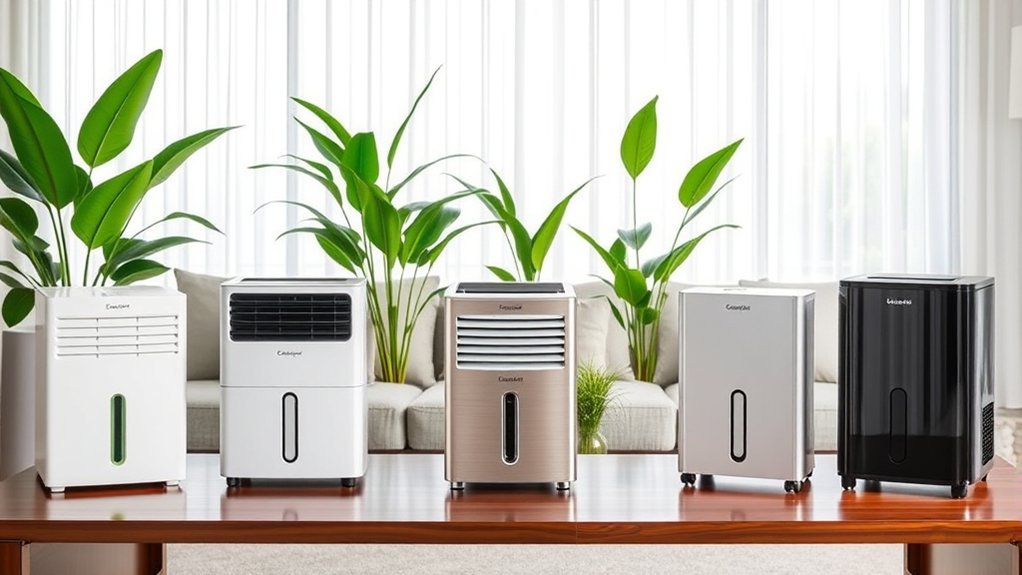
If you need a 50-pint dehumidifier for a basement, focus first on drainage, low-temperature performance, bucket size, and controls you will actually use. The five models below match the 50-pint buyer intent and suit different basement layouts: the Midea and Whirlpool units add built-in pumps, the Midea Cube offers an unusually large bucket, Frigidaire adds Wi-Fi in a traditional upright design, and Amazon Basics keeps operation simple.
Quick verdict
- Best overall: Midea 50 Pint Dehumidifier with Pump
- Best for cool basements: Whirlpool 50 Pint Dehumidifier with Pump
- Best large-bucket design: Midea Cube 50 Pint
- Best smart traditional design: Frigidaire 50 Pint Wi-Fi
- Best straightforward pick: Amazon Basics 50-Pint
Important: A 50-pint rating describes moisture removed during a standardized 24-hour test. It is not the bucket size. Coverage claims also depend on basement temperature, humidity, layout, air circulation, and the source of the moisture. For persistent water entry, fix the leak or drainage problem instead of relying on a dehumidifier alone.
How these picks were selected
The main filters were a clear 50-pint capacity claim, basement-suitable drainage, usable humidity controls, auto-defrost or low-temperature guidance, current product identity, and an Amazon link that matches the reviewed model. Coverage numbers were treated as manufacturer guidance rather than guaranteed performance.
Quick Comparison of the Best 50-Pint Basement Dehumidifiers
| Model | Best for | Drainage | Smart control | Amazon |
|---|---|---|---|---|
| Midea 50 Pint with Pump | Draining upward or across a room | Bucket, gravity drain, built-in pump | App and voice control | Check Details |
| Whirlpool 50 Pint with Pump | Cool basements and flexible drainage | Bucket, gravity drain, built-in pump | No app listed | Check Details |
| Midea Cube 50 Pint | Large bucket and compact storage | 4.2-gallon bucket or continuous drain | App and voice control | Check Details |
| Frigidaire 50 Pint Wi-Fi | Traditional design with remote control | 2.7-gallon bucket or continuous drain | Wi-Fi app | Check Details |
| Amazon Basics 50-Pint | Simple automatic humidity control | Bucket or continuous drain | No app | Check Details |
Midea 50 Pint Dehumidifier with Pump Included
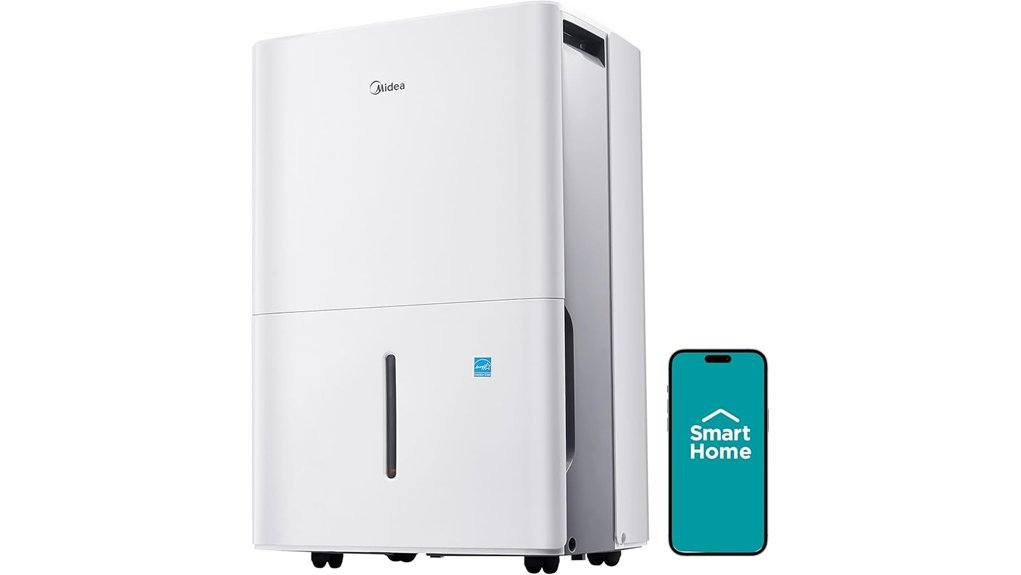
Best overall: This Midea is the most practical choice when your basement does not have a floor drain beside the unit. The built-in pump can move collected water vertically or horizontally, while the standard drain connection and 1.6-gallon bucket give you backup options.
The model is listed for up to 4,500 square feet and provides adjustable humidity control from 35% to 85%. Wi-Fi control through the SmartHome app, plus Alexa and Google Assistant support, makes it easier to monitor a basement you do not visit often. The listed low-speed noise level is 49 dBA.
Why you’ll like it: It combines three drainage methods, remote control, caster wheels, and a recognizable 50-pint configuration in one package.
Who should buy this: Buyers who need water pumped to a sink, window, or drain that sits above the unit.
Who should avoid this: Buyers with a nearby floor drain who prefer simpler controls and do not need Wi-Fi or a pump.
Pros:
- Built-in pump reduces manual bucket emptying.
- App and voice controls help with remote basement monitoring.
- Bucket, gravity drain, and pump drainage allow flexible placement.
Cons:
- At about 42 pounds, it is awkward to carry on stairs.
- A standard gravity-drain hose may need to be purchased separately.
- Wi-Fi setup adds steps that some buyers will not use.
Whirlpool 50 Pint Energy Star Dehumidifier with Pump
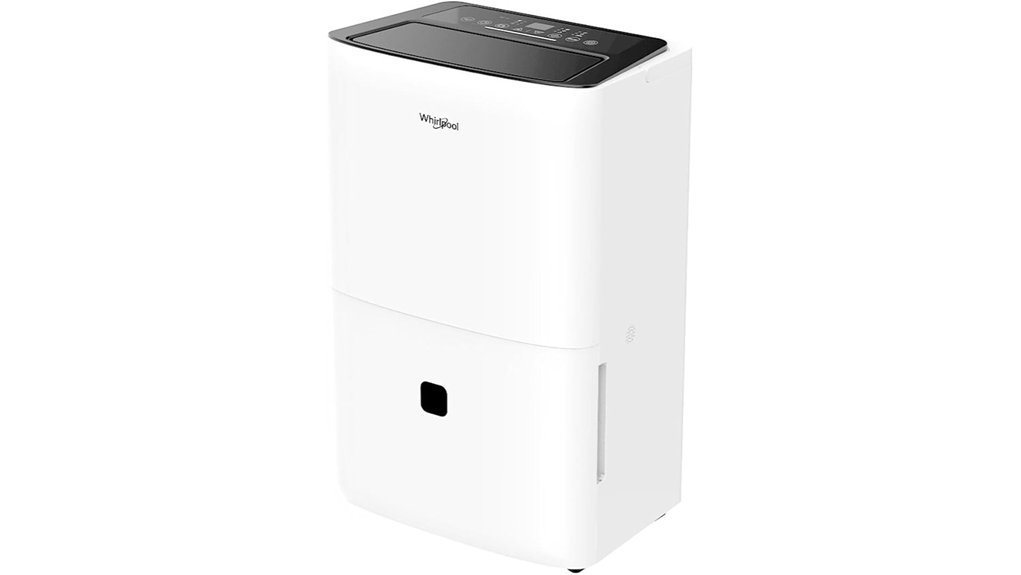
Best for cool basements: Whirlpool’s 50-pint model combines a built-in pump with auto-defrost and listed operation down to 41°F. That makes it a useful fit for cooler below-grade spaces where a compressor dehumidifier may need to manage frost more often.
The listing specifies a 2.01 IEF, ENERGY STAR 6.0 certification, three fan speeds, humidity settings from 35% to 80%, and operation as low as 45 dBA. You can use the removable bucket, connect a gravity hose, or use the built-in pump.
Why you’ll like it: It focuses on drainage flexibility, low-temperature operation, and straightforward controls rather than app features.
Who should buy this: Buyers with a cool basement who want pump drainage without depending on Wi-Fi.
Who should avoid this: Buyers who want app alerts or remote humidity changes from another floor.
Pros:
- Built-in pump, bucket, and hose drainage support different layouts.
- Auto-defrost and listed 41°F operation suit many cool basements.
- Washable filter, casters, handles, and humidity indicator simplify use.
Cons:
- No app or voice control is listed.
- The unit is still heavy enough that stairs may require two people.
- Actual moisture removal falls as temperature and humidity decrease.
Midea Cube 50 Pint Dehumidifier with Alexa Control
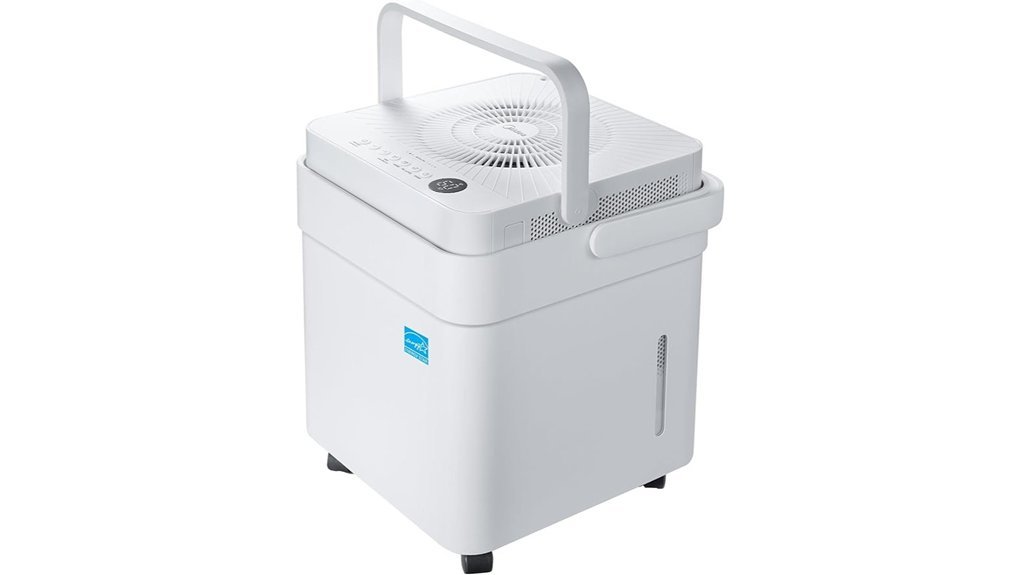
Best large-bucket design: The Midea Cube uses a lift-and-twist body that nests inside the bucket for storage and extends for operation. Its 4.2-gallon bucket can reduce emptying frequency, although a full bucket becomes heavy and may be difficult to carry safely.
This 50-pint model is listed for up to 4,500 square feet and supports the SmartHome app, Alexa, Google Assistant, three fan speeds, automatic shutoff, and continuous drainage. A drain hose and garden-hose adapter are listed among the included components.
Why you’ll like it: It offers far more bucket capacity than most portable dehumidifiers and stores in a shorter nested form.
Who should buy this: Buyers without a convenient drain who want fewer bucket-emptying trips and smart monitoring.
Who should avoid this: Anyone who may struggle to lift a large, water-filled bucket.
Pros:
- Large 4.2-gallon bucket supports longer manual operation.
- App and voice control add remote monitoring.
- Nested storage design reduces height when the unit is not in use.
Cons:
- The full bucket can be very heavy.
- The lift-and-twist setup is less conventional than a front-loading bucket.
- Smart connectivity may require extra setup or troubleshooting.
Frigidaire 50 Pint Dehumidifier with Wi-Fi
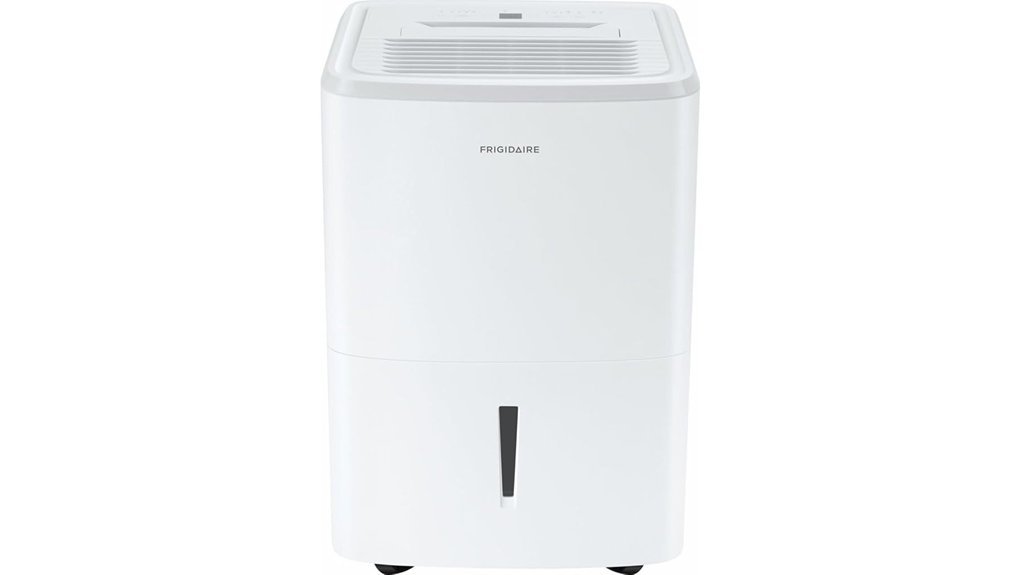
Best smart traditional design: Frigidaire’s FHDD5034Y1 keeps the familiar upright shape and front bucket while adding Wi-Fi control. It is a useful middle ground for buyers who want remote monitoring without the unusual lift-and-twist design of the Midea Cube.
The model is rated at 50 pints per day and listed for up to 4,500 square feet. It includes three fan speeds, up to 235 CFM airflow, programmable controls, a washable filter, continuous-drain support, and a 2.7-gallon bucket.
Why you’ll like it: The large bucket, familiar layout, and connected controls make it easy to understand and monitor.
Who should buy this: Buyers who want a conventional front-bucket dehumidifier with app control.
Who should avoid this: Buyers who need to pump water upward because no built-in pump is listed.
Pros:
- Wi-Fi control supports remote humidity adjustments.
- Large 2.7-gallon bucket reduces emptying frequency.
- Three fan speeds and continuous drainage provide useful flexibility.
Cons:
- At roughly 44.5 pounds, it is cumbersome on stairs.
- Gravity drainage needs a drain below the outlet.
- App features add little value if the unit stays on one automatic setting.
Amazon Basics 50-Pint Dehumidifier with Humidity Control
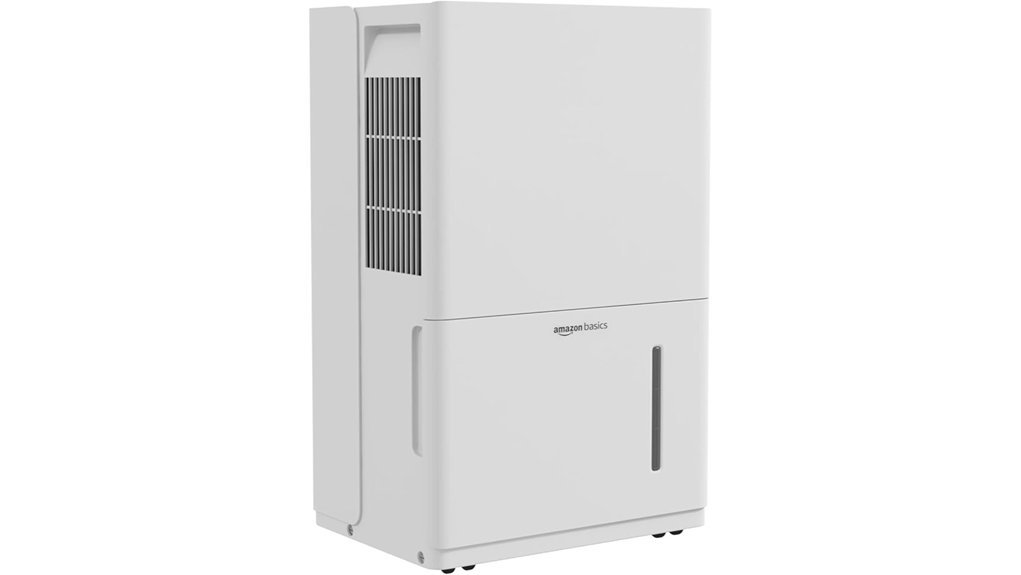
Best straightforward pick: The Amazon Basics 50-pint model is a simpler choice for buyers who do not need an app or pump. It is listed for rooms up to 4,000 square feet and includes automatic humidity control, a timer, auto-defrost, overflow protection, auto-restart, and a washable filter.
The unit has a roughly 6-liter tank and supports continuous drainage. Its conventional design is heavier and less connected than newer smart models, but the controls are easier to understand and there are fewer wireless features to configure.
Why you’ll like it: It covers the main basement-use features without making Wi-Fi or voice control part of the setup.
Who should buy this: Buyers with a nearby floor drain who want automatic humidity control and simple operation.
Who should avoid this: Buyers who need upward pump drainage or remote app monitoring.
Pros:
- 50-pint capacity directly matches the target use.
- Auto-restart, auto-defrost, timer, and overflow protection support unattended operation.
- Washable filter reduces replacement-filter costs.
Cons:
- No Wi-Fi, voice control, or built-in pump.
- At about 41 pounds, it is not highly portable.
- The design is more basic than the connected models above.
Factors to Consider When Choosing a 50-Pint Dehumidifier for a Basement
A good basement dehumidifier must match the moisture problem, not just the floor area. Compare the standardized pint rating, drainage path, operating temperature, bucket size, controls, noise, energy efficiency, and maintenance access before you buy.
50-Pint Capacity Versus Tank Size
The 50-pint rating is the amount of water the unit can remove in 24 hours under specified test conditions. It does not mean the bucket holds 50 pints. Most portable models use a much smaller bucket, so a heavily damp basement can require several emptying trips per day unless you connect a hose or use a pump.
Coverage Area and Basement Layout
Coverage claims such as 4,000 or 4,500 square feet are useful for rough comparison, but they are not a guarantee. Open layouts are easier to dehumidify than divided rooms, and cool basements reduce compressor output. A separate hygrometer can help you check whether the far side of the basement is reaching the target humidity.
Moisture Source
A dehumidifier controls airborne moisture, but it cannot repair foundation leaks, groundwater entry, plumbing problems, missing vapor barriers, or poor exterior drainage. Fix active water sources first. Otherwise, the appliance may run continuously without solving the underlying problem.
Energy Efficiency
Look for current ENERGY STAR certification and compare the Integrated Energy Factor, or IEF, when the information is available. A higher IEF indicates more water removal per unit of electricity under the applicable test procedure. Automatic humidistats and timers can also reduce unnecessary runtime.
Low-Temperature Operation
Basements can be cooler than the rest of the home. Choose a model with auto-defrost and check the manufacturer’s minimum operating temperature. Frost on the coils reduces moisture removal, so a unit that manages defrost well is more useful in cool conditions.
Drainage Options
Use a bucket when the unit must remain mobile or no drain is available. Choose gravity drainage when a floor drain sits below the outlet and the hose can slope downward continuously. Choose a built-in or external condensate pump when water must travel upward to a sink, window, or elevated drain.
Before you buy: Measure the route to the drain, confirm the hose connection type, check the vertical lift limit for any pump, and make sure the electrical outlet is properly grounded. Avoid extension cords unless the manufacturer’s instructions specifically permit one.
Bucket Size and Carrying Weight
A larger bucket means fewer trips, but water is heavy. A 4.2-gallon bucket can become difficult to lift when full. If carrying strength or stairs are a concern, continuous drainage or a pump may be safer and more practical than choosing the largest tank.
Noise Level
Noise matters most in a finished basement, office, bedroom, or media room. Published decibel figures usually reflect a specific fan setting and test setup. Compressor vibration, an uneven floor, and nearby walls can make a unit sound louder in real use.
Smart Controls
Wi-Fi can be valuable when the basement is on another floor or used infrequently. App alerts and remote humidity settings reduce unnecessary trips downstairs. However, a reliable built-in humidistat, auto-restart, and dependable drainage are more important than an app for basic moisture control.
Maintenance Ease
Choose a model with an accessible washable filter, clear full-bucket indicator, removable tank, and easy-to-clean drain connection. Clean the filter according to the manual, inspect the hose for clogs or algae, and keep the air inlet and outlet clear.
Frequently Asked Questions
What Humidity Should I Set in a Basement?
A target near 45% to 50% relative humidity works well for many basements. Avoid setting the unit unnecessarily low because that increases runtime and energy use. A separate hygrometer can help confirm the actual humidity away from the machine.
How Often Should I Clean a Basement Dehumidifier Filter?
Follow the manufacturer’s manual. A check every two to four weeks is a practical starting point in a dusty basement, but homes with pets, renovation dust, or heavy lint may need more frequent cleaning. Let a washable filter dry completely before reinstalling it.
Can a 50-Pint Dehumidifier Run Continuously in Winter?
It can run when the room stays within the model’s approved temperature range. In a very cold basement, the coils may frost and the unit may spend more time in defrost mode. Check the minimum operating temperature and do not assume continuous winter use is suitable for every model.
Is a Built-In Pump Better Than Gravity Drainage?
A pump is better only when water must travel upward or across a difficult route. Gravity drainage is simpler, quieter, and has fewer parts to fail, but it requires a drain below the outlet and a hose that slopes downward without kinks.
Is a Dehumidifier Effective Without a Floor Drain Nearby?
Yes. You can empty the bucket manually, choose a model with a built-in pump, or add a compatible condensate pump. A larger bucket reduces trips, but a full container can be heavy and awkward to carry.
Do Basement Dehumidifiers Increase Electricity Costs Significantly?
Operating cost depends on wattage, local electricity rates, humidity setting, temperature, and runtime. An efficient model with a working humidistat should cycle after reaching the target instead of running constantly. Fixing leaks and reducing moisture entry can also lower runtime.
Will a Dehumidifier Fix a Wet Basement?
No. It can reduce humidity and help dry minor dampness, but it cannot stop water intrusion. Repair plumbing leaks, foundation seepage, grading problems, clogged gutters, or drainage failures before relying on a dehumidifier for long-term control.
Conclusion
Final recommendation
Choose the Midea 50 Pint with Pump for the strongest all-around mix of drainage and smart control. Pick the Whirlpool 50 Pint with Pump for a cooler basement without Wi-Fi needs. Choose the Midea Cube when bucket capacity matters most, the Frigidaire 50 Pint Wi-Fi for a traditional connected design, or the Amazon Basics 50-Pint for simple automatic operation.
Before ordering, confirm the current model number, included drain accessories, warranty, minimum operating temperature, and return terms. Set up a reliable drainage path, keep the filter clean, and use a separate hygrometer to confirm the basement stays near your target humidity.