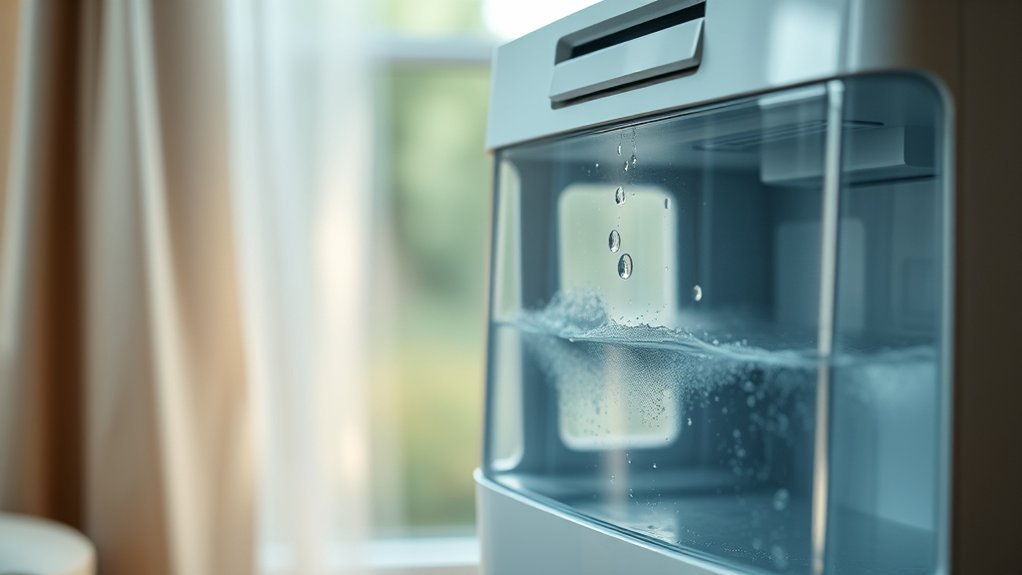
You see water in the bucket, but your dehumidifier is not making water from nothing. It is collecting moisture that was already floating in your indoor air as water vapor. When that humid air touches cold coils inside the unit, the vapor condenses into liquid droplets, then drains into a tank or hose. The water can be useful, but it is not drinking water.
Quick Answer
Dehumidifier water comes from water vapor already in your indoor air. A refrigerant dehumidifier pulls humid air across cold coils, drops it below the dew point, and collects the condensed droplets in a bucket or drain hose. It may look clear, but it is condensate—not drinking water.
Key Takeaways
- Dehumidifier water is condensed moisture from indoor air, not water made by the machine.
- It is usually low in minerals, but it can pick up dust, mold, bacteria, and metal residue from the unit and tank.
- Do not drink it, cook with it, give it to pets, or use it for personal washing.
- Safe reuse is limited to non-drinking jobs such as flushing toilets, cleaning outdoor tools, or watering non-edible ornamental plants.
- How much water you collect depends on humidity, temperature, room size, airflow, and the unit’s pints-per-day capacity.
What Dehumidifier Water Is
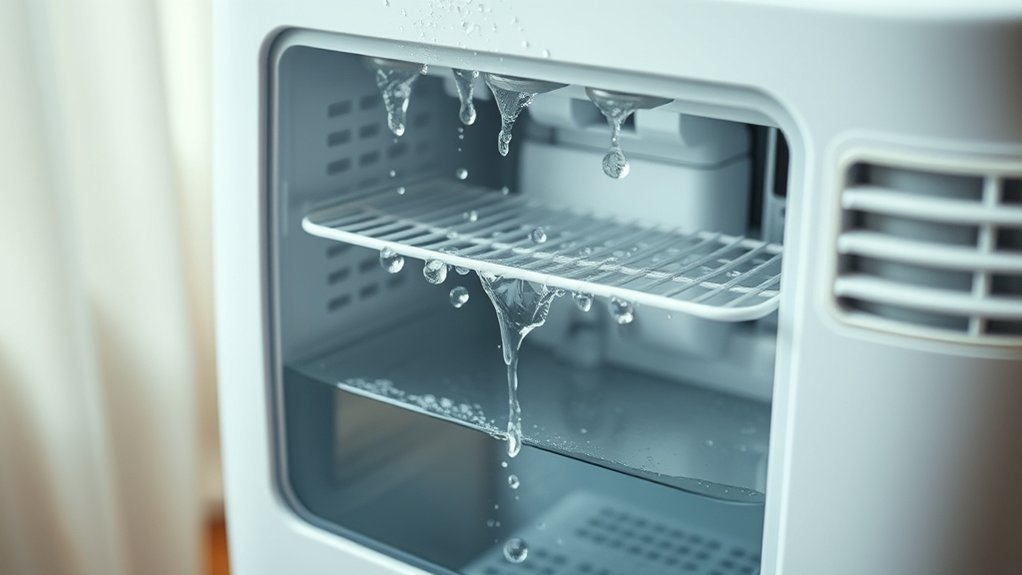
Dehumidifier water, also called condensate, is liquid water collected from humid air. In a common refrigerant dehumidifier, a fan pulls room air into the machine, the air passes over cold evaporator coils, and water vapor condenses into droplets. The University of Michigan’s Visual Encyclopedia of Chemical Engineering Equipment describes this same process: condensation dehumidifiers cool humid air to its dew point so moisture condenses and can be collected or pumped away.
That means the water in the bucket came from the room itself: damp basement air, shower steam, laundry drying indoors, cooking moisture, outside humidity, or water evaporating from building materials. The wetter the air, the more water the machine can remove.
Note: Clear water is not the same as clean water. Dehumidifier condensate may look pure, but it has touched internal surfaces, coils, hoses, filters, and a collection tank that are not designed as food-safe drinking-water equipment.
How Dehumidifiers Collect Water
A refrigerant dehumidifier collects water through a simple cooling-and-condensing cycle:
- Humid air enters the unit. A fan pulls damp room air through an intake grille and filter.
- The air hits cold coils. The coils cool the air below its dew point, which is the temperature where water vapor begins turning into liquid.
- Water droplets form. Moisture condenses on the coils, much like water beading on the outside of a cold glass.
- The water drains away. Droplets run into a bucket, drain hose, floor drain, or condensate pump.
- Drier air returns to the room. The unit sends air back out with less moisture in it.
| Factor | What It Does | Result |
|---|---|---|
| Higher humidity | Adds more water vapor to the air | More water collects in the bucket |
| Warmer room air | Can hold more moisture than cold air | Often improves collection rate |
| Cold coils | Drop air below the dew point | Triggers condensation |
| Clear airflow | Moves more damp air across the coils | Helps the unit work efficiently |
Is Dehumidifier Water the Same as Distilled Water?
Dehumidifier water can seem similar to distilled water because it forms from vapor that condensed back into liquid. However, it is not produced in a sealed, sterile distillation system. Once the water forms, it can contact dust, mold spores, bacteria, coil residue, plastic tank surfaces, hose buildup, and other indoor contaminants.
McGill University’s Office for Science and Society explains that freshly condensed water may be very clean in theory, but water that sits in a dehumidifier tank can become a place where bacteria and mold grow; their practical advice is not to drink it unless it has just dripped into a freshly cleaned tank, and even then tap water is the better choice. You can read their full explanation here: Is water from a dehumidifier drinkable?
Why Dehumidifier Water Isn’t Safe to Drink
Dehumidifier water is best treated as non-potable condensate. It is not safe for drinking, cooking, brushing teeth, making ice, washing produce, mixing baby formula, or filling pet bowls.
Warning: Do not rely on a basic filter, alkaline cartridge, or mineral drops to make dehumidifier water safe to drink. Those steps do not reliably remove microbes, mold contamination, or metal residues. Use potable water for anything that goes into or onto the body.
The main risks are not always visible. Clear condensate can still contain:
- Microbes: bacteria, mold, mildew, or biofilm from a damp tank or hose.
- Airborne particles: dust, pollen, smoke particles, pet dander, and mold spores pulled through the unit.
- Residue from the machine: trace metals, corrosion residue, plastic contact, or grime from internal surfaces.
- Stagnation: water left sitting in a warm, dark bucket can become dirtier over time.
GE Appliances recommends regularly cleaning the water bucket to prevent the growth of mold, mildew, and bacteria, which is a good reminder that the tank is a utility reservoir—not a drinking-water container. See GE’s cleaning guidance here: Dehumidifier – Cleaning.
Safe Ways to Reuse Dehumidifier Water
You can still reuse dehumidifier water for jobs that do not require potable water. The safest approach is to use it quickly, keep the tank clean, avoid food-contact surfaces, and never assume the water is sterile.
At a Glance
| Time Required | 2–5 minutes to empty and reuse; longer if you clean the tank first |
| Difficulty | Easy, as long as you keep it for non-drinking tasks only |
| Tools Needed | Clean bucket, mild detergent for tank cleaning, optional gloves, and a hygrometer for room humidity |
| Cost | Usually $0; about $10–$50 if you buy a separate humidity meter |
Recommended Products

2-in-1 Thermometer Hygrometer Meter: Built-in probe for unparalleled precision. It serves as both a digital electronic thermometer and a hygrometer, meticulously engineered for indoor environmental monitoring.

This 2-pack indoor hygrometer thermometer helps monitoring room temperature and humidity in real time. Temperature range: -58 ~ 158 ℉( -50 ~ 70℃ ), Humidity range: 10%~99%
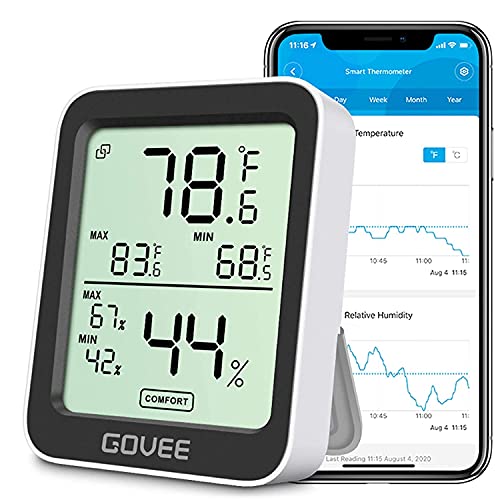
Smart Features: The Govee Wireless Thermometer Hygrometer supports all basic functions as well as smart functions such as remote monitoring and temp humidity graphs. Our humidity meters are reliable and easy to use for homes, greenhouses and more.(Only supports 164ft Bluetooth connection)
Nonpotable Reuse Options
Good non-drinking uses include:
- Watering ornamental plants: Use it for non-edible houseplants or landscape plants, especially if the tank is clean and the water has not been sitting for days.
- Flushing toilets: Pour it directly into the bowl or tank if local plumbing setup and household routine allow it.
- Outdoor cleaning: Use it for rinsing garden tools, muddy boots, patio items, or outdoor surfaces.
- Pre-rinsing non-food items: It can work for utility cleaning where sanitation is not critical.
What Not to Use Dehumidifier Water For
Avoid using dehumidifier water for anything that touches food, skin, mouths, pets, or delicate equipment.
| Use | Recommendation | Why |
|---|---|---|
| Drinking or cooking | Avoid | Not sterile or certified potable |
| Pet bowls | Avoid | Pets can ingest microbes or residues |
| Edible plants | Avoid or use only with tested water | Contaminants can contact food crops |
| Irons, humidifiers, CPAP equipment, or batteries | Avoid unless the device maker allows it and water quality is verified | Low-mineral does not mean clean, sterile, or equipment-safe |
| Vehicle coolant mixing | Use proper distilled or deionized water instead | Unknown contaminants can be risky in engines |
How to Collect and Store It Safely
For the safest nonpotable reuse, empty the tank often and do not let water sit for long periods. Rinse the bucket, clean it with mild detergent as your manual allows, and let it dry before reinstalling. If the water smells musty, looks cloudy, has algae, or came from a dirty tank, pour it down a drain instead of reusing it.
Pro Tip: If you want to reuse the water for plants, collect it from a freshly cleaned bucket and use it the same day. Use tap water instead for herbs, vegetables, seedlings, sick plants, or any plant you plan to eat.
What Affects Dehumidifier Water Output
How much water your dehumidifier collects depends mostly on humidity, temperature, capacity, airflow, and run time. A unit in a very damp basement may fill quickly, while the same unit in a cooler or already-dry room may collect very little.
ENERGY STAR explains that dehumidifier capacity is usually measured in pints per 24 hours, not gallons. Its buying guidance lists recommended portable capacity ranges from about 20–50+ pints per day depending on the size and dampness of the space. One gallon equals 8 pints, so a 50-pint unit is roughly 6.25 gallons under rating conditions, not a guaranteed daily bucket amount in every home.
| Factor | More Water Collected When… | Less Water Collected When… |
|---|---|---|
| Humidity level | The room is damp, musty, or above the target RH | The room is already dry |
| Temperature | The room is warm enough for efficient condensation | The room is cold and coils frost or cycle off |
| Unit capacity | The unit is properly sized for the room | The unit is undersized or running for short periods |
| Airflow | Filter, grille, and coils are clean and unobstructed | Furniture, dust, or a dirty filter blocks airflow |
For comfort and mold control, EPA guidance says to keep indoor relative humidity below 60% and ideally between 30% and 50%. CDC guidance is even stricter for mold prevention, recommending indoor humidity no higher than 50% all day. You can check your room with a small hygrometer and adjust the dehumidifier’s humidistat from there. Sources: EPA mold and moisture guide and CDC mold guidance.
Refrigerant vs. Desiccant Dehumidifiers
The type of dehumidifier affects how moisture is removed and how much liquid water you may see.
| Type | How It Removes Moisture | Best Fit | Water Collection Note |
|---|---|---|---|
| Refrigerant | Cools humid air below the dew point so water condenses on coils | Warm, damp rooms, basements, laundry areas, and general home use | Usually collects liquid water in a bucket or drain hose |
| Desiccant | Uses moisture-absorbing material to pull water vapor from air | Cooler conditions, closets, storage spaces, or specialty applications | Some collect water differently, regenerate with heat, or do not produce the same bucket-style condensate |
Do not judge water safety by dehumidifier type. Refrigerant condensate and desiccant moisture are both non-drinking sources unless the water is collected, treated, and tested under a system designed for potable water.
Recommended Products

【The Undisputed Champion — Industry-Leading Dehumidifier Brand】Choose AEOCKY, getting double market validation. According to data independently verified by Stackline, a leading third-party data analytics company, AEOCKY was an industry‑leading dehumidifier brand on Amazon U.S. in 2025. Meanwhile, it stands as a technology-leading rotary desiccant dehumidifier brand on Amazon. This isn’t just an appliance—it’s a complete humidity-control solution for small spaces. Skip low-performance alternatives and trust a brand recognized by the market.

✔ EASY TO USE: This mini dehumidifier is spill and mess free. Just hang and go! Non-toxic, child and pet safe! Your small rooms will be dry and odor free. Works for areas up to 333 cubic feet.

Semiconductor dehumidifiers use thermoelectric cooling to remove moisture from the air. They create a drier, more comfortable environment by reducing humidity and improving air quality.
If Your Dehumidifier Stops Collecting Water
A dehumidifier that collects little or no water is not always broken. Check these common causes first:
- The room is already dry. If the room is near your target humidity, the unit may cycle off or collect only a small amount.
- The temperature is too low. Cold rooms can reduce condensation and may cause frost on coils.
- The filter is dirty. A clogged filter slows airflow and lowers water removal.
- The bucket is not seated correctly. Many units stop running when the bucket is full or misaligned.
- Airflow is blocked. Move the unit away from walls, furniture, curtains, and dusty areas.
- The drain hose is kinked or clogged. A blocked hose can stop continuous drainage.
- The unit is undersized. A small model may run constantly but still struggle in a large or wet space.
If the room is damp, the filter is clean, the bucket is seated, and the unit still does not collect water, check the manual or contact the manufacturer. Compressor, fan, refrigerant, sensor, or defrost problems may need service.
Recommended Products

COMPATIBILITY: Our DH02 HEPA filter compatible with Afloia (AQ8/Q8)/ Honati/ Hysure Q7/ Tenergy Sorbi 2-in-1 Air Purifier/Dehumidifier(1000ML) or please double check before order
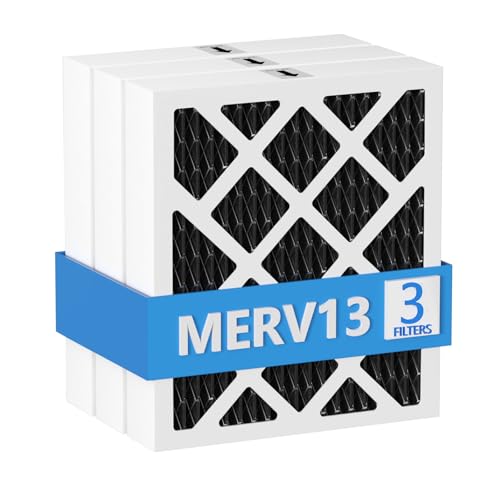
【Compatibility】 Our MERV 13 PN07126 Replacement Carbon Dehumidifier Filter Media is Compatible with Sanidry Sedona Dehumidifier PN07126 Replacement Filter.
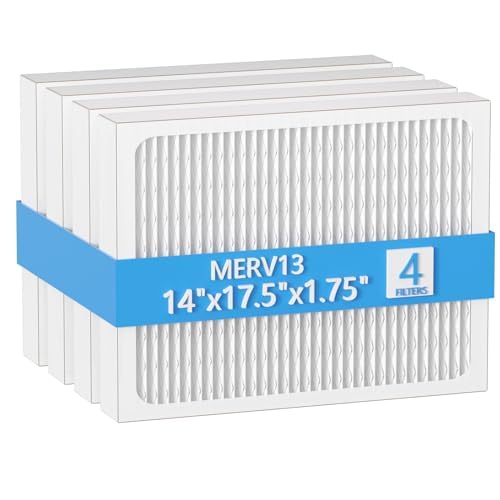
【Compatibility】 Our 14 x 17.5 x1.75 MERV 13 Replacement Dehumidifier Filter Media is Compatible with Honeywell DR90 & DR120 dehumidifier models.
Frequently Asked Questions
How drinkable is dehumidifier water?
It is not considered drinkable. Dehumidifier water may be low in minerals, but it can collect dust, mold spores, bacteria, metal residue, and tank contamination. Use potable tap water or properly treated drinking water instead.
Is dehumidifier water distilled?
No. It is condensate, not packaged distilled water. It forms from water vapor, but it is collected in an appliance that is not sterile or food-safe. Treat it as non-potable water.
Can I water plants with dehumidifier water?
You can use it for many non-edible ornamental plants if the tank is clean and the water is used promptly. Avoid using it on herbs, vegetables, fruiting plants, seedlings, or stressed plants unless you have tested the water.
Would a dehumidifier help with COPD?
It may help if excess humidity, mold, dust mites, or musty air trigger breathing discomfort. It is not a COPD treatment, though. People with COPD or other lung conditions should monitor indoor humidity, keep the unit clean, avoid over-drying the air, and follow their clinician’s advice.
Will a dehumidifier help dry out plaster?
Yes, a dehumidifier can help plaster dry by lowering room humidity and removing moisture from the air. Keep airflow gentle, follow the plaster manufacturer’s curing guidance, and avoid forcing the surface to dry too fast, which can contribute to cracking.
Where does all the water come from in my dehumidifier?
It comes from water vapor in the indoor air. Common sources include damp basements, wet building materials, showers, cooking, laundry drying indoors, houseplants, humid outdoor air, and leaks. The dehumidifier cools that humid air so the vapor condenses into liquid water.
Why is my dehumidifier not collecting much water?
The room may already be dry, the temperature may be too low, the filter may be dirty, airflow may be blocked, the bucket may not be seated correctly, or the unit may be undersized. Check the humidity reading first, then clean the filter and inspect the bucket and drain setup.
Conclusion
Dehumidifier water comes from moisture already present in your indoor air. A refrigerant dehumidifier cools humid air below the dew point, turns water vapor into droplets, and collects that condensate in a bucket or drain hose. The process is useful for controlling dampness, but the collected water is not safe to drink. Reuse it only for sensible nonpotable tasks, keep the bucket clean, and use a hygrometer to keep indoor humidity in a healthy range.
Sources
- University of Michigan Visual Encyclopedia of Chemical Engineering Equipment — dehumidifier types and condensation process
- ENERGY STAR: Dehumidifier Testing and Capacity — pints-per-day capacity ratings and DOE test procedure context
- ENERGY STAR: Dehumidifiers Buying Guidance — sizing, humidity targets, placement, and water removal options
- U.S. EPA: A Brief Guide to Mold, Moisture and Your Home — indoor humidity and mold-prevention guidance
- CDC: Mold — humidity, mold prevention, and respiratory-health context
- GE Appliances: Dehumidifier Cleaning — bucket cleaning to prevent mold, mildew, and bacteria