Updated August 2026.
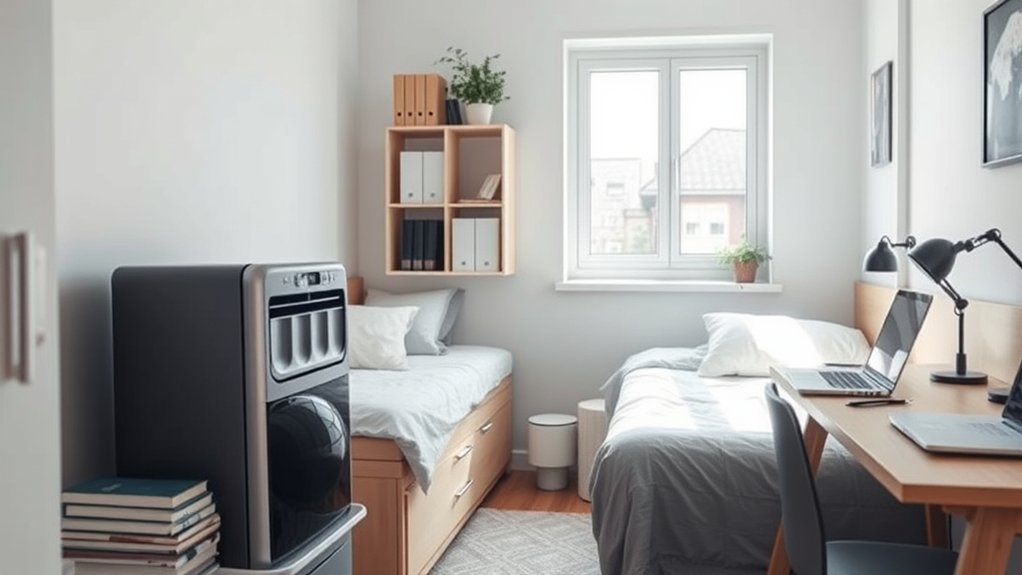
If excess humidity is making your baby’s room feel damp or causing light condensation, a quiet compact dehumidifier may help with mild nursery moisture. The most useful baby-room dehumidifier features are automatic shutoff, a removable tank, low-noise operation, simple controls, and lights that can be switched off at bedtime.
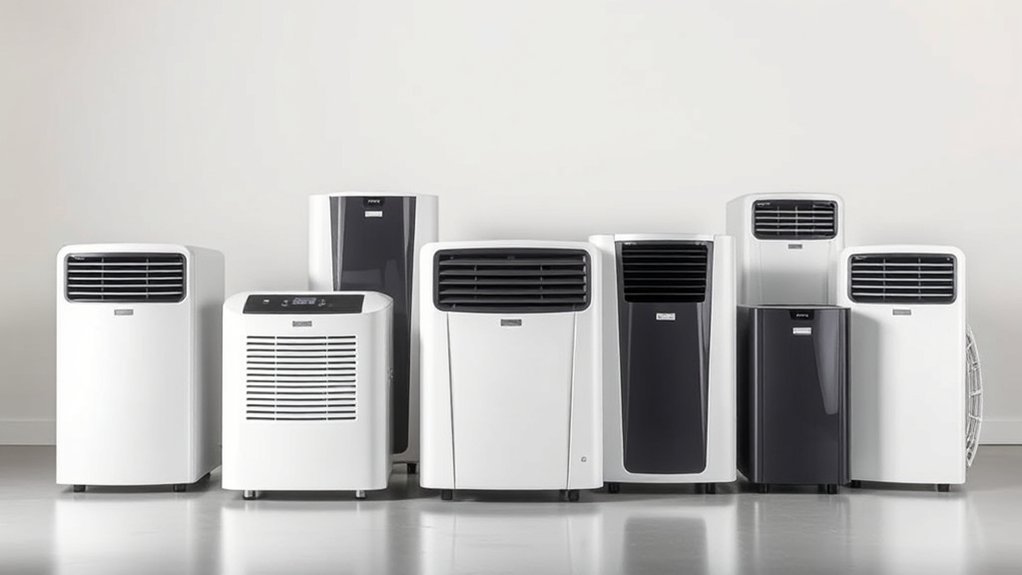
This guide compares the TENKER QIG-D05, ToLife TZ-C2, TABYIK DH-CS01, BeOkay DH-AA2, and Windangel DH-D2. All five are compact semiconductor dehumidifiers. They are better suited to small, closed rooms with mild humidity than to active leaks, wet building materials, visible mold, or persistent heavy condensation.
Quick Verdict
Best Overall: TENKER QIG-D05 for its 77-ounce tank, strong manufacturer-stated collection rate, sleep mode, and automatic shutoff. Choose the ToLife TZ-C2 as a high-output alternative, the TABYIK DH-CS01 for a smaller nursery, or the BeOkay DH-AA2 when timers and adjustable operating modes matter most.
Nursery Safety Note
Use a separate hygrometer and aim for approximately 30% to 50% relative humidity, consistent with EPA indoor-air guidance. Place the dehumidifier on a stable, level surface away from the crib, changing area, water, curtains, and heat sources. Secure the cord completely out of a child’s reach, keep the air vents clear, and stop using any unit with a damaged cord, leaking tank, unusual smell, or excessive heat. A dehumidifier does not remove existing mold or repair a moisture leak.
How We Compared These Nursery Dehumidifiers
We compared each model’s manufacturer-stated daily moisture collection, tank size, operating modes, noise claims, automatic shutoff, light controls, portability, and suitability for a small baby room. We gave more weight to daily collection and safety controls than to advertised square-foot coverage.
Important limitation: These compact units do not have the same tested pint-per-day capacity as full-size compressor dehumidifiers. Their collection figures are generally measured in warm, very humid laboratory-style conditions, so real nursery performance may be lower.
Quick Comparison of the Best Nursery Dehumidifiers
| Product | Best For | Tank | Advertised Daily Collection | Key Controls | Amazon |
|---|---|---|---|---|---|
| TENKER QIG-D05 | Best Overall | 77 oz | Up to 35 oz under stated test conditions | High speed, sleep mode, light control | Check Amazon Details |
| ToLife TZ-C2 | High-Output Alternative | 2,000 ml in model manual | Approx. 1,000 ml under stated test conditions | Powerful mode, sleep mode, light control | Check Amazon Details |
| TABYIK DH-CS01 | Small Nursery | 35 oz | Up to 16 oz under stated test conditions | One-speed operation, separate light control | Check Amazon Details |
| BeOkay DH-AA2 | Controls and Timers | 1,800 ml (63 oz) | Approximately 0.3 L under stated conditions | Three modes, five timer choices | Check Amazon Details |
| Windangel DH-D2 | Mild Humidity | 44 oz | Up to 11.8 oz (349 ml) under stated test conditions | Three modes, timer, adjustable lights | Check Amazon Details |
Daily collection and noise figures above are manufacturer-stated. Actual performance depends on room temperature, starting humidity, airflow, door position, and the source of the moisture. Confirm the exact model number and included manual on the current Amazon listing before ordering.
TENKER QIG-D05 Dehumidifier — Best Overall
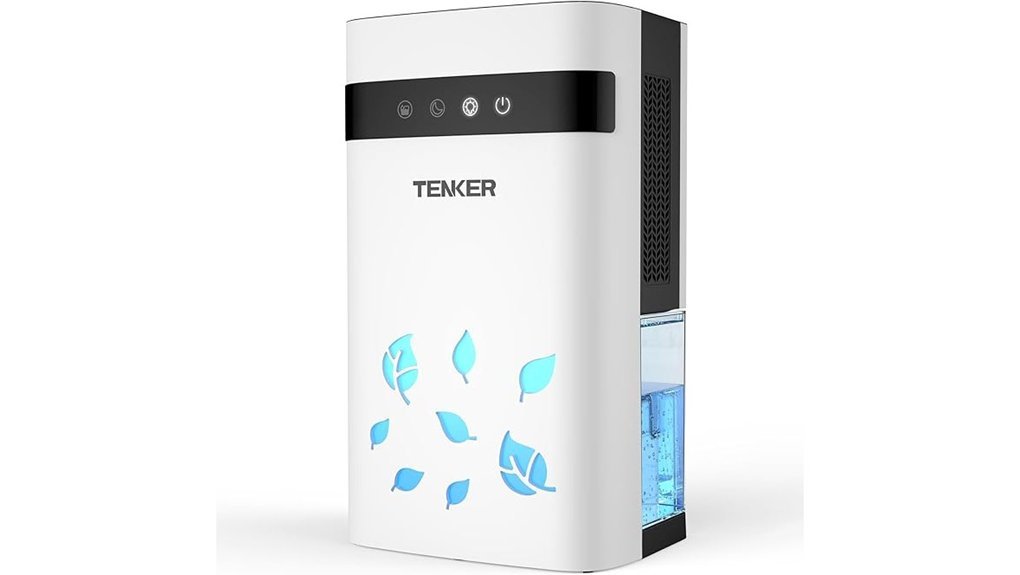
The TENKER QIG-D05 is the strongest all-around choice in this compact group. It combines a 77-ounce removable tank with dual-fan semiconductor technology, two operating modes, automatic shutoff, and lighting that can be fixed on one color or switched off.
The manufacturer states that it can collect up to 35 ounces of water per day at 86°F and 80% relative humidity. That is an ideal warm-and-humid test environment, so expect lower collection in a cooler nursery or when the room is only slightly humid.
Why You’ll Like It
- The larger tank reduces how often caregivers need to empty it.
- Sleep mode is advertised below 30 dB for quieter nighttime operation.
- Automatic shutoff helps prevent tank overflow.
- The recessed handle makes it easier to relocate for cleaning.
Who Should Buy This: Parents who want the highest advertised moisture-removal capacity among the compact models in this guide.
Who Should Avoid This: Homes with leaks, widespread condensation, visible mold, or severe dampness that requires a full-size compressor dehumidifier.
Pros:
- 77-ounce removable tank.
- Two operating modes for daytime and nighttime use.
- Automatic shutoff with a full-tank indicator.
- Seven-color light can be fixed or turned off.
Cons:
- The advertised 35-ounce daily collection applies to hot, very humid test conditions.
- The 1,000-square-foot marketing claim should not be treated as equivalent to full-room compressor capacity.
- The unit does not replace a separate hygrometer.
ToLife TZ-C2 Dehumidifier — Best High-Output Alternative
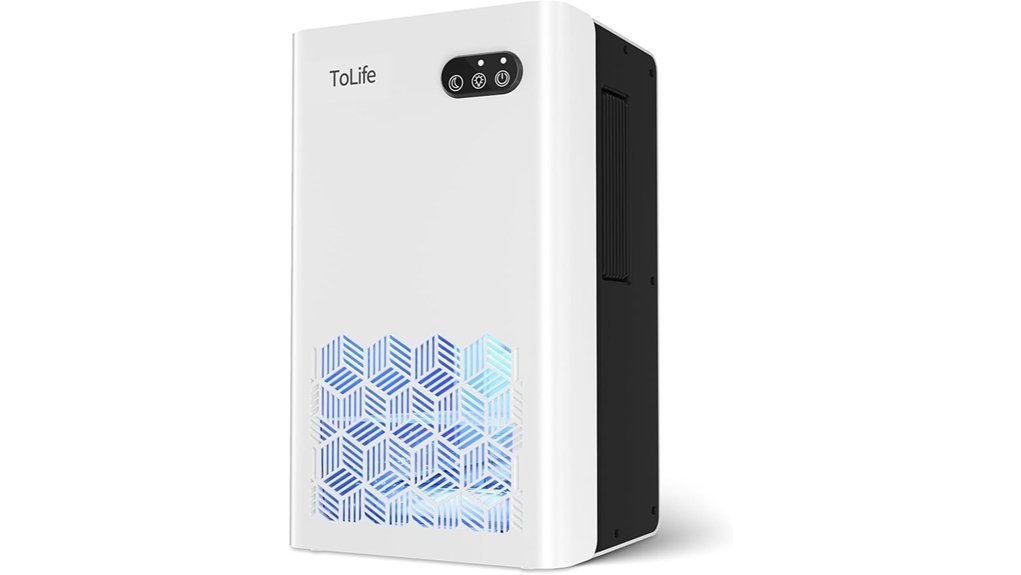
The ToLife TZ-C2 is a high-output compact dehumidifier with a removable tank, two operating speeds, automatic shutoff, sleep mode, and seven-color lighting. The model manual lists a 2,000 ml tank and approximately 1,000 ml of daily collection at 86°F and 80% relative humidity.
Because retailer listings for the TZ-C2 may show different tank figures, match the model number on the Amazon page, appliance label, and included manual before relying on an exact capacity or coverage claim.
Why You’ll Like It
- Powerful and sleep modes provide more control than a single-speed model.
- The 2,000 ml tank listed in the model manual supports less frequent emptying than many mini units.
- Automatic shutoff helps prevent overflow when the tank fills.
- The light can add gentle illumination, but it should be switched off if it distracts your baby.
Who Should Buy This: Families who want a high-output compact unit with simple dual-mode operation.
Who Should Avoid This: Buyers who require independently certified room coverage, a built-in humidistat, continuous drainage, or a verified ENERGY STAR rating.
Pros:
- Two operating speeds.
- Sleep mode for nighttime use.
- Automatic shutoff and removable tank.
- Portable body with ambient-light controls.
Cons:
- Tank specifications can vary between retailer listings, so the exact model documentation should be checked.
- Advertised floor-area figures may overstate practical performance.
- There is no substitute for checking nursery humidity with a separate hygrometer.
TABYIK DH-CS01 Dehumidifier — Best for a Small Nursery
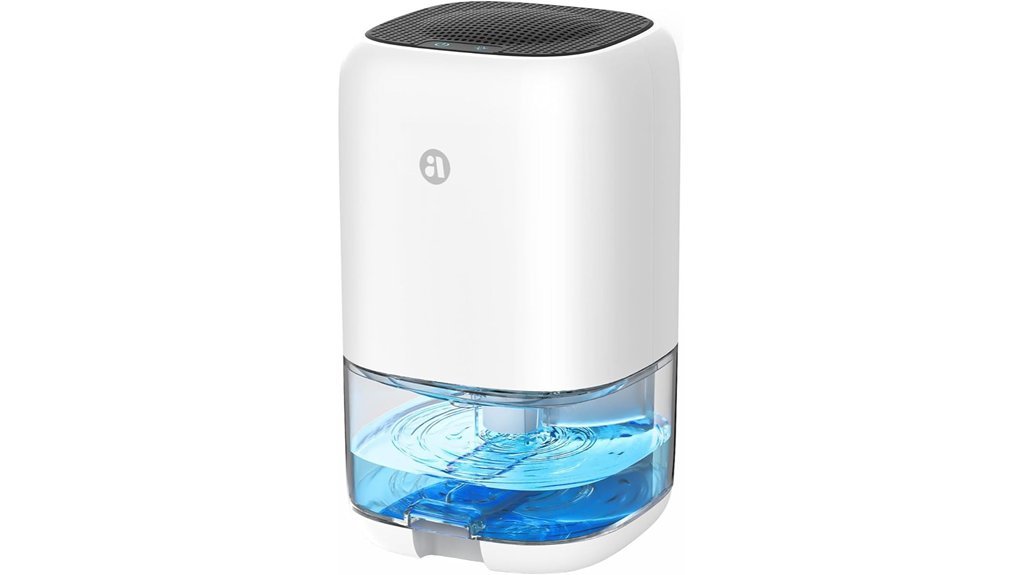
The TABYIK DH-CS01 is a straightforward choice for a small, closed nursery with mild humidity. Its compact 5.9-inch-square footprint, built-in handle, 35-ounce transparent tank, and simple one-button operation make it easy to place and maintain.
The manufacturer states that it can collect up to 16 ounces of water per day at 86°F and 80% relative humidity. It is advertised at 28 dB, but perceived noise can vary depending on placement, vibration, and room acoustics.
Why You’ll Like It
- The transparent tank makes the water level easy to check.
- Automatic shutoff stops operation when the tank is nearly full.
- The separate light control lets you turn off the seven-color display.
- Its small footprint is easier to position on a stable, protected surface well away from the crib.
Who Should Buy This: Parents with a compact nursery who want a simple dehumidifier without timers, apps, or complicated controls.
Who Should Avoid This: Anyone trying to dry a large bedroom, basement, active leak, or room with heavy daily condensation.
Pros:
- Compact and lightweight.
- Manufacturer-stated 28 dB operation.
- Automatic shutoff with a visible full-tank warning.
- Easy-to-remove transparent tank.
Cons:
- Only one operating speed.
- Small daily collection compared with a compressor dehumidifier.
- The 280-square-foot advertised coverage assumes favorable conditions and a closed room.
BeOkay DH-AA2 Dehumidifier — Best Controls and Timers
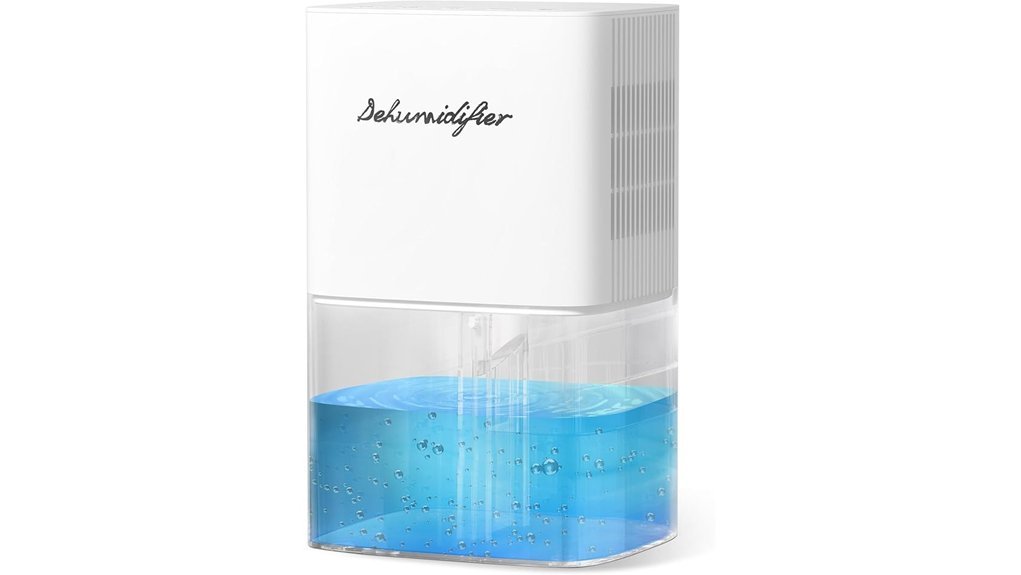
The BeOkay DH-AA2 stands out for its control options. Its model documentation lists a 1,800 ml (63-ounce) tank, three operating modes, five timer choices, automatic shutoff protection, automatic defrost, and ten adjustable light colors.
Its advertised moisture-removal capacity is approximately 0.3 liters per day. This makes it more appropriate for gradual moisture control than rapid drying after leaks or water damage.
Why You’ll Like It
- Sleep, normal, and performance modes let you balance noise and collection speed.
- Timer settings can prevent unnecessary all-day operation.
- Automatic shutoff activates when the tank is full, removed, or improperly positioned.
- The night light offers multiple colors and can be adjusted for the room.
Who Should Buy This: Caregivers who want scheduled operation and more control over fan speed and lighting.
Who Should Avoid This: Buyers who need a built-in humidity display, continuous drain hose, or high-capacity moisture removal.
Pros:
- Three operating modes.
- Five timer choices.
- Large tank relative to its compact body.
- Automatic shutoff and defrost protection.
Cons:
- Advertised sleep noise is below 40 dB, which is louder than some competing compact models.
- Daily collection is limited to approximately 0.3 liters under stated conditions.
- More controls can mean a slightly longer setup process.
Windangel DH-D2 Dehumidifier — Best for Mild Humidity
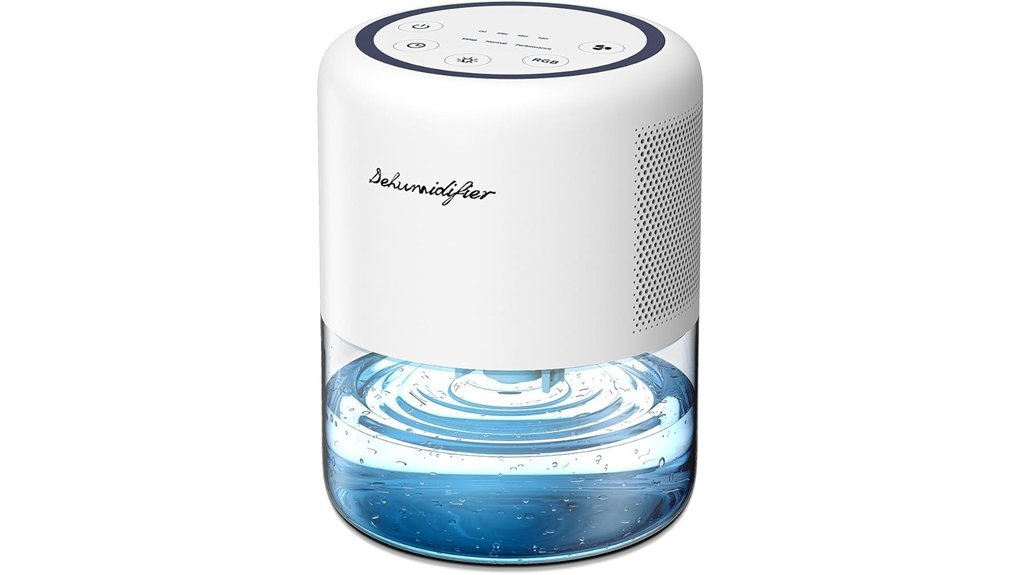
The Windangel DH-D2 is a portable 44-ounce dehumidifier intended for small, closed spaces. Retail specifications list sleep, normal, and performance modes, along with timer controls, adjustable ambient lighting, automatic shutoff, and automatic defrost protection.
The manufacturer states that it can collect up to 11.8 ounces of water per day at 86°F and 80% relative humidity. That capacity is best viewed as supplemental moisture control for a mildly humid nursery rather than a solution for major dampness.
Why You’ll Like It
- The three operating modes provide useful flexibility.
- The compact body is easy to move when cleaning or rearranging the room.
- The lighting includes multiple colors and brightness levels.
- Automatic shutoff helps protect against an overflowing tank.
Who Should Buy This: Families dealing with mild seasonal humidity in a small room.
Who Should Avoid This: Anyone who regularly sees wet windows, damp walls, musty building materials, or fast mold growth.
Pros:
- Three operating modes.
- Automatic shutoff and defrost functions.
- Timer options for scheduled operation.
- Compact 44-ounce tank design.
Cons:
- Lowest advertised daily moisture collection among the retained powered models.
- Manufacturer documentation is less accessible than for some competing models, so confirm the exact model label and manual.
- Advertised 215-square-foot coverage does not guarantee whole-room humidity control.
Factors to Consider When Choosing a Dehumidifier for a Nursery
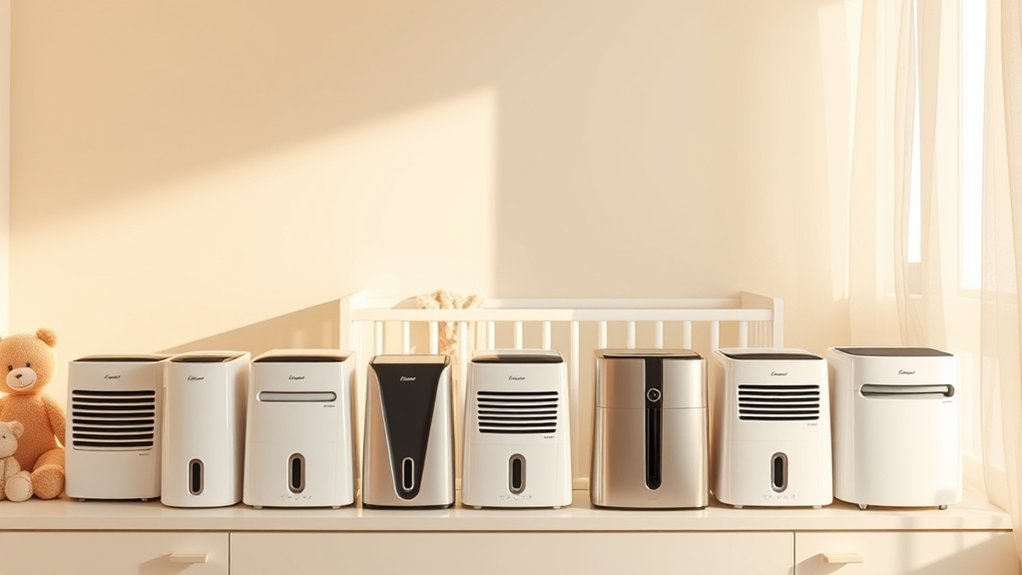
The right nursery dehumidifier should control mild moisture without creating new safety or comfort problems. Focus on measured room humidity, daily water-removal capacity, noise, tank maintenance, controls, and safe placement instead of relying only on an advertised square-foot number.
Measure Humidity Before Buying
Use a separate digital hygrometer to check the nursery at different times of day. The EPA generally recommends 30% to 50% relative humidity for homes. If the room is already within that range, continuous dehumidification may be unnecessary.
Do not try to make the nursery as dry as possible. Excessively dry air can also be uncomfortable. Use the dehumidifier only when measurements show that humidity is consistently high.
Understand Daily Moisture Removal
Daily collection capacity is more useful than tank size or advertised coverage. A large tank only stores more water; it does not necessarily mean the appliance removes moisture faster.
Compact semiconductor models often publish collection figures measured in warm conditions near 86°F and 80% relative humidity. A cooler nursery may produce significantly less collected water. For persistent dampness, consider a properly sized compressor dehumidifier instead.
Do Not Rely on Square-Foot Claims Alone
Marketing claims such as 800 or 1,000 square feet can be confusing when attached to a small appliance that removes less than two pints per day. Room size matters, but so do temperature, ventilation, open doors, outdoor humidity, wet laundry, plumbing leaks, and condensation.
For a nursery, judge success with a hygrometer. If humidity does not move toward the target range after appropriate use, the unit is undersized or the moisture source needs attention.
Noise Level Considerations
Look for a sleep mode and the option to turn off lights and button sounds. Manufacturer decibel ratings are useful for comparison, but the real sound can change when the appliance sits on a hollow dresser, uneven shelf, or surface that amplifies vibration.
Place the unit on a level, solid surface. Do not put soft fabric, foam, towels, or carpet underneath it if doing so blocks airflow or creates instability.
Safety Features Required
Automatic shutoff is essential because it stops operation when the tank fills or is not seated correctly. Also look for a secure removable tank, protected fan openings, a stable base, intact power adapter, and clear operating instructions. Do not assume electrical safety certification from marketing text alone; verify any claimed UL, ETL, or other certification for the exact model.
Keep the appliance and cord out of a child’s reach. Do not place it inside the crib, on a crib rail, on a changing table, or where it could fall onto the child. Keep it away from humidifiers, sinks, bottles, open windows, curtains, and other sources of water or obstruction.
Tank Size and Cleaning
A larger tank reduces emptying frequency, but every tank still requires regular cleaning. Empty collected water promptly, rinse the tank as directed by the manufacturer, and allow it to dry before reinstalling it.
Clean accessible filters and air openings according to the manual. Stop using the appliance if you notice slime, persistent odor, leaking, discoloration, or damage that cannot be cleaned safely.
Lighting Options Available
Color-changing lights may be useful during feeding or changing, but they should not determine which dehumidifier you buy. Choose a model that allows the light to be switched off or fixed on a dim setting so it does not disrupt the nursery’s nighttime environment.
Energy Use and Efficiency
Compare rated wattage with the amount of moisture the appliance claims to remove per day. A low-wattage unit may use little electricity each hour but still need to run continuously because its collection capacity is limited.
Do not assume a model is ENERGY STAR certified unless the exact model appears in the current ENERGY STAR product directory. The products in this guide should be evaluated primarily as compact small-room appliances.
When a Compact Dehumidifier Is Not Enough
A compact model is not the right solution when you have:
- Water leaking from a roof, pipe, window, or air conditioner.
- Visible mold on walls, ceilings, furniture, or flooring.
- Wet drywall, carpet, insulation, or wood.
- Regular water droplets on walls or windows.
- A strong musty smell that returns after cleaning.
- Humidity that remains above the target range despite continuous operation.
Repair the source of the moisture first. Significant mold, water damage, or recurring dampness may require help from a qualified building, HVAC, or mold-remediation professional.
Before You Buy: Nursery Dehumidifier Checklist
- Measure the nursery’s humidity with a separate hygrometer.
- Confirm that the room has a real excess-moisture problem.
- Compare daily water-removal capacity, not only tank size.
- Check whether the light can be turned off.
- Choose automatic shutoff and a secure removable tank.
- Confirm the cord can be routed safely out of reach.
- Leave adequate clearance around all air vents.
- Read the current Amazon specifications and included manual.
- Inspect the current CPSC dehumidifier recall information and search the exact brand and model before use.
- Plan a regular tank and filter cleaning schedule.
Frequently Asked Questions
What Humidity Level Is Best for a Nursery?
A practical target is approximately 30% to 50% relative humidity, consistent with EPA household guidance. Measure the room with a hygrometer rather than relying on how the air feels. Humidity changes with weather, air conditioning, heating, open doors, and time of day.
Can a Dehumidifier Prevent Mold in a Nursery?
Reducing excess humidity can make the room less favorable for mold growth, but a dehumidifier cannot guarantee a mold-free nursery. Existing mold must be cleaned appropriately, wet materials must be dried, and leaks or condensation sources must be corrected.
Can a Dehumidifier Treat Infant Allergies?
No. A dehumidifier is not a medical treatment and should not be described as curing or treating allergies, asthma, coughing, or other symptoms. It only helps manage excess moisture. Speak with your child’s healthcare professional about persistent respiratory or allergy symptoms.
Is It Safe to Run a Dehumidifier While a Baby Sleeps?
It can be used according to the manufacturer’s instructions when the appliance is undamaged, stable, properly ventilated, and completely out of the child’s reach. Secure the cord, keep the tank seated correctly, turn off distracting lights, and use a hygrometer to avoid over-drying the room.
Where Should a Dehumidifier Be Placed in a Nursery?
Place it on a stable, level surface where air can circulate freely. Keep it away from the crib, changing table, curtains, bedding, heater, humidifier, window condensation, sink, and any place where it could be pulled down or splashed.
How Long Should a Nursery Dehumidifier Run?
Run it based on measured humidity rather than a fixed daily schedule. Check the hygrometer periodically and reduce or stop operation when the nursery reaches the desired range. Compact units may need longer operation than full-size compressor models.
How Often Should the Water Tank Be Cleaned?
Empty the tank whenever it fills and clean it according to the manufacturer’s instructions. Frequent rinsing and complete drying help prevent residue and odor. Filters, air inlets, and outlets should also be checked regularly.
Does a Dehumidifier Clean Nursery Air?
A standard dehumidifier removes moisture, not all airborne particles, gases, odors, or allergens. It is not a replacement for ventilation, source control, cleaning, HVAC maintenance, or a suitable air purifier when filtration is needed.
Should I Use a Humidifier and Dehumidifier Together?
Normally, no. Running both at the same time wastes energy and makes humidity control difficult. Measure the room first, then use only the appliance needed to move humidity toward the target range.
Final Recommendation
Choose the TENKER QIG-D05 when you want the strongest compact option in this group, a larger tank, and a quiet sleep mode.
Choose the TABYIK DH-CS01 for a small nursery where simplicity, compact size, and low advertised noise matter most.
Choose the BeOkay DH-AA2 when timer settings and multiple operating modes are more important than maximum collection capacity.
Choose a full-size compressor dehumidifier instead when the nursery has persistent condensation, structural dampness, leaks, visible mold, or humidity that remains high despite compact-unit operation.
The safest buying decision starts with a hygrometer. Confirm that excess humidity is actually present, choose a unit with enough manufacturer-stated moisture-removal capacity, place it securely out of reach, and monitor the nursery instead of relying on an advertised square-foot claim. With realistic expectations and regular maintenance, a compact dehumidifier can be a useful tool for managing mild nursery moisture.