Last updated: August 2026
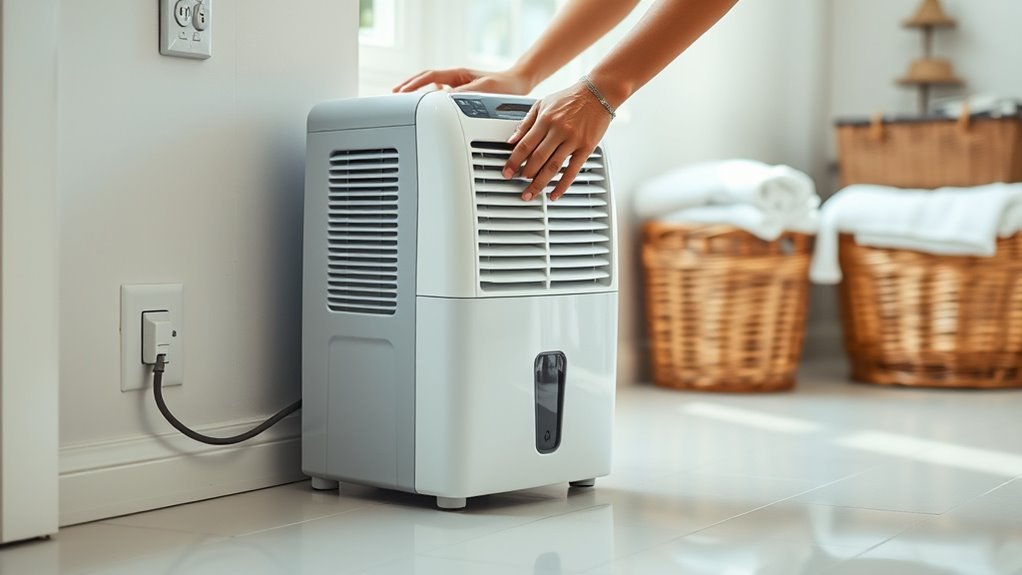
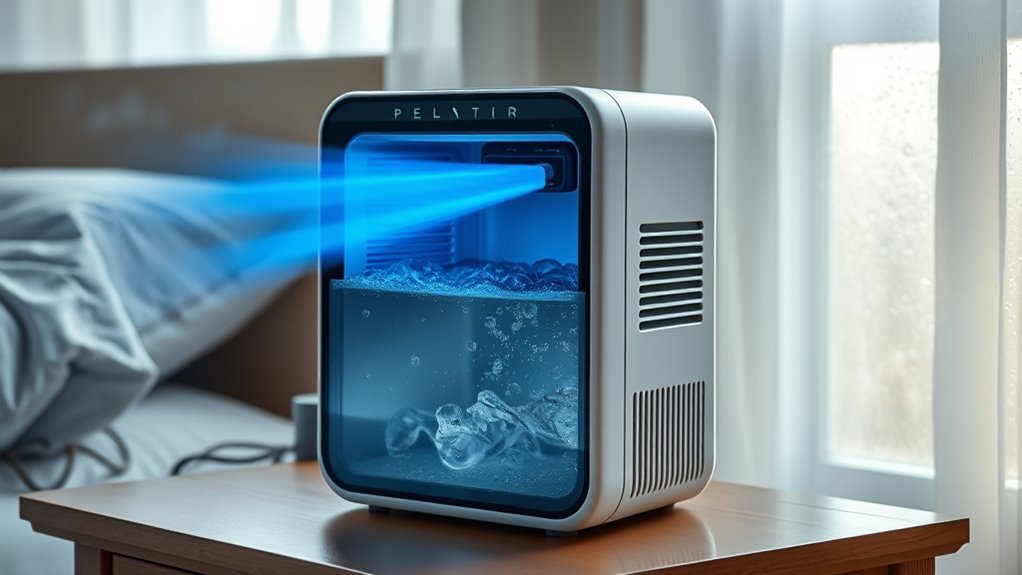
If you want one of the best basic dehumidifiers for a small room, compare the moisture-removal rate, test conditions, tank size, operating noise, controls, and room temperature before buying. The five models below are compact thermoelectric, or Peltier, dehumidifiers designed mainly for bedrooms, bathrooms, closets, offices, campers, and RVs.
These small units are easier to move and usually quieter than full-size compressor dehumidifiers. However, they are best for light condensation and modest moisture loads. They are not intended to correct active leaks, standing water, widespread mold, laundry-room moisture, or a persistently wet basement.
For the broadest feature set, the NovaLivin 68 OZ Dehumidifier stands out with selectable humidity targets, multiple modes, a timer, and the largest tank in this comparison. The CLEVAST Mini is the simplest quiet option, while the hOmeLabs Small Space Dehumidifier suits especially tight areas. The BeOkay DH-A2 adds three operating modes and several timer settings, and the TABYIK 38OZ combines quiet operation with an auto-defrost function.
Quick Verdict
- Best Overall: NovaLivin 68 OZ Dehumidifier for buyers who want selectable humidity targets, multiple modes, and a larger tank.
- Best Quiet Basic Pick: CLEVAST Mini for bedrooms, desks, closets, and other small spaces with a light moisture load.
- Best for Very Tight Spaces: hOmeLabs Small Space Dehumidifier for cabinets, closets, and tiny bathrooms.
- Best Adjustable Modes: BeOkay DH-A2 for buyers who want sleep, normal, and performance settings.
- Best with Auto-Defrost: TABYIK 38OZ for small spaces where frost-management protection is useful.
| Model | Best For | Tank | Listed Moisture Removal | Key Feature | Amazon |
|---|---|---|---|---|---|
| NovaLivin 68 OZ | Small rooms needing more control | 68 oz | Up to 34 oz/day at 86°F and 80% RH | Humidity targets, timer, and multiple modes | Check Product Details |
| CLEVAST Mini | Quiet, simple operation | 30 oz | Up to 10 oz/day at 86°F and 85% RH | Manufacturer-listed 24 dB operation | Check Current Availability |
| hOmeLabs Small Space | Closets, cabinets, and tiny bathrooms | 16 oz | Up to 9 oz/day | Very compact footprint | Check Price on Amazon |
| BeOkay DH-A2 | Buyers wanting multiple operating modes | 58 oz listed; some documentation reports 63 oz | Up to 0.3 L/day | Sleep, normal, and performance modes | Check Product Details |
| TABYIK 38OZ | Bathrooms, closets, bedrooms, and RVs | 38 oz | Up to 11 oz/day at 86°F and 80% RH | Auto-defrost and full-tank shutoff | Check Current Availability |
Important: Moisture-removal figures are manufacturer or retailer claims measured under specified or favorable test conditions. Real-world collection is usually lower in cooler rooms, at moderate humidity, or in spaces with ongoing air and moisture infiltration. Treat square-foot coverage as a rough placement estimate, not a guarantee that a mini unit will control humidity throughout the room.
NovaLivin 68 OZ Dehumidifier for Small Rooms
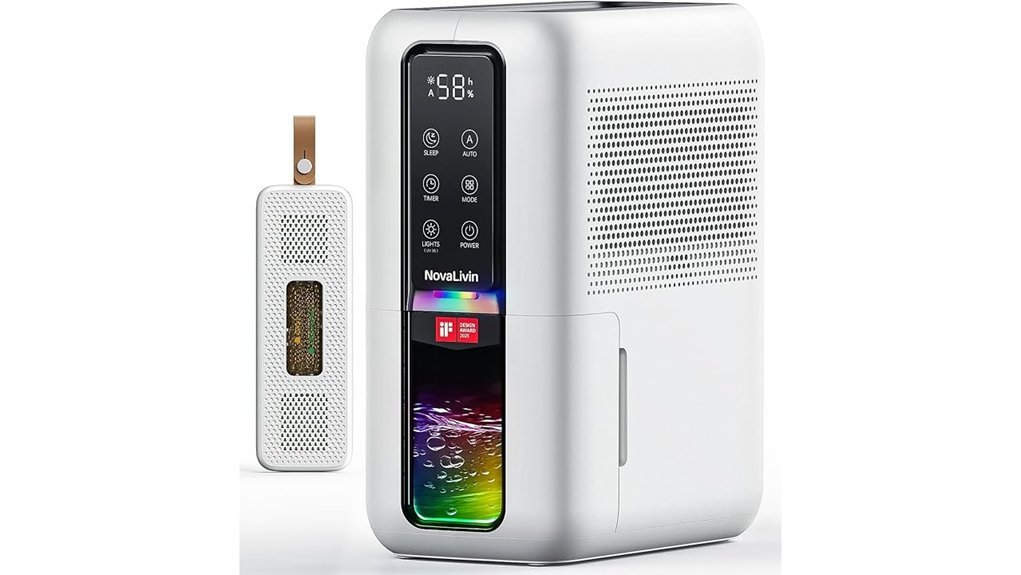
Best Overall
The NovaLivin 68 OZ Dehumidifier offers the most extensive controls in this roundup for a bedroom, bathroom, office, closet area, camper, or RV. Its 68 oz tank reduces how often collected water must be emptied, while selectable 40%, 50%, and 60% humidity targets, two dehumidifying levels, sleep mode, drying mode, and a 24-hour timer offer more flexibility than a one-button model.
The manufacturer documentation for this product series lists up to 34 oz of moisture removal per day at 86°F and 80% relative humidity, along with a placement estimate of up to 320 square feet. These are favorable-condition figures. Actual collection can be considerably lower when a room is cooler, less humid, open to adjoining spaces, or affected by continuing moisture entry.
The humidity settings should also be treated as selectable operating targets rather than a guarantee of precise room-wide control. The unit’s ability to reach or maintain a target depends on room size, temperature, ventilation, air leakage, and the amount of moisture entering the space.
Why You’ll Like It: It combines the largest tank in this group with selectable humidity targets, multiple modes, a timer, auto shutoff, and a full-tank alert.
Who Should Buy This: Buyers who want a compact small-room dehumidifier with more controls than a basic single-speed unit.
Who Should Avoid This: Anyone dealing with standing water, recurring leaks, widespread visible mold, wet laundry-room conditions, or a large damp basement that needs a pint-rated compressor dehumidifier.
Pros:
- Large 68 oz tank allows longer intervals between emptying than the smaller models in this comparison.
- Selectable controls include humidity targets, operating levels, special modes, and a timer.
- Sleep mode and full-tank shutoff add convenience for bedroom use.
Cons:
- Performance depends heavily on temperature and humidity, so real-world collection may be well below the maximum claim.
- The larger body requires more placement space than the simplest mini models.
- It uses more energy than lower-capacity single-chip units, so buyers should compare moisture removal as well as wattage.
- Model identifiers may vary between listings and documentation, making it important to confirm the exact current version before ordering.
CLEVAST Small Quiet Mini Dehumidifier for Home
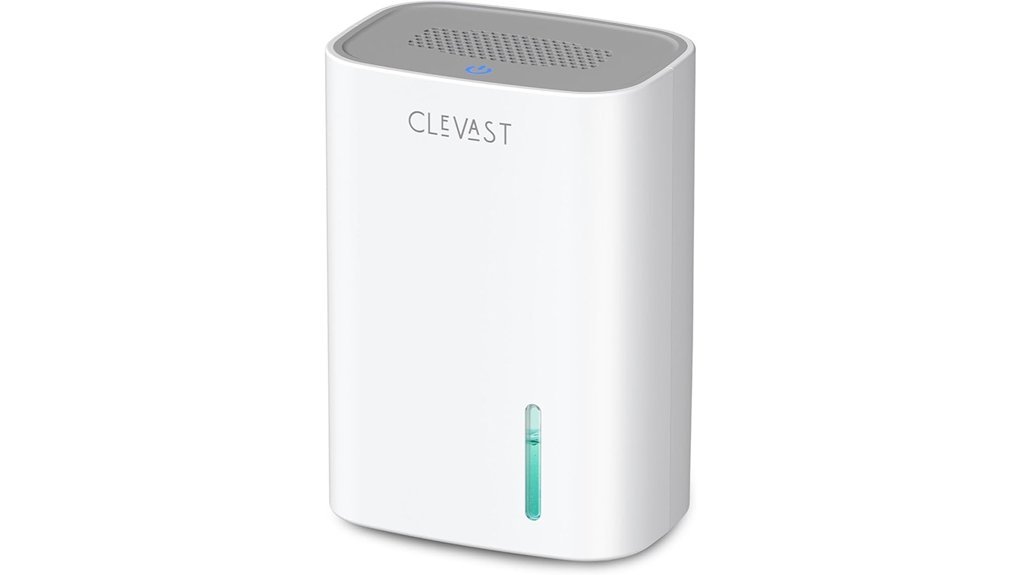
Best Quiet Basic Pick
The CLEVAST Small Quiet Mini Dehumidifier is a straightforward choice for buyers who value low listed noise, simple controls, and easy placement. It weighs about 2.1 pounds, measures roughly 4.5 × 6.5 × 9.2 inches, and uses a 30 oz tank, allowing it to fit on a stable shelf, counter, desk, or RV surface with sufficient airflow clearance.
The manufacturer lists up to 10 oz of moisture removal per day at 86°F and 85% relative humidity, 24 dB operation, and energy consumption below 0.55 kWh per day. These figures come from favorable test conditions and should be treated as reference points rather than guaranteed household results.
This model is best for a small enclosed area with light condensation or a modest moisture load. It is not an appropriate substitute for a compressor dehumidifier in a cold basement or a room that remains persistently damp.
Why You’ll Like It: One-button operation, a compact body, full-tank auto shutoff, and low manufacturer-listed noise keep daily use simple.
Who Should Buy This: Noise-sensitive users who need light moisture collection in a bedroom, closet, compact bathroom, camper, or home office.
Who Should Avoid This: Buyers who need a built-in humidistat, timer, continuous drainage, or fast moisture removal in a very damp room.
Pros:
- Compact and lightweight for easy placement and carrying.
- Low listed energy use compared with full-size compressor dehumidifiers.
- Simple one-button operation with automatic full-tank shutoff.
- Manufacturer-listed 24 dB noise level may appeal to bedroom and office users.
Cons:
- Low extraction capacity limits it to light-duty use in small spaces.
- No adjustable humidity target for automatic room-level control.
- No timer or continuous drain limits automation and convenience.
- Performance drops in cooler or less humid conditions, as with other thermoelectric mini dehumidifiers.
hOmeLabs Small Space Dehumidifier with Auto Shut Off – Compact and Portable
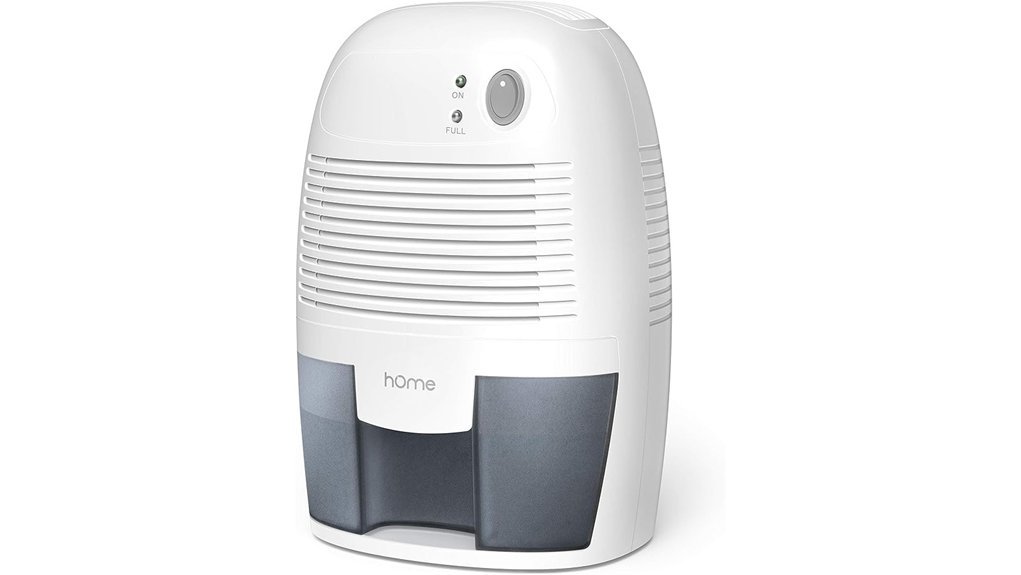
Best for Very Tight Spaces
The hOmeLabs Small Space Dehumidifier is the most compact option in this guide for closets, cabinets, tiny bathrooms, and other enclosed areas where floor or shelf space is limited. It weighs about 2.6 pounds and measures 6.5 × 5.3 × 8.5 inches, making it easy to reposition as long as its air inlet and outlet remain clear.
Its product information lists a 16 oz tank, a 25-watt adapter, and moisture collection of up to 9 oz per day. The unit operates until the tank is full, then shuts off and activates a full-tank indicator. This simple design is convenient, but it does not include selectable humidity targets, a timer, multiple speeds, or continuous drainage.
Why You’ll Like It: The small footprint, low-wattage adapter, removable tank, and full-tank shutoff make it easy to use in a confined space.
Who Should Buy This: Buyers who need a basic moisture collector for a closet, cabinet, tiny bathroom, or similarly small enclosed area.
Who Should Avoid This: Anyone who needs room-wide humidity control, rapid extraction, a large tank, or advanced operating settings.
Pros:
- Very compact design fits where larger models may not.
- Simple operation with automatic full-tank shutoff.
- Low power draw for light-duty moisture collection.
- Removable tank makes routine emptying and rinsing straightforward.
Cons:
- Small 16 oz tank may need frequent emptying in humid conditions.
- Low moisture-removal rate is not suitable for serious dampness.
- No humidistat, timer, or continuous drain limits control and convenience.
- Continuous operation between tank-emptying cycles provides less automation than a model with selectable humidity targets.
BeOkay DH-A2 Small Dehumidifier with Adjustable Settings
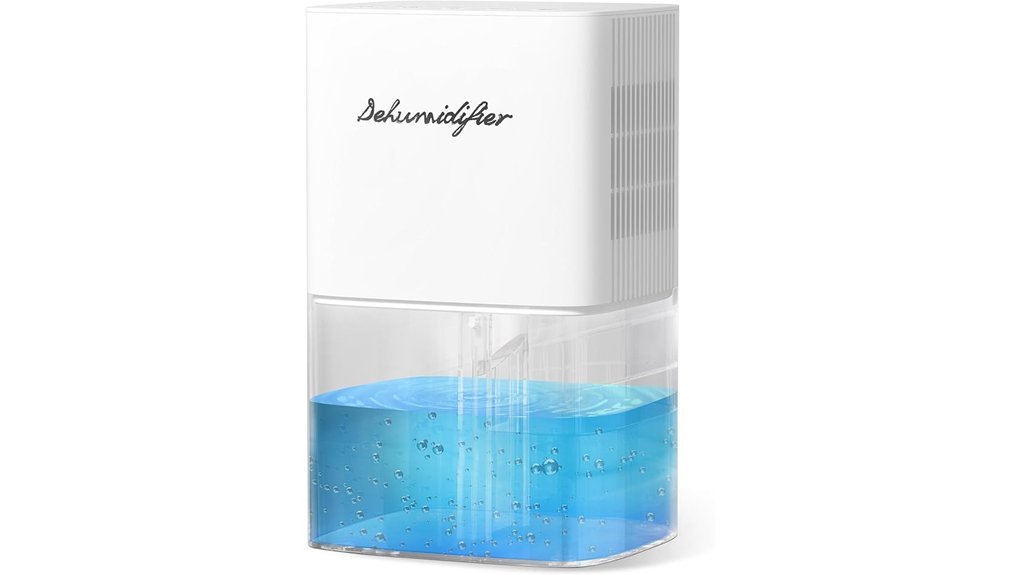
Best Adjustable Modes
The BeOkay DH-A2, also identified as model DH-AA2 in product documentation, gives buyers three operating choices: sleep, normal, and performance. It weighs about 2.32 pounds and measures 4.96D × 5.89W × 9.53H inches, making it suitable for a bedroom, bathroom, office, or another small area with a light moisture load.
The current product-title data associated with this ASIN lists a 1,657 mL, or approximately 58 oz, water tank. Some separate documentation reports a 1,800 mL, or 63 oz, tank. Because the published figures conflict, buyers should confirm the tank specification shown on the current Amazon page before ordering.
The listed dehumidification capacity is up to 0.3 liters per day. The unit also includes a removable tank, auto shutoff, several timer choices, adjustable lighting, and a sleep-mode noise claim below 40 dB. As with every model in this guide, actual water collection will depend on room temperature and relative humidity.
Why You’ll Like It: The three operating modes let you choose between quieter operation and stronger moisture collection without moving to a full-size machine.
Who Should Buy This: Buyers who want a compact unit with more operating flexibility than a basic one-button dehumidifier.
Who Should Avoid This: Anyone who requires continuous drainage, high-capacity basement performance, or completely consistent specification documentation.
Pros:
- Three operating modes provide flexibility for daytime and nighttime use.
- Compact, lightweight body is easy to move between small rooms.
- Timer, removable tank, optional lighting, and auto shutoff add convenience.
- Listed 28-watt power use gives buyers a clear energy reference point.
Cons:
- Conflicting tank-capacity figures make the current listing worth checking carefully.
- Maximum 0.3 L/day extraction is appropriate only for light-duty moisture collection.
- No continuous drain means the tank must be emptied manually.
- Decorative lighting may be unnecessary for buyers who want the simplest possible controls.
TABYIK 38OZ Quiet Energy-Saving Dehumidifier
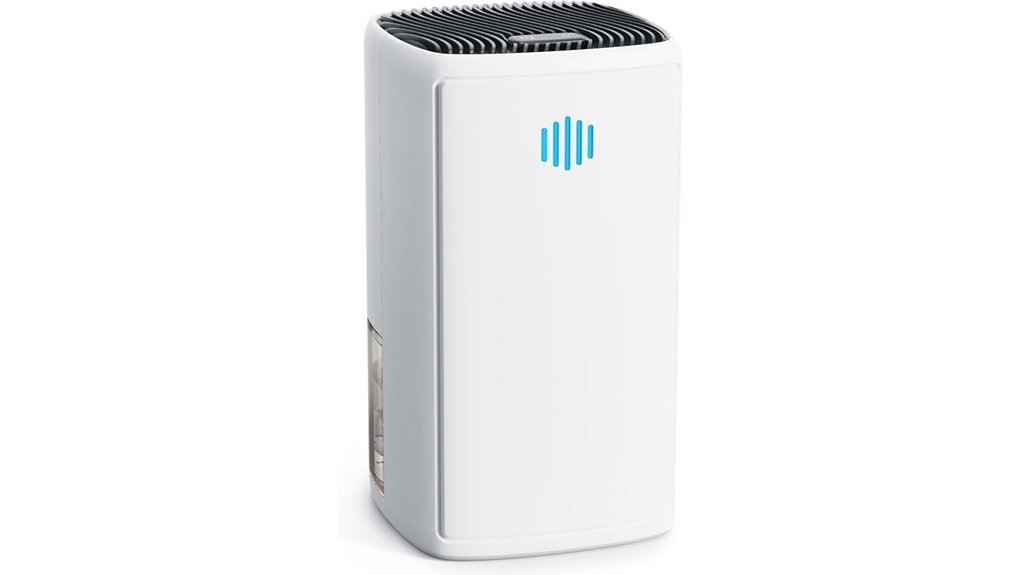
Best with Auto-Defrost
The TABYIK 38OZ Quiet Energy-Saving Dehumidifier is intended for bathrooms, closets, bedrooms, and RVs where a small footprint and low listed noise matter. Its 38 oz tank is larger than the CLEVAST and hOmeLabs tanks, while the built-in handle and compact body make it easy to relocate after the tank has been emptied.
The manufacturer lists up to 11 oz of moisture removal per day at 86°F and 80% relative humidity, a placement estimate of up to 280 square feet, and operation below 30 dB. These are favorable-condition claims rather than guaranteed household results.
Auto shutoff, a full-tank indicator, and auto-defrost add convenience. The auto-defrost function is designed to respond when frost begins to form, but it should not be interpreted as proof that this light-duty thermoelectric model will perform well in a cold, persistently damp basement.
Why You’ll Like It: It combines a moderate-size tank, low manufacturer-listed noise, automatic full-tank shutoff, and frost-management protection in a portable design.
Who Should Buy This: Buyers who need a compact dehumidifier for a bathroom, closet, bedroom, or RV and prefer an auto-defrost feature.
Who Should Avoid This: Buyers with a large open room, cold unheated basement, active leak, standing water, or high daily moisture load.
Pros:
- 38 oz tank provides more capacity than the smallest models in this guide.
- Auto shutoff and full-tank indicator help reduce overflow risk.
- Auto-defrost function helps manage frost buildup during operation.
- Listed noise below 30 dB may suit bedrooms and offices.
Cons:
- Maximum extraction is modest compared with pint-rated compressor units.
- Coverage figures are marketing estimates, not guaranteed room-level humidity control.
- No continuous drain means the tank still requires manual emptying.
- Auto-defrost does not make it a high-capacity cold-basement dehumidifier.
Factors to Consider When Choosing a Basic Dehumidifier
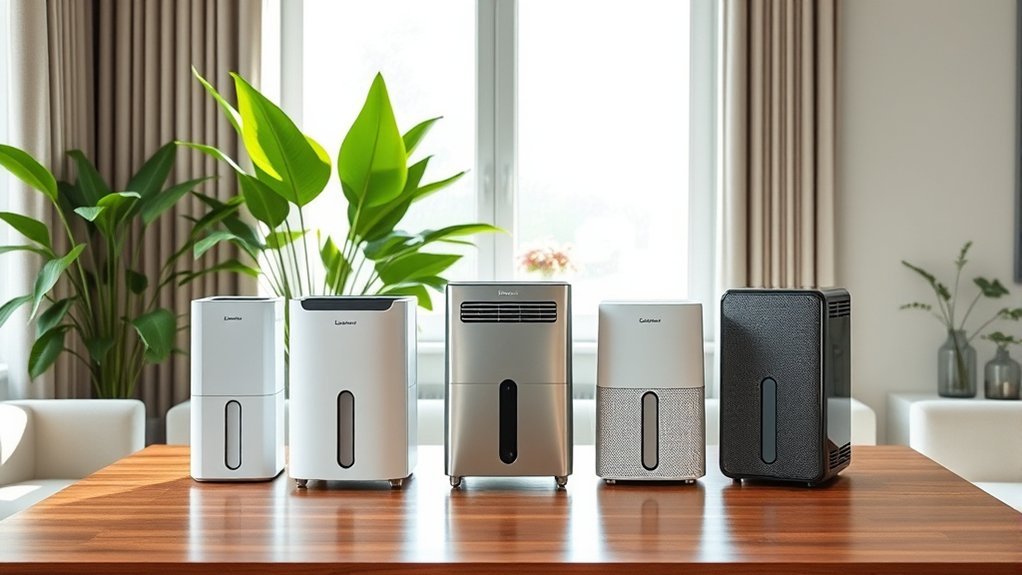
A basic dehumidifier should match the room’s moisture load, not just its floor area. Compare the daily removal rate, test temperature and humidity, tank capacity, controls, listed noise, operating-temperature range, and drainage method before buying.
Key Features to Evaluate
Start with the listed moisture-removal rate. The mini dehumidifiers in this guide claim roughly 9 to 34 oz per day, but several reach those figures only in warm air at 80% to 85% relative humidity. For a fair comparison, look at the test conditions instead of comparing the headline extraction number alone.
Next, decide whether you want one-button operation or extra controls. A simple model is easier to use, while selectable humidity targets, timers, sleep modes, multiple operating levels, and auto-defrost provide more flexibility. Full-tank auto shutoff is especially important because it helps reduce overflow risk when the tank fills.
Thermoelectric vs. Compressor Dehumidifiers
The products in this guide use thermoelectric or Peltier technology. These units are compact, portable, and generally quieter than compressor models, but they remove much less water. They work best in warm, enclosed spaces with light condensation or a modest moisture load.
A pint-rated compressor dehumidifier is usually the better choice for a damp basement, laundry area, large room, crawl space, recurring condensation, or any area that needs substantial daily moisture removal. Correct leaks, seepage, drainage problems, and ventilation issues instead of relying on a portable appliance to hide the cause.
Energy Use and Efficiency
Do not rely only on labels such as “energy-saving.” Compare the listed wattage or estimated kWh per day and consider how long the unit is likely to run. A low-wattage mini dehumidifier may use less electricity per hour, but it also removes much less water than a properly sized compressor model.
The most useful comparison is how much moisture the appliance can remove for the energy consumed in your actual room. A slightly higher-wattage unit may be more useful when it collects substantially more water or can cycle off after reaching a selected target.
Noise Level Considerations
Manufacturer-listed noise figures in this group range from about 24 dB to below 40 dB in quieter modes. Treat these numbers as reference points because measurement distance, fan speed, vibration, furniture, and room acoustics affect what you hear.
For bedroom use, choose a quiet or sleep mode when available and place the unit on a level, stable surface away from the bed. A soft vibration can become more noticeable when the appliance sits on a hollow cabinet or lightweight shelf.
Size and Portability
Check the complete dimensions, adapter or power-cord location, tank-removal direction, and required clearance around the inlet and outlet. A compact unit can perform poorly if it is pressed against a wall, curtain, towel, or cabinet.
Built-in handles and weights of only a few pounds make these models easy to move. Always switch off the appliance and empty its tank before carrying it to another room.
Water Tank Capacity
A larger tank generally means less frequent emptying, but tank size does not equal dehumidification power. Compare tank capacity with the daily removal rate. A 68 oz tank paired with a 34 oz/day maximum claim may run longer between emptying than a 16 oz tank paired with a 9 oz/day claim, although actual fill time depends on room conditions.
None of the five products in this guide offers continuous hose drainage, so each requires manual tank emptying.
Coverage Area Requirements
Square-foot coverage is often a marketing or placement estimate and can be misleading without the room’s temperature, ceiling height, air leakage, and humidity level. These compact thermoelectric units are best treated as small-space moisture collectors, not guaranteed whole-room humidity-control systems.
For a very damp room, laundry area, crawl space, basement, or large open-plan area, use a properly sized pint-rated compressor dehumidifier and address leaks, drainage, insulation, and ventilation.
Operating Temperature
Thermoelectric moisture collection generally works better in warm, humid air. Performance falls as the room becomes cooler or drier. Auto-defrost may help protect a model when frost is detected, but it does not create the extraction capacity needed for a cold, wet basement.
Check the manufacturer’s stated operating-temperature range before buying, especially for an RV, garage, basement, seasonal cabin, or other area that may become cool.
Safety Features and Placement
Look for full-tank auto shutoff, stable tank seating, overheat protection, and clear operating instructions. Use only the supplied or manufacturer-approved adapter, keep vents unobstructed, and place the unit upright on a dry, level surface.
In a bathroom, keep the appliance, adapter, plug, and cord away from tubs, sinks, direct shower spray, wet countertops, and any location where the unit could be splashed or fall into water. Follow the product manual and local electrical-safety requirements.
Frequently Asked Questions
How Often Should I Empty the Water Tank?
Check the tank at least once a day when you first start using the dehumidifier. Empty it whenever it is full, before moving the unit, and before extended storage. The interval may range from less than a day to several days depending on tank size, room humidity, temperature, and the appliance’s actual collection rate.
Can a Dehumidifier Help With Allergies?
A dehumidifier may help make indoor conditions less favorable for mold and dust mites by keeping relative humidity in a moderate range. However, it is not a medical treatment, does not filter all airborne allergens, and does not remove existing mold by itself.
Repair leaks, clean and dry affected materials, use appropriate ventilation, and seek medical advice for persistent allergy or asthma symptoms.
What Size Dehumidifier Do I Need for My Space?
Choose capacity based on both room size and dampness. The mini units in this guide are listed at approximately 0.6 to 2.1 pints per day under their stated favorable conditions, so they are most appropriate for small spaces with a light moisture load.
A damp basement, large room, laundry area, or space affected by seepage and recurring condensation usually needs a higher-capacity compressor dehumidifier rated in pints per day.
Is It Safe to Run a Dehumidifier Continuously?
Many compact models are designed to run until the tank is full, but continuous use should always follow the product manual. Keep the appliance upright on a dry, level surface, use the correct adapter, maintain clearance around the vents, inspect the cord, and clean the tank and air openings regularly.
Do not rely on automatic shutoff as a substitute for safe placement, routine inspection, and maintenance.
How Do I Maintain My Dehumidifier?
Unplug the unit before cleaning. Empty and rinse the tank regularly, dry it before storage, wipe the exterior with a soft damp cloth, and remove dust from the air inlet and outlet with a soft brush or suitable vacuum attachment.
Never immerse the appliance or power adapter. Follow the manufacturer’s instructions for any filter, sensor, or defrost maintenance.
Can I Use a Mini Dehumidifier in a Bathroom?
A mini dehumidifier may be used in a bathroom only when the product instructions allow it and the appliance can be positioned on a dry, stable surface away from the tub, sink, direct shower spray, splashing, and fall hazards. Do not touch the appliance, plug, or controls with wet hands.
Bathroom ventilation and repairing leaks are usually more important than adding a small dehumidifier. The appliance should supplement those measures rather than replace them.
When Is a Mini Dehumidifier Not Enough?
A mini model is not enough when you have an active plumbing or roof leak, standing water, widespread visible mold, recurring wall or floor condensation, a persistently wet basement, wet laundry drying indoors, or a large open space.
Correct the moisture source first and use a properly sized compressor or whole-home dehumidification solution when substantial moisture removal is needed.
Conclusion
The right basic dehumidifier depends on how much moisture you need to remove, the room temperature, the available placement area, and how much control you want. Choose the NovaLivin 68 OZ Dehumidifier for the broadest feature set and largest tank, the CLEVAST Mini for quiet simplicity, the hOmeLabs Small Space Dehumidifier for the tightest locations, the BeOkay DH-A2 for three operating modes, or the TABYIK 38OZ for a compact model with auto-defrost.
Final Recommendation
For buyers seeking a feature-rich thermoelectric unit for a small room with a light moisture load, the NovaLivin 68 OZ model is the strongest all-around choice. For a closet, tiny bathroom, or quiet bedroom corner, a simpler CLEVAST or hOmeLabs model may provide better value. Whichever model you choose, confirm the current Amazon specifications and remember that a mini dehumidifier cannot replace leak repair, ventilation, mold cleanup, or a properly sized compressor unit when the moisture problem is severe.