A robot vacuum can usually cover about 1,000 to 2,500 square feet per charge, though results vary by model and home layout. Smaller rooms may take 15 to 25 minutes, while larger spaces can push past an hour. Floor type, furniture, battery life, and navigation all affect performance. Smart mapping and efficient routes can improve coverage, but the real limits often appear in less obvious ways.
How Much Area Can a Robot Vacuum Clean?
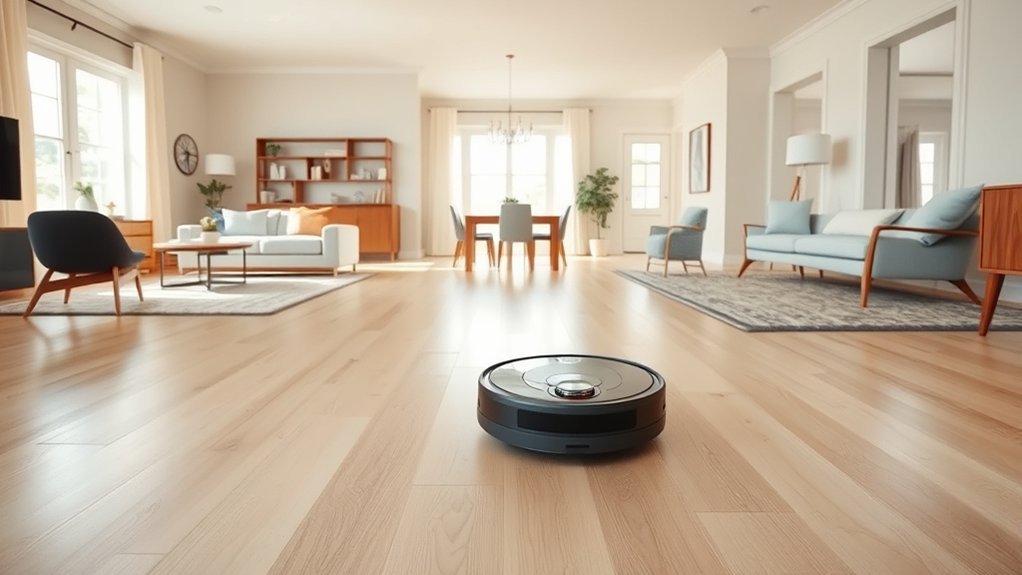
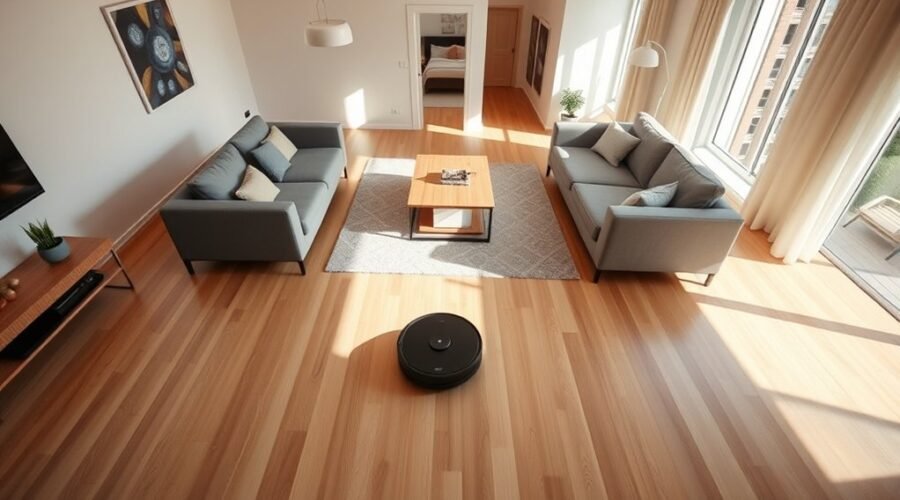
Most robot vacuums can clean about 1,000 to 2,500 square feet on a single charge, though actual coverage depends on the model, floor type, and room layout.
In practical terms, this gives most households enough cleaning capacity for a small apartment or a large section of a home. A bedroom of 100 to 200 square feet may take 15 to 25 minutes, while a 600-square-foot or larger area can require more than an hour.
Floor types matter: carpet usually demands slower passes and deeper suction than hardwood or tile. Better navigation systems also improve coverage by reducing repeated passes and wasted movement.
In open rooms, efficient mapping helps the machine move with less overlap, extending useful range. Obstacles and clutter can interrupt cleaning and shorten effective reach, so clear paths support faster, more complete coverage.
What Affects Robot Vacuum Coverage?
Robot vacuum coverage is shaped first by room size, since larger areas extend cleaning time and can exceed battery capacity.
Layout and obstacles also matter, because open spaces support efficient routes while clutter and tight turns reduce coverage.
Floor type affects performance as well, with carpets typically requiring more passes and time than hard floors.
Room Size Matters
Room size is one of the clearest predictors of how long a robot vacuum will take to complete a cleaning cycle. In a small room of 100 to 200 square feet, a typical room cleaning may finish in 15 to 25 minutes.
When the area expands to 600 square feet or more, a cleaning run can exceed an hour, especially if the machine slows to maintain full coverage. Advanced navigation helps reduce wasted passes and improves efficiency, but it cannot erase the basic time cost of larger floor plans.
Surface type also matters: hardwood and tile usually permit faster travel than carpet, which demands more suction and longer coverage.
Custom modes can shorten or extend runtime, giving users control over how much work the robot performs.
Layout And Obstacles
Layout has a direct effect on robot vacuum coverage: open floor plans usually let the machine move faster and complete more of the surface in fewer passes, while cluttered rooms with tight turns, wall breaks, and scattered objects increase runtime and raise the chance of missed spots. Navigation depends on clear routes, low-profile furniture, and minimal obstacles. | Factor | Effect |n|—|—|n| Open layout | Faster coverage |n| Tight turns | Slower navigation |n| Floor cables | Tangling risk |n| Low furniture | Better access |n| Clear pathways | More area cleaned |nnRoom design also shapes how well the robot reaches edges and under furniture. When layout is simple and obstacles are reduced, coverage improves and cleaning becomes more efficient, offering a more autonomous path to clean floors.
Floor Type Differences
Surface type markedly influences robot vacuum coverage efficiency. In floor type differences, hard surfaces such as hardwood and tile permit faster passes, less suction load, and broader area coverage.
Carpets slow progress because deeper suction is required, raising cleaning duration. Mixed floor types add friction to route planning, since the machine may switch settings across rooms, which can extend runtime and reduce effective range.
- Hard floors: quickest coverage, lower energy demand.
- Plush or thick carpets: slower travel, more passes, higher suction.
- Mixed floor types: adaptive changes can lengthen cleaning duration.
Small carpeted bedrooms may finish in 15-25 minutes, while larger carpeted spaces can exceed an hour.
Advanced mapping helps reduce overlap and preserve range, supporting more liberated, efficient cleaning.
Robot Vacuum Cleaning Times by Room Size
Robot vacuum cleaning time scales directly with room size: small bedrooms of about 100 to 200 sq. ft. typically take 15 to 25 minutes. Medium living rooms of 300 to 500 sq. ft. often require 30 to 60 minutes, and spaces above 600 sq. ft. can run past an hour depending on obstacles and path efficiency.
A robot vacuum cleaner working in a compact bedroom usually finishes fast enough for routine maintenance. In a medium living area, the cycle length reflects more turns, edges, and repeated passes needed to clean floors evenly.
For larger open zones, runtime grows as navigation, recharging, and coverage logic stretch across wider boundaries. Multi-floor mapping helps reduce wasted movement by preserving room layouts and limiting overlap.
Layout complexity matters as much as square footage; furniture islands, thresholds, and narrow channels slow progress. For users seeking autonomy, planning by room size gives a realistic estimate of when the machine can complete a full job.
Hardwood, Tile, and Carpet Coverage Differences
Floor material has a direct effect on coverage time, with hardwood and tile usually cleaned faster than carpet because the machine can move and maintain suction with less resistance.
On hardwood, a small room may finish in 15-25 minutes, supporting higher cleaning efficiency and quicker release from repetitive chores.
Carpet changes the equation because deeper suction and slower passes are needed for adequate pickup.
- Hardwood and tile: faster traversal, shorter cycles, less battery demand.
- Carpet: 25-40 minutes for 100-200 sq. ft., and 30-60 minutes for medium rooms.
- Large carpeted zones: 600+ sq. ft. can exceed an hour.
Mixed surfaces add time as settings shift between floor types.
Advanced units using DirtSense™ adjust suction automatically, preserving coverage while avoiding waste.
For users seeking liberation, the practical rule is clear: smooth floors deliver speed, while carpet trades pace for depth.
How Furniture and Layout Change Coverage
Furniture layout directly affects effective coverage by narrowing paths and forcing the robot to slow in tight spaces.
Obstacles such as chairs, cords, and low tables interrupt cleaning routes and can leave gaps in coverage.
Open floor plans generally improve reach and reduce the time needed to clean a given area.
Tight Spaces Slow Coverage
Tighter layouts typically reduce a robot vacuum’s effective coverage rate because restricted maneuvering around chairs, tables, and other obstacles increases path overlap and cleaning time. In tight spaces, navigation becomes slower, so less floor area is cleaned per cycle.
- Open zones support faster, straighter travel and higher coverage rate.
- Dense furniture layouts force repeated turns, raising overlap and reducing efficiency.
- Clear pathways let the robot vacuum cover more area with less intervention.
Low-clearance furniture can further limit movement, causing skipped sections or the need for manual support. For users seeking liberation from chores, simplified room design is the most practical way to improve automated cleaning.
Even small reductions in clutter can yield measurable gains in coverage and consistency.
Obstacles Break Cleaning Paths
When obstacles interrupt a robot vacuum’s route, coverage becomes less efficient because the machine must slow down, turn more often, and revise its path around furniture and other items.
This navigation burden reduces area cleaned per minute and can leave narrow gaps untouched. In crowded rooms, obstacle avoidance works, but dense clutter still forces repeated detours and missed edges.
Advanced mapping helps, yet it cannot fully overcome poor floor organization. A practical response is to reduce floor-level obstruction, shift furniture when needed, and set no-go zones in the app to block problem areas.
These controls help preserve cleaner paths, improve coverage, and shorten sessions. For users seeking greater autonomy from manual vacuuming, disciplined room layout is a direct performance advantage.
Open Layouts Improve Reach
Open floor plans give a robot vacuum more uninterrupted space to travel, which improves coverage and reduces cleaning time. In open layouts, fewer obstacles support strong navigation and let the machine follow direct routes instead of constant rerouting. This leads to ideal coverage across larger floor areas with less wasted motion.
Furniture placement still matters:
- Clear pathways let the robot cross rooms efficiently.
- Tight clusters force detours and can leave missed spots.
- Smart mapping systems adapt better in open areas than cluttered ones.
Complex layouts raise cleaning time because the robot must adjust course more often. For users seeking freedom from manual cleaning, open rooms and disciplined furniture spacing help the vacuum work with maximum reach and consistency.
Battery Life and Cleaning Time Limits
Battery life is a primary limit on how much floor area a robot vacuum can clean in a single session. Most units run 60 to 120 minutes, which often corresponds to 1,500 to 2,000 square feet on a full charge, though floor type and obstacles change results.
Battery life limits how much a robot vacuum can clean, with most units covering 1,500 to 2,000 square feet per charge.
Larger batteries can extend reach to about 2,500 square feet, but cleaning efficiency still depends on the path the machine must take. Bigger rooms may exceed one charge cycle, so completion in a single pass is not guaranteed.
When power drops, the robot returns to its docking station automatically, recharges, and can resume later. This behavior reduces manual intervention and supports unattended cleaning.
Frequent sessions can also improve battery use over time, as the robot encounters less overlap and moves more directly. The practical ceiling is consequently set by battery life, layout, and runtime, not by advertised area alone.
How Smart Mapping Improves Robot Vacuum Coverage
Smart mapping helps robot vacuums cover more floor area by building a room-by-room layout and remembering it for future runs. This smart mapping lets a robot vacuum plan efficient routes, reduce overlap, and raise coverage without wasting time on already cleaned paths.
LiDAR navigation improves obstacle detection, so the machine can move through open zones and around furniture with fewer missed spots.
- Multiple floors: separate maps preserve coverage across levels.
- Surface detection: suction and brush settings adapt to carpet, tile, and wood.
- No-go zones: cleaning stays focused while avoiding clutter or fragile areas.
Scheduled runs add another layer of control, allowing cleaning to happen when spaces are clear. For users seeking liberation from manual sweeping, these features turn the robot vacuum into a system that works with the home’s layout instead of fighting it.
Proper mapping is the difference between partial cleaning and reliable coverage.
Best Robot Vacuums for Large Homes
For large homes, the best robot vacuums combine strong mapping, high suction, and efficient path planning to maintain coverage across expansive floor plans. In practice, best robot vacuums for large homes should pair advanced mapping technology with durable runtime and stable navigation.
| Model | Strength | Best fit |
|---|---|---|
| iRobot Roomba Combo 10 Max | Advanced mapping technology | Up to 2,000 sq. ft. |
| DEEBOT X12 OmniCyclone | 22,000 Pa suction | Heavy debris, broad rooms |
| Roborock Saros 20 | Multi-floor maps | Multi-level homes |
The Roomba Combo 10 Max suits homes near 2,000 sq. ft. without efficiency loss. The DEEBOT X12 OmniCyclone adds raw suction for demanding coverage. For large homes above 2,000 sq. ft., the Shark PowerDetect ThermaCharged can still deliver practical pet-hair cleanup, though multiple runs may be needed. The Mova V50 Ultra Complete is stronger on carpet, while the Roborock Saros 20 supports separate floor maps for targeted, repeatable cleaning.
How to Maximize Robot Vacuum Coverage
To get the most out of a robot vacuum in a large home, coverage depends on more than run time and suction. Advanced mapping capabilities, especially LiDAR navigation, let the machine trace rooms accurately, reduce overlap, and move with less waste.
A clear floor plan also helps: remove cords, toys, and loose clutter so the robot can travel freely instead of pausing or rerouting.
- Set no-go zones in the app to block cluttered corners, fragile areas, and tight passages.
- Use customizable cleaning modes, such as auto for mixed floors and turbo for carpets, to match surface demands.
- Schedule frequent sessions so the robot learns the layout, refines routes, and maintains consistent coverage over time.
This approach improves efficiency and keeps open areas consistently serviced.
With fewer obstacles and better software guidance, the robot can clean more of the accessible floor without unnecessary detours.
Frequently Asked Questions
How Big of a House Can a Robot Vacuum Clean?
A robot vacuum can clean a house up to about 2,000 square feet, and premium models reach 3,500 with multiple maps. Robot vacuum capacity depends on floor plan considerations, cleaning efficiency factors, battery life, and surface type.
What Are the Downsides of Using a Robot Vacuum?
Battery life limits range, navigation accuracy misses edges, and maintenance costs accumulate through filters, brushes, and sensor cleaning. It also struggles with carpets, cords, and clutter, requiring constant floor clearing and supervision for reliable liberation.
Can a Robot Vacuum Clean Upstairs and Downstairs?
Yes; a premium robot vacuum can handle upstairs and downstairs through multi level cleaning, provided robot navigation is strong and carpet compatibility is adequate. Each floor usually needs separate mapping, dock placement, and saved schedules.
How Many Sq Ft Can a Roomba Clean?
A Roomba can usually clean 1,000 to 2,500 sq ft per charge, depending on battery life, navigation technology, and cleaning efficiency. Carpet, clutter, and room layout reduce coverage; advanced mapping improves performance and range.
Conclusion
In practice, a robot vacuum’s “coverage” is less a promise than a negotiation with floors, furniture, and battery anxiety. Most units handle 1,000 to 2,500 square feet per charge, provided the layout is obedient and the carpets are not ambitious. Smart mapping helps, but it does not repeal physics. For larger homes, the sensible expectation is partial conquest, not perfection. The machine cleans what time and charge allow, while humans remain responsible for the rest.