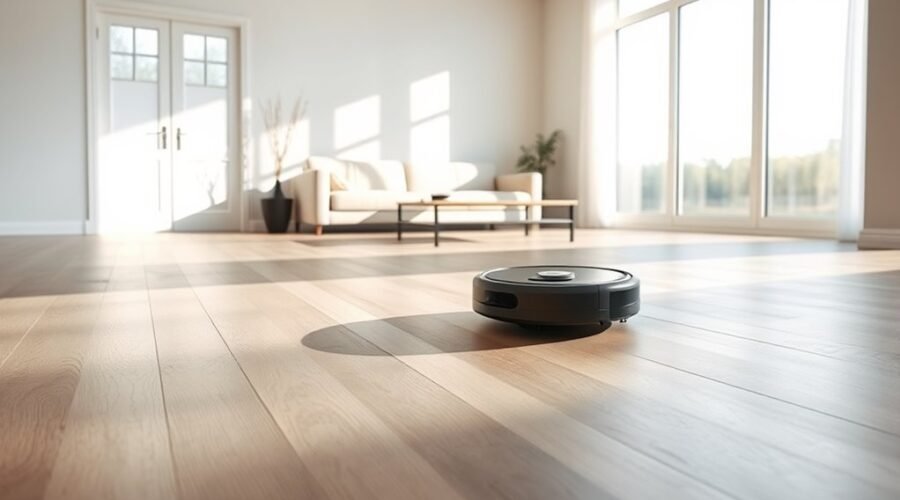
Are robot vacuums for vinyl plank floors a good choice? They can make daily cleaning much easier, especially if you deal with pet hair, dust, and tracked-in dirt. However, the wrong brush, dirty wheels, or excess mop water can damage your flooring. Knowing which features and settings are safe helps you clean effectively without putting your floor’s finish at risk.
Quick Answer
Yes, robot vacuums are generally good for luxury vinyl plank (LVP) floors. They remove dust, grit, and pet hair with little effort. Choose a model with gentle floor-contact parts, clean wheels, and suitable suction. Avoid aggressive brush heads, and use low-moisture mopping only when your flooring manufacturer allows it.
Are Robot Vacuums Safe for Vinyl Plank Floors?
)
Most robot vacuums are safe for vinyl plank flooring when their brushes and wheels suit the surface. Luxury vinyl plank has a protective wear layer, but abrasive dirt or hard objects can still leave scratches and scuff marks.
A robot vacuum can help protect that surface by regularly removing particles before they get trapped under shoes, furniture, or wheels.
However, not every vacuum head is suitable for every vinyl floor. For example, Armstrong Flooring recommends vacuuming without a beater bar because aggressive brushes can damage vinyl.
A beater bar is a rotating brush designed to loosen dirt, especially from carpet. Some flooring manufacturers restrict powered rotating brushes entirely, so even a soft brush may not be approved for your floor.
Can a Robot Vacuum Scratch Luxury Vinyl Plank?
Yes, scratching is possible, but a properly maintained robot vacuum is unlikely to damage compatible vinyl flooring during normal cleaning.
The biggest risks usually involve:
- Sand, gravel, or hard debris trapped beneath the robot.
- Damaged or dirty wheels dragging particles across the floor.
- Stiff brushes or abrasive cleaning attachments.
- Small objects being pushed rather than picked up.
- Repeated contact with loose or raised plank edges.
Check the floor before starting a cleaning cycle. Remove sharp objects and inspect the robot’s wheels for trapped debris.
If your vinyl has lifted edges, damaged joints, or loose planks, address those problems before allowing the robot to cross them.
What Features Keep LVP Scratch-Free?
The most useful protective features are gentle brushes, clean rubber-coated wheels, and reliable obstacle detection. Adjustable cleaning controls also help you match the vacuum’s performance to your flooring and the amount of dirt present.
According to robot-vacuum scratch-prevention guidance, soft brushes and rubberized wheels can help reduce damage, although trapped sand or grit remains a risk.
| Feature | Protection value |
|---|---|
| Rubber-coated wheels | Reduce hard contact and scuffing when clean |
| Soft roller brushes | Provide gentler contact than stiff brushes, where permitted |
| Low suction modes | Suit light daily cleaning but do not directly prevent scratches |
| Obstacle detection sensors | Help avoid furniture, cords, and objects that could cause marks |
Does Higher Suction Damage Vinyl Plank Floors?
Higher suction does not normally damage vinyl plank flooring by itself. Suction pulls dirt into the vacuum, while scratches usually result from physical contact with abrasive material.
For ordinary dust, a standard or quiet setting may be enough. If you have heavy pet hair, crumbs, or dirt caught in textured planks, stronger suction can improve pickup.
The goal is to remove debris without using an aggressive brush attachment. You do not need to sacrifice cleaning performance simply to keep suction low.
Why Do Navigation and Wheels Matter?
Good navigation helps the robot cover rooms without repeatedly bumping into furniture or getting trapped around obstacles.
Clean rubber-coated wheels also allow smoother movement across vinyl planks. However, rubber wheels are not completely scratch-proof if sand or another hard particle becomes lodged in them.
Look for a robot with wheels and brushes that you can easily remove or inspect for cleaning.
Can Robot Vacuums Handle Pet Hair?
Yes, robot vacuums can remove pet hair effectively from vinyl plank floors. Unlike carpet, smooth vinyl does not trap hair deep within fibers, making loose fur easier for a vacuum to collect.
Pet hair can still gather along baseboards, beneath furniture, and inside textured plank patterns. A suitable brush and enough suction help collect it before it forms larger clumps.
Specialized brushes lift pet hair efficiently, while rubber-coated wheels help protect vinyl plank surfaces.
If you have pets, look for these features:
- Strong, adjustable suction: Helps pick up loose fur, crumbs, and dirt from textured surfaces.
- Anti-tangle brush design: Reduces hair wrapping around the roller.
- HEPA filtration: Helps capture fine particles when the vacuum has a properly sealed filtration system.
- Reliable navigation: Reaches areas around furniture where pet hair collects.
- Scheduled cleaning: Removes fresh debris before it builds up.
Can Robot Vacuums Reduce Pet Allergens?
Regular vacuuming can reduce settled pet dander and household dust. However, removing visible pet hair does not guarantee an allergen-free room.
The EPA’s indoor dust guidance recommends frequent cleaning and notes that HEPA-equipped vacuums can help keep collected dust from escaping back into the air.
HEPA stands for high-efficiency particulate air. A HEPA filter can capture very fine particles, but the overall result also depends on the vacuum’s seals and airflow design.
For heavy-shedding pets, daily vacuuming may be helpful. Empty the dustbin before it becomes too full, and remove hair wrapped around the brush.
Which Mop Settings Are Safe for LVP?
Low-water or damp-pad settings are the safest starting point for robot mopping on compatible luxury vinyl plank floors. The mop should leave the surface slightly damp rather than visibly wet, and that moisture should dry quickly.
Vinyl planks resist surface moisture, but that does not mean every installation can tolerate standing water. Water can enter joints or reach the subfloor, particularly where planks are damaged or poorly fitted.
Vinyl flooring care instructions recommend nonabrasive cleaning and warn against flooding floors or leaving standing water.
Warning: Never assume a waterproof vinyl plank is safe for unlimited wet mopping. Excess moisture can reach plank joints, adhesives, or the subfloor. Avoid robot mopping on damaged or separated planks until the flooring has been assessed.
How Should You Set Up a Robot Mop for Vinyl Plank?
Use the gentlest water setting available and watch the first cleaning cycle. If the floor stays wet or develops streaks, reduce the water output or switch to manual damp mopping.
- Vacuum loose debris first. Remove grit so the mop pad does not drag abrasive particles across the finish.
- Choose low water flow. Select the least-wet mopping mode that cleans effectively.
- Use a clean, lightly damp pad. Avoid starting with a dripping mop.
- Run a small test area. Check how the surface looks and feels after drying.
- Inspect the floor afterward. Wipe away any pooled moisture near edges or seams.
For example, the Roborock S6 mopping instructions say to wring the cloth until it is damp rather than dripping and select the water-flow speed.
Can You Put Floor Cleaner in a Robot Mop?
Only use a cleaning solution approved by both your robot manufacturer and your vinyl flooring manufacturer.
A pH-neutral, nonabrasive cleaner may suit the floor, but that does not automatically mean it belongs in the robot’s water tank.
For example, iRobot’s approved cleaning solution guidance lists compatible liquids by model and warns that unauthorized solutions can damage the machine.
Avoid adding vinegar, bleach, concentrated detergent, or other household chemicals unless both manufacturers explicitly approve them. Follow the robot’s instructions for dilution and reservoir cleaning.
How Do You Choose the Best Robot Vacuum for LVP?
The best robot vacuum for vinyl plank flooring is one that cleans well without using parts that your flooring manufacturer prohibits. Brush compatibility, debris pickup, navigation, and maintenance matter more than suction claims alone.
Start by checking whether your floor allows a rotating brush. Then compare robots based on how easily they handle your home’s daily cleaning needs.
- Brush design: Choose soft or rubber brushes only if your flooring instructions permit them. Consider a brush-free hard-floor option when rotating heads are prohibited.
- Wheel material: Look for smooth, nonabrasive wheels that are easy to inspect.
- Obstacle detection: Choose reliable navigation if your rooms contain furniture, cords, or toys.
- Custom cleaning modes: Adjustable suction and room-specific schedules improve flexibility.
- Mop control: Select adjustable water flow if your flooring allows robot mopping.
- Filtration: Consider an effective, well-sealed filter system for homes with pets or dust concerns.
- Maintenance: Check whether replacement brushes, filters, and mop pads are available.
Should You Choose a Vacuum-Only Robot or a Vacuum-Mop Combo?
A vacuum-only robot is often the simpler choice if you mainly need to remove dust, grit, and pet hair. It also avoids the moisture risks associated with automatic mopping.
A vacuum-mop combination may be more useful if your flooring permits damp cleaning and you regularly deal with light footprints or paw marks.
If your home has both vinyl planks and area rugs, look for reliable carpet detection, mop lifting, or no-mop zones. Otherwise, remove rugs before a wet cleaning cycle.
Do not assume that every robot automatically recognizes carpet. Some models require you to set cleaning boundaries manually.
How Do You Use a Robot Vacuum on Vinyl Plank Without Damage?
Safe robot vacuuming starts with preparing the floor, choosing suitable settings, and maintaining the machine. You can reduce the risk of scratching by checking the parts that touch the floor and removing hazards before each cleaning cycle.
Follow These Cleaning Steps
- Inspect the floor. Pick up stones, sharp objects, and larger pieces of debris.
- Check the wheels. Remove sand, hair, and dirt from the main wheels and front caster.
- Inspect the brush. Remove tangled hair and confirm that the brush type is suitable for your floor.
- Start with a suitable cleaning mode. Use standard suction for everyday dust and increase it if debris remains.
- Watch the first run. Make sure the robot crosses plank seams and thresholds without catching.
- Check the cleaned surface. Look for scuffs, streaks, leftover dirt, or wheel marks.
- Clean the robot afterward. Empty the dustbin and maintain its brush, wheels, sensors, and filters as directed.
Pro Tip: Test your robot on a small, easy-to-see section of vinyl flooring before scheduling unattended cleaning. Inspect the area in good lighting after several passes to catch any scuffs or tracking marks early.
What if Your Robot Vacuum Leaves Marks on Vinyl?
Stop the cleaning cycle and inspect the machine before using it again. Dirty wheels, trapped grit, or a soiled mop pad may be responsible.
Clean the contact points and gently wipe the affected floor with a suitable microfiber cloth. Avoid abrasive scrubbing, which can make surface damage worse.
If the marks remain after cleaning, they may be scratches rather than removable dirt. Check the flooring manufacturer’s repair guidance before applying any treatment.
If you find new damage after each cleaning cycle, stop using that robot on the affected floor until you identify the cause.
Frequently Asked Questions
What’s the Best Way to Clean a Luxury Vinyl Plank Floor?
Sweep or vacuum loose grit first, then wipe marks with a slightly damp microfiber mop and a cleaner approved for your flooring. Avoid abrasive scrubbers, steam, and standing water. For textured planks, wipe along the grain instead of scrubbing hard.
What Is the Best Robot Cleaner for Vinyl Plank Floors?
There is no single best robot for every vinyl plank floor. The Roborock S6 is an older example with laser mapping, a rotating bristle brush, and a mop attachment. It can handle loose debris, but its brush may not meet every flooring maker’s rules. A claimed 40% reduction from daily cleaning is not verified.
What Type of Vacuum Is Best for Vinyl Plank Floors?
A hard-floor robot or cordless vacuum with gentle, compatible floor contact works best. Pick a model without an aggressive beater bar, with wheels you can clean and enough suction for dirt and hair. Cordless vacuums also help with edges, large messes, and spots the robot misses.
Is Roomba Safe for Luxury Vinyl Plank?
Roomba vacuums are generally suitable for compatible vinyl plank floors, but the exact model and floor warranty matter. Inspect the rollers and wheels, and avoid mopping unless your flooring instructions allow it. Some Roomba combo models also require you to remove rugs before using the mop.
The original Roborock S6 specifications confirm its laser navigation and mopping capabilities. Roborock’s S6 maintenance instructions also confirm that the main brush has bristles that require regular hair removal.
Conclusion
Robot vacuums are a practical way to keep vinyl plank floors free from daily dust, grit, and pet hair. The key is choosing a machine with compatible brushes, clean wheels, effective debris pickup, and careful mopping controls.
Start by checking your flooring manufacturer’s cleaning rules. Then test the robot on a small area before scheduling regular use. With the right settings and maintenance, you can reduce manual cleaning while protecting your vinyl floor’s appearance.
Sources
- Armstrong Flooring: Vinyl floor cleaning methods and warnings about beater bars.
- ECOVACS: Robot vacuum scratch prevention, wheel materials, and debris risks.
- US Environmental Protection Agency: Indoor dust reduction and HEPA vacuum guidance.
- Mohawk Flooring: Vinyl maintenance, approved cleaning practices, and excess-water precautions.
- Roborock S6 Mopping Tutorial: Mop preparation, damp-pad use, and water-flow selection.
- iRobot Approved Cleaning Solutions: Cleaning liquid compatibility and robot maintenance precautions.
- Roborock S6 Product Announcement: Original model specifications, mapping, and mopping capabilities.
- Roborock S6 General Maintenance: Brush, wheel, sensor, and filter maintenance instructions.