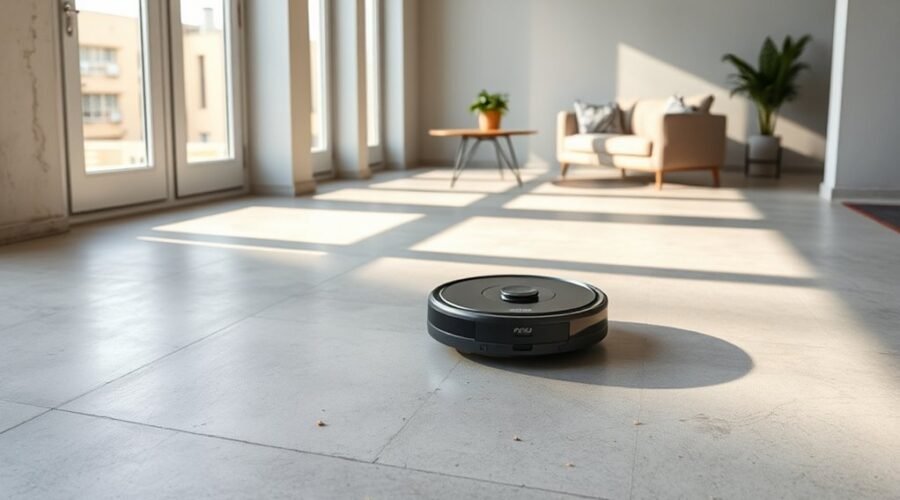
Robot vacuums on concrete floors can make daily cleaning easier, but not every concrete surface is suitable. Smooth indoor concrete is easier to clean than rough garage slabs covered in grit, dust, and debris. If you want to use a robot vacuum in your garage, you need to understand its cleaning limits, essential features, and maintenance needs before choosing a model.
Quick Answer
Yes, robot vacuums can clean concrete floors, especially smooth, sealed, or polished surfaces. They handle everyday dust, light grit, and loose dirt. However, rough garage concrete, large gravel, sharp debris, oil spills, and construction dust can cause problems. Choose strong airflow, suitable brushes, reliable navigation, and adequate dust capacity for routine cleaning.
Can Robot Vacuums Handle Garage Concrete?
)
Yes, a robot vacuum can clean a concrete garage floor if the surface is reasonably smooth, dry, and free of dangerous debris. It works best as a maintenance cleaner rather than a replacement for heavy-duty garage cleaning equipment.
The type of concrete makes a major difference:
- Sealed concrete: Usually suitable for routine vacuuming because loose dirt stays closer to the surface.
- Polished concrete: Works well with gentle brushes and wheels kept free of abrasive grit.
- Unsealed concrete: Can be cleaned, but its rough texture and porous surface make fine dust harder to collect.
- Cracked or uneven concrete: May trap wheels, interrupt navigation, and leave debris inside deep grooves.
A garage also presents obstacles that indoor rooms rarely have. These include parked vehicles, toolboxes, loose cables, floor drains, and raised doorway thresholds.
According to Dreame’s garage robot vacuum guidance, these machines are most useful for maintaining relatively clear floors. They are not designed to replace workshop cleaning equipment.
For dependable results, check whether the manufacturer allows operation and charging under your garage’s temperature and moisture conditions. A sheltered, dry environment is especially important for the charging dock.
What Features Matter on Concrete Floors?
The best robot vacuum features for concrete floors are effective suction, a suitable brush system, reliable navigation, and enough dust capacity. These features determine how well the machine collects dirt and handles changing floor conditions.
Strong Suction and Airflow
Suction helps lift fine dust and grit from concrete, while airflow carries that debris into the dustbin.
Many high-performance robot vacuums advertise suction ratings above 10,000 pascals (Pa). However, 10,000 Pa is not a required minimum for concrete cleaning.
As explained in ECOVACS’ suction power guide, suction pressure alone does not determine actual cleaning performance. Airflow, brush design, and the amount of debris collected also matter.
Prioritize proven hard-floor pickup performance over the highest advertised suction number.
Durable Brushes and Wheels
A versatile brush system helps loosen dirt without damaging the floor or wearing out too quickly.
- Rubberized rollers: Help collect loose dirt and hair while maintaining contact with hard floors.
- Soft bristle brushes: Suit polished or decorative concrete where surface protection matters.
- Side brushes: Move dust from wall edges and corners toward the main suction opening.
- Durable wheels: Help maintain traction over minor surface texture and joints.
Rough concrete and abrasive particles can wear brushes and wheel surfaces faster than ordinary indoor flooring.
Smart Navigation and Obstacle Detection
Smart navigation helps the robot cover open concrete areas without repeatedly missing sections or getting stuck.
Laser-based mapping, often called LiDAR, can support systematic cleaning. Obstacle detection helps the robot recognize larger objects around vehicles and storage areas.
However, sensors cannot reliably identify every small screw, cable, or sharp fragment. You still need to clear dangerous objects before cleaning.
Large Dustbin and Self-Emptying Features
Concrete floors, especially garages, can accumulate more loose dirt than ordinary living spaces.
A larger onboard dustbin reduces interruptions. A self-emptying charging station transfers collected dirt into a larger container or bag.
This improves convenience, but it does not eliminate filter cleaning, brush maintenance, or regular checks for abrasive debris.
How Robot Vacuums Handle Garage Debris
Robot vacuums handle light garage debris better than heavy workshop waste. The size, weight, and type of material matter as much as the machine’s suction strength.
Here is what you can realistically expect.
Fine Dust and Everyday Dirt
Routine dust, tracked-in dirt, and small loose particles are the easiest garage debris for a robot vacuum to collect.
On smooth concrete, brushes direct these particles into the suction opening. On rough concrete, some dust may remain trapped in pores and shallow grooves.
Regular scheduled cleaning can help prevent this loose dirt from building up.
Sand, Grit, and Small Gravel
Many robot vacuums can collect small amounts of sand and light grit, but coarse gravel presents a bigger challenge.
Heavy particles may be pushed aside by spinning brushes. Larger pieces can also block the suction opening or become trapped around the wheels.
Remove noticeable gravel before running the robot, particularly on rough garage floors.
Wood Shavings, Screws, and Workshop Scraps
Robot vacuums are poor choices for heavy sawdust buildup, long wood shavings, metal filings, screws, nails, and similar workshop debris.
These materials can clog filters, jam brushes, or damage internal parts. A suitable workshop vacuum is a better choice for this type of cleanup.
Fine dust produced by cutting or grinding concrete needs additional care because it may contain respirable crystalline silica.
For construction workplaces, OSHA’s silica housekeeping standard prioritizes methods such as HEPA-filtered vacuuming and wet cleaning to control dust exposure. A standard household robot vacuum is not a replacement for properly rated dust-control equipment.
Warning: Never use a standard robot vacuum to collect gasoline, oil, solvents, standing water, hot ash, or sharp metal fragments. Keep the robot away from contaminated areas and clean hazardous spills using appropriate equipment and safety procedures.
Light Residue and Stains
A robot vacuum with mopping functionality can remove light surface residue from suitable sealed concrete.
However, mopping robots cannot reliably remove oil stains, heavy grease, or dirt embedded deep inside unfinished concrete.
For polished or decorative floors, Concrete Network’s floor care guidance recommends gentle cleaning with a pH-neutral cleaner and avoiding harsh chemicals that can damage finishes.
Use only cleaning liquids approved for your robot and floor finish. Keep water flow low where appropriate, and avoid wet mopping bare concrete unless the manufacturer permits it.
How to Use a Robot Vacuum on a Concrete Garage Floor
To clean garage concrete successfully, prepare the surface before starting an automatic cleaning cycle. A short inspection helps prevent blockages, damage, and incomplete coverage.
Follow these steps for routine garage floor maintenance.
- Check the floor and robot compatibility. Confirm that the concrete is dry and reasonably level. Review the machine’s instructions for approved surfaces, operating temperatures, and charging conditions.
- Remove dangerous debris. Pick up screws, nails, large stones, wood scraps, cables, and anything that could jam the machine. Keep it away from oil spots and wet patches.
- Position the charging station. Place the dock on a stable, dry surface away from vehicle tires, garage doors, drains, and workshop activity. Follow the manufacturer’s clearance requirements.
- Map the cleaning area. Allow the robot to identify the available floor space. Use no-go zones around workbenches, floor drains, electrical cords, and areas containing loose hardware.
- Start a supervised cleaning cycle. Watch the first run to identify traction problems, missed areas, and obstacles. If the machine handles the floor well, establish a regular cleaning schedule.
- Inspect and maintain the robot. Empty the dustbin as needed, clean the filter according to its instructions, and remove grit from the brushes, wheels, and sensors.
Pro Tip: After the first cleaning cycle, inspect the robot’s wheels and brush housing for embedded grit. Then check the cleaned floor with a white cloth. If the cloth collects substantial dust, the surface may need additional passes or a more suitable vacuum.
If the robot repeatedly gets stuck, leaves heavy debris behind, or fills its bin unusually quickly, consider switching to a conventional vacuum or workshop cleaning system.
Which Robot Vacuums Are Best for Garages?
The best robot vacuum for a garage depends on the floor finish, the amount of debris, and the machine’s operating limits. Models with good hard-floor pickup, dependable navigation, and self-emptying features are worth comparing.
These existing robot vacuum models illustrate useful features. Their specifications do not establish that they are approved for demanding workshop conditions.
| Model or Type | Key Strength | Note |
|---|---|---|
| Narwal Flow | 22,000 Pa advertised suction | Advanced cleaning and obstacle detection; garage suitability requires separate confirmation |
| DEEBOT X5 PRO OMNI | 12,800 Pa suction | Smart navigation, anti-tangle brushes, and automatic maintenance features |
| Narwal Freo Z Ultra | 12,000 Pa suction | AI-assisted obstacle avoidance and a self-emptying station |
| iRobot Roomba s9+ | Strong hard-floor pickup and rubber brushes | Self-emptying Clean Base; no built-in mopping |
| Robot vacuums with mop functionality | Light residue removal | Use only on compatible floors with approved water settings |
| High-capacity models | Less frequent dustbin emptying | Useful for regular dirt accumulation, but not heavy workshop waste |
| Durable units | Replaceable brushes and sturdy wheels | Abrasive grit still increases maintenance requirements |
Comparing the Named Models
Narwal Flow: The manufacturer’s Flow specifications confirm up to 22,000 Pa suction, a tangle-resistant brush system, and advanced obstacle detection. These features suit demanding household cleaning, but the suction rating does not establish workshop compatibility.
DEEBOT X5 PRO OMNI: The official ECOVACS specifications list 12,800 Pa suction, smart navigation, and an automatic cleaning station. It is a potential option for suitable smooth concrete surfaces.
Narwal Freo Z Ultra: The Narwal model comparison confirms 12,000 Pa suction and AI-assisted obstacle avoidance. These features can be helpful around larger garage obstacles, although small hardware still needs manual removal.
iRobot Roomba s9+: The official iRobot product page confirms dual rubber brushes, smart mapping, and Clean Base automatic dirt disposal. The official US listing currently marks the model as unavailable.
Which Type Should You Choose?
For smooth, sealed garage concrete with light daily dust, prioritize a vacuum with reliable navigation, effective hard-floor pickup, and easy maintenance.
For a larger garage, self-emptying functionality and adequate battery coverage can reduce interruptions. For polished indoor concrete, use suitable soft brushes and avoid dragging abrasive particles across the finish.
If your garage regularly contains metal scraps, large gravel, sawdust piles, or liquid spills, a conventional workshop vacuum is a more appropriate primary cleaning tool.
Remember that manufacturer suction ratings are not direct proof of cleaning results on garage concrete. Actual pickup performance, surface compatibility, and durability matter more than any single specification.
Frequently Asked Questions
What Is the Best Way to Clean Concrete Floors in My House?
The best way to clean indoor concrete floors is to remove loose dust regularly and damp mop when needed. Use a pH-neutral cleaning solution suitable for the floor finish. Avoid abrasive tools and harsh chemicals on polished concrete. Proper sealing can also make routine cleaning easier.
What Are the Downsides of Using a Robotic Vacuum Cleaner?
Robot vacuums have limited capacity for heavy debris and cannot clean every corner or uneven surface. They may become stuck, miss obstacles, or struggle with large spills. Battery limitations, noise, filter cleaning, replacement parts, and maintenance costs are other drawbacks. They work best for regular light cleaning.
What Is the Best Robot Vacuum Cleaner for Cleaning Cement Floors?
The best robot vacuum for cement floors is one that combines effective hard-floor pickup, suitable brushes, reliable navigation, and adequate dust capacity. Narwal Flow, DEEBOT X5 PRO OMNI, and Narwal Freo Z Ultra offer useful features to compare. However, no single model is automatically best for every concrete surface or garage environment.
Can a Roomba Clean Concrete Floors?
Yes, a Roomba can clean suitable smooth, dry concrete floors when the model’s instructions permit that surface. Its brushes and suction can collect everyday dust and loose dirt. Rough concrete, deep cracks, sharp debris, and heavy workshop waste may cause problems. Check the specific Roomba’s surface and environmental restrictions before using it in a garage.
Conclusion
Robot vacuums can clean concrete floors effectively when the surface and debris match the machine’s capabilities. Strong airflow, suitable brushes, smart navigation, and adequate dust capacity make routine cleaning easier.
For garages, the safest approach is to clear dangerous debris, confirm the manufacturer’s operating limits, and use the robot for regular light cleaning. Keep a suitable workshop vacuum available for heavy dirt, construction dust, and demanding cleanup tasks.
Sources
- Dreame: Garage Robot Vacuum Guide: Garage floor compatibility, debris limitations, navigation, and operating conditions.
- ECOVACS: Robot Vacuum Suction Power: Suction pressure, airflow, and cleaning performance.
- OSHA: Respirable Crystalline Silica Standard: Construction dust hazards and workplace housekeeping methods.
- Concrete Network: Cleaning Concrete Floors: Cleaning solutions and concrete floor maintenance.
- Narwal: Flow Specifications: Advertised suction and cleaning features.
- ECOVACS: DEEBOT X5 PRO OMNI: Manufacturer suction specification and features.
- Narwal: Robot Vacuum Comparison: Freo Z Ultra suction and navigation features.
- iRobot: Roomba s9+: Brush system, self-emptying station, navigation, and product availability.