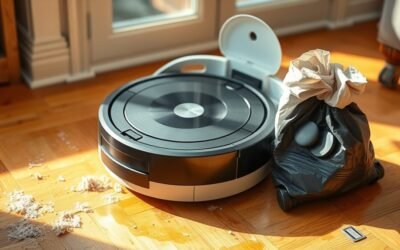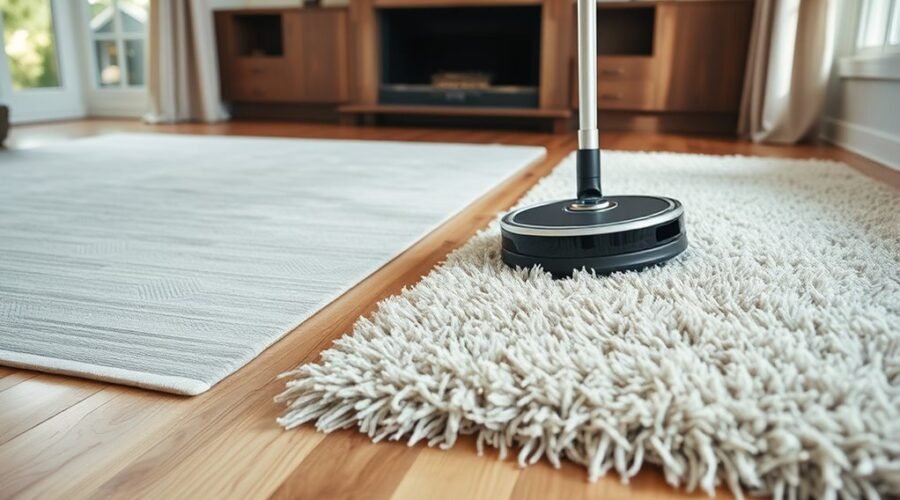
Robot vacuums can go over most area rugs, but not every rug is easy to clean. Pile height, raised edges, loose fringe, and dark colors can affect how well the robot moves and picks up dirt. Before running your vacuum, check the rug’s thickness and how securely it sits on the floor.
Quick Answer
Yes, most robot vacuums can cross and clean flat-weave, low-pile, and many medium-pile area rugs. High-pile and shag rugs may trap the wheels or brush. Loose fringe, curled corners, and dark patterns can also cause problems. Check your robot’s carpet compatibility, secure the rug, and supervise its first cleaning run.
Key Takeaways
- Measure both the rug’s pile and its raised edge. A robot may handle the fibers but fail to climb onto the rug.
- A higher suction rating does not guarantee better cleaning. Airflow, brush design, and wheel traction also matter.
- Thin, lightweight rugs can bunch up under a robot. A suitable low-profile rug pad may help keep them flat.
- Some vacuum-mop combinations cannot cross rugs with a wet mop attached. Check the carpet settings before mopping.
Can Robot Vacuums Go Over Area Rugs?
)
Yes. A robot vacuum can usually move from a hard floor onto an area rug when its wheels can climb the edge and its brush can move freely through the fibers.
However, crossing a rug and cleaning it effectively are different things. Some robots drive over thick rugs without collecting much embedded dirt. Others clean the fibers well but struggle to enter or leave the rug.
Three factors determine whether a rug is suitable:
- Rug construction: Flat-weave and low-pile surfaces create less resistance than shag or deep-pile rugs.
- Robot design: Wheel clearance, brush type, traction, and carpet detection affect movement and cleaning.
- Rug placement: Flat edges, secure backing, and unobstructed paths reduce the chance of getting stuck.
For mixed flooring, a robot with carpet detection and adjustable suction is often a practical choice. Virtual no-go zones also help you protect rugs that the machine cannot handle safely.
Still, deep cleaning is different from daily upkeep. A robot can remove surface dust, crumbs, and pet hair, but a full-size vacuum may be needed for dirt trapped deep in the rug.
Why Pile Height Matters
Pile height is the length of the rug fibers above the backing. It affects wheel traction, brush contact, and how deeply dirt can settle.
Low-pile rugs are usually easier to clean because the wheels remain stable. Thick or shaggy fibers create more resistance and may wrap around moving parts.
There is no single pile-height limit for every robot vacuum. The manufacturer’s carpet compatibility specifications are more useful than general labels such as low, medium, or high pile.
Low Pile Handling
Low-pile rugs, often described as having fibers under 1/2 inch tall, are among the easiest rugs for robot vacuums to handle. Their relatively firm surface allows the wheels to move with less resistance.
Most compatible robots can collect everyday dust, crumbs, and pet hair from these rugs. Models with carpet detection may increase suction automatically when moving off a hard floor.
However, even low-pile compatibility varies by model. For example, eufy’s official carpet compatibility guide lists a maximum total carpet thickness of 10 mm for its G20 series and 26 mm for several G30, G40, and G50 series models.
These are manufacturer-specific limits, not universal standards. They also describe total thickness, which is different from measuring pile height alone.
For routine care, a flat, securely positioned low-pile rug normally requires fewer adjustments than a thick decorative rug.
High Pile Challenges
High-pile rugs have longer fibers that can restrict wheel movement and interfere with the brush roll. Shag rugs are particularly challenging because their loose strands may enter the cleaning mechanism.
A robot may struggle with traction, become stuck, leave uneven cleaning paths, or report a brush error. Increasing suction can improve debris pickup, but it cannot fix insufficient wheel clearance or tangled fibers.
| Factor | Impact |
|---|---|
| Pile height | Long fibers increase drag and can restrict wheel movement. |
| Suction power | More suction may improve dirt pickup but cannot solve climbing problems. |
| Navigation systems | Mapping and obstacle detection help the robot plan a route around difficult areas. |
| Regular maintenance | Clean brushes, sensors, and wheels reduce avoidable errors. |
The best way to judge a thick rug is to compare its thickness with your robot’s published limits. Then watch a short cleaning run to see whether the machine moves freely and collects debris.
If the brush repeatedly stalls or the wheels spin without moving, stop the test. Use a no-go zone rather than forcing repeated crossings.
How Robot Vacuums Detect Rug Edges
Robot vacuums use several sensors and mechanical responses to move between hard floors and rugs. However, not every robot has a dedicated sensor that identifies rug edges.
Infrared cliff sensors primarily detect dangerous drop-offs, such as stairs. They are not the main system used to identify ordinary rug boundaries.
Depending on the model, a robot may use:
- Carpet sensors: Detect changes in flooring and activate carpet-specific cleaning modes.
- Brush resistance: Some models recognize carpet when the rotating brush meets greater resistance.
- Wheel and movement sensors: Help track travel and detect movement problems.
- Mapping systems: Use laser, camera, or other sensor information to plan cleaning routes.
- Bumper sensors: Respond when the robot meets an obstacle it cannot pass.
When a robot reaches a raised rug edge, its wheels must physically climb the transition. If the edge is too high, too soft, or curled upward, the robot may turn away even when its navigation system is working correctly.
Low, firm edges are generally easier to cross than thick, uneven borders. This is why two rugs with similar pile heights can produce different results.
Why Dark Rugs and Fringe Cause Problems
Dark rugs and decorative fringe cause different problems for robot vacuums. Dark surfaces can interfere with some drop sensors, while fringe may become tangled in the rotating brushes.
On certain robots, black or very dark rug patterns absorb enough infrared light to produce a false drop-off reading. The machine may stop, reverse, or avoid the rug completely.
This behavior is documented in iRobot’s cliff-sensor troubleshooting guidance for several Roomba series.
Fringe presents a mechanical problem. Loose tassels can wrap around the side brush or main roller, leading to stalled cleaning and possible rug damage.
- Dark rugs: The robot may mistake the surface for a drop-off.
- Loose fringe: Tassels may wrap around rotating parts.
- Curled edges: The bumper or brush housing may catch the raised fabric.
- Thick borders: Heavy backing can prevent the wheels from climbing onto the rug.
If a dark rug causes problems, clean the cliff sensors with a dry, soft cloth and test the area again. If the robot still refuses to cross, exclude that rug from its cleaning map.
Warning: Do not cover or disable cliff sensors to force a robot vacuum onto a dark rug. These sensors help prevent dangerous falls near stairs and raised floor edges.
For fringe, fold the tassels underneath when doing so will not damage the rug. Otherwise, keep the robot away from the decorative edge with a virtual barrier or no-go zone.
Area Rugs Robot Vacuums Handle Best
Flat-weave and low-pile area rugs are usually the most compatible with robot vacuums. Their short fibers, firm construction, and relatively flat edges help the robot maintain steady movement.
The best rug is not always the thinnest one. A lightweight rug that slides or folds can cause more trouble than a slightly thicker rug that stays securely in place.
Here is how common area rug styles generally perform:
- Flat-weave rugs: Usually easy to cross when the edges remain flat and the backing stays in place.
- Low-pile rugs: Suitable for many robot vacuums and effective for everyday surface cleaning.
- Medium-pile rugs: Often manageable with adequate clearance, carpet boost, and a suitable brush.
- High-pile rugs: Require greater traction and compatible brush clearance. Results vary considerably.
- Shag rugs: More likely to trap wheels or wrap around brushes. Many are better cleaned separately.
- Fringed decorative rugs: May be manageable in the center but require protection around their edges.
What About Wool, Jute, Silk, and Delicate Rugs?
Rug material matters as much as pile height. A robot that moves easily over a rug may still be too aggressive for delicate fibers or decorative stitching.
Many tightly woven synthetic and cotton rugs are suitable for routine vacuuming. Wool, jute, sisal, silk, and antique rugs require closer attention to their construction and care instructions.
For example, a loosely woven jute rug may snag on a rotating brush. A delicate silk rug may not tolerate the same cleaning action as a durable synthetic rug.
The Carpet and Rug Institute’s cleaning guidance recommends gentle treatment around fringe and following the manufacturer’s instructions for specialty rugs.
For valuable, antique, or fragile rugs, use an approved gentle cleaning method instead of assuming a robot vacuum is safe.
Area Rugs That Need More Suction
Medium-pile and dense area rugs generally benefit from stronger suction because dirt settles deeper between their fibers. However, suction pressure alone does not tell you how effectively a robot will clean.
Manufacturers often advertise suction in pascals (Pa). This measurement describes pressure, not the complete cleaning performance of the vacuum.
According to ECOVACS’ suction-power guidance, airflow, brush design, and dust pickup also affect cleaning results. A larger advertised Pa number does not automatically mean a cleaner rug.
Choose suction settings according to the rug and the debris:
- High-pile rugs: Use a compatible robot with suitable wheel clearance, airflow, and brush design. Strong suction cannot overcome physical obstruction.
- Medium-pile rugs: Enable carpet boost if supported and increase suction when dirt remains after a normal pass.
- Fringed rugs: Protect the fringe before increasing suction. Strong suction may pull loose fabric into the brush housing.
- Regular maintenance: Empty the dustbin, clean the filter, and remove hair from the brush to maintain consistent airflow.
If a rug is very lightweight, high suction can actually make cleaning harder by lifting or bunching the material.
Start with a moderate setting on an unfamiliar rug and increase suction only when the rug stays flat and the robot moves freely.
Setup Tips for Rugs, Pads, and Thresholds
A robot vacuum can struggle with an otherwise compatible area rug when its edges are raised or the backing slides across the floor. A secure, flat setup helps prevent these problems.
Start by checking the rug’s corners and backing. Use a low-profile, floor-compatible rug pad when necessary to prevent slipping.
Then measure the raised rug edge and any doorway thresholds along the robot’s route. Compare these measurements with the obstacle-crossing specifications for your exact model.
For example, eufy’s Omni C30 Edge support guidance lists an approximate maximum obstacle-crossing height of 2 cm, depending on floor material. It also warns that soft edges, excessive thickness, and fringe can prevent successful crossings.
That figure applies to the named model. Other robots may have lower or higher limits.
To prepare your rugs:
- Flatten the edges: Make sure corners and borders do not curl upward.
- Secure loose rugs: Use a suitable non-slip pad or removable rug tape that will not damage the flooring or backing.
- Protect decorative fringe: Fold it under when safe or exclude the fringed section from the cleaning area.
- Check thresholds: Make sure the robot can enter and leave the room without getting trapped.
- Review the cleaning map: Add no-go zones around rugs the machine cannot handle.
Some high-clearance robots can handle challenging transitions, but they still need enough traction to climb the rug.
Pro Tip: Measure the rug twice: once across the fibers to assess pile height and once at the thickest bound edge. The raised border may be harder for the robot to cross than the rug’s main surface.
If a robot repeatedly catches on the same edge, reposition the rug or exclude that section. Avoid permanently altering a valuable rug just to accommodate a cleaning machine.
Best Robot Vacuum Features for Area Rugs
The most useful robot vacuum features for area rugs are carpet detection, adjustable suction, effective brush design, and reliable navigation. These help the machine clean changing surfaces with fewer interruptions.
For homes with several rug types, prioritize compatibility over a single advertised specification.
Carpet Detection
Carpet detection allows a compatible robot vacuum to recognize a rug and adjust its cleaning behavior. Depending on the model, it may increase suction, change its cleaning route, or avoid the rug during mopping.
Carpet boost can improve pickup by increasing suction automatically when the machine detects carpet. This saves you from manually changing the power setting every time it moves between surfaces.
However, carpet detection is not perfect. Short, smooth rugs may not always trigger automatic boost, while some thick rugs may exceed the robot’s physical climbing ability.
Look for these capabilities:
- Automatic carpet boost: Increases suction when carpet is detected.
- Adjustable suction: Lets you reduce power for lightweight rugs or increase it for denser surfaces.
- Accurate floor mapping: Helps the robot follow consistent routes and avoid problem areas.
- Carpet avoidance options: Allow the robot to skip delicate or incompatible rugs.
These features are especially useful in rooms where area rugs sit between hardwood, tile, or vinyl flooring.
Anti-Tangle Brushes
Anti-tangle brushes help prevent hair and fibers from wrapping tightly around the roller. They are particularly useful in homes with pets, long hair, and textured area rugs.
Some robots use rubber rollers, shaped brush elements, or mechanisms that direct hair away from the brush. These designs can reduce cleaning interruptions and make maintenance easier.
However, anti-tangle does not mean fringe-proof. Long tassels can still become caught in a side brush, wheel, or roller housing.
For shag and other delicate rugs, brush design matters more than simply choosing the most aggressive cleaning system.
Some advanced machines also adjust brush position or lift cleaning components when they detect certain surfaces. This may reduce dragging, but compatibility still depends on the rug and model.
Inspect the brushes regularly for string, hair, and loose fibers. Damaged or obstructed rollers can reduce cleaning efficiency and increase wear.
Can Robot Vacuum Mops Cross Area Rugs Without Wetting Them?
Some robot vacuum-mop combinations can cross area rugs without wetting them, but others cannot. The answer depends on how the machine handles carpets while its mopping system is active.
There are several approaches:
- Mop lifting: The robot raises its mop pad when it detects carpet. The lift must be high enough to clear the rug fibers.
- Carpet avoidance: The robot goes around rugs during wet cleaning.
- Crossing without cleaning: Supported models travel across selected rugs without vacuuming or mopping them.
- Removable mop pads: Some models require the wet mopping attachment to be removed before vacuuming rugs.
For example, Roborock’s carpet mode guidance describes Rise, Avoid, Ignore, and Cross options on supported models.
In Rise mode, the robot raises its mop and stops water flow for carpet vacuuming. In Cross mode, it can cross a carpet without cleaning it.
Not all machines offer these options. The iRobot Roomba 100/1000 Combo guidance explains that those robots can detect and avoid rugs during mopping but cannot lift their pads to cross them.
Note: Before using a vacuum-mop combination on mixed floors, confirm that its carpet settings can protect your specific rug thickness. Automatic mop lifting does not guarantee that thick or high-pile rugs will remain dry.
If you are uncertain, use a vacuum-only cleaning session for the rugs and a separate mopping session for hard floors.
First-Run Checklist for Area Rugs
Before using a robot vacuum on an unfamiliar area rug, make sure the rug is stable and the machine can move across it safely. The first cleaning run should be supervised so you can identify problems before scheduling automatic cleaning.
Follow these steps:
- Check the rug thickness. Measure the pile and raised edges. Compare them with the robot’s carpet and obstacle-crossing limits.
- Secure loose corners. Flatten curled edges and prevent lightweight rugs from sliding across the floor.
- Inspect fringe and tassels. Tuck loose ends underneath when appropriate or mark them as no-go areas.
- Review vacuum settings. Enable carpet detection or auto-boost if the robot supports these features.
- Check mopping controls. Make sure the robot will not drag a wet mop across the rug.
- Watch the first pass. Look for spinning wheels, folded edges, unusual brush noises, or unexpected avoidance.
- Inspect the results. Check whether the vacuum collected surface debris and whether the rug or its fibers were disturbed.
If the robot works smoothly, you can include the rug in routine cleaning. If it hesitates or becomes stuck, try correcting the physical setup before changing the suction setting.
For recurring problems, use this quick diagnosis:
- Robot turns away from a dark rug: Clean its cliff sensors and review the exclusion settings.
- Robot pushes a thin rug: Secure the rug or reduce suction if supported.
- Robot stops at a raised edge: Flatten the edge and check the machine’s crossing limit.
- Brush stalls on fringe: Remove any tangled material after switching off the robot, then protect that edge from future contact.
- Robot crosses but leaves dirt: Adjust carpet cleaning settings or make another pass if the rug and machine are compatible.
When the same problem continues after these checks, the rug may simply be unsuitable for automated cleaning. A handheld or full-size vacuum can be the safer option.
Frequently Asked Questions
Can Robot Vacuums Go Over Thick Rugs?
Yes, some robot vacuums can cross thick rugs, but compatibility depends on wheel clearance, pile height, and rug construction. High-pile and shag rugs can cause traction problems or brush jams. Check your model’s carpet thickness limits before allowing automatic cleaning.
What Are the Downsides of Using a Robotic Vacuum Cleaner?
Robot vacuums may miss deeply embedded dirt, struggle with thick rugs, and become stuck on fringe or loose objects. They also need regular brush, filter, and sensor maintenance. Higher suction settings can increase noise and battery use, while advanced models may cost more.
Can Roomba Go Over Area Rugs?
Yes, many Roomba models can cross and vacuum low-pile and compatible medium-pile area rugs. Performance depends on the specific model, rug thickness, and edge design. Roomba Combo models also differ in how they handle rugs when their mopping system is active.
Why Won’t My Roomba Go Over My Rug?
Your Roomba may avoid the rug because of a raised edge, thick pile, dark surface, or cleaning restriction. Dirty cliff sensors can also cause errors. Clean the sensors, flatten the rug edges, and review the model’s carpet compatibility and cleaning settings.
Can a Robot Vacuum Damage an Area Rug?
Yes, a robot vacuum can damage a rug if its brushes catch fringe, loose loops, or delicate fibers. Thin rugs may also bunch up under the machine. Check the rug’s care instructions and use a no-go zone for materials that need gentle cleaning.
Can Robot Vacuums Go Over Rugs While Mopping?
Some robot vacuum-mop models can cross rugs while keeping their mops raised or inactive. Others avoid carpets entirely or require the mopping attachment to be removed. Check the machine’s mop-lift clearance and carpet settings before using it around area rugs.
Conclusion
Robot vacuums can clean many area rugs, especially flat-weave and low-pile styles. Thick fibers, fringe, dark patterns, and loose edges are the main problems to watch for.
Measure your rug, check your robot’s compatibility limits, and supervise the first run. If the machine crosses and cleans the rug without catching or disturbing it, you can add that area to your regular cleaning schedule.
Sources
- eufy Support: G Series Carpet Compatibility: Model-specific carpet thickness limits, dark-rug restrictions, and fringe precautions.
- iRobot Support: Roomba Error 6: Cliff-sensor behavior, dark surfaces, and drop-off troubleshooting.
- eufy Support: E20 Thin Carpet Troubleshooting: Lightweight rug movement, brush jams, no-go zones, and suction adjustments.
- Carpet and Rug Institute: Cleaning and Maintenance: Area rug cleaning, fringe care, and guidance for specialty rugs.
- ECOVACS: Robot Vacuum Suction Power: Suction pressure, airflow, brush design, and carpet cleaning performance.
- eufy Support: Omni C30 Edge Rug Troubleshooting: Obstacle-crossing height, thick rug edges, fringe entanglement, and carpet boost.
- Roborock Support: Carpet Avoidance Modes: Rise, Avoid, Ignore, and Cross carpet-handling options.
- iRobot Support: Roomba 100/1000 Combo Mopping: Carpet avoidance and mop-lifting limitations during wet cleaning.