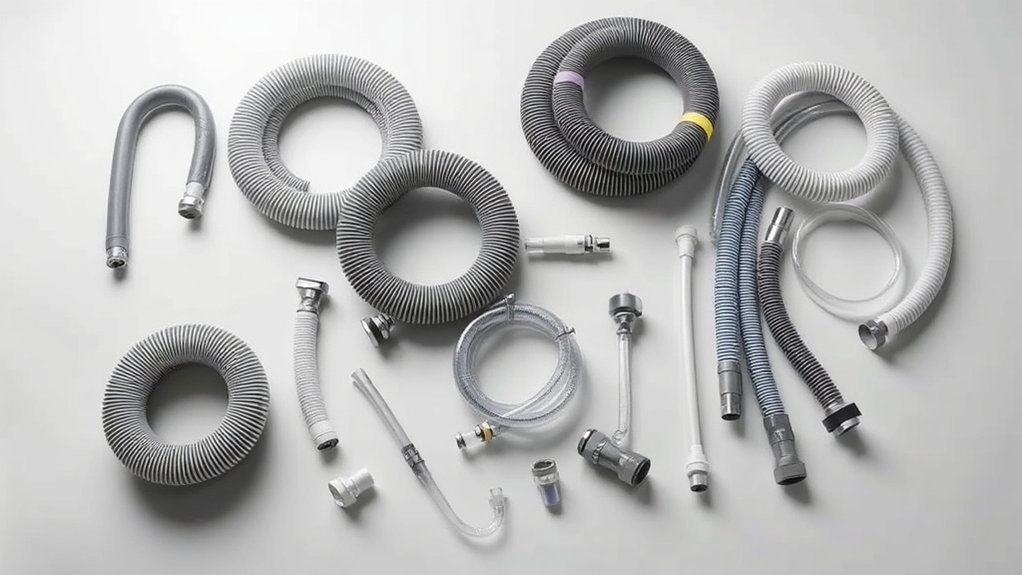
The best hose for continuous dehumidifier drainage is usually a short, flexible hose with a compatible female fitting that can run continuously downhill to a floor drain, utility sink, or condensate pump reservoir. Many full-size dehumidifiers accept a 3/4-inch garden-hose-thread connection, but smaller and specialty models may require push-on tubing or a proprietary adapter. This guide compares purpose-made dehumidifier drain hoses and compact garden-hose alternatives by length, material, flexibility, connection type, and ease of routing.
Quick Verdict
The LDR Industries 5-Foot Drain Hose is the best overall choice for a simple nearby gravity drain. Choose the Boombamo 5-Foot Drain Hose when you want a compact PVC line, or the TT FLEX 5-Foot Hose when you prefer a more substantial rubber option. The Ebusin Drain Hose is useful when you need to select from several lengths. Flexzilla and Cesun hoses are bulkier garden-hose alternatives for specialized routes.
Compatibility note: These products require a compatible drain outlet. Confirm the thread type, hose diameter, adapter requirements, and drainage method in your dehumidifier manual. For gravity drainage, place the unit above the drain and route the hose with no upward loops, deep sags, crushed sections, or kinks.
How These Hoses Were Compared
The products were organized by connection type, usable length, hose material, flexibility, routing difficulty, and the specific problem each option solves. Purpose-made drain hoses rank ahead of general garden hoses because they are usually slimmer and easier to manage indoors.
Quick Comparison
| Product | Best Use | Length | Connection | Amazon |
|---|---|---|---|---|
| LDR Industries Drain Hose | Simple nearby gravity drain | 5 ft | 3/4-inch female hose thread | Check Price |
| 5FT Drain Hose with Durable Connector | Compact PVC setup | 5 ft | 3/4-inch FHT | Check Price |
| TT FLEX Dehumidifier Drain Hose | Heavy-duty short connection | 5 ft | 3/4-inch FHT | Check Price |
| Ebusin Drain Hose with Brass Fitting | Choosing a closer-fit length | 6 ft selected; other options | 3/4-inch FHT | Check Details |
| Flexzilla Lead-In Hose, 5 ft | Flexible routing in tight spaces | 5 ft | 3/4-inch GHT fittings | Check Price |
| Flexzilla Lead-In Hose, 10 ft | Flexible medium-length route | 10 ft | 3/4-inch GHT fittings | Check Price |
| Cesun 10 FT Metal Garden Hose | Exposed or abrasion-prone route | 10 ft | Male-to-female garden-hose fittings | Check Availability |
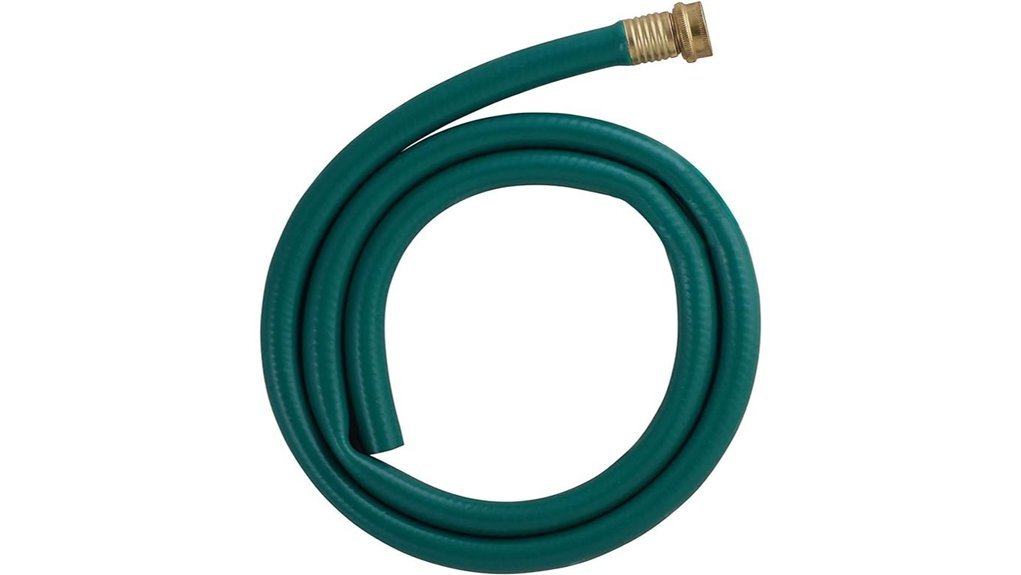
LDR Industries Garden Dehumidifier Drain Hose, 5ft
Best Overall
The LDR Industries hose is a straightforward 5-foot rubber drain line made for short utility and dehumidifier-drain applications. Its female garden-hose-thread coupling can connect to a compatible threaded dehumidifier outlet, while the compact rubber body is easier to route and inspect than a long yard hose.
Why You’ll Like It: It focuses on the basic job most buyers need: moving condensate a short distance to a nearby drain without leaving a large coil of unused hose on the floor.
Best For: Dehumidifiers positioned close to a floor drain, utility sink, or condensate pump reservoir.
Avoid If: Your unit uses a push-on tube, proprietary adapter, or drain located more than five feet away.
Pros:
- Purpose-oriented length for nearby dehumidifier drains
- Flexible rubber construction is easy to route
- Compact size is easier to flush, inspect, and store
Cons:
- Limited five-foot reach
- Not suitable for non-threaded drain outlets
- The bright green finish may be noticeable indoors
5FT Dehumidifier Drain Hose with Durable Connector
Best Compact PVC Pick
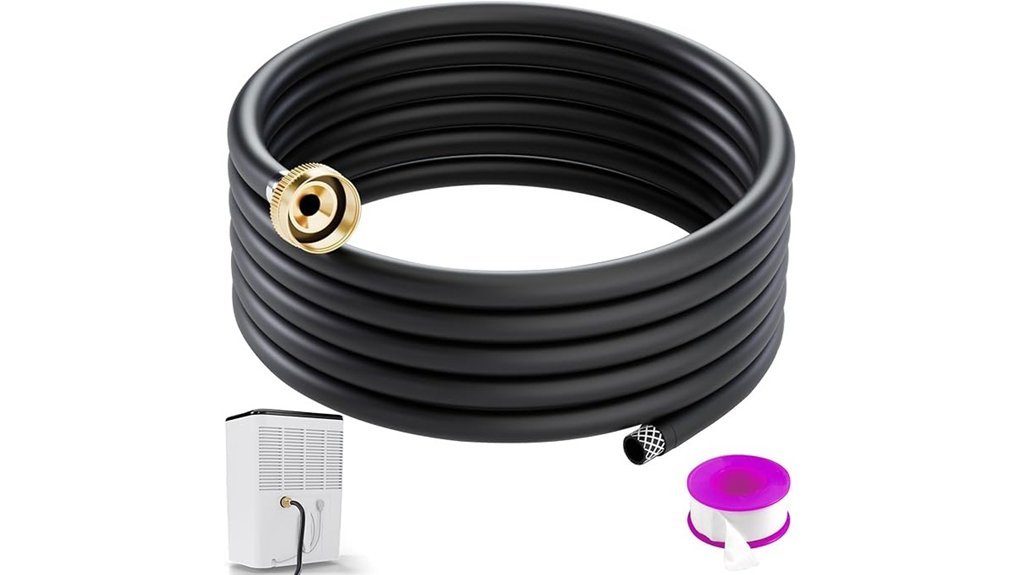
This Boombamo drain hose is designed for short routes from a dehumidifier to a nearby floor drain or pump reservoir. The listing identifies a 3/4-inch female threaded connector, flexible PVC hose body, rubber seal, and metal-finished connector. Its compact length reduces unnecessary slack and makes it easier to maintain a steady downward route.
Why You’ll Like It: The slim PVC body takes up less space than a full-size garden hose and can be easier to guide along a wall or behind the appliance.
Best For: Apartments, laundry rooms, and utility spaces where the drain is close to the dehumidifier.
Avoid If: You need a thick rubber hose or more than five feet of reach without selecting another available size.
Pros:
- Short length is easy to route without large loops
- Flexible PVC construction works well in compact spaces
- Rubber seal helps create a secure threaded connection
Cons:
- Five feet may not reach across a larger room
- Compatibility still depends on the exact drain-port thread
- Soft PVC requires support so it does not develop low spots
TT FLEX Dehumidifier Drain Hose, 5 FT, 3/4″ FHT
Best Heavy-Duty Rubber Pick
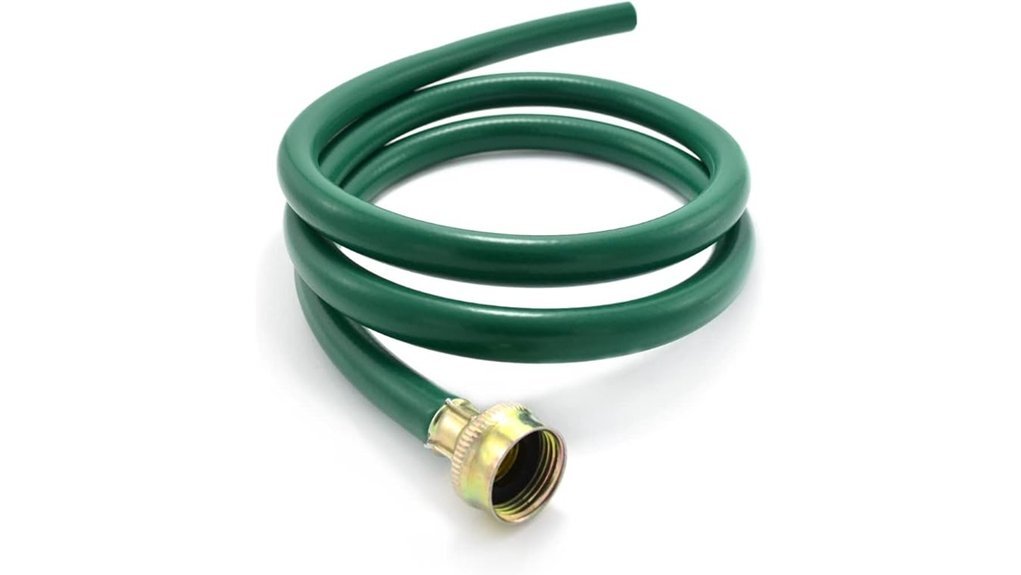
The TT FLEX hose is a compact rubber-and-plastic option for buyers who prefer a more substantial drain line with metal fittings. It uses a 3/4-inch female hose-thread connection and is sized for short drainage routes. Its reinforced construction is more than gravity drainage normally requires, but it can be useful where the hose may be moved or bumped during routine cleaning.
Why You’ll Like It: It offers the flexible feel of a short rubber hose with a heavier connector assembly than many lightweight PVC alternatives.
Best For: Utility rooms, rental properties, and frequently accessed areas where the hose may receive more handling.
Avoid If: You need a lightweight low-profile tube or a drain is located across the room.
Pros:
- Flexible construction is suited to repeated handling
- Metal fittings provide a substantial threaded connection
- Five-foot length is manageable beside a nearby drain
Cons:
- Too short for distant drain locations
- Heavier construction may be unnecessary for a protected indoor route
- Must still be checked against the dehumidifier manual
Ebusin Dehumidifier Drain Hose with Brass Fitting
Best for Length Choices
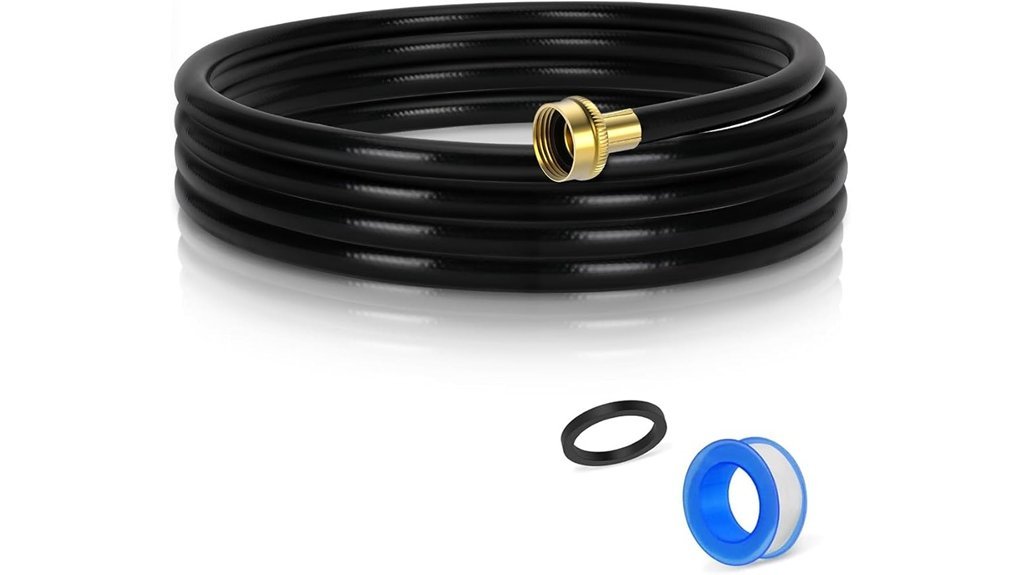
This Ebusin hose listing offers several selectable lengths with a 3/4-inch FHT connector. The linked option may open on a 6-foot variant, so check the selected size before ordering. Its nickel-plated brass fitting, rubber washer, and flexible rubber body are intended for a simple downhill drainage route.
Why You’ll Like It: Choosing a hose closer to the measured route can reduce the slack, loops, and low spots that commonly interfere with gravity drainage.
Best For: Buyers who have measured the route and want more length flexibility than a fixed 5-foot hose provides.
Avoid If: You have not confirmed the selected variant or your appliance uses a non-threaded outlet.
Pros:
- Multiple length options support different room layouts
- Metal fitting and washer help create a secure connection
- Flexible rubber is easier to route than rigid tubing
Cons:
- The selected length must be checked carefully before checkout
- Longer versions require support to prevent sags
- Brand compatibility claims do not replace checking the manual
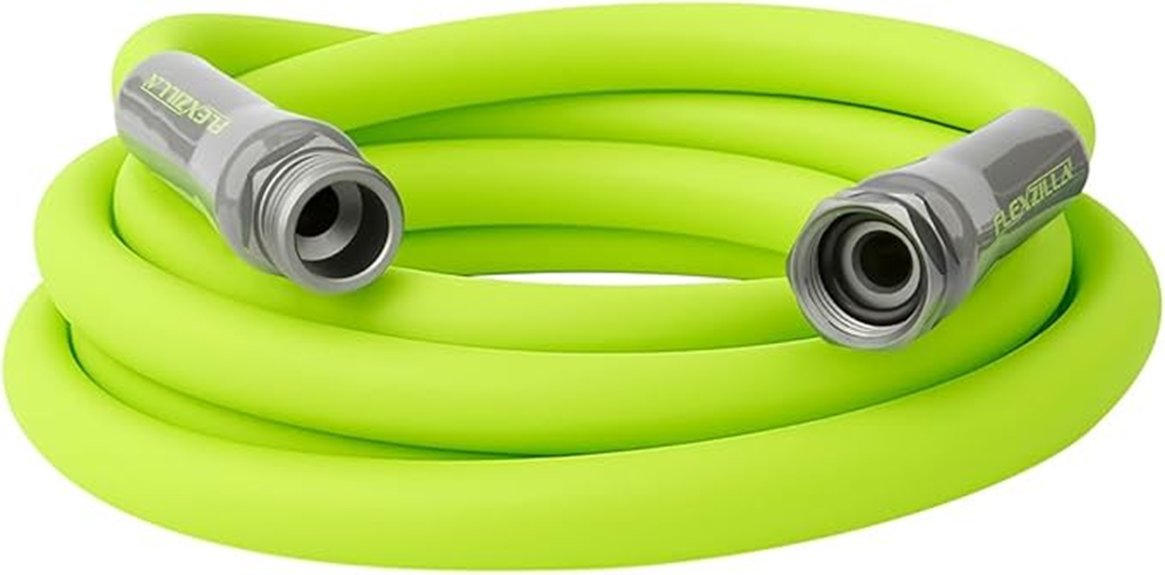
Flexzilla Garden Lead-In Hose, 5/8 in. x 5 ft
Best Flexible Garden-Hose Alternative
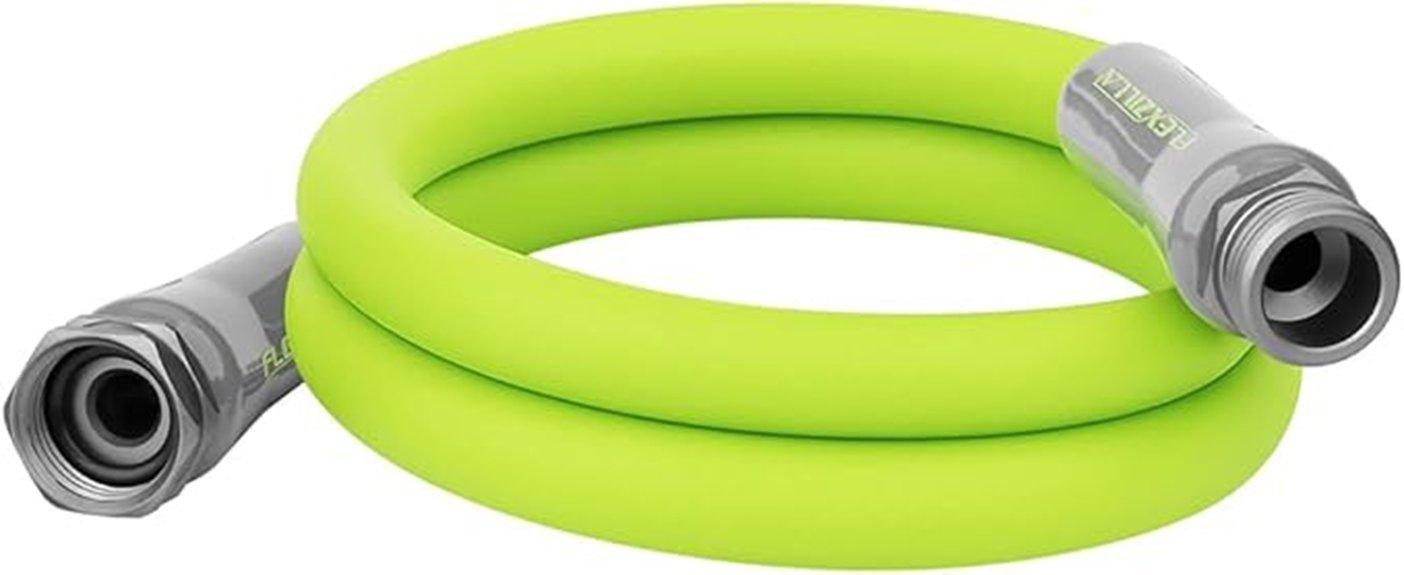
The 5-foot Flexzilla lead-in hose is not a dedicated dehumidifier accessory, but its standard garden-hose fittings, short length, and flexible hybrid-polymer body make it a practical alternative for a compatible threaded outlet. It is easier to bend around nearby obstacles than many traditional garden hoses, although its 5/8-inch hose body is bulkier than a slim condensate line.
Why You’ll Like It: Its flexible construction is useful when the route includes a gentle corner or a tight space behind the dehumidifier.
Best For: Buyers who prioritize easy bending and kink resistance over the smallest possible hose profile.
Avoid If: You want a discreet purpose-made drain hose or have limited clearance around the outlet.
Pros:
- Flexible and easy to position
- Short length minimizes unnecessary loops
- Substantial garden-hose fittings support repeated connection
Cons:
- Bulkier than a dedicated dehumidifier drain hose
- Five feet may be too short for a distant drain
- Garden-hose construction may cost more than a basic drain line
Flexzilla Garden Lead-In Hose, 5/8 in. x 10 ft
Best Flexible 10-Foot Alternative
This 10-foot Flexzilla lead-in hose offers the same flexible hybrid-polymer design in a longer size. Its 3/4-inch GHT fittings can connect to compatible threaded outlets, while the flexible body makes it easier to arrange than many conventional yard hoses. The 5/8-inch hose body is much larger than condensate flow requires, but it can be acceptable when durability and handling matter.
Why You’ll Like It: It provides medium-distance reach without moving to a full-length garden hose.
Best For: Buyers who need roughly 10 feet of reach and prefer a flexible branded garden hose.
Avoid If: The route has no continuous downward slope or a slim drain tube would be easier to secure.
Pros:
- Flexible body is easier to route than many traditional garden hoses
- Ten-foot length covers medium-distance drain locations
- Substantial fittings support repeated installation and removal
Cons:
- Larger and heavier than a dedicated drain hose
- Extra length can create low spots if unsupported
- Not designed exclusively for condensate drainage
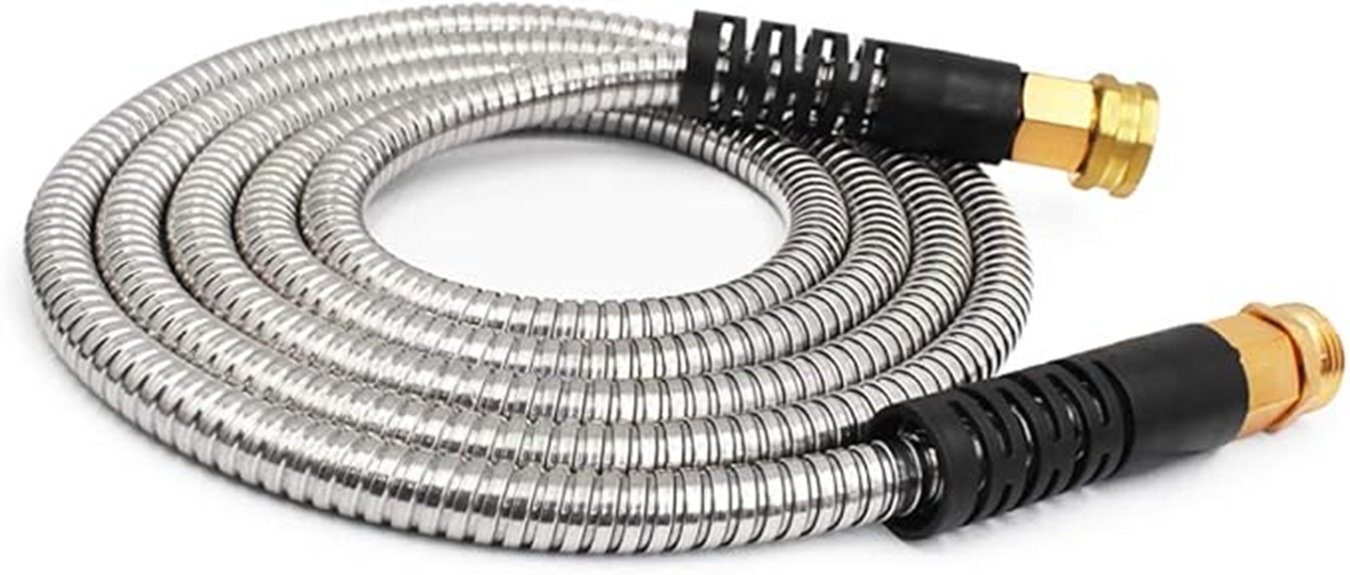
Cesun 10 FT Metal Garden Hose
Best for an Exposed Route
The Cesun 10-foot metal garden hose is a specialized alternative for locations where a soft hose could be scraped, pinched, stepped on, or disturbed. Its stainless-steel outer shell protects an inner water tube, and the male-to-female garden-hose fittings can work with a compatible dehumidifier outlet. It is not the simplest choice for a protected indoor room, but it may suit garages, workshops, RV spaces, or exposed utility routes.
Why You’ll Like It: The protective metal exterior provides more abrasion resistance than an ordinary soft drain hose.
Best For: Exposed routes where puncture and abrasion protection matter more than minimum weight and compactness.
Avoid If: The hose will remain protected behind the dehumidifier or must fit through a very narrow space.
Pros:
- Metal outer shell adds abrasion and puncture protection
- Ten-foot length provides useful reach
- Resists the sharp folding common with very thin hoses
Cons:
- Bulkier and more visually prominent than a standard drain hose
- May be unnecessary for a protected indoor installation
- The discharge-end fitting adds weight that may require support
Factors to Consider When Choosing a Dehumidifier Drain Hose
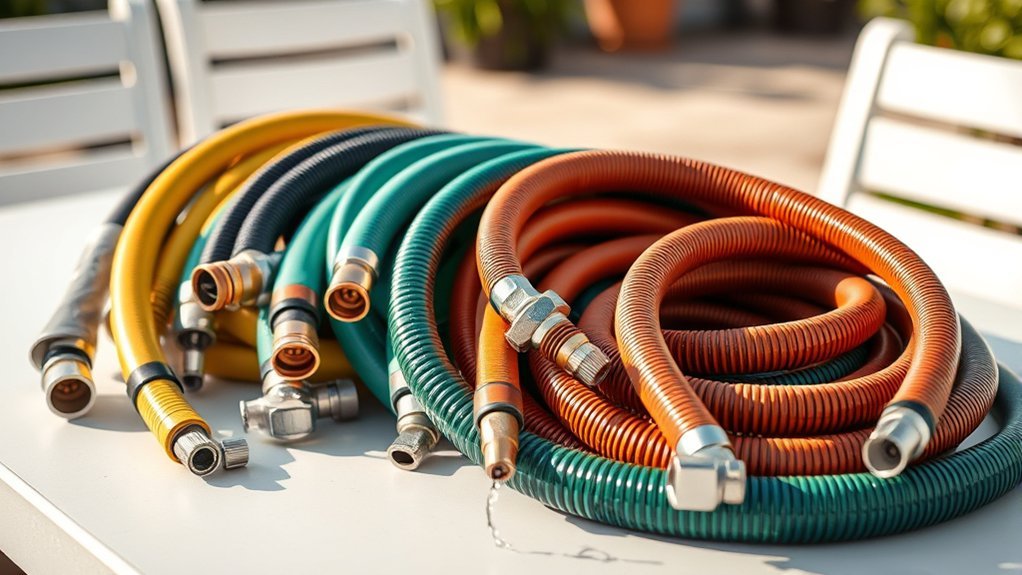
The correct hose is the one that fits your exact drain port and reaches the drain while maintaining an uninterrupted downward slope. Length, thread type, flexibility, sealing washers, and route design matter more than high pressure ratings in a normal gravity-drain installation.
Check the Manual First
Do not assume every dehumidifier uses the same connection. Many full-size units accept a female garden-hose connector, while other models use a small push-on tube, proprietary adapter, or pump hose. Confirm the required fitting, hose diameter, adapter, and drainage method before buying.
Understand the Hose Measurements
A 3/4-inch FHT or GHT connection describes the nominal garden-hose thread, not necessarily the hose body’s inside diameter. For example, a garden hose may have a 5/8-inch body while still using standard 3/4-inch garden-hose fittings. Match the thread connection specified by the appliance rather than choosing by hose-body diameter alone.
Hose Length
Choose the shortest hose that reaches the drain safely. A 5-foot hose works well when the drain is close, while a 6- to 10-foot hose provides more placement flexibility. Longer hoses can drain successfully, but only when they are supported so water cannot collect in low spots. Avoid large coils and unnecessary slack.
Thread Compatibility
Look for the exact fitting described by the manufacturer. A listing marked 3/4-inch FHT has a female garden-hose-thread coupling, but that does not guarantee compatibility with every dehumidifier. Start the coupling gently by hand and never force mismatched threads, because cross-threading can damage the drain outlet.
Gravity Drainage and Slope
Most continuous-drain connections rely on gravity. Place the dehumidifier on a stable, level surface above the drain point, and route the hose continuously downward. An upward loop, crushed section, kink, or submerged hose end can slow or stop drainage. A longer hose does not create pumping power.
When a Pump Is Needed
A gravity hose cannot carry water uphill to a higher sink, window, or drainpipe. Use a dehumidifier with a built-in pump or a properly sized external condensate pump when the discharge point is above the appliance outlet. Follow the pump manufacturer’s instructions for tubing, lift height, and maintenance.
Leak Prevention
Garden-hose-style connections usually seal against a rubber washer inside the female coupling. Make sure the washer is present, flat, and undamaged, then hand-tighten the fitting securely. Thread-sealing tape is normally unnecessary on a washer-sealed garden-hose connection unless the appliance or hose instructions specifically call for it.
Material Durability
Flexible PVC and rubber hoses are easy to route indoors. Hybrid-polymer garden hoses offer added flexibility, while metal-sheathed hoses provide abrasion protection in exposed areas. For most homes, easy routing and a reliable seal are more important than high pressure capability because condensate normally leaves the dehumidifier slowly.
Flexibility and Kink Resistance
A hose that bends smoothly is easier to guide behind the appliance and along walls. However, very soft hoses can flatten or sag, while bulky garden hoses may be harder to position. Choose a hose that maintains an open path without fighting the route, and secure it gently where needed without crushing it.
Secure the Discharge End
Place the open hose end where it cannot slip out of the drain, become crushed, or sit below standing water. Do not seal the hose tightly into a drain unless the appliance instructions and local plumbing setup specifically allow it. The water needs an open, unobstructed path out of the hose.
Storage and Cleaning
Short hoses are easier to remove, flush, dry, and store. If you disconnect the hose seasonally, coil it loosely rather than folding it sharply. Keep the washer with the hose and inspect the connector, gasket, and full hose length before reinstalling it.
Before You Buy Checklist
- Confirm the drain-port type in the dehumidifier manual.
- Measure the complete route from the unit to the drain.
- Verify that the drain point is lower than the outlet.
- Choose the shortest practical hose length.
- Check that the coupling uses the correct thread type.
- Confirm that a sealing washer or gasket is included.
- Plan support points that prevent dips and sags.
- Make sure the hose end will not sit in standing water.
- Use a condensate pump if the water must travel uphill.
Setup tip: After installation, run the dehumidifier while you are nearby and verify that water reaches the drain without leaking or collecting in the hose. Recheck the route after the unit has been moved, cleaned, or stored.
Frequently Asked Questions
Can I Use Any Garden Hose With My Dehumidifier?
No. Use a garden hose only when its fitting matches the drain port and the manufacturer allows that type of continuous drainage. Many full-size models use a standard garden-hose-style connection, but smaller or specialty units may require different tubing or an adapter.
What Size Hose Do I Need for a Dehumidifier?
Use the fitting and hose size listed in your appliance manual. A 3/4-inch female garden-hose-thread connector is common on full-size units, but it is not universal. The hose body may have a different inside or outside diameter from the nominal thread size.
How Often Should I Replace a Dehumidifier Drain Hose?
There is no universal replacement schedule. Inspect the hose regularly and replace it when you find cracks, hardened material, damaged threads, a flattened section, persistent odor, leakage, or a washer that no longer seals.
Do Dehumidifier Hoses Need a Shutoff Valve?
Usually not. A gravity-drain hose should remain open so condensate can flow freely. An unnecessary valve can be closed accidentally or restrict low-flow drainage. Follow the appliance instructions if your setup uses a pump, manifold, or specialized plumbing connection.
Can a Longer Hose Affect Dehumidifier Drainage?
Yes. Length itself is not always the main problem, but longer hoses are more likely to develop sags, upward loops, and kinks. Use the shortest practical route and support the hose so it slopes continuously toward the drain.
Should I Clean the Hose to Prevent Clogs?
Yes. Disconnect the hose according to the appliance instructions and flush it with clean water. Inspect both ends for debris, slime, or mineral buildup, and let the hose dry before storage. Do not push tools into the dehumidifier drain port unless the manufacturer recommends it.
Can a Dehumidifier Drain Hose Run Uphill?
Not with gravity drainage. The hose must run to a lower drain point. To move water upward to a sink, window, or elevated pipe, use a dehumidifier with a built-in pump or a properly sized external condensate pump.
Why Is Water Still Going Into the Bucket?
Common causes include an improperly seated hose, missing washer or adapter, kink, upward section, blocked outlet, or drain end submerged in water. Recheck the manual and hose route. If the setup is correct but the bucket still fills, contact the manufacturer rather than modifying the appliance.
Conclusion
For most buyers, the best dehumidifier drain hose is a short, flexible, correctly threaded line that reaches the drain without dips or upward bends. The LDR Industries 5-foot hose is the strongest general choice for a nearby gravity drain. The Boombamo hose offers a compact PVC alternative, while TT FLEX provides a more substantial short rubber option. Choose the Ebusin listing when you need more control over hose length.
Flexzilla and Cesun hoses can work as garden-hose alternatives when their fittings match, but they are larger than most purpose-made drain lines. Flexzilla is the better choice for flexible routing, while the metal-sheathed Cesun is mainly useful where the hose could be scraped or disturbed.
Final Recommendation
Start by checking the dehumidifier manual and measuring the downhill route. Choose the LDR Industries 5-Foot Hose for the simplest nearby setup, the Ebusin Hose when another length fits better, or a Flexzilla hose when extra flexibility is worth the added bulk. Install the washer correctly, support the full route, and test the system before leaving it unattended.