Last updated: August 2026
The best dehumidifier for mold prevention is one that can lower and maintain the humidity in your actual space. For a basement, laundry room, or other large area with persistent moisture, the AEOCKY 4500 Sq.Ft Smart Compressor Dehumidifier is the strongest option in this guide. For warm bedrooms, bathrooms, RVs, and other smaller enclosed spaces with light to moderate condensation, the KeepGlad 98OZ, BREEZOME 60OZ, TABYIK 35OZ, and BeOkay 58OZ are easier to place and generally quieter.
A dehumidifier can reduce the excess humidity that supports mold growth, but it cannot remove existing mold or repair a leak. Fix water intrusion first, use a separate hygrometer when needed, and keep indoor relative humidity below 60%, ideally around 30% to 50%.
The products below were compared by moisture-removal method, listed daily capacity, humidity controls, drainage, noise-focused features, portability, and suitability for mold-prevention humidity control. Manufacturer square-foot claims are treated as estimates, not guarantees.
- Best overall for large damp spaces: AEOCKY 4500 Sq.Ft Smart Compressor Dehumidifier
- Best compact model with a humidity display and drain hose: KeepGlad 98OZ Dehumidifier
- Best compact model for higher listed small-room output: BREEZOME 60OZ Dehumidifier
- Best for quiet bedroom use: TABYIK 35OZ Dehumidifier
- Best for flexible timer controls: BeOkay 58OZ Dehumidifier
Quick Comparison of the Best Dehumidifiers for Mold Prevention
| Product | Best For | Listed Moisture Removal | Controls and Drainage | Main Limitation | Amazon |
|---|---|---|---|---|---|
| AEOCKY Smart Compressor Dehumidifier | Basements and large, persistently damp rooms | Amazon-listed maximum of 80 pints/day at 95°F and 95% RH; check the exact model label for its standardized rating | Adjustable humidity control, drain hose, auto defrost | Larger, heavier, and louder than compact thermoelectric units | Check Product Details |
| KeepGlad 98OZ | Warm small-to-medium rooms with moderate humidity | Listed up to 2.8 pints/day | Humidity display, three speeds, timer, continuous-drain option | Thermoelectric design is not suitable for a wet or cool basement | Check Current Availability |
| BREEZOME 60OZ | Bedrooms, bathrooms, kitchens, and RVs | Listed up to 0.56 L/day | Two operating speeds, 12-to-48-hour timer, auto shutoff; tank drainage only | No target-humidity control or continuous drain | Check Current Availability |
| TABYIK 35OZ | Quiet small-room use | Listed up to 0.45 L/day at 86°F and 80% RH | Single speed, auto shutoff; tank drainage only | Limited capacity and no humidistat or timer | Check Price on Amazon |
| BeOkay 58OZ | Bathrooms, compact bedrooms, and closets | Listed up to 0.3 L/day | Three modes, 24-to-96-hour timers, auto shutoff; tank drainage only | Light-duty output for gradual moisture control only | View Latest Deal |
AEOCKY 4500 Sq.Ft Smart Compressor Dehumidifier
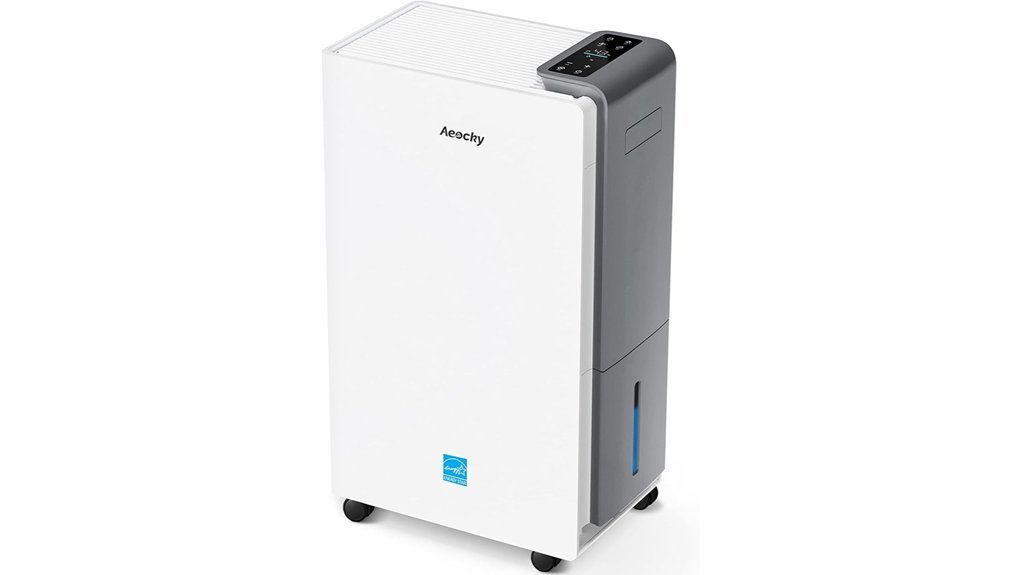
The AEOCKY RHEA-001 is the only full-size compressor dehumidifier in this roundup, making it the most suitable choice for basements, laundry rooms, open living areas, and other spaces with persistent humidity. Its listed features include adjustable humidity control, continuous drainage, automatic defrost, a child lock, casters, and a washable filter.
The Amazon listing advertises a maximum removal rate of 80 pints per day at 95°F and 95% relative humidity. That high-condition figure should not be compared directly with standardized DOE-style pint ratings. Dehumidifier output falls as the room becomes cooler or less humid, so check the exact model label and current certification details before comparing it with another compressor unit.
Why You’ll Like It: It can remove much more moisture than the compact thermoelectric models and can cycle around a selected humidity setting instead of running blindly.
Who Should Buy This: Homeowners dealing with recurring basement humidity, laundry moisture, widespread condensation, or a large area that stays above the target humidity.
Who Should Avoid This: Buyers who only need light moisture control in a small bedroom, closet, or RV and prefer a very compact unit.
Pros:
- Compressor design is better suited to large or persistently damp rooms.
- Adjustable humidity control can cycle the unit around the selected setting.
- Drain-hose support reduces manual tank emptying.
- Automatic defrost supports operation in cooler conditions.
- Listed minimum noise level is about 44 dB.
Cons:
- Larger and heavier than thermoelectric models.
- The advertised 80-pint figure applies to very warm, humid test conditions.
- Requires more floor space plus regular filter and drainage maintenance.
KeepGlad 98OZ Dehumidifier for Small to Medium Rooms
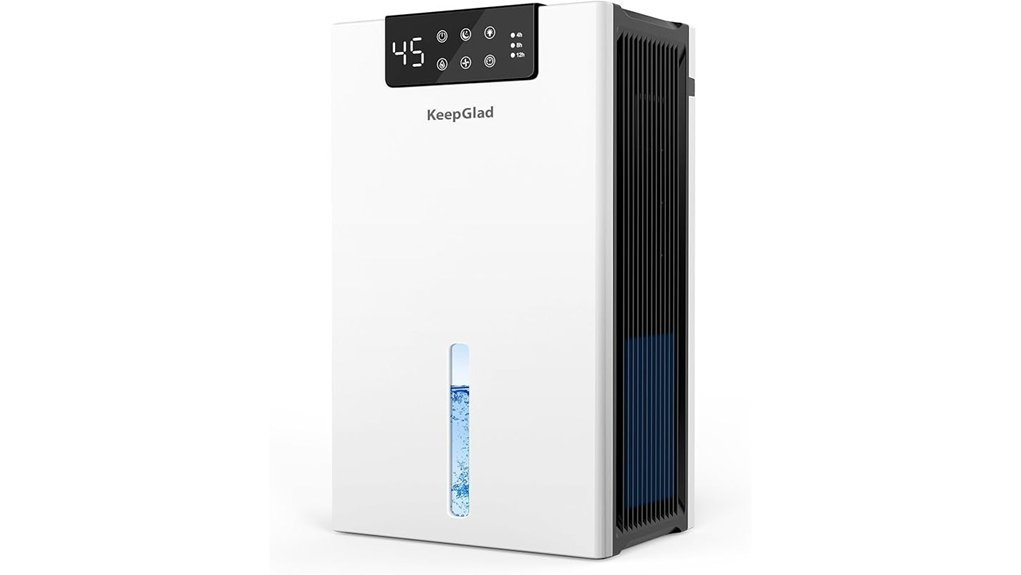
The KeepGlad 98OZ is a useful middle ground between a tiny single-speed unit and a full-size compressor dehumidifier. Its listing includes a 98-fluid-ounce tank, real-time humidity display, three speeds, timer controls, automatic defrost, automatic shutoff, a washable filter, and a continuous-drain connection.
The listed removal capacity is up to 2.8 pints per day. Although the manufacturer advertises broad room coverage, its thermoelectric design is better suited to warm small-to-medium spaces with moderate humidity than to a cold or wet basement. Use a separate hygrometer to confirm that it can actually maintain your target humidity.
Why You’ll Like It: The humidity display helps you see whether conditions are improving, while the drain option can reduce how often you handle the tank.
Who Should Buy This: Buyers who want a portable unit for a bedroom, bathroom, RV, laundry corner, or other moderately humid space.
Who Should Avoid This: Anyone dealing with standing water, an active leak, severe basement dampness, or a large room that stays above 60% humidity.
Pros:
- Large tank for a compact thermoelectric model.
- Real-time humidity display improves day-to-day monitoring.
- Continuous-drain support reduces manual emptying.
- Three speeds, timer controls, auto shutoff, and auto defrost add flexibility.
Cons:
- Manufacturer square-foot claims may overstate real-world performance.
- Lower moisture-removal power than a compressor dehumidifier.
- No clearly verified ENERGY STAR-style efficiency or standardized capacity rating.
BREEZOME 60OZ Quiet Portable Dehumidifier with Timer
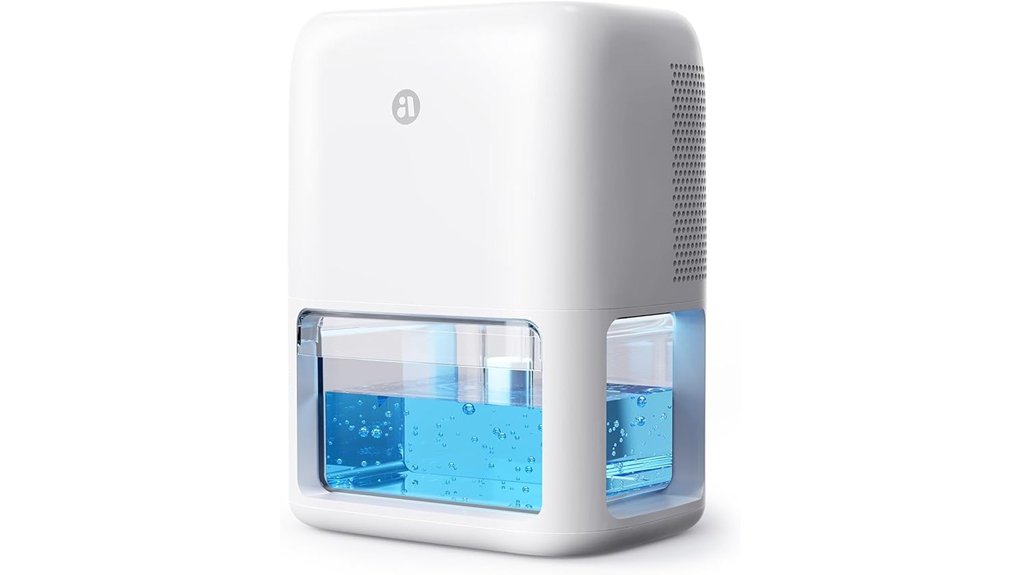
The BREEZOME portable dehumidifier uses dual semiconductor condensers and has a 1.8-liter tank. Its product details list moisture removal up to 0.56 liters per day, two operating speeds, automatic defrost, automatic shutoff, and a 12-to-48-hour timer.
The listed sleep-mode noise level is 35 dB. This makes it easier to use in a bedroom or RV, but the unit does not provide target-humidity control or a continuous-drain connection. Its 350-square-foot claim should be treated as a screening estimate rather than proof that it can maintain safe humidity in every room of that size.
Why You’ll Like It: It combines one of the higher listed daily removal rates among the compact models with a larger tank and useful timer settings.
Who Should Buy This: Buyers managing condensation or moderate humidity in a warm bedroom, bathroom, kitchen, RV, or other enclosed space.
Who Should Avoid This: Anyone who needs automatic target-humidity control, continuous drainage, or basement-grade moisture removal.
Pros:
- 1.8-liter tank can reduce emptying frequency.
- Listed capacity of up to 0.56 liters per day.
- Sleep mode and timer support overnight or scheduled use.
- Automatic shutoff and defrost add convenience.
Cons:
- Thermoelectric performance drops in cooler or less humid rooms.
- No built-in humidistat for a precise target.
- No continuous-drain connection.
TABYIK 35OZ Dehumidifier for Bedroom and Home
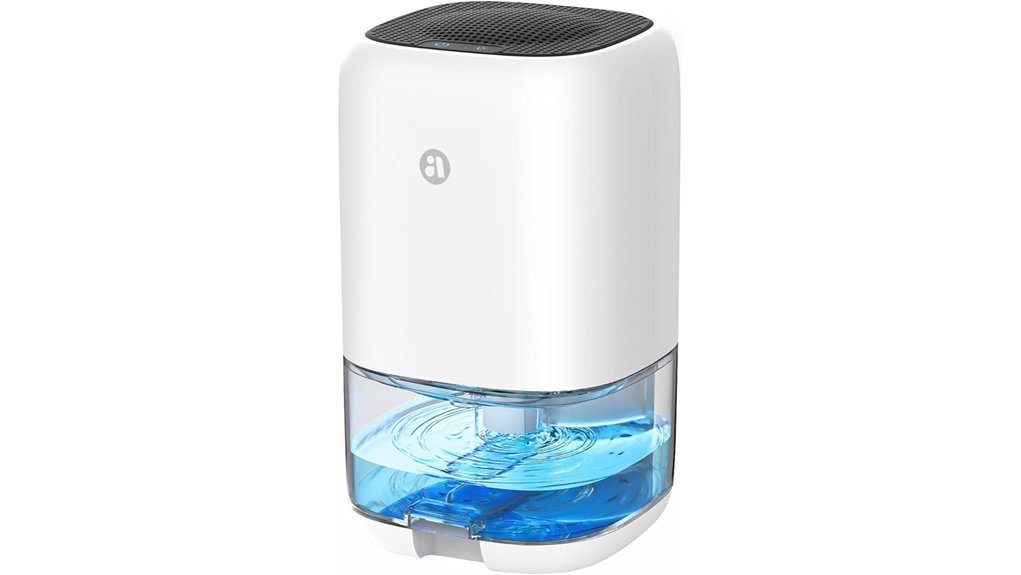
The TABYIK 35OZ is designed for small spaces where low noise and a compact footprint matter. Its listing specifies a 1,000 ml tank, a maximum moisture-removal capacity of 0.45 liters per day at 86°F and 80% relative humidity, and a listed operating noise level of 28 dB.
It includes automatic shutoff, a transparent tank, seven-color lighting, and a carrying handle. The single-speed design is simple, but it lacks a timer, drain hose, and target-humidity control, so a separate hygrometer is important when mold prevention is the goal.
Why You’ll Like It: The low listed noise level and small footprint make it easy to place near a bed, desk, sink, or closet.
Who Should Buy This: Buyers who want gradual moisture control in a small warm bedroom, bathroom, dorm room, closet, or RV.
Who Should Avoid This: Anyone who needs fast drying, continuous drainage, or reliable control in a large or cool basement.
Pros:
- Listed at 28 dB for quiet use.
- Compact and lightweight for easy placement.
- Automatic shutoff helps prevent tank overflow.
- Transparent tank makes the water level easy to check.
Cons:
- Single-speed operation offers limited adjustment.
- Small daily removal capacity compared with compressor models.
- No timer, humidistat, or drain connection.
BeOkay 58OZ Small Dehumidifier with Adjustable Lights and Timers
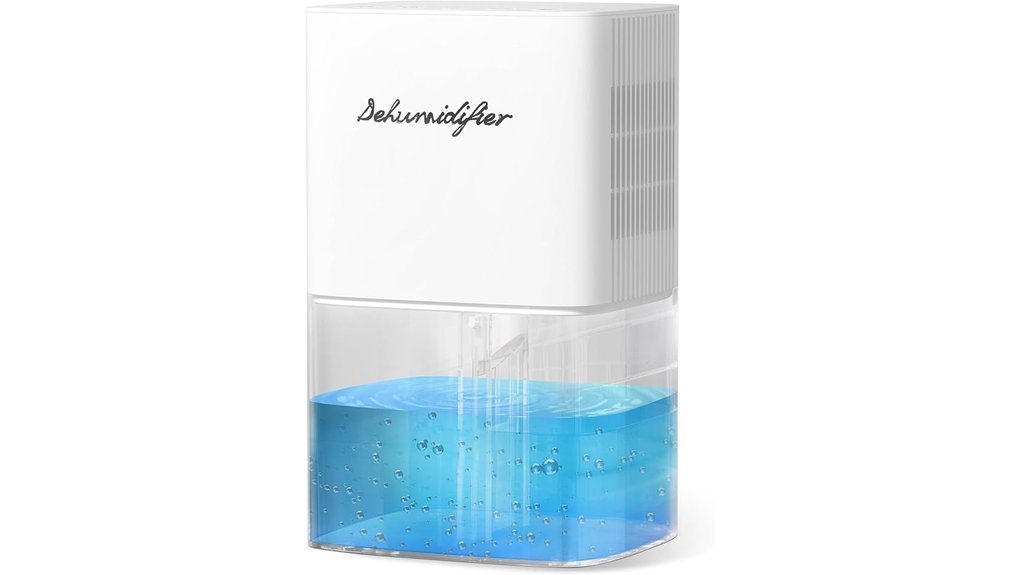
The BeOkay small dehumidifier has a 1,657 ml, or roughly 58-ounce, water tank and a listed dehumidification capacity of up to 0.3 liters per day. It is a light-duty option for warm compact spaces rather than a solution for widespread or severe dampness.
It includes sleep, normal, and performance modes; 24-, 48-, 72-, and 96-hour timer settings; continuous operation; automatic shutoff; automatic defrost; a removable tank; and adjustable lighting. The listing states sleep-mode noise remains below 40 dB.
Why You’ll Like It: The broad timer range makes it easier to schedule gradual moisture control around sleeping, working, or showering.
Who Should Buy This: Buyers who want a compact unit with more operating and timer choices for a bathroom, small bedroom, or closet.
Who Should Avoid This: Anyone whose room remains above 60% humidity despite continuous operation or has visible water intrusion.
Pros:
- Three operating modes plus multiple timer settings.
- Large tank relative to its listed daily removal capacity.
- Automatic shutoff and defrost improve convenience.
- Compact, lightweight design.
Cons:
- Listed output of 0.3 liters per day is modest.
- Not suitable for large, cool, or severely damp rooms.
- No humidistat or continuous-drain connection.
Factors to Consider When Choosing a Dehumidifier for Mold Prevention
The right dehumidifier should lower and maintain relative humidity in the actual space where it will run. Focus on moisture-removal capacity, room temperature, drainage, humidity control, noise, and maintenance instead of relying on tank size or advertised square footage alone.
Compressor vs. Thermoelectric Dehumidifiers
Compressor dehumidifiers remove much more moisture and are generally the better choice for basements, laundry rooms, large living areas, and persistent humidity. They are heavier and usually louder, but they commonly include humidistats, automatic defrost, and continuous drainage.
Thermoelectric dehumidifiers, also called Peltier dehumidifiers, are smaller and quieter. They work best in warm, compact spaces with light to moderate humidity. They are not a substitute for a compressor model in a wet basement or after water damage.
Room Size, Temperature, and Moisture Load
Manufacturer square-foot ratings are only a starting point. A cool basement at 75% humidity may need far more capacity than a warm bedroom of the same size. Also consider ceiling height, open doorways, showers, indoor laundry, poor ventilation, seepage, and how quickly humidity returns after the unit switches off.
Moisture-Removal Capacity
Compare how much water the unit can remove in 24 hours, not just the size of its collection tank. A large tank reduces emptying frequency but does not prove that the machine removes moisture quickly. Maximum capacities measured in unusually hot and humid conditions should not be compared directly with standardized DOE-style ratings. For more detail, see the ENERGY STAR explanation of dehumidifier testing and capacity.
Humidistat and Hygrometer
A built-in humidistat can cycle a dehumidifier around a target humidity level. For models without one, use a separate hygrometer across the room rather than directly beside the outlet. A practical target is usually 30% to 50% relative humidity while always keeping it below 60%.
Tank Size and Continuous Drainage
Choose a drain-hose model when the unit will run for long periods or the tank fills daily. Confirm that the hose can slope continuously to a suitable drain unless the unit includes a pump. For tank-only models, automatic shutoff is essential, and the tank should be emptied and cleaned regularly.
Energy Efficiency
For compressor units, look for a current ENERGY STAR certification and compare the Integrated Energy Factor, or IEF, when available. Compact thermoelectric models use less power at any one moment, but they can take much longer to remove the same amount of water and may run continuously without reaching the target humidity.
Noise Level
The compact models in this guide list sleep or operating noise levels from about 28 to 40 dB, while the larger AEOCKY lists a minimum around 44 dB. Treat these figures as reference points because fan speed, room acoustics, vibration, surface stability, and distance from the bed affect perceived sound.
Safety and Maintenance Features
Prioritize automatic shutoff, automatic defrost, stable placement, easy tank access, and washable filters. Keep the air intake and outlet clear, clean the tank regularly, and follow the manual for electrical clearances and bathroom placement. Never place a dehumidifier in standing water or use an extension cord unless the manufacturer expressly permits it.
When a Small Dehumidifier Is Not Enough
A compact thermoelectric unit is undersized when it runs continuously but humidity stays above 60%, condensation keeps returning across a wide area, the tank collects very little water despite obvious dampness, or the room is cool and musty. Move to a properly sized compressor dehumidifier and investigate leaks, ventilation, drainage, or insulation problems.
A dehumidifier controls moisture; it does not clean existing mold. Fix the water source and clean affected materials appropriately. For extensive water damage, contaminated HVAC systems, or visible mold covering more than about 10 square feet, review EPA mold guidance and consider qualified professional help.
- Measure the room and check current humidity with a hygrometer.
- Fix leaks, seepage, and drainage problems first.
- Choose a compressor model for a large, cool, or severely damp space.
- Compare daily removal capacity, not tank size alone.
- Confirm whether you need a drain hose or can empty the tank daily.
- Check the operating-temperature range for a cool basement.
- Verify the exact model, warranty terms, and current Amazon offer before ordering.
Frequently Asked Questions
What Humidity Level Helps Discourage Mold Growth?
Keep indoor relative humidity below 60%, with 30% to 50% being a practical target for many homes. Use a hygrometer to check the room rather than relying only on how the air feels.
Can a Dehumidifier Remove Existing Mold?
No. A dehumidifier can reduce moisture conditions that support growth, but it does not remove existing mold, clean contaminated materials, or repair the moisture source. Fix leaks and address visible mold separately.
How Do I Determine the Right Size Dehumidifier?
Consider room area, ceiling height, temperature, current relative humidity, and how quickly moisture returns. Choose a compressor dehumidifier for a large, cool, or persistently damp room. Use a thermoelectric model only for a smaller warm space with a light moisture load.
Are Small Thermoelectric Dehumidifiers Good for Basements?
Usually only for a small, warm, mildly damp basement area. A cool or persistently humid basement generally needs a compressor dehumidifier with stronger moisture removal, automatic defrost, and continuous drainage.
How Often Should I Empty the Water Tank?
Empty it whenever the tank is full and check it daily during humid weather. The interval depends on tank size, room humidity, temperature, and operating time. A continuous drain can reduce this task, but the tank and hose still need periodic cleaning.
Should a Dehumidifier Run Continuously?
It may run continuously while initially lowering high humidity, but a properly sized humidistat-controlled unit should eventually cycle off near the target. If a compact model runs nonstop and humidity remains above 60%, it is probably undersized or the room has an unresolved moisture source.
When Should I Call a Mold Professional?
Consider professional help for extensive water damage, sewage contamination, suspected mold inside HVAC equipment, recurring growth after cleanup, or a moldy area larger than about 10 square feet. People with significant health concerns should also seek appropriate medical advice rather than relying on a dehumidifier alone.
What Maintenance Is Required?
Clean or replace the air filter as directed, wash and dry the tank, inspect the drain hose, remove dust from the intake and outlet, and keep the unit level with space for airflow. Unplug it before cleaning and follow the manufacturer’s manual.
Conclusion
For serious humidity control in a basement or large room, the AEOCKY 4500 Sq.Ft Smart Compressor Dehumidifier is the strongest option in this guide. The KeepGlad 98OZ adds a humidity display and drain connection for moderate conditions, while the BREEZOME 60OZ offers the highest listed daily output among the compact models retained here. The TABYIK 35OZ is the simplest quiet bedroom option, and the BeOkay 58OZ offers the most flexible timer controls.
Final recommendation:
Choose the AEOCKY when you need measurable room-level humidity control in a large or persistently damp area. Choose one of the compact thermoelectric models only when the space is warm, enclosed, and mildly humid—and confirm its results with a hygrometer.
The most important step is matching the dehumidifier to the actual moisture load. Monitor relative humidity, correct leaks and ventilation problems, clean any existing mold properly, and use the unit consistently enough to keep the space below 60% humidity.