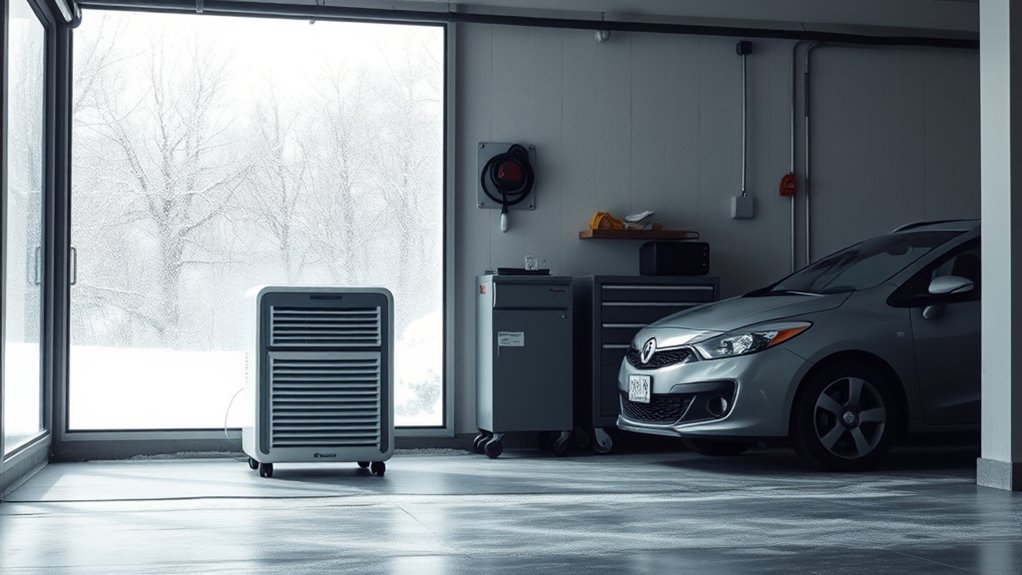
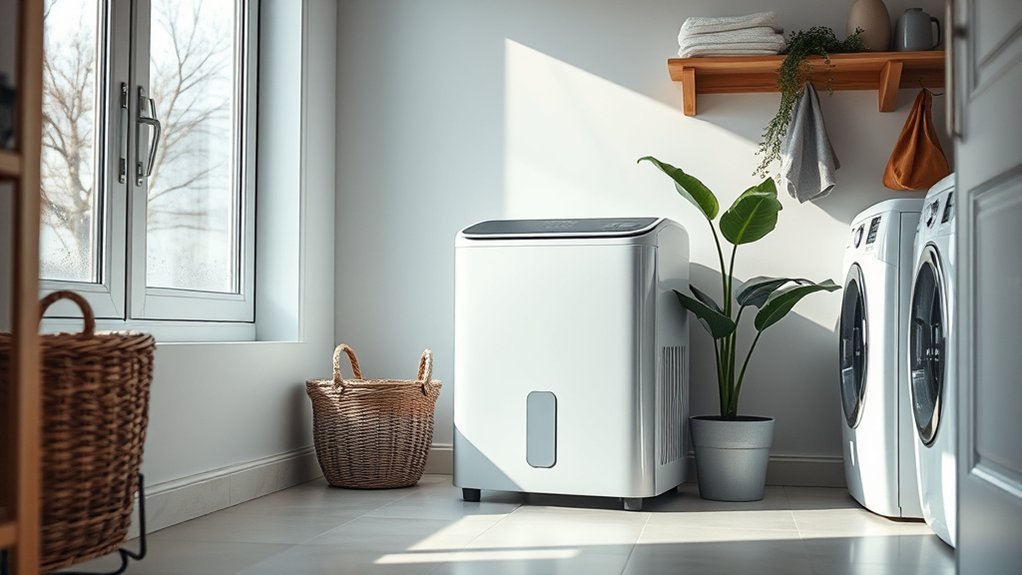
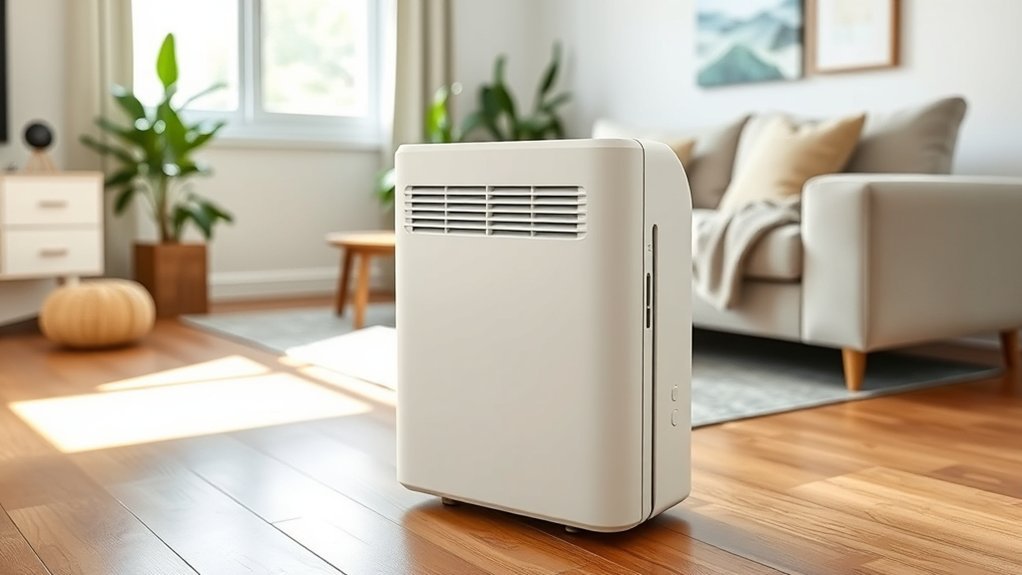
Choosing the best dehumidifier for a storage unit depends first on whether the facility allows electricity and provides a safe outlet or drain. For a powered, climate-controlled space, the Midea Cube 20 Pint Dehumidifier is the strongest all-around option in this list. The GoGuess 21-Pint Dehumidifier is another powered choice for shoppers who want adjustable humidity and a drain hose. For units without power, the DampRid Hi-Capacity Bucket and Camco Moisture Absorber Bucket provide passive moisture control, although they cannot match an electric compressor dehumidifier in persistently humid conditions.
Quick Answer
Best overall: Choose the Midea Cube 20 Pint if your storage unit has an approved 115-volt outlet and a practical drainage plan. Best without electricity: Choose the DampRid Hi-Capacity Bucket for passive moisture control in a sealed unit. Use a separate hygrometer and aim to keep relative humidity below 60%, with roughly 30% to 50% being a useful target when conditions allow.
Key Takeaways
- Confirm that the storage facility permits plugged-in appliances before using an electric dehumidifier.
- Powered compressor models remove far more moisture than disposable or refillable absorber buckets.
- Continuous drainage is the easiest long-term setup, but only when a safe drain route is available.
- Passive absorbers are most useful in sealed, unpowered units with mild to moderate moisture—not for leaks, flooding, or standing water.
- Check a hygrometer regularly because product coverage claims do not account for every temperature, air-leak, or humidity condition.
Quick Verdict
The Midea Cube 20 Pint offers the most complete humidity control for an approved powered unit. The GoGuess 21-Pint is a simpler powered alternative, though its advertised daily removal rate is based on hot, very humid test conditions. The DampRid and Camco buckets are better choices when no outlet is available, but they should be treated as low-maintenance moisture absorbers rather than replacements for an electric dehumidifier.
Quick Comparison
| Product | Type | Best For | Main Limitation | Check Details |
|---|---|---|---|---|
| Midea Cube 20 Pint | Powered compressor | Best overall for approved powered units | Needs electricity and regular emptying or drainage | Check on Amazon |
| GoGuess 21-Pint | Powered compressor | Adjustable humidity with hose drainage | Advertised output depends heavily on test conditions | Check on Amazon |
| DampRid Hi-Capacity Bucket | Passive calcium-chloride absorber | Best no-power option | Slower than a powered dehumidifier | Check on Amazon |
| Camco 44282 Bucket | Passive moisture absorber | Large passive bucket for enclosed storage | Must stay upright and be checked for saturation | Check on Amazon |
Midea Cube 20 Pint Dehumidifier with Smart Control
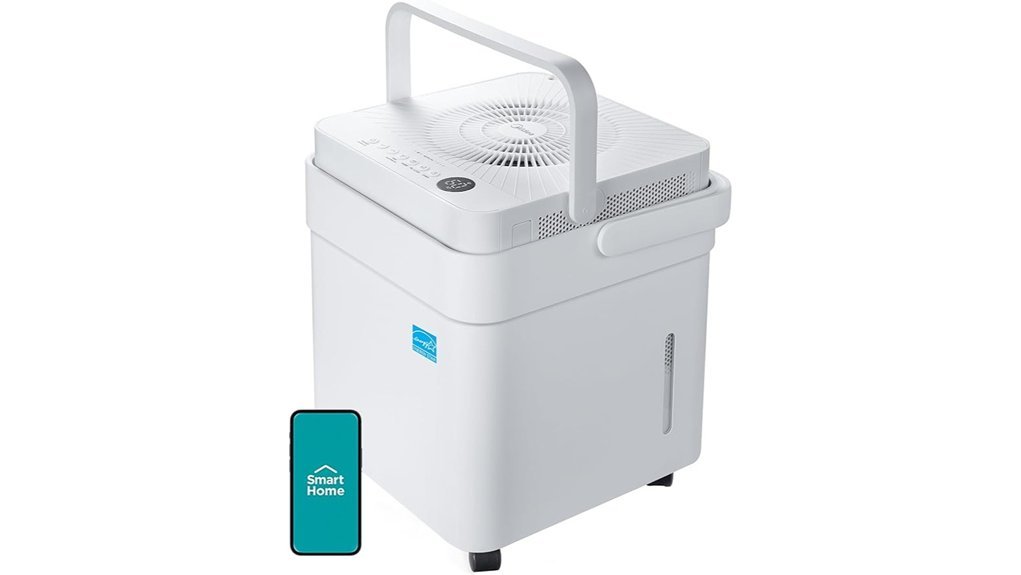
Best Overall for Powered Storage Units
The Midea Cube 20 Pint Dehumidifier is the most complete option here for a storage unit that has facility-approved power. It is rated to remove up to 20 pints of moisture per day and is designed for spaces up to 1,500 sq. ft. Its large, extendable bucket can reduce emptying frequency, while the included drain hose supports continuous drainage when the unit can be positioned above a suitable drain. Wi-Fi control also makes it easier to review settings remotely, although remote control is not a substitute for inspecting the storage unit.
Best For: Climate-controlled or powered storage units where the facility permits appliances and a safe drainage or emptying plan is available.
Why You’ll Like It: It combines a built-in humidistat, automatic shutoff, washable filter, smart control, wheels, and flexible bucket or hose drainage in one established model.
Who Should Avoid It: Renters whose facility prohibits electrical appliances, units without a reliable outlet, or spaces where the bucket cannot be checked and no safe drain is available.
Pros:
- Active humidity control: A compressor system can remove substantially more moisture than passive absorber tubs.
- Flexible drainage: Use the large bucket or the included hose for continuous gravity drainage.
- Remote adjustments: App and compatible voice controls add convenience.
- Energy-conscious design: The model is ENERGY STAR certified.
Cons:
- Requires a permitted 115-volt outlet and may need Wi-Fi for remote features.
- Continuous drainage works only when the hose can run downward to an approved drain.
- The 20-pint rating is a laboratory capacity; real removal varies with temperature and humidity.
GoGuess 1600 Sq. Ft. 21-Pint Dehumidifier with Drain Hose
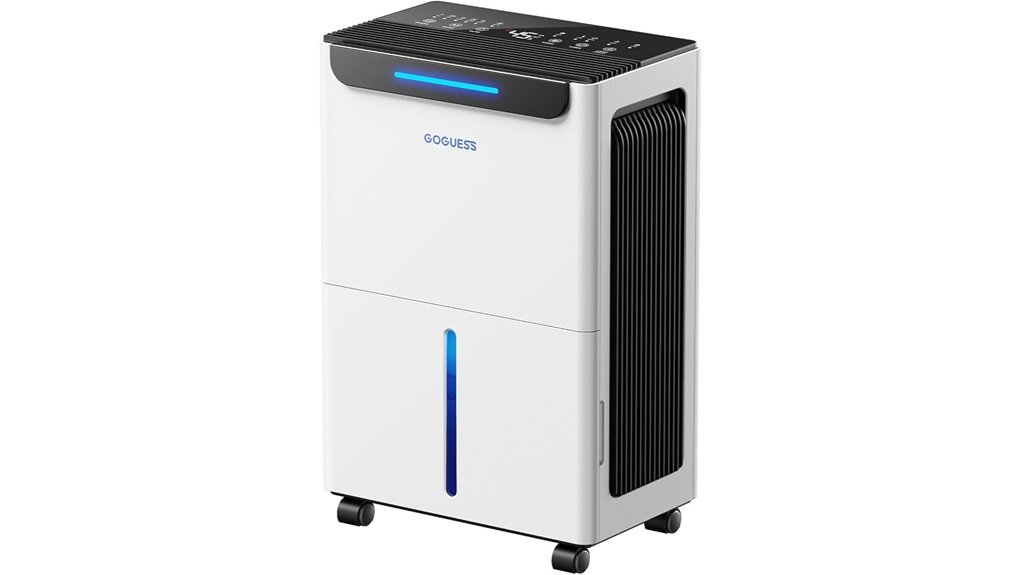
Best Value Powered Option
This GoGuess compressor dehumidifier is marketed for spaces up to 1,600 sq. ft. and for removing up to 21 pints per day under hot, highly humid test conditions. It offers adjustable humidity control, DEHU, TURBO, and SLEEP modes, a timer, automatic shutoff, and a drain hose for continuous gravity drainage. Those features make it relevant to a powered storage unit, but buyers should expect lower daily water removal in cooler or less humid real-world conditions.
Best For: Shoppers who want a lower-cost powered model with a humidistat and drain-hose option.
Why You’ll Like It: The controls are more useful for storage protection than decorative lights or bedroom-focused features, and the hose can reduce maintenance when a proper drain is available.
Who Should Avoid It: Buyers who require extensive manufacturer documentation, an independently confirmed efficiency certification, or operation in a facility that does not allow plugged-in equipment.
Pros:
- Adjustable control: Lets you select a target humidity rather than running continuously without feedback.
- Multiple modes: DEHU, TURBO, and SLEEP modes support different operating needs.
- Two drainage choices: Use the tank or connect the supplied hose for gravity drainage.
Cons:
- The 21-pint claim is tied to 95°F and 90% relative humidity test conditions, so normal output may be lower.
- Brand support, warranty details, and certification information were not clearly established in the supplied article.
- Like any tank-style unit, it will stop when full unless continuous drainage is set up correctly.
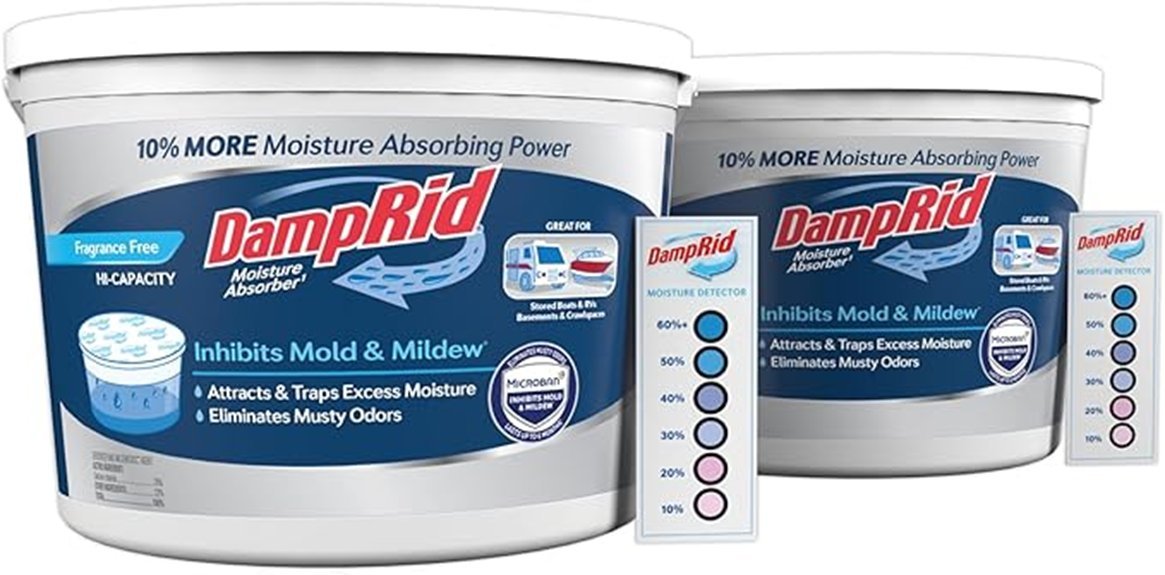
DampRid Hi-Capacity Moisture Absorber Bucket (2 Pack)
Best for Storage Units Without Power
The DampRid Hi-Capacity Bucket uses calcium-chloride crystals to attract moisture from the air without electricity. This two-pack includes large fragrance-free buckets and moisture detection strips, making it a practical choice for sealed storage areas where powered appliances are not allowed. It can also help reduce musty odors caused by excess airborne moisture. However, it is a passive absorber—not a compressor dehumidifier—and it will not fix water intrusion, standing water, or severe humidity by itself.
Best For: Unpowered storage units with mild to moderate excess humidity and owners who can inspect and replace the buckets periodically.
Why You’ll Like It: Setup is simple, no outlet is needed, and the fragrance-free formula is less intrusive around stored fabrics and household items.
Who Should Avoid It: Anyone dealing with active leaks, flooding, very high humidity, or a unit that cannot be visited often enough to monitor the collected liquid.
Pros:
- No electricity required: Useful where outlets or unattended appliances are prohibited.
- Large passive format: Better suited to storage areas than small closet bags or mini tubs.
- Monitoring aid: Included strips help identify excess humidity.
- Fragrance-free: Avoids adding a strong scent to stored belongings.
Cons:
- Removes moisture more slowly than an electric compressor model.
- Service life varies substantially with temperature, humidity, and airflow.
- The bucket must remain upright and away from children, pets, leather, and metal surfaces.
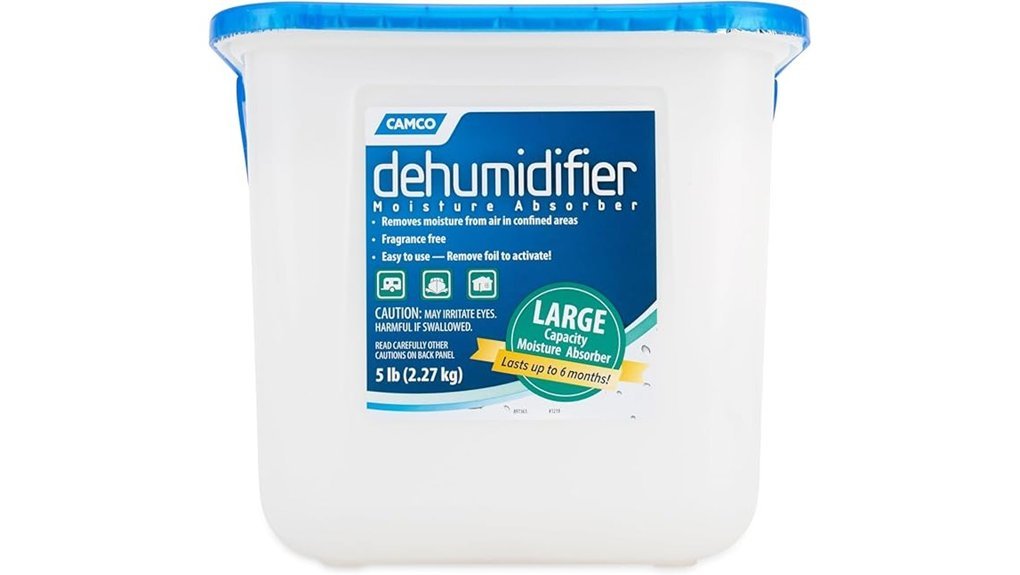
Camco Moisture Absorber Bucket (Model 44282)
Best Large Passive Bucket
The Camco 44282 is a 5 lb. fragrance-free moisture absorber bucket designed for enclosed areas such as stored RVs, campers, closets, and similar storage spaces. It works continuously without cords or batteries and helps reduce excess moisture and musty odors. Its larger bucket format is more appropriate for a storage-unit article than small hanging bags, but it still provides passive control and should not be presented as equal to a 20-pint electric dehumidifier.
Best For: Enclosed, unpowered storage spaces where a large passive bucket can sit upright on a stable, protected surface.
Why You’ll Like It: It is simple, fragrance-free, and requires no ongoing electricity or drain connection.
Who Should Avoid It: Users with major moisture intrusion, standing water, or a need for precise automatic humidity control.
Pros:
- Large 5 lb. bucket is more storage-oriented than closet-size absorbers.
- No power, batteries, app, or hose is required.
- Fragrance-free beads help avoid scent transfer to stored items.
Cons:
- Does not provide a selectable humidity set point.
- Must be checked and replaced when the material becomes saturated.
- Collected brine can damage nearby materials if the bucket tips or leaks.
Factors to Consider When Choosing a Dehumidifier for a Storage Unit
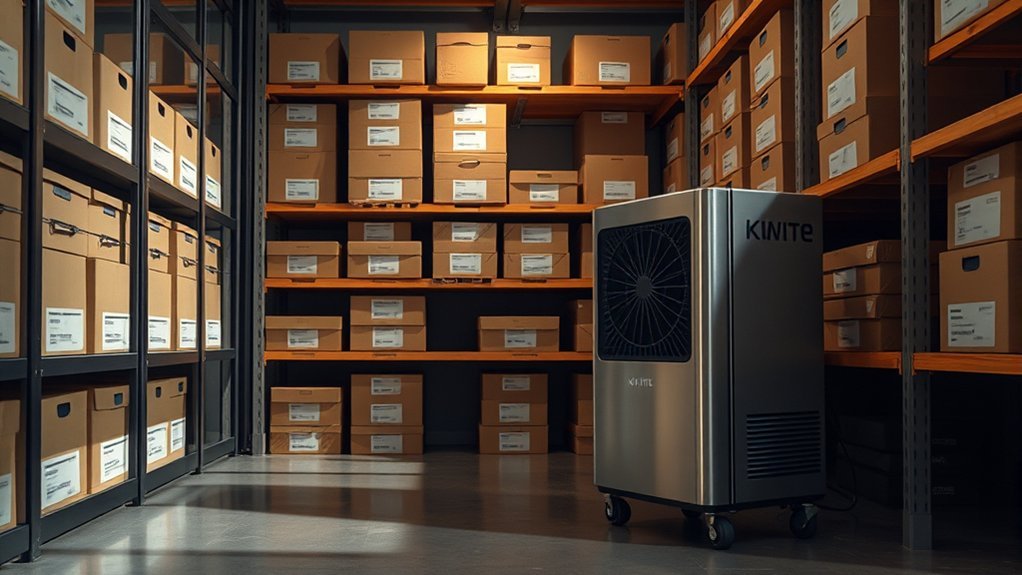
The right moisture-control product depends on the storage unit’s rules, temperature, humidity, size, airflow, and drainage access. Start with the practical constraints below instead of relying only on a product’s advertised square-foot coverage.
Facility Rules and Power Access
Ask the storage facility whether electrical appliances are allowed, whether the outlet can support a dehumidifier continuously, and whether unattended operation is permitted. Never use an extension cord unless both the appliance manufacturer and facility explicitly allow it. For units without approved power, choose a passive bucket and plan regular inspections.
Coverage Area and Moisture Load
Square footage is only a starting point. Ceiling height, outdoor air leakage, stored damp items, local climate, and the unit’s temperature all affect performance. A 20-pint compressor model is generally more appropriate than a thermoelectric mini unit when the entire storage room needs active moisture removal. Measure relative humidity with a hygrometer before and after installation.
Target Humidity Level
Try to keep relative humidity below 60%. A range around 30% to 50% is often recommended for indoor moisture control, although a non-climate-controlled storage unit may not remain in that range year-round. Avoid setting the humidity unnecessarily low because that wastes energy and may be unsuitable for some stored materials.
Drainage Options Available
A removable tank is simple but requires frequent visits. Continuous gravity drainage is more convenient, but the hose must slope downward without kinks and terminate at an approved drain. A model without a built-in pump cannot push water uphill. Never route drainage where it could leak into another unit or walkway.
Temperature and Auto-Defrost
Compressor dehumidifiers remove less moisture as temperatures fall, and coils can frost in cool spaces. Choose a model with automatic defrost for cooler environments and check the manufacturer’s operating-temperature limits. Passive absorbers also work at different rates depending on temperature and humidity.
Energy Efficiency Ratings
For a powered unit, look for ENERGY STAR certification and a built-in humidistat. The humidistat lets the appliance cycle instead of running constantly, while a correctly sized model can reach the target humidity more efficiently than an undersized unit that rarely shuts off.
Safety Features Included
Useful electric-model protections include automatic shutoff when the bucket is full, automatic defrost, overload protection, and restart behavior after a power interruption. Passive calcium-chloride products should stay upright and out of reach of children and pets. Keep collected liquid away from leather, metal, electrical equipment, and other vulnerable surfaces.
Maintenance and Visit Frequency
Clean an electric dehumidifier’s filter, inspect the hose, confirm airflow is unobstructed, and check that the unit is cycling normally. Empty or replace passive absorbers before they overfill. No product should be left indefinitely without inspection, especially in a unit containing paper, textiles, wood furniture, electronics, or sentimental items.
Before You Buy: Storage Unit Checklist
- Does the facility allow a dehumidifier or other powered appliance?
- Is the outlet grounded and available for continuous use?
- Can you drain water safely, or will someone empty the bucket?
- What are the unit’s current temperature and relative humidity?
- Is there an active roof, wall, plumbing, or groundwater leak that must be repaired first?
- Can the product sit on a stable surface with open airflow around it?
- How often can you visit to inspect the unit and stored belongings?
Safety Note: A dehumidifier or moisture absorber controls airborne moisture; it does not repair leaks, remove standing water, or remediate established mold. Report water intrusion to the storage facility immediately and dry affected items promptly.
Frequently Asked Questions
How Do I Determine the Right Size Dehumidifier for My Storage Unit?
Measure the floor area, note the ceiling height, and use a hygrometer to judge how damp the unit is. For an entire room, compare pint-per-day capacity—not just advertised square footage. A moderately damp small or medium room generally needs a compressor model in roughly the 20-pint-per-day class or higher, while passive absorbers are better for mild moisture or no-power situations.
Can I Run an Electric Dehumidifier in a Rented Storage Unit?
Only when the storage facility permits it and provides a suitable outlet. Confirm unattended-appliance, extension-cord, drainage, and insurance rules in writing when possible. Do not assume that an outlet inside or near the unit is approved for continuous personal use.
What Can I Use If My Storage Unit Has No Electricity?
Use a high-capacity passive moisture absorber, such as a stable calcium-chloride bucket, and monitor the space with a battery-powered hygrometer. Passive products work best in sealed spaces with mild to moderate humidity and require replacement as they fill.
How Often Should I Empty or Check the Dehumidifier?
Check a new setup within the first day or two, then adjust the schedule based on how quickly the tank or absorber fills. In humid weather, an electric bucket may fill daily. Continuous drainage reduces emptying, but the hose and drain still need regular inspection.
What Humidity Level Is Best for Stored Belongings?
Keep relative humidity below 60%, and aim for approximately 30% to 50% when practical. Some sensitive items may have narrower storage requirements, so review guidance for musical instruments, photographs, artwork, electronics, leather, or important documents.
Will a Dehumidifier Stop Mold in a Storage Unit?
Lower humidity can reduce the conditions that support mold growth, but a dehumidifier cannot fix leaks or clean existing mold. Remove the moisture source, dry wet materials quickly, and seek qualified remediation help when contamination is extensive.
Conclusion
For an approved powered storage unit, the Midea Cube 20 Pint Dehumidifier is the best overall choice because it combines active moisture removal, a humidistat, a large bucket, continuous drainage, and smart controls. The GoGuess 21-Pint Dehumidifier is a reasonable alternative when its features and documentation meet your needs. If electricity is unavailable, choose the DampRid Hi-Capacity Bucket for the most balanced passive option or the Camco 44282 for a large fragrance-free bucket. Whichever product you choose, pair it with a hygrometer, inspect it regularly, and address leaks before relying on moisture-control products.
Final Recommendation
Choose Midea when permitted power and drainage are available. Choose DampRid when the unit has no outlet. Do not use a closet-size mini absorber as the main humidity solution for a full storage room.