Disclosure: As an Amazon Associate, we earn from qualifying purchases. If you click a link on this page and make a purchase, we may receive a small commission at no extra cost to you.
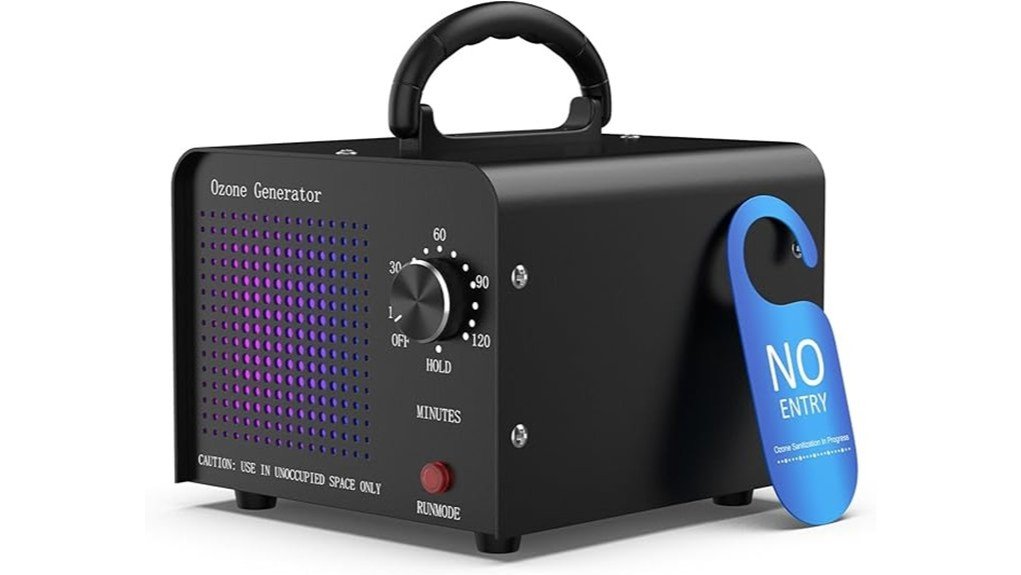
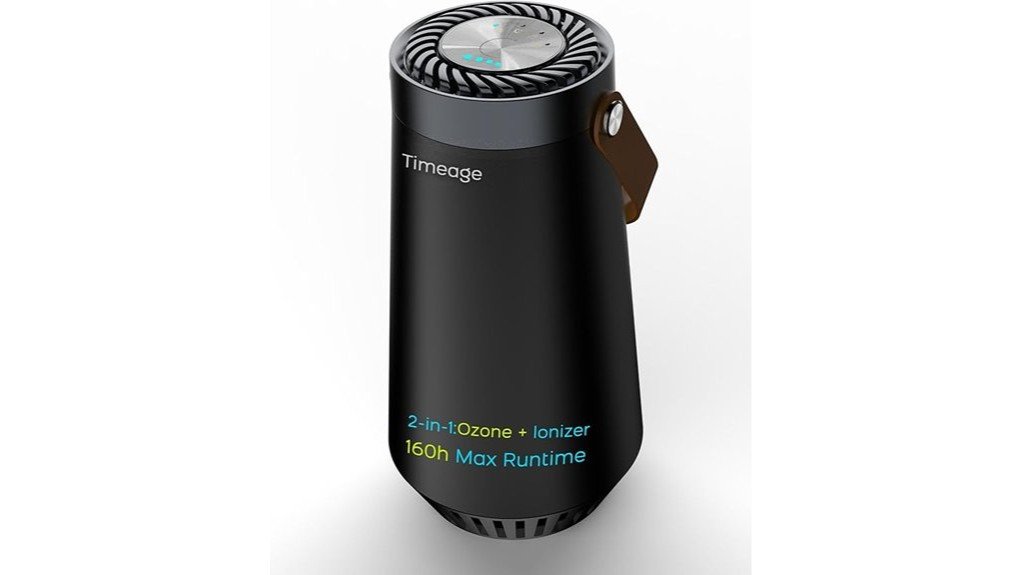
Stubborn smoke, pet, food, or musty odors can stay in a car even after you clean the visible source. The Timeage AIR11 Ozone Generator for Car combines a 300-500 mg/h ozone mode with a separate negative-ion mode in a rechargeable, filterless unit. Its strongest advantage is portable, high-intensity odor treatment for an unoccupied vehicle, while its biggest limitation is equally important: ozone mode is not meant to run while you, children, or pets are inside. This review explains the verified specs, realistic use cases, safety limits, and who should choose a different type of car air cleaner.
Quick Verdict
Rating: 7/10, Recommended with caveats
Best For: Car owners and detailers who need a rechargeable ozone unit for short odor-treatment cycles in an empty vehicle.
Bottom Line: The Timeage AIR11 offers a strong 300-500 mg/h ozone output, a 10,000mAh battery, four operating modes, and a compact form. The tradeoff is that ozone requires strict safety habits and does not replace mechanical filtration for everyday particle removal while you drive.
| Specification | Detail |
|---|---|
| Brand | Timeage |
| Model | AIR11 |
| Product type | 2-in-1 ozone generator and negative-ion generator |
| Ozone output | 300-500 mg/h O3 |
| Ion output | 100 million ions/cm³, manufacturer-listed |
| Battery | 10,000mAh rechargeable lithium-polymer battery |
| Maximum listed runtime | Up to 260 hours in ionizer mode and 360 hours in ozone mode, manufacturer-listed |
| Modes | Ionizer, Quiet Sleep, Daily Ozone, Strong Ozone |
| Strong Ozone cycle | 30-minute continuous cycle |
| Noise | Listing states about 5 dB, with Quiet Sleep Mode listed below 5 dB |
| Size | Amazon product details list 2.9 x 2.9 x 6.3 in; feature copy separately lists 2.68 x 2.68 x 5.87 in |
| Weight | Amazon product details list 14.4 oz; feature copy separately lists 0.85 lb |
| Filter | No filter |
| Included components | Car ozone machine and charging cable |
| Warranty | 1 year by Timeage, as listed on Amazon |
Key Takeaways
- The Timeage AIR11 combines a 300-500 mg/h ozone generator with a separate negative-ion mode.
- Its 10,000mAh rechargeable battery and compact body make it easier to use away from a wall outlet.
- Four modes give you different options, including a 30-minute Strong Ozone cycle and a separate ionizer setting.
- The unit is filterless, so there is no replacement filter cost, but it also does not provide HEPA-style mechanical particle capture.
- Ozone mode should be used only in unoccupied spaces. It is not a mode to run while driving or sitting in the vehicle.
What Is the Timeage AIR11?
The Timeage AIR11 is a battery-powered car odor-treatment device that combines two different technologies. Its ozone function is designed for short, high-intensity deodorizing cycles, while the negative-ion function is intended as a separate everyday mode. The Amazon listing identifies the unit as model AIR11 and includes a charging cable.
The main reason to consider it is portability. You are not tied to a wall outlet, and the body is roughly the size of a tall drink container. It can fit into a car cabin or other small enclosed area without taking much space, although Amazon currently shows two slightly different dimension and weight sets in different parts of the same listing.
Who Should Buy It?
Best For
- Car owners dealing with lingering smoke, pet, food, or other stubborn odors after the odor source has been cleaned.
- Auto detailers who want a rechargeable ozone unit for controlled treatments between vehicle uses.
- Buyers who understand ozone safety and can keep the treatment area completely unoccupied during ozone operation.
Skip If
- You want a purifier that you can safely run as your main air cleaner while driving.
- Your main goal is HEPA-style capture of fine particles and allergens rather than odor treatment.
- You cannot reliably keep people and pets out of the treated space during ozone cycles.
Before You Buy: Ozone is a lung irritant. Do not use the ozone modes while anyone is inside the car, and do not treat a vehicle with children or pets left inside. Follow the product instructions for treatment and re-entry, and ventilate the space before normal use.
Ozone Deodorization Performance
The AIR11 lists an ozone output of 300-500 mg/h, which is intended for short, concentrated odor-treatment sessions rather than continuous occupied use. The 30-minute Strong Ozone mode is the most direct option for a vehicle with a persistent smell after normal cleaning has not fully solved it.
Ozone can react with some odor-causing compounds, but it should not be treated as a substitute for removing the source. If a drink spilled into carpet, food is trapped under a seat, or smoke residue coats interior surfaces, physical cleaning comes first. Ozone treatment is better viewed as a finishing step for lingering odor, not a replacement for detailing.
How Does the Ozone Generator Work for Odor Elimination?
Ozone is a reactive gas. In a closed, unoccupied space, it can react with some odor molecules and change the compounds responsible for the smell. Results depend on the source, the material holding the odor, the amount of ozone, contact time, and ventilation.
This is also why you should avoid vague claims that ozone simply makes every pollutant harmless. Some contaminants do not react quickly, and ozone can create irritating reaction products. For routine particle control while people are in the car, mechanical filtration is the more appropriate technology.
Modes, Battery Life, and Controls
The AIR11 uses one-button controls and lists four operating modes: Ionizer Mode, Quiet Sleep Mode, Daily Ozone Mode, and Strong Ozone Mode. Strong Ozone runs continuously for 30 minutes, while Daily Ozone uses an intermittent one-hour pattern. That gives you more control than a simple on/off ozone generator.
The built-in 10,000mAh battery is one of the product’s most useful practical features. Timeage lists maximum runtimes of up to 260 hours for ionizer use and up to 360 hours for ozone operation. Treat those as manufacturer maximums, because real runtime can vary with mode, battery condition, charging habits, and use pattern.
Quiet Operation
The listing describes Quiet Sleep Mode as below 5 dB and separately lists a 5 dB noise level. With no large fan or replaceable filter, the unit is designed to operate with very little mechanical noise. Noise is less important during ozone treatment because the space should be empty, but it can matter if you use the separate ionizer mode as directed.
Ozone vs. Ionizer: Which Mode Fits Your Need?
| Feature | Ozone Mode | Ionizer Mode |
|---|---|---|
| Main purpose | Short-term odor treatment | Charges airborne particles so they tend to settle onto surfaces |
| Listed output | 300-500 mg/h O3 | 100 million ions/cm³ |
| Best use | Empty car during a controlled deodorizing cycle | Separate mode used according to the product instructions |
| Main limitation | Not for occupied spaces | Does not replace a HEPA filter or remove particles by trapping them in filter media |
How It Performs in Real Use
After Smoke or Pet Odor Cleanup
This is the clearest use case. After you remove ash, hair, litter residue, stains, or other odor sources and clean the surfaces, a short ozone cycle can address smell that remains in fabrics and the cabin. The portable battery makes it easy to place the AIR11 in the car without running an extension cord.
After a Food Spill
If food or liquid has soaked into upholstery, clean and dry the area first. Running ozone without removing the source can leave you with the same underlying problem. Once the source is handled, the AIR11 gives you a compact finishing option for lingering odor.
For Auto Detailing
The 30-minute Strong Ozone mode can fit a detailer’s workflow when the vehicle can remain closed and empty during treatment. Its rechargeable design is convenient if you move between cars, but you still need a safe process for ventilation and re-entry before returning the vehicle to a customer.
For Everyday Driving
Ozone mode is not the right choice while you drive. If your main concern is traffic pollution, fine dust, or allergens during occupied use, a true filter-based car purifier is a better match. The AIR11’s separate ionizer mode does not provide the same kind of particle capture as a mechanical filter.
How to Use It More Safely and Effectively
- Remove the odor source first. Vacuum, wipe, wash, or dry the affected area before relying on ozone.
- Keep the vehicle unoccupied. No person or pet should remain inside during ozone operation.
- Choose a mode that matches the job. Avoid longer or stronger treatment than the product instructions call for.
- Ventilate before re-entry. After treatment, air out the vehicle and follow the manufacturer’s instructions before normal use.
- Keep the unit dry and unobstructed. Do not cover the air openings, and store the device in a dry place between uses.
Pro Tip: For stubborn car odor, spend more time on source cleaning than on extending the ozone cycle. Removing residue first gives the treatment a better chance to address what is left instead of masking an ongoing problem.
Safety, Maintenance, and Filterless Design
The most important safety rule is simple: never use the ozone mode in an occupied car. Ozone can irritate the respiratory system, so children, adults, and pets should stay out during treatment. You should also avoid treating ozone as a daily wellness feature or as a substitute for ventilation and source control.
The AIR11 is listed as filterless. That means you do not have a filter-replacement schedule or recurring filter cost. Basic care is mainly about keeping the exterior and openings clean, charging the battery as needed, storing the unit in a dry place, and following the manufacturer instructions rather than opening or modifying the device.
Pros and Cons
Pros
- 300-500 mg/h ozone output for short odor-treatment cycles.
- 10,000mAh rechargeable battery supports cordless use.
- Four modes provide more control than a basic on/off unit.
- Filterless design avoids replacement-filter costs.
- Amazon lists a charging cable and a 1-year Timeage warranty.
Cons
- Ozone mode cannot be used while people or pets occupy the vehicle.
- No HEPA or other mechanical filter for captured-particle removal.
- Amazon currently shows conflicting size and weight figures in different listing sections.
Is It Worth the Price?
Feature-wise, the AIR11 sits in the mid-range portable odor-treatment category: you get rechargeable power, ozone plus ionizer functions, four operating modes, and no filter replacements. That feature set can be worthwhile if you routinely treat cars or have a recurring need for portable odor remediation.
The value is weaker if you mainly want cleaner air while driving. In that case, paying for a filter-based purifier makes more sense because the primary job is particle capture during occupied use. Compare the current seller price with other rechargeable ozone units before deciding, because a higher price is difficult to justify if you will use the ozone function only occasionally.
How It Compares to Alternatives
Compared with the LKT K200, another compact ozone generator with a listed 300-500 mg/h output, the Timeage AIR11 puts more emphasis on its 10,000mAh battery and separate ionizer modes. The practical choice between them comes down to battery/runtime needs, controls, and current price.
If your priority is air cleaning while you are actually in the car, a mechanical filtration option such as the IQAir Atem Car is a very different alternative. It uses filter media to capture particles and gases rather than intentionally generating ozone, but it is larger and positioned as a premium in-cabin purifier. The AIR11 makes more sense for controlled odor treatment in an empty vehicle, not as a substitute for that type of filter-based system.
Frequently Asked Questions
Can I use the Timeage AIR11 while driving?
Do not use the ozone modes while driving or while anyone is inside the vehicle. Ozone treatment should be limited to an unoccupied space, followed by ventilation and the manufacturer’s re-entry instructions.
Is it safe to use around pets and children?
Pets and children should not be in the car during ozone operation. Treat the cabin only when it is empty, then ventilate and follow the product instructions before anyone returns.
Does the AIR11 have a replaceable filter?
No. Amazon lists the AIR11 as a no-filter device. That removes filter replacement costs, but it also means the unit does not trap particles in HEPA-style filter media.
How long is the Strong Ozone cycle?
The product listing describes Strong Ozone Mode as a continuous 30-minute cycle. Do not extend treatment simply because an odor is severe; clean the source first and follow the product instructions.
How often should I use the ozone generator?
There is no good reason to run ozone on a fixed weekly schedule just for routine air quality. Use ozone only when you have a specific odor-treatment need and can follow the manufacturer’s safety directions.
Does it remove the cause of an odor?
Not necessarily. You should remove food, smoke residue, pet mess, moisture, or other sources first. The AIR11 is better used as a follow-up treatment for odor that remains after cleaning.
Is the listed size accurate?
Amazon currently shows two sets of measurements. The product-details table lists 2.9 x 2.9 x 6.3 inches and 14.4 ounces, while feature copy lists 2.68 x 2.68 x 5.87 inches and 0.85 lb, so allow for a small listing discrepancy.
The Bottom Line
The Timeage AIR11 is worth considering if you need a compact, rechargeable ozone generator for occasional car odor treatment and you can follow strict unoccupied-space precautions. Skip it if your main goal is continuous in-cabin particle filtration while driving, because its filterless ozone/ionizer design serves a different purpose.