Reviewed for accuracy: July 7, 2026
Use dehumidifier mode on a portable air conditioner when the room feels damp but does not need strong cooling. Select Dry, Dehumidify, or the water-droplet icon, keep doors and windows closed, set a humidity target near 45%, and drain the collected water before the tank fills. Most portable ACs still need the exhaust hose connected because the unit must move heat outside while it condenses moisture. If humidity stays above 60%, the room smells musty, or condensation keeps returning, use a dedicated dehumidifier instead of relying on dry mode alone.
Quick Answer
Turn on Dry or Dehumidify mode, aim for 30% to 50% relative humidity, and start around 45%. Empty the tank often or connect a continuous drain hose if your model supports it. Keep the exhaust hose and window kit sealed unless your owner’s manual clearly says dry mode can run without venting.
How to Use Dehumidifier Mode on a Portable Air Conditioner
- Move the unit into the damp room. Keep the intake and outlet clear so air can move through the portable AC.
- Install the exhaust hose and window kit. Seal gaps around the window adapter to stop humid outdoor air from leaking back inside.
- Select Dry or Dehumidify mode. Look for the water-droplet icon on the control panel or remote.
- Set the humidity target. Use 45% as a starting point, then adjust within the 30% to 50% comfort range.
- Choose drainage. Use the tank for short sessions. Use continuous drainage for long runs if your model allows it.
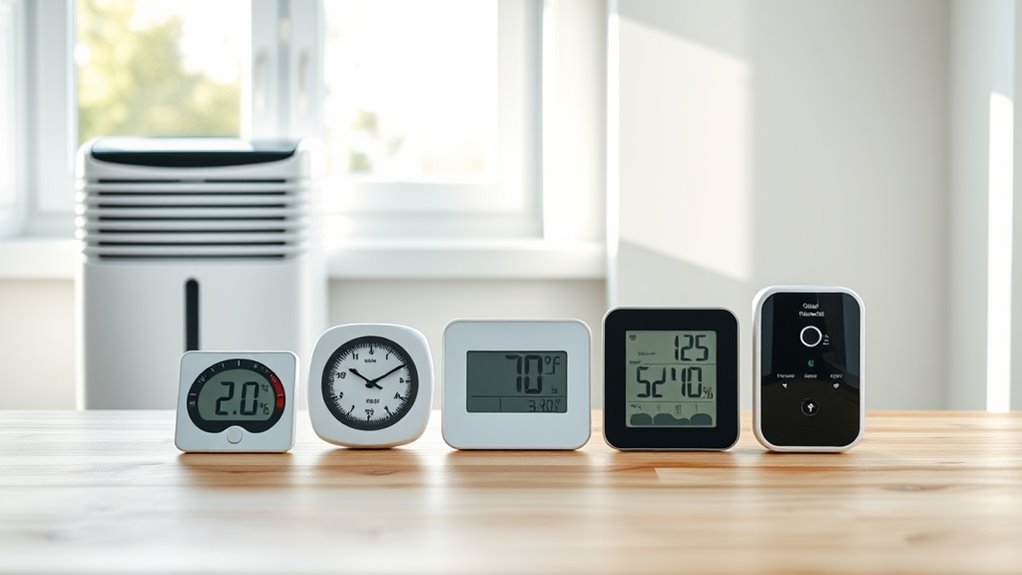
- Check the room with a hygrometer. The display on the unit may read the air near the machine, not the whole room.
How Portable AC Dry Mode Works
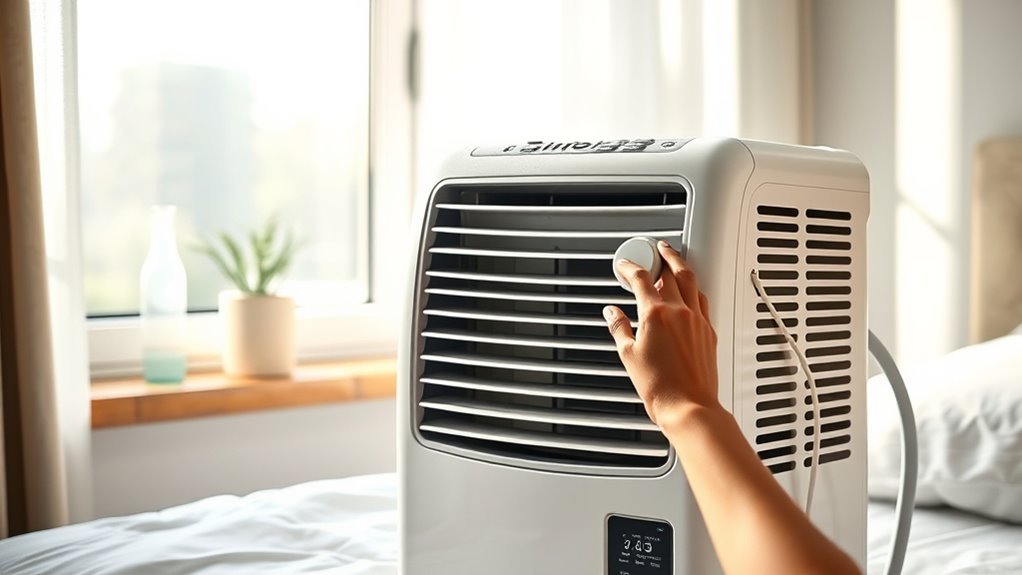
When you switch a portable air conditioner to dry mode, the unit focuses on moisture removal instead of aggressive cooling. Damp room air passes over cold evaporator coils. Water vapor condenses on those coils, then collects in the internal tank, drains through a hose, or leaves through the model’s condensate system.
Dry mode can still cool the room slightly because the refrigeration cycle is active. The difference is control. The unit usually lowers fan output, limits fan adjustment, or changes compressor cycling so it removes moisture without chasing a cold temperature setpoint. Exact behavior varies by model, so your owner’s manual should control if it conflicts with general guidance.
Think of dry mode as a comfort setting for light to moderate humidity. It helps when the room feels sticky, rainy weather pushes indoor moisture up, or you want a drier feel without making the space much colder. It is not the same as a dedicated dehumidifier for basements, laundry rooms, storage rooms, or recurring mold-risk moisture.
What Humidity Setting Should You Use?
Set the humidity target between 30% and 50%. A good starting point is 45%, because it usually feels comfortable without over-drying the room. If windows fog, fabrics feel damp, or the air still feels heavy, lower the setpoint a few points. If your throat, skin, or eyes feel dry, raise it slightly.
Do not chase the lowest number just because the unit allows it. Lower settings can make the portable AC run longer, fill the tank faster, and waste energy if the room has outdoor air leaks. Close windows, reduce moisture sources, and check the actual room humidity with a separate hygrometer before blaming the AC.
Rule of thumb
Use 45% RH for everyday comfort, 40% to 45% for sticky rooms, and 50% when the air starts to feel too dry. If humidity stays above 60% after repeated dry-mode sessions, treat it as a moisture problem, not just an AC setting problem.
How to Drain or Empty the Water Tank
Dehumidifier mode removes real water from the air, so drainage matters. In humid rooms, the internal tank can fill quickly and trigger an automatic shutoff. Check the water-level indicator during the first few sessions so you learn how fast your room fills the tank.
If you use the tank, empty it before it reaches the shutoff point. Rinse and dry it regularly so standing water does not create odors or mildew. If your portable AC supports continuous drainage, attach the correct hose to the drain port and run it to a floor drain, sink, or approved collection point.
Keep the drain hose sloping downward unless your model has a pump. A flat, kinked, or uphill hose can leave water sitting inside the line. After connecting the hose, run the unit for a short test and check for leaks around the drain cap, hose fitting, and floor area.
Recommended Products

MULTIFUNCTIONAL UNIVERSAL DRAIN HOSE: This drain hose has multiple uses, in addition to being suitable for dehumidifier drainage, it is also suitable for air conditioner drainage as well as being suitable for a variety of gardening tasks. Additionally our dehumidifier drain hose can be cut to your desired length to customize it for different situations.

Extra Long Hose:The air conditioning drain hoses are 10 feet long. The long hose will meet the requirements of drainage at different heights.
Does a Portable AC Need Venting in Dehumidifier Mode?
In most cases, yes. A portable AC uses refrigeration to condense moisture, and that process creates heat that usually needs to leave through the exhaust hose. If the hose is disconnected, the room may dry less effectively, heat up, or pull humid replacement air through gaps around doors and windows.
Some models handle condensate differently, and a few owner’s manuals may give model-specific dry-mode instructions. Follow your manual first. As a safe default, keep the exhaust hose attached, use the window kit, and seal the window opening before running dry mode for more than a short test.
When Dry Mode Is Enough vs. When You Need a Dehumidifier
|
Situation |
Use Portable AC Dry Mode |
Use a Dedicated Dehumidifier |
|---|---|---|
|
Room feels sticky but not wet |
Good choice |
Usually not necessary |
|
Humidity spike after rain |
Good for short sessions |
Use if humidity keeps returning |
|
Basement, laundry room, or storage room |
May help only if the AC serves that room |
Better choice for ongoing moisture |
|
Musty smell, condensation, or damp walls |
Not enough by itself |
Better choice, plus fix the moisture source |
|
Need cooling and light drying together |
Good choice |
May add heat back to the room |
Dry mode works best as a comfort tool. It can make a muggy room feel better without forcing a lower temperature. A dedicated dehumidifier works better when moisture is persistent, localized, or tied to building issues such as leaks, poor ventilation, damp foundations, or wet laundry drying indoors.
Recommended Products

Semiconductor dehumidifiers use thermoelectric cooling to remove moisture from the air. They create a drier, more comfortable environment by reducing humidity and improving air quality.

POWERFUL 2,500 SQ. FT. COVERAGE - Stop letting sticky, heavy air dictate your comfort. The BANABIE dehumidifier utilizes a high-efficiency rotary compressor to deliver heavy-duty moisture removal, extracting 32 pints daily (at 95°F, 90%RH). Engineered with a smart integrated airflow system, this unit effectively covers up to 2,500 Sq. Ft., ensuring that your basement, crawl space, or large open floor plans stay bone-dry

3 Smart Modes for Every Space — Whether you need everyday moisture control, faster clothes drying, or continuous protection in damp areas, this dehumidifier has you covered. DEHU mode maintains your ideal living room humidity. DRY mode speeds up drying delicate clothes indoors. CONT mode runs nonstop for basements, crawl spaces, and any area that never seems to dry out. All adjusted with a single tap on the LED touchscreen.
Fix Common Portable AC Dry Mode Problems
If your portable air conditioner is not removing moisture well, first confirm it is set to Dry or Dehumidify, not Fan mode. Fan mode moves air but does not condense much moisture because the evaporator coil is not actively cooling the air.
- Humidity is not dropping: Close windows and exterior doors, seal the exhaust kit, and move the unit closer to the damp area.
- The tank fills too fast: Switch to continuous drainage if available, or run shorter sessions and empty the tank more often.
- The room gets warmer: Check that the exhaust hose is connected, short, uncrushed, and sealed at the window kit.
- Airflow feels weak: Clean the filter, clear intake grilles, and move furniture away from the unit.
- Water leaks: Check the drain cap, hose slope, hose connection, and tank seating before restarting the unit.
- Musty odor remains: Clean and dry the tank, filter, and drain path. If the smell returns, inspect the room for hidden damp materials.
If the portable AC still struggles after these checks, compare room size, moisture load, and the unit’s manual. A portable AC may not control humidity in a large, leaky, or chronically damp space. In that case, fix the moisture source and use a dedicated dehumidifier sized for the room.
Recommended Products

Three-in-One Unit: Our 10,000 BTU (5,550 DOE) air conditioner also functions as a dehumidifier & fan. This portable air conditioner has a full function remote control & top mounted control panel with LED display

HANDY AND PORTABLE: The SereneLife Portable Air Conditioner System features a lightweight, handy, sleek body design intended to be used in the bedroom, living room or garage at home or office. It features rolling wheels for easy portability

𝗨𝗹𝘁𝗿𝗮 𝗣𝗼𝘄𝗲𝗿𝗳𝘂𝗹 𝗜𝗰𝗲𝗖𝗼𝗼𝗹 𝗦𝘆𝘀𝘁𝗲𝗺: Increase coverage up to 14 ft. away with this 8000 BTU ASHRAE (5000 BTU SACC) portable air conditioners and its best buddy, the fan, giving you instant chills even in hot summer days. Additionally, you can keep the temperature between 61°F to 86°F using various controls to tailor the cooling to your preferences.
Related Guides
Frequently Asked Questions
How do you use a portable AC as a dehumidifier?
Select Dry or Dehumidify mode, set the humidity target around 45%, connect the exhaust hose, and keep the room closed off from outdoor humidity. Empty the tank when it fills, or connect a continuous drain hose if your model supports it.
What humidity should I set my portable AC to?
Use 30% to 50% relative humidity as the normal target range. Start at 45%. Lower it slightly if the room still feels damp, or raise it if the air feels too dry.
Can I run my AC on dry mode all day?
You can run dry mode for long sessions if the unit is draining properly, the filter is clean, and the room still needs moisture removal. Do not run it blindly all day if the room has already reached the target humidity. Use a hygrometer, check the tank or drain hose, and follow your owner’s manual.
Does a portable AC need venting in dehumidifier mode?
Usually, yes. Most portable ACs still need the exhaust hose because the unit must move heat outside while it condenses moisture. Follow your owner’s manual if it gives different instructions for your exact model.
Is dry mode as good as a real dehumidifier?
No. Dry mode is useful for light humidity and comfort. A dedicated dehumidifier is better for recurring dampness, basements, storage rooms, laundry areas, mold-risk rooms, and spaces where humidity keeps returning after the AC stops.
Should you use a dehumidifier if you have COPD?
Ask your clinician for advice that fits your symptoms and home. In general, keeping indoor humidity in a moderate range can help reduce dampness, mold, and dust-mite conditions. Avoid making the air too dry, because very dry air can irritate some people’s airways.
Sources Checked
- EPA: Care for Your Air indoor humidity guidance
- Haier: Portable Air Conditioner Dehumidify Mode
- LG: When to Use a Dehumidifier vs AC Dry Mode
- Hisense: How Portable Air Conditioners Work
- Danby: Using a Portable Air Conditioner as a Dehumidifier
Conclusion
Use your portable AC’s dehumidifier mode when the air feels sticky but the room does not need full cooling. Set a realistic humidity target, keep the exhaust and drain paths clear, and check the tank before it shuts the unit down. If dampness keeps coming back, move beyond dry mode: measure the humidity, fix the moisture source, and use a dedicated dehumidifier for steady control.