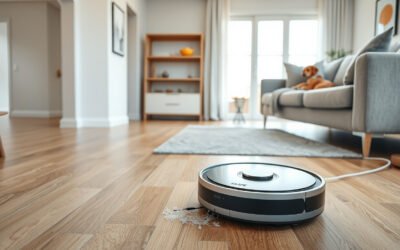
Do robot vacuums work on hardwood floors? Yes, and they can make daily cleaning much easier. However, the results depend on the vacuum’s brushes, suction, navigation, and how well you maintain it. Choosing the right features also helps protect your floor from scratches and unwanted moisture.
Quick Answer
Yes, robot vacuums work well on hardwood floors. They remove dust, crumbs, and pet hair with little daily effort. Models with gentle brushes, clean rubberized wheels, and reliable navigation are especially useful. However, they cannot replace every deep-cleaning task, and robot mopping should only be used when your flooring manufacturer permits it.
Key Takeaways
- Soft rollers and non-abrasive brushes help reduce wear on delicate hardwood finishes.
- Edge-cleaning systems and accurate room mapping reduce missed dust along baseboards and furniture.
- Pet owners benefit from anti-tangle brushes, good filtration, and regular cleaning schedules.
- Sand trapped in wheels or brushes can scratch floors, so equipment maintenance matters as much as cleaning power.
- Vacuum-only cleaning is the safer default when your wood floor’s moisture tolerance is uncertain.
Do Robot Vacuums Work Well on Hardwood Floors?
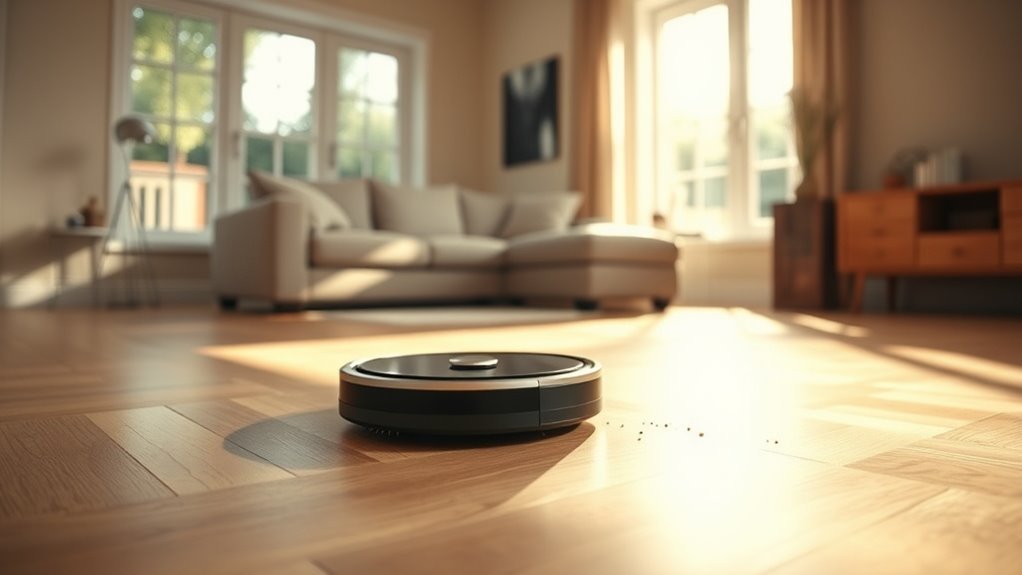
Yes, robot vacuums generally work well on hardwood floors. Their suction and side brushes collect loose dirt from smooth surfaces, while suitable wheels and brush designs help limit contact damage. They are particularly helpful for keeping busy rooms clean between thorough cleaning sessions.
Hardwood floors do not trap debris as deeply as carpet. Dust, crumbs, and pet hair usually remain on the surface, making them easier for a robot vacuum to collect.
The National Wood Flooring Association recommends regular sweeping, dust mopping, or vacuuming with a bare-floor setting. Removing loose grit is important because particles dragged across wood can wear down the finish.
Models such as the Bissell FlexClean FurForce 4270L and iRobot Roomba Max 705 have shown strong bare-floor results in independent evaluations.
Some advanced robot vacuums also adjust suction when they detect heavier debris or changes in floor type. This helps them balance cleaning performance with battery use.
However, even a high-performing robot cannot reach every narrow gap or remove every stubborn stain. You will still need occasional manual cleaning around furniture, deep corners, and other difficult areas.
How Robot Vacuums Clean Bare Floors
Robot vacuums clean bare floors by combining suction, rotating brushes, and programmed movement. The brushes guide loose particles toward the intake, where airflow carries them into the dustbin. Navigation systems help the robot cover open areas and move around obstacles.
The most noticeable differences between models involve their ability to collect larger debris, reach edges, and avoid leaving scattered particles behind.
Bare Floor Pickup
On hardwood, a robot vacuum uses suction to lift dust and crumbs while its brushes move debris toward the intake. This works especially well on smooth, open surfaces where particles remain exposed.
Some robot vacuums automatically increase suction when they detect heavier dirt. Others let you select cleaning power through an app.
Many models can finish a small 4×5-foot area in under 10 minutes, although the actual time depends on navigation, room layout, cleaning mode, and obstacles.
For everyday maintenance, the following features help improve pickup:
- Strong suction: Helps collect fine dust and heavier particles.
- Soft rollers: Pick up debris while reducing harsh contact with the floor.
- Side brushes: Move particles from edges toward the main intake.
- Automatic suction control: Adjusts cleaning power on compatible models.
- Tangle-resistant brushes: Reduce hair wrapping around the roller.
Hardwood floors are generally easier for robots to navigate than thick carpets. However, very large crumbs, pebbles, and irregular objects may still require another pass or manual removal.
Edge and Corner Cleaning
Edge cleaning depends on the robot’s brush reach, body shape, and navigation. Side brushes sweep dust away from baseboards, while mapping systems guide the machine along walls and furniture.
This matters because dust and pet hair often collect where the floor meets a wall.
Some models have extendable brushes or dedicated edge-cleaning mechanisms. Others rely on fixed brushes, which may leave a narrow strip of dirt near baseboards.
Advanced navigation can also improve coverage by reducing repeated passes over clean areas and directing the robot toward missed spaces.
Low-profile designs offer another advantage. They can move under some beds, sofas, and cabinets where upright vacuums are difficult to use.
However, narrow corners, chair legs, high thresholds, and tightly arranged furniture remain challenging. Even a capable robot may need occasional manual follow-up in these areas.
Why Hardwood Floors Need Soft Brushes
Hardwood floors benefit from soft brushes because repeated contact with abrasive materials can scratch or dull the finish. A suitable robot vacuum should collect dirt without dragging hard particles across the surface.
Soft rollers and flexible rubber brush systems are often better choices than aggressive, stiff-bristle designs for routine hardwood cleaning.
Several design details help protect the floor:
- Soft brushes: Reduce abrasive contact during repeated passes.
- Rubberized wheels: Provide traction while limiting harsh contact with the finish.
- Flexible side brushes: Sweep debris toward the intake without excessive scraping.
- Suitable suction settings: Help collect dirt without relying on aggressive brush action.
- Regular maintenance: Prevents trapped grit from turning gentle components into abrasive surfaces.
Studies on rubberized surfaces have been cited in support of reduced visible marking on hardwood floors. However, brush material alone cannot guarantee that a robot will never leave scratches.
The condition of the wheels, floor finish, and particles caught underneath the machine also affect the risk.
For delicate or newly refinished floors, a gentle cleaning mode and a supervised first run are sensible precautions.
What Robot Vacuums Pick Up Best
Robot vacuums perform best on common household debris such as fine dust, crumbs, loose dirt, and pet hair. These materials are usually easy to move toward the suction opening on smooth hardwood.
Cleaning performance can change with particle size, suction strength, and brush design.
- Fine dust: Usually collected effectively during routine passes.
- Pet hair: Easy to gather from bare floors, especially with anti-tangle brushes.
- Small crumbs: Often removed in one pass when suction and brush movement are well matched.
- Larger food particles: May scatter if fast-moving side brushes push them away.
- Sand and grit: Can be collected, but larger sharp particles deserve extra caution because they may scratch the finish.
- Sticky residue: Usually requires a floor-approved cleaning method rather than dry vacuuming.
A robot’s first pass may not collect every particle. Some machines perform better after repeated cleaning, especially near baseboards and furniture.
For daily household messes, this is rarely a major problem. Regular scheduled cleaning can prevent debris from building up between deeper cleaning sessions.
Can Robot Vacuums Handle Pet Hair?
Yes, robot vacuums can handle pet hair effectively on hardwood floors. Since hair remains on the surface instead of becoming trapped in carpet fibers, a suitable robot can collect it with relatively little effort.
Models with rubber rollers and anti-tangle brushes are especially helpful in homes with shedding dogs or cats.
Pet hair is a natural fit for robot vacuums on hardwood, where loose strands are easy to gather into the suction path.
Side brushes move hair away from walls and furniture legs. The main brush and suction system then carry it into the dustbin.
However, long hair can wrap around brush ends, wheel axles, and other moving parts. Even models advertised as tangle-resistant may require cleaning.
For better results in a home with pets:
- Choose a robot with a rubber or anti-tangle brush system.
- Schedule regular cleaning before loose hair forms large clumps.
- Inspect brush ends and wheel axles for wrapped hair.
- Empty the dustbin when needed, even if the robot has a self-emptying dock.
- Clean or replace filters according to the manufacturer’s instructions.
If your home also has rugs or carpets, compare pet-hair performance on those surfaces separately. A robot that collects hair well from hardwood may struggle with hair embedded in thick carpet.
For households with heavy shedding, regular automated vacuuming can reduce the amount of hair left on the floor each day.
How to Prevent Scratches and Scuffs
Robot vacuums are generally suitable for hardwood, but they can cause marks when grit becomes trapped in the wheels or brushes. The safest approach is to inspect the machine, remove hazardous debris, and choose settings designed for delicate flooring.
Small grains of sand, pebbles, and other hard particles deserve special attention. If they become lodged underneath the robot, repeated movement may drag them across the floor.
Follow these steps before and during regular cleaning:
- Inspect the wheels. Look for trapped grit, hair, or damaged rubber. Make sure each wheel turns freely.
- Check the main brush. Remove tangled hair and particles that could scrape the floor.
- Clear sharp debris. Pick up pebbles, glass, and other potentially damaging objects before running the machine.
- Remove loose obstacles. Keep cords, small toys, and lightweight objects out of the cleaning path.
- Use suitable settings. Select a hardwood or gentle cleaning mode when your robot provides one.
- Inspect the floor. Check for new marks after the first few cleaning runs.
Wheel maintenance is particularly important. According to iRobot’s caster-wheel maintenance guidance, hair and debris trapped in a front wheel can cause floor damage. The company recommends cleaning the caster wheel every two weeks, although individual models and cleaning conditions may require different schedules.
The following checklist helps you maintain safer operation:
| Check | Why it matters | Action |
|---|---|---|
| Wheels | Reduce scratching | Inspect weekly |
| Brushes | Protect finish | Choose soft bristles |
| Floor debris | Prevent damage | Clear grit first |
| Scheduling | Limit hazards | Run at set times |
| Maintenance | Keep motion smooth | Clean after use |
Pro Tip: Watch your robot complete one cleaning cycle before using unattended schedules. This helps you identify spots where it drags objects, struggles with thresholds, or repeatedly rubs against furniture. Set no-go zones around problem areas when your model supports them.
If you notice scratches, stop using the robot until you identify the cause. Inspect the wheels and brush assembly, then test the machine on a less visible area after correcting the problem.
For older hardwood with a worn or delicate finish, a flooring professional can help determine whether the surface needs additional protection.
Is Mopping Safe on Hardwood Floors?
Robot mopping can be suitable for some sealed hardwood floors, but it is not automatically safe for every wood finish. The floor manufacturer’s care instructions should take priority over a robot manufacturer’s general compatibility claims.
Many vacuum-and-mop robots control water output and use soft cleaning pads. However, excessive moisture can enter floorboard joints, damage the finish, and cause swelling or warping.
Warning: Do not use a robot’s wet-mopping function on unsealed, damaged, or moisture-sensitive hardwood. Some flooring manufacturers prohibit wet mopping even on finished floors. If you cannot confirm that your floor allows machine mopping, use vacuum-only mode.
The Shaw Floors hardwood care guide advises against wet and steam mops. It recommends regular vacuuming and cleaning methods suitable for the floor’s finish.
If your flooring manufacturer explicitly approves damp robot mopping, take these precautions:
- Use controlled water output: Select the lowest suitable setting and avoid leaving visible pools of water.
- Check the floor finish: Avoid mopping areas with exposed wood, worn coatings, or open joints.
- Use compatible cleaning solutions: Follow both the flooring and robot manufacturers’ instructions.
- Keep mop pads clean: Dirty pads can spread grit and leave streaks.
- Inspect the floor afterward: Stop using the mop if moisture remains near joints or edges.
Some robot vacuums can automatically lift or remove their mop pads when cleaning carpets. Others allow you to define no-mop zones through room mapping.
These features are useful in homes with mixed flooring, but they do not remove the moisture risks associated with hardwood.
For many households, regular dry vacuuming combined with occasional manufacturer-approved manual cleaning remains the safer approach.
Best Features for Hardwood Floors
The best robot vacuum features for hardwood focus on effective debris removal, gentle floor contact, and reliable navigation. High suction alone does not guarantee better results.
A balanced combination of brushes, sensors, edge cleaning, and maintenance features usually matters more than one impressive specification.
Strong Suction and Brushes
Strong suction helps a robot vacuum collect fine dust, crumbs, and loose debris from hardwood floors. However, its brush design affects whether particles enter the intake or scatter across the surface.
For homes with mostly bare floors, look for these features:
- Soft or flexible main brushes: Help collect particles without aggressive floor contact.
- Tangle-resistant rollers: Reduce hair wrapping, especially in pet-friendly homes.
- Effective side brushes: Sweep particles inward from walls and corners.
- Automatic suction adjustment: Changes power according to detected debris or floor conditions on supported models.
- Efficient airflow: Helps maintain pickup as the dustbin fills.
- Accessible brush assemblies: Make routine cleaning and maintenance easier.
Not every hardwood floor needs a robot running at maximum suction. Fine dust often requires less power than heavier debris.
If a model allows manual adjustment, you can select a suitable cleaning mode based on the amount of dirt present.
Safe Wheels and Sensors
Wheels and sensors help a robot move safely across hardwood, around furniture, and between rooms. Soft rubberized wheels reduce harsh contact, while navigation sensors help the machine follow a planned cleaning route.
Many advanced robot vacuums use LiDAR, cameras, or other sensors to map rooms and detect obstacles.
LiDAR uses reflected light to measure distances and build a map of the surrounding space. This can help a robot clean systematically instead of moving randomly.
Obstacle-avoidance sensors may also help the machine avoid cords, shoes, and furniture legs. However, mapping and obstacle avoidance are not the same feature. A robot may map a room accurately but still fail to recognize small objects on the floor.
Some advanced machines use floor or dirt sensors to change suction and cleaning behavior. Others offer app-controlled settings rather than fully automatic adjustment.
The most useful combination for hardwood is:
- Clean, soft-contact wheels
- Reliable room mapping
- Effective obstacle detection
- Gentle brush movement
- Adjustable cleaning power
- No-go zones for delicate areas
These features can improve coverage and reduce unnecessary contact with furniture and obstacles. Still, regular wheel and brush inspections remain essential.
Best Robot Vacuums for Hardwood Floors
The best robot vacuum for hardwood floors depends on your cleaning priorities. Some models excel at dust and pet hair pickup, while others provide better navigation, edge cleaning, or automated maintenance.
Independent RTINGS hardwood-floor testing identifies the Roborock Saros 10R as a strong overall choice, particularly for its bare-floor pickup and obstacle handling.
However, the models below offer different advantages. These comparisons are based on published manufacturer specifications and independent evaluations, not firsthand testing for this article.
iRobot Roomba Max 705
The iRobot Roomba Max 705 Vac is a strong option for households with pets. Its dual rubber brushes are designed to reduce tangles while collecting loose dirt and hair.
The Vac model includes an AutoEmpty dock, making routine dust disposal easier. It also uses LiDAR mapping and obstacle-avoidance technology.
It is important to distinguish this vacuum-only version from the separate Roomba Max 705 Combo, which adds mopping capabilities.
Best for: Pet hair, automated dust disposal, and regular hardwood vacuuming.
Bissell FlexClean FurForce 4270L
The Bissell FlexClean FurForce 4270L combines vacuuming and mopping with a self-emptying base.
It includes a NeverTangle brush roll and 360React LiDAR navigation. Bissell lists sealed wood floors among its supported surfaces.
The robot is designed to handle pet hair, dust, and everyday debris on hard floors and carpets.
Its mopping feature should only be used on hardwood when the flooring manufacturer approves that cleaning method.
Best for: Homes with pets and mixed flooring that need strong routine debris pickup.
Dyson 360 Vis Nav
The Dyson 360 Vis Nav focuses on strong vacuuming rather than wet mopping.
It uses a full-width triple-action brush bar with soft nylon fibers, carbon fiber filaments, and stiffer bristles for different floor types.
Its D-shaped design and extending side duct help collect dust near walls. Dyson also provides automatic suction adjustment based on detected dirt.
The main trade-offs are its vacuum-only design, lack of a self-emptying dock, and the possibility of more noticeable noise during high-power cleaning.
Best for: Strong dry vacuuming, mixed floors, and edge-focused cleaning.
Mova P10 Pro Ultra Gen2
The Mova P10 Pro Ultra Gen2 combines powerful suction, rotating mop pads, and automated dock maintenance.
Mova specifies up to 26,000 Pa of suction and offers several adjustable suction levels. Its navigation system uses LiDAR and front-facing obstacle detection.
The robot also includes anti-tangle components designed to reduce hair buildup.
It performs well on bare floors, but furniture arrangements and obstacles may still affect cleaning coverage. As with other mop-equipped robots, hardwood moisture compatibility must be checked separately.
Best for: Homes seeking automated vacuuming and mopping with adjustable cleaning settings.
Roborock Saros 10R
The Roborock Saros 10R combines powerful suction, advanced navigation, and automated cleaning features.
It uses a DuoDivide main brush, anti-tangle side brush, and advanced obstacle-detection technology. Its slim design also helps it reach beneath some low furniture.
The multifunction dock can handle dust collection and mop maintenance, reducing daily manual work.
Independent testing has found strong hardwood pickup and obstacle handling. However, pet hair embedded in carpets may be more challenging than loose hair on bare floors.
Best for: Hardwood-focused homes that prioritize navigation, obstacle avoidance, and hands-free maintenance.
Here is a quick comparison of the main advantages and limitations:
| Robot Vacuum | Main Advantage | Main Limitation |
|---|---|---|
| iRobot Roomba Max 705 Vac | Pet hair pickup and self-emptying | Vac version does not mop |
| Bissell FlexClean FurForce 4270L | Strong bare-floor and pet-hair cleaning | Mopping requires floor compatibility |
| Dyson 360 Vis Nav | Strong suction and edge cleaning | No mopping or self-emptying dock |
| Mova P10 Pro Ultra Gen2 | Powerful suction and automated mop care | Complex layouts may affect navigation |
| Roborock Saros 10R | Hardwood pickup and obstacle handling | Carpet pet-hair pickup can be less effective |
For hardwood-only cleaning, focus first on debris pickup and gentle brush design. For busy homes with pets, anti-tangle rollers and self-emptying docks may deliver more practical value.
If your home includes delicate hardwood, expensive mopping technology is not necessarily an advantage. A reliable vacuum-only robot may be the better fit.
How Robot Vacuums Perform Day to Day
Robot vacuums are most useful when they clean hardwood floors regularly rather than waiting for heavy dirt to build up. Scheduled runs help collect dust, crumbs, and pet hair with less manual work.
How often you should run one depends on household activity, pets, and how quickly debris accumulates.
The National Wood Flooring Association recommends regular dry cleaning, with vacuuming as needed. Homes with frequent foot traffic or shedding pets may benefit from more frequent cleaning.
Advanced models such as the Roborock Saros 10R can map rooms and follow planned cleaning routes. More basic mapping models, including those in Roborock’s Q7 series, can also provide systematic room coverage, although their obstacle-avoidance capabilities differ.
In everyday use, you may notice several benefits:
- Less visible dust between manual cleaning sessions
- More consistent pet hair removal
- Cleaner areas underneath accessible furniture
- Reduced need for frequent manual sweeping
- Convenient scheduled cleaning during suitable hours
However, robot vacuums still require maintenance. Empty bins, clean brushes, and unobstructed sensors help them operate as intended.
If a robot starts missing debris, check the dustbin, brush assembly, filter, and wheels before assuming the suction motor has failed.
If it repeatedly misses an area, review its room map and remove obstacles that may prevent access. You can also use targeted room or zone cleaning when supported.
Regular vacuuming may help reduce dust buildup. The US Environmental Protection Agency also advises using suitable filtration because vacuuming can sometimes stir dust into the air. A well-maintained filter is useful, but a robot vacuum is not a substitute for proper ventilation or air filtration.
Over time, the biggest benefit is consistency. Instead of allowing dirt to accumulate for several days, your robot can help maintain a cleaner hardwood surface with less effort.
Frequently Asked Questions
What Is the Absolute Best Way to Clean Hardwood Floors?
The best approach is regular dry sweeping or vacuuming, followed by occasional cleaning with a product approved for your floor’s finish. Use gentle tools, remove grit promptly, and wipe spills before moisture reaches the joints. Avoid wet or steam mopping unless your flooring manufacturer specifically permits the method.
What Are the Downsides of Using a Robotic Vacuum Cleaner?
Robot vacuums can miss tight corners, struggle around clutter, and require regular brush and filter maintenance. Hair may become tangled, and grit trapped in wheels can scratch delicate floors. They also cannot replace every deep-cleaning task. Models with mopping features may damage hardwood if moisture is not properly controlled.
What Is the Best Robot Vacuum Cleaner for Hardwood Floors?
The Roborock Saros 10R is a strong overall choice for hardwood floors because of its debris pickup, navigation, and obstacle handling. The iRobot Roomba Max 705 Vac is another useful option, especially for households with pets. The better choice depends on your floor layout, cleaning needs, and preferred maintenance features.
What Is the Best Robot Vacuum Cleaner for Wooden Floors?
The Roborock Saros 10R is a strong option for wooden floors, offering effective cleaning and advanced navigation. Other options include the Roomba Max 705 and Dreame X60 Max Ultra. However, the condition and finish of your wooden floor matter more than the robot’s brand. Choose gentle brushes and avoid wet mopping unless your flooring manufacturer approves it.
Conclusion
Robot vacuums can clean hardwood floors effectively, especially when used for regular dust, crumbs, and pet hair removal. Models with gentle brushes, clean wheels, good navigation, and suitable suction settings offer the best balance of performance and floor protection.
For most homes, the safest starting point is a reliable dry-vacuuming routine. Keep the robot maintained, remove abrasive debris, and use wet-mopping features only when your floor’s care instructions allow them. This approach can reduce daily cleaning work while helping preserve your hardwood finish.
Sources
- National Wood Flooring Association: Recommended hardwood maintenance, dry vacuuming, moisture precautions, and cleaning methods.
- Shaw Floors Hardwood Care: Hardwood finish protection, cleaning recommendations, and wet-mopping restrictions.
- iRobot Caster Wheel Maintenance: Wheel cleaning guidance and the risk of floor damage from trapped debris.
- RTINGS Hardwood Robot Vacuum Testing: Independent evaluations of hardwood pickup, navigation, and model performance.
- BISSELL FlexClean FurForce 4270L: Official brush, navigation, cleaning, and dock specifications.
- iRobot Roomba Max 705 Vac: Official specifications for pet-hair cleaning, rubber brushes, navigation, and dust disposal.
- Dyson 360 Vis Nav: Brush design, suction adjustment, navigation, and hard-floor compatibility.
- MOVA P10 Pro Ultra Gen2: Official suction, navigation, brush, and mopping features.
- Roborock Saros 10R Support: Main brush, obstacle avoidance, navigation, and dock features.
- US Environmental Protection Agency: Indoor dust, vacuum filtration, and particulate matter control.