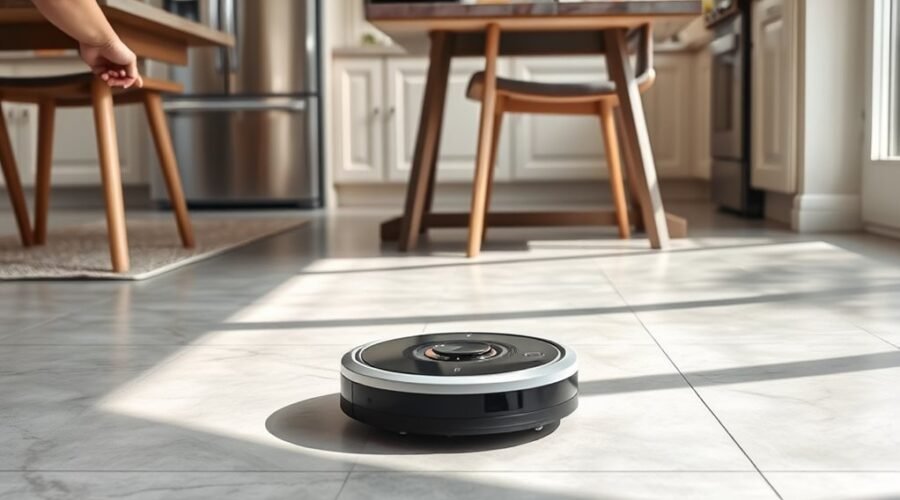
Robot vacuums work well on most tile floors, but some handle grout lines, edges, and sticky messes better than others. If you have ceramic or porcelain tile, the right robot can reduce daily sweeping and mopping. This guide explains which features matter, what these machines cannot clean, and how to protect your floor.
Quick Answer
Yes, robot vacuums work on tile floors, including ceramic and porcelain. They remove dust, crumbs, pet hair, and loose dirt from grout lines. Models with gentle brushes, reliable navigation, and adjustable suction perform especially well. Vacuum-mop combinations can also clean sealed tile, although stained grout and stubborn buildup still need manual scrubbing.
Key Takeaways
- Advertised suction power alone cannot predict how thoroughly a robot cleans grout or tile.
- Soft bristles, rubber rollers, and clean wheels help reduce the risk of surface scratches.
- A vacuum can remove loose grout debris, but discolored grout may require a separate cleaner and brush.
- Adjustable water flow and active scrubbing improve routine mopping on suitable sealed floors.
- Navigation, edge coverage, filtration, and easy maintenance matter as much as raw suction.
Do Robot Vacuums Work on Tile Floors?
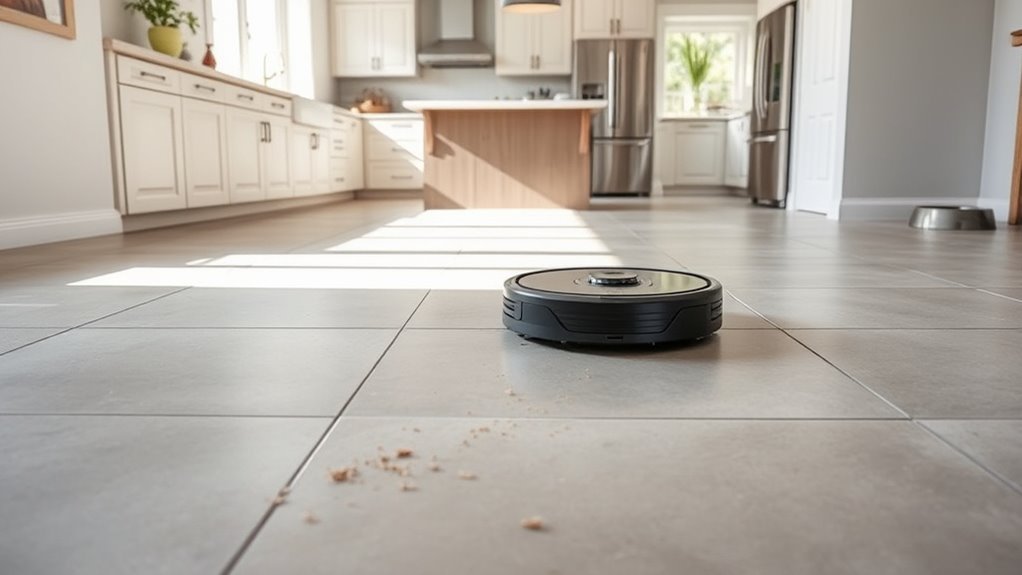
Yes. Most robot vacuums can clean ceramic and porcelain tile effectively because these hard surfaces allow their wheels and cleaning brushes to move freely. They collect everyday dust, crumbs, hair, and small pieces of debris without requiring you to push a vacuum around the room.
However, tile has a challenge that smooth flooring does not always present: recessed grout lines. Dirt can settle below the tile surface, where a poorly designed vacuum may leave it behind.
Glossy tile also needs careful cleaning. Although ceramic and porcelain are generally durable, gritty debris trapped under a wheel or brush can mark some finishes. Choosing suitable brushes and keeping them clean helps reduce that risk.
Many robots include side brushes to sweep along baseboards and into corners. Models with advanced navigation can map rooms, plan cleaning routes, and move between hard floors and rugs.
Hybrid robots offer another benefit. They vacuum loose debris and then mop suitable surfaces, making them useful in kitchens, hallways, and other busy areas.
For the best results, use a robot for regular maintenance cleaning. It reduces dirt buildup but does not completely replace deep cleaning.
Why Tile Floors Need Strong Suction
Tile floors benefit from strong suction because dust and crumbs can collect in grout lines, textured finishes, and small gaps. A robot needs enough airflow to lift this loose debris instead of pushing it around.
However, higher suction does not automatically mean better cleaning. Brush design, airflow, floor contact, and navigation also affect how much dirt reaches the dustbin.
Suction for Grout Lines
Grout lines often sit slightly below the surrounding tiles. Strong suction helps pull loose particles from these recessed areas, especially when the robot makes complete, overlapping passes.
Robot vacuum manufacturers commonly advertise suction in pascals (Pa). Some models offer 8,000Pa or higher, but there is no universal suction minimum that guarantees clean grout.
For example, the Roborock S8 Pro Ultra has a manufacturer-rated maximum suction of 6,000Pa. It also uses dual rubber rollers designed to improve debris pickup and reduce hair tangles, according to Roborock’s official S8 specifications.
When comparing models, consider these factors:
- Suction: Helps lift loose dust and grit from grout lines.
- Airflow: Moves collected debris toward the dustbin.
- Brush design: Guides hair and particles into the suction opening.
- Cleaning passes: Repeated coverage can improve pickup in dirty areas.
- Floor detection: Allows compatible models to adjust cleaning power across surfaces.
For homes with pets, children, or frequent foot traffic, consistent cleaning matters more than choosing a robot based on one large suction number.
Deep Cleaning Crevices
Deep grout lines and uneven tile surfaces can hold dirt that ordinary cleaning passes miss. A robot with adjustable suction and reliable navigation has a better chance of collecting loose debris from these areas.
Increase suction when cleaning heavily used spaces, such as entryways and kitchens. On smoother, lightly soiled tile, a lower setting may be sufficient and can reduce noise and battery consumption.
Tangle-resistant rollers are especially helpful if you have pets or long hair. They reduce hair buildup around the brush, which can interfere with cleaning.
For normal household conditions, running a robot two or three times weekly is a practical starting point. Daily cleaning may be more useful in busy rooms or homes where pets shed heavily.
If dirt remains inside a grout line after several vacuuming passes, the problem may be stuck-on grime rather than loose debris. That requires cleaning the grout itself, not simply increasing suction.
Which Brushes Are Safest for Tile?
Soft bristles and well-designed rubber rollers are generally good choices for tile floors. They collect dust and hair while avoiding the aggressive brushing action some carpet-focused cleaning heads use.
Hard tile is durable, but polished finishes and decorative surfaces still need care. The greatest concern is often abrasive grit caught beneath a brush, wheel, or cleaning component.
- Soft bristle brushes: Sweep fine dust without aggressive contact.
- Rubber rollers: Help collect hair and debris on hard surfaces.
- Side brushes: Move dirt away from corners and baseboards.
- Tangle-free rollers: Reduce maintenance in homes with pets or long hair.
- Clean wheels and brushes: Help prevent trapped grit from marking the surface.
For glossy ceramic or porcelain, choose brushes intended for hard-floor use. Check the flooring manufacturer’s recommendations if your tile has a special coating or delicate finish.
Regular brush maintenance is just as important as brush material. Remove wrapped hair, inspect the rubber parts, and replace worn components when needed.
A damaged roller or debris stuck beneath the robot can reduce cleaning performance and increase the chance of scratching.
Can Robot Vacuums Clean Grout Lines?
Robot vacuums can remove loose dirt from grout lines, but they cannot reliably remove deep stains or hardened buildup. They work best as a way to keep grout cleaner between manual cleaning sessions.
Strong suction lifts crumbs, dust, and pet hair from shallow recesses. Side brushes help move debris away from tile edges and corners, although they do not necessarily reach the full depth of every grout line.
Navigation also affects results. A robot that covers the floor in overlapping paths is less likely to leave dirty strips between passes. However, room-mapping technology does not mean the machine can identify and follow individual grout lines.
You can improve grout cleaning with a simple routine:
- Remove large debris and objects that could block the robot.
- Select a suitable suction setting for the amount of dirt.
- Run the robot across the complete tiled area.
- Use an additional cleaning pass where loose debris remains.
- Inspect grout lines for stains or residue that need manual cleaning.
Dark grout marks that do not disappear after vacuuming often need a grout-compatible cleaning product and a soft, nonmetallic brush.
Follow the tile maker’s instructions before applying any cleaner. The Marazzi tile care and maintenance guide explains that grout requires periodic cleaning, even when it has been sealed.
This distinction matters: vacuuming removes loose particles, while scrubbing breaks up grime attached to the grout surface.
Can Robot Vacuums Mop Tile Floors?
Yes. Robot vacuum-mop combinations can clean suitable ceramic and porcelain tile floors using controlled amounts of water. They are particularly useful for footprints, light spills, fine dust, and everyday surface residue.
For stronger cleaning, look for a model with vibrating or rotating mop pads rather than relying only on a damp cloth dragged across the floor.
Water control also matters. Excess moisture can remain in recessed grout lines, while too little water may leave dried residue untouched.
Mopping on Sealed Tile
Robot mopping works best on floors that are suitable for damp cleaning, especially properly maintained ceramic and porcelain tile. The condition of the grout and any sealant also matters.
Hybrid robots can remove light smudges, footprints, and some sticky spots without requiring you to mop the entire room manually.
Systems that wash mop pads during cleaning can reduce the amount of dirty water and residue spread across the floor. Models with separate clean-water and dirty-water tanks in their docks make this process more convenient.
Warning: Do not assume every tiled floor is safe for robot mopping. Unsealed natural stone, damaged grout, and moisture-sensitive flooring may require different care. Always follow the flooring manufacturer’s cleaning instructions and avoid leaving standing water on the surface.
For normal upkeep, a robot mop can help maintain the appearance of sealed tile. However, it cannot restore damaged grout or remove every stubborn stain.
Water Control Settings
Adjustable water settings allow a robot mop to control how much moisture reaches the tile. They help you match the cleaning process to the floor’s condition and the amount of dirt.
Some hybrid robots offer low, medium, and high water-flow options. The exact amount varies by model.
| Setting | Effect | Use |
|---|---|---|
| Low | Less moisture | Light dust and routine wiping |
| Medium | Balanced water delivery | Regular mopping on suitable tile |
| High | More water, not necessarily more scrubbing power | Heavier surface dirt when the flooring allows it |
Start with a low or medium setting and inspect the floor after cleaning. If the robot leaves puddles, wet grout lines, or streaks, reduce the water flow.
For stubborn marks, a stronger scrubbing mode may help more than extra water alone.
Keep the mop pad clean and use only cleaning solutions approved for your machine. For example, Roborock’s cleaning solution guidance warns that unsuitable detergents can cause foaming and affect the mopping system.
Do not pour household cleaners, vinegar, or other chemicals into a robot’s tank unless its manufacturer specifically allows them.
Best Hybrid Robot Models
The most useful hybrid robots for tile combine reliable vacuuming with active mopping. Features such as adjustable water delivery, scrubbing motion, and automatic pad cleaning can reduce manual work.
Several models mentioned in the original comparison offer different approaches:
- Roborock S8 Pro Ultra: Uses vibrating mop technology, dual rubber rollers, and a dock that washes and dries the mop. It suits households seeking automated vacuuming and mopping.
- iRobot Roomba Combo j9+: Offers SmartScrub, a back-and-forth mopping action designed for tougher surface marks. It also retracts its mop when moving onto carpets.
- Shark AI Ultra 2-in-1: Offers sonic mopping on supported versions, making it an option for cleaning everyday tile residue.
The Roomba Combo j9+ product specifications confirm its SmartScrub system, dual rubber brushes, edge-sweeping brush, and carpet-protection design.
Consider your home before choosing a hybrid robot. A mostly tiled kitchen may benefit from stronger mopping performance, while a home with rugs needs dependable carpet detection and mop lifting.
For larger homes, automatic mop washing and separate water reservoirs can reduce the number of interruptions during cleaning.
Remember that automatic mopping systems still require maintenance. You must periodically empty dirty-water tanks, replenish clean water, and inspect the mop pads.
What Features Matter Most for Tile Floors?
The most important robot vacuum features for tile are effective debris pickup, gentle brushes, accurate navigation, and reliable edge cleaning. If you want mopping, water control and suitable mop pads also matter.
Instead of focusing only on an advertised suction rating, compare how well a machine handles the actual cleaning challenges in your home.
- Hard-floor pickup: The robot should collect fine dust and larger crumbs without scattering them.
- Adjustable suction: Different settings help balance cleaning power, noise, and battery life.
- Gentle brush design: Soft bristles and suitable rubber rollers help clean delicate finishes.
- Edge cleaning: Side brushes or specialized cleaning designs improve pickup near walls.
- Smart navigation: Room mapping and obstacle detection help the robot cover more of the floor.
- Filtration: A good filter and well-sealed dust system reduce the release of collected particles.
- Pet hair handling: Tangle-resistant brushes reduce the amount of hair wrapped around rollers.
- Mopping controls: Adjustable water flow and active scrubbing help with routine hard-floor cleaning.
- Convenient maintenance: Accessible filters, washable pads, self-docking, and optional self-emptying reduce upkeep.
For allergy-sensitive households, filtration deserves particular attention. Some robots advertise HEPA or HEPA-like filtration, but these descriptions do not always mean the entire vacuum has a sealed HEPA system.
The US Environmental Protection Agency’s indoor dust guidance explains that HEPA filtration can help keep some collected dust from escaping back into indoor air.
Navigation deserves equal attention. A robot that misses areas around furniture may leave more dirt behind than a lower-suction model with better coverage.
These features work together. The best choice is the machine that consistently reaches dirty areas, collects debris, and fits your cleaning routine.
Tile vs. Hardwood, Laminate, and Carpet
Robot vacuums can clean tile, hardwood, laminate, and carpet, but each surface presents different challenges. Tile often requires grout-focused debris pickup, while wood and laminate demand careful moisture control.
Tile cleaning depends on loose-debris pickup and grout coverage. Hardwood and laminate need greater attention to surface protection, while carpet requires effective cleaning within the fibers.
Here is how the main flooring types compare:
| Floor Type | Main Challenge | Useful Robot Features |
|---|---|---|
| Tile | Dust in grout lines and textured surfaces | Strong pickup, edge cleaning, controlled mopping |
| Hardwood | Scratches and moisture damage | Gentle brushes and floor-safe moisture settings |
| Laminate | Water entering joints or damaged edges | Reliable vacuuming and cautious water control |
| Carpet | Hair and dirt trapped in fibers | Suitable suction, effective rollers, carpet detection |
Tile and laminate usually allow efficient vacuuming across open areas. However, tile grout can trap debris, while laminate joints can be vulnerable to excess moisture.
Carpet requires the robot to lift debris from fibers rather than collect it from a solid surface. Some machines automatically increase suction when they detect carpet.
If your home has several floor types, choose a robot with dependable surface detection. For hybrid models, automatic mop lifting or carpet avoidance helps prevent wet rugs.
What Robot Vacuums Work Best on Tile?
The best robot vacuums for tile combine effective hard-floor pickup, reliable navigation, and brushes that reach edges without damaging the finish. If you also want to remove light stains, choose a model with active mopping.
A high suction rating can be useful, but it should never be the only reason you select a model.
Independent testing supports this approach. A Good Housekeeping Institute analysis of robot vacuum performance explains that navigation, brush design, and airflow influence real cleaning results. Advertised pascal ratings alone cannot predict debris pickup.
For different household needs, consider these features:
- Mostly tile floors: Prioritize hard-floor pickup, edge coverage, and optional active mopping.
- Deep grout lines: Look for strong tested debris pickup and repeat-cleaning options.
- Homes with pets: Choose tangle-resistant brushes and convenient dustbin maintenance.
- Tile and carpet together: Look for carpet detection and automatic mop lifting.
- Large or cluttered rooms: Prioritize dependable mapping and obstacle avoidance.
- Busy households: Consider scheduling, app control, and an automatic emptying dock.
D-shaped robots may offer an advantage in some corners, while round robots with effective side brushes can also clean along baseboards.
Models such as the Roborock S8 Pro Ultra and Yeedi Vac Max illustrate different approaches to automated floor cleaning. Their features and capabilities differ, so compare actual hard-floor performance rather than assuming they deliver similar results.
Before choosing a vacuum, consider the condition of your tile, grout depth, room layout, and how often you want to mop.
How to Get Better Cleaning Results on Tile Floors
Even a capable robot vacuum needs the right setup to clean tile effectively. A few simple changes can improve coverage, reduce missed debris, and protect the floor.
Prepare the Floor Before Cleaning
Remove charging cables, small toys, loose clothing, and other objects the robot might catch. Pick up large pieces of debris that could jam its cleaning mechanism.
Check the wheels and brushes for trapped stones or sharp particles. This is particularly useful after dirt has been carried indoors from outside.
Use the Right Cleaning Mode
For light dust, a standard vacuuming mode is often sufficient. Increase suction or choose an additional pass where the floor has heavier debris.
If your robot supports room-specific cleaning, schedule more frequent runs in kitchens, hallways, and other high-traffic areas.
When mopping, use a water setting suitable for the floor and inspect the results before increasing moisture.
Maintain the Robot Regularly
Dirty filters, blocked suction openings, and tangled brushes can reduce pickup. Follow the machine’s maintenance schedule and check its moving parts whenever cleaning performance drops.
Empty the dustbin as needed, clean or replace filters according to the manufacturer’s instructions, and wash reusable mop pads after use.
For a robot with an automatic cleaning dock, maintain both the clean-water and dirty-water systems. Automatic washing reduces work, but it does not eliminate maintenance.
Pro Tip: If your robot repeatedly misses the same grout-filled area, schedule an extra pass across that room. If loose dirt remains after repeated cleaning, inspect the brush and suction opening before assuming the motor is too weak.
Know When Manual Cleaning Is Necessary
Robot vacuums are designed mainly for regular floor maintenance. They may struggle with dried food, sticky grease, heavily stained grout, or dirt packed into deep recesses.
A traditional vacuum with a crevice tool can help remove stubborn loose debris. For attached grime, use a grout-compatible cleaning product and a suitable brush.
If a floor has cracked tiles, loose grout, or damaged sealant, address those issues before relying on wet cleaning.
Frequently Asked Questions
What Are the Downsides of Using a Robotic Vacuum Cleaner?
Robot vacuums can miss corners, struggle with deep grout, and get stuck around clutter. Battery life, navigation errors, noise, and maintenance costs are other limitations. They also cannot replace every deep-cleaning task. However, a well-maintained model can significantly reduce the amount of routine sweeping you need to do.
Which Robot Vacuum Cleaner Is Best for Tile Floors?
The Roborock S8 Pro Ultra is a capable option for tile floors because it combines strong vacuuming, vibrating mopping, and automatic maintenance features. The Roomba Combo j9+ is another option if you want active scrubbing and carpet protection. The best model for your home depends on grout depth, room layout, budget, and whether mopping matters to you.
What Is the Best Way to Clean Ceramic Tile Floors?
The best routine is to remove loose dirt first, then mop with a cleaning method approved for your tile and grout. A robot vacuum can handle regular debris pickup, while a compatible robot mop can remove light surface residue. Clean stubborn grout stains separately and avoid harsh chemicals that could damage the finish.
What Type of Vacuum Is Best for Cleaning Tile Floors?
A vacuum with effective hard-floor suction, gentle brushes, and good filtration is best for everyday tile cleaning. Robot vacuums are convenient for frequent maintenance, while traditional vacuums with suitable floor tools are helpful for deep crevices. Choose based on the amount of dirt, your floor finish, and how much manual work you want to avoid.
Can a Robot Vacuum Scratch Glossy Tile?
A robot vacuum can mark some glossy tile finishes if abrasive grit becomes trapped beneath its wheels or brushes. Most suitable cleaning components are designed for hard floors, but regular maintenance remains essential. Keep the wheels clean, replace damaged brushes, and use settings appropriate for delicate surfaces.
How Often Should You Run a Robot Vacuum on Tile?
Running a robot vacuum two or three times weekly is a reasonable starting point for many homes. Daily cleaning may be more helpful in kitchens, entryways, or households with shedding pets. Adjust the schedule based on how quickly dust and crumbs accumulate rather than following a fixed rule.
Do Robot Vacuums Work on Textured Tile?
Yes, robot vacuums can clean textured tile, although deeper grooves may hold more dirt than smooth surfaces. Strong debris pickup, suitable brushes, and repeated cleaning passes can help. If the texture traps sticky residue or compacted dirt, you may still need a compatible manual cleaning tool.
Conclusion
Robot vacuums can keep tile floors clean with less daily effort. Strong debris pickup, gentle brushes, good navigation, and optional mopping make them useful for ceramic and porcelain surfaces. Choose a model suited to your grout, floor finish, and household needs, then maintain it regularly. For stained grout and stubborn buildup, combine automated cleaning with occasional manual care.
Sources
- Marazzi USA, Tile Care and Maintenance: Supports tile cleaning methods, grout maintenance, and precautions for ceramic, porcelain, and natural stone.
- Roborock, S8 Series Announcement: Confirms the S8 Pro Ultra suction specification, rubber roller design, and automated cleaning features.
- Good Housekeeping Institute, Robot Vacuum Navigation and Suction: Explains why advertised suction ratings alone do not establish real cleaning performance.
- US Environmental Protection Agency, Sources of Indoor Particulate Matter: Supports guidance about indoor dust reduction and filtration.
- Roborock Support, Cleaning Solutions for Mopping: Explains cleaning-solution compatibility and possible damage from unsuitable detergents.
- iRobot, Roomba Combo j9+ Specifications: Confirms SmartScrub, brush design, automatic mopping, and carpet-protection features.