A heavy-duty steam floor cleaner should do more than make a floor damp. It should loosen stuck-on residue, match the flooring manufacturer’s care rules, and remain practical to use across the space you actually clean. This guide compares three floor-focused options: the Shark Steam & Scrub S8001 for powered scrubbing, the BISSELL PowerSteamer 2685A for floor-to-handheld versatility, and the Roborock F25 Ultra for premium cordless vacuuming, washing, and steam cleaning in one machine.
Quick Verdict
Best Overall Steam Mop: Shark Steam & Scrub S8001 — the rotating pads add mechanical scrubbing while three steam modes help match light cleaning and stuck-on messes.
Best Multipurpose Pick: BISSELL PowerSteamer 2685A — converts from an upright floor mop to an extended or handheld steamer and includes tools for grout, fixtures, glass, fabric, and vehicle interiors.
Best Premium Hybrid: Roborock F25 Ultra — a cordless wet-dry floor cleaner that vacuums debris, washes hard floors, and adds steam and hot-water modes. It is not a traditional steam mop.
Quick Comparison
| Product | Type | Standout Feature | Power / Runtime | Best For | Amazon |
|---|---|---|---|---|---|
| Shark Steam & Scrub S8001 | Corded steam mop | Advertised rotating pads with 150+ scrubs per minute | 1120W; continuous corded power | Sealed hard floors and stuck-on residue | Check Amazon |
| BISSELL PowerSteamer 2685A | Corded 3-in-1 steam mop | Upright, extended-reach, and handheld configurations | 1500W; 25-foot cord | Floors, grout, kitchens, garages, and detailing | Check Amazon |
| Roborock F25 Ultra | Cordless wet-dry vacuum and steam floor washer | Vacuums, washes, steams, and self-cleans | Up to 60 minutes in Auto mode; shorter in high-heat modes | Pet hair, crumbs, wet messes, and low furniture | Check Amazon |
Shark Steam & Scrub Steam Mop (S8001)
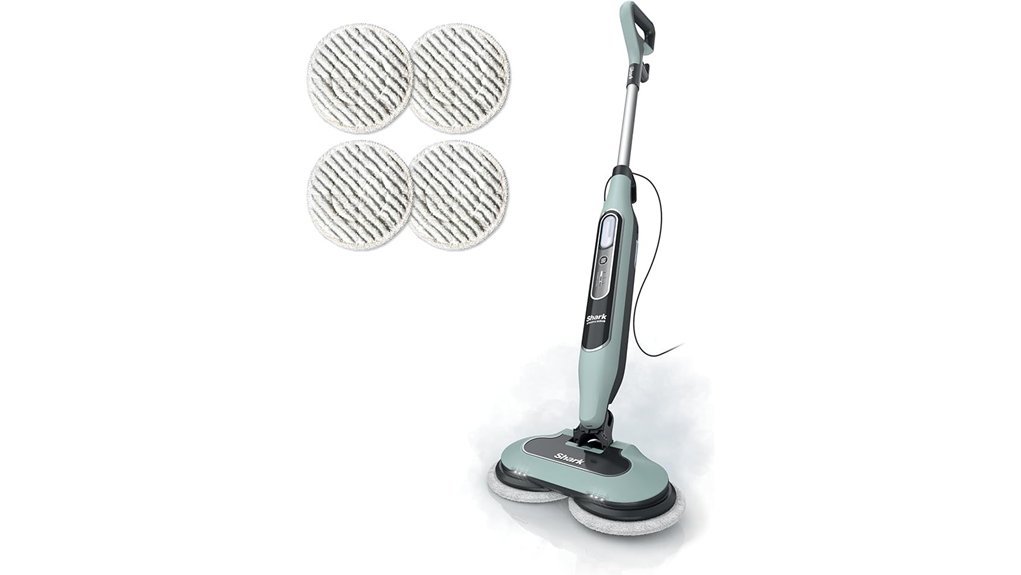
The Shark S8001 is the strongest fit for shoppers who want a traditional upright steam mop with extra scrubbing help. The product listing advertises more than 150 scrubs per minute from its two rotating pads, reducing the effort needed to work over dried splashes and tracked-in residue. Three modes—Light, Normal, and Deep—let you adjust the output to the cleaning job.
The mop is rated at 1120 watts and has an approximately 11.8-ounce removable water tank. At about 6.9 pounds, it is manageable for an upright scrubber, while swivel steering and LED headlights help around furniture and in dim areas. The cord is roughly 19 feet, so it offers consistent power but still requires outlet changes in larger homes.
Why You’ll Like It: The rotating pads add mechanical agitation that a basic steam-only mop cannot provide, making this a practical choice for sealed tile, stone, marble, and compatible sealed hardwood.
Who Should Buy This: Households that mainly clean sealed hard floors and want powered scrubbing without moving up to a heavier wet-dry vacuum system.
Who Should Avoid This: Buyers who need to vacuum crumbs and pet hair before mopping, clean upholstery or grout with handheld tools, or work far from electrical outlets.
Pros:
- Advertised rotating-pad scrubbing adds mechanical help for stuck-on residue
- Three steam modes support light maintenance and deeper floor cleaning
- Includes four washable Dirt Grip pads, LED headlights, and swivel steering
Cons:
- Does not vacuum loose debris, so floors should be swept or vacuumed first
- The cord limits mobility compared with a battery-powered cleaner
- The modest tank may require refilling during larger whole-home sessions
BISSELL PowerSteamer 3-in-1 Steam Mop and Handheld Steamer (2685A)
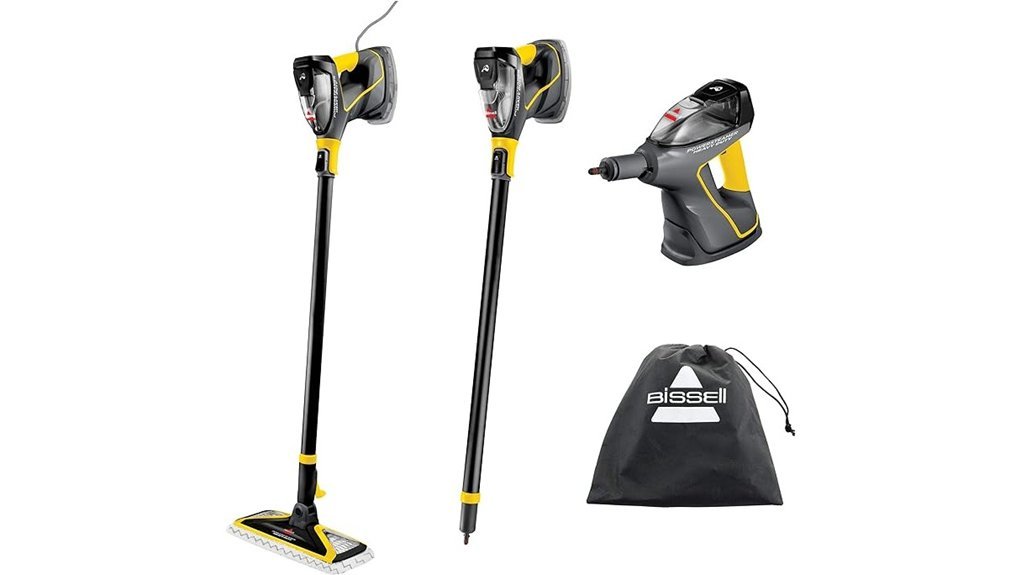
The BISSELL PowerSteamer 2685A is the most versatile option here. It works as an upright floor mop, an extended-reach steamer, or a handheld cleaner, so it can move from sealed floors to grout, sinks, oven doors, windows, vehicle interiors, and other manufacturer-approved surfaces. Its variable steam modes and on-demand trigger provide more control than a single-output model.
BISSELL lists a 1500-watt power rating, a 25-foot cord, an approximately 350 mL tank, a weight of about 6.13 pounds, and a heat-up time of around 30 seconds. The included tool set covers detail brushing, scraping, grout work, fabric steaming, concentrated steam, and window cleaning.
Why You’ll Like It: One machine can handle floor mopping and detailed above-floor cleaning, which is useful when kitchens, bathrooms, garages, or vehicles are the main problem areas.
Who Should Buy This: Buyers who value attachments and whole-property versatility more than powered floor scrubbing or cordless operation.
Who Should Avoid This: Anyone wanting automatic scrubbing, wet-debris pickup, or a simple lightweight mop with minimal accessory management. BISSELL also states that this model is not intended for vinyl flooring.
Pros:
- Three configurations cover floors, high areas, tight spaces, and detailing tasks
- Long 25-foot cord reduces outlet changes during larger jobs
- Fast heat-up and on-demand steam help with short or targeted cleaning sessions
Cons:
- No powered scrub pads, so stubborn residue may still require manual brushing
- The small floor-mop tank is less convenient than a large canister for long continuous steaming
- Multiple attachments require storage and careful surface matching
Roborock F25 Ultra Steam Wet Dry Vacuum Cleaner
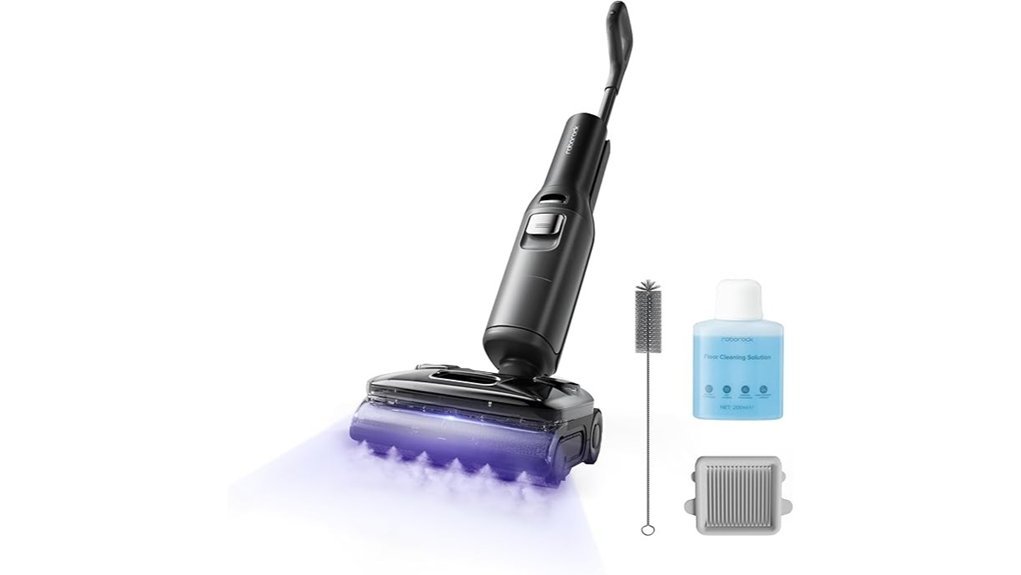
The Roborock F25 Ultra is not a conventional steam mop. It is a cordless wet-dry floor cleaner that can vacuum loose debris, wash hard floors, use steam for dried residue, and use hot water for greasy messes. This makes it the most capable option for homes dealing with crumbs, pet hair, wet spills, and sticky floor buildup in the same cleaning session.
Roborock advertises 22,000 Pa suction, a 180-degree lay-flat design, SlideTech 2.0 assisted wheels, blue-light debris illumination, app customization, and up to 60 minutes of runtime in Auto mode. High-heat modes use more energy, so their runtime is shorter. The dock runs automated roller washing and hot-air drying to reduce hands-on maintenance.
The widely advertised 356°F steam figure is measured at the internal heater output—not where the steam touches the floor. Roborock states that steam is about 210°F at the outlet and below 158°F at floor contact. That distinction matters when comparing it with ordinary steam mops.
Why You’ll Like It: It combines several floor-care steps in one pass and reaches under low furniture without a power cord trailing behind.
Who Should Buy This: Pet owners, busy households, and buyers with mostly compatible hard flooring who want premium automation and combined wet-dry pickup.
Who Should Avoid This: Shoppers seeking a low-cost, lightweight steam mop; homes dominated by carpet; or anyone who does not want battery charging, dock storage, app features, and more involved maintenance.
Pros:
- Vacuums, washes, and steam-cleans compatible hard floors in one system
- Lay-flat body and assisted wheels improve reach under furniture and around obstacles
- Automated roller washing and hot-air drying reduce post-cleaning handling
Cons:
- More expensive and complex than a standard steam mop
- Steam and hot-water modes provide less runtime than the quoted Auto-mode maximum
- Larger footprint and charging dock require dedicated storage space
How to Choose a Heavy-Duty Steam Floor Cleaner
The best choice depends less on the highest advertised temperature and more on the kind of mess, the floor warranty, the amount of loose debris, and how much setup and maintenance you are willing to accept.
Choose the Right Cleaner Type
A traditional steam mop is usually the simplest option for sealed hard floors. A convertible steam mop adds handheld tools for grout, fixtures, glass, and detailing. A wet-dry steam floor washer can pick up debris and dirty water, but it costs more, weighs more, and requires roller, tank, and dock maintenance. Choose the category first; then compare specifications within that category.
Read Steam Temperature Claims Carefully
A large temperature number does not automatically mean better floor-contact performance. Brands may measure heat at the internal boiler, steam outlet, roller, hot-water channel, or floor surface. Look for clear measurement notes and avoid comparing unlike figures. Effective cleaning also depends on steam volume, contact time, pad movement, suction, and how slowly the machine passes over the mess.
Confirm Floor Compatibility Before Buying
Never rely only on a steam-cleaner listing that says “hardwood,” “laminate,” or “vinyl.” Check the flooring manufacturer’s current care instructions and warranty first. Some floor brands prohibit steam even on products described as sealed. When steam is allowed, use the lowest effective setting, keep the machine moving, and test an inconspicuous area.
Decide Whether You Need Scrubbing or Suction
Rotating pads help with adhered residue but do not collect crumbs, hair, or dirty water. A wet-dry vacuum system can collect those messes while washing, but it requires more cleaning after each use. For a conventional steam mop, vacuum or sweep first so loose grit does not scratch the floor or clog the pads.
Balance Tank Size, Weight, and Runtime
A bigger tank reduces refills but makes the cleaner heavier when full. Battery models also quote runtime under specific modes, and steam or hot-water settings often run for less time than an Eco or Auto maximum. Compare the runtime for the mode you expect to use—not only the longest number in the marketing copy.
Consider Heat-Up Time and On-Demand Control
Fast heat-up is useful for small spills and quick maintenance. For longer sessions, consistent output and an on-demand trigger may matter more. A trigger prevents constant steam when repositioning the machine, while adjustable modes help reduce unnecessary heat on more sensitive approved surfaces.
Check Cord, Battery, and Storage Needs
A long cord provides uninterrupted power but can catch on furniture and still require outlet changes. A cordless machine removes that limitation but needs charging and a place for its dock. Measure storage space, especially for a wet-dry cleaner that must remain upright on a charging or self-cleaning base.
Buy Only the Attachments You Will Use
More accessories can increase value, but only when they match real cleaning jobs. Grout brushes, scrapers, squeegees, and fabric tools are useful for kitchens, bathrooms, garages, and vehicles. They also add setup time and storage needs. A floor-only mop is often the better purchase when floors are the only priority.
Review Water and Maintenance Instructions
Check whether the manual calls for tap, distilled, or demineralized water. Do not add essential oils, detergent, vinegar, or fragrance unless the manufacturer explicitly permits it. Empty dirty-water tanks promptly, wash pads after use, dry rollers fully, and follow the model-specific descaling procedure rather than using a universal schedule.
Verify Warranty and Replacement Parts
Confirm the warranty length, exclusions, and whether pads, rollers, brushes, filters, tanks, and nozzles are readily available. A feature-rich machine is less useful if routine replacement parts are difficult to obtain. Save the receipt and register the product when the manufacturer offers registration.
Before You Buy
- Check the care guide for your exact flooring brand and model.
- Decide whether you need steam only, handheld tools, or wet-dry pickup.
- Compare the temperature measurement location—not just the largest number.
- Confirm cord reach or battery runtime in the mode you will use most.
- Review tank cleaning, pad or roller washing, descaling, and storage requirements.
- Confirm replacement parts and the current warranty terms.
Frequently Asked Questions
Can Steam Mops Damage Hardwood Floors?
Yes. Heat and moisture can enter seams or weaken a finish, and some hardwood manufacturers prohibit steam completely. Use steam only when the flooring manufacturer—not just the mop brand—approves it for your exact floor. Otherwise, use the cleaning method specified in the floor’s care guide.
Can I Use a Steam Mop on Laminate or Vinyl?
Do not assume that you can. Some laminate manufacturers warn that steam may cause swelling, peeling, or warping, and BISSELL states that the PowerSteamer 2685A is not intended for vinyl floors. Follow the flooring manufacturer’s instructions and warranty requirements.
How Often Should I Descale My Steam Mop?
There is no reliable universal schedule. Mineral buildup depends on the machine design, water hardness, and frequency of use. Follow the manual for your exact model and use the recommended water type. Do not pour vinegar or another descaler into the tank unless the manufacturer specifically instructs you to do so.
Are Steam Mops Safe for Use Around Pets?
They can be used in pet homes, but hot steam, pads, rollers, and freshly cleaned surfaces can burn paws or skin. Keep pets and children away while cleaning, store the machine safely, and allow the floor and attachments to cool before contact.
Can I Add Essential Oils to the Water Tank?
Not unless the manufacturer explicitly allows it. Oils, detergents, and fragrances can leave residue, damage internal parts, block steam passages, or affect warranty coverage. Use only the water or approved solution specified in the manual.
Do Steam Mops Kill Bed Bugs Effectively?
Steam can kill exposed bed bugs when the correct equipment, temperature, airflow, and technique are used, but a floor steam mop is not designed to reach every crack, fabric fold, or hiding place. Do not rely on a steam mop as the only treatment. A broader bed-bug control plan or qualified pest professional may be needed.
Should I Vacuum Before Steam Mopping?
Yes, unless you are using a wet-dry model designed to collect debris. Removing hair, sand, crumbs, and grit first improves pad contact and reduces the chance of dragging abrasive particles across the floor.
Final Recommendation
Choose the Shark Steam & Scrub S8001 for the best balance of familiar steam-mop operation and powered scrubbing on approved sealed hard floors.
Choose the BISSELL PowerSteamer 2685A when you want one corded machine for floors, grout, fixtures, garage tasks, and vehicle detailing.
Choose the Roborock F25 Ultra when you are willing to pay more for cordless wet-dry pickup, steam, hot-water cleaning, app controls, and automated roller care.
Whichever model you select, the safest decision starts with your flooring manufacturer’s care instructions. Match the machine to the surface, use the correct water or cleaning solution, and follow the operating method required for any sanitization or performance claim.