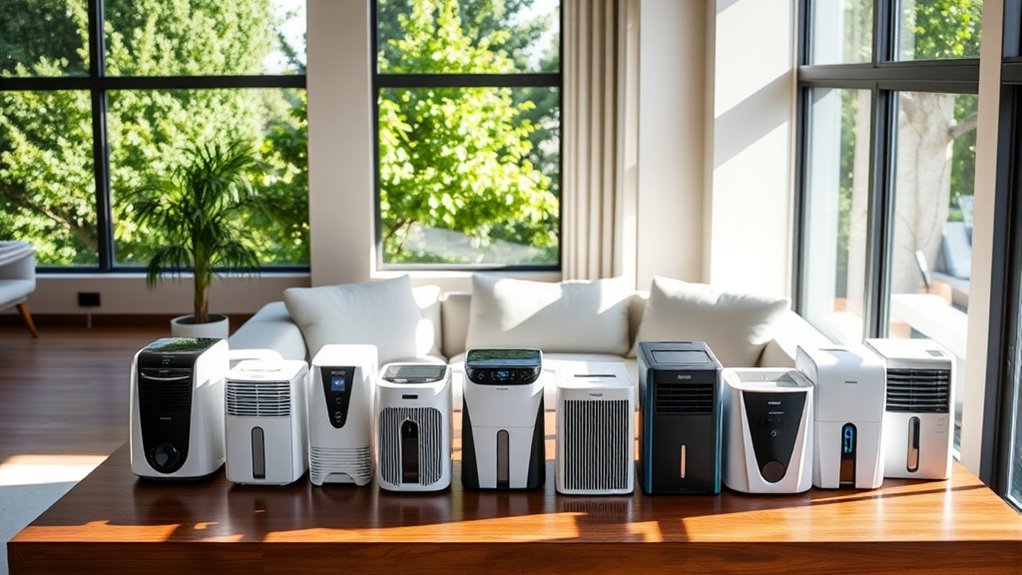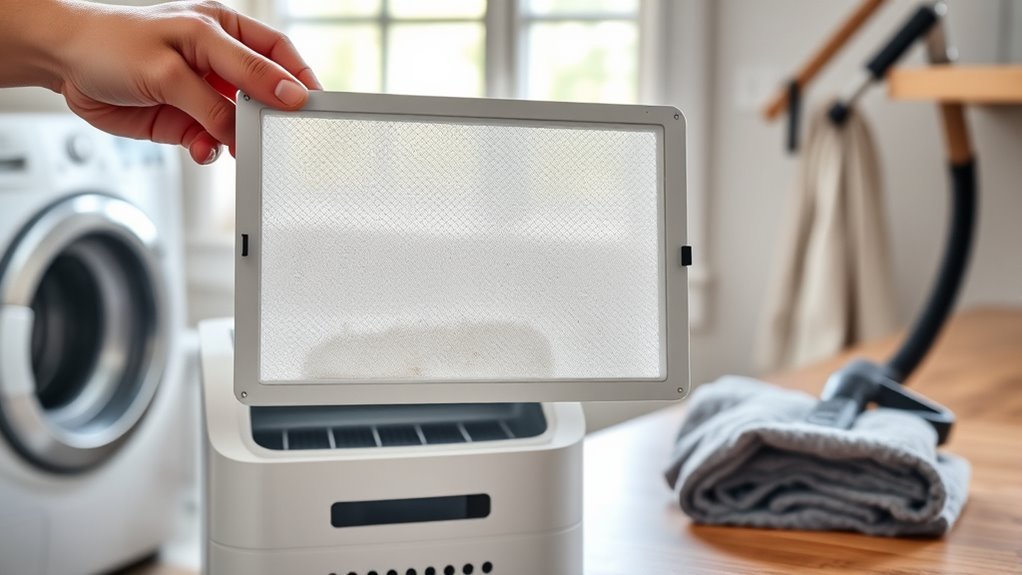
How often should you clean a dehumidifier filter? Inspect it about every two weeks, and clean it whenever it looks dusty, airflow drops, or the filter light comes on. Some models use an operating-hour reminder instead, and not every filter is washable, so check your owner’s manual first.
Quick Answer
Check your dehumidifier filter about every two weeks when first establishing a maintenance routine. Clean it whenever you see dust, notice weaker airflow, or the filter light comes on. Some models use a 250-hour reminder instead. Always follow your owner’s manual because not every filter is washable.
Key Takeaways
- Many manufacturers recommend checking or cleaning reusable filters every two to three weeks.
- A filter reminder may be based on operating hours, not calendar time.
- Rinse a filter only when the manual confirms that it is washable.
- Unplug the dehumidifier and let a washed filter dry completely before reinstalling it.
- Replace filters that are torn, warped, deteriorated, or identified as disposable.
At a Glance
| Time Required | About 10–15 minutes of hands-on work, plus complete air-drying time for a washable filter |
| Difficulty | Easy |
| Tools Needed | Vacuum with a soft brush attachment, soft cloth, and warm water with mild dish soap if the filter is washable |
| Cost | Usually no additional cost unless the filter is damaged or disposable |
How Often Should You Clean a Dehumidifier Filter?
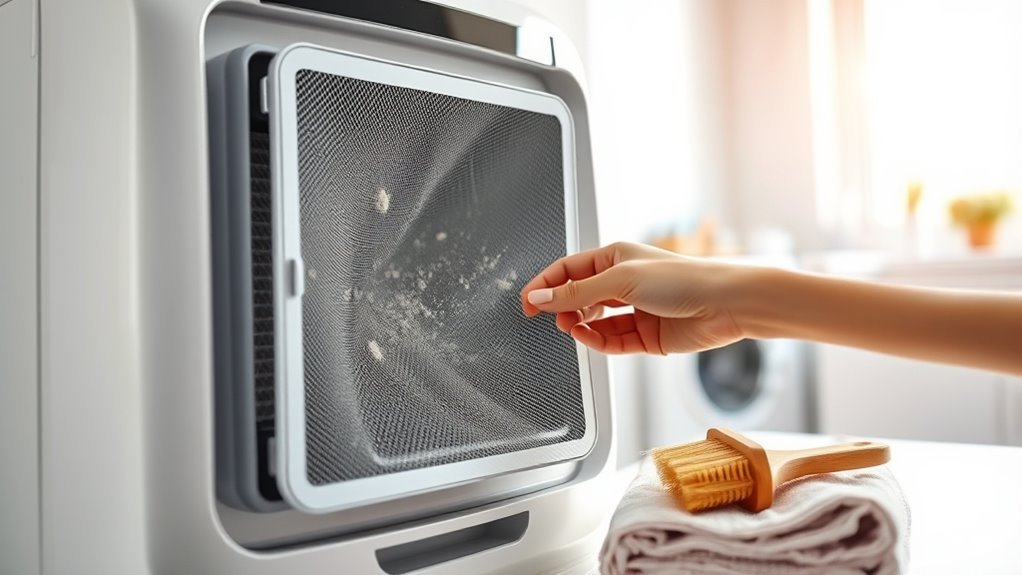
There is no single cleaning interval that applies to every dehumidifier. A practical starting point is to inspect the filter every two weeks, then adjust the schedule according to how quickly dust builds up.
Current manufacturer instructions show why model-specific guidance matters. Honeywell recommends cleaning certain washable filters every two weeks. GE advises checking some models every two to three weeks, while newer GE units may display a reminder after 250 operating hours. A Midea dehumidifier manual also calls for checking and cleaning the filter at least every two weeks.
| Filter or Reminder Type | Suggested Routine | What to Do |
|---|---|---|
| Reusable mesh or washable dust filter | Inspect about every two weeks at first | Vacuum or wash according to the manual when dust is visible. |
| Operating-hour reminder | Clean when the indicator appears, or sooner if dirty | Clean the filter and follow the model’s reset procedure. |
| Disposable, HEPA, carbon, or specialty filter | Follow the stated replacement schedule | Do not rinse unless the manufacturer specifically says the filter is washable. |
Do not wait for a fixed calendar date when the filter is visibly dirty. Clean it sooner when airflow drops, the filter light appears, or the unit operates in a dusty room.
The owner’s manual is the final authority: cleaning schedules, washing methods, filter materials, and reset procedures vary by model.
What Affects Dehumidifier Filter Cleaning Frequency?
The filter becomes dirty as the appliance pulls room air through its intake. Anything that increases airborne particles or operating time can shorten the cleaning interval.
- Operating hours: A unit that runs continuously moves more air through the filter than one that cycles occasionally.
- Dust and pet hair: Pets, carpeting, open windows, workshops, and nearby construction can increase buildup.
- Room use: Laundry rooms, garages, unfinished basements, and renovation areas often contain more lint or debris.
- High moisture levels: Humid conditions may make the dehumidifier run longer, indirectly exposing the filter to more airborne particles.
- Placement: A unit placed near a dryer, dusty storage area, or blocked intake may need more frequent attention.
- Seasonal use: Heavy summer use may require a shorter interval than occasional use during cooler months.
- Smoke and aerosols: Cooking residue, candles, smoke, and airborne sprays can leave deposits that are harder to remove than ordinary dust.
Start with a two-week visual inspection. If the filter remains nearly clean after several checks, you can extend the inspection interval while staying within the manual’s guidance. If it becomes coated sooner, inspect it weekly.
How Do You Know When the Filter Needs Cleaning?
Inspect the filter before assuming that poor dehumidifier performance is caused by a mechanical problem. Common signs include:
- Visible dust, lint, pet hair, or discoloration on the filter
- A filter-cleaning or check-filter indicator
- Weaker airflow from the outlet
- Longer operating times without reaching the selected humidity
- More fan noise caused by restricted airflow
- Dust collecting around the intake grille
- A filter that appears warped, torn, brittle, or loose in its frame
For the symptoms of neglect, see what happens when a dehumidifier filter is dirty. A musty odor does not always come from the filter. The water bucket, drain hose, grille, or internal moisture may also be responsible. Clean and inspect those areas separately according to the manual.
Note: Frost, weak moisture removal, or unusual noise can have several causes, including low room temperature, blocked airflow, incorrect placement, or a service problem. Cleaning the filter is a useful first check, but it may not solve every performance issue.
Is Your Dehumidifier Filter Washable?
Confirm the filter type before exposing it to water. Check the owner’s manual, the label on the filter frame, or the manufacturer’s support page.
- Reusable plastic or mesh dust filters are often washable, but the manual should still confirm the approved method.
- Pleated paper filters are commonly non-washable because water can deform the media.
- HEPA and activated-carbon filters may require replacement instead of washing unless the manufacturer clearly states otherwise.
- Combination filters may contain both washable and replaceable layers that must be separated before cleaning.
Warning: Do not rinse an unidentified filter. Water can damage non-washable media, remove treatments, deform the frame, or leave moisture that may be drawn into the appliance.
Recommended Products

BUY WITH CONFIDENCE Genuine AprilAire MERV 8 Replacement Filter for your AprilAire Whole Home Dehumidifier Models E080 or E100 or Dehumidifying Ventilator 8192A (and all variations of these models)

Perfect Compatibility:The 5695 filter compatible with whole-house dehumidifiers models : 1820 1820Z E070 E070KZ E070KZM E070N E070T E070Z.not compatible with dehumidifier model 1850f

[Compatibility]: Our 5881 dehumidifier Filter (MERV 8) compatible with Whole-House Dehumidifiers models: E080, E080H, E080KZ, E080Z, E100, E100C, E100CS, E100CZ, E100D, E100H, E100KZ, E100N, E100T, E100V, E100Z, 8192A and Dehumidifying Ventilator 8192A
How to Clean a Dehumidifier Filter Properly
\n
This is the short version; our longer guide covers how to clean a dehumidifier filter properly step by step.
- Turn off and unplug the dehumidifier. Never remove or wash the filter while the appliance is connected to power.
- Locate the filter. It is commonly fitted behind the front or rear intake grille (see where the dehumidifier filter is located). Follow the manual so you do not break a tab, latch, or frame.
- Remove loose dust. Use a vacuum with a soft brush attachment. Work gently across both sides without bending or scraping the filter.
- Wash only when approved. If the manual identifies the filter as washable, rinse it with warm water. Use a small amount of mild dish soap only when permitted.
- Rinse away soap residue. Avoid forcing a high-pressure stream through delicate mesh.
- Let the filter air-dry completely. Place it in a clean, ventilated area away from direct heat. Do not reinstall it while damp.
- Inspect the filter. Replace it if the frame is cracked, the mesh is torn, the media is deteriorating, or it no longer fits securely.
- Reinstall it in the correct direction. Make sure the filter sits fully in its tracks and does not leave gaps around the intake.
- Reset the reminder if required. Some models require holding a Filter or Fan button for several seconds. Use the exact procedure in the manual.
Pro Tip: Take a quick photo of the filter’s position before removing it. The photo can help you restore the correct orientation after cleaning.
Recommended Products
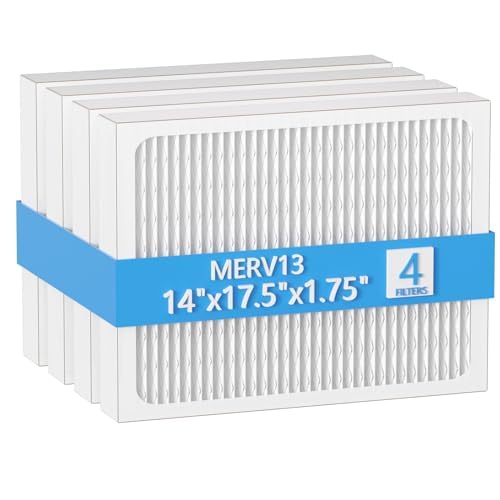
【Compatibility】 Our 14 x 17.5 x1.75 MERV 13 Replacement Dehumidifier Filter Media is Compatible with Honeywell DR90 & DR120 dehumidifier models.
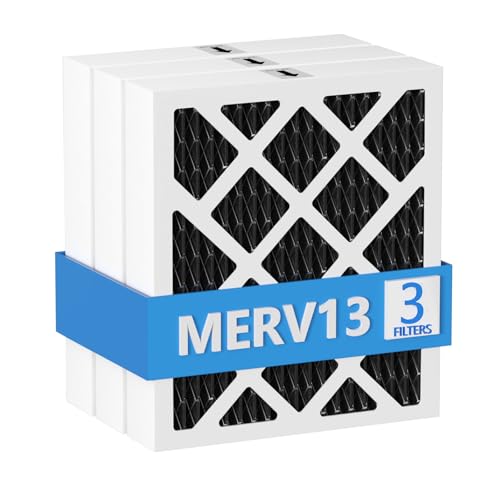
【Compatibility】 Our MERV 13 PN07126 Replacement Carbon Dehumidifier Filter Media is Compatible with Sanidry Sedona Dehumidifier PN07126 Replacement Filter.

COMPATIBILITY: Our DH02 HEPA filter compatible with Afloia (AQ8/Q8)/ Honati/ Hysure Q7/ Tenergy Sorbi 2-in-1 Air Purifier/Dehumidifier(1000ML) or please double check before order
Dehumidifier Filter Cleaning Mistakes to Avoid
- Do not use a dishwasher. Heat, pressure, and detergent can damage the filter or frame.
- Do not use bleach or harsh chemicals. Residue may damage materials or enter the airflow.
- Do not scrub aggressively. Hard brushes can tear mesh or loosen filter media.
- Do not use very hot water. Heat may warp plastic parts.
- Do not dry the filter with a heater or hair dryer. High heat can deform the frame or media.
- Do not reinstall a wet filter. Allow it to dry fully before returning it to the appliance.
- Do not operate the dehumidifier without its required filter. Dirt and lint can enter the unit and reduce performance.
- Do not assume every filter can be washed. Specialty and disposable filters may need replacement.
What to Do if the Dehumidifier Still Has Problems
Recommended Products

【𝐂𝐨𝐦𝐩𝐚𝐭𝐢𝐛𝐥𝐞 𝐌𝐨𝐝𝐞𝐥𝐬】This 9 x 11 x 1 MERV 13 Replacement Dehumidifier Filter is compatible with Santa Fe Compact70, Ultra70, Element, Compact2, UA 65H. Not compatible with Santa Fe other models, please check your model before ordering.

【Compatibility】 Our 9 x 11 x 1 MERV 13 Replacement Dehumidifier Filter Media is Compatible with Santa Fe Compact70, Ultra70, Element, Compact2, UA 65H dehumidifier models.

BUY WITH CONFIDENCE Genuine AprilAire MERV 8 Replacement Filter for your AprilAire Whole Home Dehumidifier Models 1820 or E070 (and all variations of these models)
The Filter Light Stays On
The reminder may not reset automatically. Reinstall the clean filter, turn the unit on, and follow the manual’s reset procedure. Some models require pressing and holding a Filter or Fan button for about three seconds, but the exact control varies.
Airflow Is Still Weak
Confirm that the filter is fully dry, correctly seated, and facing the proper direction. Check the intake and outlet for curtains, furniture, lint, or other obstructions. If airflow remains weak, turn the unit off and consult the troubleshooting section of the manual.
The Unit Still Smells Musty
Clean the bucket, grille, and approved drain components. Check the surrounding room for leaks, damp materials, or visible mold. A clean filter cannot correct an unresolved moisture source.
The Filter Is Damaged
Replace a torn, cracked, warped, or deteriorated filter with the manufacturer-specified part. A damaged filter may allow lint and debris to bypass the media.
The Unit Does Not Remove Enough Moisture
Check the humidity setting, room temperature, door and window openings, airflow clearance, bucket position, and drain setup. Contact the manufacturer or a qualified service provider if normal troubleshooting does not restore operation.
How to Keep Your Dehumidifier Filter Cleaner Longer
- Vacuum or sweep the surrounding floor regularly.
- Remove lint, pet hair, and dust from the intake grille.
- Keep the required clearance around the appliance.
- Avoid placing the unit directly beside a dryer vent, workshop activity, or dusty storage shelf.
- Close exterior doors and windows while the dehumidifier is operating, unless ventilation is needed for another safety reason.
- Clean the water bucket and approved drain components on their own maintenance schedule.
- Use a separate air cleaner when particle filtration is needed; a standard air cleaner does not replace a dehumidifier.
For general indoor moisture control, the U.S. Environmental Protection Agency recommends keeping relative humidity around 30% to 50%. Use a hygrometer and avoid setting the dehumidifier lower than necessary, since an unnecessarily low target may increase operating time.
Frequently Asked Questions
How Long Do Dehumidifier Filters Last?
Filter life depends on the design. A reusable mesh filter may last for years or for much of the appliance’s service life when it remains undamaged. Disposable, HEPA, carbon, and specialty filters have model-specific replacement schedules. Replace any filter that is torn, warped, deteriorated, permanently clogged, or unable to fit securely.
Can You Clean a Dehumidifier Filter With Soap?
Use mild dish soap only when the manufacturer permits washing the filter. Warm water alone may be sufficient for light dust. Do not use bleach, abrasive cleaners, solvents, or strong fragrances, and rinse away all soap before air-drying the filter completely.
Can You Run a Dehumidifier Without the Filter?
Do not operate the unit without a required filter. The filter helps keep lint and dirt away from internal components. Running without it may reduce performance and increase the amount of debris entering the appliance.
How Do You Know if a Dehumidifier Filter Is Dirty?
Look for visible dust or lint on the filter, weaker airflow, longer run times, extra fan noise, or a filter indicator light. A dirty filter is a common first check before assuming the dehumidifier has a mechanical problem.
Are All Dehumidifier Filters Washable?
No. Reusable mesh or plastic dust filters are often washable, but HEPA, carbon, pleated, and specialty filters may need replacing instead. Check the owner’s manual or the label on the filter frame before using water.
How Do You Reset the Filter Light on a Dehumidifier?
Clean the filter, put it back in place, and follow the reset steps in the manual. On some GE models, you hold the filter button for about three seconds; other brands use a different control.
Conclusion
Check your dehumidifier filter about every two weeks until you know how quickly it becomes dirty in your home. Clean it sooner when you see buildup, notice weaker airflow, or receive a filter reminder. Follow the manual before rinsing any filter, let washable media dry completely, and replace damaged or non-washable filters as directed. Consistent filter care helps the dehumidifier maintain proper airflow and dependable moisture removal. For the bucket, grilles, and drain hose as well, see how often you should clean a dehumidifier.
Sources
- GE Appliances: Dehumidifier Cleaning and Maintenance — inspection intervals, vacuuming, washing, drying, and operating-hour reminders
- Honeywell Air Comfort: Portable Dehumidifier Maintenance — two-week cleaning guidance and washable-filter care
- Midea Dehumidifier User Manual — electrical precautions, two-week checks, washing instructions, drying, and filter installation
- U.S. Environmental Protection Agency: Care for Your Air — recommended indoor relative-humidity range