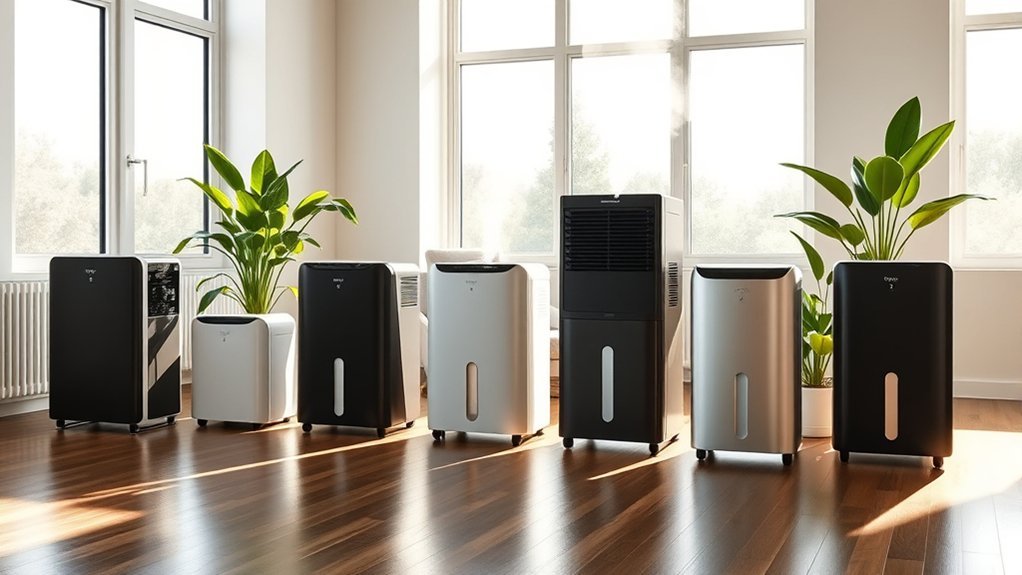
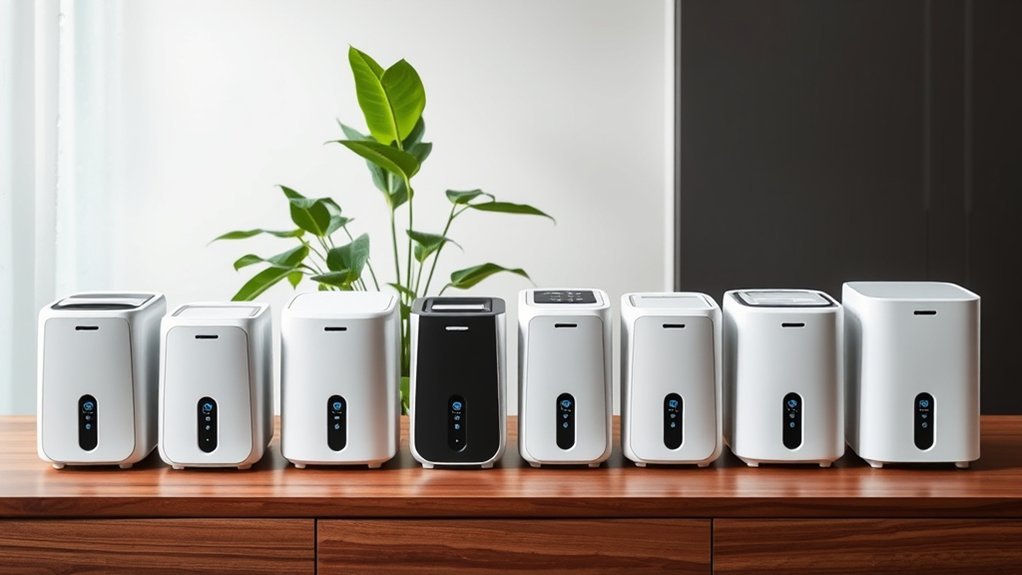
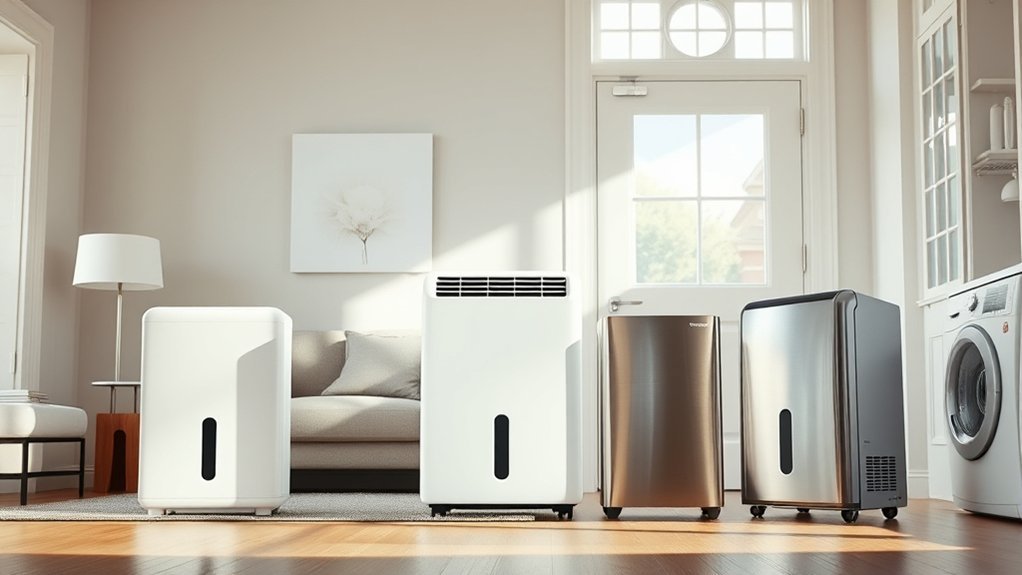
Small and quiet dehumidifiers are best for light moisture control in bedrooms, bathrooms, closets, RVs, and other compact spaces. The Tenergy Sorbi is the strongest all-around choice here because it combines a small dehumidifier with a replaceable HEPA filter. The TABYIK 35 OZ is a simpler and more affordable bedroom option, while the cordless Eva-Dry E-333 is better suited to enclosed spaces such as closets, cabinets, cars, and boats. These compact products are not substitutes for a full-size compressor dehumidifier when a room has leaks, standing water, visible mold, or severe humidity.
- Best Overall: Tenergy Sorbi — Best for a small bedroom, bathroom, or office when you also want supplemental HEPA filtration.
- Best Value: TABYIK 35 OZ — A straightforward, quiet option for light moisture in a compact room.
- Best for Closets and Cars: Eva-Dry E-333 — Cordless moisture control for enclosed spaces where an electric unit is inconvenient.
Quick Comparison
| Product | Best For | Type | Manufacturer-Rated Capacity | Noise | Amazon |
|---|---|---|---|---|---|
| Eva-Dry E-333 | Closets, cabinets, cars, boats | Renewable desiccant | Up to 6 oz per recharge cycle | Silent while absorbing | Check on Amazon |
| TABYIK 35 OZ | Small bedrooms, bathrooms, RVs | Thermoelectric | Up to 16 oz per day under favorable conditions | Listed at approximately 28 dB | Check on Amazon |
| Tenergy Sorbi | Small rooms needing moisture control and filtration | Thermoelectric with HEPA filter | Up to 750 mL per day under favorable conditions | Approximately 35–42 dB | Check on Amazon |
Best for Closets and Cars: Eva-Dry Wireless Mini Dehumidifier E-333
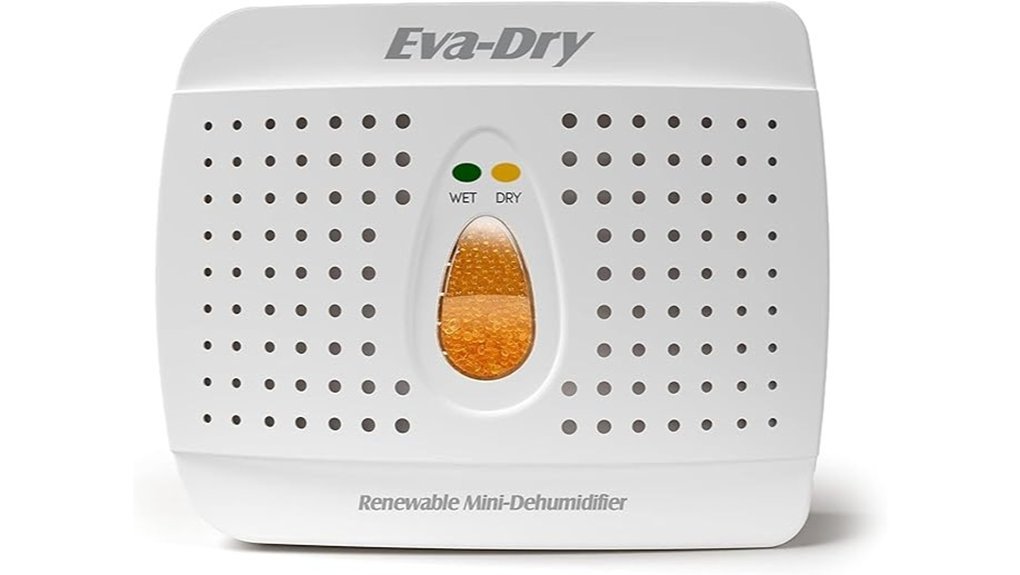
The Eva-Dry E-333 is a renewable desiccant moisture absorber designed for enclosed spaces where a corded dehumidifier would be inconvenient. It contains moisture-absorbing beads and operates silently without batteries or a power cable during normal use.
The manufacturer rates it for enclosed areas up to approximately 333 cubic feet, with an absorbing capacity of up to 6 ounces before regeneration is needed. Once the indicator shows that the beads are saturated, the unit must be connected to power to dry and renew the beads.
Who Should Buy This: Buyers who need light moisture control in a small enclosed area without leaving an electric appliance running continuously.
Who Should Avoid This: Anyone trying to lower the relative humidity of an entire bedroom, bathroom, basement, or other open room. This is not a powered room dehumidifier.
Pros:
- Silent and cordless during moisture absorption.
- Compact enough for closets, cabinets, cars, and boats.
- Reusable beads reduce the need for disposable moisture-absorber tubs.
- No water tank to empty.
Cons:
- Limited to small, enclosed spaces.
- Must be plugged in periodically to regenerate the beads.
- Cannot handle leaks, heavy condensation, or whole-room humidity.
Best Value for Bedrooms: TABYIK 35 OZ Dehumidifier
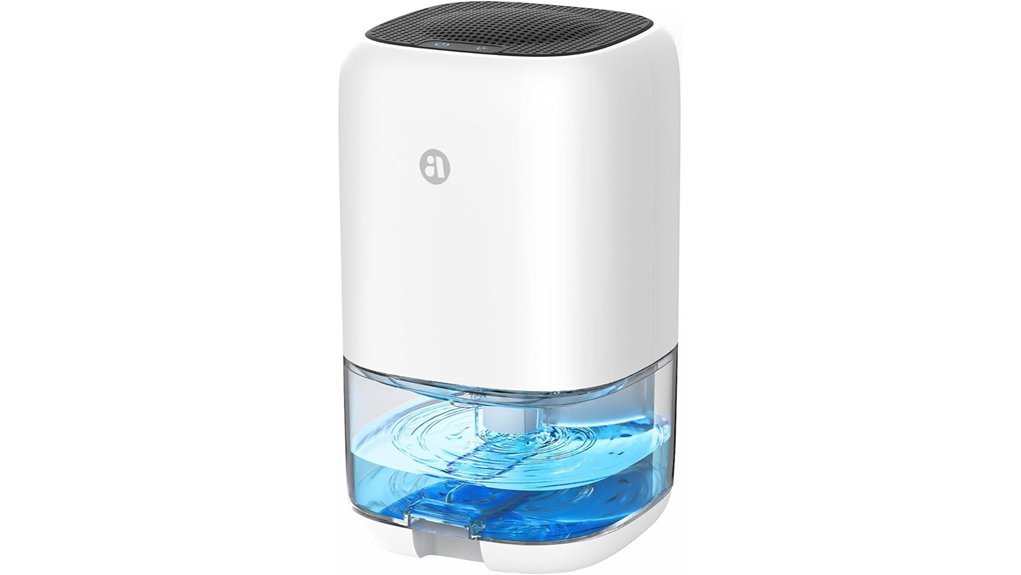
The TABYIK 35 OZ Dehumidifier is a compact thermoelectric model for light moisture in bedrooms, bathrooms, closets, offices, and RVs. Its small footprint and built-in handle make it easier to move than a conventional compressor dehumidifier.
The product listing gives a maximum extraction rating of up to 16 ounces per day under favorable temperature and humidity conditions. Actual collection will depend on the room temperature, starting humidity, airflow, and whether doors and windows remain closed.
Who Should Buy This: Someone with a small bedroom, bathroom, RV, or closet that feels mildly humid but does not have water intrusion or a severe dampness problem.
Who Should Avoid This: Buyers who need rapid humidity reduction in a wet basement, laundry room, or large living area. A pint-rated compressor model will normally be more appropriate for those conditions.
Pros:
- Compact, lightweight design with a carrying handle.
- Manufacturer-listed noise level of approximately 28 dB.
- Automatic shutoff helps prevent tank overflow.
- Transparent tank makes the water level easy to monitor.
Cons:
- Maximum extraction is based on favorable test conditions.
- Performance can decline in cooler rooms.
- The tank may need frequent emptying in humid weather.
- No built-in humidistat for selecting a precise relative-humidity target.
Best Overall: Tenergy Sorbi 1000 mL Dehumidifier with HEPA Filter
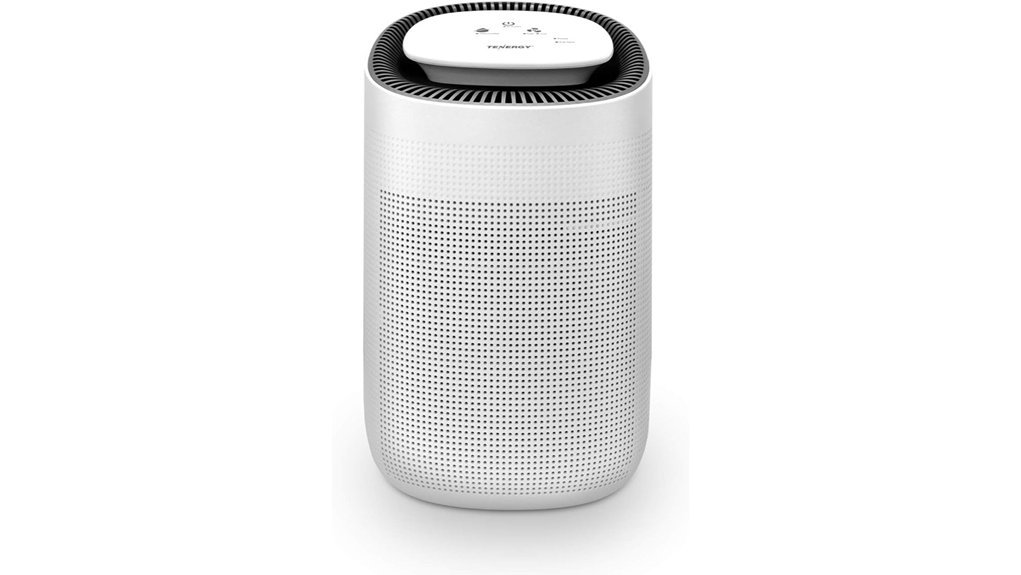
The Tenergy Sorbi combines a small thermoelectric dehumidifier with a replaceable HEPA filter. It is the most versatile choice in this comparison for a bedroom, office, bathroom, or other compact room where you want both light moisture removal and supplemental particle filtration.
Tenergy lists a 1-liter removable tank, two fan speeds, automatic shutoff, a water-full indicator, and a maximum moisture-removal capacity of 750 mL per day. That maximum is measured under warm, highly humid conditions, so ordinary household collection may be lower. Its listed operating noise is approximately 35–42 dB.
Who Should Buy This: Buyers with a small room who want a quiet mini dehumidifier and basic particle filtration in one unit.
Who Should Avoid This: Anyone who needs high-capacity basement dehumidification, continuous hose drainage, precise humidistat control, or the airflow performance of a dedicated room air purifier.
Pros:
- Combines light dehumidification with a replaceable HEPA filter.
- Two fan speeds allow a choice between quieter and stronger operation.
- Automatic shutoff and a water-full indicator improve convenience.
- Clearly identified manufacturer specifications and replacement-filter guidance.
Cons:
- The 1-liter tank cannot connect to a continuous drain hose.
- Replacement HEPA filters add ongoing ownership cost.
- Maximum extraction depends on warm, humid test conditions.
- Its filtration airflow is modest compared with a dedicated air purifier.
Factors to Consider When Choosing a Small and Quiet Dehumidifier
A quiet dehumidifier should do more than fit on a nightstand. Compare its technology, tested moisture-removal capacity, room conditions, water-tank size, noise level, controls, and maintenance needs before buying.
Choose the Right Technology
Renewable desiccant units such as the Eva-Dry E-333 are designed for enclosed storage spaces. They absorb a limited amount of moisture silently and must be regenerated periodically.
Thermoelectric or Peltier dehumidifiers such as the TABYIK and Tenergy Sorbi use a cooled surface to condense water. They are compact and quiet but remove much less moisture than a conventional compressor model.
Compressor dehumidifiers are larger and noisier, but they are normally the better choice for basements, large rooms, recurring condensation, laundry areas, or humidity that remains above the target level.
Check Moisture-Removal Capacity
Do not choose a dehumidifier based only on an advertised square-foot number. Daily water-removal capacity provides a more useful comparison, although test conditions still matter. ENERGY STAR explains that the appropriate capacity depends on both room size and how damp the space is.
For standardized sizing guidance, see the ENERGY STAR dehumidifier guide. A room that is persistently damp may require a compressor model rated in pints per day rather than a mini model rated in ounces or milliliters.
Consider Temperature and Humidity
Thermoelectric dehumidifiers generally collect the most water in warm, humid rooms. Collection may fall sharply in a cool bedroom, basement, garage, or RV. Compare the water collected over several days with readings from a separate hygrometer instead of judging performance only by whether water appears in the tank.
Compare Noise Levels
For bedrooms and offices, models advertised below approximately 40 dB are usually easier to live with than compressor units. However, sound quality also matters. Fan vibration, rattling, and changes between operating modes may be more noticeable than the published number suggests.
Look for Humidity Control
Many mini dehumidifiers run continuously until their tanks fill because they do not include an adjustable humidistat. A separate hygrometer can help you avoid running the appliance unnecessarily and show whether it is powerful enough for the room.
The U.S. Environmental Protection Agency generally recommends maintaining indoor relative humidity between 30% and 50%. See the EPA’s indoor-air guidance for more information.
Check the Tank and Drainage Options
A larger tank reduces how frequently you need to empty the unit, but tank size does not tell you how quickly the appliance removes moisture. Confirm whether the model has automatic shutoff and whether continuous hose drainage is supported. Neither the TABYIK nor the Tenergy Sorbi should be assumed to offer continuous drainage unless the current manufacturer instructions specifically state it.
Review Maintenance Needs
Unplug an electric dehumidifier before cleaning it. Empty and rinse the tank regularly, keep the air inlet and outlet clear, and clean or replace filters according to the manual. The Tenergy Sorbi’s HEPA filter is a consumable part and should be replaced on the manufacturer’s recommended schedule.
Know When a Mini Model Is Not Enough
A mini dehumidifier does not repair plumbing leaks, stop groundwater intrusion, dry soaked building materials, or remove existing mold. Address the source of water first. Consider a higher-capacity unit or professional help when walls feel wet, floors show seepage, condensation is widespread, or relative humidity stays above 60% despite continuous operation.
Frequently Asked Questions
Do Small Dehumidifiers Work in Bedrooms?
They can help with light, localized moisture in a small, warm bedroom. They may not maintain the target humidity when the room is large, doors remain open, outdoor humidity is high, or there is a leak or other major moisture source. Check the result with a hygrometer.
What Is a Good Noise Level for a Bedroom Dehumidifier?
A model listed below approximately 40 dB is a reasonable starting point for a bedroom. The Eva-Dry is silent while absorbing moisture because it has no fan, the TABYIK is listed at approximately 28 dB, and the Tenergy Sorbi is listed at approximately 35–42 dB.
Can a Mini Dehumidifier Handle a Basement?
Usually not when the basement is persistently damp. Mini thermoelectric models remove a small amount of water compared with pint-rated compressor dehumidifiers. A basement with musty odors, wet surfaces, seepage, or consistently high humidity generally needs a higher-capacity model and correction of the underlying moisture source.
Can a Dehumidifier Reduce Allergens?
Lower humidity can make the environment less favorable for mold and dust mites, but an ordinary dehumidifier does not capture airborne particles. The Tenergy Sorbi includes a HEPA filter for supplemental filtration, while the TABYIK and Eva-Dry do not replace an air purifier.
How Do I Clean and Maintain a Small Dehumidifier?
Unplug the unit, empty and rinse its tank, wipe the exterior, remove dust from the air openings, and follow the manual’s filter instructions. Allow all washable parts to dry before reassembly. Renewable desiccant products should be regenerated only as directed by their manufacturer.
What Humidity Level Should I Aim For?
A practical indoor target is generally between 30% and 50% relative humidity. Avoid driving humidity excessively low, and take action when it remains above 60% or when you notice recurring condensation, damp materials, or mold.
Final Recommendation
Choose the Tenergy Sorbi when you want the most versatile small-room option and value its replaceable HEPA filter.
Choose the TABYIK 35 OZ when you want a simpler, quieter, and more affordable electric model for light bedroom or bathroom moisture.
Choose the Eva-Dry E-333 for a closet, cabinet, car, boat, or other enclosed space where silent cordless operation matters more than rapid water removal.
Whichever model you select, use a hygrometer to confirm the result. Upgrade to a pint-rated compressor dehumidifier when a mini unit cannot keep the space within the desired humidity range.