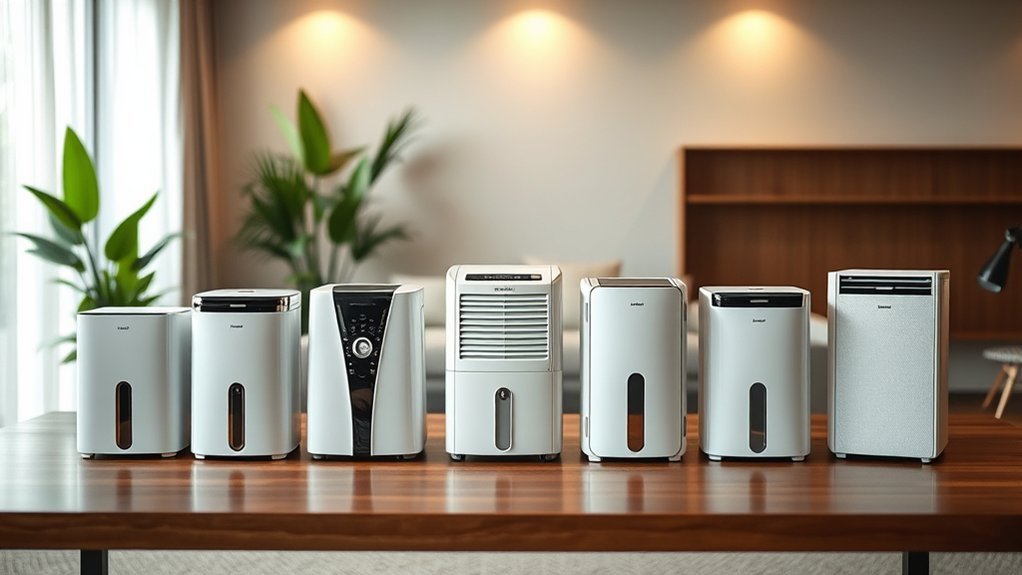
Best Dehumidifiers for Closets in 2026
Last updated: 2026
If your closet smells musty, feels damp, or leaves clothes with a stale odor, a small closet dehumidifier can help protect clothing, shoes, linens, handbags, documents, and seasonal storage. The right choice depends on the space you are trying to fix. Hanging moisture absorber bags work well in tight closets, compact electric dehumidifiers suit small bedrooms and wardrobes, and odor-control tubs are useful when dampness and smells show up together.
For 2026, the Ksend Moisture Absorbers are a practical pick for simple moisture capture, while the TABYIK 35OZ Peltier Dehumidifier is better if you want compact electric operation. The Arm & Hammer Moisture Absorber option adds odor control, and the ToLife Dehumidifier gives you a larger tank for broader room coverage. Below, you can compare the best dehumidifiers for closets by format, capacity, best use, maintenance needs, and buyer fit.
Quick buying tip: For a small closet, start with a hanging or tub-style moisture absorber. For a walk-in closet, laundry closet, or humid bedroom closet, consider a compact electric model with auto shut-off and a removable water tank. If you see visible mold, recurring wall condensation, or water stains, fix the source of moisture first instead of relying only on a dehumidifier.
Quick Verdict
Choose Ksend Moisture Absorbers if you want the easiest no-electricity option for small closets. Choose the TABYIK 35OZ Peltier Dehumidifier if you want a quiet electric model for a closet near a bedroom or office. Choose Arm & Hammer if odor control matters as much as moisture control. Choose the ToLife 95 OZ Dehumidifier if your closet connects to a larger damp room and you want a bigger water tank.
Quick Picks: Best Closet Dehumidifiers
- Best simple moisture absorber: Ksend Moisture Absorbers 10 Pack Dehumidifier Bags
- Best compact electric option: TABYIK 35OZ Peltier Dehumidifier
- Best tub-style odor control: Arm & Hammer Moisture Absorber and Odor Eliminator Pack of 3
- Best larger-tank option: ToLife Dehumidifier for Home with 95 OZ Tank
Closet Dehumidifier Comparison Table
| Product | Type | Best For | Key Detail | CTA |
|---|---|---|---|---|
| Ksend Moisture Absorbers 10 Pack Dehumidifier Bags | Hanging moisture absorber bags | Closets, bathrooms, laundry rooms, and small storage spaces | Uses spherical calcium chloride and has a transparent moisture collection area | Check Price on Amazon |
| TABYIK 35OZ Peltier Dehumidifier | Compact electric dehumidifier | Small bedrooms, closets, and rooms up to 280 sq. ft. | 35 oz tank, quiet operation, auto shut-off, and built-in handle | Check Product Details |
| Arm & Hammer Moisture Absorber and Odor Eliminator Pack of 3 | Tub-style moisture and odor absorber | Musty closets, mudrooms, laundry rooms, and enclosed spaces | Fragrance-free formula with baking soda, activated bamboo charcoal, and calcium salts | Check Price on Amazon |
| ToLife Dehumidifier for Home with 95 OZ Tank | Larger compact electric dehumidifier | Walk-in closets, bedrooms, and larger damp areas | 95 oz tank, two operation modes, auto shut-off, and ambient lighting | View Latest Deal |
Before You Buy: Match the Dehumidifier to Your Closet Problem
- Light dampness: A hanging bag or tub absorber may be enough.
- Musty odor: Choose a product with odor-control ingredients such as baking soda or activated charcoal.
- Walk-in closet: A compact electric dehumidifier with a tank can be more practical.
- No outlet nearby: Stick with non-electric bags or tubs.
- Recurring mold or wet walls: Fix leaks, ventilation, or condensation problems first.
Ksend Moisture Absorbers 10 Pack Dehumidifier Bags
Best Simple Moisture Absorber

If you want a low-maintenance way to keep a closet fresher, the Ksend Moisture Absorbers 10 Pack Dehumidifier Bags are a simple place to start. Each 9.8 oz bag uses spherical calcium chloride to capture excess humidity, helping reduce dampness, odor, and moisture-related damage in enclosed spaces.
The transparent collection area makes it easy to see when moisture is building up, which is useful if you do not want to guess when a bag is working. Each bag is designed for up to 30 days of use, and the 10-pack gives you enough pieces for multiple closets, bathrooms, laundry rooms, or kitchen storage areas.
The leak-resistant packaging is a helpful feature for closets because it lowers the chance of collected moisture reaching clothing, shoes, boxes, or linens. For best results, hang the bag where air can circulate around it instead of pressing it flat against clothing or a wall.
Why you’ll like it: This is the easiest option in the list if you want a no-plug, no-tank, no-button solution. It works especially well for people who want to hang something once, check the water collection area later, and replace it when full.
Best For: Individuals seeking an effective solution to control humidity and prevent moisture damage in small spaces like closets, bathrooms, and kitchens.
Who should skip it: Choose an electric dehumidifier instead if you need active moisture removal for a large walk-in closet, a very humid room, or a space that repeatedly develops mold.
Pros:
- Long-lasting: Each bag lasts up to 30 days, providing extended moisture control.
- Visible effectiveness: Transparent area allows users to easily monitor moisture absorption.
- Leak-resistant: Well-sealed packaging protects belongings from potential leaks.
Cons:
- Limited capacity: Each bag may not be sufficient for larger or more humid areas.
- Single-use: After 30 days, bags need to be replaced, which may require ongoing costs.
- Scent neutral: Does not provide any added fragrance to the areas it protects.
Bottom line: Pick the Ksend bags if you want a no-plug closet moisture absorber that is easy to monitor and replace. They make the most sense for small enclosed spaces rather than whole-room humidity control.
Dehumidifier for Bedroom and Home (35 OZ)
Best Compact Electric Option
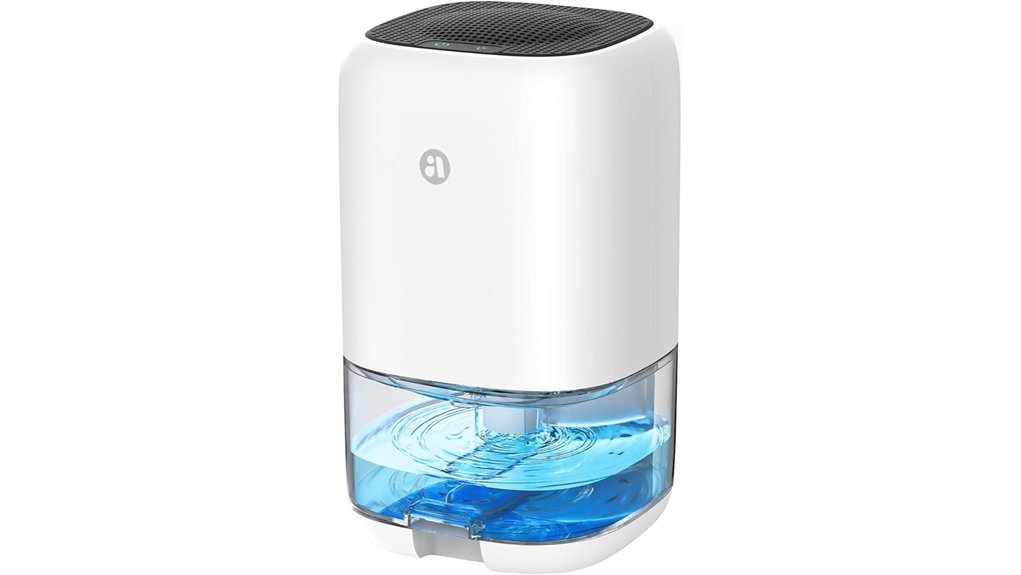
The TABYIK 35OZ Peltier Dehumidifier is a better fit if you want an electric option instead of disposable moisture bags. It is designed for small bedrooms or homes up to 280 sq. ft., which makes it useful for a bedroom closet, wardrobe area, small bathroom, office, RV, or other compact damp space.
With a 35 oz water tank, it can collect up to 16 oz of moisture daily in humid conditions. The quiet 28 dB operation is one of its strongest closet-friendly features because a dehumidifier near a bedroom should not become distracting at night.
The compact design and built-in handle make it easy to move between rooms. The auto shut-off and red light indicator help prevent overflow when the tank is full, and the transparent tank makes maintenance easier. The 7-color atmospheric lights are a bonus if you want a small night-light effect, though some users may prefer to keep lighting minimal in bedrooms.
Why you’ll like it: This model gives you active moisture removal without jumping to a large basement-style machine. It is a good middle choice for shoppers who want more power than a hanging bag but still need a compact design for a closet, bathroom, RV, or bedroom corner.
Best For: Individuals seeking an efficient and quiet dehumidifier for small spaces up to 280 sq. ft.
Who should skip it: Skip this model if you need moisture control for a large basement, whole apartment, or very wet room. It is best used as a compact dehumidifier for small spaces.
Pros:
- Compact design with a built-in handle for easy portability.
- Quiet operation at only 28 dB, making it ideal for bedrooms and offices.
- Safety features including auto shut-off and a red light indicator for peace of mind.
Cons:
- Limited coverage area of 280 sq. ft., which may not be sufficient for larger rooms.
- Water collection rate of 16 oz per day may be inadequate for very humid environments.
- Requires regular maintenance for optimal performance, including emptying and cleaning the water tank.
Bottom line: Choose this TABYIK model if you want a quiet, compact electric dehumidifier with a removable tank and auto shut-off. It is one of the better fits here for small closets near living or sleeping areas.
Arm & Hammer Moisture Absorber and Odor Eliminator (Pack of 3)
Best Tub-Style Odor Control
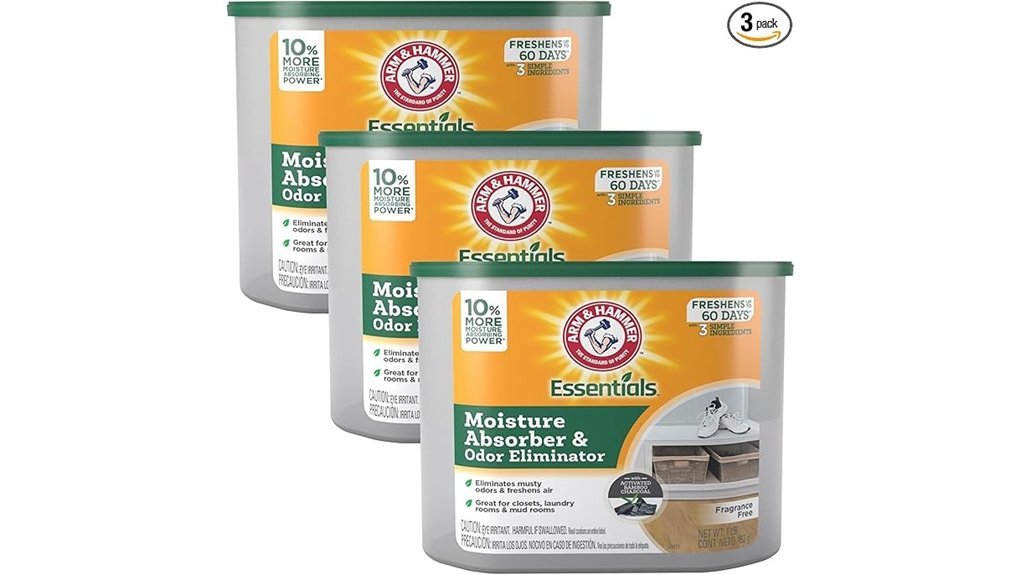
Looking for an effective way to tackle excess moisture and odors in your closet? The Arm & Hammer Moisture Absorber and Odor Eliminator is a practical choice when musty smells are the main problem. This pack of three fragrance-free tubs combines baking soda, activated bamboo charcoal, and calcium salts to absorb moisture and help reduce musty smells.
It offers 10% more moisture-absorbing power than many competitors and lasts up to 60 days. The visible replacement indicator line helps you know when it is time to swap the tub rather than relying on smell alone.
This option works well for closets, laundry rooms, mudrooms, and other indoor areas where dampness and odor build up. Because it is a tub-style absorber, placement matters. Keep it stable, away from children, and away from surfaces that may be sensitive to spills or contact.
Why you’ll like it: This product is helpful when your biggest complaint is not just humidity, but that stale closet smell that clings to shoes, coats, towels, and stored fabrics. The tub format is also easy to place on a shelf or floor corner where it can sit upright.
Best For: Those seeking an effective, fragrance-free solution to eliminate excess moisture and musty odors in small spaces like closets and laundry rooms.
Who should skip it: If you need a hanging bag for a crowded closet rod or a powered unit for faster moisture removal, one of the other options may be easier to use.
Pros:
- 10% more moisture-absorbing power compared to many competitors.
- Lasts up to 60 days, providing long-term odor and moisture control.
- Visible indicator line for easy monitoring of moisture absorption.
Cons:
- Not suitable for use in moving vehicles, limiting its portability.
- Avoids contact with leather or metal surfaces, which may restrict placement options.
- Needs replacement when the liquid reaches the indicator line, requiring ongoing maintenance.
Bottom line: This Arm & Hammer tub is a strong pick for odor-prone closets because it targets both dampness and musty smells without fragrance.
ToLife Dehumidifier for Home with 95 OZ Tank
Best Larger-Tank Option
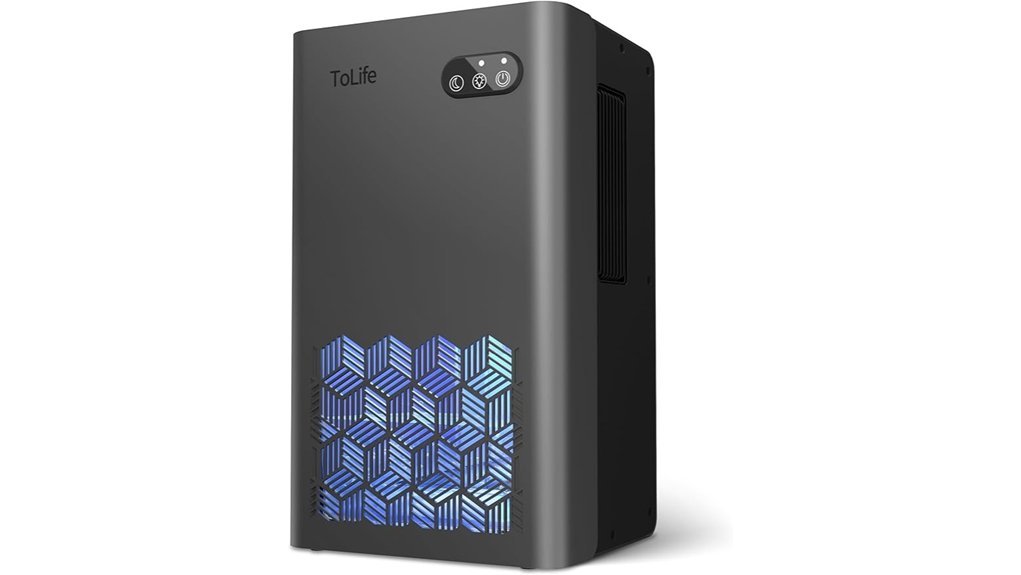
For anyone seeking stronger moisture control in a larger closet or nearby room, the ToLife Dehumidifier with a 95 OZ tank stands out. It uses semiconductor condensation technology and is described as helping keep humidity levels below 45%.
You can choose between a powerful mode for faster moisture removal or a low-speed sleep mode for quieter nighttime use. The larger tank is helpful if you do not want to empty the unit as often as a smaller compact model, though any dehumidifier will need more frequent emptying in very humid conditions.
The seven ambient lighting options can work as a night light, but they may not be necessary for every closet setup. More important for closet use is the automatic shut-off, which helps prevent overflow when the tank is full. The compact and portable design also makes it easier to move between a bedroom, closet, bathroom, or other damp indoor space.
Why you’ll like it: This option is better for shoppers who feel that moisture bags are too passive and smaller mini units need emptying too often. It gives you a larger tank while still staying more compact than a full-size dehumidifier.
Best For: Individuals or families looking for an efficient and portable dehumidifier to maintain comfortable humidity levels in larger living spaces.
Who should skip it: Skip this option if you only need a no-electricity moisture absorber for a small cabinet or narrow closet. Its larger tank and powered design make more sense for bigger spaces.
Pros:
- Efficient Moisture Control: Uses advanced semiconductor condensation technology to help manage excess humidity.
- Versatile Operation Modes: Offers both a powerful mode for quick dehumidification and a quiet sleep mode.
- User-Friendly Design: Compact and portable, capable of covering larger spaces with built-in handles for easy movement.
Cons:
- Limited Tank Capacity: The 95 OZ tank may require frequent emptying in very humid conditions.
- Noise Levels on High Mode: While the sleep mode is quiet, the powerful mode may be louder than some users prefer.
- Ambient Lighting May Distract: The seven color options, while aesthetically pleasing, could be distracting for some during nighttime use.
Bottom line: The ToLife model is the better choice if your closet is connected to a damp bedroom, bathroom, or larger storage area and you want a bigger tank than most mini dehumidifiers provide.
Factors to Consider When Choosing Dehumidifiers for Closets
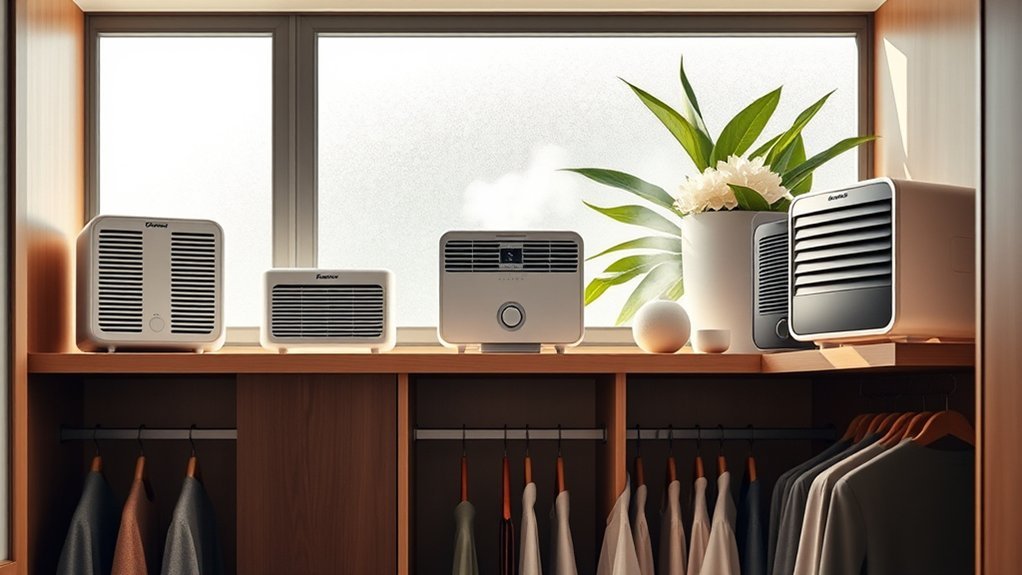
When choosing a dehumidifier for your closet, focus on the problem you are trying to solve first. A small closet with light dampness may only need a hanging bag, while a walk-in closet or humid bedroom may benefit from an electric unit with a removable tank. Size and capacity, moisture absorption efficiency, safety features, maintenance, and portability all matter.
How to Choose the Right Closet Dehumidifier
- For tight closets: Choose a hanging moisture absorber that does not take up shelf space.
- For musty odors: Look for baking soda, charcoal, or odor-control formulas.
- For walk-in closets: Consider an electric dehumidifier with a tank and auto shut-off.
- For low maintenance: Pick a larger tank or a multi-pack that lasts longer between replacements.
- For bedrooms: Prioritize quiet operation and indicator lights that are not distracting.
Key Features to Assess
Choosing the right dehumidifier for your closet involves evaluating several key features to guarantee it meets your needs. First, check the water tank capacity and coverage area; you want a unit that efficiently handles your closet’s humidity levels. Next, consider the moisture absorption mechanism; options like calcium chloride or semiconductor condensation impact how quickly moisture is removed. Longevity is also essential; some dehumidifiers can last up to 60 days before needing maintenance. Portability matters too; a compact design lets you easily relocate the unit as humidity levels change. Finally, prioritize safety features like automatic shut-off mechanisms to prevent overflow, ensuring safe operation, especially in enclosed spaces. These factors will help you choose the best dehumidifier for your closet.
Size and Capacity Matters
Understanding size and capacity is essential for selecting the right dehumidifier for your closet. First, consider your closet’s dimensions; smaller spaces may only need a compact unit, while larger areas require a more powerful model. Capacity matters too; dehumidifiers with larger tanks, like those holding 35 oz or more, allow for longer operation before emptying, making maintenance easier. It’s important to choose a unit that aligns with your typical humidity levels and covers areas up to 280 sq. ft. Look for models that specify their moisture removal efficiency, ensuring they adequately meet your needs. Finally, opt for options that can last up to 60 days before needing replacement to minimize upkeep in tight spaces.
Moisture Absorption Efficiency
Moisture absorption efficiency is a key factor in selecting the right dehumidifier for your closet. You’ll find that some products capture up to 10% more moisture than others, making them more effective in damp spaces. Look for dehumidifiers that use spherical calcium chloride; they provide a visible indication of moisture absorption, letting you monitor efficiency easily. Consider the duration of moisture absorption as well; some models can last up to 60 days before needing replacement, which is essential for long-term use. Additionally, check the capacity of the moisture collection tank; certain models can hold up to 16 oz (450 ml) of water daily. If you prefer a chemical-free option, non-electric dehumidifiers with natural ingredients like baking soda are worth exploring.
Safety and Reliability Features
When selecting a dehumidifier for your closet, safety and reliability features play an essential role in ensuring effective operation. Look for units with automatic shut-off functions to prevent overflow when the water tank is full or misaligned. Leak-resistant designs, like moisture-permeable materials, help protect your belongings from potential spills. A transparent water tank allows you to easily monitor levels, ensuring timely maintenance. Additionally, choose devices that operate quietly, especially in enclosed spaces, to avoid noise disturbances. Finally, check for safety certifications and warnings, such as keeping the product out of reach of children and avoiding contact with sensitive materials like leather or metal. These features will help you make a safer, more reliable choice.
Design and Portability
Choosing the right dehumidifier for your closet involves considering its design and portability features, especially since space is often limited. Look for compact dimensions, ideally under 12 inches in height and width, to guarantee a snug fit. Portability is key; opt for models with built-in handles or lightweight designs to make relocation effortless. You’ll also want an easy-to-remove water tank, so maintenance is hassle-free. Quiet operation is essential; aim for units that run below 30 dB to keep noise levels low, particularly if your closet is near living spaces. Finally, don’t overlook energy efficiency; choose models that use less than 1 kilowatt-hour per day to keep your electricity costs down while effectively managing humidity.
Ideal Placement Locations
Finding the right dehumidifier design and portability features is just the beginning; placement plays a significant role in its effectiveness. To prevent moisture buildup that leads to mold and mildew, make sure your dehumidifier sits on a flat surface for ideal airflow. Choose a unit based on your closet size and humidity levels, adjusting the number of units as necessary for maximum effectiveness. Position it close to the closet door to enhance air circulation and moisture removal. Regularly monitor the humidity and adjust the settings based on seasonal changes, keeping your closet environment healthy. With the right placement, you’ll protect your clothes and stored items from unwanted dampness.
Pro Tips for Better Closet Moisture Control
- Leave a small gap between clothes and the wall so air can move.
- Use breathable storage bags instead of trapping damp clothing in sealed plastic.
- Dry shoes, towels, and coats fully before storing them inside the closet.
- Open closet doors occasionally during humid weather to improve airflow.
- Use a small hygrometer if your closet repeatedly feels damp or smells musty.
Safety Note
Moisture absorbers and electric dehumidifiers should always be used according to the product instructions. Keep calcium chloride bags and tubs away from children and pets, place tub-style absorbers on stable surfaces, and avoid direct contact with leather, metal, or delicate materials unless the manufacturer says it is safe. For electric models, keep vents clear, empty the tank before overflow, and avoid placing the unit where clothing can block airflow.
Closet Dehumidifier Maintenance Tips
A closet dehumidifier works best when it is checked regularly. Disposable bags and tubs should be replaced when they are full, heavy, or past the recommended use period. Electric models need the water tank emptied, rinsed, and dried so odors do not build up inside the tank.
- Keep clothing, boxes, and shoes from blocking airflow around the dehumidifier.
- Check closets more often during rainy seasons, summer humidity, or after leaks.
- Use a separate humidity monitor if your closet has recurring dampness.
- Do not place moisture absorbers directly on leather, metal, or delicate surfaces unless the manufacturer says it is safe.
- Fix water leaks, poor ventilation, or wall condensation before relying on a dehumidifier alone.
Frequently Asked Questions
How Do I Know When to Replace Dehumidifier Bags?
You should replace dehumidifier bags when they feel heavy, saturated, or discolored. If the bag or tub has a visible fill line, replace it when the liquid reaches that mark. If you notice musty odors returning or increased humidity levels, it’s time to swap the absorber for a fresh one.
Can Dehumidifiers Help With Musty Odors in Closets?
Yes. Dehumidifiers help reduce the damp conditions that often cause musty closet odors. Moisture absorbers and odor-control products can also help keep stored clothing, shoes, linens, and seasonal items fresher, especially when the closet stays closed most of the day.
Are Dehumidifiers Safe to Use in Small Spaces?
Yes, dehumidifiers are safe to use in small spaces when used as directed. Choose a model that fits the closet size, keep airflow clear, empty tanks on time, and follow the manufacturer’s placement and safety instructions. Keep disposable moisture absorbers away from children, pets, leather, and metal unless the product directions say otherwise.
How Much Energy Do Closet Dehumidifiers Consume?
Small electric closet dehumidifiers usually use much less power than full-size basement units. Non-electric moisture absorbers use no electricity at all, which makes them useful for closets, wardrobes, and storage cabinets without nearby outlets.
Do I Need a Dehumidifier if I Already Have Ventilation?
You might still need one. Ventilation moves air, but it may not remove enough moisture during humid seasons or in closed closets. A closet dehumidifier can help lower humidity where air movement is limited.
Which Type Is Best for a Small Closet?
For a small reach-in closet, hanging moisture absorber bags are usually the easiest starting point because they do not need floor space, electricity, or tank emptying. If the closet is larger, very humid, or connected to a damp room, a compact electric model may work better.
Can I Use a Closet Dehumidifier for Shoes and Seasonal Clothes?
Yes. A closet dehumidifier or moisture absorber can help reduce dampness around shoes, coats, seasonal clothing, bags, and linens. For best results, store only dry items, avoid overpacking the closet, and keep the absorber where air can move around it.
Conclusion
The best dehumidifier for your closet depends on the space and the type of dampness you are dealing with. For a small closet, the Ksend Moisture Absorbers are an easy, non-electric pick. For a bedroom closet or walk-in space, the TABYIK 35OZ Peltier Dehumidifier or ToLife 95 OZ Dehumidifier gives you active moisture removal with a tank and auto shut-off.
If odor control matters as much as humidity, the Arm & Hammer Moisture Absorber and Odor Eliminator tubs are a strong choice. Pick the format that fits your closet size, maintenance preference, and humidity level, then place it where air can move around it for the best results.
Final recommendation: Start with a non-electric absorber for light closet dampness and move to an electric dehumidifier if the space stays humid, smells musty again quickly, or holds valuable clothing and storage items you want to protect.