Affiliate disclosure: As an Amazon Associate I earn from qualifying purchases. This does not increase your cost.
Content reviewed: August 2026
If you want non-electric moisture control for a small conservatory, passive silica-gel packs and calcium-chloride absorbers can help with mild damp, local condensation, cupboards, storage areas, and moisture-prone corners. They are silent and need no mains power, but they are not powered dehumidifiers and do not have a fan or a pint-per-day extraction rating. The six options below are best compared by active material, pack size, spill risk, reusability, placement, and maintenance.
How We Compared Them: We focused on whether each product suits localized conservatory damp, how safely it can be placed, whether it creates a liquid reservoir, how easy it is to monitor, and whether it is reusable or disposable. None should be treated as a cure for leaks, poor ventilation, or persistent whole-room condensation.
Quick Verdict
- Best reusable option for localized damp: Wisedry Rechargeable Silica Gel Packets
- Best reusable option with an indicator: Wisesorb 500g Rechargeable Desiccant Packs
- Best hanging option: Vacplus Hanging Moisture Absorber Bags
- Best standing option for room corners: Vacplus Moisture Absorber Boxes
- Best for moisture and musty odors: MHTTEC Activated Charcoal Boxes
- Best for conservatory cupboards and storage: FURWEY 100g Desiccant Packs
Quick Comparison
| Product | Type | Best Use | Reusable? | Main Limitation | Amazon |
|---|---|---|---|---|---|
| Wisedry 2 x 500g Packets | Silica gel bags | Reusable moisture control near windows or storage areas | Yes | Needs periodic heat reactivation and has no built-in indicator | Check Price on Amazon |
| Wisesorb 2 x 500g Packs | Silica gel bags | Reusable protection for damp corners and stored items | Yes | Large packs take up more room | Check Price on Amazon |
| Vacplus Hanging Bags | Calcium chloride bags | Hanging beside glazing, doors, or shelving | No | Must be replaced after filling | Check Price on Amazon |
| Vacplus 6-Pack Boxes | Calcium chloride boxes | Low shelves, corners, and level surfaces | No | Needs stable placement and monitoring | Check Price on Amazon |
| MHTTEC Charcoal Boxes | Calcium chloride and charcoal boxes | Localized damp and stale-smelling storage areas | No | Absorption varies with conditions | Check Price on Amazon |
| FURWEY 6 x 100g Packs | Silica gel packets | Cupboards, storage boxes, drawers, and tool storage | Yes | Too small for whole-room control | Check Price on Amazon |
Before You Buy: These are passive moisture absorbers, not whole-room appliances. Choose them for mild or localized damp. Use a hygrometer to check the room rather than judging only by how much liquid appears in a box. If water regularly runs down the glazing, relative humidity stays above 60%, or mold returns, investigate ventilation, heating, leaks, drainage, and a properly sized electric dehumidifier. The EPA advises keeping indoor relative humidity below 60%, ideally between 30% and 50% where practical. See the EPA moisture-control guidance.
Wisedry 2 x 500g Rechargeable Silica Gel Packs
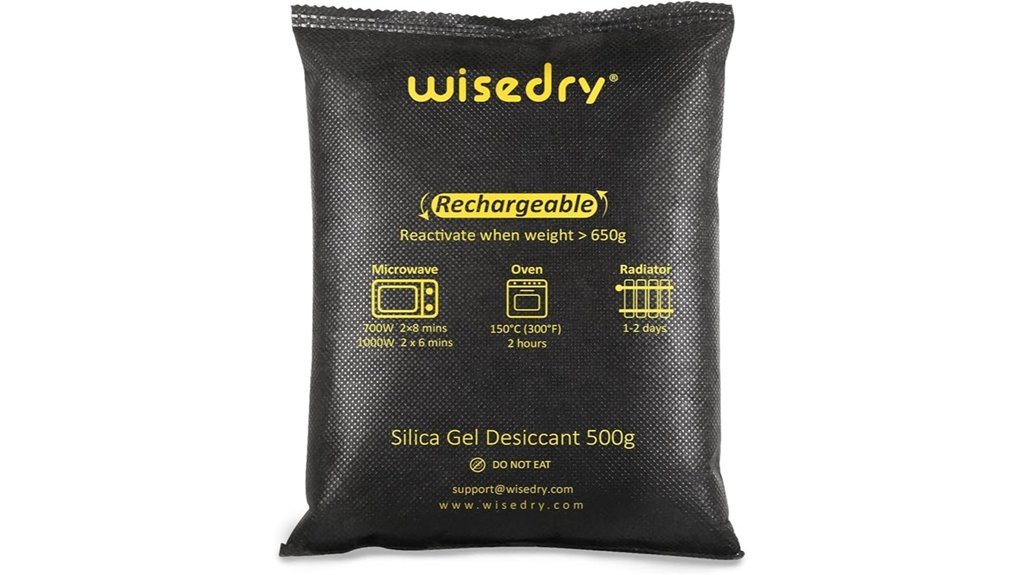
Best Reusable Pick for Localized Damp. Wisedry provides two 500g silica-gel bags designed for reusable moisture control. The larger pack size makes this set more practical than small packets for a storage bench, cupboard, vehicle, or protected damp-prone corner. Wisedry states that each 500g pack can absorb more than 150g of moisture before reactivation.
Why You’ll Like It: You can reuse the bags after heating them according to the product instructions. There is no liquid reservoir to empty, which lowers spill risk around furniture and flooring.
Best For: Buyers who want a reusable option for mild condensation and localized damp in a small conservatory.
Who Should Avoid It: Anyone expecting one pair of passive bags to control high humidity across a large, frequently opened room, or anyone who wants an automatic saturation indicator.
Pros:
- Two large 500g packs provide flexible placement.
- Reusable design can reduce repeated disposable purchases.
- No liquid collection tray to spill.
Cons:
- Requires periodic microwave or oven reactivation.
- No built-in color indicator; monitor performance by weight and the stated reactivation routine.
- Not a replacement for a powered whole-room dehumidifier.
Wisesorb Rechargeable Desiccant Packs, 2pcs 500g Moisture Absorbers

Best Reusable Option with an Indicator. This Wisesorb set also includes two 500g silica-gel bags. A transparent viewing area lets you watch the indicating beads change color, making it easier to see when reactivation may be needed. The larger format is better suited to storage areas, vehicles, garages, and protected damp corners than small sachets.
Why You’ll Like It: The color indicator removes some of the guesswork, while microwave or oven reactivation allows repeated use.
Best For: Homeowners who want visible saturation guidance and reusable packs for small damp areas.
Who Should Avoid It: Buyers with very limited shelf space or anyone who does not want to heat the packs during maintenance.
Pros:
- Two 500g packs provide more active material than small sachets.
- Transparent indicator window helps with maintenance timing.
- Reusable in accordance with the manufacturer’s heating directions.
Cons:
- The bulky bags may be awkward in narrow spaces.
- Needs careful reactivation and cooling before reuse.
- Cannot actively circulate or process room air.
Vacplus Hanging Closet Dehumidifier Bags (10 Pack)

Best Hanging Pick. Vacplus Hanging Moisture Absorber Bags use calcium chloride to collect absorbed moisture in a visible lower pouch. The 10-pack format is useful when you want several localized absorption points without taking up shelf or floor space.
Why You’ll Like It: The clear collection section shows that moisture has been captured, and the hanging design works well near shelving, coat hooks, storage rails, or a conservatory door area.
Best For: Buyers who need disposable, no-power moisture control near a secure rail or hook where a standing box would be inconvenient.
Who Should Avoid It: Homes with no safe hanging position or where children or pets could pull, puncture, or squeeze the bags.
Pros:
- Ten bags allow moisture control in several locations.
- Visible liquid collection makes replacement timing easier.
- Hanging format saves shelf space.
Cons:
- Disposable rather than rechargeable.
- Filled bags must be handled carefully to avoid leaks.
- Not suitable for controlling severe whole-room humidity.
Vacplus Moisture Absorbers 6 Pack for Bathroom, Closet, Car
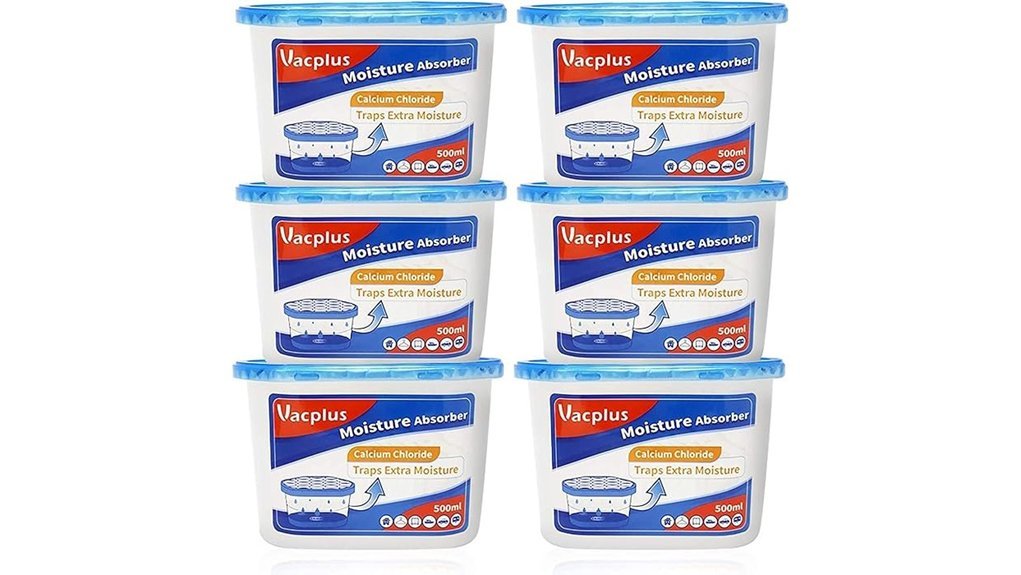
Best Standing Box for Room Corners. This Vacplus six-pack uses calcium chloride above a separate water-collection layer. The compact boxes are easy to position on a firm shelf or protected floor corner, and the clear lower section lets you monitor collected liquid.
Why You’ll Like It: Each unit works without electricity and can be moved between safe, level positions as damp conditions change.
Best For: Buyers who want a compact disposable absorber that stands on a level surface.
Who Should Avoid It: Anyone unable to place the boxes where they will remain upright and out of reach of children or pets.
Pros:
- Six compact boxes support placement at several damp points.
- Separate collection section makes progress visible.
- No power, fan, or recharging routine required.
Cons:
- Must be replaced when the crystals dissolve and the reservoir fills.
- Needs a stable, protected surface.
- Absorption rate varies with temperature and humidity.
Moisture Absorber Boxes with Activated Charcoal (4-Pack)
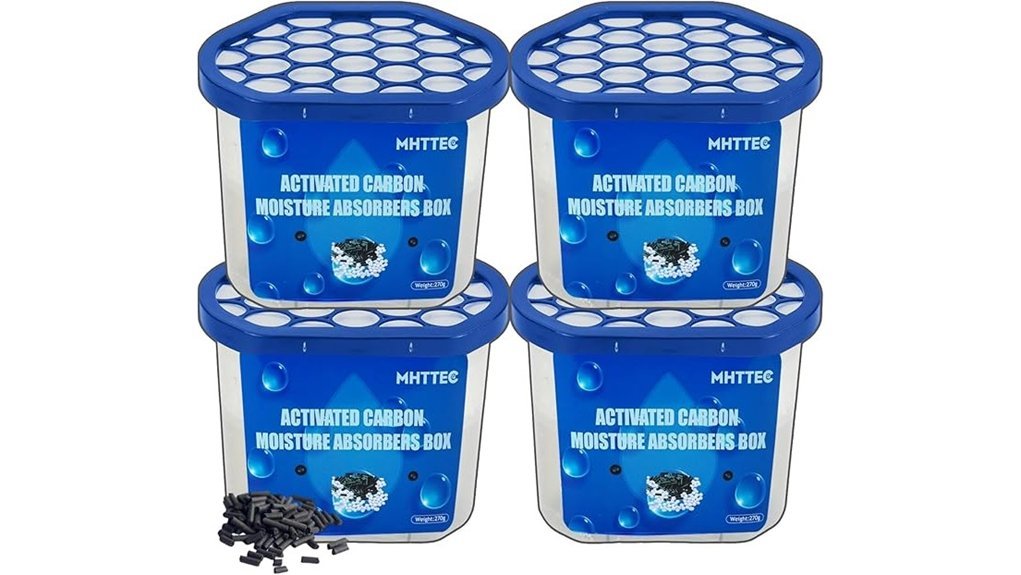
Best for Damp and Musty Odors. MHTTEC combines calcium chloride with activated charcoal in four disposable boxes. The moisture-collection chamber is visible through the translucent housing, while the charcoal is intended to support odor control. Retail listings show inconsistent per-box weight figures, so compare the current Amazon listing before buying.
Why You’ll Like It: It targets two common conservatory complaints at once: localized damp and stale-smelling air around stored fabrics, furniture, or closed corners.
Best For: Small conservatories or storage zones where mild humidity and musty odors occur together.
Who Should Avoid It: Buyers looking for reusable media or strong whole-room dehumidification.
Pros:
- Four ready-to-use standing boxes.
- Translucent design helps you monitor liquid collection.
- Activated charcoal provides added odor-control support.
Cons:
- Disposable after the absorber is spent.
- Needs safe, upright placement.
- Odor control does not replace cleaning or fixing the source of damp.
FURWEY Rechargeable Silica Gel Desiccant Packs for Storage
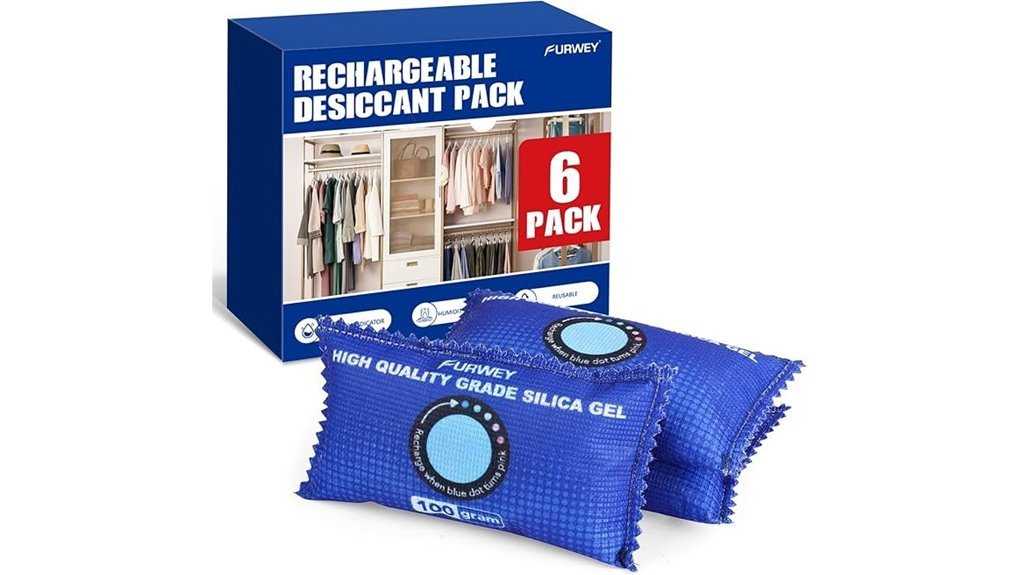
Best for Conservatory Cupboards. FURWEY supplies six individually packed 100g silica-gel bags. Their smaller size makes them better suited to cupboards, drawers, toolboxes, storage bins, and enclosed furniture than to the open conservatory itself.
Why You’ll Like It: You can spread the six packs among several storage areas, and the color indicator helps show when the silica gel needs reactivation.
Best For: Protecting stored textiles, tools, papers, and other moisture-sensitive items inside conservatory furniture.
Who Should Avoid It: Anyone seeking a single product to reduce humidity across the entire conservatory.
Pros:
- Six compact packs support flexible placement.
- Reusable design lowers disposable waste.
- Color-changing indicator assists maintenance.
Cons:
- Limited capacity per 100g pack.
- Requires careful microwave reactivation within the manufacturer’s stated limits.
- Best for enclosed storage, not open-room condensation.
Factors to Consider When Choosing a Moisture Absorber for a Conservatory
The best passive moisture absorber depends on whether you are treating a small damp zone, open room corner, or enclosed cupboard, whether you prefer reusable silica gel or disposable calcium chloride, and where the product can sit safely. Use the points below to avoid buying an undersized solution or creating a spill risk.
Whole-Room Versus Localized Damp
Passive packs and boxes work best for cupboards, storage benches, protected corners, and small conservatories with mild moisture. They do not have a fan or a published daily extraction rate like an electric dehumidifier. If condensation is widespread or persistent, use a hygrometer to monitor conditions and investigate ventilation, heating, leaks, and powered dehumidification.
Rechargeable Versus Disposable
Rechargeable silica-gel packs avoid a liquid reservoir and can be reused after heating, but they need the exact microwave or oven routine stated for that product and must cool before being returned to use. Disposable calcium-chloride absorbers require less maintenance during use and make captured liquid visible, but they need replacement and careful handling after filling.
Capacity and Number of Units
Compare the amount of active material, the number of packs, and the intended placement rather than relying on vague claims such as “large room.” Larger 500g silica-gel bags offer more capacity than 100g packets, but both will saturate faster in an open, frequently ventilated conservatory than in an enclosed container. Smaller packets are most useful inside drawers and cupboards, while multiple disposable boxes can be distributed around separate safe damp spots.
Safe Placement Options
Place standing boxes on a firm, level, protected surface where they cannot be knocked over. Hang moisture bags from a secure rail or hook, not directly over plants, electronics, upholstery, or valuable furniture. Keep every product away from children and pets. Do not open the packs, mix the contents, or use a heating method that is not specifically approved in the product instructions.
Indicator and Maintenance
For reusable packs, a visible color indicator can help show when the desiccant has absorbed moisture, but not every product includes one. Follow the product’s specific reactivation instructions and allow packs to cool fully before reuse. For disposable absorbers, replace the unit when the crystals have dissolved or the collection chamber reaches the marked limit. Check all products regularly during wet or cold weather.
The Source of Conservatory Moisture
Moisture absorbers manage symptoms; they do not repair leaks or remove the source of humidity. Check roof seals, glazing, gutters, damp flooring, blocked vents, clothes drying, and dense plant groupings. Better airflow, steadier heating, and source control can reduce how quickly passive absorbers become saturated.
Frequently Asked Questions
Are Passive Moisture Absorbers Enough for a Conservatory?
They can help with mild damp, cupboards, corners, and localized condensation. They are usually not enough for a large conservatory with water running down windows or consistently high humidity. In that situation, address airflow and moisture sources and consider a properly sized electric dehumidifier.
Which Is Better: Silica Gel or Calcium Chloride?
Silica gel is useful when you want a reusable, liquid-free option that can be reactivated. Calcium chloride is convenient for disposable boxes and hanging bags because it collects moisture as visible liquid. The better choice depends on placement, maintenance preference, and spill risk.
Where Should I Place Moisture Absorbers?
Start near the dampest safe location, often close to glazing, doors, storage furniture, or poorly ventilated corners. Keep standing products level and hanging products secure. Do not block vents or place liquid-collecting products where a leak could damage plants, fabrics, electronics, or wood.
How Often Do They Need Replacement or Reactivation?
There is no fixed schedule because saturation depends on humidity, temperature, airflow, product capacity, and how often doors are opened. Check indicators, pack weight, and collection chambers weekly at first, then adjust your routine based on how quickly each unit fills or reaches its reactivation point.
How Many Moisture Absorbers Do I Need?
There is no reliable one-product-per-room rule for passive absorbers. Start with one unit at each safe, persistent damp spot and monitor both the product and a separate hygrometer. If several units fill quickly while room humidity remains high, the space needs better ventilation, heating, leak control, or powered dehumidification rather than simply adding more passive packs.
Can Moisture Absorbers Stop Mold?
They may help reduce localized damp conditions that support mold growth, but they do not remove existing mold, capture airborne spores, or repair the moisture source. Clean affected surfaces safely and correct leaks, condensation, or ventilation problems.
Are Moisture Absorbers Safe Around Plants, Pets, and Children?
Use them only as directed and keep them out of reach. Do not allow pets or children to open the packs or touch collected liquid, and do not pour the liquid onto plants. Position every absorber where it cannot tip, tear, or leak onto soil, furniture, or flooring.
Conclusion
For a small conservatory with mild or localized damp, Wisedry is the simplest spill-free reusable choice, while Wisesorb adds a visible indicator. Vacplus hanging bags work well when shelf space is limited, and Vacplus boxes suit stable corners and low shelves. Choose MHTTEC when mild damp and musty odors occur together, and use FURWEY mainly inside cupboards and storage containers. Whichever format you select, monitor it regularly and treat persistent whole-room condensation as a ventilation, heating, leak, or powered-dehumidification problem rather than expecting passive packs to solve it alone.
Final Recommendation
Choose Wisedry for reusable, liquid-free localized moisture control, Vacplus Hanging Bags for space-saving disposable use, or Vacplus Boxes for easy standing placement. Use FURWEY only for enclosed cupboards and storage. For severe or recurring condensation, move beyond passive absorbers and address the underlying humidity source.