Affiliate disclosure: This article contains Amazon affiliate links. We may earn a commission from qualifying purchases at no extra cost to you.
For 2026, the best rechargeable desiccant moisture absorber depends on the volume of the enclosed space, the amount of desiccant you need, how you prefer to regenerate it, and whether you want a visible saturation indicator. Small silica gel packets suit sealed containers, electronics cases, drawers, and storage bins. Larger bags and metal canisters are easier to use in vehicles, safes, toolboxes, and bigger storage boxes. Loose activated alumina is a specialized option for 3D-filament dry boxes and technical drying systems, but it requires secure containment and a high-temperature regeneration process.
Quick Verdict
- Best Overall: Wisedry 20 Gram Rechargeable Silica Gel Packets for convenient color monitoring and a manufacturer-listed microwave reactivation option.
- Best for Small Containers: 5 Gram Color-Indicating Silica Gel Packets for jars, cases, drawers, and other compact enclosed storage.
- Best High-Capacity Bags: Large 600 Gram Silica Gel Packs for vehicles and larger enclosed storage areas.
- Best Self-Contained Option: Eva-Dry Dehumidifier for cordless use inside a safe or cabinet and plug-in renewal outside the storage space.
- Best for Filament Dry Boxes: Wisesorb Activated Alumina for technical users who can securely contain loose beads and follow the high-heat regeneration directions.
Important: These passive products are intended for enclosed or partly enclosed spaces. They are not substitutes for leak repair, ventilation, drainage, or a powered room dehumidifier in a wet basement, bathroom, or other open living area. Use a hygrometer to confirm that the chosen product is keeping humidity within an appropriate range for the stored items.
How We Compared These Products
The selections were compared by desiccant type, packet or canister size, saturation indicator, regeneration method, containment, placement flexibility, and suitability for the stated enclosed-space use. Seller coverage and absorption claims are treated as guidance rather than guaranteed real-world performance because humidity, temperature, airflow, and air leakage can change results.
Quick Comparison
| Product | Best Use | Format | Recharge Method | Amazon |
|---|---|---|---|---|
| Wisedry 20 Gram Packets | General enclosed storage | 12 indicating packets | Microwave or oven as directed | Check Price on Amazon |
| 5 Gram Color-Indicating Packets | Small containers and cases | 50 indicating packets | Microwave, oven, or sunlight as directed | Check Price on Amazon |
| 50 Pack Silica Gel Packets | Budget multi-container use | 50 clear 5-gram packets | Follow the seller’s reactivation directions | Check Price on Amazon |
| Large 600 Gram Silica Gel Packs | Cars and larger storage spaces | Five large reusable bags | Oven or microwave as directed | Check Price on Amazon |
| Eva-Dry Dehumidifier | Safes, drawers, and cabinets | Self-contained renewable unit | Plug-in regeneration | Check Price on Amazon |
| Gun Safe Silica Gel Canister | Gun safes and toolboxes | 200-gram aluminum canisters | Oven regeneration | Check Price on Amazon |
| Wisesorb 40 Gram Canisters | Ammo cans, cases, and compact safes | Four aluminum canisters | Oven regeneration | Check Price on Amazon |
| Wisesorb Activated Alumina | 3D filament dry boxes and technical setups | Two pounds of loose beads | High-temperature oven regeneration | Check Price on Amazon |
Wisedry Rechargeable Silica Gel Packets with Indicating Beads
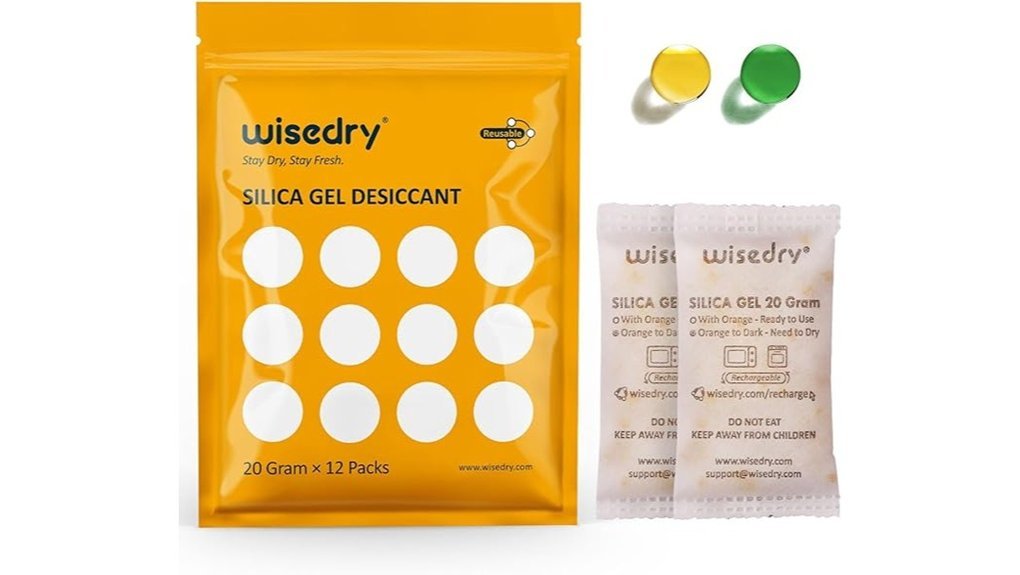
Best Overall: Wisedry’s 20-gram packets offer a practical balance of packet size, visible saturation monitoring, and flexible reactivation. The pack includes 12 sachets with orange indicating beads that gradually turn dark green when saturated. Their medium size works well in storage bins, camera cases, compact safes, document boxes, and packaged dry-goods storage when the product directions permit that use.
Why You’ll Like It: The main advantage is convenience. The current listing describes microwave reactivation in about two minutes and also provides oven directions, but buyers should follow the included instructions rather than applying one heating method to every desiccant packet. Unused sachets are supplied in protective sealed packaging to limit moisture exposure before use.
Who Should Avoid It: Skip these if you do not have a safe way to heat the packets or if your storage space is so large or damp that a passive absorber cannot maintain the target humidity.
Pros:
- Color indicator makes saturation easier to monitor.
- Medium 20-gram size balances placement flexibility and capacity.
- Reusable design can reduce repeated replacement purchases.
Cons:
- Needs careful microwave or oven reactivation according to the included directions.
- The outer material can be damaged by overheating.
- Passive absorption is not intended for open rooms or severe moisture problems.
5 Gram Color-Indicating Silica Gel Packets (50 Pack)
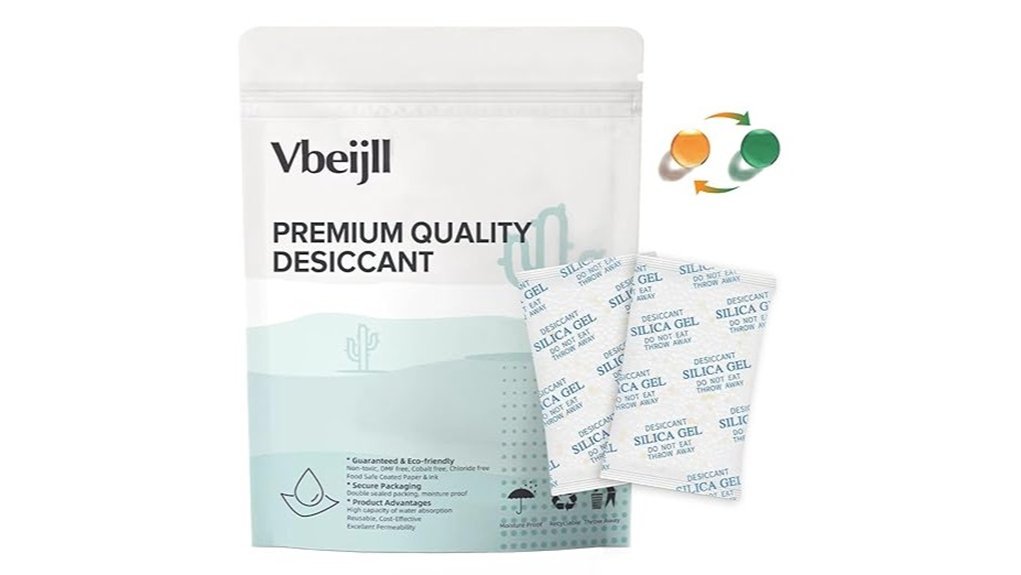
Best for Small Containers: These compact 5-gram packets are a strong fit for drawers, seed containers, camera cases, electronics storage, book boxes, and small packaged-food storage areas. The orange indicating beads turn dark green when saturated, giving you a visible reminder that regeneration is due.
Why You’ll Like It: The 50-pack makes it easy to place separate packets in many small containers. The listing describes the packets as rechargeable in an oven, microwave, or sunlight and notes that overheating can damage the wrapping. Use only the method, temperature, power setting, and duration stated on the current packaging.
Safety Note: “Food grade” does not mean edible. Keep every packet intact, follow the listing and package directions for direct-contact uses, and keep the packets away from children and pets.
Pros:
- Visible color change simplifies monitoring.
- Small packets fit where larger bags and canisters cannot.
- Large quantity works well for multiple containers.
Cons:
- Several packets may be needed in a larger bin.
- Frequent opening of a container can shorten the time between recharges.
- Incorrect heating can damage the packet material.
50 Pack Silica Gel Moisture Absorber Packets
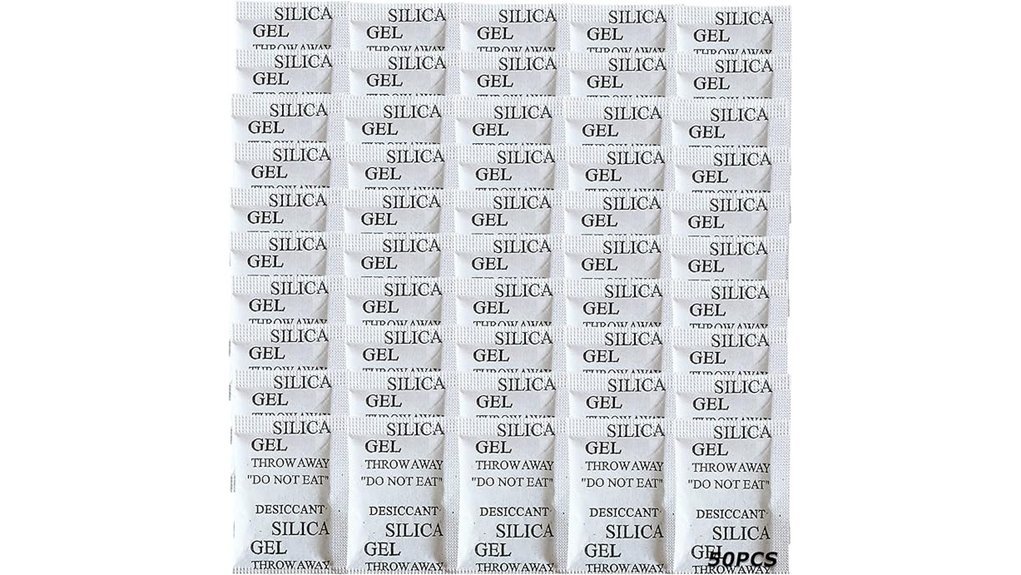
Best Budget Multi-Pack: This set contains 50 non-indicating 5-gram silica gel packets for shoes, electronics, documents, collectibles, tools, camera gear, and other compact storage spaces. Each packet is better suited to a sealed or partly sealed container than an open closet or room.
Why You’ll Like It: The transparent beads provide a non-indicating option, and the large pack count gives you flexible placement across many containers. The listing describes oven, microwave, and sunlight reactivation but recommends no more than three reuse cycles, so this is better viewed as a limited-reuse value pack than a lifetime desiccant.
Who Should Avoid It: Choose an indicating product instead if you want an immediate visual signal when the desiccant is saturated.
Pros:
- Fifty packets provide broad coverage across many small containers.
- Compact size works well around electronics, documents, shoes, and valuables.
- Rechargeable for a limited number of cycles according to the seller.
Cons:
- No color indicator means you must track performance another way.
- Small packets have limited capacity individually.
- The seller recommends only a limited number of reactivation cycles.
Large Silica Gel Desiccant Packs for Car
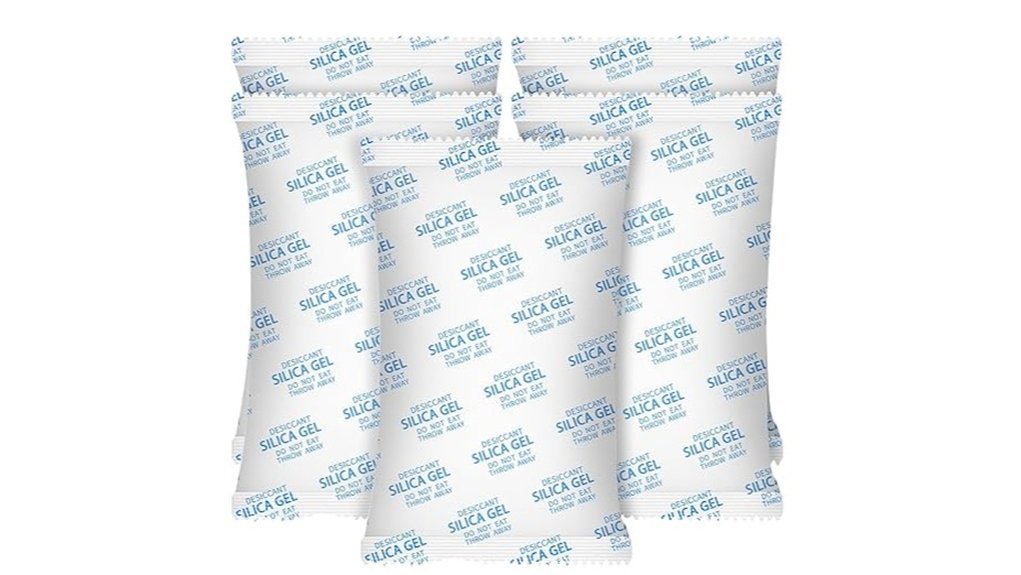
Best High-Capacity Bags: This set includes five 600-gram silica gel packs for vehicles, safes, large storage boxes, filament storage, and other enclosed areas that need more capacity than small sachets can provide. The seller states that each bag can adsorb up to 240 grams of moisture under its stated conditions, but real performance depends on humidity, temperature, airflow, and how well the space is sealed.
Why You’ll Like It: The larger format can reduce the need to scatter dozens of small packets through a vehicle or storage area. The listing describes oven and microwave reactivation, but the bags are bulky and must be heated only with the seller’s specified settings to reduce the risk of melting or damage.
Who Should Avoid It: These bulky bags are not ideal for tight drawers, small camera cases, or direct placement where they could interfere with controls, pedals, vents, or moving parts.
Pros:
- Much higher capacity than small 5-gram packets.
- Reusable design suits recurring humidity control in vehicles and storage spaces.
- Thick-edged packet construction is intended to reduce bead leakage.
Cons:
- Large size takes up noticeable storage space.
- Reactivation requires careful temperature and timing control.
- It will not fix water leaks, soaked carpeting, or major ventilation problems in a car.
Eva-Dry Dehumidifier, Liberty Safes
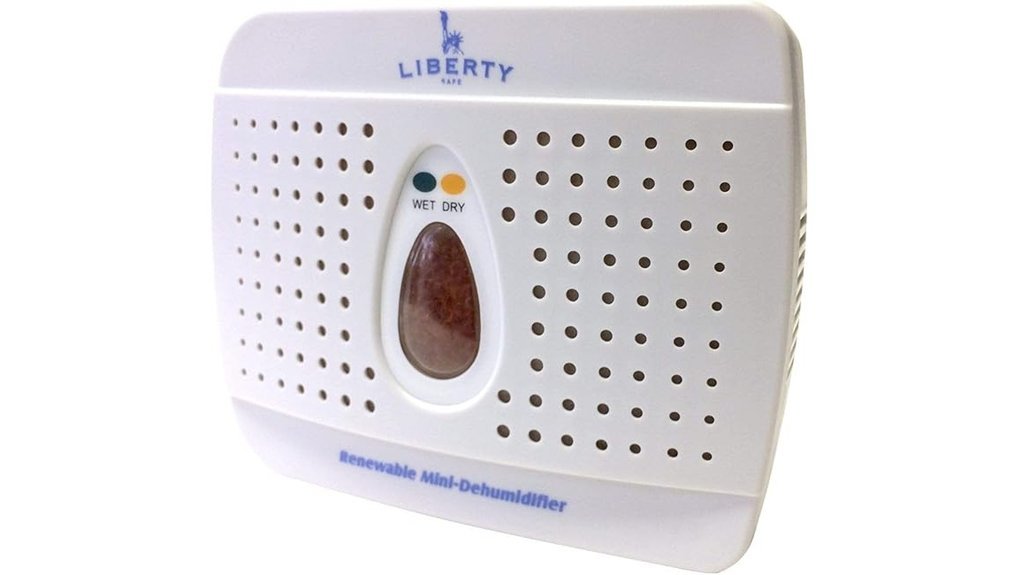
Best Self-Contained Safe Dehumidifier: This renewable Liberty Safe and Eva-Dry unit is designed to work without power while placed inside a safe or other enclosed storage area. The desiccant remains inside a rigid housing, and a color indicator helps show when the unit needs renewal.
Why You’ll Like It: It does not need continuous power during normal use. When the indicator shows saturation, remove the unit from the safe, connect it as directed, and plug it into an outlet for the stated renewal period. This self-contained process is convenient for buyers who do not want to heat fabric packets or metal canisters in an oven.
Who Should Avoid It: Choose another format if you cannot safely remove and plug in the unit for renewal, or if your safe maker recommends a continuously powered dehumidifier rod for the safe’s size, location, or contents.
Pros:
- Rigid, self-contained design reduces loose-packet clutter.
- Works without power while absorbing moisture.
- Visible indicator helps show when regeneration is needed.
Cons:
- Must be removed and plugged in periodically to regenerate.
- Performance depends on safe volume, sealing, temperature, and ambient humidity.
- Not intended for whole-room humidity control.
Gun Safe Dehumidifier Silica Gel Desiccant Canister
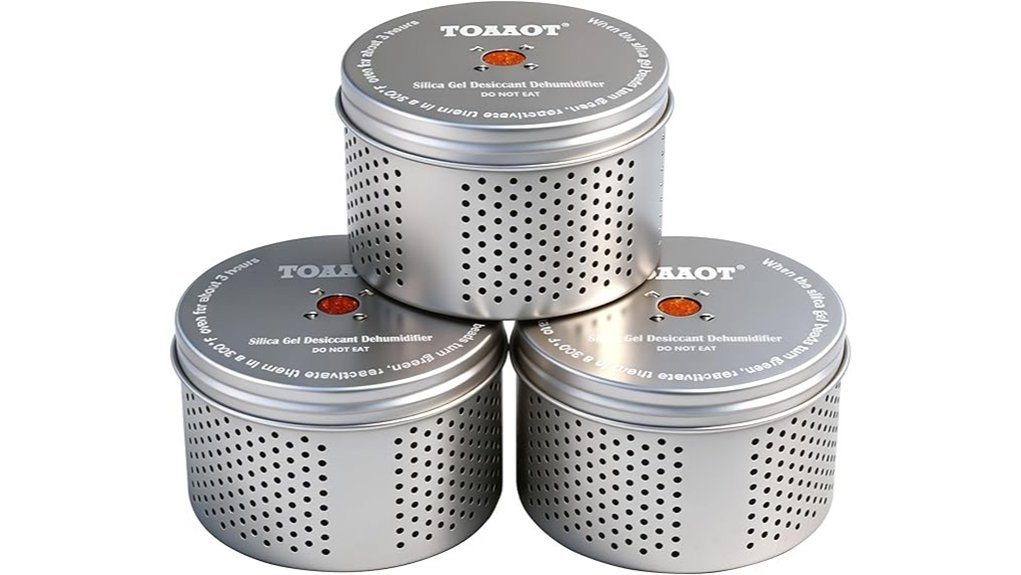
Best Large Safe Canister: These 200-gram aluminum canisters are made for enclosed storage such as gun safes, toolboxes, document cabinets, and filament boxes. The current seller listing states coverage of up to approximately 27 cubic feet per canister, but that figure should be treated as seller guidance because real performance depends on air leakage and ambient humidity.
Why You’ll Like It: The aluminum shell keeps the beads contained while allowing air exposure, and the orange indicating silica gel provides a visual cue for oven regeneration. The larger canister format can be easier to manage than many small sachets inside a safe or toolbox.
Safety Note: Follow the exact oven temperature and time printed on the product or manual. Let the canister cool completely before returning it to a safe, and never place a hot canister near ammunition, documents, plastics, or other heat-sensitive items.
Pros:
- Higher capacity than compact packet or 40-gram canister options.
- Aluminum housing keeps beads contained during normal use.
- Color-changing beads make reactivation timing easier to judge.
Cons:
- Requires oven regeneration using the current product directions.
- Coverage is limited to enclosed spaces and depends on humidity and air leakage.
- The canister becomes hot during regeneration and needs safe handling.
Wisesorb Silica Gel Canister Dehumidifiers Pack of 4
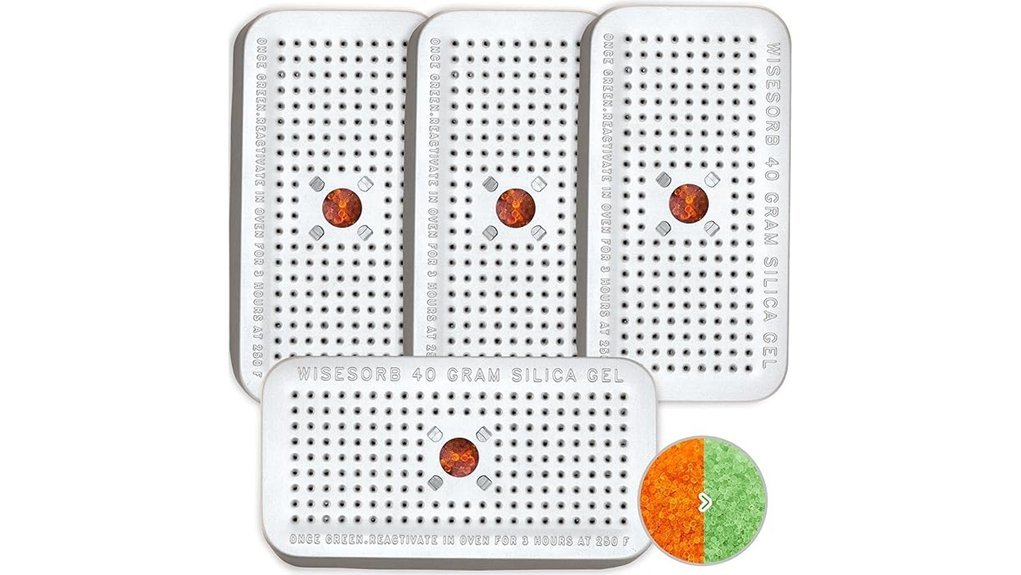
Best Compact Canister Set: Wisesorb’s four 40-gram aluminum canisters fit in ammo cans, toolboxes, camera cases, compact safes, closets, and document boxes. Four separate units give you more placement flexibility than one large canister when the storage area has several compartments.
Why You’ll Like It: The indicating silica gel changes from orange to green, and the listing directs users to reactivate the canisters in an oven when the indicator changes. The reusable aluminum housing is more durable than a soft packet and helps keep the beads contained.
Who Should Avoid It: Choose a larger bag or canister if you are treating a vehicle, large cabinet, or poorly sealed space. These compact units are designed for smaller enclosed areas.
Pros:
- Four separate units allow flexible placement.
- Compact aluminum bodies suit tight storage spaces.
- Orange-to-green indicator supports timely oven regeneration.
Cons:
- Lower capacity per unit than large desiccant bags or canisters.
- Requires oven reactivation.
- The indicator is a saturation guide, not a precise humidity measurement.
Wisesorb Activated Alumina Desiccant for Filament Drying
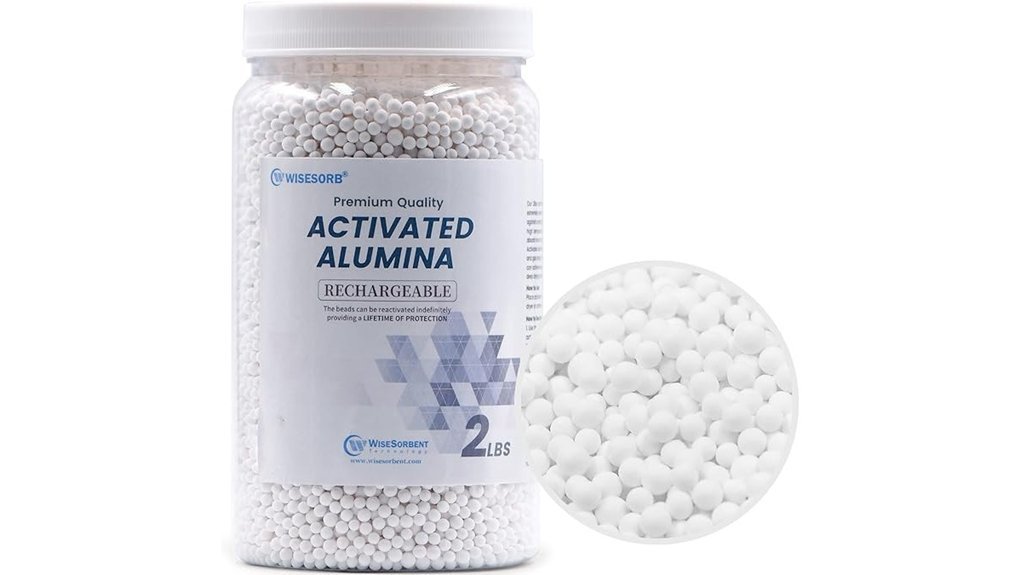
Best for 3D Filament Dry Boxes: This two-pound package contains loose activated alumina beads for sealed filament storage, compressed-air drying, and other technical moisture-control setups. Activated alumina is physically durable and reusable, but it is less convenient than ready-filled packets and requires a properly designed breathable container.
Why You’ll Like It: The porous beads are designed for moisture adsorption in humid technical systems and tolerate much higher regeneration temperatures than fabric silica gel packets. The listing specifies oven regeneration for eight hours at 200°C to 250°C, so this option is best for users with suitable equipment, a heat-safe process, and secure containment.
Who Should Avoid It: This is not the best option for casual household use, direct food contact, or any setup where loose beads could spill into electronics, machinery, or filament. The listed regeneration temperature and duration may also be unsuitable for some household ovens or shared food-preparation equipment.
Pros:
- High-capacity loose desiccant for sealed technical systems.
- Durable beads can withstand repeated regeneration when handled correctly.
- Useful for specialized filament and gas-drying applications.
Cons:
- Loose beads need a secure, breathable, heat-safe container.
- Regeneration requires approximately eight hours at a seller-specified 200°C to 250°C.
- More complex and messier than packet or canister products.
Factors to Consider When Choosing a Rechargeable Desiccant Moisture Absorber
Choose by enclosed-space size, desiccant format, saturation indicator, regeneration method, and safety around the stored items. Passive desiccants work best when the container, cabinet, safe, or vehicle is reasonably sealed and leaks, standing water, and soaked materials have already been addressed.
Moisture Absorption Capacity
Capacity should be compared by the amount and type of desiccant, not by pints per day. A 5-gram sachet suits a small jar or case, while a 600-gram bag or 200-gram canister is intended for a much larger enclosed volume. Published percentage-adsorption and coverage claims vary with temperature and relative humidity, so treat them as seller or laboratory conditions rather than guaranteed real-world results.
Enclosed-Space Size
Passive packets and canisters should be matched to container volume, not room square footage. Check the manufacturer’s cubic-foot or container-size guidance when available, but confirm performance with a hygrometer because doors, seals, vents, and frequent opening can change the result.
Recharge Method
Microwave regeneration can be fast, but only products specifically designed for microwave use should be heated that way. Oven-safe canisters and loose beads often need longer drying cycles, while plug-in renewable units may require several hours to renew. Always use the exact temperature, power level, placement, and duration printed by the manufacturer because overheating can melt packet material, damage indicators, scorch packaging, or create a burn risk.
Packet, Canister, or Loose Beads
Soft packets fit small spaces but can tear if crushed or repeatedly overheated. Aluminum canisters are more durable and keep beads contained, though they take up more room. Loose activated alumina offers flexible capacity for technical setups but requires a separate breathable container that cannot spill into sensitive equipment.
Placement and Monitoring
Place the absorber where air can circulate around it without blocking vents, controls, locks, pedals, or moving parts. Keep it away from standing water and direct heat. In a vehicle, first repair leaks and dry wet carpet or upholstery. In a safe, monitor humidity and follow the safe maker’s guidance for the stored contents.
Before You Buy
- Measure the container or safe volume.
- Decide whether you prefer a packet, rigid canister, or self-contained unit.
- Confirm the exact recharge method and whether your oven or microwave is suitable.
- Choose an indicating product if you do not want to track recharge dates manually.
- Use a hygrometer when protecting high-value or moisture-sensitive items.
Frequently Asked Questions
How Often Should a Rechargeable Desiccant Be Regenerated or Replaced?
Recharge it when the indicator changes color, the hygrometer shows humidity rising, or the manufacturer’s stated service interval is reached. Timing can range from days to months depending on humidity, container size, air leakage, and how often the space is opened. Replace any packet or unit that is torn, leaking, scorched, warped, or no longer responds to regeneration.
Can Passive Desiccants Work in Freezing Temperatures?
Many silica gel and activated alumina products can still adsorb moisture at low temperatures, which can make them useful where compressor dehumidifiers struggle. However, adsorption rate and total capacity still depend on temperature, humidity, airflow, and the exact material. Check the product’s stated operating conditions for cold storage use.
Are Desiccants Safe Around Food and Electronics?
They can be suitable when the product is designed for that setting and the packet or container remains intact. Never eat silica gel or activated alumina, and do not assume a “food-grade” label permits direct contact with every food, supplement, or medicine. Keep dust and loose beads away from electronics, and discard any torn, scorched, or leaking packet.
What Humidity Level Should I Target?
The correct target depends on what you are protecting. Many household storage applications aim to remain below about 50% relative humidity, while some materials need a narrower range. Use a hygrometer and follow the storage recommendations for the specific safe contents, documents, camera equipment, filament, packaged food, or other stored items rather than relying on one universal number.
Do Rechargeable Desiccants Require Electricity?
They usually work passively while they are absorbing moisture. Electricity may be needed only during regeneration, such as heating a packet in a microwave, drying a canister or loose beads in an oven, or plugging in a self-contained renewable unit.
Can These Products Dehumidify a Bedroom or Basement?
Not effectively in most cases. Passive packets and canisters are designed for enclosed spaces with limited air exchange. A persistently damp room usually needs leak repair, ventilation improvements, drainage work, or a properly sized powered dehumidifier.
Conclusion
Final Recommendation
For most buyers, the Wisedry 20 Gram Rechargeable Silica Gel Packets provide the best balance of packet size, color monitoring, and convenient reactivation. Choose the 5 Gram Color-Indicating Packets when you need to protect many small containers, the 600 Gram Silica Gel Packs for vehicles or larger enclosed storage, and the Eva-Dry unit when you prefer a self-contained safe or cabinet solution. Wisesorb Activated Alumina is best reserved for technical users with secure containment and suitable high-temperature regeneration equipment.
The right choice is the product that matches your enclosed-space volume, recharge routine, monitoring preference, and handling limits. Whichever format you choose, follow the current manufacturer directions and confirm performance with a hygrometer instead of relying only on a color indicator or seller coverage claim.